金价暴涨背后,预示 BTC 自己的「黄金时刻」

Foresight NewsPublished on 2025-10-22Last updated on 2025-10-22

Abstract

金价涨幅远超比特币,而这背后暗藏利好。只要 ETF 和企业的联合买入态势持续,比特币就会迎来属于它的「2025 年黄金时刻」。

撰文:Matt Hougan,Bitwise 首席投资官

编译:金色财经

当前加密市场对比特币存在两大核心疑问:

1. 为何金价表现会远超比特币?

2. 既然 ETF 和企业大量买入,为何比特币价格仍停滞不前?

事实上,若能仔细解答第一个问题,第二个问题的答案也会随之浮现——且这一答案为比特币的未来描绘了一幅极具看涨潜力的图景。

接下来我将具体分析。

疑问一:为何金价表现远超比特币?

目前金价尽管有所回调,但今年以来涨势迅猛,2025 年涨幅已达 57%,正朝着美元计价下的历史第二好年度表现迈进。与此同时,比特币却在 11 万美元关口附近陷入停滞,自 5 月以来价格大致持平。

这让将比特币视为「数字黄金」的投资者感到沮丧,但背后其实有一个简单的解释:差异源于各国央行的行为。

自俄罗斯入侵乌克兰后美国冻结俄罗斯持有的美国国债以来,各国央行便开始大量增持黄金。据 Metals Focus 数据显示,央行的黄金购买量自俄乌战争爆发后近乎翻倍,从每年约 467 吨增至如今的约 1000 吨,这一规模约为黄金 ETP(交易所交易产品)预估购买量的两倍。

比特币则无法享受这一待遇。尽管部分央行在研究比特币,但尚未有央行实际买入。因此,若央行是此次金价上涨的主要推手,那么比特币未能跟随金价走高便合乎逻辑。

这一观点并非新鲜事。无论是摩根士丹利(Morgan Stanley)、摩根大通(JPMorgan),还是穆罕默德·埃尔 - 埃里安(Mohamed El-Erian)等机构与人士,均指出央行购金是金价飙升的关键驱动因素。

疑问二:为何 ETF 与企业大量买入,比特币价格仍停滞不前?

这与第二个疑问有何关联?

答案是:关联极大。

比特币市场最大的谜团在于,尽管 ETF 和企业在大量买入,但其价格为何相对平稳。自 2024 年 1 月比特币 ETF 推出以来,ETF 和企业累计买入 139 万枚比特币,而同期比特币网络的新增供应量还不到这一规模的四分之一。尽管从那时起比特币价格已上涨 135%,表现不俗,但许多人仍在疑惑:难道它不该涨得更高吗?

我也曾有过同样的疑问:究竟是谁在大量抛售比特币?是什么阻碍了它突破 20 万美元关口?

当前的金价上涨给出了答案。

请看下方表格,该表格展示了 2010 年至 2024 年各国央行的年度黄金购买量。2021 年央行购金量为 467 吨,2022 年跃升至 1080 吨,此后一直保持在这一高位(预测显示 2025 年的需求将略低于 2024 年)。

2010-2024 年各国央行黄金购买量(单位:吨):
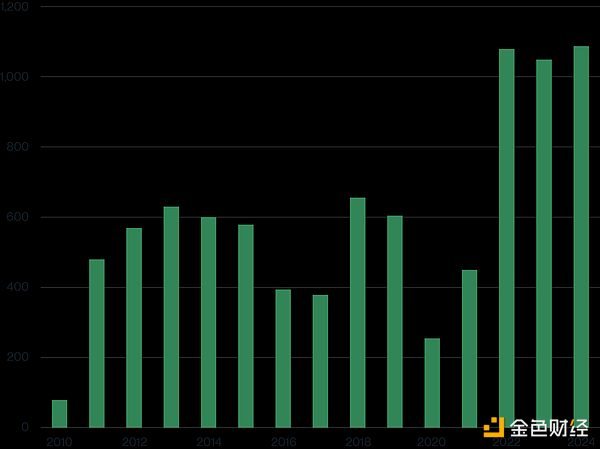
简而言之,尽管央行购金是今年金价上涨的重要催化剂,但这类购买并非始于今年,而是从 2022 年就已开始。

这也为比特币当前的情况提供了答案。

2022 年央行购金量开始大幅增加时,金价的上涨速度较为缓慢:2022 年平均价格为 1800 美元,2023 年升至 1941 美元(仅上涨 8%),2024 年升至 2386 美元(上涨 23%)。直到今年,金价才迎来爆发式上涨,涨幅近 60%,达到约 4200 美元。

也就是说:央行从 2022 年开始购金,而金价在 2025 年才出现 parabolic(抛物线式)上涨。

我认为事情的逻辑很清晰:在任何市场中,都存在一部分对价格敏感的投资者——这类投资者往往会在价格涨跌 10%-15% 时采取行动。2022 年央行开始大量购金、推动金价上涨时,这些投资者会趁着需求上升抛售黄金。但最终,这部分抛售力量会消耗殆尽,随后价格便会大幅上涨。

我怀疑比特币当前正处于类似阶段。

正如前文所述,自 2024 年 ETF 和企业开始大举买入以来,比特币价格已上涨 2.3 倍。在此期间,对价格敏感的持有者会抓住获利机会抛售离场。

但正如金价的例子所显示的,总有一天这些抛售力量会消耗殆尽。只要 ETF 和企业的联合买入态势持续(我认为大概率会持续),比特币就会迎来属于它的「2025 年黄金时刻」。

我的建议是:保持耐心。

不要艳羡金价的暴涨,而应将其视为一种预示——它或许正在向我们展示比特币未来的走向。

Related Reads

Anthropic and OpenAI Have Single-Handedly Severed the Logic of Pre-IPO Stock Tokenization

The pre-IPO stock token market is experiencing significant turmoil following strong statements from AI giants Anthropic and OpenAI. Both companies have updated their official policies, declaring that any transfer of their company shares—including sales, transfers, or assignments of share interests—without prior board approval is "invalid" and will not be recognized in their corporate records. This means buyers in such unauthorized transactions would not be recognized as shareholders and would have no shareholder rights. A major point of contention is the use of Special Purpose Vehicles (SPVs), which are legal entities commonly used by pre-IPO token platforms to pool investor funds and indirectly acquire shares from employees or early investors. The companies explicitly state they do not permit SPVs to acquire their shares, and any such transfer violates their restrictions. They warn that third parties selling shares through SPVs, direct sales, forward contracts, or stock tokens are likely engaged in fraud or are offering worthless investments due to these transfer limits. This stance directly threatens the core model of many pre-IPO token platforms, which rely on SPV structures. The announcement revealed additional risks within this model, such as complex "SPV-within-SPV" layering that obscures legal transparency, increases management fees, and creates a chain reaction risk of invalidation. Following the news, tokens like ANTHROPIC and OPENAI on platforms like PreStocks fell sharply (over 20%). The market reaction highlights a divergence: while asset-backed pre-IPO tokens plummeted, purely speculative pre-IPO futures contracts, which are bilateral bets on future IPO prices with no claim to actual shares, remained relatively stable as they are unaffected by the transfer restrictions. The industry is split on the implications. Some believe the fundamental logic of pre-IPO token trading is broken if leading companies reject SPV-held shares, potentially causing a domino effect. Others, like Rivet founder Nick Abouzeid, argue that buyers of such unofficial tokens always knowingly accepted the risk of non-recognition by the company. The statements serve as a stark risk warning and a corrective measure for a market where valuations for some AI-related pre-IPO tokens had soared to irrational levels, far exceeding recent funding round valuations.

marsbit57m ago

Anthropic and OpenAI Have Single-Handedly Severed the Logic of Pre-IPO Stock Tokenization

marsbit57m ago

Anthropic and OpenAI Personally Sever the Logic of Pre-IPO Crypto-Stocks

The pre-IPO token market has been rocked by strong statements from Anthropic and OpenAI. Both AI giants have updated official warnings, declaring that any sale or transfer of their company shares without explicit board approval is "invalid" and will not be recognized on their corporate records. This directly targets Special Purpose Vehicles (SPVs), the common legal structure used by pre-IPO token platforms. These platforms typically use an SPV to acquire shares from employees or early investors, then issue blockchain-based tokens representing a claim on the SPV's economic benefits. Anthropic and OpenAI's position means that if an SPV's share purchase lacked authorization, the underlying asset could be deemed worthless, nullifying the token's value. Anthropic explicitly warned that any third party selling its shares—via direct sales, forwards, or tokens—is likely fraudulent or offering a valueless investment. The crackdown highlights risks in the popular SPV model, including complex multi-layered "Russian doll" SPV structures that obscure legal ownership, add fees, and concentrate risk. If one layer is invalidated, the entire chain could collapse. Following the announcements, tokens like ANTHROPIC and OPENAI on platforms like PreStocks fell sharply (over 20%). In contrast, purely speculative pre-IPO prediction contracts remained stable, as they involve no actual share ownership. The move is seen as a corrective measure amid a market frenzy where some pre-IPO token valuations (e.g., Anthropic's token hitting a $1.4 trillion implied valuation) far exceeded recent official funding rounds. Opinions are split: some believe this undermines the core logic of pre-IPO token trading if top companies reject SPVs, while others argue buyers always assumed this legal risk when accessing unofficial channels. The statements serve as a stark warning and a potential catalyst for market de-leveraging and clearer boundaries.

Odaily星球日报1h ago

Anthropic and OpenAI Personally Sever the Logic of Pre-IPO Crypto-Stocks

Odaily星球日报1h ago

The Waged Worker Driven to Poverty by AI Subscriptions

"AI Membership: The Hidden Cost Pushing Workers Toward 'Poverty'" The widespread corporate push for AI adoption is creating a hidden financial burden for employees. Companies, from giants like Alibaba to small firms, are mandating AI use, often tying token consumption to KPIs, but frequently refuse to cover the costs. Workers are forced to pay for subscriptions out of pocket to stay competitive and avoid being replaced. Front-end developer Long Shen spends up to 2000 RMB monthly on tools like Cursor and ChatGPT Plus, seeing it as a necessary 3% salary investment to handle 90% of his coding tasks. While it boosted his performance and led to promotions, he now faces idle time at work, pretending to be busy. Designer Peng Peng navigates strict company firewalls by using personal devices and accounts for AI image generation tools like Midjourney, spending hundreds monthly without reimbursement, while her boss demands faster, more numerous revisions. The pressure creates workplace anxiety and suspicion. Programmer Li Huahua, after a friend's experience of raised KPIs following AI success, fears being branded a "traitor" for using it yet worries about falling behind if she doesn't. The dynamic allows management to demand results without understanding the tools or covering expenses, treating employees like AI "agents." While some, like entrepreneur Jin Tu, find high value in paid AI, building entire systems and winning competitions, for most, it's a trap. Free tools like Kimi and Doubao are introducing fees, closing off alternatives. The initial efficiency gains individual advantage, but as AI becomes ubiquitous, the personal edge disappears, workloads increase, and a cycle of dependency begins. Workers like Long Shen realize they cannot maintain AI-generated code without AI, making stopping harder than continuing to pay. The tool promising liberation is instead becoming a compulsory, costly chain in the modern workplace.

marsbit1h ago

The Waged Worker Driven to Poverty by AI Subscriptions

marsbit1h ago

SK Hynix's Trillion-Won Empire: The Successors

"SK Hynix's Trillion-Won Empire and Its Heirs" explores the unconventional succession narrative within SK Group, South Korea's second-largest conglomerate, following SK Hynix's dramatic market rise. Unlike traditional chaebol scripts prioritizing the eldest son, ownership, and political marriages, Chairman Choi Tae-won's three children from his first marriage are charting distinct paths. The eldest daughter, Choi Yun-jeong, is considered the most visible candidate. With a background in biology, consulting, and a PhD, she holds executive roles at SK Bioscience and SK Inc.'s growth strategy unit, focusing on biopharma and new businesses. Her marriage is to an AI infrastructure entrepreneur, not a traditional chaebol heir. The second daughter, Choi Min-jeong, took a unique route by voluntarily serving as a South Korean naval officer, including a tour in the Gulf of Aden. She later worked on policy and strategy for SK Hynix in Washington D.C. before co-founding an AI-driven healthcare startup in San Francisco. She married a former U.S. Marine Corps officer, connecting the family to U.S. defense and policy networks. The son, Choi In-geun, who has Type 1 diabetes, followed a more classic preparatory path with a physics degree and a stint at SK E&S but left to join McKinsey's Seoul office. He remains publicly silent and holds no SK shares, defying the traditional "crown prince" archetype. Their paths unfold against the backdrop of their parents' high-profile, contentious divorce and a record-setting asset division lawsuit. The article argues that as SK Hynix becomes a geopolitical asset in the AI era, the conventional rules of chaebol inheritance are changing. The heirs are being groomed not simply to take over, but to navigate a complex global landscape defined by AI, biotech, geopolitics, and policy, forging legitimacy through their own expertise and networks rather than birth order alone.

marsbit1h ago

SK Hynix's Trillion-Won Empire: The Successors

marsbit1h ago

Trading

Spot
Futures

Hot Articles

What is $BITCOIN

DIGITAL GOLD ($BITCOIN): A Comprehensive Analysis Introduction to DIGITAL GOLD ($BITCOIN) DIGITAL GOLD ($BITCOIN) is a blockchain-based project operating on the Solana network, which aims to combine the characteristics of traditional precious metals with the innovation of decentralized technologies. While it shares a name with Bitcoin, often referred to as “digital gold” due to its perception as a store of value, DIGITAL GOLD is a separate token designed to create a unique ecosystem within the Web3 landscape. Its goal is to position itself as a viable alternative digital asset, although specifics regarding its applications and functionalities are still developing. What is DIGITAL GOLD ($BITCOIN)? DIGITAL GOLD ($BITCOIN) is a cryptocurrency token explicitly designed for use on the Solana blockchain. In contrast to Bitcoin, which provides a widely recognized value storage role, this token appears to focus on broader applications and characteristics. Notable aspects include: Blockchain Infrastructure: The token is built on the Solana blockchain, known for its capacity to handle high-speed and low-cost transactions. Supply Dynamics: DIGITAL GOLD has a maximum supply capped at 100 quadrillion tokens (100P $BITCOIN), although details regarding its circulating supply are currently undisclosed. Utility: While precise functionalities are not explicitly outlined, there are indications that the token could be utilized for various applications, potentially involving decentralized applications (dApps) or asset tokenization strategies. Who is the Creator of DIGITAL GOLD ($BITCOIN)? At present, the identity of the creators and development team behind DIGITAL GOLD ($BITCOIN) remains unknown. This situation is typical among many innovative projects within the blockchain space, particularly those aligning with decentralized finance and meme coin phenomena. While such anonymity may foster a community-driven culture, it intensifies concerns about governance and accountability. Who are the Investors of DIGITAL GOLD ($BITCOIN)? The available information indicates that DIGITAL GOLD ($BITCOIN) does not have any known institutional backers or prominent venture capital investments. The project seems to operate on a peer-to-peer model focused on community support and adoption rather than traditional funding routes. Its activity and liquidity are primarily situated on decentralized exchanges (DEXs), such as PumpSwap, rather than established centralized trading platforms, further highlighting its grassroots approach. How DIGITAL GOLD ($BITCOIN) Works The operational mechanics of DIGITAL GOLD ($BITCOIN) can be elaborated on based on its blockchain design and network attributes: Consensus Mechanism: By leveraging Solana’s unique proof-of-history (PoH) combined with a proof-of-stake (PoS) model, the project ensures efficient transaction validation contributing to the network's high performance. Tokenomics: While specific deflationary mechanisms have not been extensively detailed, the vast maximum token supply implies that it may cater to microtransactions or niche use cases that are still to be defined. Interoperability: There exists the potential for integration with Solana’s broader ecosystem, including various decentralized finance (DeFi) platforms. However, the details regarding specific integrations remain unspecified. Timeline of Key Events Here is a timeline that highlights significant milestones concerning DIGITAL GOLD ($BITCOIN): 2023: The initial deployment of the token occurs on the Solana blockchain, marked by its contract address. 2024: DIGITAL GOLD gains visibility as it becomes available for trading on decentralized exchanges like PumpSwap, allowing users to trade it against SOL. 2025: The project witnesses sporadic trading activity and potential interest in community-led engagements, although no noteworthy partnerships or technical advancements have been documented as of yet. Critical Analysis Strengths Scalability: The underlying Solana infrastructure supports high transaction volumes, which could enhance the utility of $BITCOIN in various transaction scenarios. Accessibility: The potential low trading price per token could attract retail investors, facilitating wider participation due to fractional ownership opportunities. Risks Lack of Transparency: The absence of publicly known backers, developers, or an audit process may yield skepticism regarding the project's sustainability and trustworthiness. Market Volatility: The trading activity is heavily reliant on speculative behavior, which can result in significant price volatility and uncertainty for investors. Conclusion DIGITAL GOLD ($BITCOIN) emerges as an intriguing yet ambiguous project within the rapidly evolving Solana ecosystem. While it attempts to leverage the “digital gold” narrative, its departure from Bitcoin's established role as a store of value underscores the need for a clearer differentiation of its intended utility and governance structure. Future acceptance and adoption will likely depend on addressing the current opacity and defining its operational and economic strategies more explicitly. Note: This report encompasses synthesised information available as of October 2023, and developments may have transpired beyond the research period.

363 Total ViewsPublished 2025.05.13Updated 2025.05.13

What is $BITCOIN

Discussions

Welcome to the HTX Community. Here, you can stay informed about the latest platform developments and gain access to professional market insights. Users' opinions on the price of BTC (BTC) are presented below.

活动图片