30-Day Doubling, 15-Fold Year-to-Date Gain: Why is the English-Speaking Crypto Community FOMOing Over $ZEC Again?

marsbitPublished on 2026-05-09Last updated on 2026-05-09

Abstract

Over the past week, ZEC has surged back into the spotlight on English Crypto Twitter, driven by endorsements from prominent figures like Naval, Arthur Hayes, and Mert Mumtaz, alongside a public "significant" position announcement from Multicoin Capital at Consensus Miami. The price has skyrocketed, with ZEC gaining over 110% in 30 days and 1500% year-to-date, now ranking among the top 20 cryptocurrencies by market cap. The primary catalyst is a shifting investment thesis. Multicoin Capital's Tushar Jain argues that while Bitcoin resists censorship, its transparent ledger leaves holdings vulnerable to potential wealth confiscation via taxation. Zcash's shielded pool, using zk-proofs to obscure transaction details, is positioned as "insurance against Bitcoin" for true financial privacy. Arthur Hayes has set a long-term price target of 10% of Bitcoin's value. Further momentum comes from technical developments announced at Consensus, including a roadmap for quantum-recoverable wallets and full post-quantum security within 12-18 months. Institutional adoption signals are growing, with a Grayscale ETF application pending, Robinhood listing ZEC, and Foundry launching a mining pool. However, a critical caveat is the recent departure of the entire original Zcash development team (ECC) due to governance conflicts, leaving the project's future development uncertain. While narrative and institutional interest are clearly fueling the current rally, distinguishing between genuine adopti...

Author: Curry, Deep Tide TechFlow

If you've been browsing English Crypto Twitter lately, you've likely seen ZEC all over the screen.

Names like Naval, Arthur Hayes, Mert Mumtaz, Balaji, and Cobie are popping up repeatedly around the same topic. Coupled with Multicoin Capital's public announcement of a significant position and multiple privacy-focused panels at Consensus Miami, ZEC's social media buzz over the past week has reached its highest point since the rally at the end of 2025.

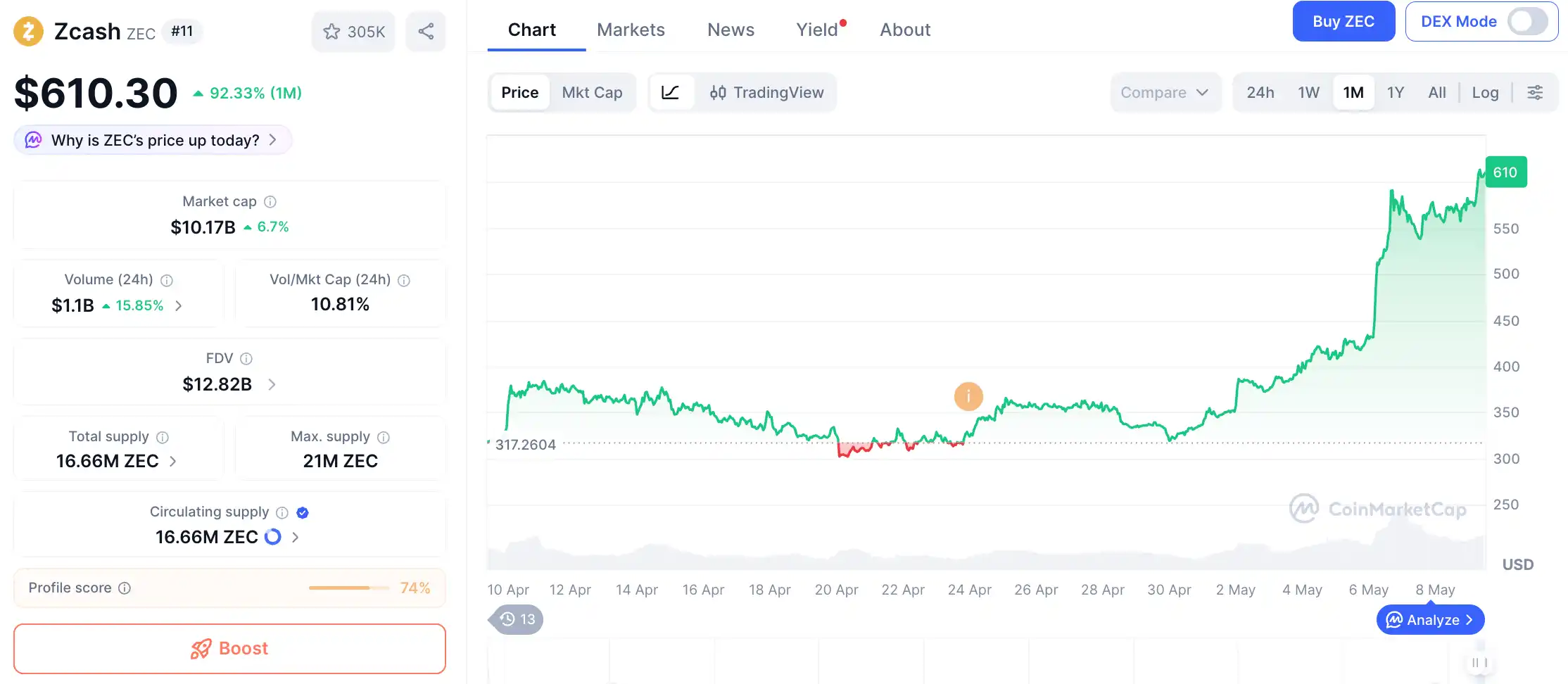
The price has already run ahead of the narrative. At the time of writing, ZEC is trading around $580, with gains exceeding 110% over the past 30 days and cumulative year-to-date gains surpassing 1500%. Its market cap has exceeded $9.5 billion, overtaking the veteran privacy coin Monero (XMR) and climbing into the top 20 on CoinGecko.

On May 6th, ZEC surged nearly 30% in a single day, triggering over $62 million in short liquidations, with shorts accounting for $46.7 million of that.

So the question is: What's driving this wave?
Multicoin's Heavy Position: "Bitcoin is Censorship-Resistant, But It Can't Stop a Wealth Tax"

The most direct catalyst came from Multicoin Capital.

On May 6th, Multicoin Capital co-founder and managing partner Tushar Jain publicly stated during a panel at Consensus Miami that the firm had built a "significant position" starting in February. He didn't disclose the specific size but provided a clear investment logic framework.

In a subsequent long post on X, Jain wrote: "Bitcoin is censorship-resistant; nobody can freeze your BTC or stop you from using it. But it does not stop governments from confiscating known holdings via a wealth tax."

His direct evidence is California's Initiative 25-0024 proposal, which aims to impose a one-time 5% wealth tax (including unrealized gains) on residents with a net worth exceeding $1 billion, expected to raise approximately $100 billion.

Jain's core thesis is: Bitcoin is insurance against fiat currency, but its on-chain balances are completely transparent; a tax agency with a blockchain explorer can see everything. ZEC's shielded pool, using zero-knowledge proof technology, hides the sender, receiver, and amount, making on-chain assets invisible to external observers.
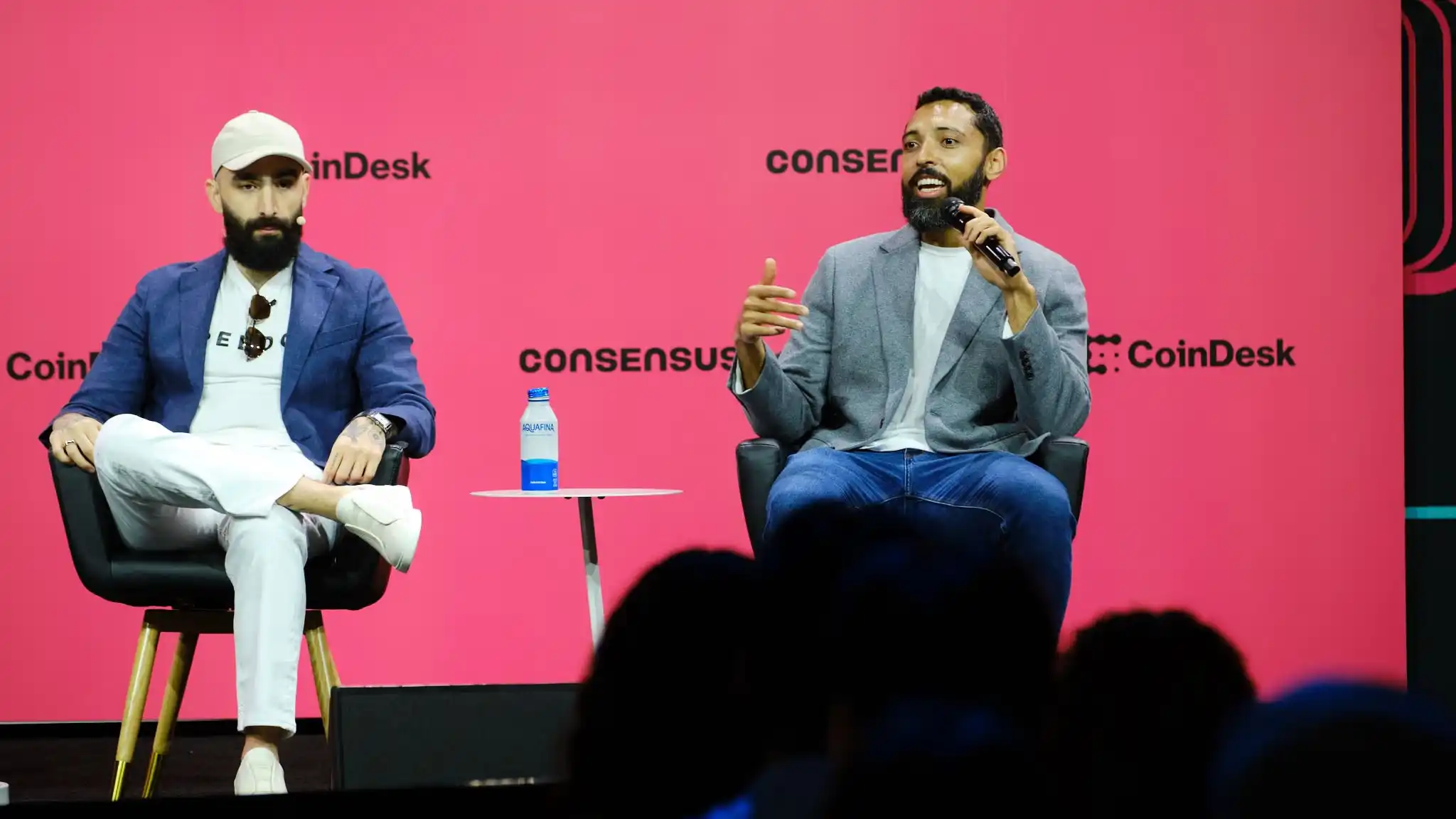
"We think there is clear product-market fit for truly private, censorship- and seizure-resistant assets, and demand is accelerating," Jain wrote, "Zcash is the cleanest way to express this thesis in public markets."

This represents a clear shift in stance for Multicoin.

In 2019, the fund published an article arguing that "privacy is a feature of valuable cryptocurrencies, not a standalone product," suggesting users shouldn't sell BTC or ETH to buy ZEC just for privacy.

Seven years later, this public statement looks like they are betting real money to overturn their past conclusion.

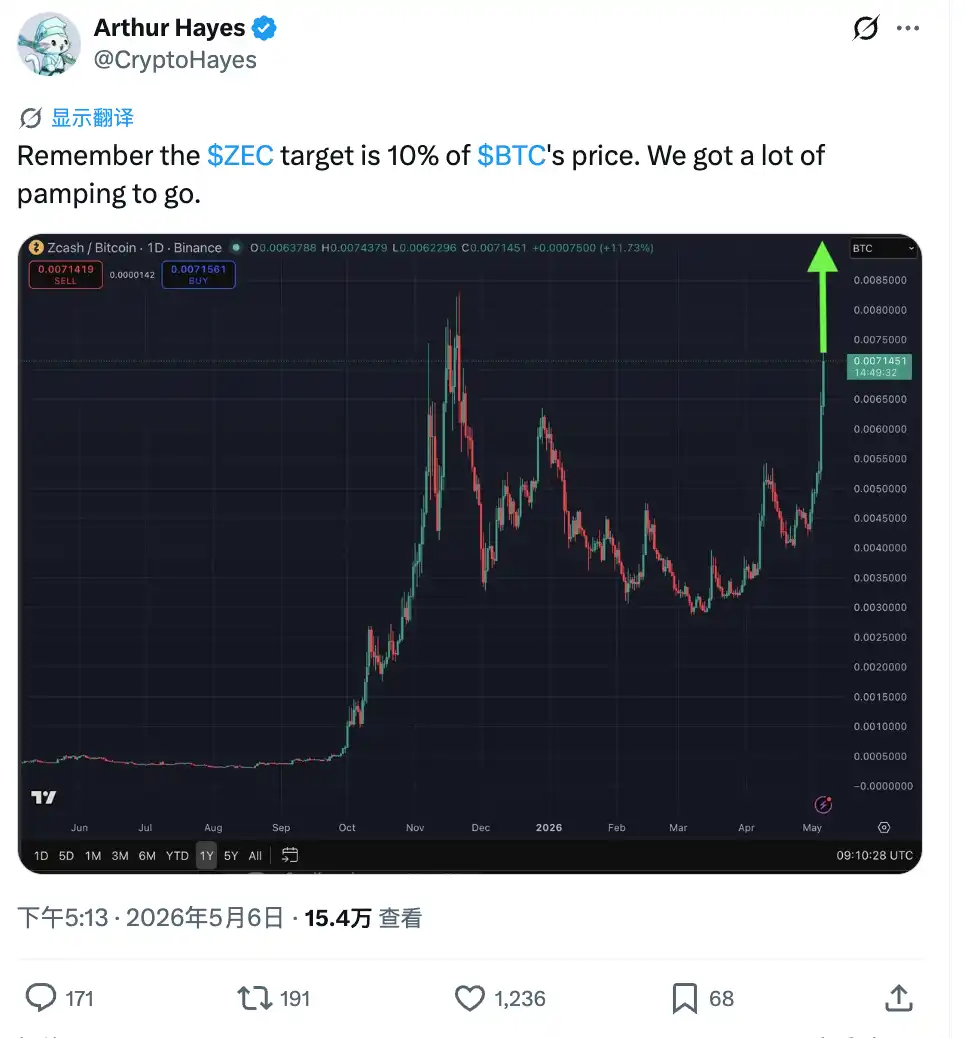
KOLs Rally, Arthur Hayes Calls for "10% of BTC's Price"

The seeds for this ZEC narrative were actually planted in the second half of 2025.

BitMEX co-founder Arthur Hayes, AngelList co-founder Naval Ravikant (also an early Zcash investor), Helius founder Mert Mumtaz, along with other top crypto KOLs like Balaji Srinivasan and Cobie, began voicing strong support for ZEC intensively starting last fall.

Naval tweeted in October last year: "Bitcoin is insurance against fiat. Zcash is insurance against Bitcoin."

Hayes's stance was more aggressive. At Consensus 2026, he bluntly stated ZEC's long-term target price should be "10% of Bitcoin's price." Based on BTC's current price of around $80,000, this implies a target of approximately $8,000 for ZEC, representing over 13x upside from the current price. Tyler Winklevoss also endorsed a thesis this week targeting $9,700 for ZEC based on capturing offshore wealth.

These calls themselves might not be reliable investment advice, but their concentrated emergence indicates one thing: the top capital and top voices in the English-speaking crypto space are simultaneously tilting towards the privacy sector.
The Quantum-Resistant Narrative at Consensus Miami

If Multicoin and the KOLs provided catalysts on the capital and narrative fronts, the release of the technical roadmap at Consensus Miami gave the market a fundamental story.

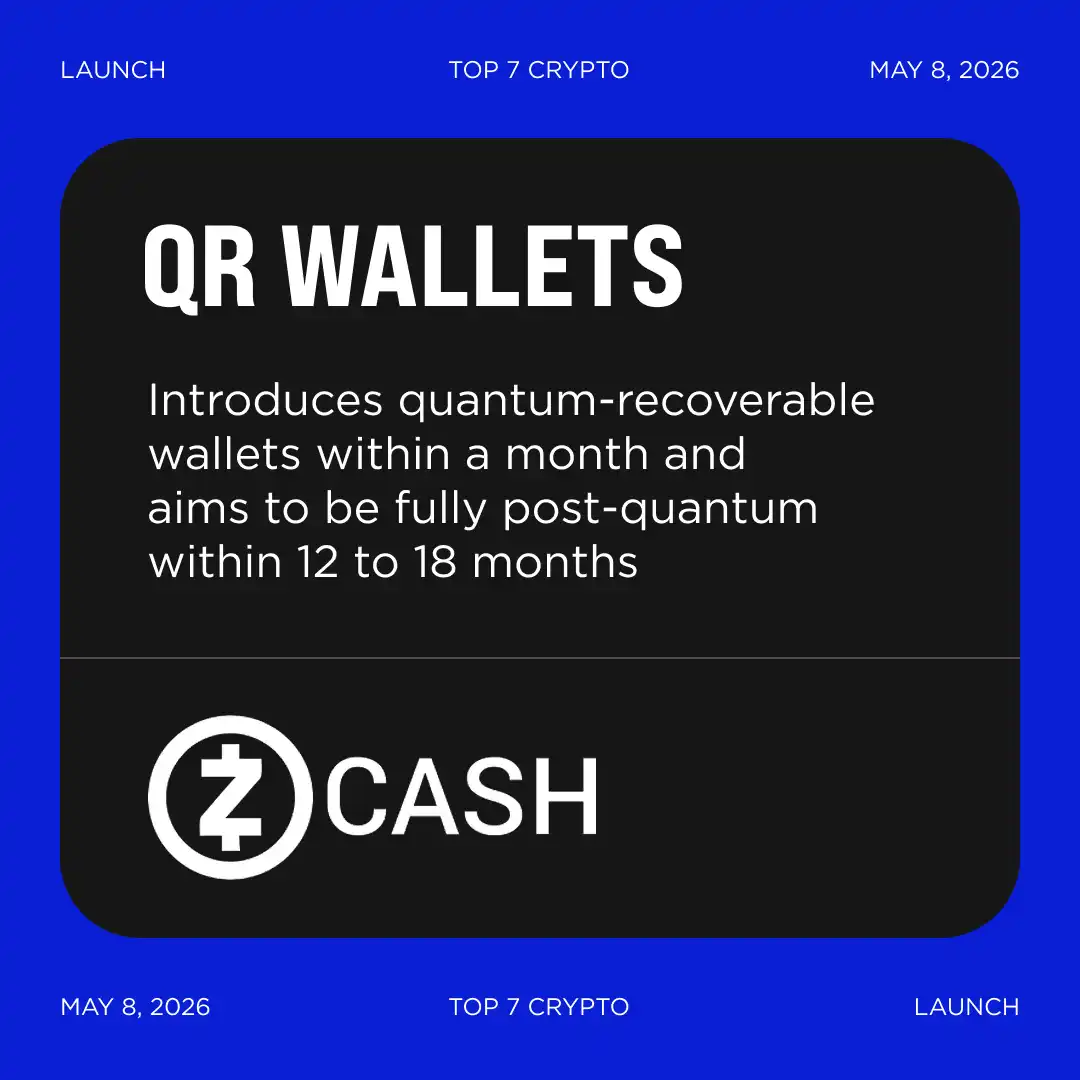
At a dedicated privacy panel on May 8th, Zcash Open Development Lab founder and CEO Josh Swihart announced that quantum-recoverable wallets will launch within a month, and Zcash plans to achieve full post-quantum security within 12 to 18 months.
The logic here is: the ECDSA signature algorithm used by most cryptocurrencies today will become vulnerable once quantum computing matures. A more dangerous scenario is the "harvest now, decrypt later" strategy, where adversaries record encrypted data now and decrypt it later when quantum hardware is available. For a privacy coin whose entire value proposition is built on the confidentiality of transaction data, this is an existential threat.

Swihart also disclosed that since the ECC wallet integrated Near Intents cross-chain swap functionality last October, $6-7 billion has flowed in and out through this channel, primarily swapping for dollars and USDC. Zcash's shielded pool currently holds about 30% of the circulating ZEC supply, the highest level in history.

Institutional Entry Signals: Grayscale ETF, Robinhood Listing, Foundry Mining

Beyond Multicoin's heavy position, ZEC is accumulating more institutional-level catalysts.

Grayscale has filed for a ZEC spot ETF, still awaiting an SEC ruling. Grayscale has previously stated publicly that ZEC's upside potential is closely tied to the "repricing of financial privacy in an AI-driven world."

Robinhood recently listed ZEC for trading, opening up a retail gateway. Foundry (under Digital Currency Group) announced the launch of large-scale ZEC mining pool operations. This is the second asset supported by the company after Bitcoin, adding credibility to ZEC's mining security and institutional acceptance.

On the on-chain data front, Santiment data shows retail investor interest in privacy coins is rising, driven by tighter exchange compliance rules and growing data tracking concerns. In a March report, CoinDesk Research stated that Zcash has reached a "encryption supremacy" tipping point, driven by the convergence of three forces: AI tools can de-anonymize users on transparent blockchains by tracking transaction patterns, the threat of quantum computing to current crypto wallet security is becoming more real, and quarterly trading volume has surpassed $100 billion.

However, The Team That Built Zcash Has All Left

The catalysts above paint a bullish picture, but one fact shouldn't be ignored: the core team that built Zcash is gone.

In January of this year, Electric Coin Company (ECC) CEO Josh Swihart and the entire ECC team resigned collectively, citing governance conflicts with the Bootstrap Project board and characterizing the departure as "constructive discharge." ECC was the core organization that created and maintained Zcash. The team's departure means the chain is now operating without its original engineering team.

Therefore, what's more apparent with ZEC currently is that the narrative hype is far outpacing the fundamentals. KOL calls, fund heavy positions, consecutive Consensus panels—these are stories of capital and attention, but on-chain public transaction volume hasn't grown much.

Because transactions in the shielded pool are, by design, invisible, you can't use on-chain data to distinguish between "real adoption" and "speculative capital sitting idle."

But lacking fundamentals is the norm for most coins. In this wave of "old guard coin" revival, ZEC is undoubtedly one of the brightest stars, but it likely won't be the last.


Related Questions

QAccording to the article, what is the main reason behind Multicoin Capital's significant investment in ZEC?

AMulticoin Capital's main investment thesis is that while Bitcoin resists censorship, it does not protect against government confiscation via mechanisms like wealth taxes on transparent holdings. They believe ZEC, with its shielded pool using zero-knowledge proofs, offers a truly private, censorship-resistant, and confiscation-resistant asset, which they see as having clear product-market fit with accelerating demand.

QWhat ambitious price target for ZEC was mentioned by BitMEX co-founder Arthur Hayes?

AArthur Hayes stated that the long-term price target for ZEC should be "10% of Bitcoin's price." With Bitcoin around $80,000, this would imply a ZEC target price of approximately $8,000.

QWhat key technical development for ZEC was announced at Consensus Miami?

AAt Consensus Miami, it was announced that quantum-recoverable wallets for ZEC will launch within a month, with the goal of achieving full post-quantum security for the Zcash network within 12 to 18 months to address the threat posed by future quantum computers.

QWhat major organizational change has recently occurred concerning Zcash's core development team?

AThe entire team of the Electric Coin Company (ECC), the core organization that created and maintained Zcash, including its CEO Josh Swihart, resigned in January. This departure was due to governance conflicts with the Bootstrap Project board, leaving the chain to operate without its original engineering team.

QBesides Multicoin Capital's investment, what are two other institutional-level catalysts mentioned for ZEC?

ATwo other institutional catalysts mentioned are: 1) Grayscale has filed for a ZEC spot ETF, which is pending SEC approval, and 2) Robinhood has listed ZEC for trading, providing a major retail access point.

Related Reads

A Nation Blocks Chips, a Giant Buys a Nuclear Power Plant: Why It's Time to Seriously Consider DeAI

**Title: Great Powers Blockade Chips, Giants Buy Nuclear Plants: Why It's Time to Seriously Consider DeAI** In May 2026, the US closed loopholes for Chinese firms to acquire advanced NVIDIA chips via overseas subsidiaries. That same month, Kenya halted a $1B geothermal data center project involving Microsoft, fearing its immense energy consumption. Meanwhile, Huawei announced mass production of its Ascend AI chip. These disparate events underscore a new reality: the competition for computing power ("compute") has escalated beyond the tech industry, becoming a geopolitical and infrastructural battleground. A new era of oligopoly is forming, with control over the AI stack—from GPU chips (NVIDIA) and cloud platforms (AWS, Azure, Google Cloud) to foundational models (OpenAI, Anthropic)—concentrating in a few Western "AI Octopus" corporations. This centralization creates systemic risks: pricing power and platform lock-in for users, infrastructure fragility, and a widening "compute divide" that threatens to marginalize nations without independent AI capacity. An "AI Iron Curtain" is deepening through export controls. In response, some nations like Saudi Arabia and the UAE are investing heavily to buy compute power, aiming to transition from oil to AI economies. The EU seeks to triple its compute capacity by 2030 to reduce dependency. However, the spending gap is vast, with four US tech giants alone planning ~$750B in AI capex for 2026. The race is increasingly constrained by energy, with AI tasks consuming up to 1000x more power than web searches, pushing firms to even acquire nuclear plants. This landscape is fueling interest in Decentralized AI (DeAI). It proposes a third way: using open protocols to coordinate a global network of idle GPUs, independent developers, and data centers, creating an AI infrastructure without a single controlling entity. Leveraging blockchain and cryptographic verification, DeAI aims to break market concentration, disperse energy demands, reduce geopolitical dependencies, and enhance transparency. While still nascent in performance and stability, DeAI's core promise is not immediate superiority but providing a crucial alternative architecture to resist monopoly, censorship, and centralized power. As specialized AI hardware costs fall and open-source models flourish, the window to build this foundation is open. The very existence of such competition serves as a vital check against the inevitable abuse of concentrated power.

marsbit11m ago

A Nation Blocks Chips, a Giant Buys a Nuclear Power Plant: Why It's Time to Seriously Consider DeAI

marsbit11m ago

Outpoll Review: A Prediction Market Platform Built for Active Traders

Outpoll Review: A Prediction Market Platform Built for Active Traders In recent years, prediction markets have grown from a niche sector to a mainstream arena, attracting billions in trading volume and institutional capital. However, the user experience and tools for traders have not kept pace. Outpoll, a new global prediction market platform, aims to fill this gap by providing enhanced trading infrastructure for active and professional traders. Built on standard prediction market principles, Outpoll allows users to trade on the outcome of specific events. It uses fully collateralized contracts with USDC settlement, charges a competitive 0.1% fee per trade, and provides clear settlement rules upfront to minimize disputes. A key focus for Outpoll is its professional-grade trading tools. The platform supports limit and market orders, as well as take-profit and stop-loss orders for open positions—features uncommon in prediction markets. For automated trading, Outpoll offers comprehensive REST and WebSocket APIs, enabling portfolio management, price arbitrage, and integration with existing tools. The platform also features a creator-led market model, where approved experts and community leaders can create and manage markets for niche topics under platform supervision. Its integrated interface combines news feeds directly with trading functions, allowing users to monitor events and manage positions seamlessly. Outpoll launched with a native Android app (available on Google Play) and plans an iOS version later this year. In summary, Outpoll distinguishes itself with trader-focused tools, practical APIs, transparent and collateralized markets, integrated news, and an expanding creator program. For active traders, its advanced order types and API access alone make it a platform worth watching. Outpoll is now globally accessible via outpoll.com and Google Play.

marsbit19m ago

Outpoll Review: A Prediction Market Platform Built for Active Traders

marsbit19m ago

Bitwise: Crypto Becomes a Contrarian Investment, Three Logics to Understand the Current Market

**Summary** Matt Hougan, Bitwise's CIO, analyzes the current crypto market through three key lenses, arguing it has shifted from a momentum-driven to a contrarian investment. **1) Crypto Becomes a Contrarian Play:** The market is weak, with major assets like Bitcoin and Ethereum down significantly. Capital has moved to hot sectors like AI, leaving crypto as an "unloved" asset class. This transforms crypto investing from trend-following to a test of patience and fundamental analysis. Investors now favor projects with solid fundamentals (e.g., Hyperliquid) over speculative ones. **2) Regulatory Overhang:** The uncertain fate of the U.S. CLARITY Act, a major crypto regulatory framework, is a key headwind. With its passage in 2024 seen as far from guaranteed (estimates range from 30-55%), institutional capital remains on the sidelines, choosing less risky alternatives like AI stocks. The market needs clarity—whether the bill passes or fails—more than any specific outcome to move decisively. **3) Capital Rotates to New Fundamentals:** This cycle differs from past bear markets where money fled to Bitcoin. Now, capital seeks smaller assets with strong use cases. While major cryptos fell in May 2024, tokens like Hyperliquid (+72%), Zcash (+50%), and XLM (+44%) rallied on their specific fundamentals. This rotation confirms the new contrarian, fundamentals-driven logic and signals the bear market may be in its later stages. **Conclusion:** Short-term pressure persists due to regulatory uncertainty and competition from AI narratives. Investing in crypto now requires a contrarian mindset—acting against the crowd and focusing on fundamental value. Patience and targeting high-quality projects based on their merits are essential for capturing long-term gains.

marsbit1h ago

Bitwise: Crypto Becomes a Contrarian Investment, Three Logics to Understand the Current Market

marsbit1h ago

ChatGPT Might Be Disappearing Soon

OpenAI announced at its "Intelligence at Work" event that its coding assistant, Codex, will be fully integrated into the ChatGPT app within weeks. This move marks a strategic shift from a conversational AI (Chat) towards a unified "agentic" platform capable of execution. Codex, originally launched to compete with Anthropic's Claude Code, has grown rapidly to 5 million weekly active users, with 20% being non-developers like analysts and designers. Its enterprise revenue now constitutes 40% of OpenAI's total. The integration is the first step in creating a super-app combining ChatGPT (interface), Codex (execution engine), and the Atlas browser (web access). OpenAI also unveiled new Codex features: specialized Agent plugins for six professional roles, an "Annotations" tool for direct document editing, and a "Sites" function to turn work into shareable web apps. Internally, this reflects a power shift; the Codex team now leads core product strategy. While the ChatGPT brand remains for its vast user base, the platform's future is focused on autonomous agents that perform tasks, not just chat. The article notes that competition with Claude Code pushed OpenAI's development, with Codex competing on cost-effectiveness and accessibility rather than raw coding quality. It concludes that the essence of "ChatGPT" is evolving from a chatbot into an AI agent platform, with the name potentially becoming a legacy symbol of its original function.

marsbit1h ago

ChatGPT Might Be Disappearing Soon

marsbit1h ago

Trading

Spot
Futures

Hot Articles

How to Buy ZEC

Welcome to HTX.com! We've made purchasing Zcash (ZEC) simple and convenient. Follow our step-by-step guide to embark on your crypto journey.Step 1: Create Your HTX AccountUse your email or phone number to sign up for a free account on HTX. Experience a hassle-free registration journey and unlock all features.Get My AccountStep 2: Go to Buy Crypto and Choose Your Payment MethodCredit/Debit Card: Use your Visa or Mastercard to buy Zcash (ZEC) instantly.Balance: Use funds from your HTX account balance to trade seamlessly.Third Parties: We've added popular payment methods such as Google Pay and Apple Pay to enhance convenience.P2P: Trade directly with other users on HTX.Over-the-Counter (OTC): We offer tailor-made services and competitive exchange rates for traders.Step 3: Store Your Zcash (ZEC)After purchasing your Zcash (ZEC), store it in your HTX account. Alternatively, you can send it elsewhere via blockchain transfer or use it to trade other cryptocurrencies.Step 4: Trade Zcash (ZEC)Easily trade Zcash (ZEC) on HTX's spot market. Simply access your account, select your trading pair, execute your trades, and monitor in real-time. We offer a user-friendly experience for both beginners and seasoned traders.

3.2k Total ViewsPublished 2024.03.29Updated 2026.06.02

How to Buy ZEC

Discussions

Welcome to the HTX Community. Here, you can stay informed about the latest platform developments and gain access to professional market insights. Users' opinions on the price of ZEC (ZEC) are presented below.

活动图片












