$272B in Bitcoin ETF Outflows Force Crash Below $100B as $HYPER Pumps

bitcoinistPublished on 2026-02-04Last updated on 2026-02-04

Abstract

Massive outflows of $272 billion from Bitcoin ETFs have driven total assets below $100 billion, signaling institutional pullback. However, on-chain data suggests this reflects a rotation rather than capital flight, as smart money moves from passive products into high-yield Layer 2 protocols. Bitcoin Hyper ($HYPER) is highlighted as a key beneficiary, leveraging the Solana Virtual Machine to address Bitcoin's scalability issues with high-speed execution and a decentralized bridge. The project has raised over $31.2 million in its presale, with significant whale accumulation noted, indicating strong interest in programmable Bitcoin infrastructure amid ETF volatility.

Institutional capitulation has hit the market hard. After weeks of chop, spot Bitcoin ETFs recorded a staggering $272 billion in volume-adjusted outflows.

That massive exit dragged total Assets Under Management (AUM) below the critical $100 billion mark, a psychological blow many didn’t see coming.

Is capital actually leaving? Not quite. While retail investors panic-sell on the headlines, on-chain data reveals a different story: rotation. Smart money is moving downstream, dumping passive ‘paper Bitcoin’ products to chase yields in the Layer 2 sector.

The logic is brutal, but it makes sense. Why hold stagnant assets in a bleeding ETF when infrastructure plays are heating up? As legacy pipes clog, liquidity is flooding into protocols solving Bitcoin’s oldest headache: scalability.

That’s where Bitcoin Hyper ($HYPER) steps in, using the Solana Virtual Machine (SVM) to bring high-speed execution to the Bitcoin network.

Buy $HYPER here now.

Solving The Scalability Dilemma With SVM Integration

The current flush exposed (again) the limits of Bitcoin’s base layer. When volatility hits, the network congests. Fees skyrocket. L1 becomes unusable for anything but settlement. Bitcoin Hyper ($HYPER) fixes that friction.

By integrating the Solana Virtual Machine (SVM) as a Layer 2 environment, the protocol delivers sub-second finality while keeping Mainnet security.

It’s not just a speed upgrade; it’s an architectural overhaul. Traditional Bitcoin L2s often struggle with fragmented liquidity or clunky bridging. (Sound familiar?) Bitcoin Hyper’s Decentralized Canonical Bridge creates a seamless pipeline for BTC transfers, letting users deploy capital into DeFi and gaming instantly.
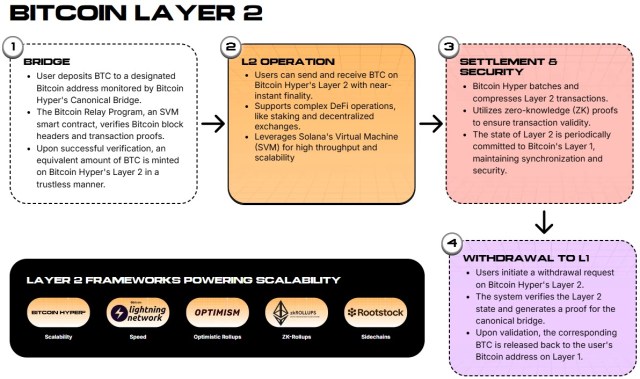
Traders are watching. According to Etherscan records, 3 whale wallets accumulated $1M recently. The largest transaction, $500K, hit the chain on Jan 15, 2026. This accumulation during a drawdown suggests sophisticated actors are positioning for the ‘Programmable Bitcoin’ narrative before the retail herd returns.

For developers, the SVM environment means building with familiar Rust-based SDKs, but with Bitcoin’s security guarantees. It’s the liquidity of the world’s largest asset combined with the speed of the fastest chain.

Check out the Bitcoin Hyper presale.

Smart Money Rotates Into High-Yield Layer 2 Protocols

While ETF investors lick their wounds, the Bitcoin Hyper presale is showing strength. According to the official site, the project has raised over $31.2M, with tokens currently priced at $0.0136751.
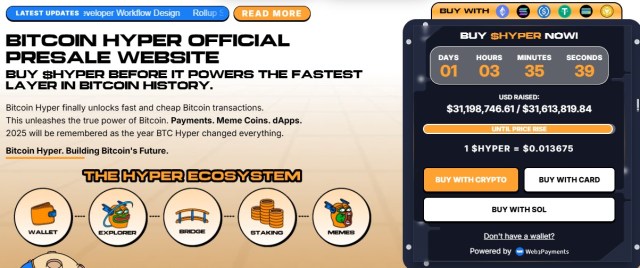
That divergence highlights a decoupling. Institutional inflows are often lagging indicators, they react to what just happened. Presale participation? That’s usually a leading indicator of where liquidity flows next. The appeal is twofold: potential token appreciation and yield generation.

Unlike holding $BTC in cold storage, Bitcoin Hyper offers immediate staking after the Token Generation Event (TGE). Stakers face a 7-day vesting period, a mechanism designed to stop mercenary dumping and align incentives. Plus, the protocol rewards governance participation, turning holders into active stakeholders rather than passive speculators.

The risk here is obvious: L2s are competitive, and execution is everything. But the sheer volume of capital raised suggests the market is betting big on the SVM-on-Bitcoin thesis. As the dust settles on the ETF crash, projects building essential infrastructure are likely to capture the rebound.

Buy your $HYPER today.

This article is for informational purposes only and does not constitute financial advice. Cryptocurrencies are volatile; presale projects carry high risk. Always perform your own due diligence before investing.


Trending Cryptos

Related Questions

QWhat was the total amount of outflows from spot Bitcoin ETFs that caused the AUM to drop below $100 billion?

A$272 billion in volume-adjusted outflows.

QAccording to the article, what is the primary reason 'smart money' is moving away from Bitcoin ETFs?

AThey are rotating capital to chase yields in the Layer 2 sector, dumping passive 'paper Bitcoin' products for higher returns.

QWhat technology does Bitcoin Hyper ($HYPER) use to solve Bitcoin's scalability issues?

AIt uses the Solana Virtual Machine (SVM) as a Layer 2 environment to deliver sub-second finality.

QHow much has the Bitcoin Hyper ($HYPER) presale raised, according to the official site?

AOver $31.2 million.

QWhat is the purpose of the 7-day vesting period for stakers in the Bitcoin Hyper protocol?

AIt is a mechanism designed to stop mercenary dumping and align incentives among stakeholders.

Related Reads

Global Stock Market's Storm Center: South Korea's Stock Market De-leveraging Is Largely Complete

Storm's Eye: South Korean Market De-leveraging Nears Completion The recent sharp correction in South Korean equities, with the KOSPI index dropping 32% from its June high, has been a key trigger for global tech stock volatility. The core driver was not a fundamental shift but a forced de-leveraging process within the market's unique structure, which is now largely complete. Two main leverage channels amplified the sell-off: 1. **Leveraged ETFs:** Their size, proportionally four times larger than in the U.S., peaked near $50 billion. Their mandatory daily rebalancing mechanism created a vicious cycle of "price drop → forced selling → further drop." Approximately 75% of this excess has been unwound, shrinking to $26 billion, with regulatory curbs now blocking new inflows. 2. **Hedge Fund Leverage:** Using swaps to magnify exposure, hedge funds saw their net long positioning fall by over 50% from peak levels. The most intense phase of this institutional de-leveraging is over. In contrast, **retail margin debt** poses minimal systemic risk. At 0.5% of market cap, it is far lower than in the U.S. or China, lacks automatic triggers, and is concentrated in smaller stocks. The conclusion: the high-leverage structures most prone to "chain-reaction selling" have been substantially cleared. The market is transitioning from a liquidity-driven crash to one priced more on fundamentals. The article argues that the AI trend—centered on Korean memory chips—remains intact. This episode represents a painful but necessary clearing of crowded trades, not the end of the AI revolution. For investors, the key question is conviction in the long-term AI direction; if the trend is real, current volatility is a cost of entry, not a terminal risk.

链捕手1h ago

Global Stock Market's Storm Center: South Korea's Stock Market De-leveraging Is Largely Complete

链捕手1h ago

The Eternal Fragments of Money: Third-Party Payment Has No First Principle

"The Enduring Fragments of Money: Third-Party Payments Lack a First Principle" Stripe is reportedly attempting to acquire PayPal, marking a significant shift reminiscent of PayPal's merger with the original X.com 30 years ago. The article analyzes Stripe's strategic challenges and the broader payments industry landscape. Despite its initial success with a developer-friendly API model, Stripe missed its optimal IPO window during the pandemic and has since seen its valuation decline. Its attempts to expand through acquisitions and new ventures, particularly in stablecoins (like its OUSD project) and Agent-focused payments (ACP/MPP protocols), have faced headwinds. The author argues that the payment industry remains highly fragmented and is ultimately an adjunct to the traditional banking system. This structure limits the potential for any single player, including Stripe, to achieve complete dominance. While stablecoins and the future rise of autonomous Agent economies present potential growth avenues, they are not yet mainstream and still require integration with the existing financial system. For now, Agent-based transactions are largely used for speculative "volume boosting" rather than substantive business applications. Stripe's current move to acquire PayPal is seen as an attempt to bolster its weak consumer-facing (C-side) business after its stablecoin-focused strategies faltered. Meanwhile, PayPal is described as structurally outdated, unable to revive itself through new products like Venmo or PYUSD. The future of payments may lie not in payments themselves but in value-added services like more efficient settlement networks. The author suggests that companies like Stripe and Circle, which are building their own blockchains (Tempo, Arc) and stablecoins, are positioning themselves to eventually profit from high-efficiency settlement systems. These new networks could potentially bypass some traditional banking layers. In conclusion, the article posits that third-party payment is a perpetually fragmented battlefield where scale alone cannot ensure victory. Players must find new models, focusing on efficiency to compete with the entrenched banking system. Stripe's acquisition of PayPal represents a bet on this uncertain future.

链捕手1h ago

The Eternal Fragments of Money: Third-Party Payment Has No First Principle

链捕手1h ago

Trading

Spot

Hot Articles

What is $BITCOIN

DIGITAL GOLD ($BITCOIN): A Comprehensive Analysis Introduction to DIGITAL GOLD ($BITCOIN) DIGITAL GOLD ($BITCOIN) is a blockchain-based project operating on the Solana network, which aims to combine the characteristics of traditional precious metals with the innovation of decentralized technologies. While it shares a name with Bitcoin, often referred to as “digital gold” due to its perception as a store of value, DIGITAL GOLD is a separate token designed to create a unique ecosystem within the Web3 landscape. Its goal is to position itself as a viable alternative digital asset, although specifics regarding its applications and functionalities are still developing. What is DIGITAL GOLD ($BITCOIN)? DIGITAL GOLD ($BITCOIN) is a cryptocurrency token explicitly designed for use on the Solana blockchain. In contrast to Bitcoin, which provides a widely recognized value storage role, this token appears to focus on broader applications and characteristics. Notable aspects include: Blockchain Infrastructure: The token is built on the Solana blockchain, known for its capacity to handle high-speed and low-cost transactions. Supply Dynamics: DIGITAL GOLD has a maximum supply capped at 100 quadrillion tokens (100P $BITCOIN), although details regarding its circulating supply are currently undisclosed. Utility: While precise functionalities are not explicitly outlined, there are indications that the token could be utilized for various applications, potentially involving decentralized applications (dApps) or asset tokenization strategies. Who is the Creator of DIGITAL GOLD ($BITCOIN)? At present, the identity of the creators and development team behind DIGITAL GOLD ($BITCOIN) remains unknown. This situation is typical among many innovative projects within the blockchain space, particularly those aligning with decentralized finance and meme coin phenomena. While such anonymity may foster a community-driven culture, it intensifies concerns about governance and accountability. Who are the Investors of DIGITAL GOLD ($BITCOIN)? The available information indicates that DIGITAL GOLD ($BITCOIN) does not have any known institutional backers or prominent venture capital investments. The project seems to operate on a peer-to-peer model focused on community support and adoption rather than traditional funding routes. Its activity and liquidity are primarily situated on decentralized exchanges (DEXs), such as PumpSwap, rather than established centralized trading platforms, further highlighting its grassroots approach. How DIGITAL GOLD ($BITCOIN) Works The operational mechanics of DIGITAL GOLD ($BITCOIN) can be elaborated on based on its blockchain design and network attributes: Consensus Mechanism: By leveraging Solana’s unique proof-of-history (PoH) combined with a proof-of-stake (PoS) model, the project ensures efficient transaction validation contributing to the network's high performance. Tokenomics: While specific deflationary mechanisms have not been extensively detailed, the vast maximum token supply implies that it may cater to microtransactions or niche use cases that are still to be defined. Interoperability: There exists the potential for integration with Solana’s broader ecosystem, including various decentralized finance (DeFi) platforms. However, the details regarding specific integrations remain unspecified. Timeline of Key Events Here is a timeline that highlights significant milestones concerning DIGITAL GOLD ($BITCOIN): 2023: The initial deployment of the token occurs on the Solana blockchain, marked by its contract address. 2024: DIGITAL GOLD gains visibility as it becomes available for trading on decentralized exchanges like PumpSwap, allowing users to trade it against SOL. 2025: The project witnesses sporadic trading activity and potential interest in community-led engagements, although no noteworthy partnerships or technical advancements have been documented as of yet. Critical Analysis Strengths Scalability: The underlying Solana infrastructure supports high transaction volumes, which could enhance the utility of $BITCOIN in various transaction scenarios. Accessibility: The potential low trading price per token could attract retail investors, facilitating wider participation due to fractional ownership opportunities. Risks Lack of Transparency: The absence of publicly known backers, developers, or an audit process may yield skepticism regarding the project's sustainability and trustworthiness. Market Volatility: The trading activity is heavily reliant on speculative behavior, which can result in significant price volatility and uncertainty for investors. Conclusion DIGITAL GOLD ($BITCOIN) emerges as an intriguing yet ambiguous project within the rapidly evolving Solana ecosystem. While it attempts to leverage the “digital gold” narrative, its departure from Bitcoin's established role as a store of value underscores the need for a clearer differentiation of its intended utility and governance structure. Future acceptance and adoption will likely depend on addressing the current opacity and defining its operational and economic strategies more explicitly. Note: This report encompasses synthesised information available as of October 2023, and developments may have transpired beyond the research period.

963 Total ViewsPublished 2025.05.13Updated 2025.05.13

What is $BITCOIN

Discussions

Welcome to the HTX Community. Here, you can stay informed about the latest platform developments and gain access to professional market insights. Users' opinions on the price of BTC (BTC) are presented below.

活动图片