首席执行官Paolo Ardoino回应Celsius对Tether的诉讼,称其为“无根据的动摇”

币界网Published on 2024-08-10Last updated on 2024-08-10

币界网报道:

在申请破产两年后,Celsius正试图通过起诉Tether来追回一些资金,指控Tether错误清算了价值超过8亿美元的BTC(按2022年年中的价格计算)。

这家稳定币发行商迅速作出回应,称这起诉讼是“毫无根据的勒索”,并承诺将争取胜利。

摄氏度追随系绳

该诉讼于8月9日在纽约南区美国破产法院提起,指控Tether两年前违反了与Celsius的合同。这两家实体于2020年签订了一项贷款协议,该协议允许这家曾经著名的加密货币贷款机构通过以比特币(BTC)的形式提供抵押品,以低利率借入USDT和EURT。

在2022年年中熊市的高峰期,BTC的价格大幅下跌,Celsius的抵押品面临清算风险,这就是Tether要求更多的原因。根据诉讼文件,该贷款人在“优先充值转让”和“优先交叉抵押转让”中额外转让了16700多个BTC,这“不公平地”改善了Tether作为债权人的地位。

根据两家公司之间的代币协议,稳定币发行商于2022年6月13日要求提供额外抵押品,Celsius“有权在10小时内存入”资金。然而,该文件声称Tether没有等到十个小时的最后期限。相反,该公司“继续不当使用39542.42比特币,即Celsius发布的全部抵押品,使用抵押的比特币全额覆盖其风险敞口,但摧毁了Celsius在抵押品中的剩余权益。”

“这一最终的优先转让(定义见下文,“优先申请转让”)价值超过20亿美元(按今天的美元计算),也改善了Tether的地位,因为大部分假定的抵押品是可以避免的,并且由优先充值转让组成,这些转让与整个发布的比特币混合在一起。”阅读文件。

Tether回应

就在诉讼提起一天后,Tether及其首席执行官Paolo Ardoino发表了声明作为回应。这位首席执行官解释说,Tether“向提供比特币超额抵押的选定客户提供USDT。”如果抵押品的价格低于追加保证金的价格,那么借款人需要发送更多的抵押品。如果他们不这样做,Tether“有权清算客户的头寸。”

与Celsius的上述说法不同,Ardoino表示,一旦比特币价格在2022年年中下跌,贷款人“指示Tether出售Tether作为抵押品持有的比特币”。稳定币发行商当时解释说,它清算了BTC,并设法“将超额部分退还给摄氏度”

“现在,两年多过去了,这起毫无根据的诉讼试图声称我们应该归还为弥补Celsius头寸而出售的比特币。索赔人的申请中有很多缺陷,我们对我们的合同和行动的可靠性非常有信心。”——Ardoino继续说道。

Tether的声明进一步将这起诉讼描述为“毫无根据的改组”,“除了参与此案的律师、银行家和顾问外,没有人会受益”

无论如何,Ardoino向Tether代币持有者保证,即使“在最遥远的情况下”,这种“毫无根据的诉讼会取得进展”,他们也不会受到影响,因为该公司拥有近120亿美元的股权。
Related Reads

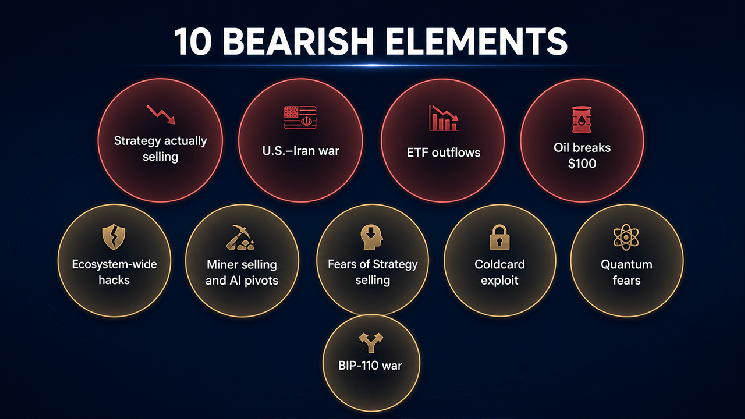
Bitcoin Withstood 10 Bearish Blows in 2026, Yet Experienced Its Mildest Bear Market

Bitcoin, the leading cryptocurrency by market cap, peaked above $126,000 in early October before entering a prolonged decline. By August, it was mainly trading between $63,000 and $65,400, inflicting losses on late buyers but resulting in what is, historically for Bitcoin, an unusually shallow bear market—down about 49% from its peak, compared to typical 75-80% plunges. Throughout 2026, Bitcoin faced multiple headwinds yet demonstrated notable resilience. Geopolitical tensions in the Middle East and volatile oil prices revived inflation concerns but failed to trigger the panic-driven sell-offs seen in prior cycles. A significant psychological blow came from corporate seller MicroStrategy, a longtime accumulator, which began strategic sales to bolster its cash position, reducing its holdings. U.S. spot Bitcoin ETFs also faced sustained outflows, though a late-week inflow hinted at potential relief. Pressure also came from within the ecosystem. A contentious blockchain proposal, BIP-110, failed after a minority chain stalled. Miners, facing tighter economics, sold reserves and pivoted infrastructure toward AI. A major security breach involving Coldcard hardware wallets saw an estimated 2,000 BTC stolen, shaking confidence in self-custody. Long-term threats like quantum computing resurfaced in discussions. Despite this confluence of corporate selling, ETF outflows, miner capitulation, geopolitical shocks, internal conflict, and security issues—any one of which could historically cause sharp declines—Bitcoin stubbornly held above a key $60,000 support level. Deeper market liquidity, regulated products, and long-term holders appear to be absorbing selling pressure that once would have caused deeper crashes. This resilience suggests a maturing market structure, though risks remain. Another shock could still push Bitcoin toward $50,000. For now, its 49% decline, severe for most assets, is relatively moderate by Bitcoin's own volatile standards. The remaining months of 2026 will test whether $60,000 is a durable floor or merely the next major line of defense.

cryptonews.ru1m ago

Bitcoin Withstood 10 Bearish Blows in 2026, Yet Experienced Its Mildest Bear Market

cryptonews.ru1m ago

Korean Financial Supervisory Service to Revise Compensation System for Phishing Losses Involving Crypto Transfer

The South Korean Financial Supervisory Service (FSS) is overhauling its system for reimbursing victims of voice phishing scams. Starting in October, the new system will be able to calculate and compensate losses held in cryptocurrency, not just in Korean won. Previously, the reimbursement system assumed stolen funds were in won, failing to fully compensate victims whose money was converted into digital assets. The upgraded software will apply a recovery ratio to determine the specific type and quantity of tokens owed to each victim, based on the token's value at the time the payment was frozen. It will also better track cases where fraud proceeds are split across multiple accounts and later consolidated. These changes follow March 31st amendments to the Act on Reimbursement of Losses from Telecommunications Fraud, which now classify virtual assets as both damaged and recoverable property. Major Korean crypto exchanges like Upbit and Bithumb must now comply with the same anti-phishing obligations as banks, including verifying transaction purposes and tracking suspicious funds. The revised law takes effect October 1st, with the FSS allocating a three-month period and a budget of 118.53 million won for system implementation and troubleshooting. The update addresses schemes where stolen money is intentionally laundered through cryptocurrency for overseas transfer. Notably, telecom fraud losses in South Korea rose 14.1% to 433.8 billion won in 2025, a five-year high.

cryptonews.ru12m ago

Korean Financial Supervisory Service to Revise Compensation System for Phishing Losses Involving Crypto Transfer

cryptonews.ru12m ago

Trading

Spot
活动图片