usual.money :RWA去中心化稳定币

Odaily星球日报Published on 2024-08-10Last updated on 2024-08-10

Abstract

稳定币是加密货币行业的基础,主要用于大规模支付和推动行业普及。截至2024年7月30日,稳定币总市值为1680亿美元,其中USDT和USDC占约90%。Tether和Circle在2023年创造了超过100亿美元的收入。去中心化稳定币项目不断涌现,旨在打破这种垄断。usual.money引入美国国库券作为抵押物,结合以太坊智能合约,提供透明度和安全性。Usual Labs在2024年4月完成700万美元融资,并于7月宣布启动主网。

Why usual?

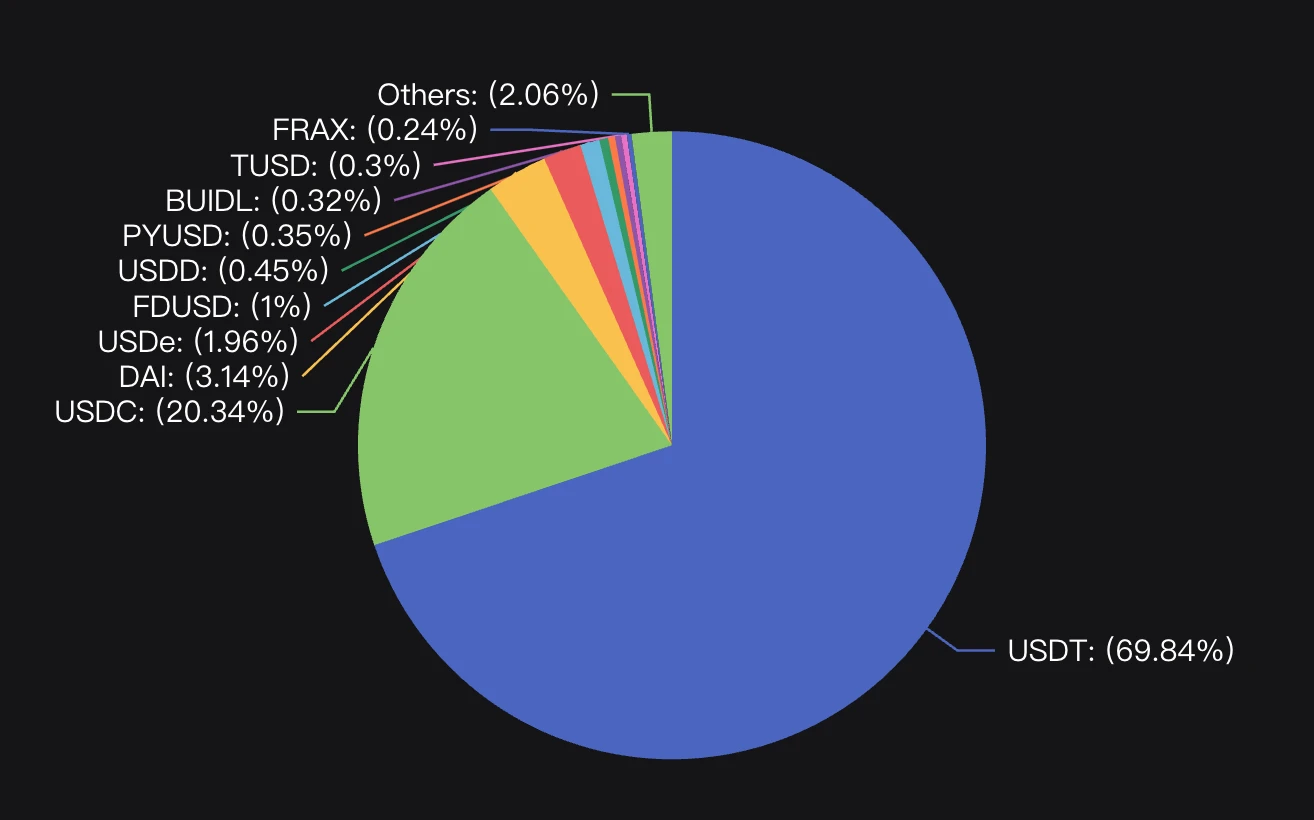
  • 稳定币可以说是加密货币行业的根基,人们需要稳定币来作为大规模支付的用例,同时稳定币也在行业的 Mass Adoption 中发挥着关键作用。截至 2024 年 7 月 30 日,稳定币总市值为 $ 168 B,而从下面这张稳定币市值概览图中可以看出,两大中心化稳定币,USDT 和 USDC 加起来占据了稳定币总市值的约 90% 。
usual.money :RWA去中心化稳定币

图源 Defillama, 2024 年 7 月 30 日数据

  • 稳定币是 Crypto 的印钞机,两大巨头 Tether 和 Circle 在 2023 年创造了超过 100 亿美元的收入,估值超过 2000 亿美元。Tether 在 2024 年 Q1,更是创纪录地获利 45.2 亿美元。如此巨大的获利垄断与加密精神显然相悖,因此各类去中心化稳定币项目源源不断。根据抵押额度,去中心化稳定币可以分为以 MakerDAO(DAI)为代表的超额抵押,以 Ethena(USDe)为代表的等额抵押,以及不足额抵押(目前没有跑出大市值项目)。

  • 去中心化稳定币有过不少成功的项目,然而这些项目的抵押物普遍是加密资产,因此需要设计一套精密的机制来对抗币价的波动。而如果引入 RWA(现实世界资产),这个问题将迎刃而解。RWA 正在增长且方兴未艾, 2023 年区块链上的 RWA 增长超过 800% 。usual.money 引入了美国国库券作为抵押物,同时基于以太坊智能合约提供透明度和安全性,将利润归还给社区和贡献者。这一设计可以说是 tether-on-chain,兼具了中心化稳定币协议的 1: 1 RWA 特性以及链上的安全与透明。

usual.money :RWA去中心化稳定币

图源 https://docs.usual.money/start-here/why-usual

背景

  • 2024 年 4 月 17 日,Usual Labs 完成 700 万美元融资,IOSG 和 Kraken Ventures 领投,GSR、Mantle、Starkware、Flowdesk、Avid 3、Bing Ventures、Breed、Hypersphere、Kima Ventures、Psalion、Public Works 和 X Ventures 等参投。

  • 创始人 Pierre Person 曾是法国政治家、国民议会议员,最近还担任总统政党副主席,带头推动了该国的加密资产立法。

  • 7 月 10 日,Usual 宣布其主网启动。截至 8 月 6 日,项目 TVL 为 $ 146 M。

  • 根据 Coinmarketcap 8 月 6 日的数据,目前 USD 0 接近 95% 的交易都在 Curve 的 USD 0/USDC 池子,有着 $ 11.33 M 的流动性。同时,在 Maverick Protocol 上有 Aave 的稳定币 GHO 和 USD 0 的 LP,目前 TVL 为 $ 100 k。

  • 目前 USD 0 在借贷项目 Morpho 上有由 MEV Capital 策划的金库,USD 0 USD 0++/USDC 和 USD 0++/USDC 的流动性池,以 86% 的 LLTV(Liquidation Loan-to-Value,清算贷款价值比)有着总共接近 $ 30 M 的抵押。通过这个池子可以同时获得 Usual 的 Pills 奖励(详见文末交互章节)以及 Morpho 代币奖励。

  • $USUAL TGE 预计在 2024 年 Q4,其中 90% 的 USUAL 代币分配给社区。

机制分析

抵押与铸造

  • $USD 0 是首个聚合各种美国国库券代币的 RWA 稳定币,可以通过两种不同的方式在 Usual 上铸造:

    a. 直接 RWA 存款:用户将符合条件的 RWA 存入协议,并以 1: 1 的比例获得等值的 USD 0 。

    b. 间接 USDC/USDT 存款:用户将 USDC/USDT 存入协议,以 1: 1 的比例接收 USD 0 。这种间接方法涉及第三方抵押品提供商,他们提供必要的 RWA 抵押品。这使用户无需直接处理 RWA 即可获得 USD 0 。

    RWA 增长显著,但仍然只占加密货币市场基础资产的一小部分,主要挑战在于流动性问题,包括机构在二级市场清算 RWA 持有量面临的困难,以及散户投资者无法在核心 DeFi 生态系统中获得 RWA 回报。通过 USD 0 ,Usual 能够无缝整合来自 Hashnote 等平台的 RWA 代币流动性。

收益

  • $USD 0++ 是一种增值型国库券,USD 0++ 是 USD 0 的包装和锁定版本。

  • $USUAL 是 Usual 协议的治理和奖励代币。

  • 收益来源于质押:用户将其 USD 0 锁定在 USD 0 Liquid Bond (USD 0++) 中一段时间。收益可以从下面两种方式中选择一种:

    1. USUAL 收益: Liquid Bond 的持有人可以以 USUAL 代币的形式每日领取其收益(每个区块计算)。

    2. 基本利息保障:保证 USD 0++ 持有者获得至少相当于 USD 0 抵押品收益的收益(无风险收益)。为实现此目的,用户必须将其 USD 0++ 锁定一段指定时间(目前设计为周期为 6 个月)。此期间结束时,用户可以选择以 USUAL 代币的形式或 USD 0 的无风险收益领取基本利息保障。

        需要注意的是,无论 USD 0++ 是通过一级发行还是二级市场获得,持有者都自动有权领取 USUAL 代币。

交互

Pills 活动概览

  • 预启动阶段从 7 月 10 日 0 时(UTC)开始,活动持续时间: 4 个月

  • 空投数额:在代币生成事件(TGE)时铸造总 $USUAL 供应量的 7.5% 

  • 用户通过推荐计划和 TVL 贡献可获得 $USUAL 空投分配。类似 Ethena 的种植 pills 活动。

  • 线性分配:存入的越多,得到的就越多。

详细交互指南

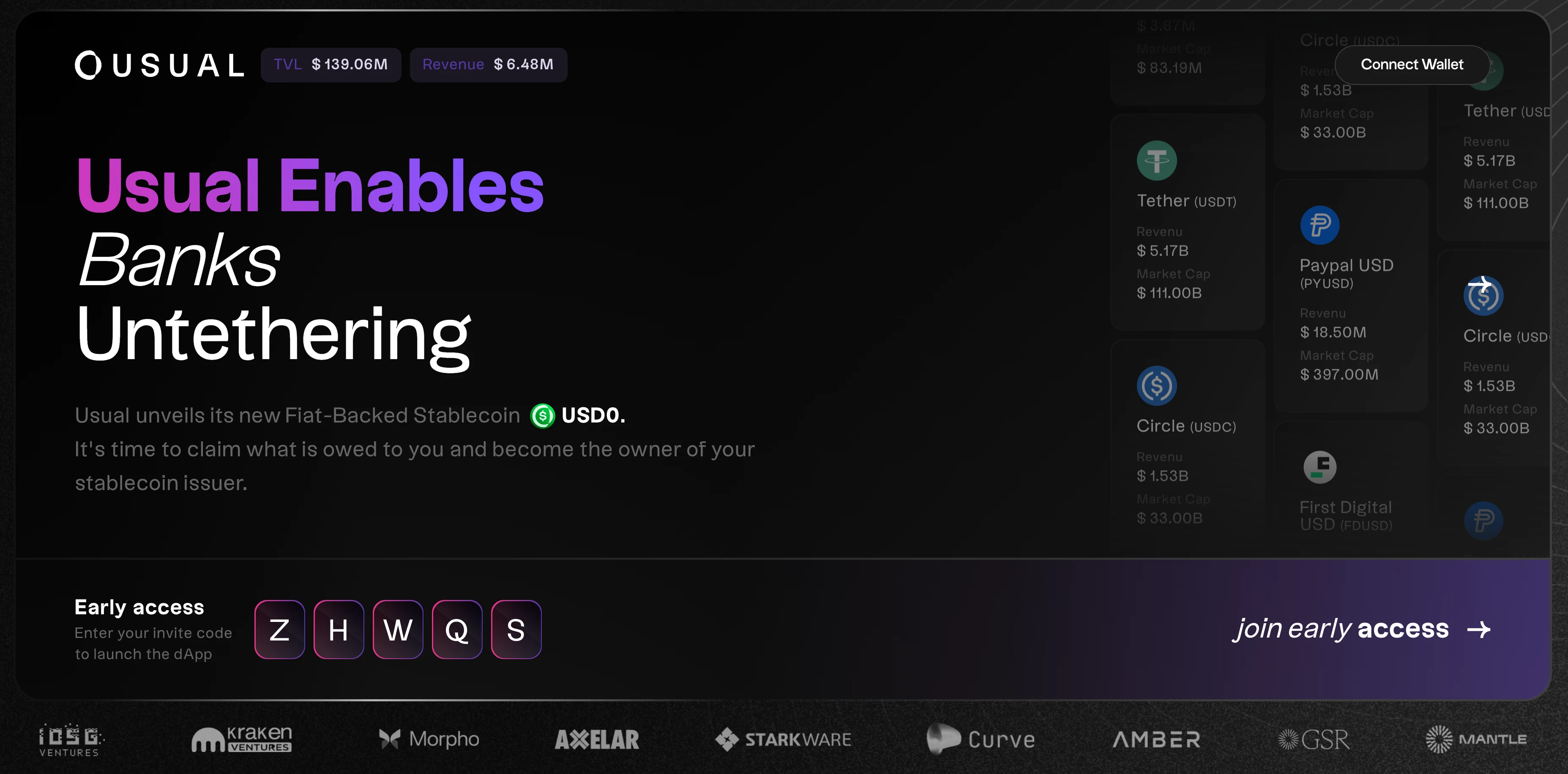
1. 打开 Usual Money dApp:https://app.usual.money/#ZHWQS 或通过官网进入然后输入早期访问代码:ZHWQS
usual.money :RWA去中心化稳定币

2. 存入 USDC、USDT、ETH 以铸造 USD 0 (以太坊主网)。点击链接铸造:https://app.usual.money/counter/deposit

3. 赚取药丸方式:

    1. 铸造:用户将 USD 0 锁定为 USD 0++ 时,每次可以赚取 5 粒药丸。

    2. 持有:持有 USD 0++ 的用户每天可以获得 3 粒药丸。

    3. USD 0/USDC 池:用户在 Curve 的 USD 0/USDC 池中提供流动性,每天可以获得 1 粒药丸。

    4. USD 0/USD 0++ 池:

    • 向该池贡献 USD 0 的用户每天可以获得 3 粒药丸。

    • 每铸造一枚 USD 0++,还可以获得 5 粒药丸,按比例分配给该池中的 USD 0 LP。

    • 注意:向该池提供 USD 0++ 不会产生任何药丸。

    同时,还有一个时间乘数,从 1 开始,每天增加 2% 。如果用户退出其位置则重置为 1 。

4. 添加流动性获得 pills: 选择 USD 0/USD 0++ 选项,输入 USD 0 数量。链接:https://app.usual.money/desk/liquidity

Pills 活动第二期

  • 8 月 4 日,Usual 发布了第二期活动,通过在 Galxe 上完成任务来获得 Pills。活动链接:https://app.galxe.com/quest/usual/GCsgvtvTNA

Related Reads

Bitcoin Withstood 10 Bearish Blows in 2026, Yet Experienced Its Mildest Bear Market

Bitcoin, the leading cryptocurrency by market cap, peaked above $126,000 in early October before entering a prolonged decline. By August, it was mainly trading between $63,000 and $65,400, inflicting losses on late buyers but resulting in what is, historically for Bitcoin, an unusually shallow bear market—down about 49% from its peak, compared to typical 75-80% plunges. Throughout 2026, Bitcoin faced multiple headwinds yet demonstrated notable resilience. Geopolitical tensions in the Middle East and volatile oil prices revived inflation concerns but failed to trigger the panic-driven sell-offs seen in prior cycles. A significant psychological blow came from corporate seller MicroStrategy, a longtime accumulator, which began strategic sales to bolster its cash position, reducing its holdings. U.S. spot Bitcoin ETFs also faced sustained outflows, though a late-week inflow hinted at potential relief. Pressure also came from within the ecosystem. A contentious blockchain proposal, BIP-110, failed after a minority chain stalled. Miners, facing tighter economics, sold reserves and pivoted infrastructure toward AI. A major security breach involving Coldcard hardware wallets saw an estimated 2,000 BTC stolen, shaking confidence in self-custody. Long-term threats like quantum computing resurfaced in discussions. Despite this confluence of corporate selling, ETF outflows, miner capitulation, geopolitical shocks, internal conflict, and security issues—any one of which could historically cause sharp declines—Bitcoin stubbornly held above a key $60,000 support level. Deeper market liquidity, regulated products, and long-term holders appear to be absorbing selling pressure that once would have caused deeper crashes. This resilience suggests a maturing market structure, though risks remain. Another shock could still push Bitcoin toward $50,000. For now, its 49% decline, severe for most assets, is relatively moderate by Bitcoin's own volatile standards. The remaining months of 2026 will test whether $60,000 is a durable floor or merely the next major line of defense.

cryptonews.ru48m ago

Bitcoin Withstood 10 Bearish Blows in 2026, Yet Experienced Its Mildest Bear Market

cryptonews.ru48m ago

Korean Financial Supervisory Service to Revise Compensation System for Phishing Losses Involving Crypto Transfer

The South Korean Financial Supervisory Service (FSS) is overhauling its system for reimbursing victims of voice phishing scams. Starting in October, the new system will be able to calculate and compensate losses held in cryptocurrency, not just in Korean won. Previously, the reimbursement system assumed stolen funds were in won, failing to fully compensate victims whose money was converted into digital assets. The upgraded software will apply a recovery ratio to determine the specific type and quantity of tokens owed to each victim, based on the token's value at the time the payment was frozen. It will also better track cases where fraud proceeds are split across multiple accounts and later consolidated. These changes follow March 31st amendments to the Act on Reimbursement of Losses from Telecommunications Fraud, which now classify virtual assets as both damaged and recoverable property. Major Korean crypto exchanges like Upbit and Bithumb must now comply with the same anti-phishing obligations as banks, including verifying transaction purposes and tracking suspicious funds. The revised law takes effect October 1st, with the FSS allocating a three-month period and a budget of 118.53 million won for system implementation and troubleshooting. The update addresses schemes where stolen money is intentionally laundered through cryptocurrency for overseas transfer. Notably, telecom fraud losses in South Korea rose 14.1% to 433.8 billion won in 2025, a five-year high.

cryptonews.ru58m ago

Korean Financial Supervisory Service to Revise Compensation System for Phishing Losses Involving Crypto Transfer

cryptonews.ru58m ago

Trading

Spot
活动图片