
SignalPlus波动率专栏(20240806):黑色星期一

Odaily星球日报Published on 2024-08-06Last updated on 2024-08-06

Abstract

上周美国非农和以制造业指数为代表的疲弱经济数据引发市场对经济放缓的担忧仍在蔓延。市场的抛售情绪也由传统市场蔓延到了数字货币。

SignalPlus波动率专栏(20240806):黑色星期一

SignalPlus波动率专栏(20240806):黑色星期一

上周美国非农和以制造业指数为代表的疲弱经济数据引发市场对经济放缓的担忧仍在蔓延,全球资产遭受“黑色星期一”带来的抛压。美元对日元汇率一度跌破 142 ,回吐过去一年来的几乎所有涨幅。日本,韩国,土耳其股指触发熔断机制。美股三大指数均收跌在 3% 左右,“七巨头”开盘便蒸发 1.3 万亿美元的市值,期货市场完全定价美联储 9 月将降息 50 个基点,两年期美债收益率于盘中一度结束与 10 年期的倒挂,现报 3.957% 。
SignalPlus波动率专栏(20240806):黑色星期一

Source: TradingView

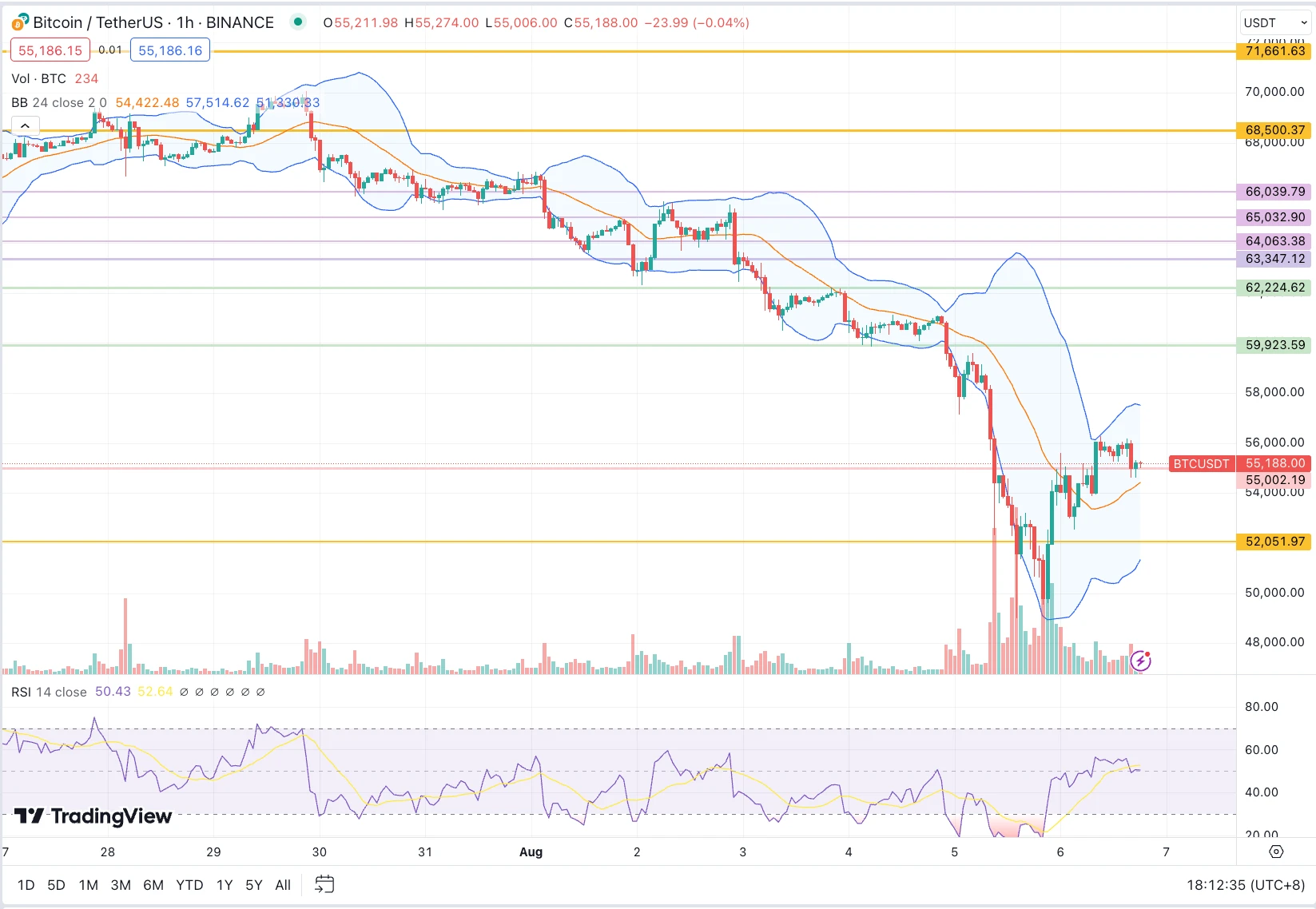
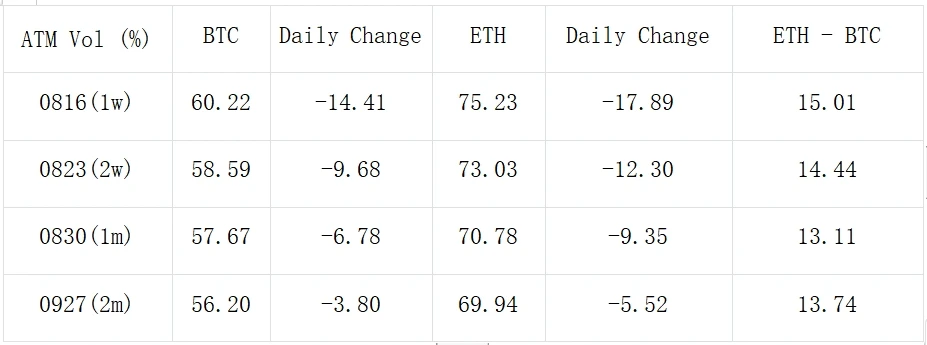
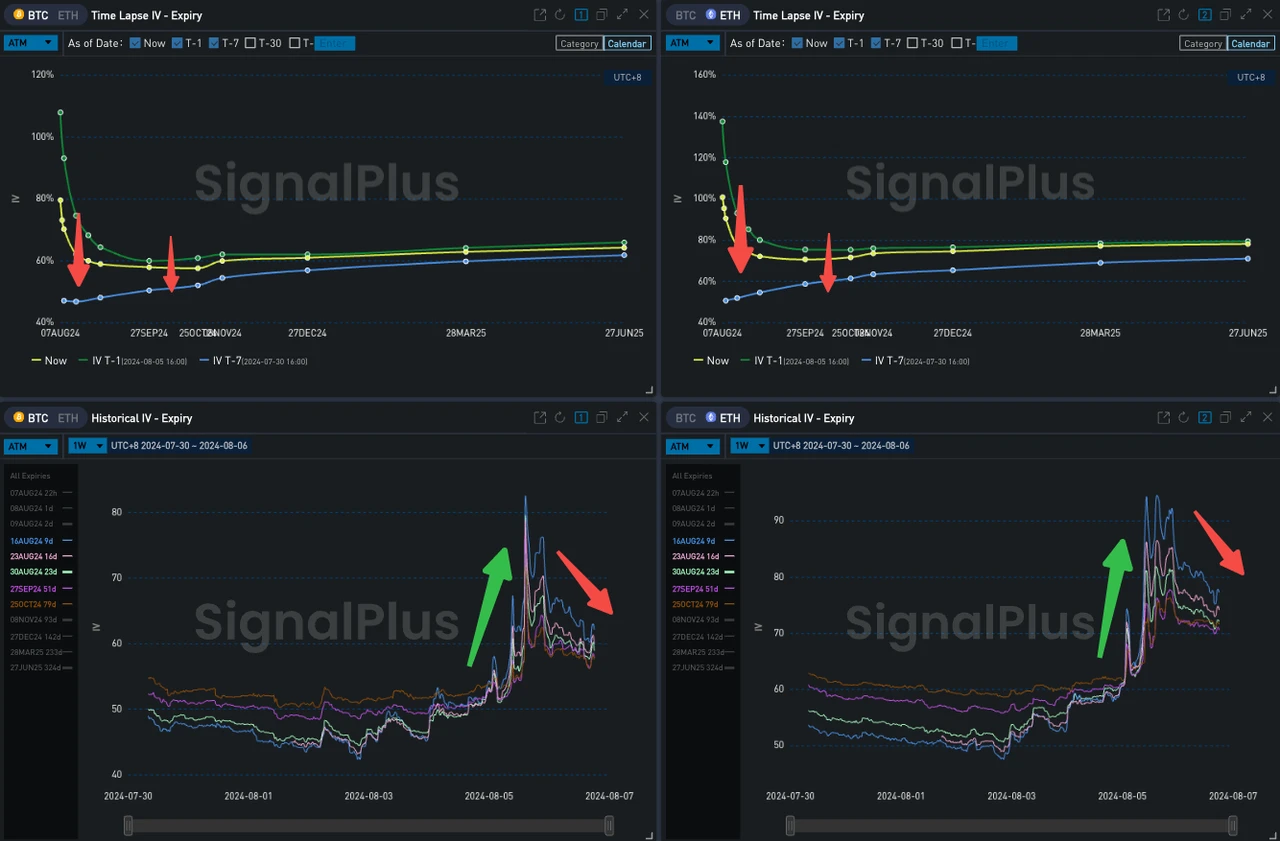
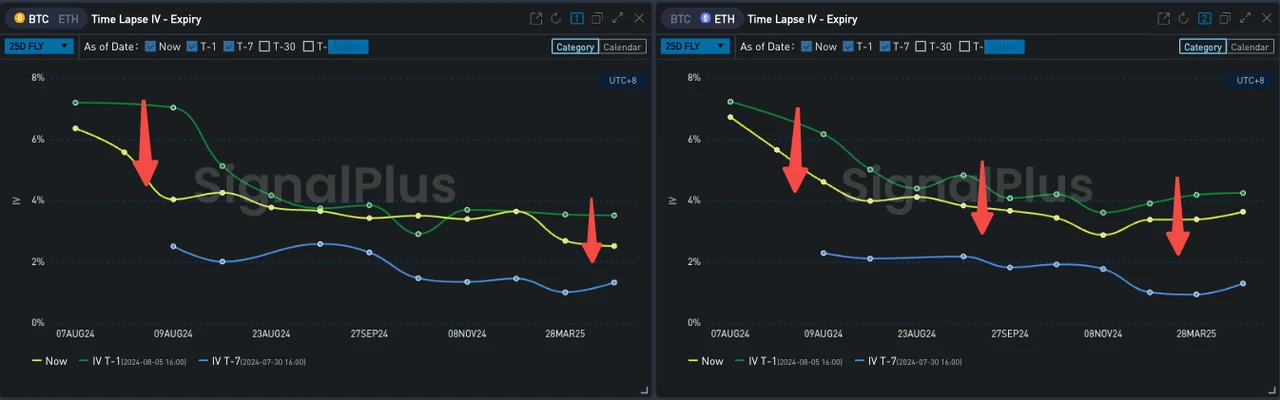
市场的抛售情绪也由传统市场蔓延到了数字货币。作为与 SP 500 高度相关的风险资产,BTC 于昨日一度暴跌至五万美元下方,引发了市场的恐慌情绪,短期 IV 冲上三位数区间,流动性出现挤兑,Vol Skew 也随着价格一同下跌,Wing 上的需求暴增导致 Fly 的估值快速上扬。

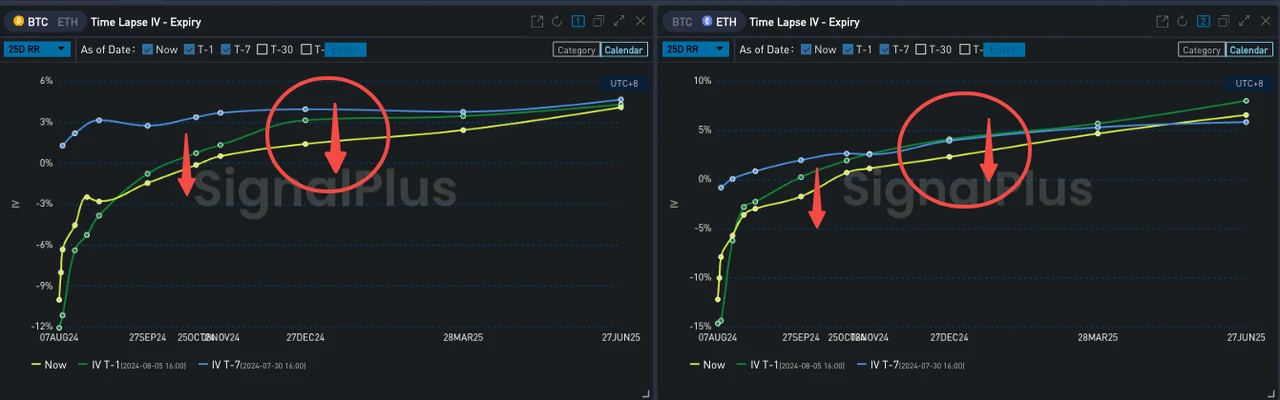
但随着价格逐步反弹回到 55000 美元,期权市场的流动性逐步回归,IV 下行逃离了局部高点,尾部高昂 Vol Premium 也被重新定价,Fly 整体走低。对 Vol Skew 来说,尽管前端的负斜率轻微反弹,但更需要关注的变化是远端 Vol Skew 的进一步大幅下跌,事实上,昨日价格暴跌的时候只有前端做出了反应,流动性较差的远端 Risky 直到今天才被重新矫正了定价。
SignalPlus波动率专栏(20240806):黑色星期一

Source: Deribit (截至 6 AUG 16: 00 UTC+ 8)
SignalPlus波动率专栏(20240806):黑色星期一

Source: SignalPlus,ATM Vol

SignalPlus波动率专栏(20240806):黑色星期一

Source: SignalPlus, 25 dRR,远端 Vol Skew 被重新定价
SignalPlus波动率专栏(20240806):黑色星期一

Source: SignalPlus, 25 dFly

SignalPlus波动率专栏(20240806):黑色星期一

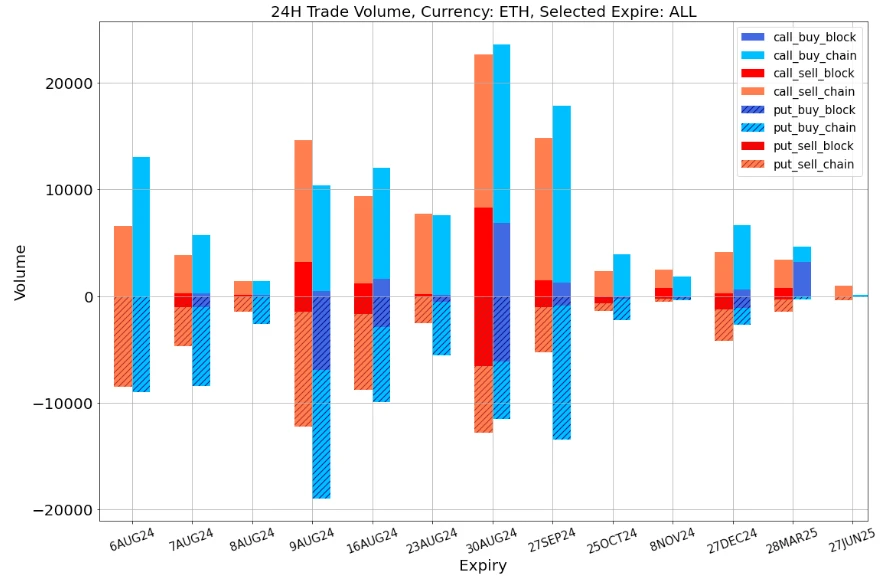
Data Source: Deribit, ETH 交易总体分布

SignalPlus波动率专栏(20240806):黑色星期一

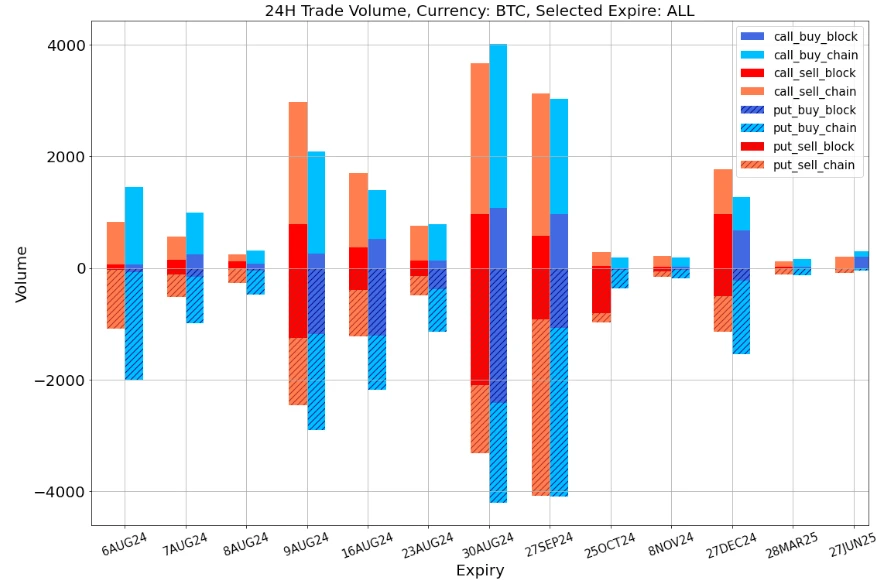
Data Source: Deribit,BTC 交易总体分布

SignalPlus波动率专栏(20240806):黑色星期一

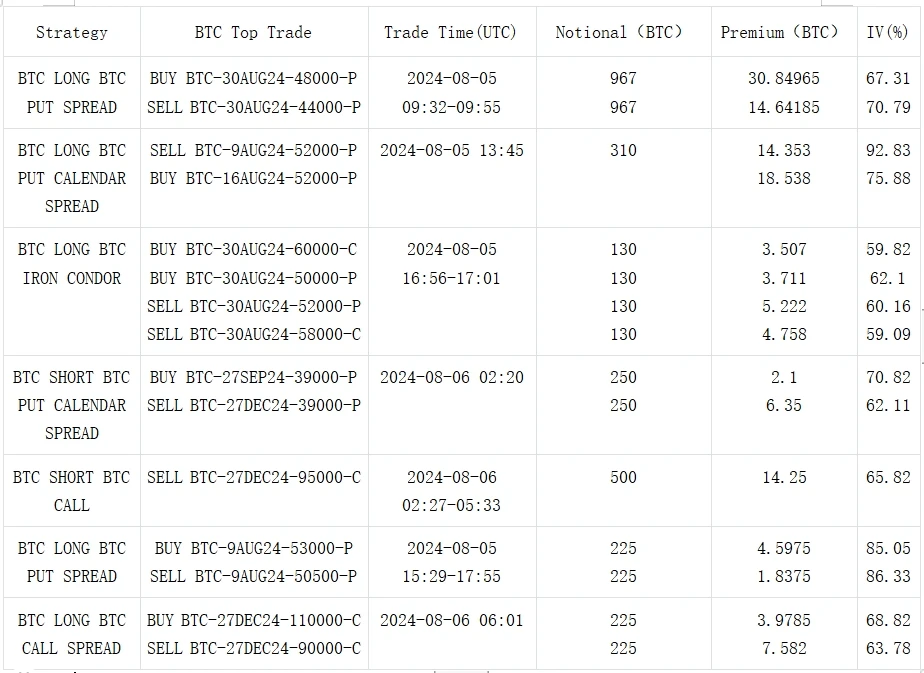
Source: Deribit Block Trade

SignalPlus波动率专栏(20240806):黑色星期一

Source: Deribit Block Trade

SignalPlus波动率专栏(20240806):黑色星期一

您可在 t.signalplus.com 使用 SignalPlus 交易风向标功能,获取更多实时加密资讯。如果想即时收到我们的更新,欢迎关注我们的推特账号@SignalPlusCN,或者加入我们的微信群(添加小助手微信:SignalPlus 123)、Telegram 群以及 Discord 社群,和更多朋友一起交流互动。SignalPlus Official Website:https://www.signalplus.com

Related Reads

Snap, Unprofitable for Nine Years, and a Decade-Long AR Obsession Without Return

Snap's AR Obsession: A Decade of Betting Against the Odds On June 16, Snap CEO Evan Spiegel unveiled the new AR glasses, Specs, priced at $2,195, causing the company's stock (SNAP) to plummet nearly 10%. The launch was met with intense criticism online, with investors questioning why a consistently unprofitable company would stake its future on an expensive product its core young user base can't afford. Snapchat, known for pioneering features like ephemeral Stories and popular AR lenses (like the iconic dog filter), has a history of innovation often copied by rivals like Instagram and Meta. Despite this, it has struggled to translate first-mover advantage into commercial success. Since its 2017 IPO, Snap has reported annual net losses, with a Q1 2026 loss of $89 million. Its stock is down 94% from its 2021 peak, hampered by iOS privacy changes, competition, and a young demographic less attractive to major advertisers. In this challenging context, Spiegel is doubling down on AR. He calls 2026 a "crucible moment," having recently laid off 16% of staff while reportedly investing over $3.5 billion cumulatively in its AR glasses line over nearly a decade. The new Specs represent a significant leap from the 2016 camera-focused Spectacles, offering true AR overlays, gesture control, and standalone operation. However, at $2,195, it faces tough comparisons. While more advanced than Meta's $799 Ray-Ban smart glasses, critics point to its heavier weight, short battery life, and features largely replicable by a smartphone. Facing pressure from investors to cut losses on the Specs project, Spiegel has refused, framing it as essential to Snap's long-term vision. The company finds itself in a paradoxical position: cutting costs while heavily funding a decade-long, unproven bet. Some see Specs as an awkward but necessary step in AR's evolution, akin to early mobile phones. Whether Spiegel is a visionary outlier or a gambler destined to fail remains an open question, highlighting the tension between long-term ambition and short-term market demands.

marsbit3m ago

Snap, Unprofitable for Nine Years, and a Decade-Long AR Obsession Without Return

marsbit3m ago

Annualized Revenue Exceeds $20 Billion, Kalshi Aims to Become the First Prediction Platform IPO?

Kalshi, a leading U.S. prediction markets platform, is reportedly in early, informal discussions for an Initial Public Offering (IPO). The company's annualized revenue now exceeds $2 billion, fueled by its dominance of over 90% of the domestic prediction market activity. This growth stems from a surge in trading volume—reaching a total of $52.7 billion—and an increase in fee rates, largely driven by sports event contracts like the NBA playoffs and the 2026 FIFA World Cup. Monthly active users are approximately 2 million. Kalshi recently raised $1 billion in a funding round led by Coatue Management, valuing the company at $22 billion. It has also expanded its offerings to include Bitcoin perpetual contracts and plans to launch a dedicated trading platform, Kalshi Pro. However, Kalshi's path to an IPO faces significant regulatory hurdles. The core risk involves jurisdictional conflicts, as multiple U.S. states are challenging its operations under local gambling laws. For instance, Arizona has filed criminal charges against the platform, while states like Kentucky have filed lawsuits. Kalshi and the Commodity Futures Trading Commission (CFTC) argue that its event contracts fall under exclusive federal jurisdiction as "swaps." The outcomes of these ongoing legal battles could critically impact Kalshi's core revenue and its IPO timeline. Analysts suggest that while an IPO could theoretically occur by late 2026, a more likely timeframe is late 2027 or 2028, contingent on resolving legal issues and favorable market conditions. If successful, its fundraising could significantly exceed $1 billion, given its current valuation and revenue multiple.

Foresight News20m ago

Annualized Revenue Exceeds $20 Billion, Kalshi Aims to Become the First Prediction Platform IPO?

Foresight News20m ago

Financing Weekly Report | 11 Public Financing Events, Stablecoin Payment Infrastructure Company Trace Finance Completes $32 Million Series A Round Led by CoinFund

Financing Weekly Report | 11 public funding events recorded, with a total scale exceeding $264 million. The stablecoin payment infrastructure sector remains a hot spot. Key Deals: - Trace Finance, a stablecoin payment infrastructure firm, raised $32 million in a Series A round led by CoinFund to expand in Latin America and Asia-Pacific. - Galaxy Ventures co-led a $140 million Series A round for Karta, a US credit card provider for global travelers without requiring an SSN. - Instant payment platform Interchecks completed a $50 million Series C round. - Paradigm led a $9 million Series A for Latin American cross-border payment app El Dorado. - Range, a stablecoin compliance startup, raised $8.3 million in an oversubscribed Series A. - RWA infrastructure project Renaiss raised $1.5 million to expand its on-chain collectibles platform. Sector Breakdown: - Infrastructure & Tools: 6 deals, including the above-mentioned Trace Finance, Range, and Renaiss. - Centralized Finance (CeFi): 3 deals, led by Karta's $140 million round. - DeFi: 1 deal – reinsurance protocol Re secured strategic investment from Coinbase Ventures. - Prediction Markets: 1 deal – K25.ai completed a $10 million Pre-A round from NewGen. Other notable transactions include digital asset depository RDC raising $7 million, ad-tech startup EarnOS securing $6 million, and a $1 million strategic investment in LitVM, a ZK Layer 2 for Litecoin. The report highlights sustained investor interest in stablecoin payment infrastructure, compliant on-chain finance, and real-world asset (RWA) tokenization.

marsbit1h ago

Financing Weekly Report | 11 Public Financing Events, Stablecoin Payment Infrastructure Company Trace Finance Completes $32 Million Series A Round Led by CoinFund

marsbit1h ago

When Transfers Become Truly Frictionless: How Sui Uses 'Zero Gas' to Become the Underlying Infrastructure for Stablecoin Payments

Title: Sui Launches Zero-Gas Stablecoin Transfers to Become the Foundation for Stablecoin Payments Sui has introduced a zero-gas fee feature for peer-to-peer stablecoin transfers, eliminating the need for users or businesses to hold separate SUI tokens to pay transaction costs. This innovation, built on a new underlying account architecture called Address Balances, significantly reduces validator processing costs for eligible transactions. Currently, the feature applies to a whitelist of stablecoins for transfers meeting a minimum amount, effectively preventing spam. This development aims to unlock mainstream payment use cases for stablecoins—such as everyday purchases, remittances, and subscriptions—by removing cost and complexity barriers. It is also positioned to benefit high-frequency micro-payments for AI agents and institutional B2B payments, reducing operational friction. Major custody provider Fireblocks has already announced support. The move follows Sui processing over $1 trillion in stablecoin transfer volume since August 2025. Looking ahead, Sui plans to enhance this infrastructure with protocol-level confidential transactions later in 2026, aiming to provide scalable, free, and privacy-preserving payments. Together, these advancements strengthen Sui's goal of becoming the default settlement layer for stablecoin payments.

marsbit1h ago

When Transfers Become Truly Frictionless: How Sui Uses 'Zero Gas' to Become the Underlying Infrastructure for Stablecoin Payments

marsbit1h ago

Trading

Spot
Futures
活动图片