Weak US Employment and $1.1 Billion into ETFs: Wintermute on the New Rally and Inflation Risks

cryptonews.ruPublished on 2026-08-11Last updated on 2026-08-11

Abstract

Analysts at Wintermute stated that the cryptocurrency market gained support following a weak U.S. jobs report. Against this backdrop, U.S. spot Bitcoin and Ethereum ETFs collectively attracted $1.1 billion in inflows over the week. While demand via ETFs has recovered, there is insufficient data to confirm a sustainable shift in market sentiment. U.S. spot Bitcoin ETFs saw inflows of $853.5 million over five sessions, the best weekly result since mid-April. Ethereum ETFs attracted another $244.9 million, marking a fifth consecutive positive week. Over 80% of the inflows into both groups went to BlackRock. Wintermute notes that relatively restrained trading volumes may indicate large investors gradually building positions rather than short-term capital rotation. A disappointing U.S. employment report for July, which showed a loss of 23,000 jobs versus an expected gain of 80,000, led markets to reduce the probability of a Federal Reserve rate hike in September. This supported risk assets, including crypto. However, Wintermute cautions that the upcoming U.S. Consumer Price Index report on August 12 poses a key test. Higher-than-expected inflation could revive rate hike fears above 50%, risking a reversal of the recent rally. Beyond ETFs, institutional adoption of blockchain infrastructure continues, exemplified by Wells Fargo's planned launch of tokenized deposits. Wintermute views this as banks modernizing their settlement systems, which could eventually support broader digit...

Analysts at Wintermute stated that the crypto market received support following a weak US employment report. Against this backdrop, US spot Bitcoin and Ethereum ETFs attracted a total of $1.1 billion over the week.

Experts emphasized that demand via ETFs has recovered, but there is still insufficient data to speak of a sustainable shift in market sentiment.

ETFs Are Attracting Capital Again

Over five trading sessions, US spot Bitcoin ETFs received $853.5 million. This is the best weekly result since mid-April. Ethereum ETFs attracted another $244.9 million, continuing the positive trend for the fifth consecutive week. Over 80% of the inflows into both groups of funds came from BlackRock.

Meanwhile, trading volumes remained relatively restrained. Wintermute believes this could indicate a gradual accumulation of positions by large investors, rather than short-term capital rotation.

On Friday, after the employment data was published, the asset rose above $65,300 but failed to significantly outperform traditional risk assets. According to Wintermute, this may indicate that demand via ETFs is meeting significant supply from sellers.

Weak US Data Changed Rate Expectations

In July, US employment contracted by 23,000 instead of the expected growth of approximately 80,000. After the report's publication, the probability of a Federal Reserve rate hike in September decreased from 55% to 40%.

The yield on 10-year Treasury bonds fell to 4.6%, and risk assets transitioned to growth. Wintermute noted that the labor market weakness provided an additional argument for a more accommodative monetary policy. At the same time, the next important test for the market will be the US Consumer Price Index, scheduled for release on August 12.

If inflation is higher than expected, the probability of a rate hike in September could again exceed 50%. This would create a risk of a reversal in the recent rally of risk assets, including cryptocurrencies, the report says.

Institutional Demand and Regulation

Beyond ETFs, the institutional sector continues transitioning financial infrastructure to blockchain. Wintermute pointed to Wells Fargo, which plans to launch tokenized deposits for corporate clients in the fall. The first will be a corridor between the US dollar and the British pound, with the bank planning to expand the project in the future.

In Wintermute's view, banks are not so much integrating crypto-assets as they are using blockchain technology to modernize their own settlement infrastructure. In the long term, this could become one of the factors for further institutional adoption of digital assets. US regulation remains a separate catalyst.

Wintermute believes the recovery in demand via ETFs is a positive signal, but one week is insufficient to confirm a sustainable trend.

Analysts also want to see if inflows into ETFs and activity by companies with Bitcoin reserves persist until the end of summer. For now, the market remains sensitive to macroeconomic data, and a stronger-than-expected inflation reading could quickly change current rate expectations.

As a reminder, experts previously reported record activity in Ethereum and a growing number of Bitcoin whales.

end-content

Related Questions

QAccording to the analysts at Wintermute, what provided support to the cryptocurrency market recently?

AThe cryptocurrency market received support following a weak U.S. employment report.

QWhat was the total combined net inflow into U.S. spot Bitcoin and Ethereum ETFs for the week mentioned in the article?

AU.S. spot Bitcoin and Ethereum ETFs attracted a total of $1.1 billion in net inflows over the week.

QHow did the weak U.S. July employment data affect expectations for the Federal Reserve's interest rate decision in September?

AFollowing the weak employment data, the probability of the Federal Reserve raising interest rates in September decreased from 55% to 40%.

QWhat upcoming U.S. economic data release does Wintermute identify as a key test for the market, and what risk does it pose?

AThe upcoming U.S. Consumer Price Index (CPI) release on August 12th is a key test. If inflation is higher than expected, it could raise the probability of a September rate hike above 50%, creating a risk of a reversal in the recent rally of risk assets, including cryptocurrencies.

QBesides ETF flows, what other institutional activity related to blockchain technology does the article mention?

AThe article mentions that Wells Fargo plans to launch a tokenized deposit corridor for corporate clients between the US dollar and British pound in the fall, as part of using blockchain technology to modernize its own settlement infrastructure.

Related Reads

Meme Coins Peak in 17.2 Days on Average: Ephemeral Fervor and the Great Capital Migration

Meme Coins' Average Peak: 17.2 Days - A Fleeting Frenzy and a Capital Exodus A Bloomberg analysis reveals the stark reality behind meme coin mania: extreme short-term speculation. On average, a new meme coin reaches its all-time high (ATH) a mere 17.2 days after its first trade. Alarmingly, 25% of projects peak within just 38.4 hours. The subsequent decline is brutal, with the median time to drop 95% from the peak and enter dormancy being 370 days. Only about 3% ever break their previous ATH again. This drastic compression of the speculative lifecycle is driven by zero-barrier token creation on platforms like Pump.fun and automated trading tools like sniper bots, which enable instant deployment and rapid pump-and-dump schemes. The market is saturated, diluting liquidity and forcing a predatory, player-versus-player environment where early holders quickly exit with minimal gains. As the odds of success in traditional meme coins diminish, speculative capital is migrating. Decentralized prediction markets like Polymarket, offering transparent, event-driven betting, are attracting significant liquidity. Concurrently, AI agent tokens are drawing funds with their combination of high volatility and long-term narrative tied to artificial intelligence. This capital shift marks a move away from simplistic "greater fool" assets toward platforms with clearer mechanisms or dynamic technological themes.

marsbit25m ago

Meme Coins Peak in 17.2 Days on Average: Ephemeral Fervor and the Great Capital Migration

marsbit25m ago

CoreWeave Default Probability Exceeds 60%! Huang Renxun 'Puts Out Fire': Financing Costs Declining, No Need for NVIDIA to Provide Backstop

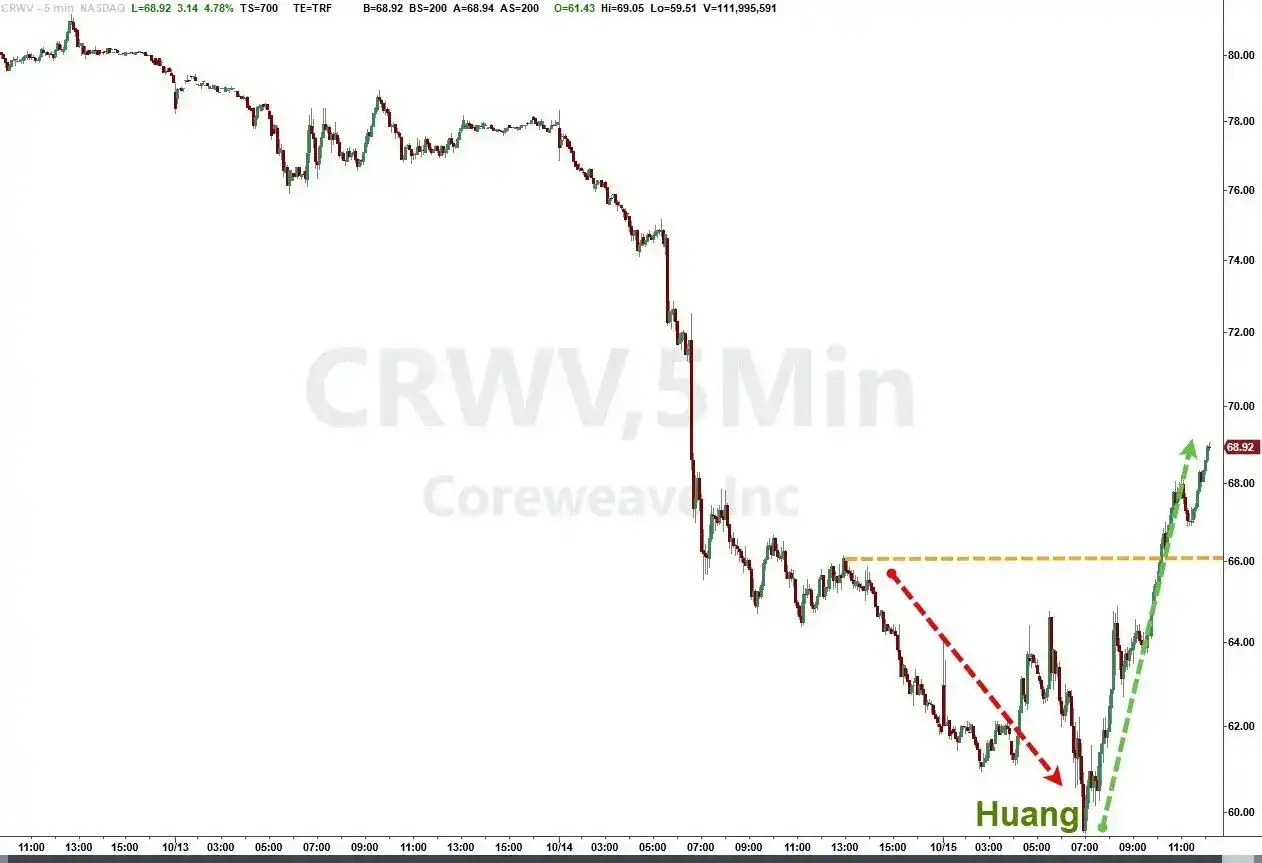
CoreWeave, a major AI cloud service provider and key NVIDIA customer, is facing heightened credit market concerns. Its five-year credit default swap (CDS) spreads soared to a record high of over 1190 basis points, implying a perceived default probability exceeding 60%. Concurrently, its bond prices plummeted, with yields surging above 15-16%, reflecting intense investor worries about its ability to service nearly $50 billion in debt while remaining unprofitable. This stress is spreading within the AI infrastructure sector. CDS spreads for companies like Oracle, SoftBank, NVIDIA, and others also widened significantly, indicating a broader market reassessment of the debt risks behind massive AI capital expenditures. In response, NVIDIA CEO Jensen Huang publicly expressed confidence in CoreWeave, stating its "financial strength is growing daily" and its cost of capital is declining. He explicitly stated NVIDIA sees no need to provide a financial backstop for CoreWeave, in which it holds a roughly 10% stake. His comments helped CoreWeave's stock recover from early losses. The core issue under scrutiny is whether the future cash flows from AI investments can cover the enormous upfront costs and interest burdens, especially as financing becomes more expensive. The situation highlights a critical shift in market focus: from purely evaluating AI compute demand to questioning the sustainability of the debt-fueled expansion models used to build that capacity.

marsbit44m ago

CoreWeave Default Probability Exceeds 60%! Huang Renxun 'Puts Out Fire': Financing Costs Declining, No Need for NVIDIA to Provide Backstop

marsbit44m ago

Trading

Spot
活动图片