Author: Nancy, PANews
Since Vitalik reframed the Layer2 roadmap this year, the survival competition in the L2 track has become increasingly brutal. Star L2s like Base, Arbitrum, and OP Mainnet continue to vie for market attention and liquidity, while numerous mid-to-long-tail and emerging L2s have become "ghost towns," with many projects even forced to make drastic cuts to survive.
Amid this growing L2 fragmentation, World Chain has carved out a relatively independent growth trajectory. Although its on-chain ecosystem applications remain sparse, real user activity drives high-frequency interaction demand. Concurrently, riding the AI wave, WLD has recently experienced a relatively independent upward trend.
Behind the 130%+ Monthly Surge: Why is WLD on an Independent Run?
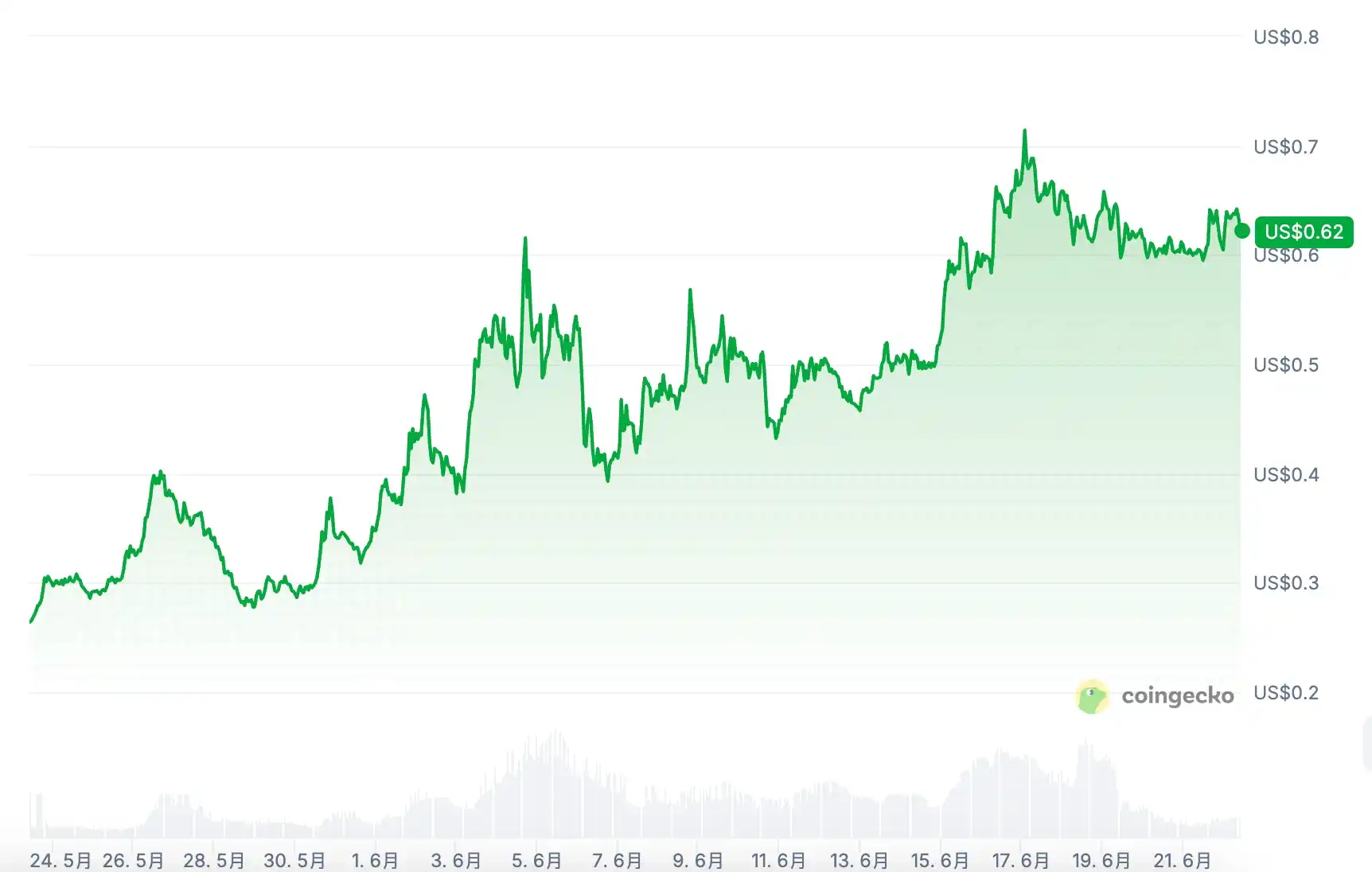
As the investment fervor in the AI sector continues to heat up, Worldcoin has become a target for market capital. CoinGecko data shows that WLD has surged 136.1% over the past 30 days, significantly outperforming most mainstream crypto assets.
This rally is primarily driven by a confluence of multiple expectations and capital inflows.
On one hand, substantial institutional holdings have boosted market confidence. Nasdaq-listed company Eightco Holdings publicly holds approximately 283 million WLD (about 8.4% of the circulating supply), incorporating it into its treasury asset allocation. Additionally, as the company holds indirect equity in OpenAI (an investment of around $90 million), it has amplified the market's imagination regarding the value of its token holdings.
On the other hand, incentive activities have stimulated WLD's trading activity. At the end of last month, Oku Trade integrated into the World App and launched a WLD trading competition, directly incentivizing user participation. Dune data shows that WLD's daily trading volume on DEXs once exceeded $11 million, compared to a long-term average of several hundred thousand dollars, representing a multiplier increase in volume.
A more critical driving factor comes from expectations of improvements in tokenomics. According to the latest adjustment plan, starting July 24, 2026, the daily WLD unlock volume will decrease from approximately 5.1 million to about 2.9 million tokens, a reduction of about 43%. Community unlocks will drop from 3.2 million to 1.6 million (50% decrease), while team and investor unlocks will decrease from 1.9 million to 1.3 million tokens per day (32% decrease). This adjustment is widely interpreted by the market as a significant alleviation of medium-to-long-term supply pressure, helping to dampen expectations of continuous sell-side pressure.
Furthermore, as expectations for the listing of AI giant OpenAI continue to heat up, the market fervor for the AI narrative has spilled over. As a crypto project co-founded by its figurehead Sam Altman, market attention on Worldcoin has intensified, further driving speculative capital inflows.
Soaring On-Chain Activity, Growth Dependent on Bridge Inflows
Alongside the rising token price, on-chain activity on World Chain is also surging.
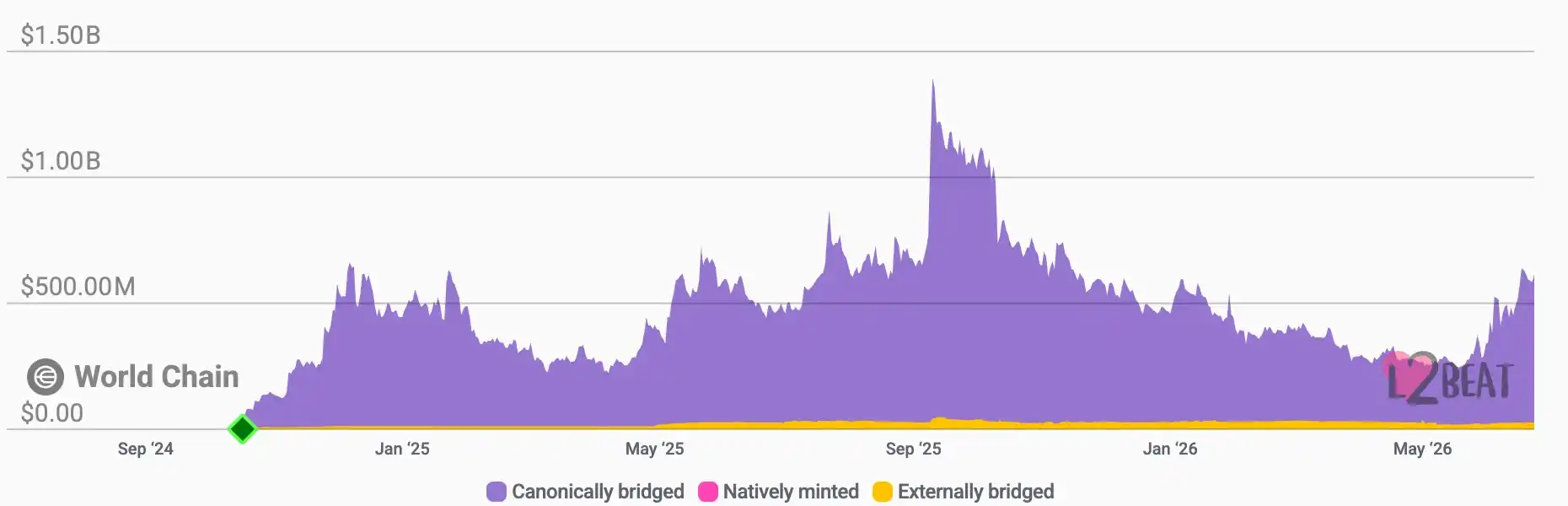
In terms of capital inflows, this growth phase is primarily fueled by bridged TVL. According to L2BEAT data, World Chain's Total Value Secured (TVS) now exceeds $610 million, representing an increase of about 122.6% over the past 30 days. Standard bridge asset inflows dominate this, amounting to approximately $557 million, a 118.4% month-on-month increase, constituting the main source of recent capital expansion.
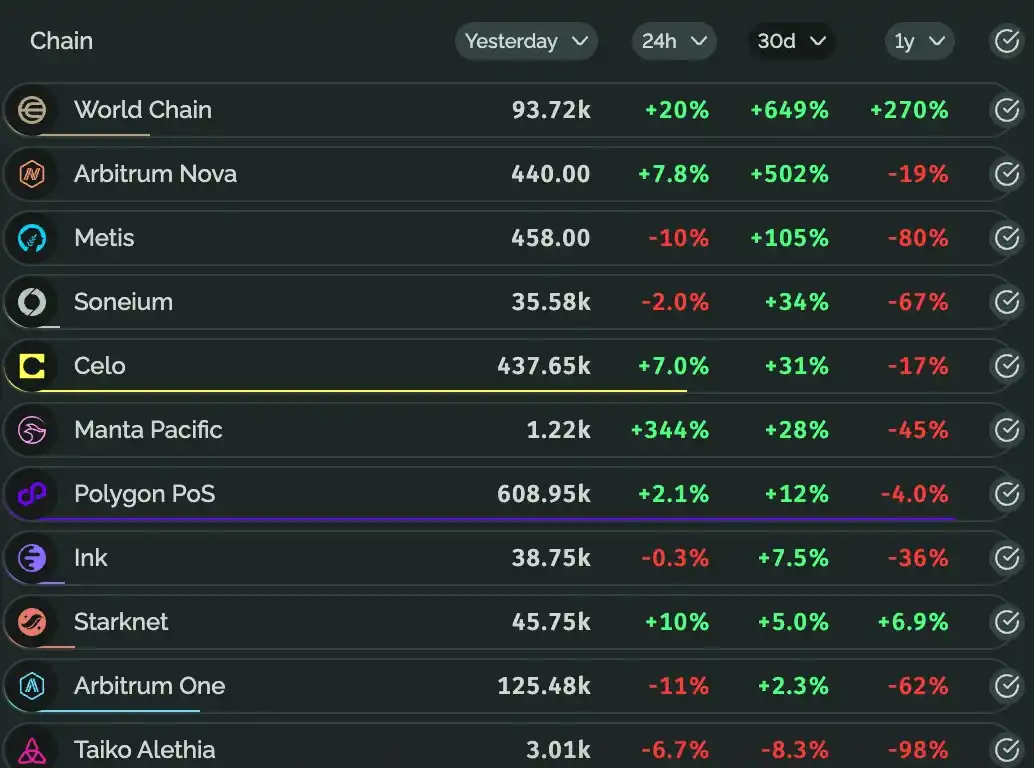
Growing alongside the capital flow is its on-chain activity. GrowThePie data shows that over the past 30 days, World Chain's daily active addresses have skyrocketed by 649%. In comparison, Polygon, Base, Arbitrum One, Celo, and others saw limited growth during the same period, with some even experiencing negative growth.
However, World Chain's on-chain ecosystem has not seen large-scale expansion. Compared to Base, which leverages Coinbase's traffic, or Arbitrum, which boasts a mature DeFi ecosystem, World Chain remains in the early stages of ecosystem development, lacking native protocols with network effects and high-frequency use cases.
DeFiLlama data shows that as of June 22, World Chain's TVL is only about $40.42 million, a scale incomparable to other leading L2s. Although it has nearly doubled over the past 30 days, the incremental liquidity is mainly concentrated in Morpho Blue-related vaults, with this protocol accounting for about 93% of World Chain's TVL.
In other words, a significant portion of the bridged capital remains in the form of idle assets, not effectively converted into DeFi lending, DEX trading, or complex application interactions. The depth of on-chain capital utilization and the efficiency of retention and conversion remain limited.
Second Only to Base, World Chain Becomes a Major Blob Consumer
Despite the lack of external applications, its unique positioning as Worldcoin's dedicated L2 and tens of millions of real user activities mean large-scale internal transactions are continuously driving up World Chain's Blob consumption, making it a high-frequency L2.
Blobs are primarily used by Layer 2 Rollups to publish transaction data to the mainnet at extremely low cost, achieving data availability. Since the Dencun upgrade in March 2024, the Ethereum mainnet has cumulatively submitted over 19.53 million Blobs. Among numerous Layer 2s, World Chain has grown into the second-largest Blob consumer, its strong performance even surpassing established L2s like Arbitrum.
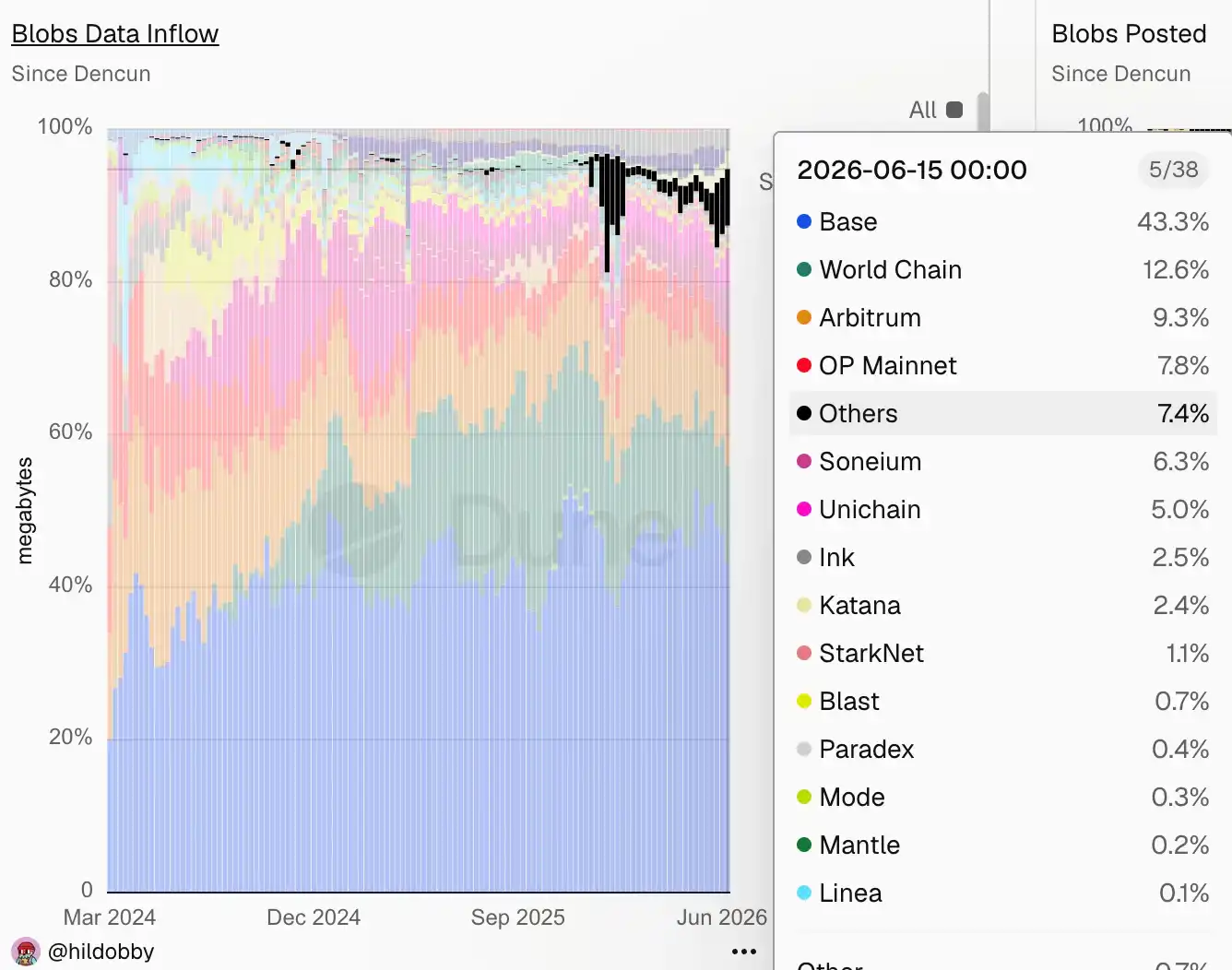
According to the latest Dune Analytics statistics, since its launch in June 2025, World Chain has cumulatively submitted over 2.63 million Blobs to Ethereum, firmly placing it among the top networks, second only to the leading Base. In the past 24 hours, it has averaged 106 Blob submissions per hour, equivalent to writing about 13.3MB of data to Ethereum per hour, with a Blob fill rate as high as 99%, leading most L2s in data packaging efficiency.
In terms of cost and operational efficiency, World Chain also demonstrates strong competitiveness. Over the past 3 days, its data availability (DA) fees amounted to about $304, with cumulative historical fees exceeding $2 million, proving more efficient compared to established L2s like Base (cumulative ~$6.45 million) and Arbitrum (cumulative ~$3.51 million). Simultaneously, it submits batches to Ethereum on average every 3 minutes and 45 seconds, with each submission transaction averaging 3 Blobs, indicating a high frequency of on-chain interactions.
Judging by the scale of data inflow, World Chain quickly ascended to the top tier shortly after launch and has maintained a leading position. As of June 15, its Blob data inflow accounted for 12.6% of the total network volume, second only to Base's 43.3%, solidifying its second-place standing. Mainstream L2s like Arbitrum One, Soneium, OP Mainnet, and Unichain all rank behind it.
While most L2s grapple with growth anxiety, World Chain's rise to the forefront of Blob consumption is not only due to the cost and throughput advantages afforded by its underlying OP Stack architecture, enabling it to handle on-chain activities more efficiently. More importantly, the migration of tens of millions of real World ID users to its dedicated chain, driven by scenarios like identity verification, subsidized Gas, and reward claims, generates sustained high-frequency transaction demand. This allows it to maintain vigorous data demand and Blob consumption even in the absence of a mature ecosystem.
Looking at a longer cycle, what truly determines the long-term development of an L2 is not short-term capital and trading hype. World Chain must effectively convert externally流入的资产 into on-chain liquidity and sustainable economic activities to evolve from a frequently used L2 into a mature network with a self-sustaining ecosystem.