OCC Highlights Major Concerns Over Crypto Debanking Practices Among Major Banks

bitcoinistОпубликовано 2025-12-11Обновлено 2025-12-11

Введение

The Office of the Comptroller of the Currency (OCC) has raised concerns over "harmful debanking policies" among nine major US banks, including JPMorgan Chase, Bank of America, and Wells Fargo. A review found that between 2020 and 2023, these institutions restricted services or imposed heightened scrutiny on customers in legal industries—including crypto, oil and gas, firearms, and adult entertainment—based on the banks' own values rather than legality. OCC Comptroller Jonathan V. Gould criticized the use of "government-granted charter and market power" for such practices. The agency is evaluating thousands of debanking complaints and recently allowed national banks to facilitate crypto transactions, aiming to provide a more regulated environment than external exchanges.

On Wednesday, the Office of the Comptroller of the Currency (OCC) released findings that have raised alarm bells regarding crypto debanking, reigniting fears of what some are dubbing “Operation Chokepoint 2.0” within the financial sector.

This supervisory review focused on nine of the largest national banks under OCC supervision, including JPMorgan Chase, Bank of America, Citibank, Wells Fargo, US Bank, Capital One, PNC Bank, TD Bank, and BMO Bank.

‘Harmful Debanking Policies’

The preliminary findings from the OCC reveal troubling trends: between 2020 and 2023, these banks appeared to make unwarranted distinctions among customers based on their legal business activities.

Specifically, many of these institutions maintained policies that either restricted access to financial services or required heightened scrutiny and approvals for certain clients.

The OCC identified examples where at least one bank imposed limitations on various sectors, including crypto, due to their engagement in activities considered “contrary to [the bank’s] values,” even though those activities were not illegal.

Sectors affected by these policies included oil and gas exploration, coal mining, firearms, private prisons, tobacco and e-cigarettes, adult entertainment, and notably, digital assets.

The findings indicated that many banks placed strict limitations on crypto-related activities as well, which often stemmed from concerns about financial crime.

These practices, the OCC confirmed, were prevalent at each of the banks examined in the review. Comptroller Jonathan V. Gould expressed frustration regarding the situation, stating:

It is unfortunate that the nation’s largest banks thought these harmful debanking policies were an appropriate use of their government-granted charter and market power.

Gould noted that while many of these policies were publicly announced, some banks have maintained that they did not participate in debanking.

In his comments, Comptroller Gould emphasized the OCC’s commitment to eliminating practices that would “weaponize finance,” whether instigated by regulators or the banks themselves.

National Banks To Facilitate Crypto Transactions

The agency disclosed that it is still evaluating “thousands of complaints” related to allegations of political and religious debanking, with plans to report on these findings “in due course.” The OCC aims to hold banks accountable for these actions and ensure that unlawful debanking practices do not persist.

This follows Tuesday’s letter from the banking regulator that allows national banks to participate in “riskless principal transactions” involving cryptocurrencies. This permits national banks to buy and sell cryptocurrencies for their customers’ accounts.

This new structure allows users to transact in crypto-assets through established national banks, resulting in a more regulated environment than exchanges that operate outside of strict oversight regulation.

The daily chart shows the total crypto market cap valuation at $3.16 trillion. Source: TOTAL on TradingView.com

Featured image from DALL-E, chart from TradingView.com

Похожее

The AI Stock Genius Who Made 60x Bets $7.7 Billion on Nvidia Topping Out

An AI-focused hedge fund named Situational Awareness LP, known for its 60x returns, has taken a significant bearish stance on semiconductor stocks in Q1 2026. Its 13F filing reveals a massive 148% quarterly increase in nominal exposure to $13.677 billion, with over 60% of the new exposure directed towards put options on major chip players. Key bearish bets include $2.04 billion in puts on the VanEck Semiconductor ETF (SMH) and $1.56 billion on NVIDIA, alongside positions against Broadcom, Oracle, AMD, and others. The fund simultaneously increased its long equity holdings in AI infrastructure and compute providers like CoreWeave and Bitcoin mining companies repurposing for compute. The core thesis behind this positioning is a shift in the primary constraint for AI expansion. The fund argues that while GPU supply was the critical bottleneck in previous years, the new limiting factors for large-scale AI cluster deployment are physical infrastructure: electrical grid access (with multi-year backlogs in the US), power availability, land, and data center construction timelines. The fund is not betting against AI's success but rather hedging against potential valuation corrections in semiconductor stocks whose prices may have run ahead, while directly investing in the downstream physical bottlenecks—power and data center capacity—it believes will capture value next. This move translates a previously theoretical narrative about infrastructure constraints into a concrete, high-conviction portfolio structure.

链捕手38 мин. назад

The AI Stock Genius Who Made 60x Bets $7.7 Billion on Nvidia Topping Out

链捕手38 мин. назад

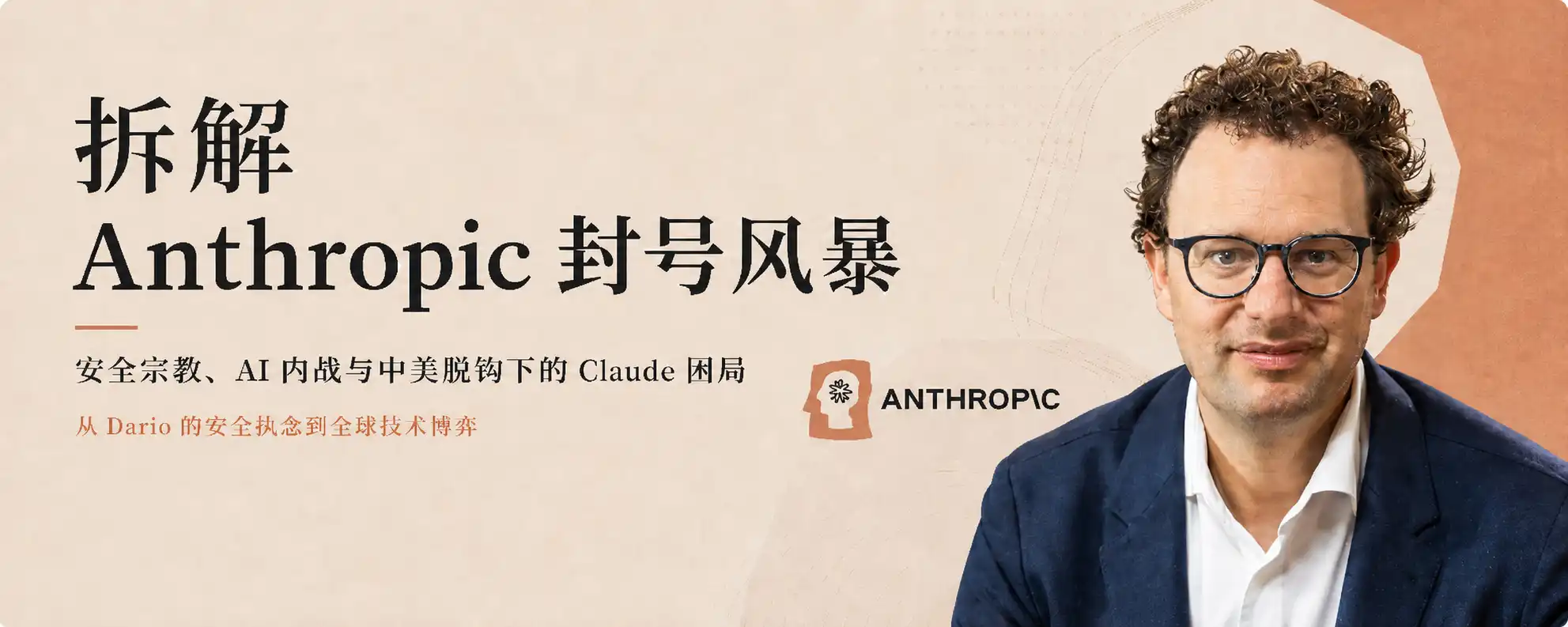
Deep Dissection of the Anthropic Account Banning Storm: The Behind-the-Scenes of the Safety Religion, AI Civil War, and Claude's Dilemma Under US-China Decoupling

"Deconstructing Anthropic's Account Banning Storm: Safety Dogma, AI Civil War, and the Claude Dilemma Under US-China Decoupling" analyzes the aggressive user account suspension policies of Anthropic, particularly for its product Claude Code. The article attributes this to a multi-layered convergence of factors. The root cause is traced to founder Dario Amodei's personal "safety religion." Shaped by his father's illness and his exit from OpenAI over safety disagreements with Sam Altman, Amodei embedded this "zero-tolerance" philosophy into Anthropic's DNA. This manifests in technologies like Constitutional AI and a "preventive enforcement" approach to risk, prioritizing safety over user experience or growth. This stance defines Anthropic's position in the US "AI Civil War," pitting "safety-first" proponents like Amodei against "accelerationists" like Altman who prioritize rapid development and commercialization. Anthropic's strict model aligns with its business strategy targeting high-value, low-risk enterprise clients who pay a premium for security, unlike OpenAI's mass-market approach. Capital from Amazon and Google supports Anthropic but also creates a delicate balance, as these investors need its safety reputation without allowing overly restrictive policies to cripple its commercial viability. The conflict escalated when Anthropic refused a US Department of Defense contract requiring the removal of safety guardrails, leading to its placement on a "supply chain risk" blacklist—a key example of the public battle between the two AI factions. For Chinese users, the stringent bans are further compounded by US-China tech decoupling. Anthropic's policies act as a tool for compliance with US export controls, making Chinese users—who often circumvent regional blocks via VPNs or virtual cards—primary targets for "preventive" account terminations to avoid regulatory penalties. The article concludes that Anthropic's harsh account control measures are unlikely to loosen in the near future, being integral to its founding philosophy, business model, and geopolitical compliance needs, positioning it as a unique, security-obsessed player in the tripartite global AI competition involving US safety and acceleration factions and rising Chinese AI power.

marsbit54 мин. назад

Deep Dissection of the Anthropic Account Banning Storm: The Behind-the-Scenes of the Safety Religion, AI Civil War, and Claude's Dilemma Under US-China Decoupling

marsbit54 мин. назад

Торговля

Спот
Фьючерсы
活动图片