TON Rebrands Native Token As Gram, Reviving Original White Paper Name

bitcoinistPublished on 2026-06-03Last updated on 2026-06-03

Abstract

The native token of the Toncoin (TON) network is being rebranded to 'Gram,' reviving its original name from the project's first white paper. This change, announced by Telegram co-founder and CEO Pavel Durov, is the fourth step in his "Make TON Great Again" (MTONGA) initiative. The transition period is expected to take about three weeks, and a new logo has been previewed. The rebrand follows Telegram's official return to the ecosystem in May as its largest validator, after a six-year absence that began with a 2020 legal dispute with the SEC. Durov stated that the move "returns to our roots" and paves the way for future developments, with three more steps remaining in the MTONGA roadmap. At the time of the announcement, Gram was trading around $2.02.

Toncoin’s native token has rebranded to ‘Gram’ as part of the latest step in Pavel Durov’s “Make TON Great Again” roadmap.

Toncoin’s Native Token Is Now Called Gram

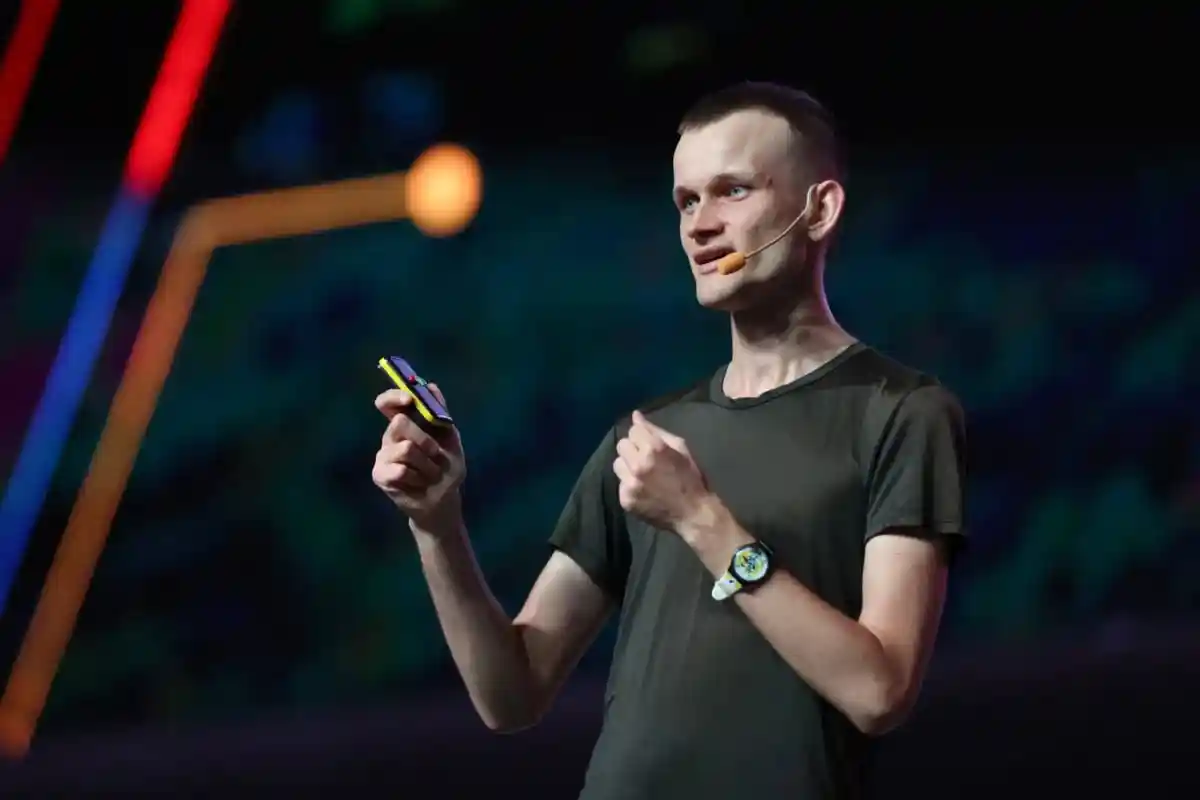
In a new post on Telegram, Pavel Durov has shared details related to a rebranding of the native token of the Toncoin network. The asset is set to see a name change to Gram, with the transition period expected to take about three weeks.

Durov is the co-founder and CEO of Telegram, and one of the biggest backers of TON. In the blockchain’s early days, its full form even stood for the Telegram Open Network, with the Telegram team handling its development. Telegram’s official involvement with the token, however, ended back in 2020 following a legal dispute with the US Securities and Exchange Commission (SEC).

After Telegram pulled out, the ecosystem rebranded itself to The Open Network and development was handed off to independent contributors. While the messaging giant ended its involvement in the project, it didn’t break all ties. In 2023, Telegram integrated a wallet based on the blockchain to its official app.

Durov himself also remained a supporter of the project. This year, the Telegram CEO kickstarted the “Make TON Great Again” (MTONGA) initiative, which is going to have a total of seven steps. The first two steps of the roadmap went into action in April and provided upgrades to the network’s transaction speed and fees.

The third step, announced in early May, saw Telegram officially re-enter the picture after a six-year absence, replacing the TON Foundation as the driving force behind the ecosystem. The messaging company also became the network’s largest validator.

“Telegram becoming TON’s largest validator strengthens decentralization,” said Durov in an X post a day after announcing the move. “It lets other major players join the validator pool without centralizing the network — with Telegram as the counterbalance.”

Now, the Telegram co-founder has unveiled the rebrand to the name Gram as the fourth checkpoint in the MTONGA plan. This change, which only applies to the blockchain’s native token, will bring back the asset’s original name from its first white paper. The new website for the token provides a teaser of a fresh logo for the cryptocurrency.
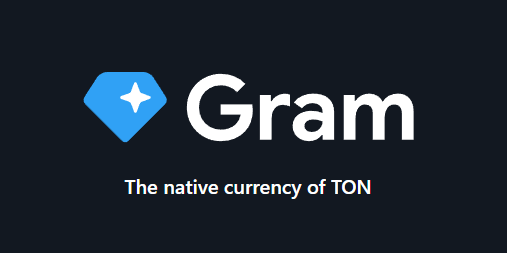
The new logo and name for the cryptocurrency | Source: Gram.org

“We’re returning to our roots — and starting a new chapter,” noted the Telegram co-founder. “This rebranding will pave the way for what comes next.” There are three more steps left in the MTONGA roadmap, but it only remains to be seen what they will bring to the network.

Gram Price

At the time of writing, Gram is trading around $2.02, up over 5% in the last seven days.

The trend in the price of the coin over the last five days | Source: TONUSDT on TradingView

Related Questions

QWhat is the new name of Toncoin's native token and why was it chosen?

AThe new name is 'Gram'. It was chosen to revive the asset's original name from its first white paper, marking a return to the project's roots.

QWho announced the rebranding of the native token and what initiative is it part of?

APavel Durov, co-founder and CEO of Telegram, announced the rebranding. It is the fourth checkpoint in his 'Make TON Great Again' (MTONGA) roadmap initiative.

QWhat was the full form of 'TON' originally, and what is its status with Telegram now?

AOriginally, TON stood for the 'Telegram Open Network'. Telegram officially re-entered the TON ecosystem in early May 2024, after a six-year absence, replacing the TON Foundation as the driving force and becoming its largest validator.

QWhat was the reason for Telegram's initial withdrawal from the TON project in 2020?

ATelegram withdrew from the TON project in 2020 following a legal dispute with the US Securities and Exchange Commission (SEC).

QAccording to the article, what was the approximate price and weekly performance of Gram at the time of writing?

AAt the time of writing, Gram was trading around $2.02, up over 5% in the last seven days.

Related Reads

Vitalik's Algorithmic Stablecoin Vision: Interpreting the Mechanism and Challenges from an Options Perspective

Vitalik Buterin's recent algorithmic stablecoin proposal envisions using an option-like mechanism to create a stablecoin without the liquidation risks inherent in traditional collateralized debt position (CDP) models. The design splits one unit of ETH into two components: a 'stable' leg (P) that maintains value up to a certain strike price, and an 'upside' leg (N) that captures any appreciation above that price. Together, they always sum to one ETH, eliminating the need for debt or liquidation mechanisms. From an options perspective, the stable leg essentially functions as a synthetic, covered call position. However, significant challenges exist. For the stable asset to maintain its peg, it must continuously roll deep in-the-money call options, leading to potential rollover slippage, predictable trading paths vulnerable to front-running, and liquidity issues. Crucially, the system's scalability depends on a constant demand for the upside leg—a form of leveraged ETH long position without funding rates or liquidation risk. It's unclear if such persistent, specific demand will materialize from speculators or market makers who have simpler alternatives like perpetual swaps. The author, drawing from experience with Rysk, argues that DeFi options have struggled as standalone trading products due to complexity and fragmented liquidity. Their potential lies instead as foundational infrastructure underpinning more complex financial primitives like stablecoins, structured yields, or index products—transforming from a direct product into a core pricing and risk distribution engine for the next generation of on-chain finance.

marsbit1h ago

Vitalik's Algorithmic Stablecoin Vision: Interpreting the Mechanism and Challenges from an Options Perspective

marsbit1h ago

GPT-5.6 Countdown: Abandon the Illusion of a Single API, Computational Iteration Can't Outpace a Single Page of Compliance

In mid-June, three seemingly independent industry events—the compliance-driven throttling of Fable 5, the open-sourcing of GLM-5.2, and the leaked release timeline for GPT-5.6—are pushing the global AI industry toward a watershed moment. These shifts signal a fundamental restructuring of the industry's underlying logic. First, **"usability" has substantially overtaken "advanced capabilities"** as the primary weight, pushing the global large language model (LLM) supply chain into a "dual-track" phase of controlled closed-source and local open-source coexistence. Second, **the competitive moats of closed-source giants are shifting**. Their technical focus is moving from "language intelligence" toward "spatial intelligence (world models)"—a domain heavily reliant on computing power. Third, faced with常态化 transnational compliance risks, **a "model-agnostic" decoupled design has become a survival necessity for application-layer developers to maintain business continuity.** The article details how Anthropic's Fable 5, despite its advanced engineering feats, was restricted for non-U.S. citizens within 72 hours of launch, highlighting how geopolitical compliance can instantly limit even the most advanced models. In response, the open-source camp, exemplified by Zhipu AI's MIT-licensed GLM-5.2, is gaining market share by offering stable performance improvements and significant cost advantages (up to 70% savings for enterprises), while achieving full adaptation with domestic semiconductor platforms. Meanwhile, closed-source leaders like OpenAI are pivoting. The anticipated GPT-5.6 reportedly shifts focus from language to spatial intelligence and world models, aiming to rebuild a generational gap in areas like 3D understanding, simulation, and industrial design that demand immense compute. The core conclusion is that the LLM supply chain's logic has changed. Enterprises must now evaluate infrastructure based on a composite of technical performance and policy compliance. For developers, complete reliance on a single closed-source API poses unacceptable risk. Implementing a truly model-agnostic architecture—enabling swift switches to compliant, locally deployable open-source alternatives—is no longer just good practice but a fundamental baseline for business continuity.

marsbit3h ago

GPT-5.6 Countdown: Abandon the Illusion of a Single API, Computational Iteration Can't Outpace a Single Page of Compliance

marsbit3h ago

Is the 'Token Subsidy War' Among AI Giants Almost Over?

The article discusses the ongoing "token subsidy war" among AI giants like OpenAI and Anthropic, questioning whether it's nearing its end. It reveals that current AI subscription prices are heavily subsidized, with some plans offering tokens at up to 70 times the actual cost to attract and retain heavy users, especially developers and enterprises. This strategy mirrors past internet-era subsidy battles, but with a key difference: AI tokens lack "lock-in" effects. Unlike ride-hailing or food delivery apps, users can easily switch between AI providers as APIs become standardized, making it difficult for companies to raise prices post-subsidy. The piece highlights a structural asymmetry in the competition. Giants like Google, with massive advertising revenue, can afford to subsidize tokens indefinitely, akin to using "tokens as a weapon." In contrast, venture-backed companies like OpenAI and Anthropic face pressure to become profitable, especially as they approach IPO. The article cites Google Ventures founder Bill Maris, who suggests Google could slash token prices by 80%, putting immense pressure on competitors. Two potential endgames are presented: the "internet service" model (subsidize, monopolize, then raise prices) and the "utility" model (tokens become a standardized, low-margin commodity like electricity). Given the low switching costs, the latter seems more likely. The competition may not have a single winner but could instead accelerate AI's evolution into a foundational, infrastructure-level technology, akin to a public utility. For now, users continue to benefit from heavily subsidized token costs.

marsbit4h ago

Is the 'Token Subsidy War' Among AI Giants Almost Over?

marsbit4h ago

Trading

Spot
Futures
活动图片