South Korea Explores Crypto Account Freezing Measure To Prevent Market Manipulation

bitcoinistPublished on 2026-01-07Last updated on 2026-01-07

Abstract

South Korea's Financial Services Commission (FSC) is considering a system to preemptively freeze crypto accounts suspected of market manipulation. This measure aims to prevent suspects from hiding or withdrawing illicit profits obtained through tactics like pre-purchasing, automated trading, and price inflation. Unlike current rules requiring court warrants, the new system would allow swift action to block withdrawals, transfers. The proposal draws inspiration from a similar stock market mechanism. This initiative is part of the broader Second Phase of the Virtual Asset User Protection Act, which has been delayed to 2026 due to disagreements between the FSC and the central bank over stablecoin issuance rules.

South Korea’s financial authorities are reportedly considering introducing a system that allows regulators to conduct pre-emptive crypto account freezes to stop digital asset price manipulation.

FSC Mulls Crypto Account Freezing System

On Tuesday, a local news media outlet reported that the Financial Services Commission (FSC) is discussing introducing a system to prevent suspects from hiding or withdrawing unrealized profits from market manipulation related to crypto assets.

In a January 6 meeting, the regulators revealed that they have been discussing the matter since November, exploring the proposal for prosecution measures against suspects of crypto asset price manipulation.

According to Newsis, some officials consider that there’s a need “to complement the current Virtual Asset User Protection Act by implementing measures for the confiscation of criminal proceeds or the preservation of recovery funds in advance.”

The measure would restrict fund outflows such as withdrawals, transfers, and payments from a crypto-related account suspected of obtaining illicit gains through typical market manipulation tactics, including pre-purchasing, repeated trades via automated trading, buying at inflated prices, and profit-taking.

Under the current rules, authorities must obtain court warrants to freeze assets linked to crypto manipulation, which leaves no means to act quickly and prevent asset concealment beforehand. One committee member reportedly referenced the payment suspension system for stock price manipulation, which was introduced through the revision of the Capital Markets Act in April.

This system saw the first domestic case of preemptively freezing accounts suspected of unfair trading last September, when the Joint Task Force for Eradicating Stock Price Manipulation imposed these measures on 75 accounts involved in a KRW 100 billion stock price manipulation case by a group of wealthy individuals.

Some FSC officials allegedly emphasized that this system is necessary for crypto assets, arguing that they are easier to conceal once transferred to personal wallets, with one noting that “currently, only exchange deposits and withdrawals are blocked, while withdrawals to financial institutions remain possible. Blocking those withdrawals would help swiftly prevent concealment.”

Another FSC member affirmed that “payment suspension is a step before recovery preservation; it would be good if we could implement it proactively,” while others asked whether provisions related to unfair trading in the Capital Markets Act can be partially replicated in the Second Phase of the Virtual Asset User Protection Act.

Second Phase of SK’s Virtual Asset Push

South Korea’s Second Phase of the Virtual Asset User Protection Act was expected to be submitted at the end of 2025. However, it has been delayed until the start of 2026 due to an ongoing disagreement between the FSC and the Bank of Korea (BOK).

As reported by Bitcoinist, financial authorities have been clashing over rules related to the issuance and distribution of stablecoins, disagreeing on the extent of banks’ role in the issuance of won-pegged tokens.

The central bank has pushed for a consortium of banks owning at least 51% of any stablecoin issuer seeking approval in the country. The FSC has shared concerns that giving a majority stake to banks could reduce participation from tech firms and limit the market’s innovation.

Despite the delay, the main policies of the crypto framework have been reportedly decided. Notably, the FSC’s draft will include investor protection measures such as no-fault liability for crypto asset operators and isolation of bankruptcy risks for stablecoin issuers.

The bill is expected to require crypto asset operators to comply with disclosure obligations as well as terms and conditions. In addition, “impose strict liability for damages on digital asset operators in accordance with the Electronic Financial Transactions Act in cases of hacking or computer system failures.”
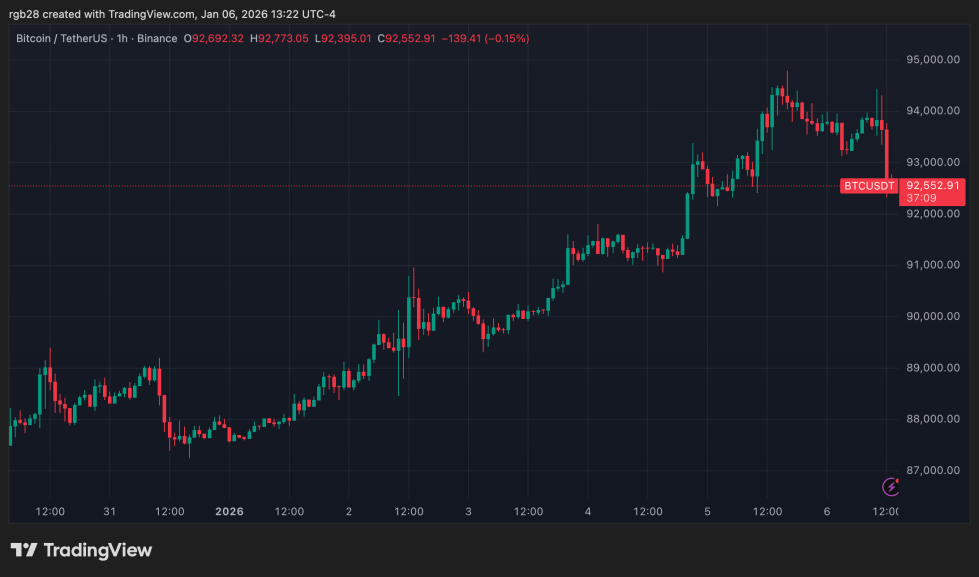
Bitcoin (BTC) trades at $92,552 in the one-week chart. Source: BTCUSDT on TradingView


Trending Cryptos

Related Questions

QWhat system is South Korea's Financial Services Commission (FSC) considering to prevent crypto market manipulation?

AThe FSC is considering introducing a system that allows for the preemptive freezing of crypto accounts to prevent suspects from hiding or withdrawing unrealized profits obtained through market manipulation.

QWhy do some FSC officials believe the current Virtual Asset User Protection Act needs to be complemented?

AThey believe it needs to be complemented by implementing measures for the confiscation of criminal proceeds or the preservation of recovery funds in advance, as the current rules require court warrants to freeze assets, leaving no means to act quickly to prevent asset concealment.

QWhat was the first domestic case where the payment suspension system for stock price manipulation was used?

AThe first case was in September, when the Joint Task Force for Eradicating Stock Price Manipulation froze 75 accounts involved in a KRW 100 billion stock price manipulation case by a group of wealthy individuals.

QWhat is the main point of disagreement causing the delay of the Second Phase of the Virtual Asset User Protection Act?

AThe delay is due to an ongoing disagreement between the FSC and the Bank of Korea (BOK) over rules for stablecoin issuance, specifically the extent of banks' role. The BOK wants a consortium of banks to own at least 51% of any stablecoin issuer, while the FSC is concerned this could reduce tech firm participation and limit innovation.

QWhat are some of the key protection measures expected to be included in the FSC's draft of the Second Phase of the Virtual Asset User Protection Act?

AThe draft is expected to include measures such as no-fault liability for crypto asset operators, isolation of bankruptcy risks for stablecoin issuers, disclosure obligations for operators, and strict liability for damages in cases of hacking or system failures.

Related Reads

TechFlow Intelligence Bureau: Anthropic IPO Odds Exceed 80%, Iran Closes Strait of Hormuz Again, Triggering Oil Price Volatility

**Market Digest** **AI & Tech:** Anthropic is widely expected to announce an IPO before November 2026, raising questions about balancing its trillion-dollar valuation ambitions with its core "AI safety" mission. Brands are increasingly adopting AI-generated virtual influencers for marketing. Cloudflare introduced temporary accounts for AI agents to ease automation workflows. **Infrastructure & Hardware:** Google's IPv6 traffic surpassed 50%, marking a major internet milestone. Goldman Sachs warned that massive projected AI capital expenditure ($5.3T) is approaching credit saturation limits, potentially curbing the "AI arms race." **Space & Robotics:** SpaceX's IPO saw a historic $370M retail buying frenzy in three days. Hyundai Motor Group plans to acquire full ownership of Boston Dynamics. Elon Musk speculated about future "septillion-dollar" investments in antimatter for interstellar travel. **Energy & Geopolitics:** Iran's military announced another closure of the strategic Strait of Hormuz, accusing Israel of violating a ceasefire, causing oil market volatility. However, ship-tracking data indicated some traffic continued. Concurrently, Iran resumed crude loadings at Kharg Island, potentially releasing up to 20 million barrels to the market. **Finance & Macro:** A European CLO (collateralized loan obligation) experienced its first post-2008-crisis-era equity tranche default, raising alarms in credit markets. Nomura warned that new Federal Reserve Chair Wash's perceived hawkish debut speech could signal a significant policy shift. **The Undercurrent:** Seemingly disparate events—the Strait of Hormuz tension, the European CLO default, and warnings on AI spending—point to a tightening of global liquidity and rising marginal costs across energy, credit, and tech investment. Meanwhile, capital continues chasing grand narratives like space exploration and advanced AI, highlighting a divergence where old-world leverage frays as new-world stories grow more ambitious.

marsbit10h ago

TechFlow Intelligence Bureau: Anthropic IPO Odds Exceed 80%, Iran Closes Strait of Hormuz Again, Triggering Oil Price Volatility

marsbit10h ago

Trading

Spot
Futures

Hot Articles

Discussions

Welcome to the HTX Community. Here, you can stay informed about the latest platform developments and gain access to professional market insights. Users' opinions on the price of S (S) are presented below.

活动图片