. Key Takeaways
- Bruno Oliveira is on a journey to show how small, steady actions can embody Bitcoin’s Proof-0f-Work in real life.
- Once mocked by friends, he’s now recognized globally for his mission to accumulate as much Bitcoin as possible.
- After discovering the power of crypto, Oliveira now wants to inspire the younger generation.
When Bruno Oliveira began collecting discarded aluminum cans to buy Bitcoin (BTC) after losing all his savings, some of his friends in his hometown of Limeira laughed at him about his new obsession.
Two years later, he’s gone viral for his mission and is even writing a children’s book to inspire the younger generation.


 88
88
Bitcoin
Ethereum
Tether
Litecoin
Bitcoin Cash
 TRON
TRON
 XRP
XRP
 Cardano
 Binance USD
 USD Coin
 Polkadot
 Shiba Inu
 Basic Attention Token
 Qtum
Qtum
 Ethereum Classic
 Chainlink
 Solana
 Polygon Matic
 Cosmos
 Wrapped Bitcoin
 PancakeSwap
 The Sandbox
 Storj
Storj
 iExec RLC
 Bancor
 Uniswap
 Enjin Coin
 1inch Network
 Chiliz
 Aave
Aave
 Synthetix
 Maker
Maker
 Compound
 Theta Network
 Celo
Celo
 Curve DAO Token
 Decentraland
 JUST
JUST
 Axie Infinity
 Gala
Gala
 Internet Computer
 The Graph
 Filecoin
 dYdX
dYdX
 Mask Network
 Lido DAO Token
 Reserve Rights
 Chromia
 Ankr
Ankr
 Ocean Protocol
 Adventure Gold
 Origin Protocol
 Celer Network
 NKN
NKN
 Bitget Token
 Alchemix
 Immutable
 Ethereum Name Service
 Avalanche
 Zilliqa
 JasmyCoin
 Toncoin
 Convex Finance
 Spell Token
 Holo
Holo
 Render Token
 SushiSwap
 MetisDAO
 Audius
 Illuvium
 ARPA Chain
 Osmosis
 Fantom
 Neo
Neo
 Arweave
 Algorand
 Kusama
 XDC Network
 APEcoin
 MultiversX
 THORChain
 NEAR Protocol
 Nexo
Nexo
 Amp
Amp
 Livepeer
 PAX Gold
 TrueUSD
 BitTorrent
 Golem
Golem
 FLUX
FLUX
 Helium
 Dai
Dai
 Build'N'Build
 151
151
Bitcoin
Ethereum
Tether
USD Coin
Solana
XRP
 Dogecoin
Cardano
Toncoin
Shiba Inu
Avalanche
TRON
Chainlink
Polygon Matic
Polkadot
Wrapped Bitcoin
Litecoin
Dai
NEAR Protocol
Bitcoin Cash
Dogecoin
Cardano
Toncoin
Shiba Inu
Avalanche
TRON
Chainlink
Polygon Matic
Polkadot
Wrapped Bitcoin
Litecoin
Dai
NEAR Protocol
Bitcoin Cash
 Stellar
Cosmos
Filecoin
Ethereum Classic
Stellar
Cosmos
Filecoin
Ethereum Classic
 Aptos
Aptos
 Hedera Hashgraph
Immutable
Hedera Hashgraph
Immutable
 Optimism
 Arbitrum
 VeChain
The Sandbox
Decentraland
Axie Infinity
VeChain
The Sandbox
Decentraland
Axie Infinity
 Injective Protocol
 Render
The Graph
Maker
Aave
Chiliz
Helium
PAX Gold
Compound
Lido DAO Token
Render
The Graph
Maker
Aave
Chiliz
Helium
PAX Gold
Compound
Lido DAO Token
 Sui
Sui
 Conflux Network
 Lido Staked ETH
 OKB
Uniswap
OKB
Uniswap
 Pepe
Pepe
 Ondo
Ondo
 Mantle
 First Digital USD
XDC Network
First Digital USD
XDC Network
 Artificial Superintelligence Alliance
 Jupiter
 Quant
Quant
 Worldcoin
 Bonk
Bonk
 Tether Gold
 JITO
JasmyCoin
JITO
JasmyCoin
 Core
Core
 Floki Inu
Ethereum Name Service
SushiSwap
1inch Network
Floki Inu
Ethereum Name Service
SushiSwap
1inch Network
 Tezos
Algorand
Tezos
Algorand
 Flow
Flow
 Trust Wallet Token
Curve DAO Token
MultiversX
Basic Attention Token
Enjin Coin
Trust Wallet Token
Curve DAO Token
MultiversX
Basic Attention Token
Enjin Coin
 Ethena
 Ethena Staked USDe
Audius
Ethena Staked USDe
Audius
 Alchemy Pay
 Arkham
 API3
API3
 Bounce Token
 Altlayer
 Aergo
Amp
Aergo
Amp
 Aevo
Ankr
Aevo
Ankr
 Axelar
 Alpaca Finance
 Blur
Blur
 Biconomy
 Tranchess
Celer Network
Tranchess
Celer Network
 Shentu
 Civic
Convex Finance
Civic
Convex Finance
 Cartesi
 Cyber
Cyber
 COTI
COTI
 DIA
dYdX
DIA
dYdX
 ether.fi
FLUX
ether.fi
FLUX
 Ampleforth
Golem
Holo
Illuvium
JUST
Livepeer
Ampleforth
Golem
Holo
Illuvium
JUST
Livepeer
 Memecoin
 Manta Network
 Treasure
Mask Network
Origin Protocol
Treasure
Mask Network
Origin Protocol
 ORDI
ORDI
 Ontology
 Phala Network
 Pendle
 Portal
 Pyth Network
 ConstitutionDAO
iExec RLC
Reserve Rights
ConstitutionDAO
iExec RLC
Reserve Rights
 Ravencoin
Storj
Ravencoin
Storj
 Status
Spell Token
Status
Spell Token
 Sun (New)
 SuperVerse
 Tellor
 LayerZero
 Scroll
 Usual
Usual
 Eigenlayer
 Hamster Kombat
 Catizen
 Berachain
 KAITO
KAITO
 Pudgy Penguins
 Solayer
 Bio Protocol
 ChainGPT
 Cookie DAO
 Solv Protocol
 Movement
 DeXe
Nexo
DeXe
Nexo
 Hyperliquid
 STEPN
Synthetix
Neo
APEcoin
Gala
Internet Computer
STEPN
Synthetix
Neo
APEcoin
Gala
Internet Computer
 Pi Network
 IoTex
Build'N'Build
IoTex
Build'N'Build

Lost Savings, New Beginnings
Oliveira, who goes by the nickname ‘Sucateiro Cripto,’ meaning “Crypto Scrap Dealer,” began his recycling project in 2022 after the COVID-19 pandemic wiped out much of his savings.
Faced with unemployment and limited resources, he decided to try to turn his project into an opportunity.
“What inspired me was the lack of resources during the pandemic,” he told CCN.
“I had to use all my investments, but the desire to keep going remained,” he added. “That’s when I came up with the idea of recycling cans.”
Even though it wasn’t much, Oliveira realized that what truly mattered was to keep “a reserve in Bitcoin and to never give up.”
Saving Cans For Bitcoin
Working mainly on weekends, Oliveira collects discarded aluminium cans from the streets of Limeira and nearby neighborhoods, selling them to local recycling centers and converting the proceeds into Bitcoin.
The process, he says, is slow but symbolic, proof that even small, consistent efforts can build something meaningful over time.
“What matters is taking the first step and understanding that even small amounts can become valuable,” he added.
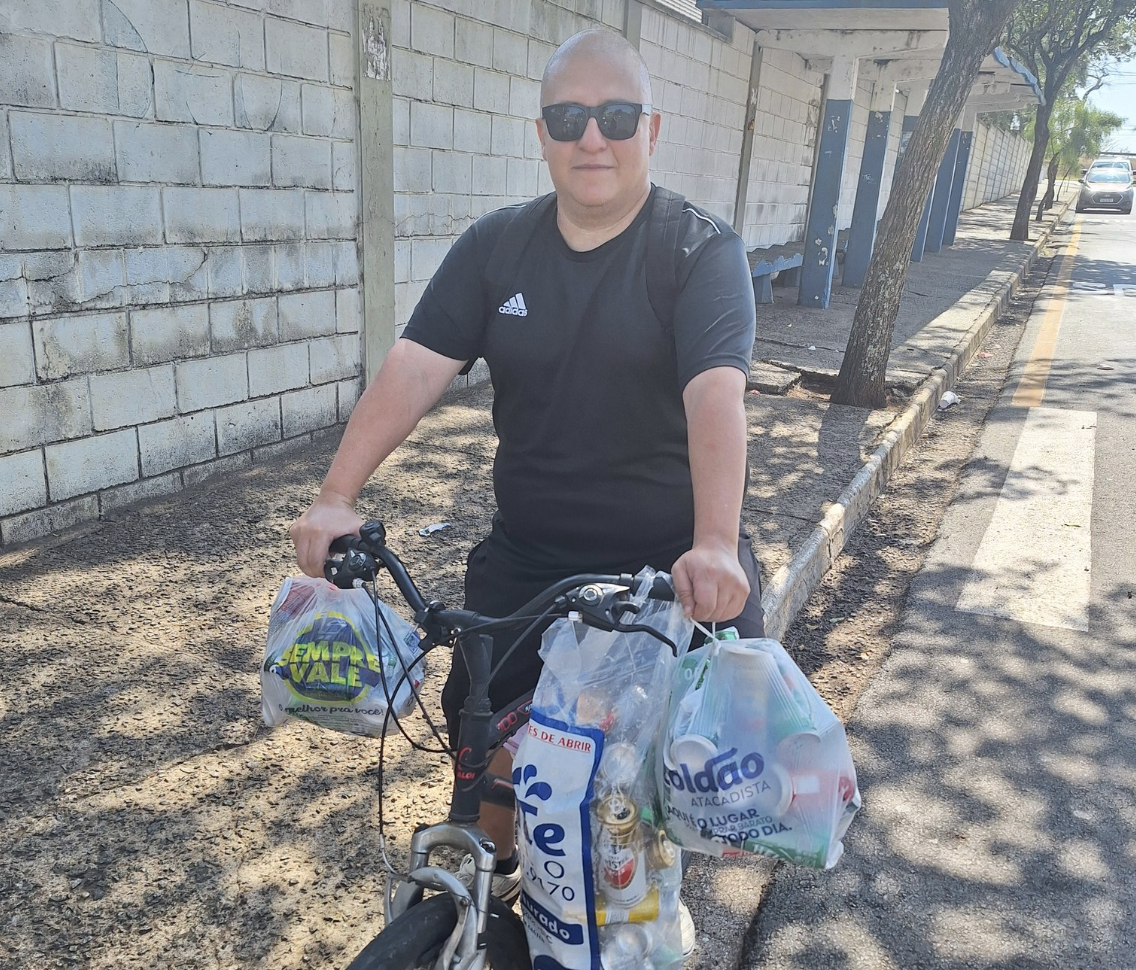
Oliveira earns around 20 to 30 reais ($4–6) per weekend from recycling, modest by any standard, which he converts directly into Bitcoin.
“Reaching 1 BTC through recycling alone is really impossible,” he said.
“But I try to show people that any percentage can make a difference. My goal is to reach 0.1 BTC by recycling mainly on weekends and converting everything I earn into satoshis,” he added.
He said Bitcoin’s price swings don’t worry him.
“Bitcoin’s volatility doesn’t bother me because I think long-term — when the price drops, I see it as a chance to accumulate more.”
Teased And Misunderstood
Oliveria’s mission wasn’t always celebrated. When he first started, he claimed some of his friends in Limeira laughed and teased him.
“Among some friends, I’m even joked about, especially by those who enjoy gambling and bets,” Oliveira told CCN.
“Still, that doesn’t discourage me — what matters is showing that it’s valuable to invest wisely, even starting small.”
Two years later, the laughter has faded.
Oliveira’s story has now become viral across social media, with thousands of online traders heralding his mission as real “proof of work.”
“I haven’t fully reached my goal yet, but I surprisingly earned the respect of the Bitcoin community, and that already means a lot to me,” he told CCN.
However, despite international recognition, Oliveira claims “only a few people really know me and invest in Bitcoin” in his local city.
Teaching Bitcoin To Younger Generation
Beyond collecting cans, Oliveira has now written four children’s books and developed a memory game aimed at teaching Bitcoin’s principles to families.
“The books and the game are part of a family-friendly Bitcoin education,” he said.
“They teach, in a fun and colorful way, values like freedom, responsibility and cooperation,” he added.
He said his main motivation comes from his two daughters and grandson, who he doesn’t want to make the same mistake he did of investing late.
“I don’t want that to happen to them,” he said.