加密羞耻:缺乏价值感,选错行业了吗?

链捕手Published on 2024-08-07Last updated on 2024-08-07

作者:深潮 TechFlow
图片

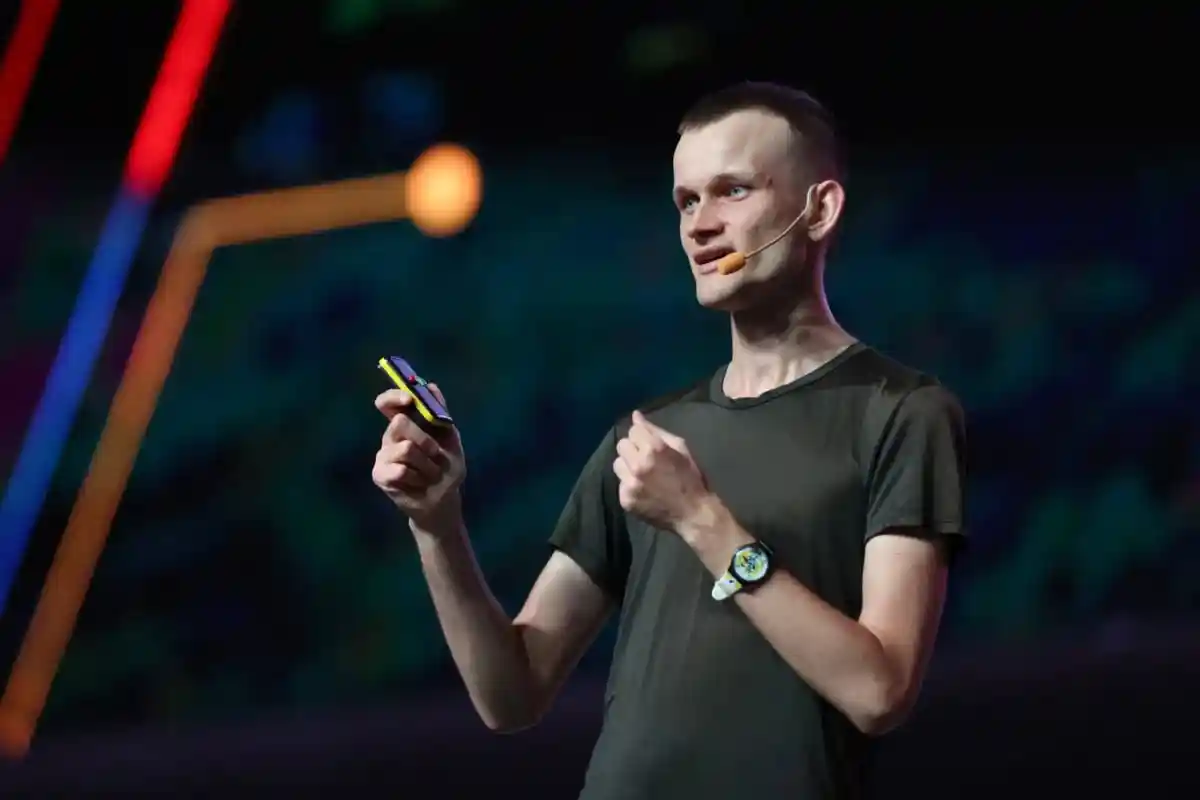
8 月 5 日,加密市场大跌,大跌之中,以太坊基金会成员, Geth 开发负责人 Péter Szilágyi 的一番感言又让人格外难受。

他在 X 上发文质疑加密行业的实际价值,表示经常怀疑自己是不是选错了行业

“比如 SpaceX,他们把火箭送上火星?人类进步。他们没能成功发射火箭并炸毁了?人类学到了教训并且仍然进步。所有结果都带来了进步。

相比之下,加密行业简直就是个给傻瓜们准备的赌场(向少数例外致歉)。价格上涨了?太好了,什么时候买跑车。价格下跌了?生活被摧毁了。对人类有何贡献?

是的,建立一个新的货币系统确实需要时间。当然了……但在这个过程中我们能不能做一些有用的事情?每个人都想成为下一个 Vitalik ,没人想去构建有用的东西,大家都只想着如何榨取价值

我真的看不出这个系统为什么不应该崩溃?从宏观来看,我们会失去什么?加密行业到目前为止所做的一切只不过是一场巨大的价值转移,我还没看到任何实质性的价值创造

请注意,通过运气发大财然后把资金转移到一些非加密的项目上,这并不能算作是加密的成功故事。这充其量只是一个幸运的慈善家成功的故事,更可能只是一个人简单的多元化投资。

在我看来,这个行业早该开始创造一些真正有用、让人们愿意使用的东西,否则就应该关门大吉。

至少比特币试图(虽然失败了)成为一种避险资产。但其他的都是在卖铲子,而根本没有淘金热的迹象。”

此般“行业虚无”、“缺乏价值感”,并不是只有 Péter Szilágyi  才有,而是如今众多行业从业者潜藏心底的心声。

3 个月前,笔者曾在小范围内发起一项调查,发现身边不少从业者都在考虑“退休”,逐渐淡出行业,有的创业者正积极寻找买家上岸,行业老人则大多躺平……

问及原因,一方面觉得行业已经到了成熟期,贝莱德等机构入场,属于普通人的 Alpha 和机会变得越来越少;另一方面则是对行业越发“疲倦”,工作缺乏价值感

经过几年的摸爬滚打,不少从业者都表示对行业祛魅了,早没有了理想主义,将工作和生活严格区分开,一切的工作注意力聚焦于赚钱本身,行业的本质就是一场巨大的财富转移,赚了钱就跑方为上策

交易平台客户经理表示,在她看来,大多数投资者都是赌徒,赚钱了就目中无人,亏钱了就扬言维权,赌徒都不值得同情。

某项目创始人表示,一开始他进入这个行业也曾想着做出一个出圈的产品,后来发现这是一个天真的想法,在目前这个阶段,叙事大于社区大于抱大腿大于产品,即使是产品,也“被迫”融合 Ponzi 机制,就连一度引领行业叙事的头部加密 VC Paradigm 也成为了造盘的高手。寻找这个行业的 PMF(与市场相匹配的产品)任重道远,在此之前,先得活下去。

投机赚钱依然是这个行业的第一驱动力, K 线就是加密行业的脉搏,其他的一些都不过只是将交易行为合理化的伪装

这不禁让笔者想到最近的一个热词:金融羞耻

最近,在交大高级金融学院毕业典礼上,高金副院长李峰在演讲中说道:

“一些人开始认为金融业毫无价值,因为金融似乎不是硬核科技,认为金融业是可有可无的交易成本;有些金融从业人员,包括我们的一些同学和校友,甚至产生职业羞耻感。”

在金融业整顿的风口浪尖,这个新名词暴露了金融业的集体不安。

殊不知,这样的不安与“加密羞耻”在加密行业已存在多年

众多从业者对外交流通常刻意隐藏自身的身份,首先是一种自我保护,另外也免于来自于他人偏见的议论与审视,在大众视野中,这个行业的标签依然是“割韭菜”,因此不少行业人士通常在对外交际中以马甲示人:酒吧老板、美股投资者、金融从业者……

只有两种情况下,加密行业投资者才在朋友圈挺起胸膛,一是行情大涨,毕竟底气是涨起来的,以涨服人;二是得到了主流个体与市场的认可,比如 SEC 通过比特币现货 ETF,马斯克、特朗普认可比特币……

时至今日,加密资产以及这个行业依然渴望得到更多人的支持与认可。

加密羞耻,缺乏价值感,如何破局?

首先,这种“情绪”并不新鲜,从比特币诞生之初,关于行业价值的 FUD 便一直存在。

巴比特联合创始人老端在 2011 年曾是比特币布道者,然而 2 年后,摇身一变为“批评者”,表示,“ 比特币目前最大的价值,就是满足了国人‘一夜暴富’的幻想。

无论是 2011 年,还是如今的 2024,拉长了时间线,我们依然可以说出那句话,“We are still early”,相较于互联网等行业,加密行业如今依然在早期,依然会经历技术成熟曲线所勾勒的低谷与黑暗,泡沫破灭,被大众质疑,然后浴火重生……有太多未知,值得探索。

我们首先得承认这个行业目前的症结所在,重基建,轻应用,缺少真正的 PMF,除了比特币和稳定币,大多数项目依然停留在技术叙事的空中楼阁中,甚至不如 MEME 接地气。

知易行难,提出问题总是容易的,难的是迎难建设,做出一番成绩,可以给创业者,特别是应用类创业者更多的包容与支持。

前段时间,以太坊联合创始人 Vitalik 在最新演讲《以太坊的下一个十年》也提出了类似的观点:“开发者应勇于探索,构建对世界产生影响的应用,不应该只是复制 Web2,而是要先行一步,2034 年不会只有桌面和移动设备,还会有可穿戴设备、可本地运行的 AI、AR……”

区块链与加密货币的发展并不是生产力的变革,而是生产关系的完善,因此并不会如同 ChatGPT 的问世般快速给予正反馈,未来 Crypto 或许也需要积极与 AI 、 AR 等新兴生产力相融合

最近,一群行业人士报名了非洲 Safari 狩猎团,需要用美金结算,漫长的银行支付手续、合同审查,高昂的 Swift 费用、银行手续费让非洲小哥和参与者苦不堪言,最后非洲小哥被安利了稳定币 USDT/USDC…… 相比之下,传统的 Swift 系统宛如旧石器时代古董。

从俄罗斯到非洲大陆,美元稳定币正在全球悄然掀起一场变革,而沙特阿拉伯等中东国家也正积极加入中国央行主导的 mBridge 项目,实现 CBDC 跨境支付……

这是一段漫长的旅途,需要有足够的耐心,但只要进步一点点,便能够让世界不一样。

最后小编想说的是:

有的人“加密羞耻”,是觉得没有创造实际价值而感到精神匮乏;有的人加密羞耻,是因为年年亏损,收集了各种被收割的亏钱姿势,都不好意思说自己是老韭菜……

毕竟,在当下残酷的市场中,对于大多数人而言,赚到钱却觉得价值感匮乏已然是幸福的烦恼了

Trending Cryptos

Related Reads

Vitalik's Algorithmic Stablecoin Vision: Interpreting the Mechanism and Challenges from an Options Perspective

Vitalik Buterin's recent algorithmic stablecoin proposal envisions using an option-like mechanism to create a stablecoin without the liquidation risks inherent in traditional collateralized debt position (CDP) models. The design splits one unit of ETH into two components: a 'stable' leg (P) that maintains value up to a certain strike price, and an 'upside' leg (N) that captures any appreciation above that price. Together, they always sum to one ETH, eliminating the need for debt or liquidation mechanisms. From an options perspective, the stable leg essentially functions as a synthetic, covered call position. However, significant challenges exist. For the stable asset to maintain its peg, it must continuously roll deep in-the-money call options, leading to potential rollover slippage, predictable trading paths vulnerable to front-running, and liquidity issues. Crucially, the system's scalability depends on a constant demand for the upside leg—a form of leveraged ETH long position without funding rates or liquidation risk. It's unclear if such persistent, specific demand will materialize from speculators or market makers who have simpler alternatives like perpetual swaps. The author, drawing from experience with Rysk, argues that DeFi options have struggled as standalone trading products due to complexity and fragmented liquidity. Their potential lies instead as foundational infrastructure underpinning more complex financial primitives like stablecoins, structured yields, or index products—transforming from a direct product into a core pricing and risk distribution engine for the next generation of on-chain finance.

marsbit1h ago

Vitalik's Algorithmic Stablecoin Vision: Interpreting the Mechanism and Challenges from an Options Perspective

marsbit1h ago

GPT-5.6 Countdown: Abandon the Illusion of a Single API, Computational Iteration Can't Outpace a Single Page of Compliance

In mid-June, three seemingly independent industry events—the compliance-driven throttling of Fable 5, the open-sourcing of GLM-5.2, and the leaked release timeline for GPT-5.6—are pushing the global AI industry toward a watershed moment. These shifts signal a fundamental restructuring of the industry's underlying logic. First, **"usability" has substantially overtaken "advanced capabilities"** as the primary weight, pushing the global large language model (LLM) supply chain into a "dual-track" phase of controlled closed-source and local open-source coexistence. Second, **the competitive moats of closed-source giants are shifting**. Their technical focus is moving from "language intelligence" toward "spatial intelligence (world models)"—a domain heavily reliant on computing power. Third, faced with常态化 transnational compliance risks, **a "model-agnostic" decoupled design has become a survival necessity for application-layer developers to maintain business continuity.** The article details how Anthropic's Fable 5, despite its advanced engineering feats, was restricted for non-U.S. citizens within 72 hours of launch, highlighting how geopolitical compliance can instantly limit even the most advanced models. In response, the open-source camp, exemplified by Zhipu AI's MIT-licensed GLM-5.2, is gaining market share by offering stable performance improvements and significant cost advantages (up to 70% savings for enterprises), while achieving full adaptation with domestic semiconductor platforms. Meanwhile, closed-source leaders like OpenAI are pivoting. The anticipated GPT-5.6 reportedly shifts focus from language to spatial intelligence and world models, aiming to rebuild a generational gap in areas like 3D understanding, simulation, and industrial design that demand immense compute. The core conclusion is that the LLM supply chain's logic has changed. Enterprises must now evaluate infrastructure based on a composite of technical performance and policy compliance. For developers, complete reliance on a single closed-source API poses unacceptable risk. Implementing a truly model-agnostic architecture—enabling swift switches to compliant, locally deployable open-source alternatives—is no longer just good practice but a fundamental baseline for business continuity.

marsbit3h ago

GPT-5.6 Countdown: Abandon the Illusion of a Single API, Computational Iteration Can't Outpace a Single Page of Compliance

marsbit3h ago

Is the 'Token Subsidy War' Among AI Giants Almost Over?

The article discusses the ongoing "token subsidy war" among AI giants like OpenAI and Anthropic, questioning whether it's nearing its end. It reveals that current AI subscription prices are heavily subsidized, with some plans offering tokens at up to 70 times the actual cost to attract and retain heavy users, especially developers and enterprises. This strategy mirrors past internet-era subsidy battles, but with a key difference: AI tokens lack "lock-in" effects. Unlike ride-hailing or food delivery apps, users can easily switch between AI providers as APIs become standardized, making it difficult for companies to raise prices post-subsidy. The piece highlights a structural asymmetry in the competition. Giants like Google, with massive advertising revenue, can afford to subsidize tokens indefinitely, akin to using "tokens as a weapon." In contrast, venture-backed companies like OpenAI and Anthropic face pressure to become profitable, especially as they approach IPO. The article cites Google Ventures founder Bill Maris, who suggests Google could slash token prices by 80%, putting immense pressure on competitors. Two potential endgames are presented: the "internet service" model (subsidize, monopolize, then raise prices) and the "utility" model (tokens become a standardized, low-margin commodity like electricity). Given the low switching costs, the latter seems more likely. The competition may not have a single winner but could instead accelerate AI's evolution into a foundational, infrastructure-level technology, akin to a public utility. For now, users continue to benefit from heavily subsidized token costs.

marsbit4h ago

Is the 'Token Subsidy War' Among AI Giants Almost Over?

marsbit4h ago

Trading

Spot
Futures

Hot Articles

Discussions

Welcome to the HTX Community. Here, you can stay informed about the latest platform developments and gain access to professional market insights. Users' opinions on the price of ETH (ETH) are presented below.

活动图片