标准普尔全球警告以太坊 ETF 现货对质押集中度的影响

区块创新Block ChangePublished on 2024-02-22Last updated on 2024-02-22

Abstract

标准普尔全球评级在最近的一份分析中强调,美国可能批准现货以太坊(ETH )交易所交易基金(ETF),其中包括质押计划,可能会放大以太坊网络内的集中风险。

标准普尔全球评级在最近的一份分析中强调,美国可能批准现货以太坊(ETH )交易所交易基金(ETF),其中包括质押计划,可能会放大以太坊网络内的集中风险。

据报道,SEC 最早可能在 5 月份批准 ETH ETF。然而,随着金融巨头争夺这一新兴领域的股份,ETF的进入可能会极大地影响以太坊验证者权力的平衡,带来新的挑战和机遇。

SEC 必须在 5 月 23 日之前对VanEck 的申请做出决定,并可能在该截止日期之前对其他 ETH ETF 申请做出裁决。

1、集中度风险

Ark Invest和Franklin Templeton提出的现货以太坊 ETF 提案旨在通过质押 ETH 来产生额外收益。然而,标准普尔全球分析师写道,如果这些支持质押的 ETF 看到足够高的资金流入,它们可能会影响以太坊验证网络的参与率。

根据该报告,Lido目前占质押 ETH 的比例略低于三分之一,是最大的以太坊验证者。然而,该报告对这些 ETF 选择 Lido 等去中心化质押协议的可能性表示怀疑。

相反,对机构加密货币托管人的偏好似乎更有可能,这表明根据发行人的多元化策略对验证者集中度产生不同的影响。
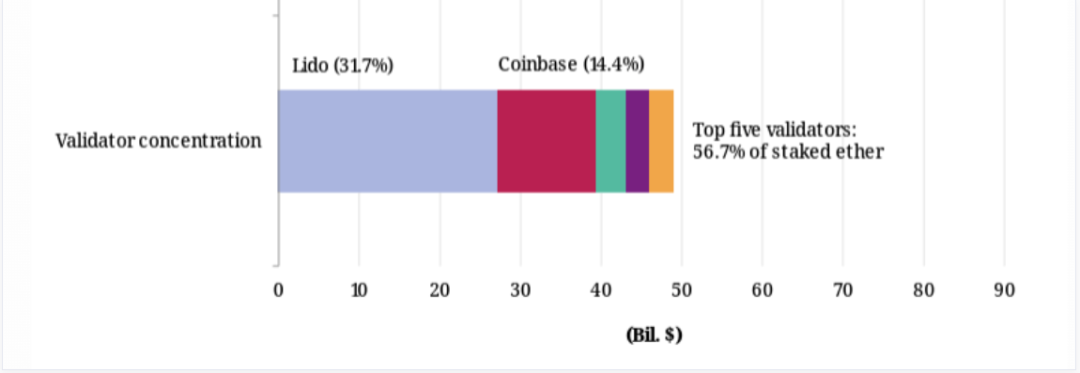
通过 S&P Global 验证 ETH 浓度

该报告还强调,作为某些基金托管人的Coinbase如果代表美国 ETF 接收新的 ETH,也可能会带来集中风险。

该交易所目前负责大约 15% 的 ETH 质押,使其成为第二大验证者。它还担任四个最大的非美国质押以太坊 ETF 中三个的托管人。

该报告表示,这些问题至关重要,因为对单一实体或软件客户端的依赖可能会带来验证器中断和攻击的风险。它呼吁加强对集中风险的监控并强调其重要性。

新数字资产托管人的出现可以为 ETF 发行人更广泛地分配其股份提供途径,这也可以减轻集中风险。

2、摩根大通也表达了担忧

标准普尔全球的报告呼应了摩根大通最近在对以太坊 ETF 现货的类似分析中提出的担忧。该贷款机构的报告还得出结论,Lido 和 Coinbase 的主导地位对生态系统构成了重大的集中风险。

摩根大通认为,验证者数量集中可能会成为单点故障,从而危及网络的稳定性和安全性。这种集中化还为恶意攻击提供了利润丰厚的目标,从黑客攻击到网络运营的协调中断。

此外,摩根大通的分析师警告称,主要验证者之间可能存在勾结。验证者的寡头垄断可以操纵网络的治理和运营参数以达到自身优势,但会牺牲以太坊更广泛的用户群。

这可能表现为审查交易、对某些操作给予优惠待遇或抢先交易——这些做法会削弱人们对以太坊公平性和透明度的信任。

确保以太坊仍然是一个强大、安全和去中心化的平台,需要集体努力来减轻集中风险,并营造一个环境,让任何一个验证者或一组验证者都无法行使不成比例的权力。

Trending Cryptos

Related Reads

OpenAI's "Most Open" Move: Codex No Longer Exclusively Favors GPT

OpenAI has significantly opened up its Codex programming agent by introducing a "model provider" configuration layer that allows users to connect it with various open-source models, not just its proprietary GPT. Through a configuration file or a simple `--oss` command-line flag, Codex can now route requests to local services like Ollama or LM Studio, or to third-party APIs such as Mistral or DeepSeek. This move is seen as one of OpenAI's most "open" steps, potentially lowering costs and enhancing privacy for developers who can run code generation offline. However, integration isn't seamless for all models. Codex primarily uses OpenAI's newer Responses API, while many open-source models rely on the older Chat Completions interface. This creates compatibility issues, especially for advanced features like function calling. The developer community is already building "routing" or adapter layers (e.g., CC Switch, LiteLLM) to translate between these protocols, enabling hybrid setups where GPT handles planning and open-source models handle execution. Analysts interpret this as a strategic shift for OpenAI: from competing solely on model superiority to controlling the platform and interface standards. By making Codex a flexible, pluggable entry point for AI-assisted programming, OpenAI aims to become the central hub in the developer toolchain ecosystem, even as users gain the freedom to switch underlying models.

marsbit37m ago

OpenAI's "Most Open" Move: Codex No Longer Exclusively Favors GPT

marsbit37m ago

When 500 Million People Abandon ChatGPT

ChatGPT's Global AI Assistant Market Share Drops Below 50% Three and a half years after its groundbreaking launch, ChatGPT faces a pivotal moment. While it remains the largest AI assistant globally, its market share has fallen below 50% for the first time, reaching 46.4% as of May, according to Sensor Tower's 2026 AI landscape report. Google's Gemini (27.7%) and Anthropic's Claude (10.3%) are now its main competitors, with Grok, Perplexity, and others also gaining ground. The market has evolved from awe and initial adoption into a phase of product comparison, ecosystem integration, and commercialization. User behavior has matured significantly. Loyalty is low; users readily switch between assistants for specific tasks. Gemini benefits from deep integration within Google's ecosystem (Search, Gmail, Android), while Claude has carved a niche among productivity-focused users with strong retention, nearly matching ChatGPT's. User choice is now influenced by a complex mix of capability, ecosystem, price, use case, and even brand trust. Commercialization is accelerating. AI app downloads continue but growth is slowing, while user spending is rising. Over $4.2 billion was spent in-app during H1 2026. Claude leads in premium subscription conversion rates (13%). OpenAI is expanding its revenue streams, testing ads shown to 17% of ChatGPT users daily by May. This shift highlights the immense financial pressure of model training and inference costs. Despite revenue growth, OpenAI's cash burn is intense, reaching $3.7 billion in Q1 2026. The company projects this could rise to $25-57 billion in the coming years, underscoring the industry-wide challenge of scaling profitably. The symbolism is clear: ChatGPT no longer defines the AI assistant market alone. The era of a single dominant product is over. Gemini, Claude, and specialized tools are collectively shaping user habits and business models. As AI assistants move from novelty to utility—judged on accuracy, efficiency, and value—they are becoming embedded in everyday digital life. ChatGPT may have lost its majority, but AI as a whole is winning, entering a mature, competitive, and diverse new phase.

marsbit38m ago

When 500 Million People Abandon ChatGPT

marsbit38m ago

Trading

Spot
Futures

Hot Articles

Discussions

Welcome to the HTX Community. Here, you can stay informed about the latest platform developments and gain access to professional market insights. Users' opinions on the price of ETH (ETH) are presented below.

活动图片