Strategy Watch #2

insights.glassnode發佈於 2026-03-24更新於 2026-03-24

文章摘要

Strategy Watch #2 provides institutional analysis of digital asset fund performance and allocation trends. The report covers six key areas: institutional capital flows, fund performance, macro strategies, on-chain vault returns, manager sentiment, and allocation updates. In February and early March, Bitcoin and Ethereum saw significant net outflows (-$9.6B and -$3.2B respectively), while stablecoins attracted inflows (+$6.2B), suggesting a defensive shift toward lower-risk assets. BTC ETF flows turned positive in March, though institutional conviction remains cautious. DeFi Total Value Locked (TVL) on Ethereum declined sharply, with peak outflows of -$23.7B in February, indicating reduced participation in on-chain yield strategies. CME basis yields continued to tighten, reflecting lower institutional leverage and softer derivatives demand. The report also highlights performance trends, with only one strategy type generating positive returns in February. Over 300 managers shared their three-month market outlook, and a new $750M fund of funds was announced.

The full report is freely available in PDF format.

Download PDF version

Welcome to Strategy Watch #2

Strategy Watch was built to address a clear demand for high-signal, impartial analysis of fund-level performance and allocation trends in digital assets.

The inaugural edition confirmed this demand, reaching a broad audience of key decision makers, from leading global asset managers, hedge funds, major investment banks, top-tier crypto-native funds and Fund of Funds.

Building on this early momentum, our objective is straightforward — to make Strategy Watch a must-read monthly publication for the digital asset investment community.

This publication is strengthened by direct input from market participants. Funds and allocators that contribute data and insights help shape a more complete and valuable view of the landscape.

If you have insights, data, or allocation updates worth sharing, we welcome your contribution.

Present your latest initiatives and updates to a curated audience of institutional allocators.

Share updates ↗

Inside the Latest Strategy Watch

The report is structured across six core sections, each focused on a distinct dimension of institutional activity in digital assets:

01 Institutional Flow Monitor |

02 Fund and SMA Performance | February was a bloodbath, check this section to see the only strategy type that returned positively last month.

03 Strategy Deep Dive: Macro Strategies | Hear firsthand from a macro portfolio manager on how they are navigating the current geopolitical challenges. 

04 On-chain Vault Performance | Are ETH curators underperforming ETH staking yield?

05 Manager Monitor | Find out how more than 300 managers are expecting the crypto market to perform over the next three months.

06 Allocation Updates | New USD 750m Fund of Funds is launching. Check this section to learn more.

in partnership with

The Premier Digital Assets Allocator Platform. Learn more


Institutional Flow Monitor

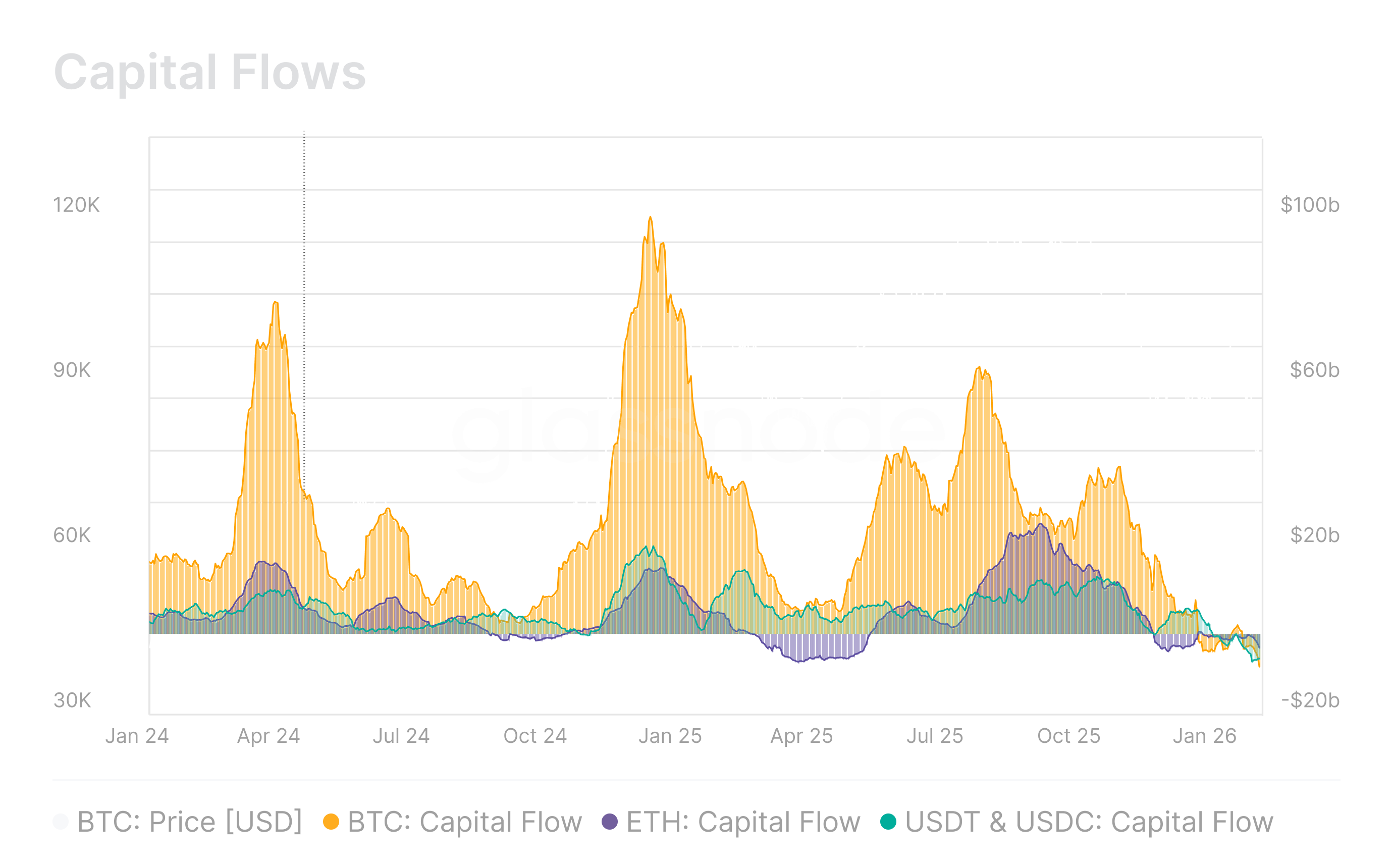
Capital flows into BTC and ETH remained deeply negative through February and into March, with stablecoins turning net positive in early March as investors rotated toward lower-risk positioning.

Bitcoin and Ethereum continued to experience sustained net outflows, with BTC and ETH capital flows registering -$9.6B and -$3.2B. However, stablecoins broke from the broader negative trend, flipping to +$6.2B in net inflows. Rather than signaling a broad return of risk appetite, this rotation likely reflects a defensive repositioning, with capital migrating into dollar-denominated on-chain instruments while conviction in spot crypto assets remains under pressure heading into mid-Q1 2026.
ETF & DAT Net Flows

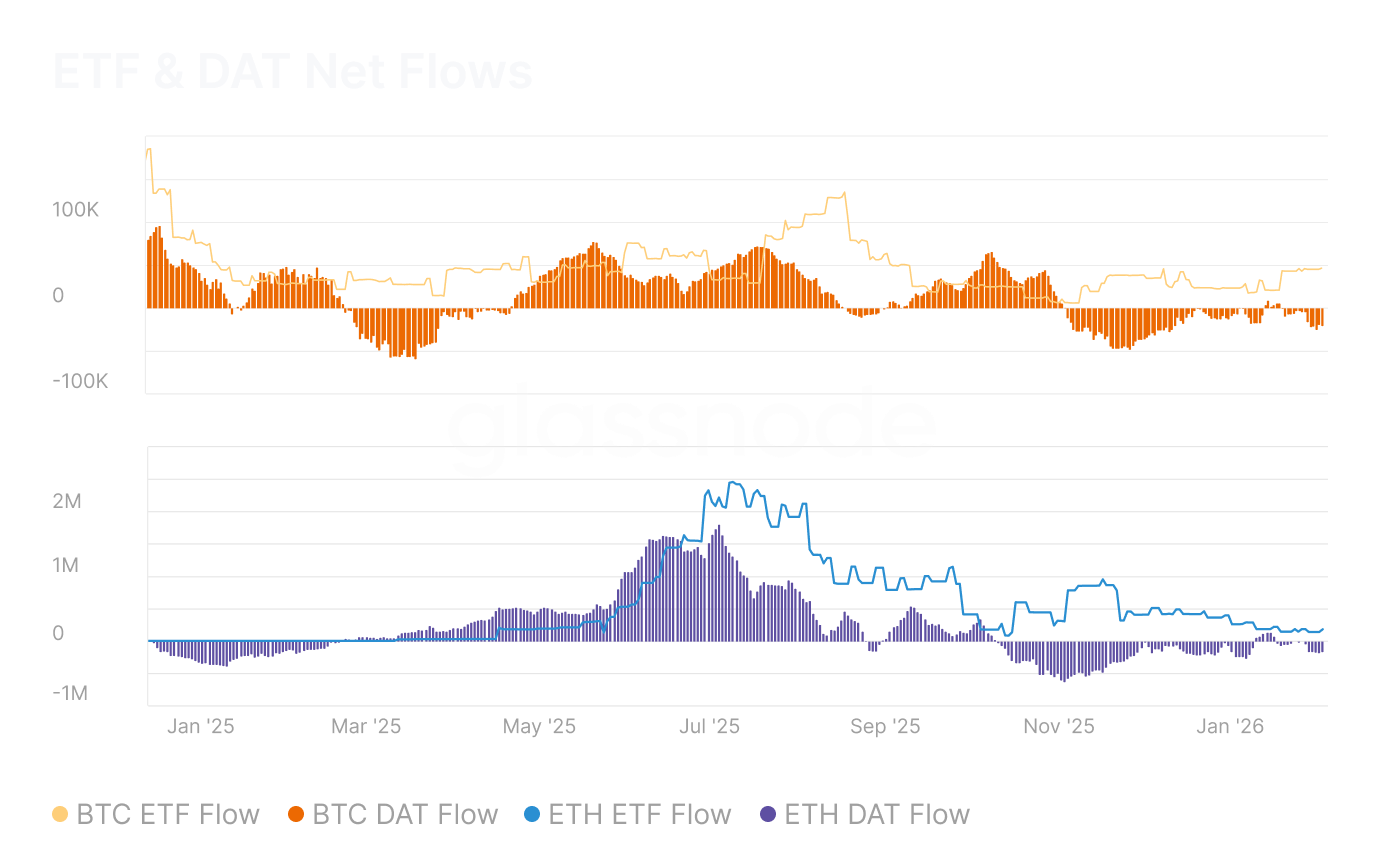
After sustained February outflows, BTC ETF and DAT flows returned to positive, while ETH institutional flows showed early signs of stabilization.

After sustained February outflows, Bitcoin ETF and DAT flows returned to positive territory, recovering to +28k BTC and +46.8k BTC respectively. Ethereum flows were more measured, with ETF flows near neutral at +46.5k ETH and DAT flows stabilizing at +295.8k ETH. While the directional shift is encouraging, the recovery remains early-stage and uneven, and it would be premature to characterize this as a broad resumption of institutional conviction.
DeFi TVL & Stablecoin Cap

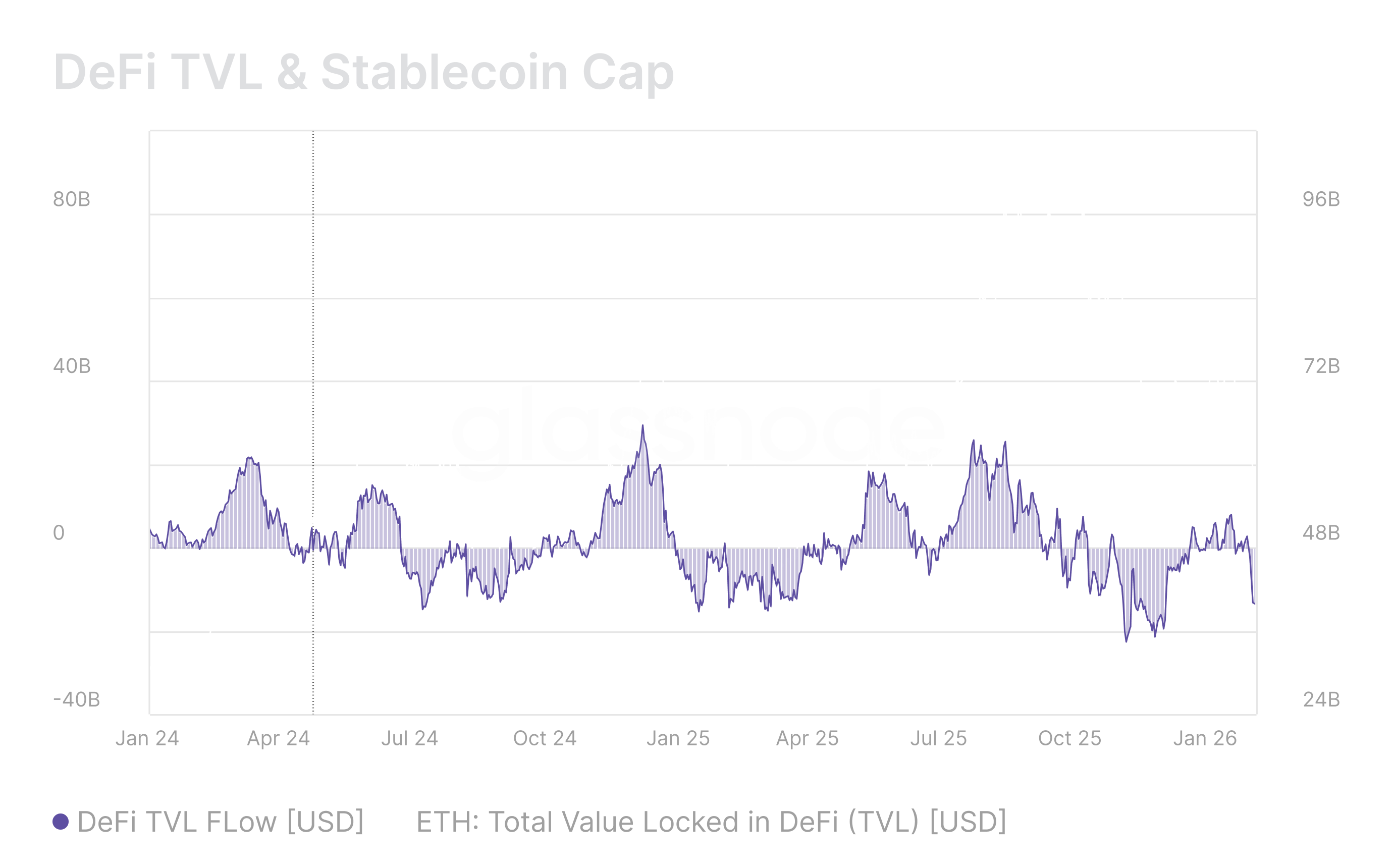
DeFi TVL on Ethereum saw sharp contraction through February before showing early signs of stabilization in March, though the broader declining trend since August 2025 remains intact.

Total Value Locked on Ethereum recorded peak outflows of -$23.7B per month in February, implying sustained withdrawal by larger allocators from on-chain activities such as liquidity provisioning and yield strategies. This slowdown alone is insufficient to signal a reversal, and diminished conviction in DeFi risk-adjusted returns continues to point to shallower liquidity depth across the ecosystem.
CME Basis Yield

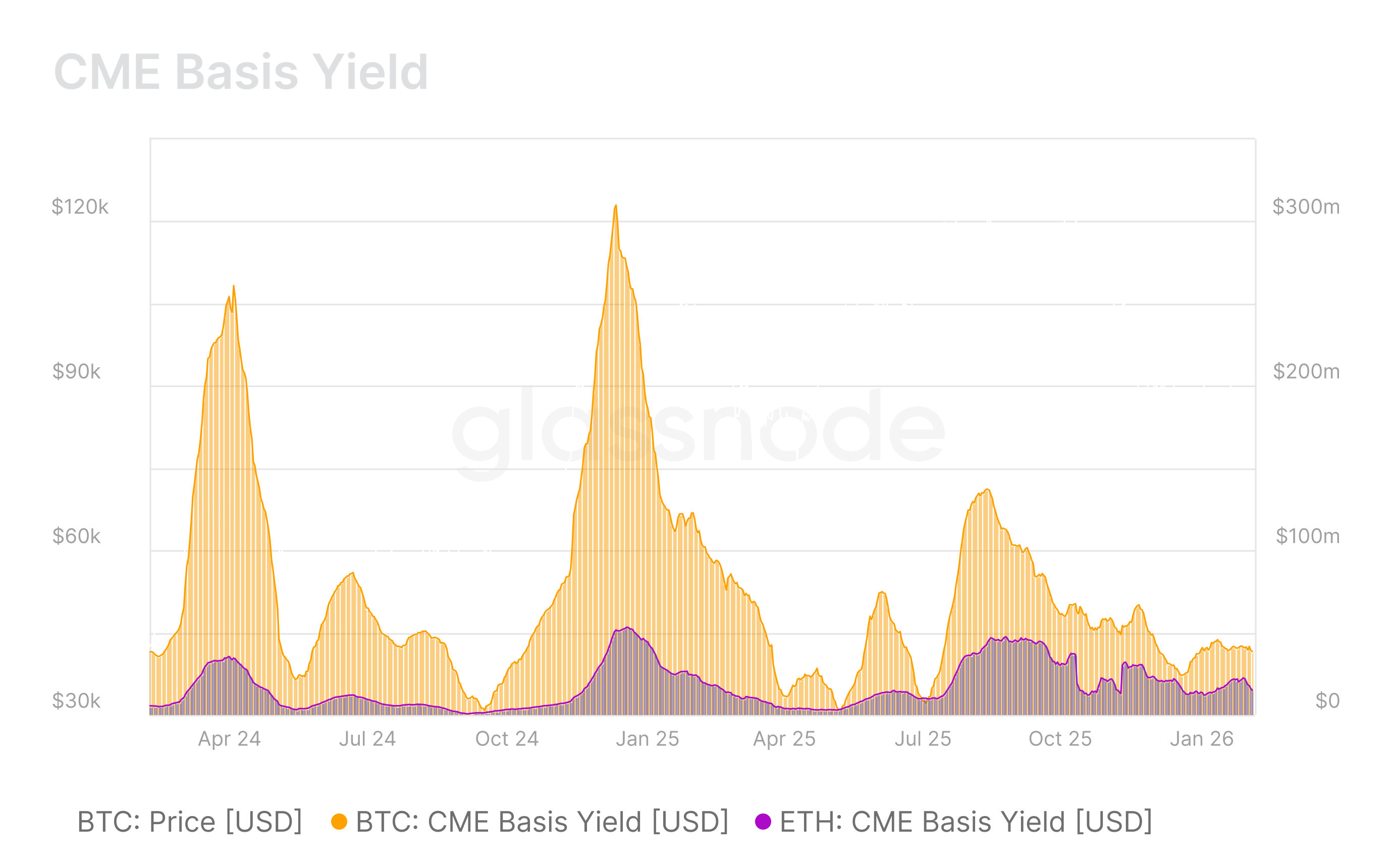
CME Basis Yield compressed even further in February, reinforcing waning incentives for market-neutral strategies compared to January.

The monthly dollar value captured by institutions via cash-and-carry trades declined notably for both Bitcoin and Ethereum, building on the sharp compression seen since August 2025. This tightening basis reflects reduced leverage deployment, softer futures demand, and continued pullback in balance-sheet commitment amid tighter liquidity conditions persisting from January into early March 2026.


Disclaimer: This report does not provide any investment advice. All data is provided for information and educational purposes only. No investment decision shall be based on the information provided here and you are solely responsible for your own investment decisions.
Exchange balances presented are derived from Glassnode’s comprehensive database of address labels, which are amassed through both officially published exchange information and proprietary clustering algorithms. While we strive to ensure the utmost accuracy in representing exchange balances, it is important to note that these figures might not always encapsulate the entirety of an exchange’s reserves, particularly when exchanges refrain from disclosing their official addresses. We urge users to exercise caution and discretion when utilizing these metrics. Glassnode shall not be held responsible for any discrepancies or potential inaccuracies. Please read our Transparency Notice when using exchange data.

相關問答

QWhat is the primary purpose of the Strategy Watch publication?

AStrategy Watch was built to address a clear demand for high-signal, impartial analysis of fund-level performance and allocation trends in digital assets, aiming to be a must-read monthly publication for the digital asset investment community.

QWhich was the only strategy type that returned positively in February according to the report?

AThe report indicates that readers should check the 'Fund and SMA Performance' section to see the only strategy type that returned positively in February, though the specific strategy name is not stated in the provided text.

QWhat was the trend in capital flows for Bitcoin (BTC) and Ethereum (ETH) through February and into March?

ACapital flows into BTC and ETH remained deeply negative, with BTC and ETH capital flows registering -$9.6B and -$3.2B, respectively.

QHow did stablecoin capital flows behave in contrast to BTC and ETH in early March?

AStablecoins broke from the broader negative trend, flipping to +$6.2B in net inflows, which likely reflects a defensive repositioning into lower-risk, dollar-denominated on-chain instruments.

QWhat does the sharp compression in CME Basis Yield indicate about market conditions?

AThe compression in CME Basis Yield reflects reduced leverage deployment, softer futures demand, and a continued pullback in balance-sheet commitment amid tighter liquidity conditions, indicating waning incentives for market-neutral strategies.

你可能也喜歡

美联储利率决议及凯文·沃什声明后,专家齐聚并分享了他们最新评论!

美联储决定维持利率不变后,市场专家针对会议结果及美联储主席凯文·沃什的发言发表了评论。尽管有三名委员对维持利率的决议投下反对票,暗示美联储内部可能出现更多政策分歧,但市场反应相对有限——债券收益率小幅下降,美元略有走软。 专家普遍认为,美联储在九月会议上仍有可能加息。Nationwide Investment Management Group的马克·哈克特指出,三名反对票可能标志着美联储委员将更加独立行事,而非追求表面共识。Citadel Securities在会前发布的报告曾呼吁加息,随后的市场反弹被哈克特称为“松了一口气的反弹”。 货币与利率策略主管奥黛丽·柴尔德-弗里曼表示,尽管决议后收益率和美元有所回落,但反对票的存在显示了美联储的强硬立场。她认为美联储将继续依据经济数据决策,美元在夏季可能因债券高收益率而保持强势。 分析师克里斯·安斯泰指出,市场将密切关注沃什讲话期间及之后美国10年期国债收益率的变化。其收益率已超过决议前水平,若长期收益率持续上升,可能反映出市场担忧美联储抗通胀力度不足,这对沃什而言是一个负面信号。安斯泰同时提到,财政部长斯科特·贝森特将10年期收益率视为抵押贷款等信贷的关键指标,因此长期利率变动对经济管理至关重要。 毕马威首席经济学家黛安·斯旺克则认为,美联储应在本次会议上加息,并预计九月会采取行动。她指出,高通胀已持续近五年,尽管美联储并非通胀的唯一原因,但采取货币政策行动仍是其责任。斯旺克警告,长期过高的通胀可能从异常现象转变为经济体系的常态。 (本文不构成投资建议。)

cryptonews.ru2 小時前

美联储利率决议及凯文·沃什声明后,专家齐聚并分享了他们最新评论!

cryptonews.ru2 小時前

《我没时间说服你》——中本聪名言问世16周年

2010年7月29日,比特币创始人中本聪在Bitcointalk论坛上回复用户关于交易速度过慢的质疑时,写下了那句著名的话:“如果你不相信我或不理解,我没有时间试图说服你,抱歉。”这句罕见的、略显不耐烦的回复,在多年来始终冷静、耐心解答技术问题的沟通记录中显得格外突出。 文章回顾了中本聪的一贯沟通风格。在长达数年的公开和私下交流中,他面对关于可扩展性、安全性等重复性质疑时,通常以具体的技术机制、数据或类比进行详尽解释,而非简单驳斥。他展现出坚定的设计哲学,例如从一开始就设想比特币网络将由少量全节点和大量轻客户端构成,并基于摩尔定律等具体预测来论证其 scalability 潜力。同时,他能够坦承设计中的简化之处,避免事后辩解。 在私下与早期合作者(如Martti Malmi)的邮件中,中本聪表现出协作甚至自嘲的一面,亲自参与细节讨论。而在公开场合,他的发言则更具教导性,致力于向大众解释比特币的工作原理。他始终避免个人崇拜,曾要求将功劳归于更广泛的开发群体。 这场关于可扩展性的辩论及其引发的名言,至今仍影响着比特币社区。中本聪的原始论述表明,比特币架构的核心权衡是初始设计的一部分。他的沟通方式也为开源协作树立了榜样:委托授权、书面记录决策、让贡献者共同创建材料。而那句著名回复则提醒所有人,即使是耐心十足的导师,在重复解释已给出的答案时,耐心也可能耗尽。

cryptonews.ru2 小時前

《我没时间说服你》——中本聪名言问世16周年

cryptonews.ru2 小時前

交易

現貨
活动图片