Quantum Threat Becomes Key Narrative, Privacy Coin Sector Defies Trend with Capital Siphon

比推發佈於 2026-01-29更新於 2026-01-29

文章摘要

Quantum Threat Emerges as Key Narrative, Privacy Coins Defy Market Downturn with Capital Inflow Privacy coins like ZEC, XMR, and DASH have surged significantly since September 2025, outperforming the broader crypto market. ZEC rose from around $50 to over $700 in two months, a 12x return, despite a post-halving correction. Monero (XMR) climbed from $300 to a record $800, bolstered by its decentralized nature and real-world usage, even after being delisted from 73 exchanges. Dash also saw a 7x increase, peaking at $150 before settling around $62. A major catalyst is growing concern over quantum computing threats to Bitcoin. Although experts believe quantum computers cannot yet break Bitcoin's ECDSA algorithm by 2026, fears have driven institutional and whale investors toward privacy coins, which use zero-knowledge proofs and ring signatures to resist quantum attacks. Reports indicate large-scale fund shifts from BTC to privacy assets, with ZEC and XMR attracting significant hedging interest. Market dynamics and high-profile endorsements, such as from Arthur Hayes, have amplified the trend. Additionally, privacy coins are being used to launder stolen funds, with one day seeing $282 million in mixed Bitcoin transactions. While Bitcoin market remains stagnant around $85,000, privacy coins continue to benefit from both quantum anxiety and practical demand for anonymity. The sector's future may depend on broader market recovery and macroeconomic factors, including Fed policy and...

Author: Ma He, Foresight News

Original Title: Under the Quantum Threat, Are Privacy Coins About to Break the "Last Dance" Curse?


Privacy coins use zero-knowledge proofs, ring signatures, or coin mixing technology to ensure untraceable transactions. Against the backdrop of increasing global regulation, they have become the preferred choice for investors seeking refuge and privacy.

Starting from September 2025, the privacy coin sector began to break away from the broader market's slump and entered an accelerated upward trend.

Taking ZEC, the leading coin in the privacy sector surge, as an example, its price was around $50 in October 2025. Within just 2 months, it broke through $700, yielding a return of over 12 times.
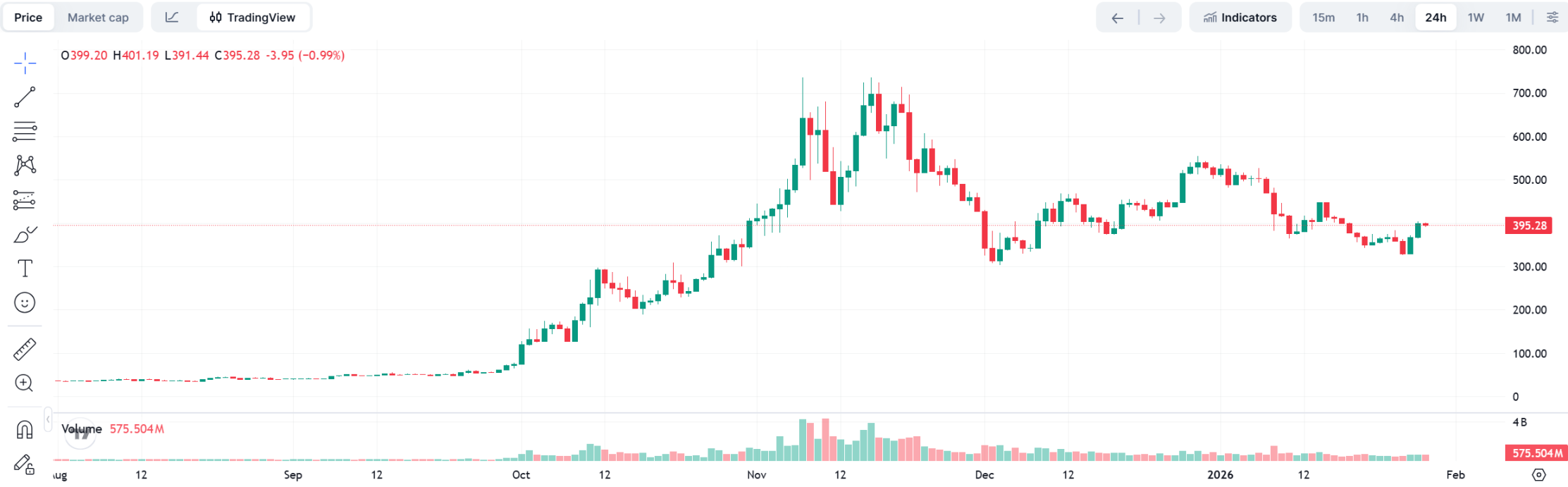
This trend is not an isolated case but a sector-wide explosion.

On November 18th, after the ZEC halving event, which reduced the block reward from 3.125 coins to 1.5625 coins, the price experienced short-term fluctuations before starting to decline and hover erratically.

Monero (XMR), the "big brother" of privacy coins, also showed a strong performance. From around $300 at the end of 2025, it skyrocketed to a high of $800, setting a new historical record.
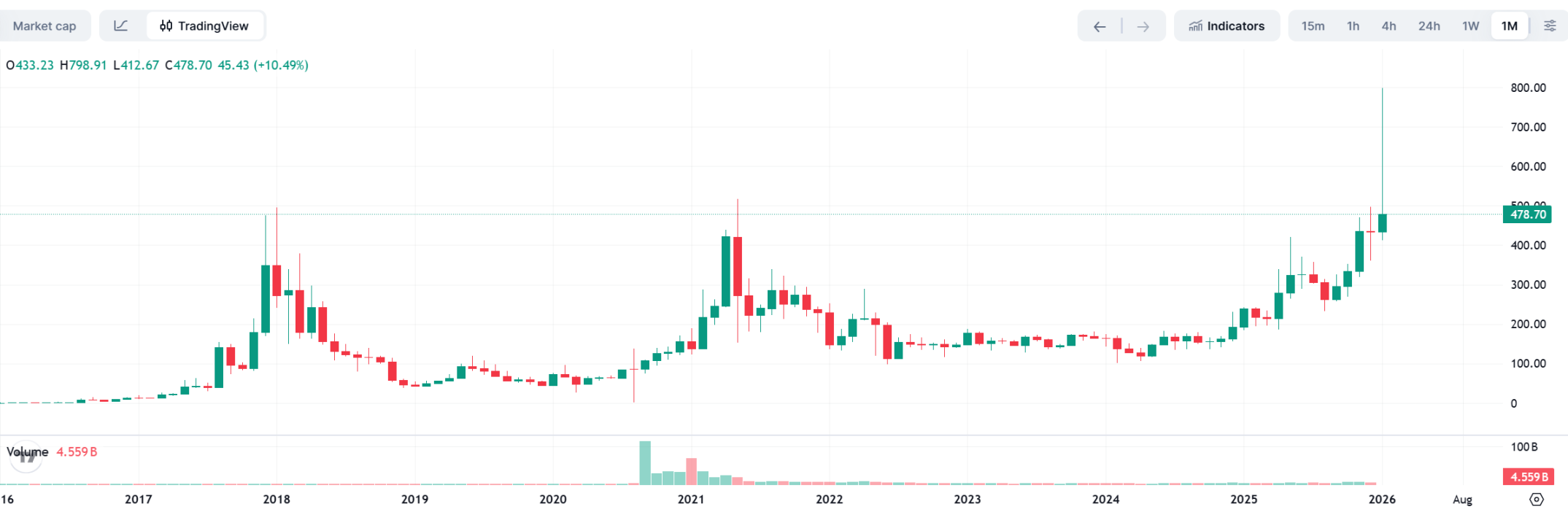
Unlike ZEC's halving-driven rise, XMR's increase relies more on its inherent decentralized nature and actual adoption rate. Despite being delisted from 73 exchanges previously, XMR's transaction volume grew against the trend, with a single-day mixing volume of stolen BTC reaching $282 million, proving the reliability of its privacy technology.

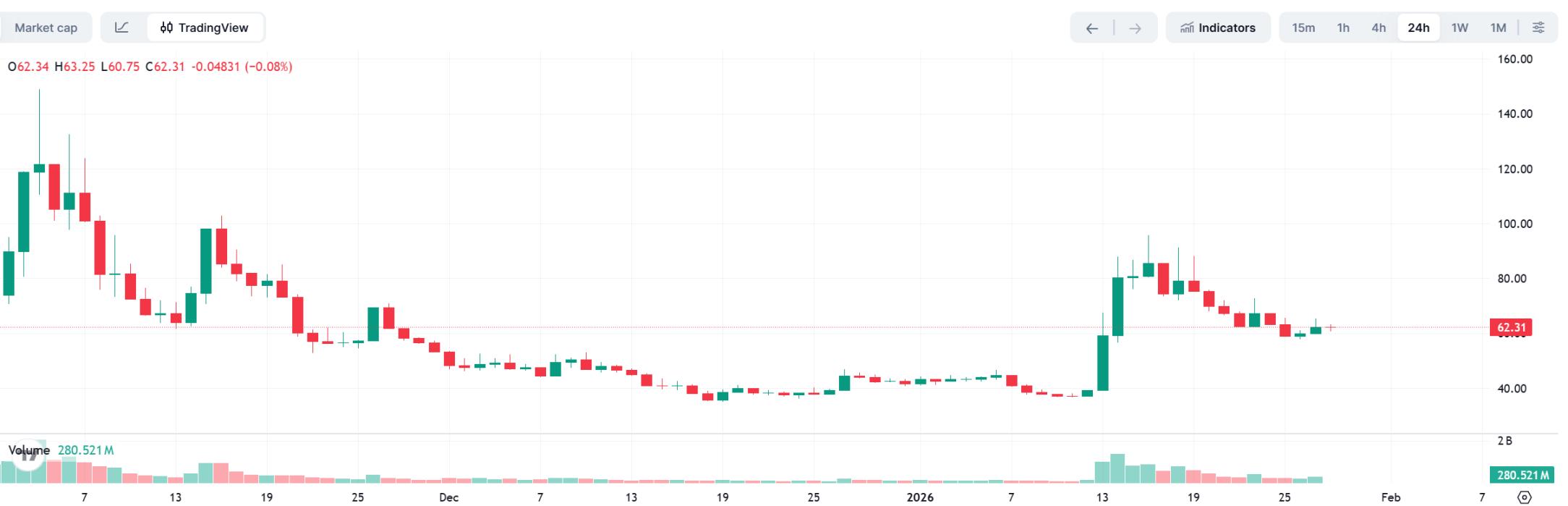
Another privacy coin, DASH, rose from nearly $20 to a high of $150, an increase of over 7 times, and has currently pulled back to $62.
Quantum Computing Threat and the Rise of the Privacy Narrative

The potential threat of quantum computing to Bitcoin became a significant catalyst for the surge in privacy coins from late 2025 to early 2026. Although experts generally believe that quantum computers cannot practically crack Bitcoin's ECDSA signature algorithm by 2026, this risk has already sparked market panic, driving capital away from BTC and towards privacy coins with better quantum resistance.

According to a report by Grayscale Research, although quantum computing is seen as a "false threat to the 2026 market," it amplified investors' concerns about exposed Bitcoin public keys in Q4 2025, leading institutional funds to reassess risk exposure and shift towards coins like ZEC and XMR. These privacy coins use zero-knowledge proofs and ring signature technology, which can better resist Shor's algorithm attacks and theoretically provide higher long-term security.

A CoinDesk report showed that the quantum upgrade discussed at the Bitcoin developer conference in December 2025 would take 5-10 years. During this window, whale investors moved hundreds of millions of dollars from BTC to privacy coins.

Secondly, market rotation and the amplification effect of capital inflows. In Q4 2025, the overall crypto market corrected, but privacy coins rose against the trend, attracting whales and large funds. BitMEX co-founder Arthur Hayes heavily invested in ZEC through the Maelstrom fund, calling it the "next BTC."

Additionally, multiple hacking incidents in 2025 (involving billions of dollars in theft) prompted funds to turn to privacy coins: stolen BTC was quickly converted to XMR, with a single-day mixing volume reaching $282 million. A CoinDesk report pointed out that 80% of privacy coins rose in 2026, with 14 out of 18 coins doubling in market capitalization.

Arthur Hayes warned that the "quantum ghost" would accelerate the privacy supercycle, predicting that ZEC and XMR would attract more hedging funds in 2026.

With the strong rise of privacy coins, some investors are happy while others are worried. Past market trends have often seen privacy coins gradually fade after their "last dance."

Wintermute stated that BTC's current price range shows fatigue, but the market structure is not bearish; instead, it is in a stalemate. The $85,000 support level has been tested multiple times—it is either a solid bottom or a trap waiting to be sprung. Although U.S. fund flows show net outflows and volatility continues to compress, this support level has held, indicating buying interest below (albeit mild). Gold is playing the role that Bitcoin should be playing. The stock market is waiting for earnings reports to validate valuation rationality. Bitcoin is stuck in "no man's land"—not weak enough to break support, nor strong enough to regain upward momentum. The macro environment is poised for a trending move, but the crypto market has been slow to follow.

This situation could change due to a reversal in ETF fund flows or shifts in the U.S. dollar's movement. If the Federal Reserve intervenes in the yen exchange rate and the dollar continues to weaken, it will become a clear catalyst for risk assets. If the "Magnificent Seven" tech stocks report better-than-expected earnings and the AI narrative continues to develop, it will drive the Nasdaq index higher, thereby boosting the crypto market. Conversely, if Powell sends hawkish signals or tariff conflicts escalate, the $85,000 support level will face severe tests. A 60-day consolidation period combined with such密集的事件风险, the market will eventually choose a direction.

If BTC's trend can stabilize and recover, privacy coins may perform well driven by the broader market.


Twitter:https://twitter.com/BitpushNewsCN

Bitpush TG Discussion Group:https://t.me/BitPushCommunity

Bitpush TG Subscription: https://t.me/bitpush

Original link:https://www.bitpush.news/articles/7607020

相關問答

QWhat is the main reason for the recent surge in privacy coins like ZEC and XMR according to the article?

AThe surge is primarily driven by concerns over quantum computing threats to Bitcoin's security, leading investors to shift funds to privacy coins which offer better quantum resistance through technologies like zero-knowledge proofs and ring signatures.

QHow much did ZEC's price increase from October 2025 to its peak, as mentioned in the article?

AZEC's price increased over 12 times, from around $50 in October 2025 to over $700 within two months.

QWhat event specifically impacted ZEC's price in November 2025, causing short-term volatility?

AZEC underwent a halving event in November 2025, which reduced the block reward from 3.125 to 1.5625 coins, leading to price fluctuations.

QWhy did XMR's value rise despite being delisted from many exchanges, as per the article?

AXMR's value rose due to its strong decentralized attributes and practical adoption, evidenced by increased transaction volumes, including a single-day mixing volume of $282 million for stolen BTC, proving the reliability of its privacy technology.

QWhat broader market condition is suggested as necessary for privacy coins to maintain their positive performance?

AThe article suggests that if Bitcoin's price stabilizes and recovers, privacy coins could perform well under the broader market's upward momentum.

你可能也喜歡

BingX为VIP用户推出行业首创的期货资产自动赚币功能

全球领先的加密货币交易所和Web3-AI公司BingX,于今日(2026年6月12日)正式推出了行业首创的“期货资产自动赚息”活动,该服务专为其VIP3及以上等级的用户设计。 此项目允许符合条件的交易者在进行USDT-M永续合约交易的同时,零摩擦、零影响交易地赚取被动收益,用户仅需一键激活即可参与。活动时间为2026年6月12日至8月12日。 该机制的核心优势在于,它能将闲置的合约保证金转化为每日利息收入,而用户无需锁定资金、改变交易策略或牺牲市场机会。主要特点包括: * **一键激活**:用户在活动页面点击“激活赚息”即可开始累积利息,无需复杂设置。 * **每日结算**:利息每日(UTC+8)03:00计算,并于次日08:00(UTC+8)自动发放至用户的USDT-M永续合约账户。 * **无锁定期**:符合条件的仓位始终保持完全可交易状态,且平仓不影响已结算的收益。 * **VIP分级奖励**:更高的VIP等级可获得更具吸引力的利率,最高可达4%,以此奖励用户的积极参与和长期投入。 此举进一步丰富了BingX VIP的特权体系,旨在通过行业领先的创新,帮助其核心交易社区最大化资金回报。BingX成立于2018年,是全球前五大加密衍生品交易所之一,也是加密跟单交易的先驱,目前为全球超过4000万用户提供服务。自2024年起成为切尔西足球俱乐部的主要合作伙伴,并于2026年成为Scuderia Ferrari HP的首个官方加密交易所合作伙伴。

TheNewsCrypto1 小時前

BingX为VIP用户推出行业首创的期货资产自动赚币功能

TheNewsCrypto1 小時前

不是黄仁勋要改变PC,而是PC要革自己的命

英伟达在GTC Taipei 2026上发布了面向Windows PC的全新超级芯片RTX Spark,正式进军PC核心处理器市场,并获得微软及宏碁、华硕、戴尔等主流PC厂商支持。微软在Build 2026大会上将Windows重新定义为“本地AI Agent的原生运行平台”,并推出搭载RTX Spark的Surface工作站。黄仁勋指出,AI正在重塑PC,使其从个人电脑转变为具备独立AI代理能力的“个人AI”助手。 AI PC概念虽由英特尔较早提出,但英伟达的强势入局改变了竞争态势。同时,高通、AMD、苹果等厂商也积极布局,推动AI算力向个人设备迁移。PC产业正经历从“CPU中心化”到“AI SoC中心化”的深层变革。英伟达通过集成CPU、GPU、统一内存和CUDA生态,以“平台思维”争夺硬件与生态主导权。 此次变革的核心在于,PC正从被动工具转向人与AI智能体协同工作的平台。英伟达拥有600万CUDA开发者生态,通过RTX Spark将其延伸至终端,构建从云到端的闭环。然而,新平台的普及仍受定价、Windows on ARM软件生态及杀手级应用等因素制约。 本质上,这场变革是AI技术发展的必然趋势。英特尔也推出了AI算力达180TOPS的Panther Lake处理器,顺应同一方向。各厂商的角逐关键在于谁能更快识别趋势、坚决变革。随着英伟达入局,AI PC新时代已开启,PC产业正在被重新定义。

marsbit1 小時前

不是黄仁勋要改变PC,而是PC要革自己的命

marsbit1 小時前

美 SEC 想拆掉一条 2005 年旧规,代币化股票看到了什么

美国证券交易委员会(SEC)近日提出一项拟议规则,计划撤销《国家市场体系条例》(Regulation NMS)中的第611条规则和第610(e)条规则。第611条规则(即“穿价成交规则”)旨在防止交易绕过市场上最优的报价成交;第610(e)条规则则限制“锁定报价”(买价等于另一场所卖价)和“交叉报价”(买价高于卖价)。 SEC认为,这些制定于2005年的规则已不适应如今高度自动化、互联且快速的市场环境。它们增加了市场参与者的合规成本和系统复杂性,并可能加剧交易碎片化。撤销这些规则可为交易场所、经纪商和另类交易系统(ATS)在订单路由、报价展示和交易机制上提供更大的灵活性与创新空间。 这项改革提案引起了Web3领域的关注,因为SEC在背景说明中特别提到了分布式账本技术、证券代币化以及智能合约和自动做市商(AMM)带来的新型交易方式。市场分析人士指出,此举可能为“代币化股票”的发展扫除部分结构性障碍。传统美股市场基于中心化协调和报价保护体系,而链上交易则倾向于全天候运行、智能合约撮合和跨场所流动性。现有规则可能限制了新型交易机制的设计空间。 SEC估计,撤销这两条规则后,市场参与者每年可节省约5420万至7700万美元的成本。提案目前处于公众意见征求阶段,最终能否实施尚不确定。即便规则撤销,代币化证券仍面临发行注册、托管、清算、股东权利等多重监管挑战。然而,这标志着SEC开始审视传统市场规则是否契合当前技术条件,为金融创新提供了可能的试验窗口。

Foresight News3 小時前

美 SEC 想拆掉一条 2005 年旧规,代币化股票看到了什么

Foresight News3 小時前

Ethena 的转型与华尔街的焦虑

2026年6月9日,稳定币协议Ethena宣布与全球资管巨头Janus Henderson达成深度战略合作,标志着其从DeFi原生协议正式迈入传统金融核心。Ethena将使用Janus Henderson的AAA级CLO基金作为其稳定币USDe的储备资产,而Janus Henderson则通过旗下平台收购ENA代币、将USDe纳入自身财库管理,并计划开发相关的交易所交易产品(ETP)向机构客户分销。 Ethena最初以Delta中性策略稳定币USDe闻名,其收益率高度依赖衍生品市场资金费率,在牛市中迅速扩张,但在市场转熊时暴露出脆弱性。经历2025年危机后,Ethena积极转型,大幅降低衍生品头寸占比,将储备资产扩展至包括国债、企业信贷和CLO在内的多种传统资产,使USDe转变为一种混合RWA抵押的稳定币。 此次合作展现了传统金融机构的深层焦虑。随着美国《GENIUS法案》等监管框架的明确,稳定币竞争转向合规与分发网络建设。传统资管机构面临“代币化或被代币化”的战略压力、收益率压力以及对未来资金入口控制权的担忧。Janus Henderson通过合作嵌入稳定币生态,旨在确保其在下一代金融基础设施中的地位。 这一案例揭示了传统金融与去中心化金融边界正在消融的趋势,稳定币成为双方融合的核心战场。双方通过资产互通、战略投资、财库管理和产品分销的四重合作,共同探索新的金融范式。

Foresight News4 小時前

Ethena 的转型与华尔街的焦虑

Foresight News4 小時前

交易

現貨
合約
活动图片