Iran Launches Bitcoin Payment Platform For Strait Of Hormuz Insurance

bitcoinist發佈於 2026-05-18更新於 2026-05-18

文章摘要

Iran has launched a maritime insurance platform named "Hormuz Safe" for cargo transiting the Strait of Hormuz, with insurance payments settled in Bitcoin. According to a report from Iran's Fars News Agency, the state-backed initiative could generate significant revenue and embeds Bitcoin into a critical global shipping corridor. The platform offers cryptographically verifiable policies for cargo moving through the Persian Gulf and surrounding waterways, with coverage beginning upon payment confirmation. This move occurs amid heightened geopolitical tensions in the strait, a vital chokepoint for global oil shipments. The report did not specify technical details on Bitcoin payment processing or identify external partners.

Iran has launched a new maritime insurance platform for cargo moving through the Strait of Hormuz, with payments settled in Bitcoin, according to a report from Iran’s semi-official Fars News Agency. The project places Bitcoin inside one of the world’s most politically sensitive shipping corridors, where energy flows, sanctions pressure and maritime risk have become increasingly intertwined.

Iran Officially Turns To Bitcoin

Fars reported that the platform, called “Hormuz Safe,” has begun offering insurance for maritime cargo passing through the Strait of Hormuz. The outlet said a document obtained by its reporter showed Iran’s Ministry of Economic Affairs and Finance had been working since early Ordibehesht, the second month of the Iranian calendar, on a plan to make management of the strait possible through insurance. The same report said the scheme could issue maritime insurance policies and financial responsibility certificates, potentially generating more than $10 billion in revenue for Iran.

The most crypto-relevant element is the settlement layer. Fars said the platform’s rules provide “fast, cryptographically verifiable” insurance policies for cargo moving through the Persian Gulf, the Strait of Hormuz and surrounding waterways. “Payments are settled with Bitcoin,” the report said, adding that cargo is covered “from the moment of confirmation” and that owners receive a signed receipt.

That wording makes the story more specific than a generic Bitcoin-payment initiative. The Fars report names Bitcoin directly, rather than referring only to crypto assets, stablecoins or blockchain-based payment rails. It also frames the product not as a consumer-facing wallet or exchange service, but as infrastructure for a maritime insurance and compliance process around ships and cargo.

Related Reading: Bitcoin Social Euphoria Hits Yearly High Amid CLARITY Act Buzz

The launch comes amid heightened scrutiny of the Strait of Hormuz, the narrow waterway between Iran and Oman that connects the Persian Gulf with the Gulf of Oman and Arabian Sea. The US Energy Information Administration has called Hormuz the world’s most important oil chokepoint, noting that oil flows through the strait averaged 21 million barrels per day in 2022, equal to about 21% of global petroleum liquids consumption.

The geopolitical context has become even more acute in recent months. Iran had begun allowing some Chinese vessels to transit the Strait of Hormuz after an understanding over Iranian management protocols for the waterway. Iran had severely restricted transit following the start of US and Israeli strikes on February 28, while a US blockade on Iranian ports after an early-April ceasefire had prolonged the crisis in a corridor through which one-fifth of global oil and natural gas transit.

Fars did not provide technical details on how Bitcoin payments are received, whether the platform uses on-chain settlement directly, third-party custody, internal accounting, or conversion into local or foreign currency. It also did not identify counterparties, underwriters, wallet infrastructure, or any external insurers connected to the platform.

At press time, BTC traded at $76,685.
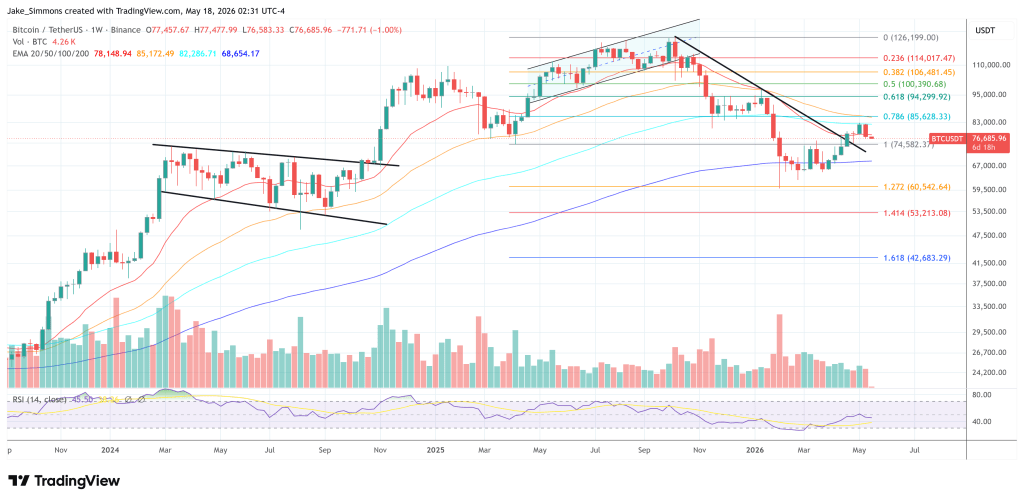
Bitcoin bulls rejected at the 100-week EMA, 1-week chart | Source: BTCUSDT on TradingView.com

相關問答

QWhat is the name of the new Bitcoin-based maritime insurance platform launched by Iran, and which waterway does it specifically cover?

AThe platform is called 'Hormuz Safe,' and it offers insurance for maritime cargo passing through the Strait of Hormuz and surrounding waterways like the Persian Gulf.

QAccording to the Fars News Agency report, what specific cryptocurrency is used for payment settlement on the 'Hormuz Safe' platform?

APayments on the 'Hormuz Safe' platform are settled with Bitcoin.

QWhat major geopolitical and economic significance does the Strait of Hormuz hold, as mentioned in the article?

AThe Strait of Hormuz is described as the world's most important oil chokepoint, with oil flows averaging 21 million barrels per day in 2022, equal to about 21% of global petroleum liquids consumption.

QWhat details about the Bitcoin payment process did the Fars report notably NOT provide, according to the article?

AThe report did not provide technical details on how Bitcoin payments are received, whether the platform uses on-chain settlement directly, third-party custody, internal accounting, or currency conversion. It also did not identify counterparties, underwriters, wallet infrastructure, or any external insurers.

QWhat was the approximate price of Bitcoin (BTC) at the time the article was published?

AAt press time, BTC traded at $76,685.

你可能也喜歡

比特币通往8万美元之路,或许取决于这一“隐藏”趋势

根据Coinglass数据,Coinbase比特币溢价指数经历了有史以来最长的50天连续负溢价,表明机构更多是净卖出而非积极买入,或美国机构需求长期疲软。尽管长期负溢价通常显示短期市场疲软和谨慎情绪,并不一定预示长期看跌趋势。 同时,比特币未实现盈亏净额(NUPL)的短期均线在6月2日下穿长期均线,形成看跌交叉,显示投资者盈利能力和市场动能正在减弱。历史上,比特币每次重大熊市底部(如2011、2015、2018、2022年)都伴随着100日NUPL均线下穿零线,意味着市场出现显著未实现亏损和投降。然而,本轮周期该指标仍保持在零线上方,这可能意味着比特币首次未跌破该指标便形成重要底部,也可能预示需要再次下跌以复制以往周期模式。 比特币现价约63,148美元,过去一周上涨近7%,但仍未突破5月初的8万美元高点。技术指标显示MACD呈现看涨动能,但RSI发出看跌信号,布林带收窄表明当前价格动能可能持续。不过,比特币ETF在连续八周资金流出后终于出现资金流入,带来一线希望。 市场分析观点出现分歧。有分析师关注4.8万至5万美元之间的关键流动性区域,认为做市商可能推动价格至此以触发大量止损和清算订单,但也指出强劲需求或其他催化剂可能阻止比特币跌至该水平。而另一位分析师则表达了不同观点。尽管长期持有者已连续三个季度面临损失,但仍展现出韧性。 总之,Coinbase溢价指数持续为负、NUPL出现看跌交叉,加之市场观点不一,比特币虽显现部分看涨迹象,但要重返8万美元水平,仍需机构投资者提供强劲推力。

ambcrypto21 分鐘前

比特币通往8万美元之路,或许取决于这一“隐藏”趋势

ambcrypto21 分鐘前

太平洋“发烧”,极端天气如何沦为华尔街提款机?

文章揭示了当前太平洋厄尔尼诺现象的严重性及其对全球气候与经济的连锁影响。2026年入夏以来,中国多地遭遇极端暴雨、洪水和高温,西太平洋台风活跃。与此同时,秘鲁鱼粉涨价、东南亚干旱、印度季风偏弱、澳大利亚小麦种植面积可能收缩等全球性事件,其背后共同的驱动因素正是本轮可能成为1950年以来最强的厄尔尼诺事件。 厄尔尼诺通过改变大气环流,叠加全球变暖背景,显著增加了极端天气风险。然而,气候异常早已成为金融市场的交易主题。文章回顾了历史案例:1972年厄尔尼诺导致秘鲁鳀鱼消失,间接推高大豆价格,让年轻交易员理查德·丹尼斯赚得第一桶金;专攻可可的交易公司通过自建气象网络把握先机;2024年西非干旱导致可可期货暴涨,令一批量化基金获利丰厚。 当前,尽管棕榈油、白糖等农产品现实库存高企,但市场已开始提前交易未来6至12个月可能因厄尔尼诺导致的减产预期。关键观察指标包括: Niño3.4海域温度是否突破2°C、印度季风降雨数据、马来西亚棕榈油库存变化等。历史表明,价格的最大影响往往出现在厄尔尼诺峰值之后。 文章最后指出,网络社区已出现将厄尔尼诺、能源断供、化肥短缺等因素串联的“末日叙事”,这反映了极端天气与地缘政治等风险正相互交织,其影响远超金融市场,最终将转化为普通人的生活成本压力。风暴的影响已然开始,并将持续渗透至全球各个角落。

链捕手1 小時前

太平洋“发烧”,极端天气如何沦为华尔街提款机?

链捕手1 小時前

交易

現貨
活动图片