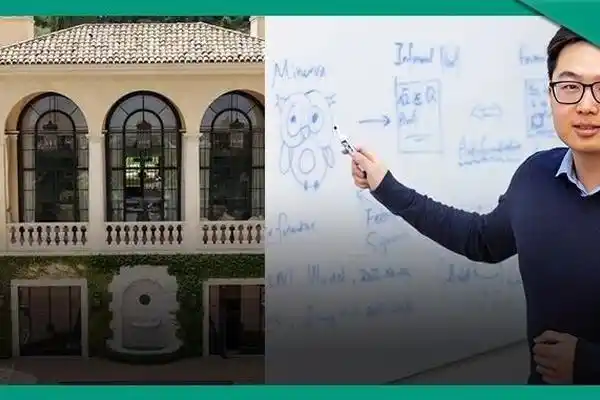
The financial infrastructure project Plan Execution Lab recently announced the completion of its angel round of financing, led by a well-known family office in Singapore, with a post-investment valuation of $50 million. This round of funding will be primarily used to accelerate the research, development, and ecosystem construction of the PlanX Financial Execution Protocol and the Xgent Autonomous Financial Runtime.
Unlike most trading platforms, Plan Execution Lab is not trying to build a "faster exchange" or a "smarter trading bot." They are attempting to answer a more fundamental question: What is truly missing from the future financial markets?
From SpaceX to Financial Infrastructure
The starting point of Plan Execution Lab founder Lex Li's career was not Wall Street, but SpaceX. As an engineer hired fresh out of school to work at SpaceX, Lex spent thirteen months there. The biggest influence from this experience was not a specific technology, but the core methodology championed by SpaceX: First Principles Thinking.
At SpaceX, engineers are required to constantly ask: Why must rockets be built this way? Why must costs be this high? Why are the industry's default practices necessarily correct? Many rules taken for granted ultimately prove to be just historical habits. This way of thinking also became the most important methodology for Lex when he later entered the financial industry.
"After entering the financial industry, I found everyone discussing faster transaction speeds, more complex product designs, and greater liquidity," Lex said. "But few people stop to think about a more fundamental question: What is the true purpose of financial markets?"
Viewing Financial Markets from First Principles
In Lex's view, the core function of financial markets is not trading, but Capital Allocation. Trading is merely one expression of capital allocation, and the true process of converting decisions into action is Execution.
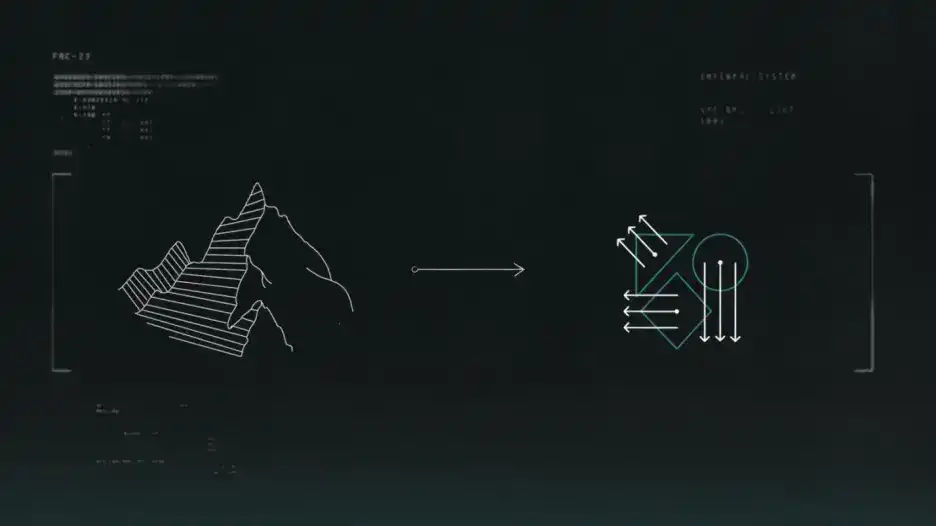
Over the past decade, financial infrastructure has undergone tremendous changes: assets have been on-chain, liquidity has been on-chain, and settlement has been on-chain. However, the execution layer has hardly seen any fundamental change. Today's markets are still built upon a large number of fragmented human workflows:
-
Human market monitoring
-
Human capital scheduling
-
Human risk management
-
Human liquidity coordination
-
Human trade execution
Even on the most advanced trading platforms, financial execution remains Human-Native.
The Agent Era is Accelerating Strategy Decay
With the development of large models, AI Agents, and automated systems, the market is entering a new phase. Information spreads faster, market reactions accelerate, and strategy decay speeds up as well.
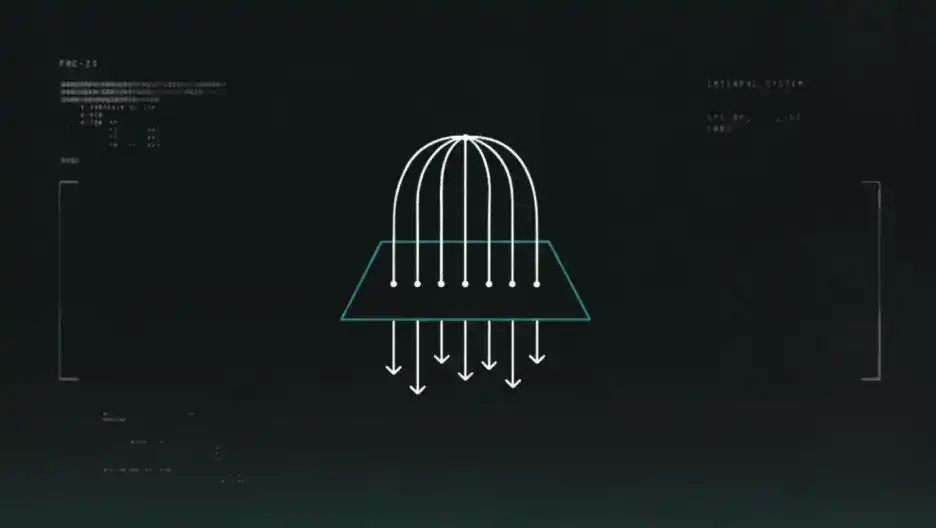
An advantage that could last for years in the past might now only last for months. Alpha that lasted for months in the past may dwindle to weeks in the future. For independent traders and even small to medium-sized institutions, maintaining effective strategies is becoming increasingly difficult.
"The biggest challenge in the future is no longer acquiring information, but how to execute consistently and efficiently," Lex said.
Strategy is Not the Fundamental Unit

Most people think of a strategy as an independent set of algorithms. But viewed from first principles, a strategy is actually a combination of multiple execution capabilities. For example:
-
Risk management
-
Capital allocation
-
Liquidity access
-
Hedging logic
-
Execution timing
-
Portfolio construction
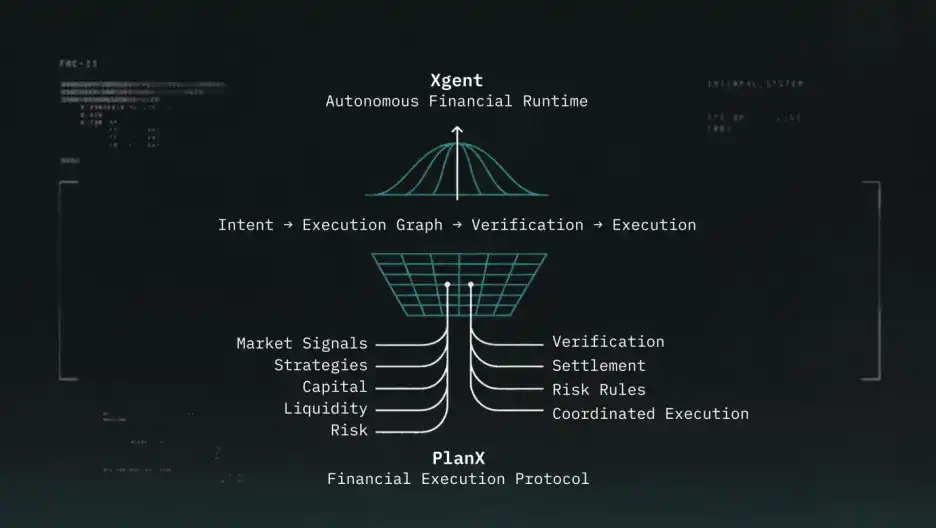
These capabilities are more like independent Nodes, which together form a larger Execution Graph. Therefore, what financial systems will truly compete for in the future is not a single strategy, but the Execution Network. The most powerful financial system of the future will not be some mysterious algorithm, but a collaborative network built and continuously evolved by a multitude of execution nodes.
PlanX: Facilitating the Migration from CEX to DEX

Based on this judgment, the team built PlanX. PlanX's positioning is not another DEX, but a Financial Execution Protocol.
The team believes that one of the largest financial migrations in the next decade will be the shift of global trading volume from centralized exchanges (CEX) to on-chain markets. But it's not just assets that will migrate; it's financial behavior itself. PlanX aims to be the execution infrastructure for this migration process, providing the market with:
-
On-chain execution capabilities
-
Liquidity access
-
Risk management
-
Settlement coordination
-
Capital scheduling
Thus building an open financial execution network.
Xgent: The Runtime for the Autonomous Finance Era
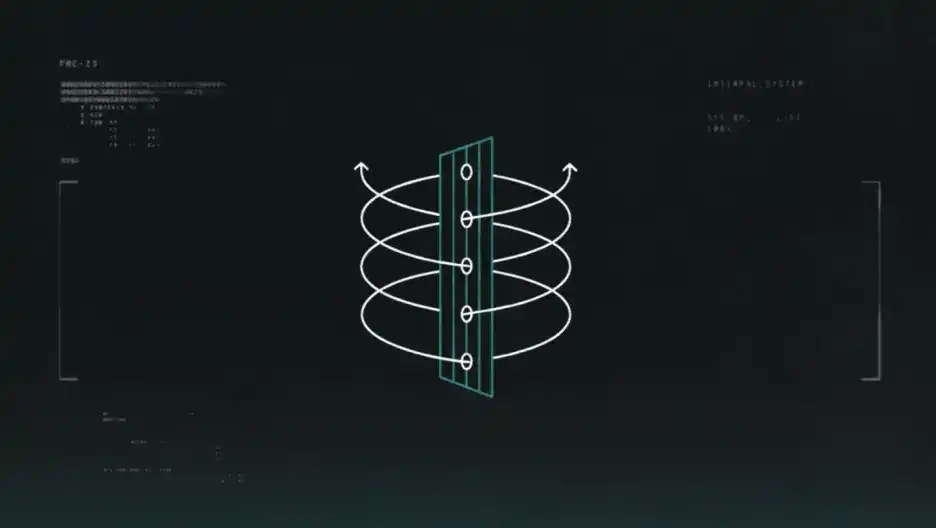
If PlanX is the execution infrastructure, then Xgent is the Autonomous Financial Runtime built on top of it. Users no longer need to manually manage multiple platforms and complex workflows; they only need to define:
-
Investment objectives
-
Risk tolerance
-
Constraints
-
Capital allocation rules
Xgent will automatically handle:
-
Execution logic construction
-
Risk verification
-
Liquidity coordination
-
Strategy operation
-
Autonomous optimization
The team defines this process as: Intent → Execution Graph → Verification → Autonomous Execution.
Building the Bloomberg Terminal for the Autonomous Finance Era

Lex often uses an analogy to describe Xgent's long-term vision. Over the past few decades, the Bloomberg Terminal became the core operating environment for global financial markets. It not only provides data but, more importantly, offers the entire financial industry a unified workflow, unified context, and unified collaborative environment.
Bloomberg is the operating system for the human finance world. In the era of autonomous finance, a new operating system is equally needed. Only this time, the clients are not humans, but Agents.
"If the Bloomberg Terminal defined the Operating Environment for Human Finance, then the combination of PlanX + Xgent aims to become the Operating Environment for Autonomous Finance."
Financial Infrastructure Built by Nodes

Unlike traditional financial systems, Plan Execution Lab does not seek to have a single institution control the entire network. The team believes that the next generation of financial infrastructure must be co-built by participants. The future ecosystem will consist of the following participants:
-
Execution Nodes
-
Liquidity Providers
-
Strategy Contributors
-
Infrastructure Operators
-
Autonomous Financial Agents
What each participant contributes is not a single strategy, but execution capability itself. These execution capabilities will continuously combine, evolve, and ultimately form the execution network for the autonomous finance era.
The Core of Next-Generation Financial Competition

For Lex, the core competitive edge in future finance is not about who has the best trading strategy, but who possesses the most powerful execution network.
The past decade changed where assets are stored. The next decade will change how financial decisions are executed. And the PlanX + Xgent combination aims to be the infrastructure for this transformation. The future will not belong to isolated strategies; it will belong to autonomous execution networks.