Author: Aryn Baker, The New York Times
Compiled by: Felix, PANews
Original Title: Afghan Stablecoins, An Unexpected Hub of Crypto Innovation
At a bustling currency exchange in northwestern Syria, a 46-year-old farmer clutched a plastic card as if it were her lifeline. She had never heard of cryptocurrency, but this card contained $500 worth of crypto, helping her restart her farm after nearly 14 years of civil war.
As the teller confirmed the total and withdrew cash for Hala Mahmoud Almahmoud's account, the farmer smiled with relief and paused to express her gratitude. She asked where such technology came from.
The answer surprised her: Afghanistan.
Many might not imagine that this blockchain-based innovation in cash transfers originates from a country known for the Taliban's authoritarian rule and skeptical stance toward the internet. Yet, in this nearly isolated nation, an Afghan startup is developing tools aimed at transforming how humanitarian aid is delivered in conflict-ravaged countries.
Zakia Hussain, a 26-year-old programmer at the startup HesabPay, said, "We have faced these challenges ourselves, so we know how to create effective solutions." It was HesabPay that designed the technology behind the card held by Ms. Almahmoud.
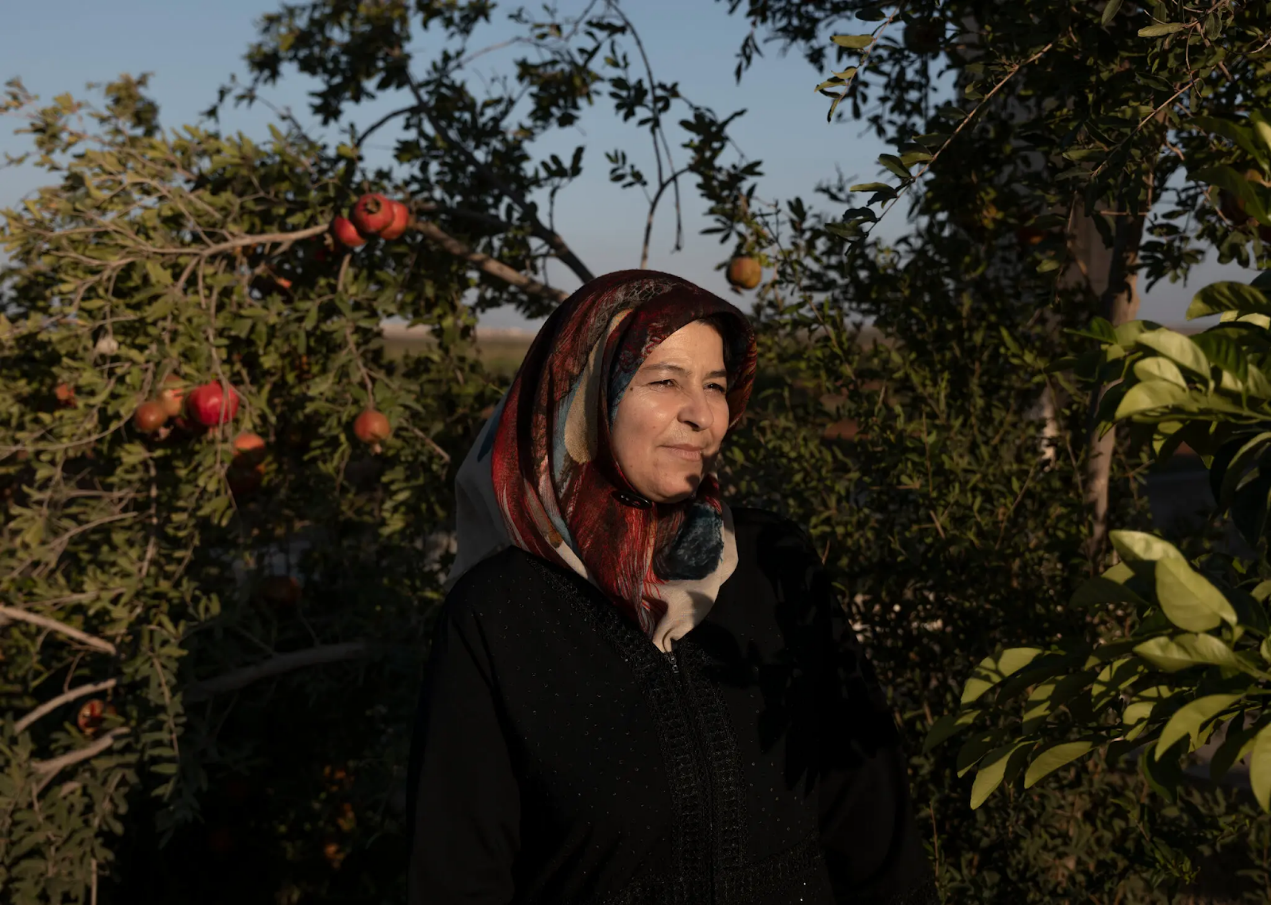
Hala Mahmoud Almahmoud outside her home near Latamina, Syria. She received $500 in cryptocurrency aid to help reopen her farm.
The United Nations Refugee Agency (UNHCR) was one of the early supporters of the platform. The agency uses it to support over 86,000 families in Afghanistan, making it one of the largest public blockchain aid projects globally. Mercy Corps, the charitable organization that donated to Ms. Almahmoud, partnered with HesabPay to extend aid to Syria and is currently developing projects for Sudan and Haiti.
In Syria, accessing funds from abroad is highly complex. Cash is scarce, international banks avoid the region, and remittance companies like Western Union charge up to 10% in transfer fees. HesabPay enables organizations like Mercy Corps to bypass these obstacles.
Sanzar Kakar, an Afghan-American entrepreneur and founder of HesabPay, previously ran Afghanistan's largest payroll processing company. However, the 2021 U.S. withdrawal from Afghanistan and the Taliban's return to power triggered a financial collapse. Sanctions halted international remittances, and the central bank became paralyzed.
To address the country's growing financial insecurity, Kakar turned to blockchain technology. He created HesabPay (meaning "account" in the local language), a mobile-based application that allows instant transfers from one digital wallet to another, bypassing banks and the Taliban government. He stated that the Afghan government has granted his company a formal financial license to operate.
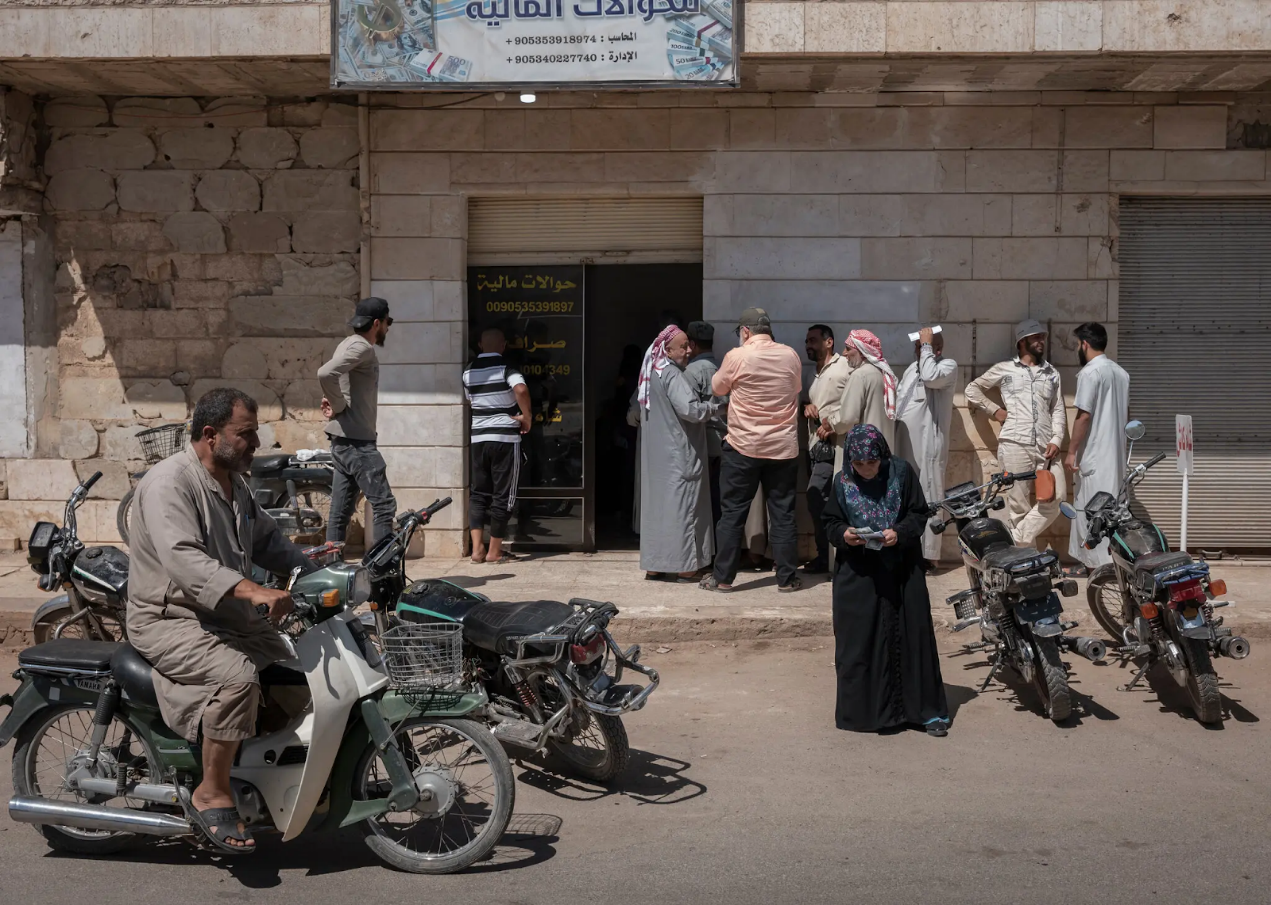
The aid organization Mercy Corps, which donated funds, partnered with HesabPay to extend the platform's services to Syria.
Today, the platform has over 650,000 wallets in Afghanistan, with about 50,000 actively used, transferring approximately $60 million worth of Afghan afghani stablecoins (stablecoins pegged to the Afghan currency) monthly.
Since February 2025, the UN has used HesabPay to distribute nearly $25 million to returning Afghans through 80,000 digital wallets. Carmen Hett, the UNHCR's corporate treasurer, said, "This helps reduce transaction fees, shorten waiting times, and enhance traceability, real-time monitoring, and accountability."
Ric Shreves, an expert in decentralized financial solutions and president of the Decentralized Cooperation Foundation, noted that it is not surprising for organizations like Mercy Corps and the UN to turn to blockchain-based fund transfers for aid. He stated, "For such organizations, this approach offers almost all advantages compared to traditional aid methods."
However, he pointed out that risks remain, especially when payment systems are based on local currency stablecoins, as in Afghanistan. (In Syria, the cryptocurrency in HesabPay wallets is backed by the U.S. dollar, a more stable option.) Just as wallets can be shut down for interacting with sanctioned individuals, they could theoretically be closed for political reasons by a central bank.
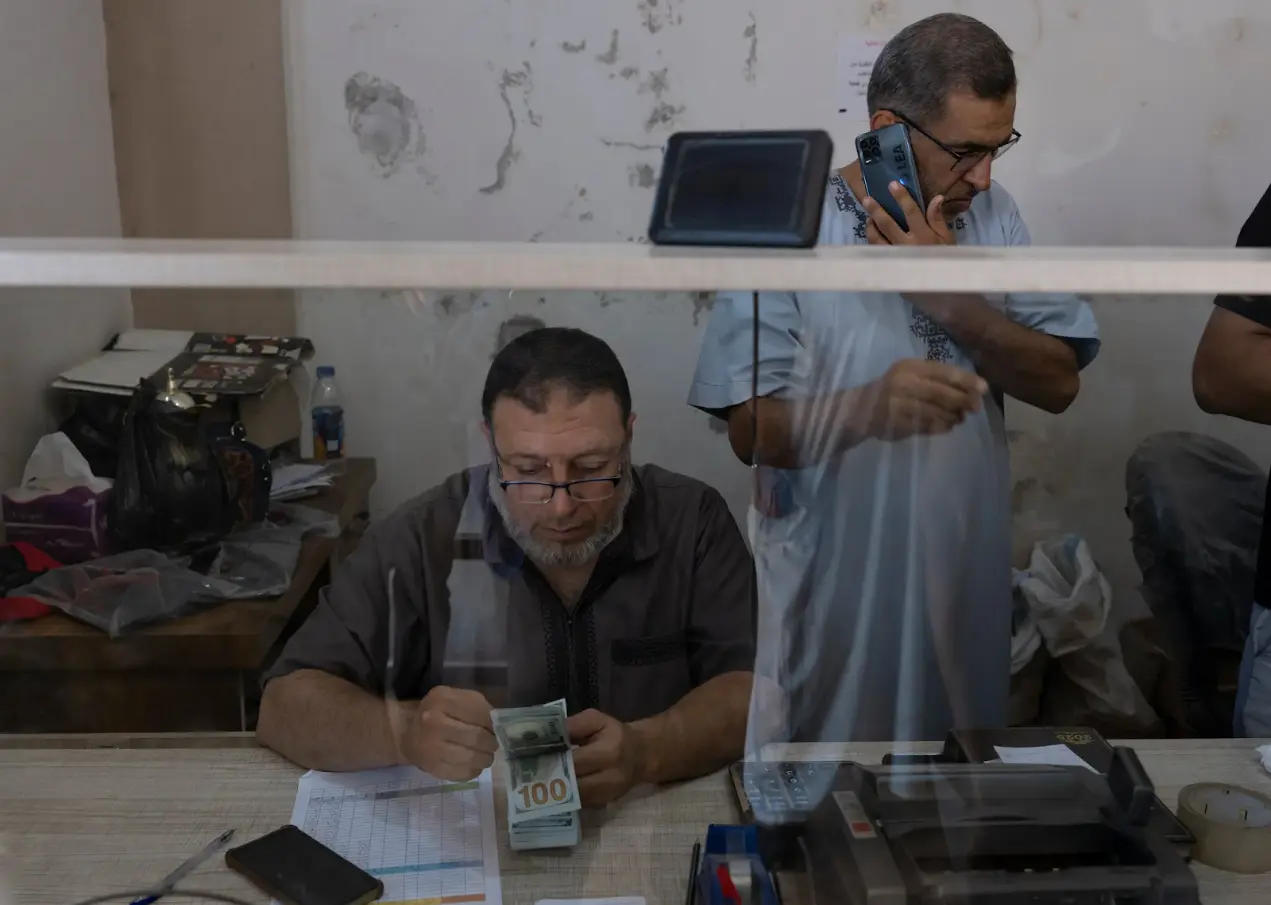
Using blockchain technology makes it easier for Mercy Corps to send funds to Syria, where cash is scarce and international banks typically do not operate.
Ric Shreves added, "When we provide people with non-physical transaction methods, it also means these transactions can potentially be blocked through technological means." He further noted that digital currencies are clearly safer than cash, but they still cannot be hidden under a mattress like cash.
In recent years, aid organizations have increasingly opted for cash assistance, viewing it as a quick and dignified form of aid. However, cash assistance has a drawback: it is difficult to track where the money goes. Donors want to see their contributions reach those in need. Since former President Trump significantly cut U.S. foreign aid early last year, organizations like Mercy Corps face greater pressure to demonstrate the effectiveness and integrity of their aid.
This is where blockchain comes into play, creating a digital record that accurately tracks how much money was sent, to whom, and where it went. Scott Onder, Mercy Corps' chief investment officer, stated that this combination of speed and accountability "might help regain the trust of those who have become skeptical about the effectiveness of aid."
HesabPay also includes additional security measures, such as real-time dashboards to track wallet activity and cross-check it with international compliance databases. The company stated that the system is designed to detect illegal activities like terrorist financing, money laundering, and cyber fraud, immediately alerting users to suspicious transactions. For aid donors, this provides a level of oversight that is nearly impossible to achieve in fragile countries.
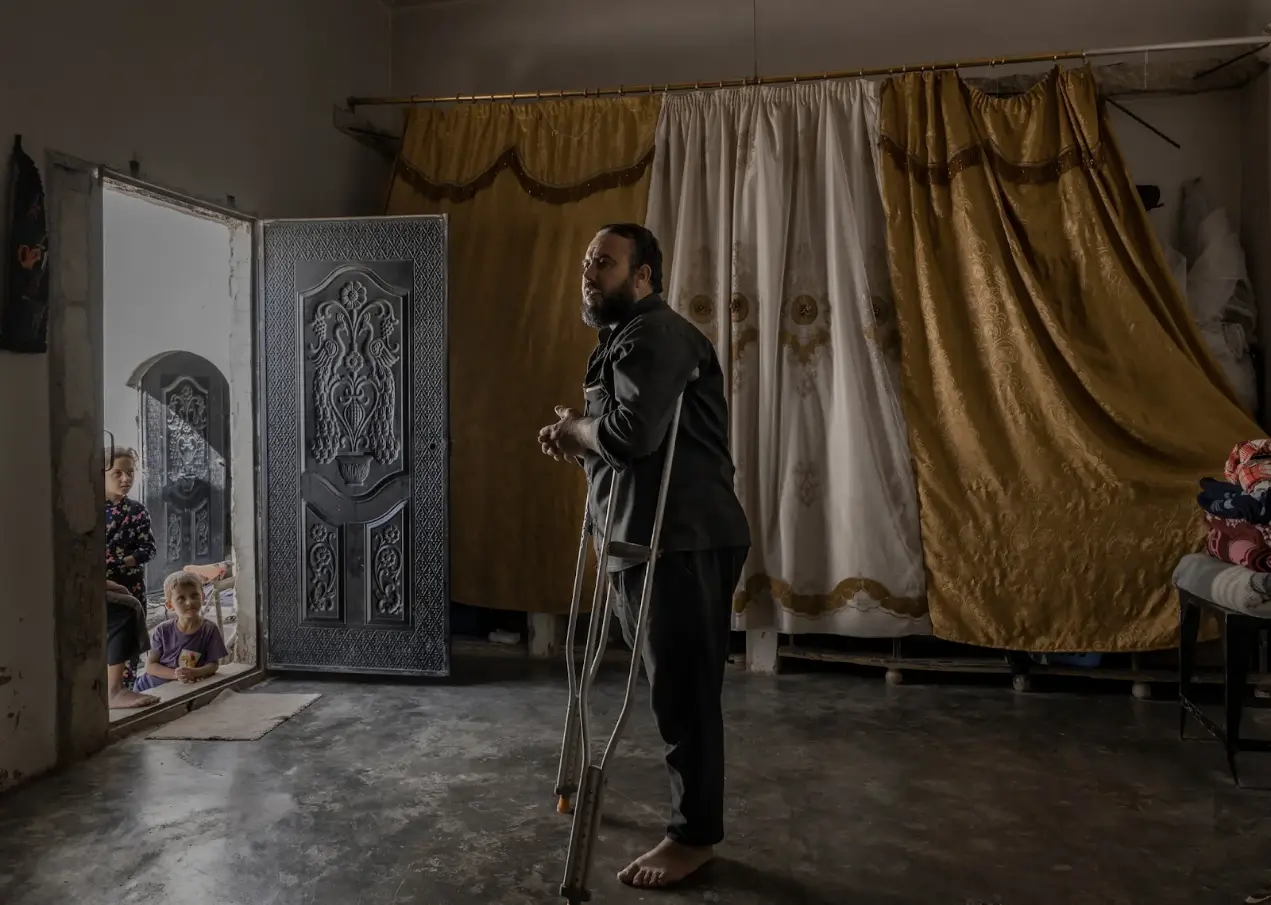
Abdul Moti Hammoud, a resident of Halfaya, lost a leg after accidentally triggering a landmine while driving a tractor. He is a beneficiary of the aid organization Mercy Corps.
During a recent online demonstration, Nigel Pont, the company's senior advisor, clicked on a purple dot representing a HesabPay agent in Afghanistan. Dozens of light blue beneficiary wallets unfolded, showing recent transfer records. Another click revealed where the funds went. Suddenly, a wallet turned red, triggering a suspected fraud alert—a slightly awkward moment during the live demo but precisely the risk the system is designed to identify.
"From an aid donor's perspective, this is incredibly valuable," said Nigel Pont, former chief strategy officer at Mercy Corps. "A system that automatically flags fraud risks means you can verify immediately, rather than waiting six months for a report that someone stole $20,000." Nigel Pont acknowledged that no system can completely eliminate corruption, but then again, neither can cash.
Twenty-two-year-old Abdul Halim Hasan was waiting in line at the same currency exchange in Syria as Ms. Almahmoud. He said he imagines a day when HesabPay could be used like a regular bank account—receiving funds, paying bills, and saving money securely. For now, though, his HesabPay card allows him to access the funds needed to restart his life after the war, and that is enough.
Twitter:https://twitter.com/BitpushNewsCN
Bitpush TG Discussion Group:https://t.me/BitPushCommunity
Bitpush TG Subscription: https://t.me/bitpush







