『Action!』 WORLD hold the breath |0228 Middle East

比推發佈於 2026-02-28更新於 2026-02-28

文章摘要

Finally, a critical trigger moment has arrived in the Middle East, with the U.S. Fifth Fleet launching a full-scale attack led by Israel after what is described as a "well-intentioned smoke bomb" from Trump. Iran has responded strongly with multiple missile attacks targeting Israel, U.S. bases in Iraq, Qatar, and Bahrain, as well as Riyadh, Saudi Arabia. Gambling websites are predicting a parabolic increase in the probability of delayed U.S. military action against Iran. Capital and commodity markets, except sustainable and futures, are awaiting the delayed impact after Monday's opening. The author hopes those who followed earlier micro-strategy adjustments will benefit. It remains uncertain whether Iran will quickly give in as in previous confrontations—a key risk to the current strategy. The situation is being closely monitored, and readers are invited to share information and insights. The post concludes with hashtags referencing geopolitical perception and anti-fragility-based multi-asset strategies.

FINALLY, the trigger moment has arrived【Whether it becomes the biggest moment depends on whether other major players 『join in or not』】.

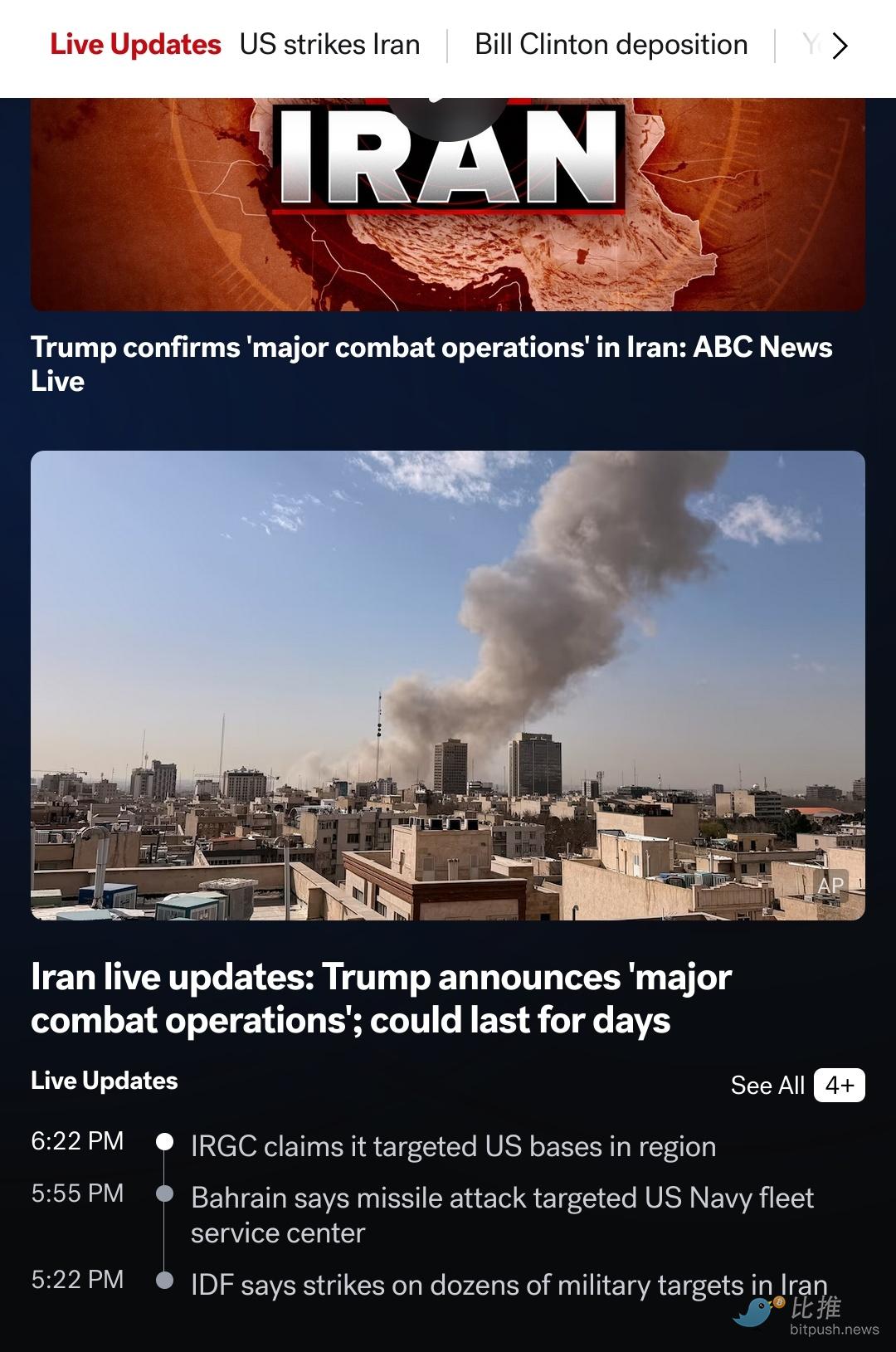
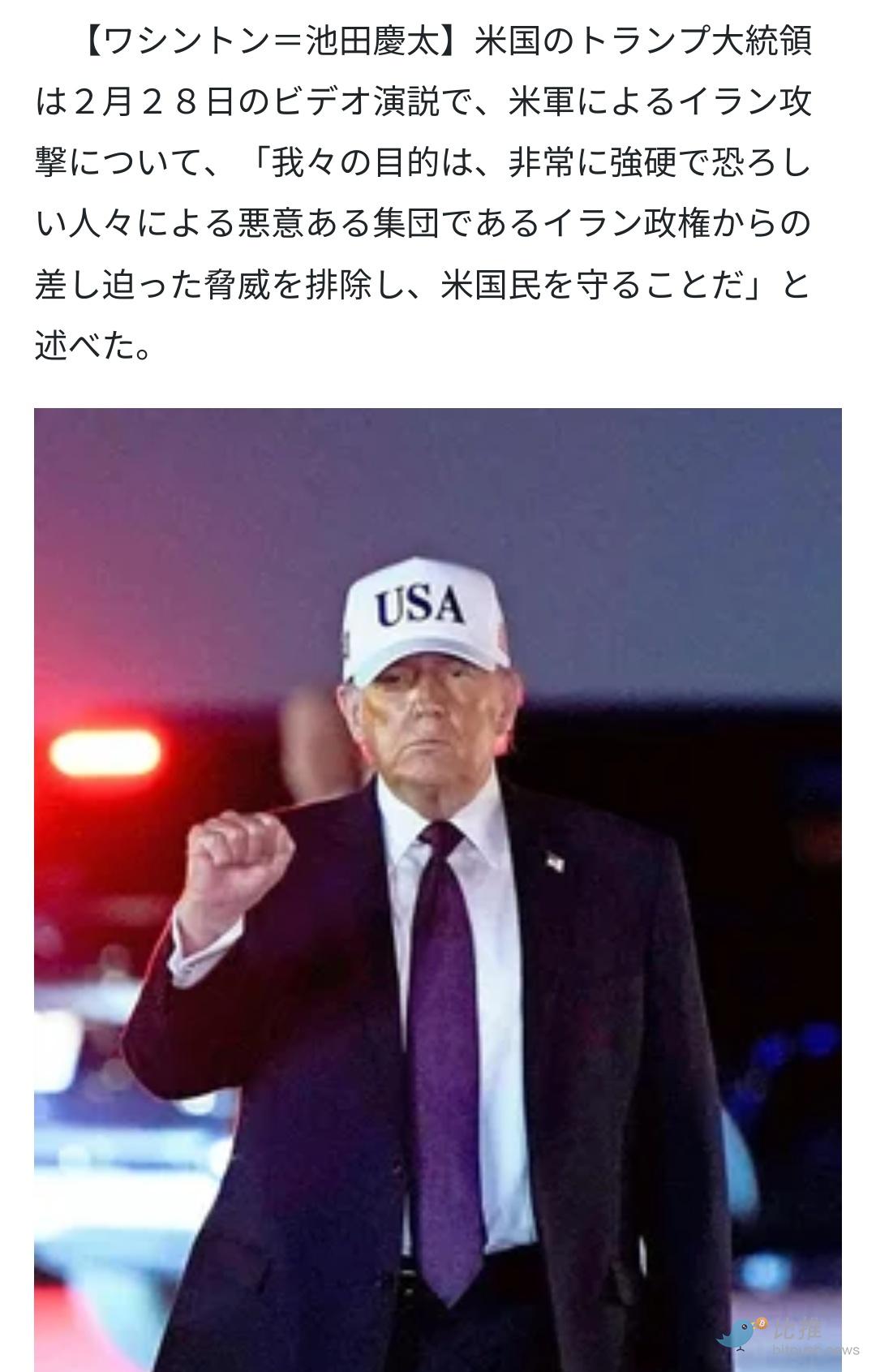
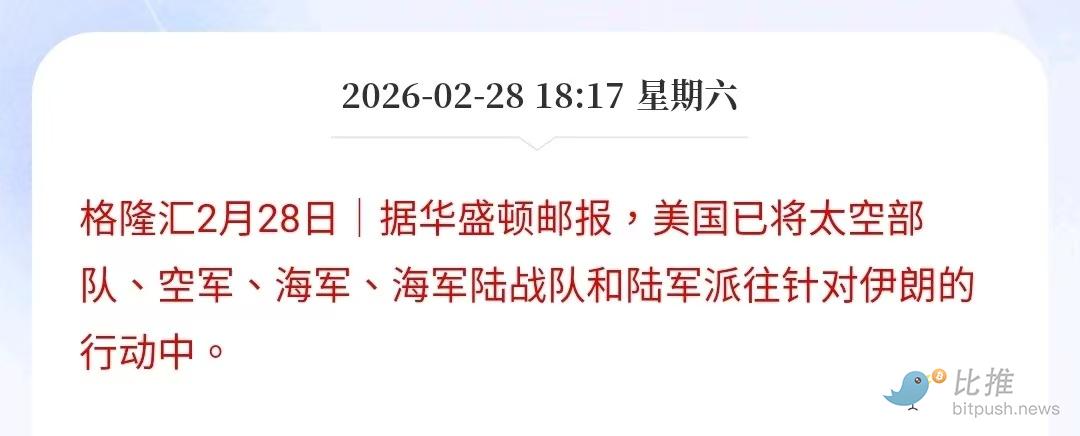
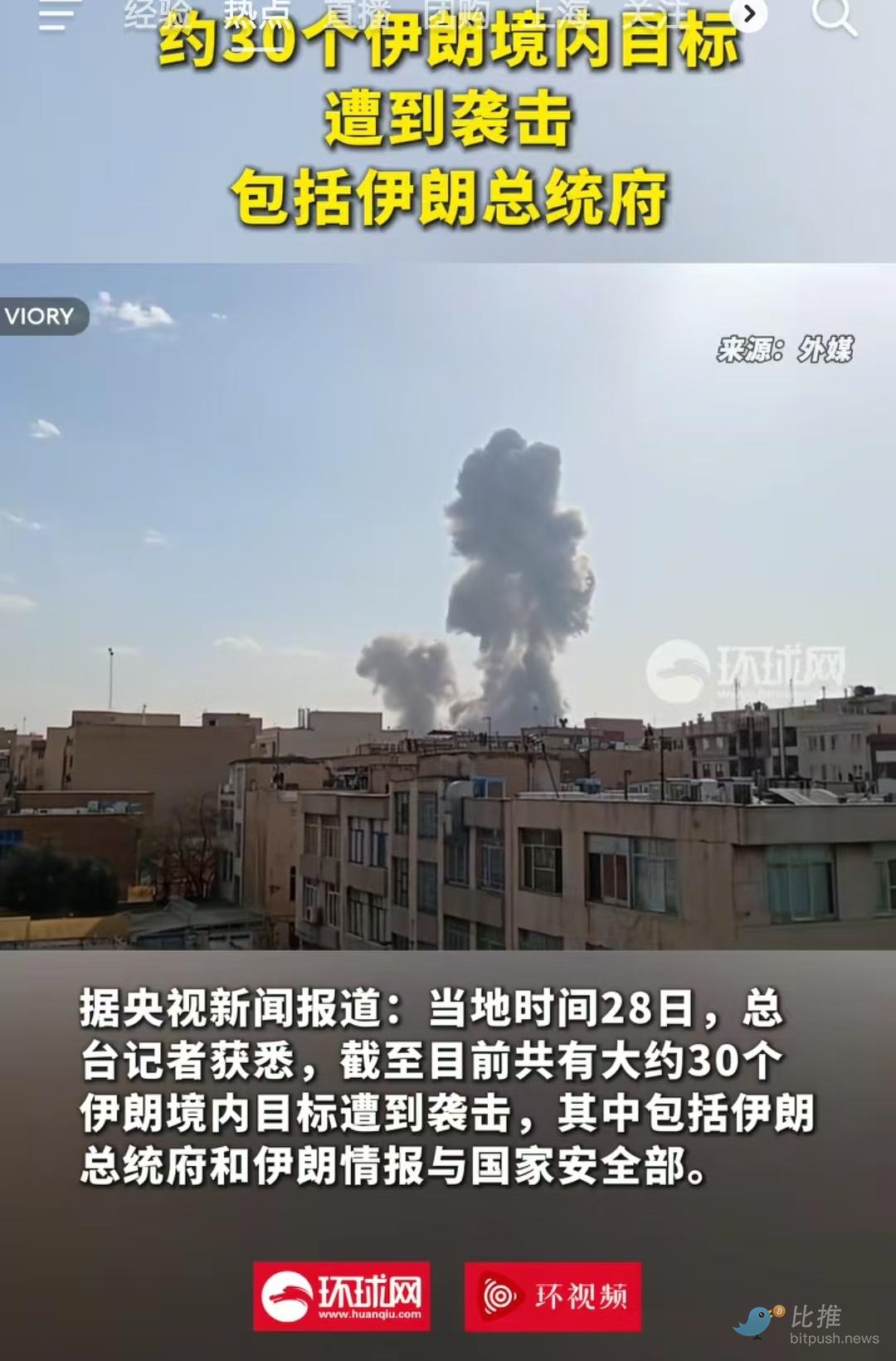
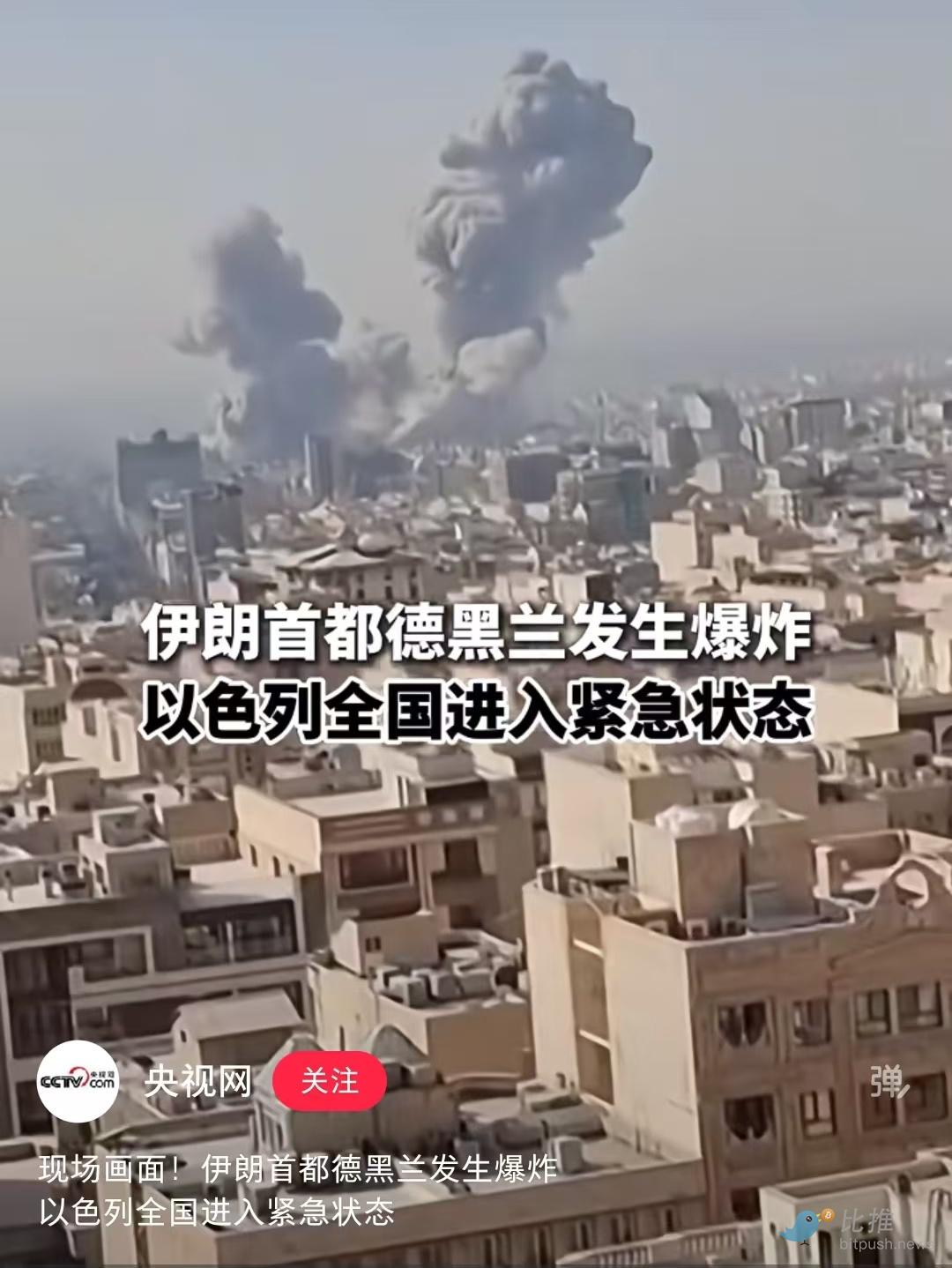
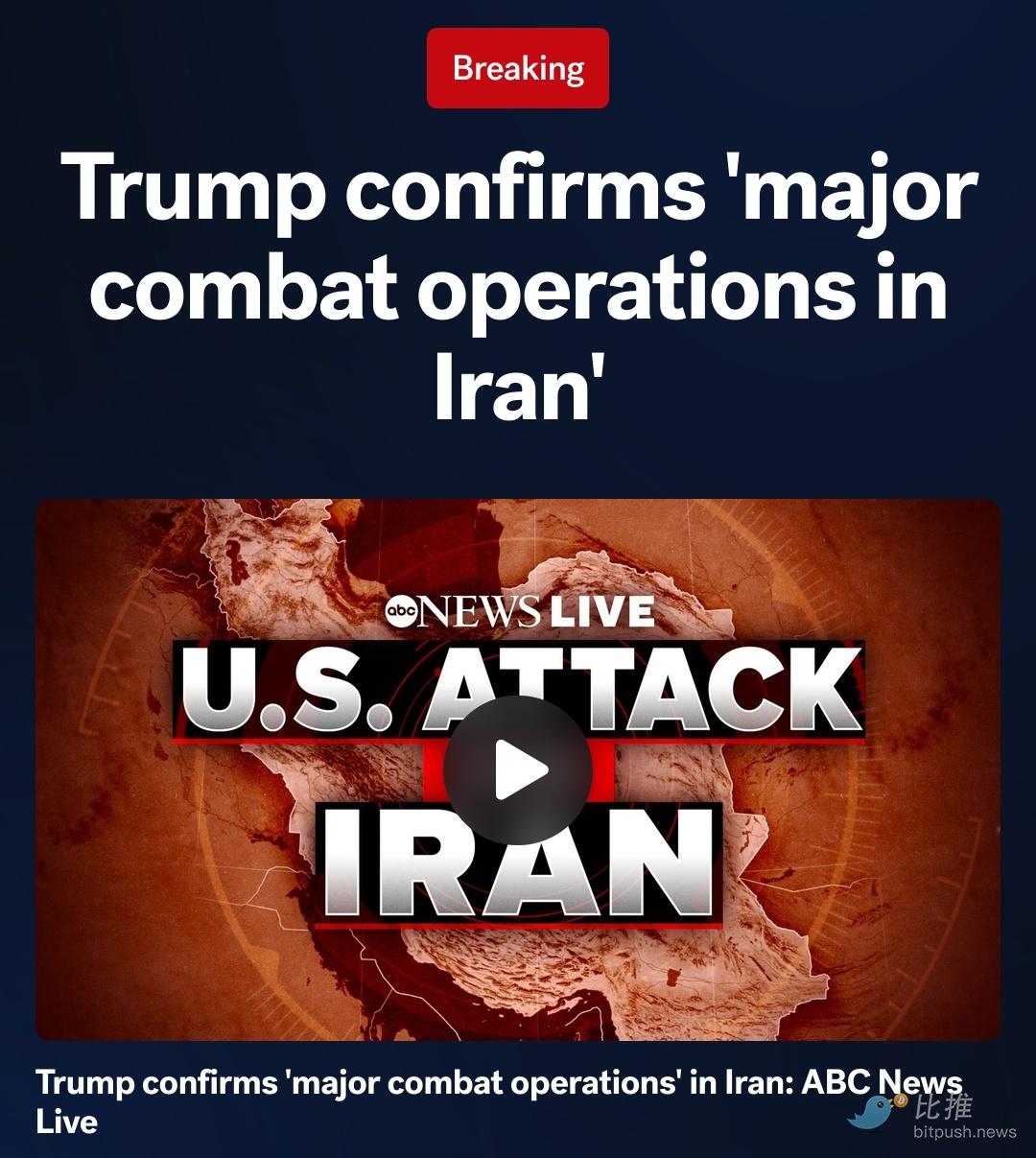
After Trump's well-intentioned smoke bomb was deployed, the US Fifth Fleet launched a full-scale attack, led by Israel.

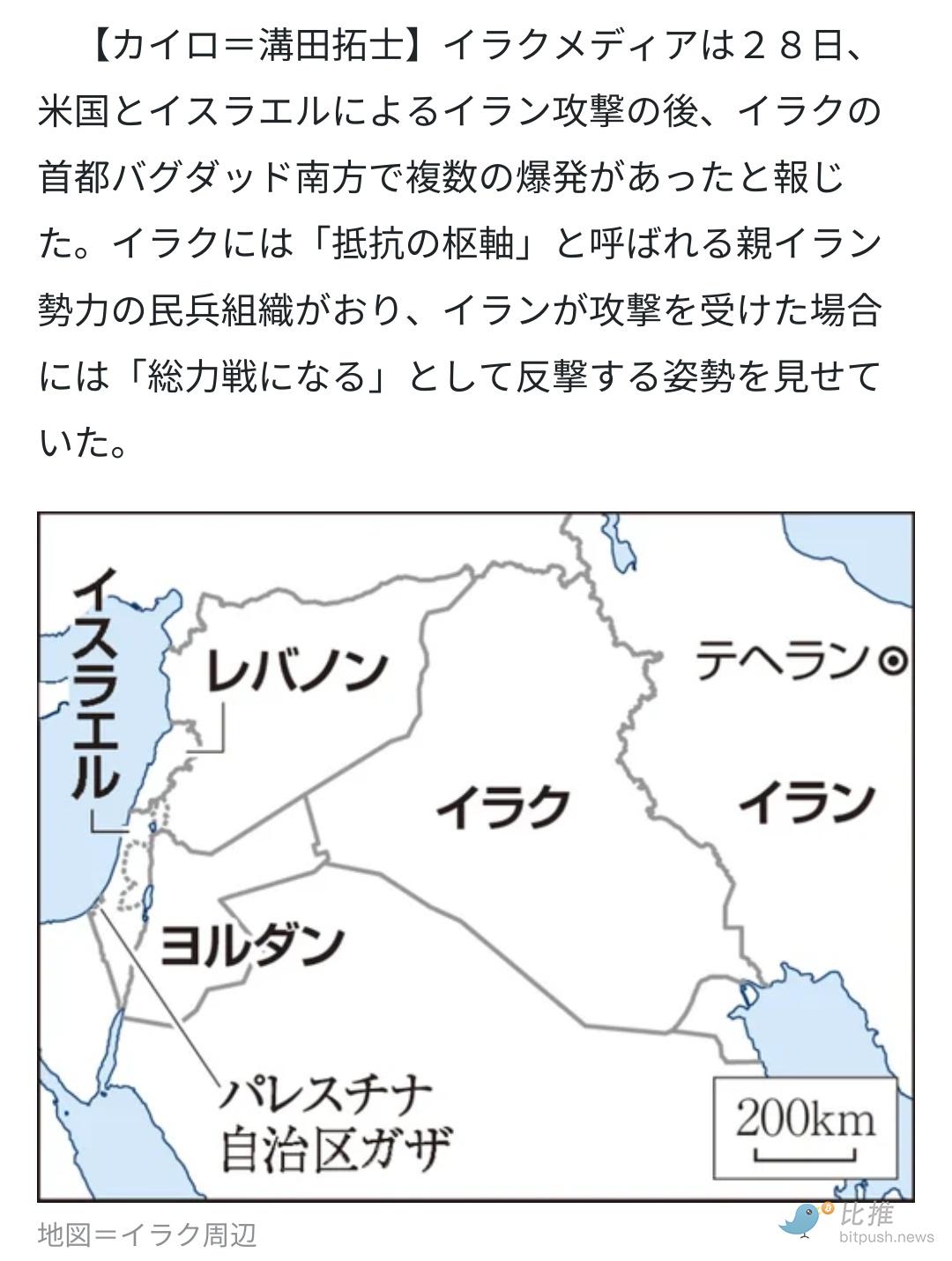
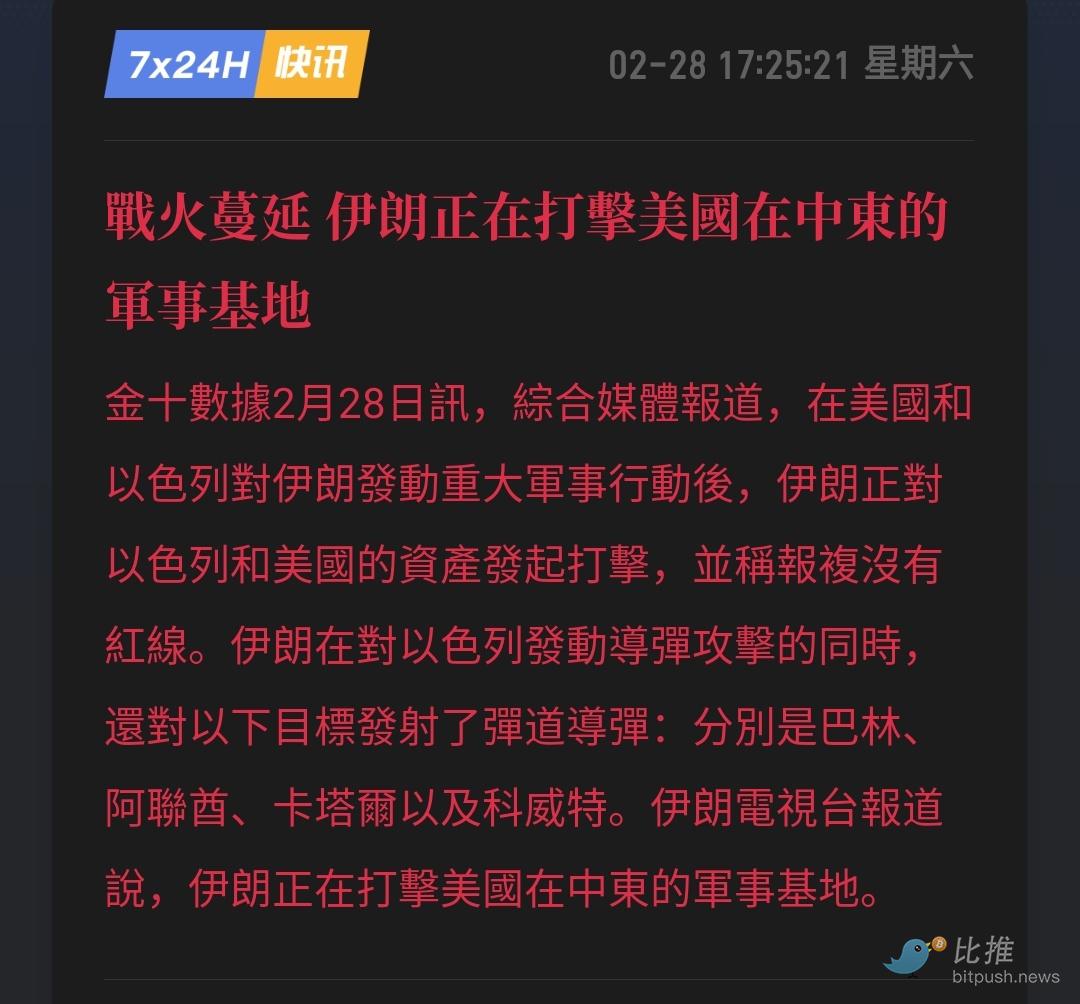
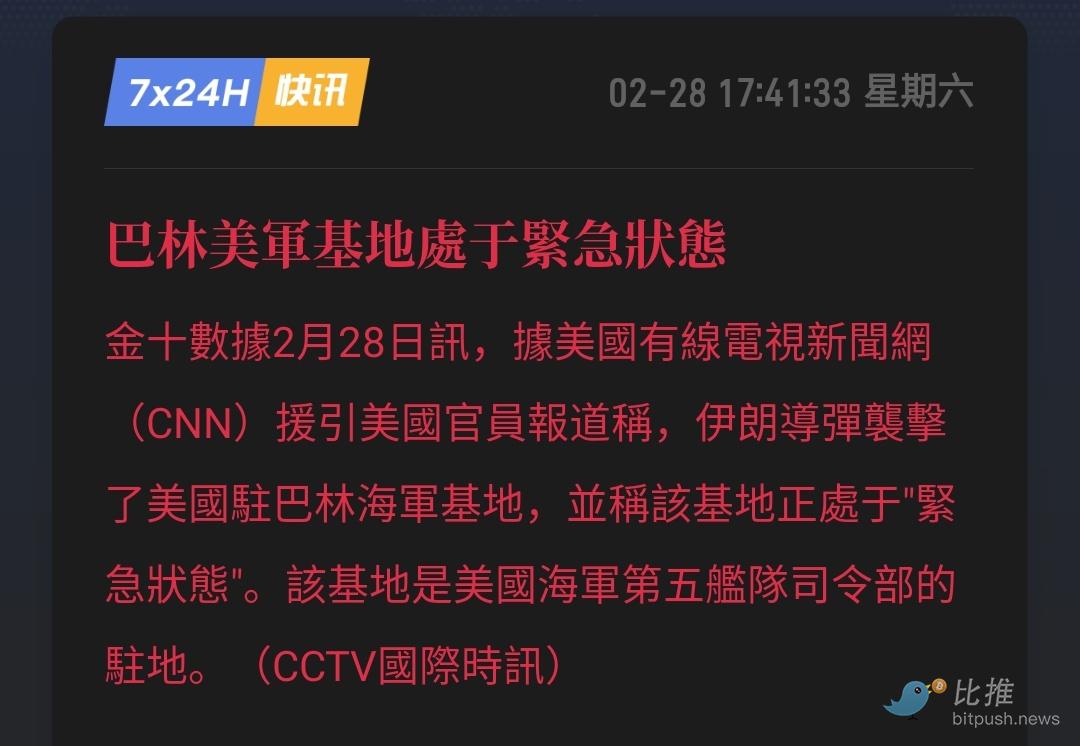
This time, Iran does not appear to be as weak. So far, it has responded with three rounds of missile attacks on Israel, missile strikes on US bases in Iraq, Qatar, and Bahrain, and missile attacks on Riyadh, the capital of Saudi Arabia.

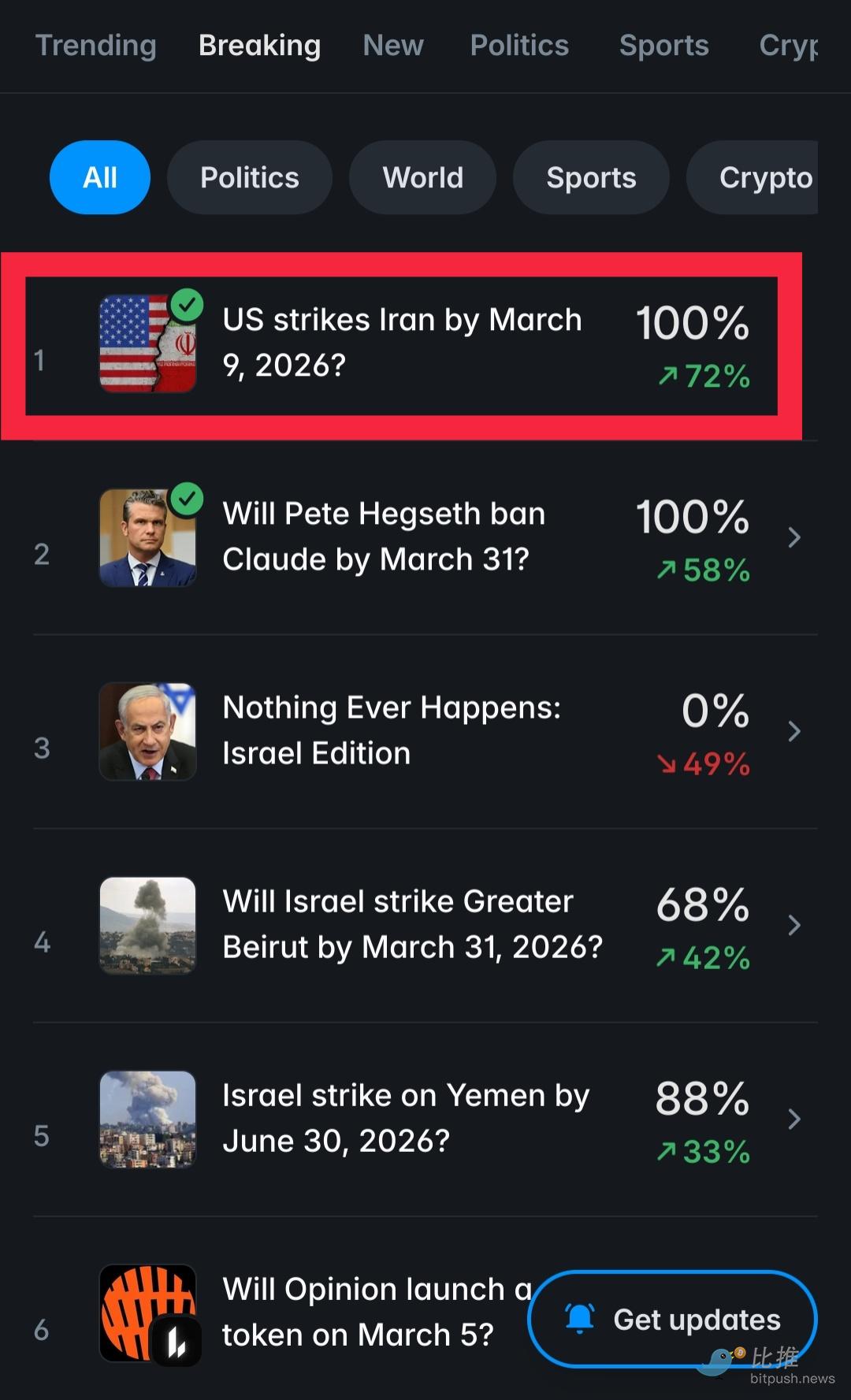
Gambling websites all predict a parabolic increase in the probability of delayed US military action against Iran. The dishes have already been cleared.

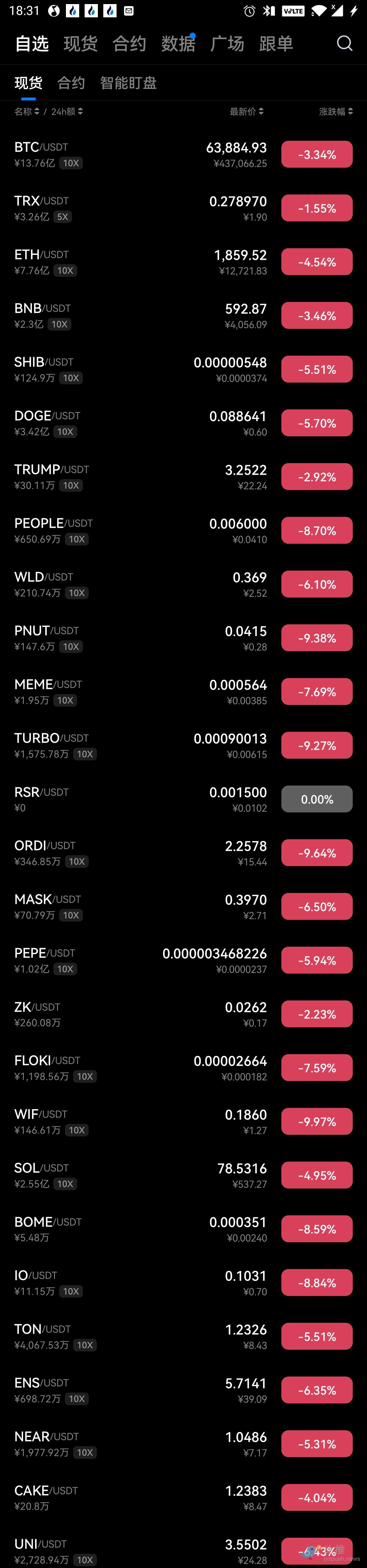
During the Asian weekend, capital markets and commodity markets—aside from sustainable and futures—can only await the delayed impact after Monday's opening. Accordingly, I also hope that friends who noticed our micro-strategy adjustments earlier will reap good returns.

We will not comment on whether Iran will be as weak as in previous instances of being attacked and then 『quickly give in (This is the biggest risk for our Micro strategy at the moment.)』.

We intend to closely follow the development of the situation. Welcome to discuss all information and developments with us.

Have a good weekend, Guys. It's a very special day.

#Post-Lighthouse Era Geopolitical and Economic Perception

#Diversified Asset Strategy Based on Anti-Fragility
Original link:https://www.bitpush.news/articles/7615392

相關問答

QWhat is the main event described in the article that has caused global attention?

AThe article describes a major military escalation in the Middle East, where the US Fifth Fleet, led by Israel, launched an all-out attack after a 'smoke bomb' from Trump. Iran has responded with multiple rounds of missile attacks on Israel, US bases in Iraq, Qatar, and Bahrain, as well as the Saudi capital, Riyadh.

QHow has Iran responded to the military actions mentioned in the text?

AIran has responded with significant force, including three rounds of missile attacks on Israel, missile strikes on US bases in Iraq, Qatar, and Bahrain, and missile attacks targeting Riyadh, the capital of Saudi Arabia.

QWhat is the potential impact on financial markets according to the article?

AThe article states that during the Asian weekend, capital and commodity markets, except for sustainable futures, are waiting for the delayed impact that will be felt after Monday's opening. Gambling websites are forecasting a parabolic increase in the probability of a delayed US military action against Iran.

QWhat is mentioned as the biggest risk to the author's 'Micro strategy'?

AThe biggest risk to the author's 'Micro strategy' is the possibility that Iran might quickly give in and surrender, as it has been 'beaten several times before'.

QWhat are the two hashtag concepts used to frame the article's analysis?

AThe two hashtag concepts are '#後燈塔時代地緣政經感知' (Perception of Geopolitical Economy in the Post-Beacon Era) and '#基於反脆弱性的多元資產策略' (Diversified Asset Strategy Based on Anti-Fragility).

你可能也喜歡

股票跌得比加密货币还狠,钱去了哪?

7月底,韩国Kospi指数罕见连续两天触发熔断,全球半导体股集体暴跌。SK海力士业绩虽创纪录但不及预期,股价重挫,其两倍做多杠杆ETF市值更蒸发超万亿港元。与此同时,比特币却从低点反弹约15%,呈现“股票跌出币圈样,比特币装死躺赢”的反常局面。 此次暴跌并非全市场恐慌,而是对前期最拥挤交易(如AI半导体)的精准去杠杆。催化剂包括不及预期的财报、中国存储芯片扩产带来的竞争压力,以及日元套息交易平仓带来的流动性压力。分析认为,产业逻辑未死,死的是过高的杠杆。 那么,从股市流出的资金是否流入了比特币?答案是否定的。比特币的相对抗跌,是因为它在5月至6月已提前经历大幅调整,美国现货比特币ETF曾出现历史性资金外流。真正的避险资金流向了黄金。数据显示,比特币与黄金的相关性已降至极低水平,“数字黄金”叙事在此次危机中暂时失效。机构将两者视为不同资产:黄金用于避险,比特币用于博弈高波动回报。 资金未来的流向取决于三个条件:全球流动性压力缓解、美联储在不引发衰退的前提下降息,以及美国CLARITY加密法案的最终落地。当前,比特币与纳斯达克指数的走势正在脱钩,其价格更依赖全球流动性而非单一科技股盈利。这种低相关性可能使其在未来成为机构资产配置中分散风险的选择。尽管当前并非避风港,但比特币已提前出清,为未来资本重新配置占据了有利位置。

marsbit32 分鐘前

股票跌得比加密货币还狠,钱去了哪?

marsbit32 分鐘前

交易

現貨
活动图片