Over the past few years, $USDT has transformed from a cryptocurrency trading tool into a universal means for international settlements. Freelancers and IT specialists receive payments in stablecoins, relocants use them for transfers between countries, and for many entrepreneurs, $USDT is the most convenient and fastest way to settle payments with foreign counterparties for deliveries of components from abroad.
Transfers in $USDT and other cryptocurrencies are fast, the coins are credited to wallets. However, users then face the problem of how to convert the cryptocurrency into fiat, as most routine payments in a person's life are conducted in fiat money. For example, rubles are needed to pay utility bills, send money to relatives, buy plane tickets, or order home delivery of groceries. Most often, the user has to go through the same chain: find an exchanger or a cryptocurrency buyer on a P2P platform, sell $USDT, wait for the rubles to arrive, and only then make the necessary payment.
However, over recent years, the process of exchanging cryptocurrency for rubles has become noticeably more complicated. Increased bank anti-fraud measures, crackdowns on money mules, a rise in fraudulent schemes, and the development of compliance procedures have made the cryptocurrency exchange process riskier than before. The situation will worsen in the coming year, as the State Duma has passed in the second and third readings a bill tightening the rules for handling digital currencies in Russia.
What's Wrong with P2P
For many users, P2P was the easiest way to exchange cryptocurrency for rubles at the market rate. The model seemed quite convenient: one user transfers rubles, the other sends cryptocurrency. The exchange acts as a guarantor of the transaction and holds the assets until the exchange is completed.
The problem lies in the fact that the bank does not see the cryptocurrency part of the deal. It only sees a transfer from an unknown individual. If there are many such operations, they can trigger internal monitoring systems.
The reason is the increase in cryptocurrency-related fraud and, as a consequence, changes in legislation, primarily in Federal Law No. 161-FZ "On the National Payment System," as well as requirements for combating money laundering (Law 115-FZ).
According to the Central Bank of Russia, the volume of operations without the voluntary consent of clients in 2025 exceeded 27 billion rubles, and a significant portion of the stolen funds passed through the accounts of individuals used as money mules.
Now banks analyze:
- the number of incoming transfers;
- the number of senders;
- the speed of subsequent withdrawal of funds;
- matches with known fraudulent patterns;
- links to details from the Central Bank of Russia's database.
If a transaction seems atypical or raises questions, the bank may request additional explanations and documents.
The Main Risk: "Triangles"
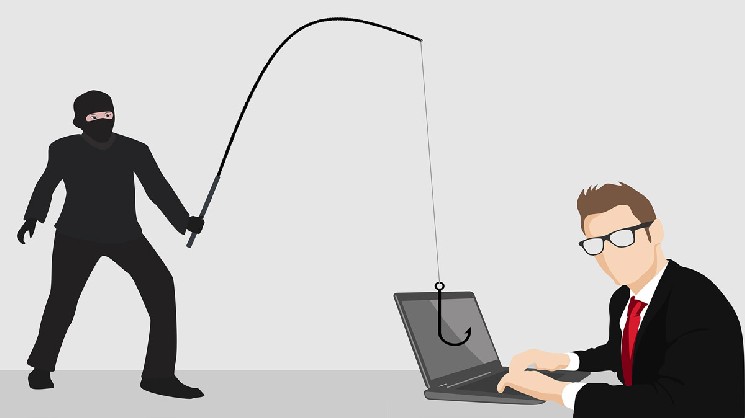
One of the most common problems in the P2P market remains the fraudulent scheme known as the "triangle" or "triangulation." It works as follows: a fraudster simultaneously negotiates with a victim and a cryptocurrency seller. The seller is confident they are selling $USDT to an ordinary buyer. At the same time, the fraudster convinces a third person to transfer money to the seller's card under any pretext: a transfer to a "safe account," helping a relative, buying goods, or another common ruse.
After the seller receives the transfer, they send the cryptocurrency to the fraudster's wallet, considering the deal complete.
Problems arise later, often months after the transaction. When the victim realizes they have been part of a fraud scheme, they contact the bank and law enforcement. The only known details are the card to which the money was sent—that is, the cryptocurrency seller's card.
As a result, the person who themselves became part of the fraudulent scheme and never communicated with the victim may find that they become a subject of a criminal case, their accounts are frozen, and their data is included in the Central Bank of Russia's database of suspicious transactions.
Exchangers allow users to avoid direct contact with unfamiliar counterparties but do not eliminate the risk of being drawn into dubious schemes.
But risks remain here too:
- users need to choose a reliable service;
- rates can differ significantly from exchange rates;
- delays are possible during transaction verification;
- some exchangers operate without clear jurisdiction and compliance procedures.
The user does not know who is sending money to their card, has no guarantee that the exchanger is not using money mule cards for settlements. The main issue is that the user is still forced to manually solve the exchange problem every time.
This is precisely why the market has started moving towards services that combine cryptocurrency storage, conversion, and payment operations in one interface. This principle is the foundation of services trying to eliminate the very need to "go exchange cryptocurrency." One such example is OneSix.
How OneSix Solves This Problem
OneSix is a cryptocurrency wallet operating via a Telegram MiniApp and a web interface. Users have access to $USDT on the TRC-20, ERC-20, and BEP-20 networks, as well as BTC, ETH, BNB, TRX, and LTC.
The main feature of OneSix is that cryptocurrency exchange is built into the user scenario and ceases to be a separate operation. For the user, everything looks like paying for a product or service with cryptocurrency, although that is not the case: the process of exchanging cryptocurrency for fiat is simply "embedded" inside and invisible to the user.
For the user, the process looks much like paying through a regular banking app.
The withdrawal process works similarly. If it's necessary to send money to relatives or withdraw part of the income in fiat, the user can exchange $USDT within the wallet, for example, for rubles, and send the funds to a bank card without searching for exchangers and facing the risks associated with P2P platforms.
In addition, through OneSix, users can create invoices and payment links to receive cross-border transfers in digital assets. This can be convenient for freelancers, developers, and small companies working with foreign clients.
In OneSix, incoming transactions undergo verification. However, unlike other services, if assets do not comply with the service's AML policy requirements or carry a high risk, they are not credited to the balance and are immediately returned to the sender instead of being frozen.
P2P and exchangers were an important stage in the development of the crypto market, but today they no longer solve the user's main task: to safely and conveniently use digital assets in everyday life. The more cryptocurrency becomes part of real financial scenarios, the fewer people are willing to independently search for counterparties, verify the origin of funds, and understand the risks of each transaction. Therefore, the market is gradually moving from manual exchange to services where storage, verification, conversion, and payments are combined in one place.
end-content