Meme Season Arrives on Robinhood Chain, but 'Scythes' Are Also Entering the Field

Foresight News發佈於 2026-07-14更新於 2026-07-14

文章摘要

A meme coin season has arrived on Robinhood Chain, but it is accompanied by a surge in scammers and fraudulent schemes. Two major incidents highlight the risks: first, compromised X accounts of SpaceX's SpaceXAI and Starlink were used to promote the meme token SCATMAN, leading to a rapid pump-and-dump where developers drained the liquidity pool, causing the token's value to crash. Second, a hacker gained control of a Robinhood founder's wallet and used it to buy a meme token, sparking a frenzy of copycat trading that artificially inflated the price before it collapsed. These events exploit the current hype on Robinhood Chain, which has seen significant activity and trading volume driven primarily by meme coins, despite its stated long-term focus on real-world assets (RWAs). The incidents reveal vulnerabilities in both platform security—such as inadequate protection for high-profile social media accounts and controversial chain-level address freezes—and investor behavior, where the lure of quick profits often overrides due diligence. The article cautions investors to verify token contracts, check liquidity pool locks, and maintain skepticism toward "official" endorsements to avoid becoming exit liquidity for such schemes.


Author: Nicky, Foresight News


The hype around Robinhood Chain has lasted over a week. However, behind the surge of new Meme coins, 'dark hunters' on the chain are also targeting this wave of popularity.


In the early hours of July 13th, the X platform accounts of SpaceXAI and Starlink, two products from the recently listed SpaceX, were compromised. They once forwarded a post promoting the Robinhood Chain network Meme token SCATMAN. The original account promoting this Meme, Sam Catman, even carried the affiliated gold checkmark verification for SpaceXAI.
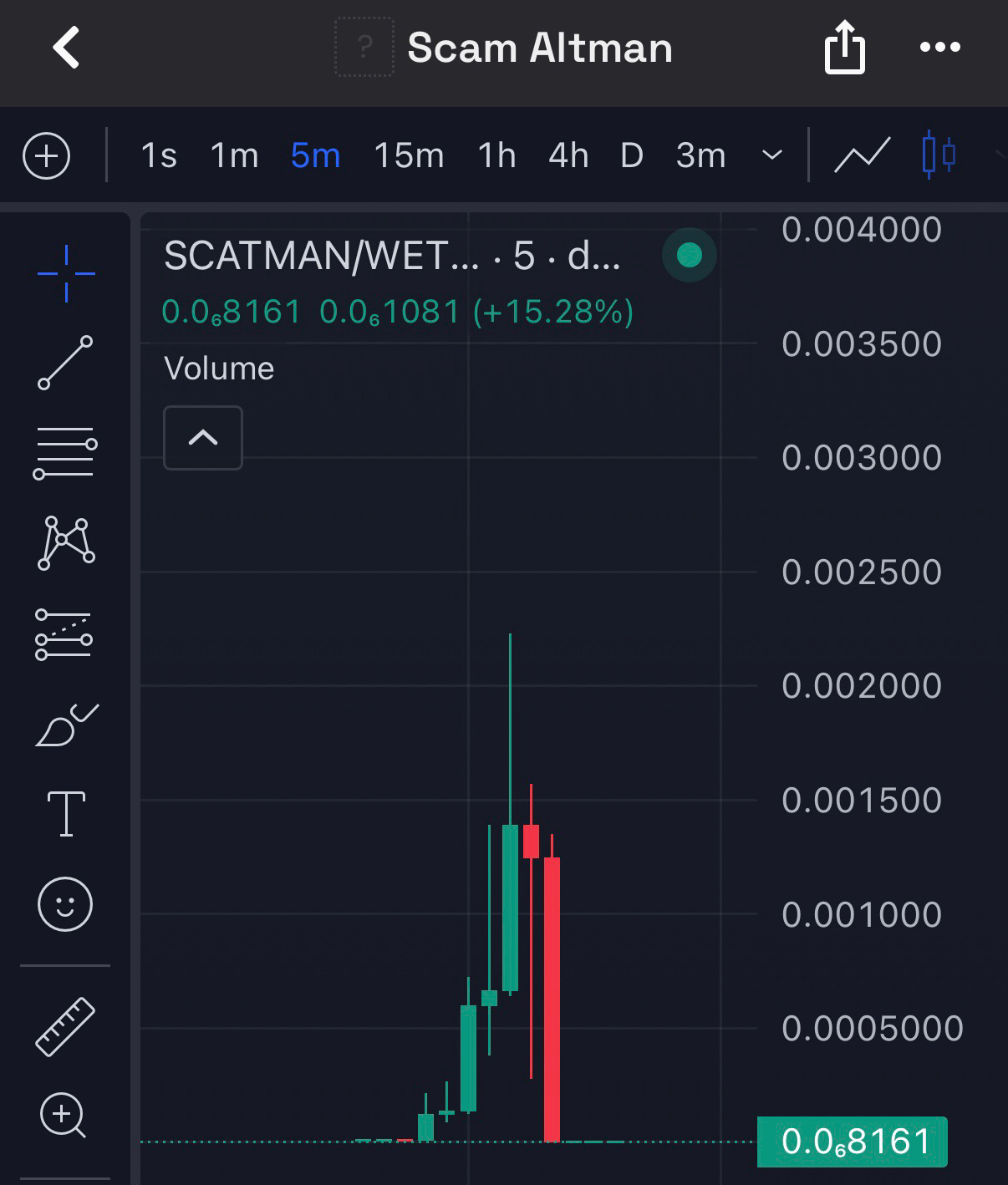


After the repost, the token's market capitalization was quickly pushed to around $2 million. At this point, the deployer immediately withdrew the liquidity pool, causing the Meme's price to plummet almost to zero. Currently, the related post has been deleted, and the original account Sam Catman that posted the Meme token has been suspended on X. As of now, SpaceXAI, Starlink, and X have not publicly responded to this incident.


It is worth noting that SCATMAN was not created through any token launch platform on Robinhood Chain. The contract was deployed by the developers themselves with initial liquidity injected, belonging to a typical self-deployed token scam. The attacker used the compromised accounts to attract traders and immediately executed a liquidity withdrawal.


According to on-chain monitoring platform Lookonchain's tracking, the hacker minted 10 trillion SCATMAN tokens after compromising the account and completed the sell-off through two associated wallets. One wallet exchanged the tokens for 59 ETH, worth approximately $108,000; the other wallet sold part of the tokens for 14.7 ETH, worth about $27,000.


It is reported that the origin of the SCATMAN token name is not without reason. The recent public feud between X platform owner Elon Musk and OpenAI CEO Sam Altman provided a high-traffic backdrop for the account compromise.
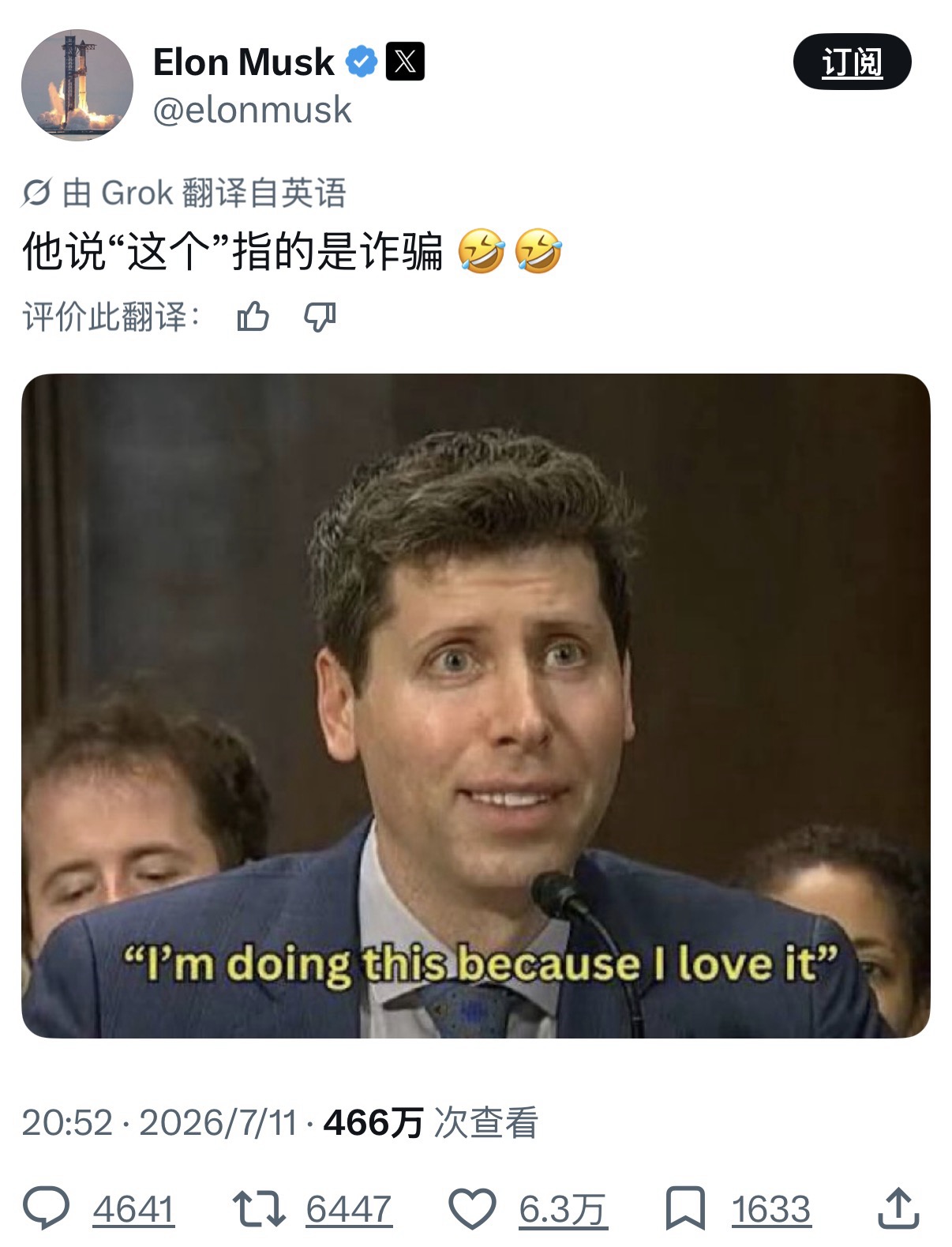


After Apple filed a trade secret theft lawsuit against OpenAI on July 10th, Musk continuously criticized Altman as a 'liar' on X, while Altman retaliated by mocking Musk for promoting space data centers. The massive number of controversial posts generated extremely high attention, making Musk-related accounts like SpaceXAI and Starlink high-value targets for attacks.


The attacker leveraged this wave of public opinion heat to compromise the accounts and used them to promote the SCATMAN token.


The incident of a SpaceX-owned platform being compromised to promote a Meme is not an isolated case; even Robinhood's founder fell victim.


Robinhood co-founder and CEO Vlad Tenev accidentally leaked 8 wallet seed phrase words during a livestream, and the remaining 4 words were reportedly guessed at random by a hacker. On July 12th, after gaining control of the address, the hacker used it to buy the Robinhood chain Meme token $1, triggering a wave of followers from many investors.


Since the transaction records showed the 'founder's address' buying, it prompted thousands of investors to follow suit. The token's market capitalization rapidly surged from around $500,000 to $14 million in a short time, with trading volume reaching approximately $20 million within two hours, before the price sharply corrected to around the $1 million market cap level.


Subsequently, Robinhood Chain's RPC node froze the involved address. Any transactions sent from this address could not be packaged by the node, preventing funds from being transferred or traded further. This handling method also sparked controversy. Some community members argued that Robinhood Chain, positioned as an Arbitrum-based Ethereum Layer 2 network, freezing addresses at the node level deviated from the decentralized nature of blockchain networks.


These two consecutive incidents, both in method, point to exploiting high-profile accounts or individuals to create short-term hype for on-chain tokens, then cashing out after retail investors enter the market.


Starting from July 8th, the Robinhood Chain Meme token CASHCAT began its rally, with intraday gains once exceeding 1000%, reaching a peak market cap of $220 million on July 11th. According to DefiLlama data, the chain's current Total Value Locked (TVL) is approximately $151 million, with a 24-hour decentralized exchange trading volume of $875 million and fee revenue of about $100,000.


On July 8th, Robinhood co-founder and CEO Vlad Tenev posted on X that Robinhood is building the Robinhood Chain focused on real-world assets (RWA), but the network is also 'great for meme coins.' This statement further fueled speculative enthusiasm.


Although Robinhood Chain positions itself with RWA as its long-term focus, currently its main traffic still comes from Meme token trading. Against this backdrop, the chain quickly became an ideal 'soil' for fraudsters to operate.


From the compromise of the official SpaceXAI account to the exploitation of the leaked founder's wallet, two major incidents within two days reflect how the popularity of Robinhood Chain is attracting a large number of fraudsters. They leverage celebrity influence, the halo of official accounts, and investors' tendency to chase trends to quickly generate short-term hype, then cash out rapidly after retail investors enter. This also highlights the shortcomings in Robinhood Chain's early-stage rapid development, particularly in terms of ecosystem infrastructure and user protection mechanisms.


Simultaneously, the X platform, as a crucial medium for information dissemination, showed明显不足 (obvious inadequacies - note: original Chinese phrase retained but translation contextually implied) in security protection capabilities for high-value accounts. This allowed the two official accounts of SpaceXAI and Starlink, with millions of followers, to become channels for distributing scam information, directly converting the platform's immense traffic and user trust into amplifiers for fraud. The platform also did not issue any official response after this incident.


For ordinary investors, before chasing trends, verifying token contract addresses, confirming liquidity pool lock status, and maintaining vigilance towards narratives of 'official endorsement' remain the most basic lines of defense to avoid becoming exit liquidity.

熱門幣種推薦

相關問答

QWhat were the two major incidents related to scams on Robinhood Chain mentioned in the article?

AThe first incident involved the hacking of SpaceX's SpaceXAI and Starlink X accounts to promote the meme token SCATMAN, leading to a rug pull. The second incident involved a hacker gaining control of Robinhood co-founder Vlad Tenev's wallet after a seed phrase leak, using it to buy the meme token $1 and pump its price.

QHow did the attack on the SpaceX-related X accounts contribute to the SCATMAN token scam?

AThe attacker compromised the high-follower SpaceXAI and Starlink X accounts to post promotional content for the SCATMAN token. This misuse of trusted, high-visibility accounts created a surge of interest and buying activity, allowing the deployer to quickly drain the liquidity pool and abandon the token.

QWhat controversial action did Robinhood Chain take in response to the hacked founder's wallet incident?

ARobinhood Chain's RPC nodes froze the compromised wallet address, preventing any transactions from being processed. This action sparked debate within the community, as it was seen as a centralized intervention that contradicts the decentralized principles of a blockchain network.

QWhat does the article suggest is the main source of current activity and traffic on Robinhood Chain?

AAlthough positioned for Real World Assets (RWA), the article states that the primary traffic and activity on Robinhood Chain currently comes from meme token trading, which has attracted both legitimate interest and fraudulent actors.

QWhat basic precautions does the article recommend for investors to avoid scams in meme token frenzies?

AThe article advises investors to verify a token's contract address, confirm the lock status of its liquidity pool, and maintain a healthy skepticism towards narratives of 'official endorsement' before chasing a trending meme token.

你可能也喜歡

崔泰源离婚案落槌:揭秘SK海力士万亿帝国背后的继承暗线

2024年底,SK集团会长崔泰源在家族活动上向子女强调“饮水思源”与继承责任。此时,旗下SK海力士市值已突破1000万亿韩元,成为韩国最值钱资产,但集团第三代接班格局却与传统财阀剧本迥异。 崔泰源与前总统卢泰愚之女卢素英育有三名子女。长女崔允贞被视为最明显接班候选,她拥有生物学背景和咨询经历,现任SK生物制药高管及集团“成长支援部”主管,主导精准医疗等新业务,其婚姻也联姻AI领域创业者。 次女崔敏贞路径独特,曾自愿服役韩国海军并参与亚丁湾护航,退役后曾在SK海力士美国部门处理国际政策,后离职在硅谷创立AI医疗公司。她与曾服役美国海军陆战队的华裔企业家结婚,连接军旅与地缘政治网络。 长子崔仁根最符合传统继承人形象,毕业于布朗大学物理系,曾任职SK旗下能源公司,后转入麦肯锡首尔办公室。他公开表现极为低调,未持有集团股份,也未公开表态。 子女们的成长与父母旷日持久的离婚诉讼交织。2025年,最高法院将涉及1.38万亿韩元财产分割的判决发回重审,期间三名子女曾向法院递交未公开内容的请愿书。 随着SK海力士在AI时代成为全球核心地缘政治资产,崔家第三代继承的已非简单的企业控制权。他们被置于AI科研、华盛顿政策圈与全球投资前沿,必须证明自己有能力应对新时代的产业博弈,而非自动承接旧式家族剧本。

marsbit13 小時前

崔泰源离婚案落槌:揭秘SK海力士万亿帝国背后的继承暗线

marsbit13 小時前

交易

現貨

熱門文章

什麼是 MEME 2.0

Memecoin 2.0:$MEME 2.0 在加密貨幣世界中的崛起 引言 在不斷演變的加密貨幣環境中,一個新的競爭者出現了。Memecoin 2.0,以 $MEME 2.0 為象徵,將 meme 幣的概念提升到一個令人興奮的新水平。作為原始 Memecoin 的副產品,該項目透過將焦點從典型的金融激勵轉移到引人入勝和娛樂性的體驗,吸引了加密社區的注意。Memecoin 2.0 在以太坊區塊鏈上運行,勇敢地重新定義了加密領域中的社區參與。 什麼是 Memecoin 2.0,$MEME 2.0? Memecoin 2.0 在本質上是一個優先考慮社區精神和與 meme 文化相關的趣味的加密貨幣項目。與專注於實際用例和具體利益的傳統加密貨幣不同,Memecoin 2.0 通過擁抱數字貨幣的輕鬆一面,脫穎而出。 該項目在沒有實用性承諾、結構化路線圖或財務回報的情況下存在,而是專注於培養圍繞 meme 和共享樂趣的活躍社區。通過這樣做,它利用了在線空間中日益增長的 meme 文化趨勢,使其成為數字資產世界中的獨特參與者。 Memecoin 2.0 的創造者,$MEME 2.0 儘管對 Memecoin 2.0 的起源進行了廣泛的研究,但其創造者的具體身份仍然未知。在加密社區中,這種匿名性並不罕見,許多項目由個人或團體牽頭,這些人或團體更願意隱身於幕後。創造者缺乏公開可用信息的情況可以被視為一種戰略性舉措,將焦點放在社區參與而非個人在該領域的聲譽上。 Memecoin 2.0 的投資者,$MEME 2.0 有關 Memecoin 2.0 的投資者或財務支持的信息稀少。這一細節的缺乏可能表明該項目要麼是自籌資金,要麼其對社區而非傳統投資結構的關注吸引了不同類型的支持者。由於 meme 幣的世界通常涉及更多的基層參與而非機構投資,這一做法與社區驅動項目的精神相契合。 Memecoin 2.0,$MEME 2.0 如何運作? Memecoin 2.0 完全運行在以太坊區塊鏈上,充分利用其強大的安全性和可擴展性。通過利用以太坊的優勢,Memecoin 2.0 可以為用戶交互提供一個安全的環境,同時確保交易既高效又具成本效益。 Memecoin 2.0 的一個獨特特徵在於其社區驅動的結構。$MEME 2.0 代幣的價值和流行度來自於用戶的積極參與,而不是內在的實用性。這一設計強化了該項目對加密貨幣娛樂方面的關注,這暗示著笑聲和社區參與是推動其成功的真正貨幣。 此外,該項目符合 meme 幣更廣泛的生態系統,在這裡,每個 meme 幣的價值根據文化、趨勢和社區參與而波動,而不是基於傳統的經濟原則。 Memecoin 2.0,$MEME 2.0 的時間線 為了更好地了解 Memecoin 2.0 的演變和里程碑,以下是重點突顯其歷史中的重要事件的時間線: 2024:Memecoin 2.0 被公認為原始 Memecoin 的衍生品,致力於在繁榮的 meme 幣背景中建立自己,同時在以太坊區塊鏈上運行。 2024 年 7 月 13 日:Memecoin 2.0 正式以社區為中心的 meme 幣身份確立於以太坊網絡,強調其以娛樂為中心的方式,邀請用戶參與其成長。 關於 Memecoin 2.0,$MEME 2.0 的關鍵點 幾個關鍵特徵定義了 Memecoin 2.0: 以社區為中心的方式:Memecoin 2.0 的核心任務是創造一種有趣、引人入勝的社區體驗,充分利用來自 meme 文化的集體樂趣。 建於以太坊:在以太坊區塊鏈上運行為該項目提供了基本基礎設施,確保安全性和可擴展性。 缺乏實用性或路線圖:與傳統加密貨幣截然不同,Memecoin 2.0 並不承諾任何實用功能或財務回報,重申其對社區參與和社會互動的承諾。 聚焦於 meme 文化:通過擁抱 meme 現象的幽默和文化方面,Memecoin 2.0 為用戶提供了一個在線下和在線上參與加密貨幣的平臺。 額外背景:meme 幣的意義 meme 幣已成為一個獨特的加密貨幣類別,通常受到幽默和輕鬆交易方式的驅動。這些幣通常缺乏重大的實用性或發展路線圖,吸引用戶以有趣、社區互動和文化相關性的承諾。 在更廣泛的加密生態系統中,meme 幣重新喚起了社區參與的重要性,挑戰僅以利潤為驅動的方式。像 Memecoin 2.0 這樣的項目開創了一個娛樂與財務願望可以和諧共存的時代,將區塊鏈變成創意和社交互動的遊樂場。 結論 Memecoin 2.0,或 $MEME 2.0,體現了一場新的加密貨幣浪潮,將社區參與置於嚴格的財務結構之上。專注於幽默和社交互動,它利用了圍繞 meme 文化的魅力。通過在以太坊區塊鏈上運行,Memecoin 2.0 利用這一技術的能力,同時堅定不移地致力於數字貨幣的娛樂價值。 隨著加密貨幣周圍的空間不斷演變,Memecoin 2.0 證明了數字資產的未來很可能寄託在共享體驗、笑聲和穩固的社區聯繫上。在這個不可預測的加密世界中,也許快樂和傳統財務收益一樣有價值。

251 人學過發佈於 2024.04.04更新於 2024.12.03

什麼是 MEME 2.0

如何購買MEME

歡迎來到HTX.com!在這裡,購買Memeland (MEME)變得簡單而便捷。跟隨我們的逐步指南,放心開始您的加密貨幣之旅。第一步:創建您的HTX帳戶使用您的 Email、手機號碼在HTX註冊一個免費帳戶。體驗無憂的註冊過程並解鎖所有平台功能。立即註冊第二步:前往買幣頁面,選擇您的支付方式信用卡/金融卡購買:使用您的Visa或Mastercard即時購買Memeland (MEME)。餘額購買:使用您HTX帳戶餘額中的資金進行無縫交易。第三方購買:探索諸如Google Pay或Apple Pay等流行支付方式以增加便利性。C2C購買:在HTX平台上直接與其他用戶交易。HTX 場外交易 (OTC) 購買:為大量交易者提供個性化服務和競爭性匯率。第三步:存儲您的Memeland (MEME)購買Memeland (MEME)後,將其存儲在您的HTX帳戶中。您也可以透過區塊鏈轉帳將其發送到其他地址或者用於交易其他加密貨幣。第四步:交易Memeland (MEME)在HTX的現貨市場輕鬆交易Memeland (MEME)。前往您的帳戶,選擇交易對,執行交易,並即時監控。HTX為初學者和經驗豐富的交易者提供了友好的用戶體驗。

753 人學過發佈於 2024.12.12更新於 2026.06.02

如何購買MEME

相關討論

歡迎來到 HTX 社群。在這裡,您可以了解最新的平台發展動態並獲得專業的市場意見。 以下是用戶對 MEME (MEME)幣價的意見。

活动图片