Lowering Expectations for BTC's Next Bull Market

marsbit發佈於 2026-04-27更新於 2026-04-27

文章摘要

The author, Alex Xu, explains his decision to significantly reduce his Bitcoin holdings (from full to ~30% of his portfolio) during the current bull cycle, citing a lowered long-term outlook for BTC's price appreciation in the next cycle. He outlines six key reasons for this reduced expectation: 1. **Diminished Growth Drivers:** The narrative of exponential user adoption has largely played out with institutional ETF adoption. The next major growth phase—adoption by sovereign national reserves or central banks—seems unlikely in the near future. 2. **Personal Opportunity Cost:** More attractive investment opportunities have emerged in other assets, such as undervalued companies. 3. **Industry-Wide Contraction:** The broader crypto industry is struggling, with most Web3 business models (SocialFi, GameFi, DePIN) failing. This overall萧条 (depression) reduces the fundamental demand and consensus for Bitcoin. 4. **Strain on Major Buyer:** MicroStrategy, a major corporate buyer of BTC, faces rising financing expenses for its debt, which could slow its purchasing rate and create significant marginal pressure on the market. 5. **Increased Competition from Gold:** The emergence of "tokenized gold" has closed the functional gap (portability, divisibility) between physical gold and Bitcoin, offering a strong competitor in the non-sovereign store-of-value space. 6. **Security Budget Concerns:** The block reward halving continues to exacerbate the long-standing issue of funding Bitcoi...

Author: Alex Xu

BTC has been my largest total asset position for most of the past few years (though it is not currently).

During this BTC bull market cycle:

  • At $70,000, I unwound the small leverage added during the deep bear market (around 1.1-1.2x, achieved through BTC collateralized loans);

  • At $100,000-120,000, I reduced my BTC position from full allocation to around 30%.

There were also some minor operations during this period, such as adding a small position when BTC corrected to $50,000+ in '24, and adding a small position when BTC dipped to $60,000 in February this year. These operations were based on a long-term bullish view on BTC.

According to the usual cyclical logic, now is a good time to accumulate more BTC and wait for the next bull market cycle. However, during the recent BTC rebound, I further reduced my already low 30% BTC position at the $78,000-79,000 level.
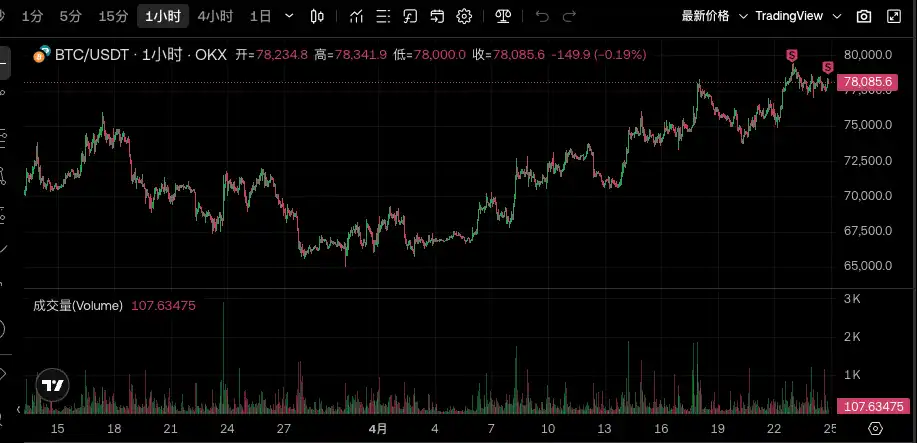
One must continuously track the assets one holds, conduct regular fundamental check-ups. The reduction in BTC was also an action taken after continuous check-ups and deliberation. The conclusion is that I will lower my expectations for the peak market capitalization of BTC in the next bull market.


Reasons summarized:

First, the potential energy driving BTC's continued significant rise in the next cycle is not as ample as in previous cycles.

In previous cycles, BTC had the expectation of exponential expansion of its investor base, from a niche financial experiment for geeks to a配置 asset for the masses and even institutions. This narrative has been gradually realized in the past.

Like in the 23-25 cycle, it entered the holdings of mainstream financial institutions through the listing of ETF compliant products and was warmly embraced by Trafi financial institutions represented by BlackRock + vocal support from the president of the world's largest country. If we want to elevate the narrative another level, it would need to enter the balance sheets of leading sovereign countries in the next cycle, for example:

  1. More sovereign funds (currently mainly Abu Dhabi)

  2. <极li>

    Central bank reserves

单纯政府的财政储备(比如美国的各州财政)可能是不够的,这部分能够提供的购买力比较小,远比不上传统金融机构。 (Simply government fiscal reserves (e.g., U.S. state finances) might not be enough; the purchasing power this part can provide is relatively small, far less than traditional financial institutions.)

But in my opinion, achieving this leap in the next 2-3 years is still quite difficult. Originally, in this bull market, there was an expectation that Bitcoin would enter the U.S. Federal Reserve, but this hope was largely disproven last year.

Currently, even the number of U.S. states that have passed Bitcoin reserve bills is very small. At the peak in early '25, there were over 20 U.S. states推进 Bitcoin reserve bills, but now only a single-digit number have最终 passed, and some bills are "half-baked" reserve bills where the purchase budget requires separate提案 approval.

Currently, central banks of mainstream countries still show no significant interest in BTC. Its short consensus history, high volatility, and the existence of gold as a competitor all make it very difficult for BTC to enter central bank balance sheets.

Second, the increase in my personal opportunity cost.

In the past six months or so, I have gradually discovered many good companies whose current prices are quite attractive. These will be the main direction of the portfolio adjustment (another part is increasing some cash reserves).

Third, the negative impact of the overall萧条 (depression/slump) in the crypto industry on Bitcoin demand and consensus.

Currently, it seems that there are very few viable business models in the crypto industry. Most Web3 models (socialfi, gamefi, depin, distributed storage/computing power...) are gradually being disproven over time. In reality, the only one that can generate positive cash flow and create profits is DeFi. But DeFi's overall development in the latter half of this cycle has also been relatively mediocre, mainly due to the萎缩 (shrinkage/atrophy) of native high-quality assets in the industry, leading to a萎缩 in DeFi business (still mainly lending and Dex trading).

The萎缩 of the entire crypto industry's basic盘 (fundamentals/base), the decrease in practitioners and investors, will also cause the growth of BTC's basic holder base to slow down or even lead to流失 (loss/outflow).

Hypeliquid, as an on-chain exchange, is an outlier growing against the trend. But its success largely comes from瓜分 (carving up/sharing) the存量 (existing) cake of Cex + incorporating asset classes outside of crypto (commodities, U.S. stocks, pre-IPO assets) for全天候 (24/7) trading in the latter stage, providing little value transfer to BTC. Hypeliquid, which relies on regulatory arbitrage and stands out alone, is难以对冲 (difficult to hedge against) the industry-wide trend of萎缩 (predictive markets have a similar impact).

Fourth, the financing cost of BTC's largest buyer, [Strategy assumed, likely MicroStrategy denoted by STRAT? But text says Strategy and STRC, so keeping original terms], is still rising.

Its main financing method currently is through issuing perpetual preferred shares (STRC), with the financing rate already rising to 11.5%, and it's about to change from monthly interest payments to bi-weekly payments, otherwise it can't stabilize the market price of STRC. This gives me a rather bad feeling, although Strategy's current financial situation is still very far from所谓的暴雷 (so-called blowing up/ default).

Additionally, we can see: in this cycle, the once very active BTC DAT concept stocks have basically all died out except for Strategy, leaving it孤零零一个 (all alone). Strategy doesn't need to actually blow up to put pressure on the BTC price; as the largest listed holder and net buyer of BTC, a decrease in its buying speed and a drying up of its financing ability will cause significant marginal selling pressure.

Fifth, Bitcoin's main competitor in the non-sovereign asset领域 (field) (value proposition: resistance to fiat inflation) — gold — has closed the product gap with Bitcoin.

We previously said that "digital gold" Bitcoin is superior to gold because it has better divisibility, portability, and verifiability + decentralization.

But this cycle saw the emergence of the "tokenized gold" product, which has no difference from Bitcoin in terms of verifiability, portability, and divisibility, and its scale is growing rapidly.

(Reference: rwa.xyz's statistics on the scale of tokenized commodity assets, most of which are tokenized gold)

Of course, many people will say that tokenized gold relies on centralized credit, but in my opinion, whether it relies on centralized credit is not actually a necessary condition in the crypto industry, because one of the core infrastructures of the entire crypto industry — stablecoins —大部分都是基于完全的中心化信用的 (mostly based on completely centralized credit).

Sixth, with each halving, Bitcoin's security budget insufficiency problem becomes increasingly severe.

(Exploration of new fee sources like inscriptions, BTC L2, etc., has basically failed). This is rather commonplace, but it remains an issue.反而量子计算我认为不是太大的威胁 (On the contrary, quantum computing I don't think is a major threat), the community already has solutions.


Summary and Q&A

Of course, after reducing the position, I am still optimistic about BTC, otherwise I would have sold out. It remains one of my larger holding assets, and I hope it will still rise.

Other questions might include:

  • Why reduce now?

    Because it has rebounded quite a bit recently, so reducing some.

  • What if it rises after reducing?

    If the reasons for not being看好 (optimistic) mentioned above become松动 (loosened)/invalidated with changes in the external and internal environment, or if more previously unforeseen positive factors appear, and the price at that time is not expensive, I will buy back.

    If the price at that time is already too high to buy back appropriately, then it means my cognition does not配不上 (match/deserve) this asset, and I will accept the outcome.

一家之言,仅供参考。 (Just my personal opinion, for reference only.)

相關問答

QWhat are the main reasons the author has lowered their expectations for Bitcoin's next bull market peak?

AThe author cites several reasons: 1) The potential energy driving the next cycle's surge is less robust than previous cycles, as the narrative of exponential user base growth is maturing and adoption by sovereign nations is unlikely in the near term. 2) Higher personal opportunity costs, with more attractive investments available in other companies. 3) Overall crypto industry萧条 negatively impacts Bitcoin's demand and consensus due to few proven business models. 4) MicroStrategy's rising financing costs could reduce its buying power, creating marginal selling pressure. 5) Increased competition from tokenized gold, which offers similar benefits. 6) Bitcoin's security budget issue becoming more severe post-halving.

QAt what price points did the author reduce their Bitcoin exposure during this cycle?

AThe author reduced their Bitcoin exposure at two main points: they removed the small leverage (1.1-1.2x) taken during the deep bear market at $70,000, and then reduced their full Bitcoin position to about 30% of their portfolio between $100,000 and $120,000. They also recently sold more at the $78,000-$79,000 level during a rebound.

QWhy does the author believe Bitcoin's adoption by sovereign national reserves is unlikely in the next 2-3 years?

AThe author believes it is difficult because the hope of Bitcoin entering U.S. Federal Reserve reserves was largely disproven last year. Very few U.S. states have passed Bitcoin reserve legislation, and even those that did often have 'semi-crippled' bills requiring separate budget proposals. Major central banks show little interest due to Bitcoin's short consensus history, high volatility, and competition from gold.

QHow does the success of 'tokenized gold' pose a competitive threat to Bitcoin according to the author?

AThe author states that tokenized gold matches Bitcoin's advantages in divisibility, portability, and verifiability. While it relies on centralized credit, the author argues this is not a critical differentiator for many in the crypto space, as major infrastructure like stablecoins is also centrally backed. The rapid growth of tokenized gold assets provides a direct competitor in the non-sovereign asset space.

QWhat is the author's stance on Bitcoin after reducing their position, and how would they react if the price rises significantly?

AThe author remains bullish on Bitcoin and it is still one of their larger holdings; they just have lower expectations for its peak. If the price rises due to a change in the factors they are concerned about (e.g., if their bearish reasons become invalid or new positive factors emerge) and the price is not too high, they would buy back. If the price becomes too high to buy back, they would accept that their analysis did not justify holding the asset at that level.

你可能也喜歡

交易

現貨
合約

熱門文章

什麼是 $S$

理解 SPERO:全面概述 SPERO 簡介 隨著創新領域的不斷演變,web3 技術和加密貨幣項目的出現在塑造數字未來中扮演著關鍵角色。在這個動態領域中,SPERO(標記為 SPERO,$$s$)是一個引起關注的項目。本文旨在收集並呈現有關 SPERO 的詳細信息,以幫助愛好者和投資者理解其基礎、目標和在 web3 和加密領域內的創新。 SPERO,$$s$ 是什麼? SPERO,$$s$ 是加密空間中的一個獨特項目,旨在利用去中心化和區塊鏈技術的原則,創建一個促進參與、實用性和金融包容性的生態系統。該項目旨在以新的方式促進點對點互動,為用戶提供創新的金融解決方案和服務。 SPERO,$$s$ 的核心目標是通過提供增強用戶體驗的工具和平台來賦能個人。這包括使交易方式更加靈活、促進社區驅動的倡議,以及通過去中心化應用程序(dApps)創造金融機會的途徑。SPERO,$$s$ 的基本願景圍繞包容性展開,旨在彌合傳統金融中的差距,同時利用區塊鏈技術的優勢。 誰是 SPERO,$$s$ 的創建者? SPERO,$$s$ 的創建者身份仍然有些模糊,因為公開可用的資源對其創始人提供的詳細背景信息有限。這種缺乏透明度可能源於該項目對去中心化的承諾——這是一種許多 web3 項目所共享的精神,優先考慮集體貢獻而非個人認可。 通過將討論重心放在社區及其共同目標上,SPERO,$$s$ 體現了賦能的本質,而不特別突出某些個體。因此,理解 SPERO 的精神和使命比識別單一創建者更為重要。 誰是 SPERO,$$s$ 的投資者? SPERO,$$s$ 得到了來自風險投資家到天使投資者的多樣化投資者的支持,他們致力於促進加密領域的創新。這些投資者的關注點通常與 SPERO 的使命一致——優先考慮那些承諾社會技術進步、金融包容性和去中心化治理的項目。 這些投資者通常對不僅提供創新產品,還對區塊鏈社區及其生態系統做出積極貢獻的項目感興趣。這些投資者的支持強化了 SPERO,$$s$ 作為快速發展的加密項目領域中的一個重要競爭者。 SPERO,$$s$ 如何運作? SPERO,$$s$ 採用多面向的框架,使其與傳統的加密貨幣項目區別開來。以下是一些突顯其獨特性和創新的關鍵特徵: 去中心化治理:SPERO,$$s$ 整合了去中心化治理模型,賦予用戶積極參與決策過程的權力,關於項目的未來。這種方法促進了社區成員之間的擁有感和責任感。 代幣實用性:SPERO,$$s$ 使用其自己的加密貨幣代幣,旨在在生態系統內部提供多種功能。這些代幣使交易、獎勵和平台上提供的服務得以促進,增強了整體參與度和實用性。 分層架構:SPERO,$$s$ 的技術架構支持模塊化和可擴展性,允許在項目發展過程中無縫整合額外的功能和應用。這種適應性對於在不斷變化的加密環境中保持相關性至關重要。 社區參與:該項目強調社區驅動的倡議,採用激勵合作和反饋的機制。通過培養強大的社區,SPERO,$$s$ 能夠更好地滿足用戶需求並適應市場趨勢。 專注於包容性:通過提供低交易費用和用戶友好的界面,SPERO,$$s$ 旨在吸引多樣化的用戶群體,包括那些以前可能未曾參與加密領域的個體。這種對包容性的承諾與其通過可及性賦能的總體使命相一致。 SPERO,$$s$ 的時間線 理解一個項目的歷史提供了對其發展軌跡和里程碑的關鍵見解。以下是建議的時間線,映射 SPERO,$$s$ 演變中的重要事件: 概念化和構思階段:形成 SPERO,$$s$ 基礎的初步想法被提出,與區塊鏈行業內的去中心化和社區聚焦原則密切相關。 項目白皮書的發布:在概念階段之後,發布了一份全面的白皮書,詳細說明了 SPERO,$$s$ 的願景、目標和技術基礎設施,以吸引社區的興趣和反饋。 社區建設和早期參與:積極進行外展工作,建立早期採用者和潛在投資者的社區,促進圍繞項目目標的討論並獲得支持。 代幣生成事件:SPERO,$$s$ 進行了一次代幣生成事件(TGE),向早期支持者分發其原生代幣,並在生態系統內建立初步流動性。 首次 dApp 上線:與 SPERO,$$s$ 相關的第一個去中心化應用程序(dApp)上線,允許用戶參與平台的核心功能。 持續發展和夥伴關係:對項目產品的持續更新和增強,包括與區塊鏈領域其他參與者的戰略夥伴關係,使 SPERO,$$s$ 成為加密市場中一個具有競爭力和不斷演變的參與者。 結論 SPERO,$$s$ 是 web3 和加密貨幣潛力的見證,能夠徹底改變金融系統並賦能個人。憑藉對去中心化治理、社區參與和創新設計功能的承諾,它為更具包容性的金融環境鋪平了道路。 與任何在快速發展的加密領域中的投資一樣,潛在的投資者和用戶都被鼓勵進行徹底研究,並對 SPERO,$$s$ 的持續發展進行深思熟慮的參與。該項目展示了加密行業的創新精神,邀請人們進一步探索其無數可能性。儘管 SPERO,$$s$ 的旅程仍在展開,但其基礎原則確實可能影響我們在互聯網數字生態系統中如何與技術、金融和彼此互動的未來。

85 人學過發佈於 2024.12.17更新於 2024.12.17

什麼是 $S$

什麼是 AGENT S

Agent S:Web3中自主互動的未來 介紹 在不斷演變的Web3和加密貨幣領域,創新不斷重新定義個人如何與數字平台互動。Agent S是一個開創性的項目,承諾通過其開放的代理框架徹底改變人機互動。Agent S旨在簡化複雜任務,為人工智能(AI)提供變革性的應用,鋪平自主互動的道路。本詳細探索將深入研究該項目的複雜性、其獨特特徵以及對加密貨幣領域的影響。 什麼是Agent S? Agent S是一個突破性的開放代理框架,專門設計用來解決計算機任務自動化中的三個基本挑戰: 獲取特定領域知識:該框架智能地從各種外部知識來源和內部經驗中學習。這種雙重方法使其能夠建立豐富的特定領域知識庫,提升其在任務執行中的表現。 長期任務規劃:Agent S採用經驗增強的分層規劃,這是一種戰略方法,可以有效地分解和執行複雜任務。此特徵顯著提升了其高效和有效地管理多個子任務的能力。 處理動態、不均勻的界面:該項目引入了代理-計算機界面(ACI),這是一種創新的解決方案,增強了代理和用戶之間的互動。利用多模態大型語言模型(MLLMs),Agent S能夠無縫導航和操作各種圖形用戶界面。 通過這些開創性特徵,Agent S提供了一個強大的框架,解決了自動化人機互動中涉及的複雜性,為AI及其他領域的無數應用奠定了基礎。 誰是Agent S的創建者? 儘管Agent S的概念根本上是創新的,但有關其創建者的具體信息仍然難以捉摸。創建者目前尚不清楚,這突顯了該項目的初期階段或戰略選擇將創始成員保密。無論是否匿名,重點仍然在於框架的能力和潛力。 誰是Agent S的投資者? 由於Agent S在加密生態系統中相對較新,關於其投資者和財務支持者的詳細信息並未明確記錄。缺乏對支持該項目的投資基礎或組織的公開見解,引發了對其資金結構和發展路線圖的質疑。了解其支持背景對於評估該項目的可持續性和潛在市場影響至關重要。 Agent S如何運作? Agent S的核心是尖端技術,使其能夠在多種環境中有效運作。其運營模型圍繞幾個關鍵特徵構建: 類人計算機互動:該框架提供先進的AI規劃,力求使與計算機的互動更加直觀。通過模仿人類在任務執行中的行為,承諾提升用戶體驗。 敘事記憶:用於利用高級經驗,Agent S利用敘事記憶來跟蹤任務歷史,從而增強其決策過程。 情節記憶:此特徵為用戶提供逐步指導,使框架能夠在任務展開時提供上下文支持。 支持OpenACI:Agent S能夠在本地運行,使用戶能夠控制其互動和工作流程,與Web3的去中心化理念相一致。 與外部API的輕鬆集成:其多功能性和與各種AI平台的兼容性確保了Agent S能夠無縫融入現有技術生態系統,成為開發者和組織的理想選擇。 這些功能共同促成了Agent S在加密領域的獨特地位,因為它以最小的人類干預自動化複雜的多步任務。隨著項目的發展,其在Web3中的潛在應用可能重新定義數字互動的展開方式。 Agent S的時間線 Agent S的發展和里程碑可以用一個時間線來概括,突顯其重要事件: 2024年9月27日:Agent S的概念在一篇名為《一個像人類一樣使用計算機的開放代理框架》的綜合研究論文中推出,展示了該項目的基礎工作。 2024年10月10日:該研究論文在arXiv上公開,提供了對框架及其基於OSWorld基準的性能評估的深入探索。 2024年10月12日:發布了一個視頻演示,提供了對Agent S能力和特徵的視覺洞察,進一步吸引潛在用戶和投資者。 這些時間線上的標記不僅展示了Agent S的進展,還表明了其對透明度和社區參與的承諾。 有關Agent S的要點 隨著Agent S框架的持續演變,幾個關鍵特徵脫穎而出,強調其創新性和潛力: 創新框架:旨在提供類似人類互動的直觀計算機使用,Agent S為任務自動化帶來了新穎的方法。 自主互動:通過GUI自主與計算機互動的能力標誌著向更智能和高效的計算解決方案邁進了一步。 複雜任務自動化:憑藉其強大的方法論,能夠自動化複雜的多步任務,使過程更快且更少出錯。 持續改進:學習機制使Agent S能夠從過去的經驗中改進,不斷提升其性能和效率。 多功能性:其在OSWorld和WindowsAgentArena等不同操作環境中的適應性確保了它能夠服務於廣泛的應用。 隨著Agent S在Web3和加密領域中的定位,其增強互動能力和自動化過程的潛力標誌著AI技術的一次重大進步。通過其創新框架,Agent S展現了數字互動的未來,為各行各業的用戶承諾提供更無縫和高效的體驗。 結論 Agent S代表了AI與Web3結合的一次大膽飛躍,具有重新定義我們與技術互動方式的能力。儘管仍處於早期階段,但其應用的可能性廣泛且引人入勝。通過其全面的框架解決關鍵挑戰,Agent S旨在將自主互動帶到數字體驗的最前沿。隨著我們深入加密貨幣和去中心化的領域,像Agent S這樣的項目無疑將在塑造技術和人機協作的未來中發揮關鍵作用。

691 人學過發佈於 2025.01.14更新於 2025.01.14

什麼是 AGENT S

如何購買S

歡迎來到HTX.com!在這裡,購買Sonic (S)變得簡單而便捷。跟隨我們的逐步指南,放心開始您的加密貨幣之旅。第一步:創建您的HTX帳戶使用您的 Email、手機號碼在HTX註冊一個免費帳戶。體驗無憂的註冊過程並解鎖所有平台功能。立即註冊第二步:前往買幣頁面,選擇您的支付方式信用卡/金融卡購買:使用您的Visa或Mastercard即時購買Sonic (S)。餘額購買:使用您HTX帳戶餘額中的資金進行無縫交易。第三方購買:探索諸如Google Pay或Apple Pay等流行支付方式以增加便利性。C2C購買:在HTX平台上直接與其他用戶交易。HTX 場外交易 (OTC) 購買:為大量交易者提供個性化服務和競爭性匯率。第三步:存儲您的Sonic (S)購買Sonic (S)後,將其存儲在您的HTX帳戶中。您也可以透過區塊鏈轉帳將其發送到其他地址或者用於交易其他加密貨幣。第四步:交易Sonic (S)在HTX的現貨市場輕鬆交易Sonic (S)。前往您的帳戶,選擇交易對,執行交易,並即時監控。HTX為初學者和經驗豐富的交易者提供了友好的用戶體驗。

1.4k 人學過發佈於 2025.01.15更新於 2025.03.21

如何購買S

相關討論

歡迎來到 HTX 社群。在這裡,您可以了解最新的平台發展動態並獲得專業的市場意見。 以下是用戶對 S (S)幣價的意見。

活动图片