When Teams Use Prediction Markets to Hedge Risks, a Trillion-Dollar Financial Market Emerges

marsbitXuất bản vào 2026-02-24Cập nhật gần nhất vào 2026-02-24

Tóm tắt

Professional sports teams are increasingly using prediction markets to hedge financial risks tied to performance-based bonuses, moving beyond traditional insurance models. As the global sports industry grows—now worth $560 billion annually—contracts increasingly include incentive clauses, such as bonuses for making playoffs or achieving specific milestones. These create significant financial liabilities. Traditionally, teams managed this risk through customized insurance and reinsurance policies, a private and costly process where probabilities were hidden in negotiated premiums. Now, prediction markets like Kalshi offer publicly traded, real-time probabilities for discrete outcomes (e.g., “Will Team X make the playoffs?”). These markets provide transparent, crowd-sourced odds that often outperform traditional models in accuracy. Studies show prediction markets are highly reliable, with platforms like Polymarket matching or exceeding the predictive power of sportsbooks and polls. This allows teams to hedge exposures at lower costs—for instance, securing coverage at a 6% implied probability instead of 12% in private markets—potentially saving millions. The emergence of identity-verification services and analytics platforms (e.g., Dflow, Kalshinomics) is making these markets more accessible and credible for institutional use, enabling teams, sponsors, and studios to manage outcome-based financial exposures efficiently. This shift is transforming a once-opaque insurance niche...

Prediction markets are no longer just for fans to trade: now, teams themselves are starting to use them.

Take a simple example: a basketball club promises its head coach a $20 million bonus if the team makes the playoffs. This is a straightforward incentive—if the team wins enough games and enters the playoffs, the bonus is paid out.

But from a financial perspective, this promise is a huge liability. As long as the team makes the playoffs, the $20 million must be paid out, regardless of the team's annual revenue or financial condition.

To manage this risk, teams typically buy insurance. Brokers design policies and find insurance companies willing to underwrite them; insurers may then transfer part of the risk to reinsurers to avoid bearing the full exposure alone. The final price of this protection is negotiated privately among institutions. The premium implicitly reflects the probability of the team advancing, but this number is never made public—it exists only in the quotes given to the team.

Now, there is another solution for the same risk.

The team's probability of advancing is already being priced elsewhere. In prediction markets, this probability is traded daily, visible to everyone, and fluctuates in real time as expectations.

Instead of relying solely on private insurance quotes, the team can refer to the public market probability and use it to hedge part of the bonus risk.

How Sports Insurance Works

To understand how this system operates, let's look at what has happened in the sports industry over the past 20 years.

Today, professional sports generate nearly $560 billion in annual revenue, with a growth rate of about 7% per year. Revenue mainly comes from media rights, sponsorships, licensing, streaming platforms, and global business partnerships.
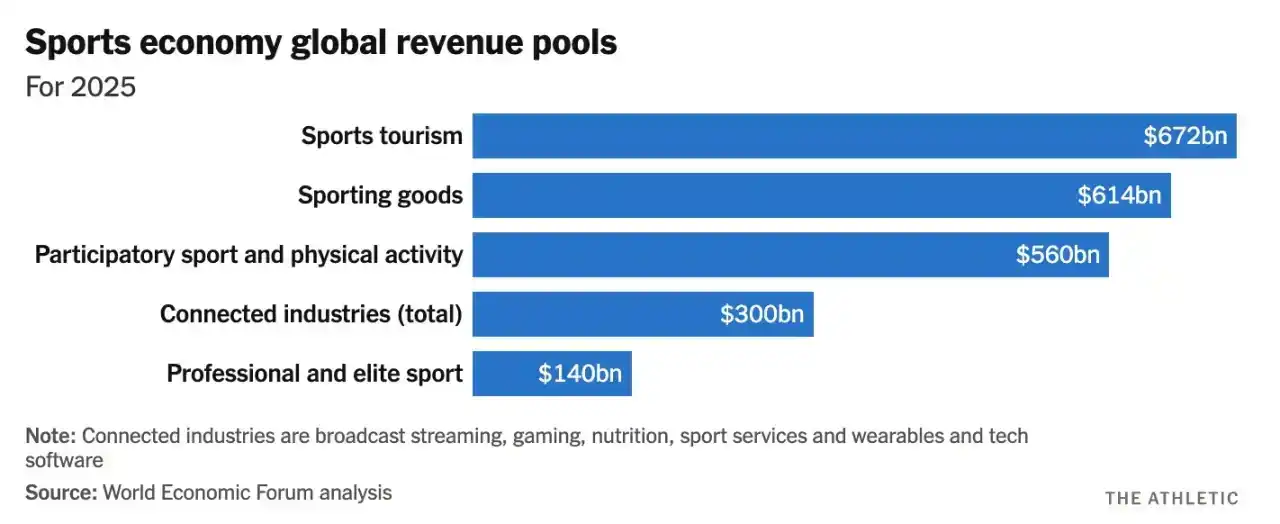
As revenue sources expand, the contracts tied to them have also grown significantly.

Today, team compensation is no longer just base season salaries but also includes numerous performance clauses linked to specific milestones. For example, if a team reaches the conference finals, the head coach may receive an additional $5 million bonus; players can earn extra pay if they achieve 1,000 rushing yards, 25 goals, or meet minimum playing time; some contracts even stipulate that bonuses increase further if the team advances deeper into the playoffs. These clauses are written into contracts as automatically triggered provisions—once conditions are met, the corresponding payments must be made.

Teams manage such exposures through insurance rather than passively bearing the risk and praying that incentives don't trigger en masse. They work with specialized brokers, who then find insurance companies willing to underwrite performance payouts; these insurers often transfer part of the exposure to reinsurers, dispersing the risk into a larger pool of capital. A simple bonus clause in a contract becomes an entire financial chain behind the scenes.

Insurers use a concept called "insurable value" to measure the scale of exposure—simply put, it refers to future income dependent on continuous performance, including salaries, incentives, endorsement income, etc., all of which can be affected if a player is unable to play.

The explosive growth of such exposure is evident in the data. For example, during the 2014 FIFA World Cup, the total insurable value of all participating teams was estimated at about $7.3 billion. But by the 2022 World Cup, this number soared to approximately $25 billion. In less than a decade, the financial value directly tied to performance more than tripled.

When so much revenue is tied to performance, uncertainty cannot be left to fate—it must be managed. An entire industry has thus been born. The global sports insurance and reinsurance market is currently estimated at about $9 billion and is expected to double by 2030. Its coverage ranges from event cancellations and athlete disabilities to sponsor guarantees and performance bonuses.

There are specialized brokers like Game Point Capital in the market, handling hundreds of millions of dollars in sports insurance annually; on the other side are underwriting entities like Lloyd's, which writes over $200 million in sports-related accident and health premiums each year, as well as large reinsurance companies that also underwrite catastrophes like hurricanes and aviation accidents. Because playoff bonuses, in pricing logic, fall into the same category of risk as storms and earthquakes.

Thus, the pricing process is cautious and private. Brokers negotiate with insurers, insurers negotiate with reinsurers, each using their own models to estimate the probability of milestone achievement and incorporating it into the premium. Teams only see the cost, not the underlying probability.

Why Private Reinsurance Is More Expensive

The price of sports insurance depends not only on the probability of the team achieving its goal but also on numerous external risks.

Ideally, if a team has a 10% probability of reaching a milestone, the premium should roughly reflect the 10% risk plus a small profit. But the reinsurance market is not an ideal world.

Reinsurers have limited capital. Every dollar invested in playoff bonus insurance is one less dollar available for businesses like hurricanes, aviation, catastrophe bonds, etc. They must continuously balance their portfolios across different regions and risk types. Therefore, when assessing sports risks, they consider: probability, available capital, outcome volatility, and correlation with existing risks.

Another constraint: the sports reinsurance market is highly concentrated. A few global institutions account for most of the underwriting capacity. Whether capacity is available and how much often depends on the reinsurer's own portfolio situation.
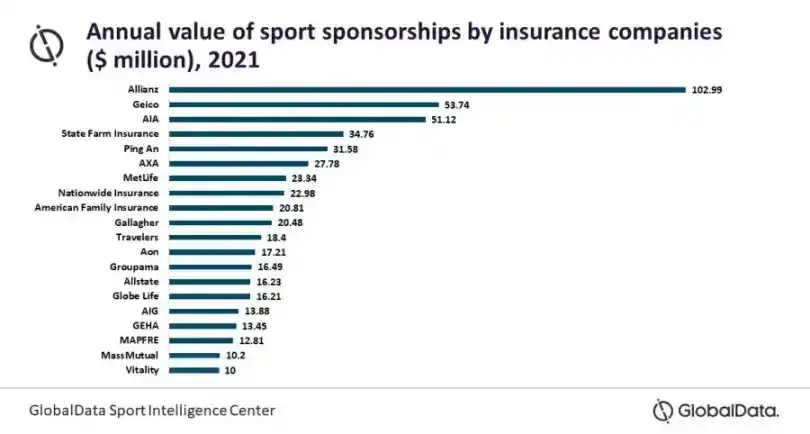
All these factors combined mean that the premium ultimately offered to the team includes not only the pure milestone probability but also many costs the team cannot see.

When Probability Is No Longer Hidden in a Black Box

Until now, outcome probability has been integral to every step: reinsurance modeling, broker negotiations, premium finalization. But this number has never been public.

Now imagine: what happens when this probability is priced in a public market? Prediction markets achieve this in a very interesting way.

Platforms like Kalshi have launched contracts for discrete real-world events, one category being sports outcomes. The contract poses a simple question: Will Team X make the playoffs?

Each contract eventually settles at $1 or $0. For example, if the price trades at $0.06, it means the market-implied probability is 6%.

This number isn't decided by an underwriting committee; it's determined by real buyers and sellers trading with real money, continuously adjusting based on their judgments of probability and price.

This mechanism is already in practical use. Game Point Capital, for instance, uses the Kalshi market to hedge basketball-related performance bonuses. In one case, a contract related to the playoffs traded on the exchange at about 6%, while the over-the-counter quote implied a price of about 12-13%. In another case, a second-round advancement contract traded on the exchange at nearly 2%, while the private reinsurance market price was 7-8%.

This is by no means a trivial difference. For a $20 million exposure, the gap between a 6% and 12% implied probability means a difference of millions of dollars in premium costs.

You might ask: these are just numbers clicked by traders—why take them seriously? Why are they more credible than insurance company models?

Extensive research shows that market-based odds are strong predictors of real outcomes. Decades of academic research on sports betting markets show that bookmaker odds are highly efficient predictors of game outcomes. More recently, a direct comparison between prediction markets and traditional sports betting: in a study of about 1,000 NBA games during the 2024–25 season, Polymarket's prediction accuracy was almost identical to that of traditional betting platforms.
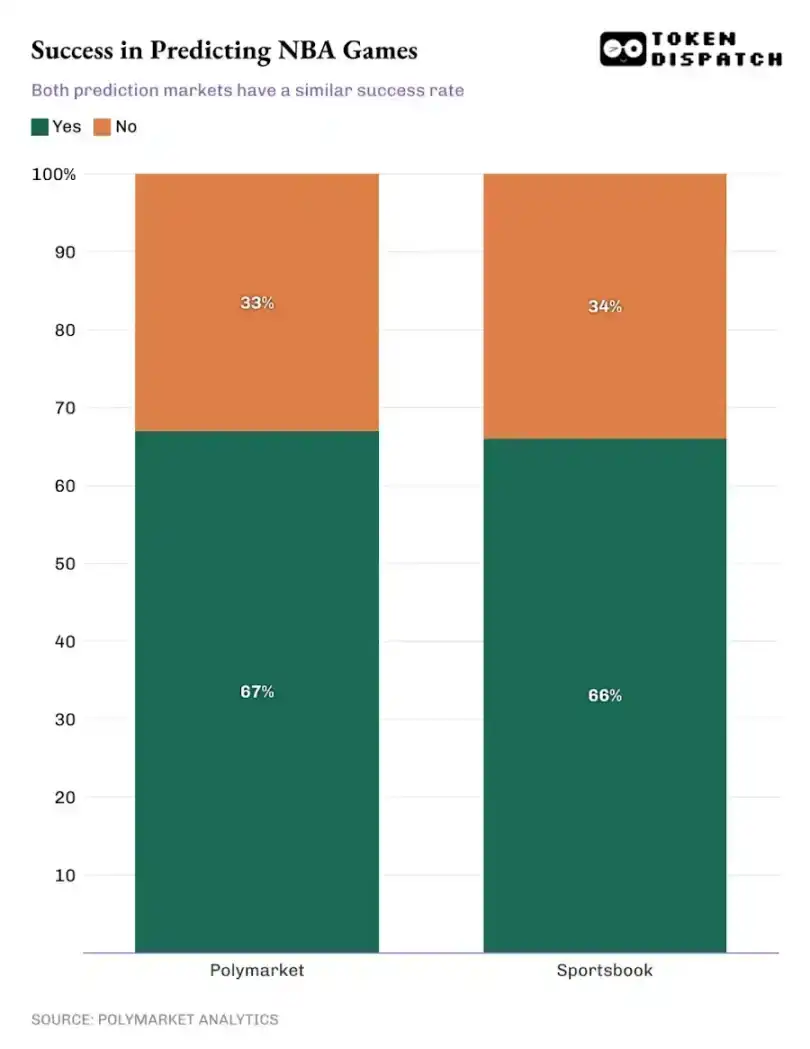
In games where the market-implied probability exceeded 95%, both had accuracy rates above 90%.

The conclusion is even clearer for election markets. During the 2024 U.S. presidential election, a study comparing Polymarket with traditional polls showed that Polymarket was more accurate in predicting the final outcome, especially in swing states.

When thousands of people continuously update expectations in a real-time market, the collective probability often aligns remarkably closely with reality.

Prediction markets enable continuous price discovery. Any new information entering the system is continuously updated and priced, without waiting for the next review by an underwriting committee.

But to be truly practical, the market must be able to handle scale. In recent major events like the Super Bowl, Kalshi processed about $22 million in trades without significant price fluctuations. This indicates that both long and short sides of the market have real depth, sufficient to support large-scale hedging without impacting prices.
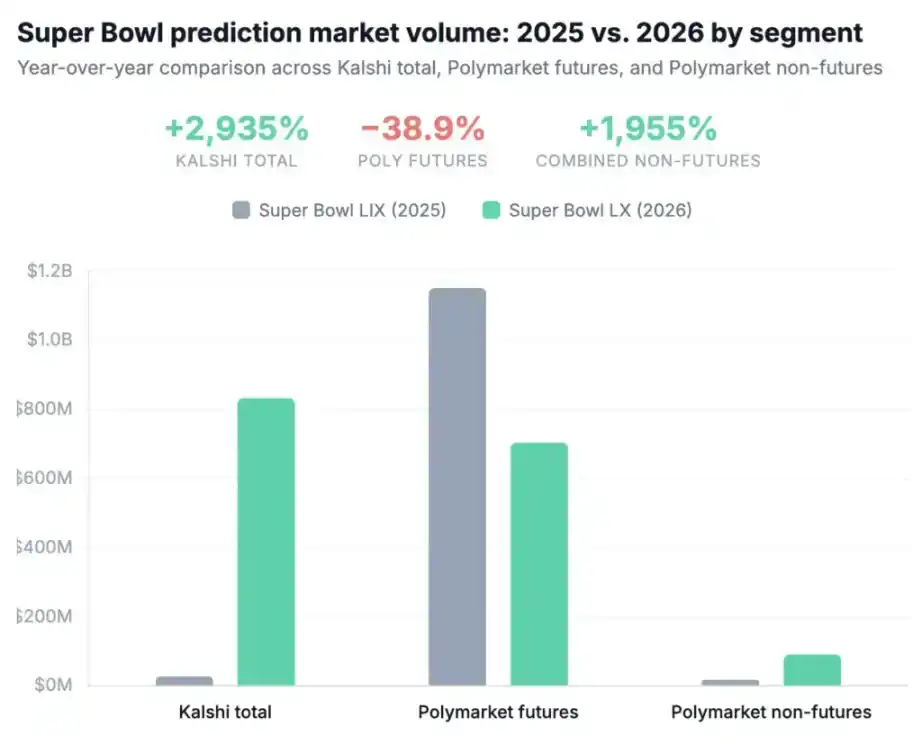
As these markets grow, a whole new set of permissionless financial tools is emerging around prediction markets.

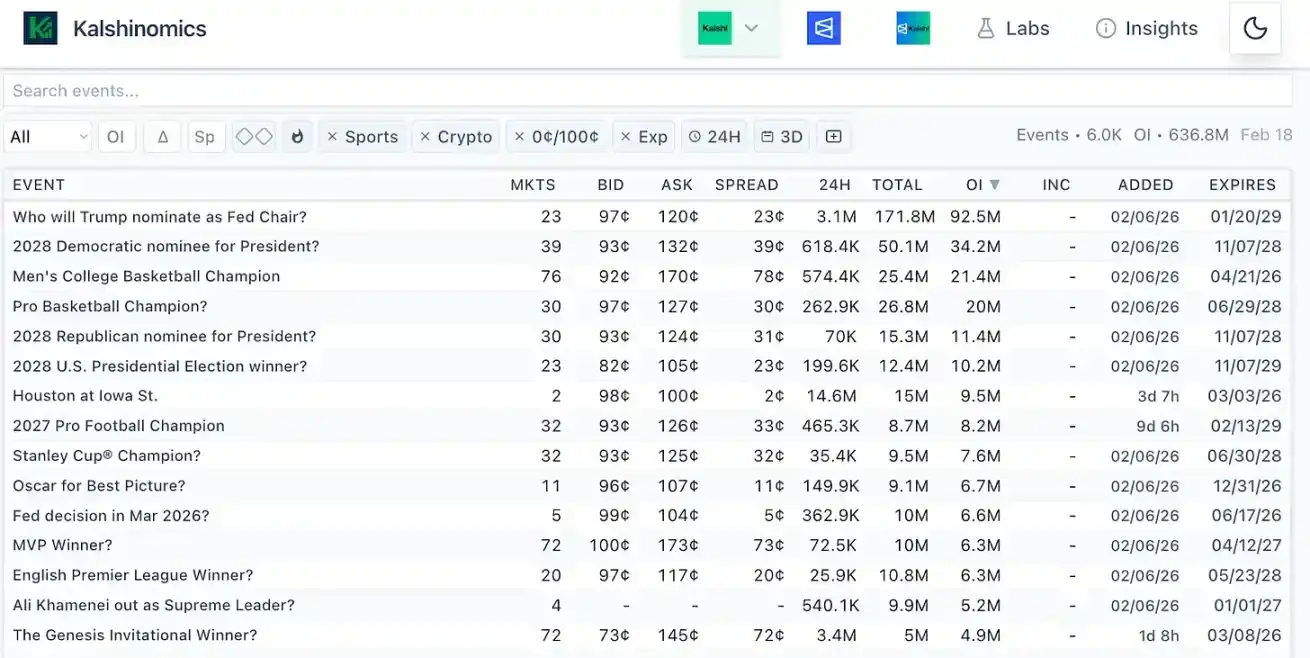
For example, Kalshinomics analyzes event contracts like analysts analyze stocks and bonds, tracking how probabilities change over time, liquidity performance around major events, and whether prices deviate from fundamentals.
There are also platforms like PredictionIndex that aggregate and rank various prediction markets, allowing you to see total trading volume, contract types, blockchains, trading mechanisms, integrating the entire field into one place to visually showcase the market size.

When the probability of an outcome can be priced in real time and effectively absorb capital, it becomes a tool institutions can actually use. Teams can now directly use publicly traded probabilities to hedge performance bonuses, sponsors can hedge risks related to viewership targets, studios can hedge box office milestones. In principle, any income dependent on a specific and verifiable outcome can be transformed into a tradable contract.

Institutions no longer need to negotiate customized insurance contracts; the outcome itself can be publicly traded.

The final piece making this structure truly usable for institutions is identity. Traditional insurance works because counterparties are verified, contracts are enforceable, and exposures are auditable—something public markets have lacked.

Companies like Dflow are now binding real-world identities to trading behavior. This means market participants can be identified, screened, and linked to real entities, rather than being completely anonymous. This also makes contract settlement, exposure management, and incorporating positions into existing compliance frameworks possible.

In practical effect, it is beginning to look less like an ordinary trading venue and more like a functional insurance layer running directly on top of public probabilities.


Câu hỏi Liên quan

QWhat is the main financial risk that sports teams face with performance-based bonuses, and how have they traditionally managed it?

AThe main financial risk is the large liability from performance-based bonuses (e.g., $20 million for making the playoffs). Teams have traditionally managed this risk by purchasing insurance through brokers and insurers, who then often offload part of the risk to reinsurers.

QHow does a prediction market provide a new solution for hedging this type of risk?

APrediction markets publicly price the probability of a specific outcome (e.g., a team making the playoffs) in real-time through trading. Teams can use these market-implied probabilities to hedge their bonus risks directly, often at a lower cost than traditional insurance.

QWhat evidence supports the reliability of prediction markets in forecasting outcomes compared to traditional methods?

AAcademic studies show that market-based odds are strong predictors of real-world outcomes. For example, research on NBA games found that prediction markets like Polymarket had similar accuracy to traditional sportsbooks, and they outperformed polls in predicting the 2024 U.S. presidential election results.

QWhat is the estimated size of the global sports insurance and reinsurance market, and how is it expected to change?

AThe global sports insurance and reinsurance market is currently estimated at about $9 billion and is projected to double by 2030.

QWhat role does identity verification play in making prediction markets viable for institutional use?

AIdentity verification (e.g., by companies like Dflow) links real-world identities to trading activities, enabling participant screening, enforceable contracts, auditability, and integration into existing compliance frameworks, making the markets functional for institutional hedging.

Nội dung Liên quan

Công ty kho bạc tiền điện tử ZeroStack cảnh báo nguy cơ tồn tại giữa khoản lỗ 82,5 triệu USD

Công ty quản lý kho bạc crypto ZeroStack (niêm yết trên Nasdaq) đã cảnh báo có nghi ngờ đáng kể về khả năng tiếp tục hoạt động trong năm tới, đảo ngược đánh giá từ ba tháng trước. Trong báo cáo 10-Q nộp cho SEC, ZeroStack công bố chỉ còn 2,6 triệu USD tiền mặt, vốn lưu động âm 600.000 USD và thâm hụt lũy kế 339,1 triệu USD tính đến 30/6. Công ty cũng ghi nhận khoản lỗ giá trị hợp lý 82,5 triệu USD trên tài sản số và lỗ ròng 61,3 triệu USD trong nửa đầu năm 2026. Khoản nắm giữ chính của ZeroStack là 75,1 triệu token Zero Gravity (0G) với giá gốc 163,3 triệu USD, nhưng giá trị hợp lý chỉ còn 15,2 triệu USD, giảm khoảng 91%. Công ty phụ thuộc vào doanh thu đặt cọc (staking) và bán token để tài trợ hoạt động, khiến khả năng huy động tiền phụ thuộc vào giá và thanh khoản của 0G. Trong nửa đầu năm, ZeroStack kiếm được 3,8 triệu USD từ staking và bán gần 4,9 triệu token để lấy 2,4 triệu USD trang trải chi phí. Dù cho rằng tiền mặt và doanh thu từ staking có thể đủ cho chi phí dự kiến, ban lãnh đạo không chắc các kế hoạch này đủ để xóa bỏ nghi ngờ về khả năng tồn tại. Đây là sự thay đổi so với báo cáo quý trước, khi công ty tuyên bố đủ nguồn lực cho ít nhất một năm. ZeroStack trước đây là công ty sản phẩm cần sa Flora Growth. Tháng 9/2023, Flora công bố kế hoạch kho bạc 0G trị giá 401 triệu USD, bao gồm tiền mặt và tài sản số, sau đó đổi tên thành ZeroStack.

cointelegraph30 phút trước

Công ty kho bạc tiền điện tử ZeroStack cảnh báo nguy cơ tồn tại giữa khoản lỗ 82,5 triệu USD

cointelegraph30 phút trước

Bản vá nóng XRP Ledger v3.2.1 Nhắm Mục Tiêu Tình Trạng Tràn Ngập Bản Kê Khai (Manifest) Của Trình Xác Thực

XRP Ledger vừa phát hành bản sửa lỗi nóng (hotfix) xrpld v3.2.1 vào ngày 31/7/2026 để giải quyết sự cố "tràn ngập bản kê khai trình xác thực" (validator manifest flooding). Sự cố này khiến các nút bị ảnh hưởng tiêu thụ bộ nhớ và băng thông cao bất thường. Mặc dù vấn đề không làm gián đoạn cơ chế đồng thuận hoặc xử lý giao dịch trên toàn mạng lưới, nó gây áp lực tài nguyên đáng kể lên các nút riêng lẻ, có thể ảnh hưởng đến hiệu suất, chi phí vận hành và độ ổn định. Đây được xem là một vấn đề về ổn định hơn là một lỗ hổng thảm họa. Các nhà vận hành nút được khuyến cáo nên nâng cấp lên phiên bản v3.2.1 và thực hiện khởi động lại kép theo hướng dẫn. Việc phản ứng nhanh chóng là cần thiết để giảm thiểu rủi ro, ngăn chặn thăm dò tấn công và duy trì hiệu quả cho toàn mạng. Bản sửa lỗi này (v3.2.1) là một bản cập nhật tập trung vào độ ổn định, tách biệt với lộ trình nâng cấp tính năng chính (như phiên bản v3.3.0 sắp tới). Sự kiện này nhấn mạnh tầm quan trọng của công tác bảo trì cơ sở hạ tầng và khả năng ứng phó kịp thời để đảm bảo độ tin cậy lâu dài cho mạng lưới blockchain.

bitcoinist34 phút trước

Bản vá nóng XRP Ledger v3.2.1 Nhắm Mục Tiêu Tình Trạng Tràn Ngập Bản Kê Khai (Manifest) Của Trình Xác Thực

bitcoinist34 phút trước

Dự luật CLARITY Đối Mặt Với Hạn Chót Tại Thượng Viện Sau Khi Vắng Mặt Trong Lịch Trình Thứ Hai

Thượng viện đã công bố lịch trình làm việc thứ Hai mà không đưa Đạo luật CLARITY vào, đẩy dự luật về tiền mã hóa vào một tuần then chốt. Áp lực thời gian gia tăng khi Quốc hội sắp bước vào kỳ nghỉ tháng Tám, và trọng tâm chuyển từ tranh luận chính sách sang các thủ tục lập pháp. Hiện tại, không có quy trình lập pháp chính thức nào được lên lịch cho dự luật này. Để thúc đẩy, lãnh đạo Thượng viện cần nộp đơn yêu cầu chấm dứt tranh luận (cloture) trước thứ Tư, để có thể tổ chức một cuộc bỏ phiếu về thủ tục này vào thứ Sáu. Tuy nhiên, ngay cả khi thủ tục cloture được thông qua, vẫn có thể có thêm 30 giờ tranh luận trước khi bỏ phiếu thông qua dự luật. Về mặt chính trị, các cuộc đàm phán giữa đảng Dân chủ và Cộng hòa vẫn đang tiếp diễn. Bảy nhà đàm phán Dân chủ cho biết bản dự thảo mới vẫn chưa được họ chấp thuận. Thượng nghị sĩ Elizabeth Warren phản đối dự thảo do một số điều khoản nhất định. Lãnh đạo đa số Thượng viện John Thune được cho là sẽ chỉ tiến hành bỏ phiếu thủ tục nếu có đủ sự ủng hộ từ các thượng nghị sĩ Dân chủ trước kỳ nghỉ tháng Tám.

TheNewsCrypto35 phút trước

Dự luật CLARITY Đối Mặt Với Hạn Chót Tại Thượng Viện Sau Khi Vắng Mặt Trong Lịch Trình Thứ Hai

TheNewsCrypto35 phút trước

Bitcoin Tiếp Tục Điều Chỉnh Ngắn Hạn, HYPE Tiến Gần Vùng Hỗ Trợ Quan Trọng|Phân Tích Đặc Biệt

Bitcoin (BTC) hiện vẫn trong giai đoạn điều chỉnh sóng b trên khung ngày, giá đã chạm mức 62,268 USD. Điểm then chốt trong tuần là liệu giá có tìm được hỗ trợ tại vùng 60,900~61,500 USD hay không. Trong khi đó, HYPE đang trong sóng C cuối cùng trên khung ngày và tiến gần vùng hỗ trợ quan trọng 50~52 USD, với các tín hiệu quá bán liên tục xuất hiện, cho thấy cửa sổ phục hồi ngắn hạn có thể mở ra. **Phân tích cấu trúc BTC:** - Sóng b điều chỉnh từ đỉnh ngày 21/7 (~66,955 USD) đã đạt khoảng 61.8% sóng a, đáp ứng yêu cầu kỹ thuật. - Nếu không phá vỡ đáy sóng a (57,820 USD), thị trường có khả năng bắt đầu sóng c phục hồi, hướng tới vùng kháng cự ~67,300 USD. - Mức kháng cự chính: 63,600 USD, 65,700~67,300 USD. - Mức hỗ trợ chính: 60,950~61,500 USD, 57,820 USD. **Chiến lược BTC:** - Chiến lược trung hạn: Giảm vị thế bán xuống dưới 20% nếu giá củng cố vững trên 63,600 USD. - Chiến lược ngắn hạn: Hai phương án giao dịch "chênh lệch giá" với 30% vốn: * **A:** Mua thử nghiệm nếu giá vững trên 63,600 USD. * **B:** Mua nhẹ tại vùng hỗ trợ mạnh quanh 57,820 USD. **Phân tích & Chiến lược HYPE:** - Đã hoàn thành cấu trúc điều chỉnh A-B-C trên khung ngày, với sóng C hiện tại ở vùng hỗ trợ 50~52 USD. - Nhiều chỉ báo kỹ thuật đang trong vùng quá bán, báo hiệu khả năng phục hồi sóng D. - Áp lực chính: 58.5~60 USD, 63.5~66 USD. - Hỗ trợ chính: 50~52 USD, 45 USD. - Chiến lược: Cân nhắc mua thử nghiệm với khối lượng nhỏ (<20%) nếu có tín hiệu ổn định tại vùng 50~52 USD, cắt lỗ nghiêm ngặt. **Xác minh & Giao dịch tuần trước:** - Dự báo về BTC (hỗ trợ 60,950~61,500 USD) và HYPE đã được thị trường xác nhận. - Thực hiện một lệnh bán BTC (đòn bẩy 1x) thành công, thu lợi nhuận ~2.58% dựa trên tín hiệu từ mô hình giao dịch chênh lệch giá và động lượng. **Lưu ý quan trọng:** Luôn đặt lệnh cắt lỗ ngay khi mở vị thế và di chuyển lệnh cắt lỗ để khóa lợi nhuận. Mọi phân tích và chiến lược đều mang tính chất tham khảo, không phải lời khuyên đầu tư. Thị trường biến động, nhà đầu tư cần thận trọng.

Odaily星球日报42 phút trước

Bitcoin Tiếp Tục Điều Chỉnh Ngắn Hạn, HYPE Tiến Gần Vùng Hỗ Trợ Quan Trọng|Phân Tích Đặc Biệt

Odaily星球日报42 phút trước

Sự Cố Tấn Công Coldcard Tiếp Diễn: Làn Sóng Thứ Tư Đẩy Tổng Giá Trị Bitcoin Bị Đánh Cắp Vượt Quá 90 Triệu Đô La

Vụ tấn công vào ví phần cứng Coldcard đã leo thang thành một trong những sự cố bảo mật nghiêm trọng nhất trong lịch sử Bitcoin. Trong ba ngày qua, các thiết bị Coldcard chạy firmware lỗi đã bị rút sạch tiền do một lỗ hổng nghiêm trọng. Các cụm seed (seed phrase) được tạo ra bởi các thiết bị bị ảnh hưởng có độ entropy thấp hơn dự định, khiến chúng có thể bị dự đoán và khai thác. Thiệt hại ước tính đã lên tới 90 triệu USD bị đánh cắp từ hơn 4.500 ví, với hơn 1.367 BTC bị rút qua nhiều đợt tấn công phối hợp. Đợt tấn công thứ tư vẫn đang hoạt động. Một phân tích các khối từ 960.778 đến 960.792 cho thấy 218 giao dịch nhắm vào 462 địa chỉ nạn nhân, với 216 ví đích mới nhận tổng cộng 388,92 BTC. Hoạt động quét tiền diễn ra với tốc độ cao gấp khoảng 45 lần bình thường. Coinkite, công ty đứng sau Coldcard, đã xác nhận lỗ hổng. Tất cả các đơn vị tồn kho chạy firmware lỗi đã bị tiêu hủy và việc vận chuyển đã bị dừng. Firmware đã được vá hiện có sẵn cho mọi mẫu bị ảnh hưởng, nhưng bản vá chỉ bảo vệ các cụm seed mới được tạo ra. Mọi cụm seed được tạo trên firmware lỗi vẫn có nguy cơ bị tấn công, bất kể đã cập nhật hay chưa. Người dùng phải tạo ví mới và chuyển toàn bộ số tiền ngay lập tức. Các sản phẩm Satscard, Opendime và Tapsigner sử dụng mã nguồn khác và không bị ảnh hưởng. Coldcard cũng đề xuất một số lựa chọn thay thế tạm thời như Bitkey, Ledger, Trezor, Jade và Bitbox. Sự cố quy mô này đối với một thiết bị vốn được coi là một trong những giải pháp lưu trữ lạnh đáng tin cậy nhất của Bitcoin đã làm lung lay niềm tin rộng rãi vào bảo mật ví phần cứng.

TheNewsCrypto1 giờ trước

Sự Cố Tấn Công Coldcard Tiếp Diễn: Làn Sóng Thứ Tư Đẩy Tổng Giá Trị Bitcoin Bị Đánh Cắp Vượt Quá 90 Triệu Đô La

TheNewsCrypto1 giờ trước

Giao dịch

Giao ngay
活动图片