The Inevitable Rise of Equity-like Tokens

marsbitXuất bản vào 2026-01-21Cập nhật gần nhất vào 2026-01-21

Tóm tắt

The article "The Inevitable Rise of Equity-Like Tokens" discusses the long-standing conflict between equity holders and token holders in crypto projects, using Uniswap's delayed fee switch implementation as a key example. It argues that neither extreme—fully eliminating equity for on-chain ownership nor abandoning tokens entirely—is optimal. Equity provides legal rights, governance control, and access to deeper capital markets, while tokens offer transparency, instant settlement, and community alignment. The piece highlights that tokenization of traditional equities is accelerating, with initiatives like the DTC pilot program and Nasdaq’s proposed tokenized securities trading. The author concludes that 2026 will be a year of innovation in equity-like tokens, merging legal protections with digital ownership, ultimately moving beyond the equity-vs-token debate toward a unified model of transparent, legally-backed digital ownership.

Author: Matty

Compiled by: Jiahuan, ChainCatcher

In November 2025, more than 5 years after the $UNI airdrop, Uniswap finally activated the fee switch.

This process involved years of delays and repeated governance battles, even reaching an extremely awkward moment in 2024 when a 'stakeholder' (widely believed to be an equity investor) blocked a proposal that was supposed to benefit token holders. Despite this, the UNIfication proposal ultimately passed with over 62 million votes.
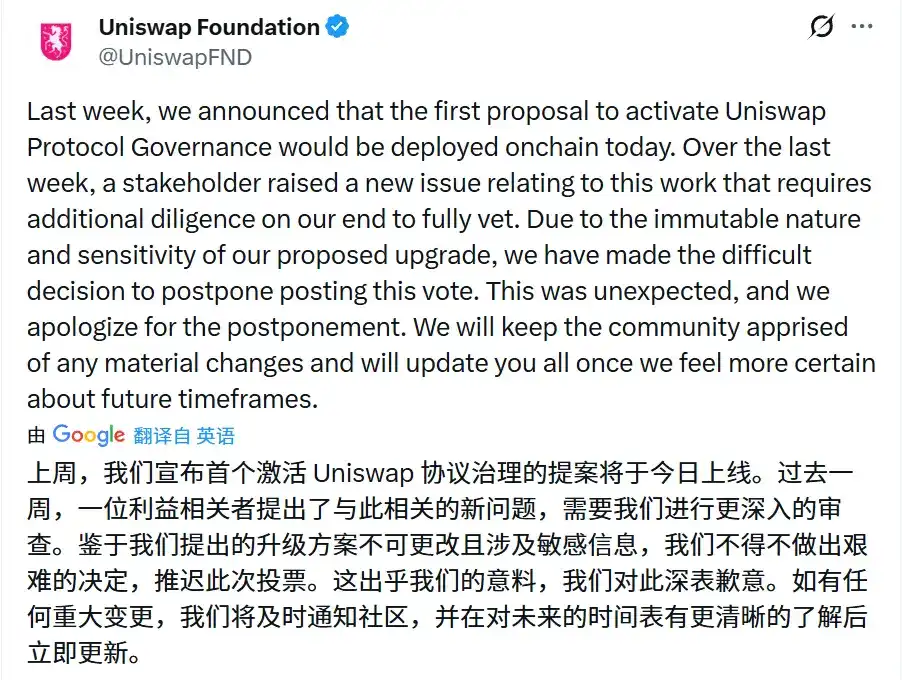
The fact that the largest DEX in crypto took this long to figure out how to reward its token holders is telling of the current state of the relationship between equity and tokens. Although UNI token holders theoretically "own" the protocol, they could only watch from the sidelines as equity investors captured all the value from front-end fees.

While Uniswap is a prime example of the equity-token divide, this issue has worsened over years and affects almost every protocol that consistently generates revenue. Equity holders and token holders often compete for the same value pool, while operating under fundamentally different legal, governance, and economic frameworks.

The proposed solutions within the industry vary widely: from completely eliminating equity and moving all ownership on-chain, to going to the other extreme—abandoning tokens altogether. Both approaches have their proponents, but also significant flaws.

Extreme Path One: Full De-equitization

Completely eliminating equity and moving all ownership concepts on-chain is undoubtedly a theoretical solution. In this vision, smart contracts replace shareholder agreements, on-chain balances replace cap tables, and governance tokens replace board votes.

Instant settlement. Transparent ownership. What's not to like?

One major problem is: Unless the enterprise's assets, operations, and customers are entirely on-chain, the off-chain court system will always be the ultimate arbiter for dispute resolution. You can try to have all your off-chain contracts and agreements reference on-chain logic, but this still doesn't change the fact that off-chain courts are the arbiters, and not everything can be moved on-chain within your control.

For example, I could own a tokenized real estate NFT issued by a smart contract that states I own the corresponding property, but if the off-chain deed for that land says otherwise, good luck presenting your NFT when the sheriff comes to serve the eviction notice. (Again, you can take steps to try to ensure the off-chain deed matches the on-chain state, but this doesn't negate the fact that off-chain enforcement takes precedence).

The "no equity, pure token" approach is only feasible for a small subset of projects:

Fully on-chain networks and protocols, such as Bitcoin, some public blockchains, and fully autonomous DeFi. These projects have no company, no employees, no servers, and no external dependencies. After all, this was the original beauty of Bitcoin! An uncensorable system and unconfiscatable asset.

But for the vast majority of projects (and the vast majority of potential on-chain activity), this is not feasible. Web2 and Web2.5 companies have off-chain assets, customers, payments, and operations.

Extreme Path Two: Full De-tokenization

At the other end of the spectrum, some projects (actually, the vast majority of companies) decide to forgo tokens entirely. They raise equity, build products, and avoid all the headaches tokens can bring—while also sacrificing all the benefits.

  • Benefits: No tokens mean no SEC knocking on your door. No worrying about whether governance tokens are securities. No need to design tokenomics, worry about emissions, or explain buyback mechanisms.

  • Costs: Giving up instant settlement, transparent ownership records, cost efficiency gains, and the ability to align incentives for a global community.

Traditional equity transfer is expensive, settles slowly, and is inaccessible to most potential investors. Gaining exposure to equity in private startups remains expensive, inefficient, and opaque. Even in 2026, the processes required to trade public stocks seem archaic compared to DeFi.

Tokens, despite their flaws, have the potential to solve these problems. They enable community ownership and user-owned products. Abandoning this entirely is a step backward.

To find the optimal balance between these two extremes, we need to understand what equity provides that tokens cannot.

What Equity and Tokens Each Provide
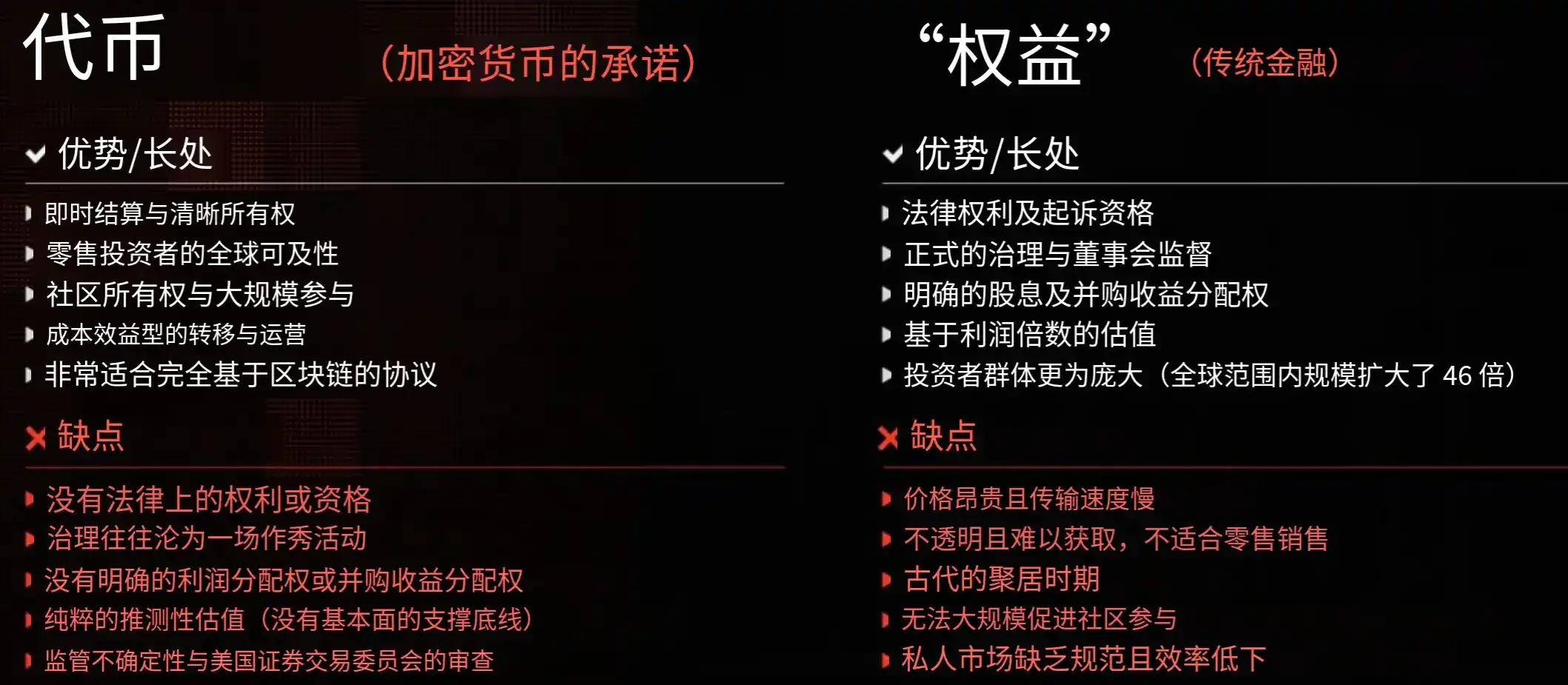
1. Legal Rights and Recourse

When you own equity, you have legal standing. You can sue, enforce rights. If directors breach fiduciary duties or fraud occurs, you have an established legal framework to recover losses.

Token holders (with very few exceptions) have little to no legally recognized rights or protections. They often must simply hope the market saves their investment.

While theoretically a company's entire budget could be placed on-chain, having founders subject every decision to a shareholder vote, without legal rights, introduces massive operational inefficiencies and defeats the purpose of the investment—trusting the team's vision and capabilities.

2. Formal Governance Control

Equity shareholders elect the board, approve major transactions, and have codified rights. In contrast, governance tokens often provide an illusion of control.

As Vitalik has noted, token governance has serious flaws: low turnout (<10%), whale manipulation, lack of expertise. More often, on-chain governance devolves into "decentralized theater," where teams can often ignore votes if they dislike the outcome, as execution still requires manual action.

3. Legal Clarity for Value Accrual

In M&A activity, equity holders have clear legal rights to proceeds. As recent cases involving Tensor and Axelar have shown, token holders are often left out in the cold, even when the related project is acquired.

Because of this strong legal right to profit-sharing, stocks trade more reliably on multiples of expected future profits. Token valuations are often purely speculative, with no fundamental backing.

Even if a project generates revenue, most do not reliably route it to token holders due to regulatory risk and fiduciary duty conflicts. While off-chain agreements can be constructed to simulate this right, it is far less reliable than the legal foundation of equity.

4. Broader and Deeper Investor Pool

Simply put, the investor pool and total buying power of equity markets are vastly larger than token markets.

  • The US stock market alone is worth over 20 times the entire crypto industry.

  • Global equity markets are worth over 46 times the crypto industry.

Projects that choose tokens over equity effectively access only 2%-5% of the potential buying power they could reach.

2026: The Year of the Equity-like Token

One thing is certain: from tokenized equity to new forms of on-chain governance, 2026 will be a year of innovation and experimentation for equity-like tokens.

The DTC Pilot Program (launching in the second half of 2026) will be the first US initiative allowing participants to hold tokenized security entitlements on a blockchain. This represents the backbone of US capital markets infrastructure moving on-chain:

  • Nasdaq has proposed trading tokenized securities.

  • Securitize offers real public stocks with full on-chain legal ownership.

  • Centrifuge and others are tokenizing equity through SEC-registered transfer agents.

The convergence of traditional financial infrastructure with blockchain rails is no longer a pipe dream—it's happening.

For crypto-native projects, Uniswap's five-year journey to the fee switch is a cautionary tale. The equity-token split won't resolve itself automatically. It requires intentional design, clear agreements, and structures to resolve conflicts of interest.

Ultimately, this divergence stems from regulatory uncertainty and a lack of legal frameworks. Whether through the SEC's "crypto projects" or the Clarity Act, the US is expected to get long-awaited regulatory certainty as early as January this year.

By the end of this year, we will no longer be discussing equity vs. tokens. We will be discussing ownership—transparent, transferable, legally protected, and natively digital ownership.


Câu hỏi Liên quan

QWhat is the main conflict discussed in the article regarding Uniswap and similar protocols?

AThe main conflict is between equity holders (like venture capital investors) and token holders, who are often competing for the same value pool from protocol revenues, but operate under vastly different legal, governance, and economic frameworks.

QWhat are the two extreme paths proposed to resolve the equity vs. token conflict, and what are their major drawbacks?

AThe two extremes are: 1) Fully eliminating equity and moving all ownership on-chain, which is only feasible for fully on-chain networks and fails when off-chain assets/courts are involved. 2) Fully eliminating tokens, which avoids regulatory headaches but sacrifices the benefits of instant settlement, transparent ownership, and global community coordination.

QAccording to the article, what key advantages does traditional equity have over governance tokens?

AEquity provides: 1) Legal rights and recourse (ability to sue, enforce rights). 2) Formal governance control (election of board, approval of major transactions). 3) Legal clarity for value accumulation (clear rights in M&A). 4) Access to a much larger and deeper pool of investors and capital.

QWhat significant infrastructure development is mentioned for 2026 regarding tokenized securities in the US?

AThe DTC Pilot Program, launching in late 2026, will for the first time allow participants in the US to hold tokenized security entitlements on a blockchain. This is part of a broader trend of traditional finance infrastructure (like Nasdaq) moving on-chain.

QWhat does the author predict will be the focus by the end of the year, moving beyond the 'equity vs. token' debate?

AThe author predicts the focus will shift to discussing 'ownership' itself—transparent, transferable, legally protected, and natively digital ownership, thanks to expected regulatory clarity and technological innovation.

Nội dung Liên quan

Ngân hàng Ý không nhìn thấy lợi thế hệ thống của stablecoin trong chuyển tiền

Một nghiên cứu của Ngân hàng Ý kết luận rằng stablecoin không mang lại lợi thế hệ thống bền vững về chi phí và tốc độ trong chuyển tiền quốc tế so với các dịch vụ tiêu chuẩn. Các ưu điểm tiềm năng bị mất đi bởi phí chuyển đổi sang/và từ tiền pháp định và hiệu quả của cơ sở hạ tầng thanh toán địa phương. Nghiên cứu so sánh việc chuyển 200 USDC qua 10 hành lang giữa Ý và các nước như Brazil, Argentina, Nhật Bản, UAE và Nam Phi. Tổng chi phí chuyển stablecoin dao động từ 0,3% đến gần 9%, tùy tuyến. Thời gian giải quyết giao dịch dưới 20 phút ở những nơi có hệ thống thanh toán tức thời, nhưng có thể kéo dài 1-2 ngày làm việc ở khu vực không có. Chi phí và độ trễ chủ yếu đến từ việc trao đổi, chuyển đổi tiền tệ và chất lượng hạ tầng địa phương, không phải từ phí blockchain. Dù stablecoin rẻ hơn mức trung bình toàn cầu là 6,65%, chúng chỉ rẻ hơn dịch vụ Wise ở 3/7 tuyến so sánh được. Các tác giả cho rằng lợi ích sẽ rõ ràng hơn nếu stablecoin có thể được chi tiêu trực tiếp mà không cần đổi sang tiền địa phương. Họ cũng lưu ý rằng các quy định cấm đoán không làm giảm nhu cầu với stablecoin, trong khi quy định quá chặt chẽ lại gây khó khăn cho người dùng phổ thông.

cryptonews.ru1 giờ trước

Ngân hàng Ý không nhìn thấy lợi thế hệ thống của stablecoin trong chuyển tiền

cryptonews.ru1 giờ trước

Cơn sốt Bitcoin đang bùng nổ: Tuyên bố mới của Saylor gây nên những đồn đoán về việc mua vào

Giám đốc điều hành của Strategy Inc. (Nasdaq: MSTR), Michael Saylor, một lần nữa khơi dậy những đồn đoán về việc công ty sẽ thông báo mua Bitcoin mới vào thứ Hai, sau khi đăng thông điệp "Bitcoin Drive engaged" vào ngày 2 tháng 8. Thông báo này đi kèm với biểu đồ mua hàng quen thuộc của công ty, phù hợp với thói quen báo hiệu thay đổi kho bạc trước các báo cáo hàng tuần của Saylor. Báo cáo kèm theo cho thấy dự trữ Bitcoin của Strategy là 843.775 BTC, trị giá khoảng 53,25 tỷ USD. Giá mua trung bình được ghi nhận là 75.653 USD/BTC, với lỗ chưa thực hiện là 10,58 tỷ USD (-16,58%). Một tín hiệu tương tự vào Chủ nhật tuần trước đã dẫn đến thông báo vào ngày 27/7 về việc công ty gia tăng dự trữ tiền mặt. Sổ cái thời gian thực của Strategy hiển thị 116 giao dịch đã đăng ký với tổng số 843.775 BTC được mua, đồng thời ghi nhận hai đợt bán Bitcoin gần đây tổng cộng 3.588 BTC (giảm từ 847.363 BTC), nhằm mục đích tài trợ cho cổ tức ưu đãi và bổ sung dự trữ USD. Công ty được báo cáo là đã không mua BTC trong tuần kết thúc ngày 26/7, đồng thời tăng dự trữ USD lên khoảng 3,75 tỷ USD. Bối cảnh tài chính đầy thách thức khi Strategy báo lỗ hoạt động 8,33 tỷ USD trong quý II/2026, chủ yếu do lỗ chưa thực hiện trên tài sản kỹ thuật số. Ban lãnh đạo có thể bán thêm tới 1,25 tỷ USD Bitcoin để củng cố dự trữ USD. Thông báo cập nhật dự kiến vào thứ Hai sẽ cho thấy liệu "Bitcoin Drive" có đánh dấu việc tái tích lũy hay không, khi Strategy cân bằng giữa kho dự trữ Bitcoin khổng lồ và các nghĩa vụ tiền mặt ngày càng tăng.

cryptonews.ru1 giờ trước

Cơn sốt Bitcoin đang bùng nổ: Tuyên bố mới của Saylor gây nên những đồn đoán về việc mua vào

cryptonews.ru1 giờ trước

Cổ phiếu các công ty trí tuệ nhân tạo được giao dịch như 'meme coin', trong khi Bitcoin hầu như không thay đổi giá - Tổng quan tuần

**Tóm tắt:** Bài viết phân tích các diễn biến chính trên thị trường tài chính và tiền điện tử trong tuần, với trọng tâm là sự biến động mạnh ở lĩnh vực AI và sự trầm lặng tương đối của Bitcoin. **Thị trường chứng khoán & AI:** * Cổ phiếu AI được giao dịch như "meme coin" với biến động cực đoan. Thị trường Hàn Quốc lao dốc 8% trong một phiên, chịu ảnh hưởng từ đợt bán tháo chip toàn cầu. * Quỹ "Situational Awareness" của Leopold Aschenbrenner bị thua lỗ nặng, dẫn đến thanh lý tài sản lớn, góp phần gây ra biến động. Citadel được cho là đã mua lại phần lớn danh mục của quỹ này. * Các chuyên gia như Ram Ahluwalia và Flood khuyên nên kiên nhẫn, trong khi Jim Bianco lưu ý thị trường thường tìm đáy sau khi một sự kiện lớn (như sự sụp đổ của một quỹ) xảy ra. **Macro & Tiền tệ:** * Các phát biểu của Chủ tịch Fed Kevin Warsh được cho là đã góp phần gây ra biến động, với một số ý kiến cho rằng ông thiếu năng lực. * Bộ Tài chính Nhật Bản can thiệp để hỗ trợ đồng Yên, nhưng hiệu quả hạn chế. * Có dấu hiệu về việc giảm thanh khoản toàn cầu và đà tăng trưởng sản xuất Mỹ chậm hơn kỳ vọng. **Thị trường Tiền điện tử:** * Bitcoin ít biến động, dao động quanh mức 64,000 USD, trong khi sự chú ý đổ dồn sang thị trường truyền thống. * Nhiều công ty tiền điện tử gặp khó khăn: BitMart và Storj Labs tuyên bố đóng cửa/phá sản; Coinbase (COIN) lao dốc sau báo cáo tài chính yếu; Uphold và các sàn khác cắt giảm nhân sự. * MicroStrategy tiếp tục tích lũy Bitcoin và mua lại cổ phiếu của chính mình, một chiến lược bị chỉ trích là "vòng xoáy Ponzi". * Cảnh báo bảo mật nghiêm trọng về lỗ hổng trên ví phần cứng Coldcard có thể làm lộ khóa riêng tư, đòi hỏi người dùng hành động ngay. **Các chủ đề khác:** * **DeFi/Blockchain:** Trade.xyz trên Hyperliquid và Pump.fun trên Solana cực kỳ thành công, đặt ra câu hỏi liệu họ có tự khởi chạy blockchain riêng hay không. Nghi ngờ giao dịch nội gián trên Hyperliquid. * **AI & Crypto:** Jason Calacanis và Barry Silbert nhiệt tình ủng hộ dự án Bittensor (TAO), coi đó là mô hình AI phi tập trung. Tác giả cảnh báo nên thận trọng trước sự cổ xúy của các nhà đầu tư mạo hiểm. * Các tranh cãi trong ngành: Kyle Samani chỉ trích Multicoin Capital; Charles Hoskinson khó chịu vì câu hỏi về quá khứ đồng sáng lập Ethereum. **Thông điệp chính:** Thị trường đang trải qua giai đoạn biến động mạnh, đặc biệt ở mảng AI, trong khi tiền điện tử chịu áp lực. Tính kỷ luật, sự kiên nhẫn và cảnh giác cao độ (đặc biệt về bảo mật) là cần thiết trong bối cảnh hiện tại.

cryptonews.ru1 giờ trước

Cổ phiếu các công ty trí tuệ nhân tạo được giao dịch như 'meme coin', trong khi Bitcoin hầu như không thay đổi giá - Tổng quan tuần

cryptonews.ru1 giờ trước

Giao dịch

Giao ngay
活动图片




