The 20% Threshold Audit: Which of the Top 20 Cryptocurrencies Will Perish Under the CLARITY Act?

marsbitXuất bản vào 2025-12-12Cập nhật gần nhất vào 2025-12-12

Tóm tắt

**Audit of the Top 20: Which Cryptocurrencies Will the CLARITY Act Kill?** Scheduled for a final push in December 2025, the U.S. CLARITY Act introduces a critical 20% threshold. If any single entity or affiliated party controls more than 20% of a network's token supply or validation power, the asset is classified as a "digital security" under the SEC's strict jurisdiction. If it remains below, it is a "digital commodity" under the more lenient CFTC. An audit of the top 20 cryptocurrencies reveals a stark divide: **The Safe Haven (Digital Commodities):** * **Bitcoin (BTC):** 0% control. The gold standard of decentralization. * **Ethereum (ETH):** <1% control. Highly dispersed validators and foundation holdings. * **Dogecoin (DOGE) & Litecoin (LTC):** Near 0% control. Their simple, early PoW issuance is now a major compliance advantage. **The Red Zone (At High Risk):** * **XRP:** High risk. Ripple's massive escrowed holdings could be deemed "entity-controlled." * **BNB:** High risk. Strong association with Binance exchange and its controlled burn mechanism. * **TON:** High risk. Historically concentrated supply from early mining. * **Sui & Aptos:** Extreme risk. Classic "VC coins" with teams, investors, and foundations holding over 50%. * **Layer 2 Tokens (e.g., ARB, OP):** Medium-High risk. Their DAO treasuries often hold 30-40+% of supply, which could be viewed as a single entity. **The Grey Zone:** * **Solana (SOL):** Its status is unclear. FTX's colla...

December 12, 2025. The winter in Washington was colder than usual.

When Senators Gillibrand and Lummis announced at the Blockchain Association Policy Summit that the Crypto-Asset Market Structure Act (CLARITY Act) was nearing the finish line, the applause from the audience was sparse. Compared to the fervor when the bill passed the House months ago, the air was now thick with a strange anxiety.

Because everyone had deciphered the inconspicuous footnote in Section 302 of the draft bill—the definition of a "mature decentralized network."

It was no longer the vague "sufficiently decentralized," but a cold, mathematical red line: No single entity or affiliated party may control more than 20% of the token supply or network validation rights.

This is the sword of Damocles hanging over the head of the trillion-dollar crypto market. Below 20%, you are a "digital commodity," under the jurisdiction of the CFTC, enjoying the free market treatment similar to gold and crude oil; above 20%, you are a "digital security," under the jurisdiction of the SEC, facing stringent audits and liquidity drought comparable to that of public companies.

This is not a gift to the crypto industry, but a verdict. Especially for those VC coins accustomed to the "low circulation, high control" playbook, the death knell has tolled.

Today, let us act as that ruthless auditor, taking this 20% ruler and placing each of the top 20 crypto assets on the operating table. Let's see who will survive and who is destined to die above this red line in the 360 days after the法案 takes effect.

Based on on-chain data and token distribution models as of December 2025, we categorize the Top 20 into the "Safe Zone" and the "Death Zone."

1. Safe Zone: The True "Digital Commodities" (The Safe Haven)

  • Bitcoin (BTC)
  • Control Rate: 0%. Satoshi Nakamoto disappeared; no single entity controls the Bitcoin network. It is the only perfect examinee under the CLARITY Act.
  • Ethereum (ETH)
  • Control Rate: <1%. The Ethereum Foundation's holdings have long been reduced to negligible levels, and validators are extremely decentralized. Vitalik's personal influence is limited to the spiritual level and cannot touch the legal red line of "20% control."
  • Dogecoin (DOGE) / Litecoin (LTC)
  • Control Rate: Nearly 0%. As early PoW products, they had no pre-mine, no VC rounds, no foundation treasuries. This "original" issuance method has, ironically, become their biggest compliance moat in 2025.

2. Death Zone: Giants Touching the 20% Red Line (The Red Zone)

  • XRP (Ripple)
  • Risk Level: Extremely High. Despite winning some court battles, under the new standards of the CLARITY Act, the massive amount of XRP locked in Ripple's Escrow account remains a problem. If the law determines these tokens are under the "control of a single entity," XRP will not be tradable as a commodity and must register as a security.
  • Binance Coin (BNB)
  • Risk Level: Extremely High. Although the number of validators on BNB Chain is increasing, its strong association with the Binance exchange is difficult to剥离. Coupled with the burn mechanism主导ed by the exchange, it will be hard to pass the "decentralization" test.
  • TON (The Open Network)
  • Risk Level: High. Due to its historical issuance mechanism (concentrated early mining), TON's token concentration has always been a regulatory pain point. If it cannot prove the non-affiliation of early whale addresses with the foundation, TON will struggle to pass.
  • Sui / Aptos (The Move Twins)
  • Risk Level: Extremely High. These are typical representatives of "VC coins." Looking at their Tokenomics, the combined share of Team + Investors + Foundation usually exceeds 50%. Even by 2025, a large number of tokens remain unlocked or under foundation control. They are the most direct targets of the bill.
  • Layer 2 Governance Tokens (e.g., ARB, OP)
  • Risk Level: Medium-High. Although they boast DAO governance, their "Treasury" typically holds 30%-40% of the tokens. If regulators determine that the core multi-signature managers of the DAO constitute a "single entity," these L2 tokens will face the risk of being classified as securities.

3. Grey Zone: A Fine Line Between Life and Death (The Grey Zone)

  • Solana (SOL)
  • The FTX bankruptcy抛售ed large amounts of SOL into the market, objectively increasing token dispersion. But will the combined holdings of the Solana Foundation and its associated VCs be below 20%? This will be the focus of博弈 between legal teams and regulators.

360-Day Race Against Time

The most brutal design of the CLARITY Act is the 360-day "grace period" it provides.

This sounds like merciful缓冲, but it is actually a "蛊 cultivation" phase for the market to cleanse itself. From the moment the Act takes effect, a countdown clock starts ticking in the boardrooms of all high FDV (Fully Diluted Valuation) projects.

We can predict the surreal scenarios that will unfold in these 360 days as projects struggle to reduce their control below 20%.

Scenario 1: The Desperate "Great Airdrop" For projects that genuinely want to survive and transition into "digital commodities," the only way is to dilute themselves. We are highly likely to witness the largest "reverse accumulation" in crypto history—foundations must offload their tokens. This isn't for charity, but for survival. Projects will frantically find reasons for airdrops, developer grants, or even directly burning their shares. For airdrop hunters and retail investors, this might be the last狂欢. But this artificially created selling pressure will also smash prices to pieces in the short term.

Scenario 2: The Resigned "Securitization" More project teams will realize that reducing control below 20% means giving back all the wealth they painstakingly extracted. This goes against the nature of capital. So, they will choose another path: admit they are securities. But this is not a smooth road. Once labeled a "digital security," major compliant exchanges like Coinbase and Kraken will be forced to remove them from the main board, moving them to a specialized "security zone" or delisting them entirely. This means instant liquidity断裂. Market makers will retreat, lending protocols will remove them as collateral, and these tokens will become zombie assets tradable only by a few accredited investors.

Scenario 3: The Exchange's "Great Purge" Even before the 360 days are up, exchange legal departments will act preemptively. To protect their precious DCE (Digital Commodity Exchange) licenses, Coinbase and others will be more aggressive than regulators in reviewing their listing catalogs. "Better to kill a thousand by mistake than let one slip through." Tokens in the grey area, with opaque control, will face密集 delistings in the first three months after the Act takes effect. Liquidity will irreversibly flow back from altcoins to Bitcoin and Ethereum.


The Outcome: The Gentrification of the Crypto Market

A decade from now, looking back at the winter of 2025, we will see the CLARITY Act as a watershed moment for the crypto industry.

Before it, this was the Wild West. If you could code and tell a story, you could launch a token, manipulate its price through高度控盘, and harvest wealth. The heroes of that era were SBF, Do Kwon, and those anonymous VCs shilling on Twitter.

After it, this is Wall Street's backyard. The 20% threshold彻底 killed the get-rich-quick myth of "makeshift teams." The future crypto market will no longer see hundred or thousand-fold疯狂 volatility, replaced instead by compliance, audits, low volatility, and institution主导ance.

The market is brutally split in two: One side is the "Whitelist" (Commodities): BTC, ETH, SOL (possibly), flowing in the veins of ETFs, becoming allocation targets for global pensions. The other side is the "Blacklist" (Securities): Thousands of altcoins that fail the 20% test, exiled from mainstream exchanges, wandering in the dark forest of on-chain DEXs, becoming a private game for geeks and gamblers.

For the average investor, now is not the time for FOMO (Fear Of Missing Out), but the time to scrutinize balance sheets with a microscope.

Please open the block explorer for the tokens you hold and check the "Holders" column. If the top 10 addresses combined hold 50% of the supply, mostly labeled "Foundation," "Team," or unknown "Vest Contracts."

Then, make your choice before the 360-day countdown hits zero. Because after that, the gate to liquidity will be forever closed to them.


Tiền kỹ thuật số thịnh hành

Câu hỏi Liên quan

QWhat is the key regulatory threshold defined in the CLARITY Act for a cryptocurrency to be classified as a 'digital commodity'?

AThe CLARITY Act defines a 'mature decentralized network' as one where no single entity or affiliated group controls more than 20% of the token supply or network validation power. Below this threshold, it is a 'digital commodity' under CFTC jurisdiction; above it, it is a 'digital security' under SEC jurisdiction.

QAccording to the article, which top cryptocurrencies are considered to be in the 'Safe Haven' category and why?

ABitcoin (BTC), Ethereum (ETH), Dogecoin (DOGE), and Litecoin (LTC) are in the 'Safe Haven'. BTC has 0% control as Satoshi is gone. ETH has

QWhy are Sui and Aptos cited as being at 'Extremely High' risk under the CLARITY Act?

ASui and Aptos are typical 'VC coins' where the combined token allocation for the team, investors, and foundation often exceeds 50%. Even by the end of 2025, a significant portion of their tokens remain unlocked or under foundation control, making them direct targets of the 20% threshold rule.

QWhat are the three predicted scenarios ('scripts') that could unfold during the 360-day grace period after the CLARITY Act takes effect?

A1. The 'Great Airdrop': Projects desperately dilute their own holdings via airdrops, grants, or burns to get below the 20% threshold. 2. The 'Securitization': Projects admit they are securities, facing delisting from major exchanges and a liquidity crash. 3. The 'Great Purge': Exchanges proactively delist ambiguous tokens to protect their licensing, causing a mass migration of liquidity to Bitcoin and Ethereum.

QWhat is the ultimate long-term outcome for the crypto market predicted by the article as a result of the CLARITY Act?

AThe article predicts a 'gentrification' of the crypto market, splitting it into two halves: a 'Whitelist' of compliant 'digital commodities' like BTC and ETH that become institutional assets, and a 'Blacklist' of thousands of non-compliant 'digital securities' (altcoins) that are banished from mainstream exchanges to on-chain DEXs, losing most of their liquidity.

Nội dung Liên quan

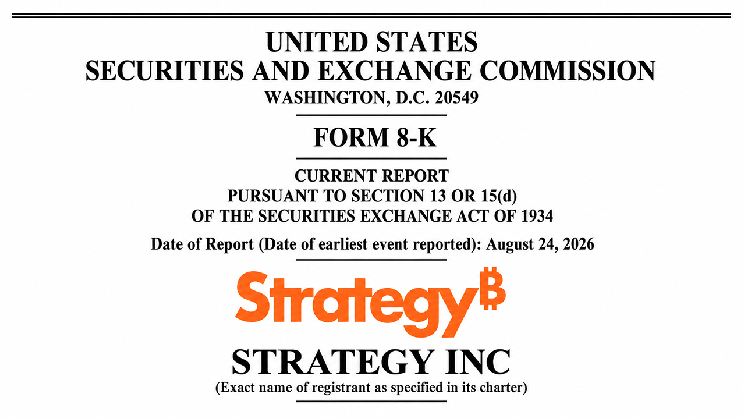
Chiến lược đột ngột dừng mua Bitcoin và tích lũy 6,69 tỷ USD tiền mặt

Công ty Strategy từ Tysons Corner, Virginia, đã thông báo tạm dừng đột ngột việc mua Bitcoin trong tuần từ 17 đến 23/8. Thay vào đó, công ty đã tích lũy một khoản tiền mặt khổng lồ lên tới 6,69 tỷ USD. Strategy hiện nắm giữ 840.447 BTC (mua với giá trung bình 75.385 USD/BTC), tương đương khoảng 4% tổng nguồn cung Bitcoin. Tuy nhiên, tuần qua họ không mua thêm đồng nào. Thay vào đó, họ đã huy động 2,01 tỷ USD thông qua chương trình phát hành cổ phiếu MSTR, đồng thời mua lại 136,4 triệu USD cổ phiếu ưu đãi STRC của chính mình. Số tiền huy động được đã được phân bổ: 300 triệu USD vào quỹ dự trữ USD, 136,4 triệu USD để mua lại cổ phiếu STRC, và phần còn lại chuyển vào quỹ "USD Cash" mới. Kết quả là Strategy hiện có 1,59 tỷ USD trong quỹ "USD Cash" linh hoạt và 5,1 tỷ USD trong quỹ dự trữ USD truyền thống, tổng cộng 6,69 tỷ USD tiền mặt. Giám đốc điều hành Michael Saylor nhấn mạnh số tiền mặt này củng cố cơ cấu tài chính, kéo dài thời gian đáp ứng các nghĩa vụ và tạo sự linh hoạt để nhanh chóng hành động - bao gồm cả việc mua Bitcoin khi có biến động thị trường. Động thái này cho thấy Strategy không từ bỏ chiến lược Bitcoin mà đang tích trữ "kho báu" tiền mặt, chuẩn bị sẵn sàng cho bước đi tiếp theo, dù đó là mua thêm BTC, hỗ trợ chứng khoán ưu đãi hay mua lại cổ phiếu.

cryptonews.ru4 phút trước

Chiến lược đột ngột dừng mua Bitcoin và tích lũy 6,69 tỷ USD tiền mặt

cryptonews.ru4 phút trước

Dự án tiền điện tử WLFI của gia đình Trump nhận được giấy phép ngân hàng tại Mỹ. Tại sao cần điều này

Dự án tiền điện tử World Liberty Financial ($WLFI) do gia đình cựu Tổng thống Mỹ Donald Trump hậu thuẫn đã nhận được sự chấp thuận để thành lập một ngân hàng ủy thác quốc gia tại Mỹ, theo Bloomberg. Tư cách pháp lý mới này, dù hạn chế hoạt động cho vay, sẽ cho phép WLFI phát hành và quản lý stablecoin $USD1 dưới sự giám sát liên bang của Văn phòng Kiểm soát Tiền tệ (OCC). Hiện tại, dự án hoạt động theo luật tiểu bang, điều này tiềm ẩn rủi ro pháp lý khi mở rộng sang các bang khác. Để chính thức trở thành ngân hàng ủy thác, WLFI vẫn cần đáp ứng các yêu cầu về vốn, quản trị doanh nghiệp và kiểm toán. Stablecoin $USD1 được ra mắt vào mùa xuân năm 2025 và được bảo đảm bằng trái phiếu chính phủ Mỹ. Vốn hóa thị trường của nó đạt đỉnh hơn 5 tỷ USD đầu năm 2026 nhưng hiện đã giảm xuống còn khoảng 3,98 tỷ USD. Mô hình này tạo ra thu nhập cho công ty từ tiền lãi trái phiếu, đồng thời, việc phát hành thêm token cũng thúc đẩy nhu cầu mua nợ công Mỹ và tăng thu nhập cho gia đình Trump với tư cách là đồng sáng lập.

cryptonews.ru4 phút trước

Dự án tiền điện tử WLFI của gia đình Trump nhận được giấy phép ngân hàng tại Mỹ. Tại sao cần điều này

cryptonews.ru4 phút trước

Giáo sư Stanford phát trực tiếp quá trình huấn luyện mô hình lớn 535B, 'hộp đen' đằng sau quá trình huấn luyện mô hình đang được mở ra?

Giáo sư Stanford Percy Liang và nhóm của ông đang thực hiện huấn luyện công khai mô hình ngôn ngữ lớn Marin 535B-A23B với 535 tỷ tham số, và toàn bộ quá trình này được phát trực tiếp. Mô hình sử dụng 11 hệ thống GB200 NVL72 (khoảng 792 GPU), được huấn luyện trên 18,75 nghìn tỷ token trong khoảng 3 tháng. Nhóm đã thực hiện các thử nghiệm quy mô nhỏ trước đó để dự đoán và gỡ lỗi. Dự án này cho phép bất kỳ ai theo dõi trực tiếp các đường cong huấn luyện, cấu hình, dữ liệu và nhật ký thông qua các nền tảng như Weights & Biases và GitHub. Điều này được coi là một bước đột phá trong việc mở "hộp đen" của huấn luyện mô hình lớn, vốn thường được các phòng thí nghiệm AI hàng đầu giữ kín. Cộng đồng nhiệt liệt hưởng ứng vì tính minh bạch và giá trị giáo dục, coi đây là tinh thần mã nguồn mở thực thụ. Người dùng có thể học hỏi, thảo luận các chi tiết kỹ thuật (như biến động của router_bias trong MoE) ngay trong quá trình huấn luyện. Giáo sư Liang cũng giảng dạy khóa học "CS336: Language Models From Scratch", củng cố mục tiêu chia sẻ kiến thức xây dựng mô hình ngôn ngữ lớn cho tất cả mọi người.

marsbit9 phút trước

Giáo sư Stanford phát trực tiếp quá trình huấn luyện mô hình lớn 535B, 'hộp đen' đằng sau quá trình huấn luyện mô hình đang được mở ra?

marsbit9 phút trước

Nhà vô địch Fields cũng thất bại, Claude kết thúc bí ẩn 78 năm, có thể trở thành thành tựu AI toán học quan trọng nhất

Một bài toán tồn tại suốt 78 năm đã được giải quyết chỉ trong ba ngày: mặt cầu 6 chiều (S6) có cấu trúc phức. Công trình này là kết quả hợp tác giữa nhà toán học Harvard Levent Alpöge và AI Claude. Vấn đề về việc liệu S6 có tồn tại cấu trúc phức hay không đã làm đau đầu giới toán học từ năm 1948, với nhiều nỗ lực thất bại của các nhà toán học lỗi lạc, kể cả những người đoạt giải Fields. Thay vì đi theo lối mòn, Alpöge và Claude đã xây dựng trực tiếp một đối tượng hình học mới có tên X, rồi chứng minh nó chính là S6 mang cấu trúc phức. Việc xây dựng X diễn ra qua ba bước chính: tạo một "đế" hình cầu từ một nhóm tam giác, gắn các xuyến phức 2 chiều lên mỗi điểm, và cuối cùng "trám" ba điểm đặc biệt bằng các kỹ thuật hình học phức cổ điển. Sau đó, họ chứng minh X có nhóm cơ bản tầm thường và đồng luân với S6, và nhờ vào kết quả phân loại trong tô pô vi phân chiều 6, X thực sự vi phôi với S6. Điều đáng chú ý là Alpöge vốn là chuyên gia về lý thuyết số, không phải hình học phức. Đây là lần thứ ba trong vòng 35 ngày anh và Claude công bố một đột phá toán học lớn, sau phản ánh cho Giả thuyết Jacobi và một cải tiến trong việc ước tính số không của hàm zeta Riemann. Nếu được xác minh, kết quả này có thể được coi là thành tựu toán học quan trọng nhất từ trước đến nay do AI đóng góp chính, đánh dấu sự thay đổi từ việc AI tìm kiếm lời giải sang việc sáng tạo ra những cấu trúc toán học hoàn toàn mới.

marsbit13 phút trước

Nhà vô địch Fields cũng thất bại, Claude kết thúc bí ẩn 78 năm, có thể trở thành thành tựu AI toán học quan trọng nhất

marsbit13 phút trước

Giao dịch

Giao ngay

Bài viết Nổi bật

Làm thế nào để Mua TOP

Chào mừng bạn đến với HTX.com! Chúng tôi đã làm cho mua TOP AI Network (TOP) trở nên đơn giản và thuận tiện. Làm theo hướng dẫn từng bước của chúng tôi để bắt đầu hành trình tiền kỹ thuật số của bạn.Bước 1: Tạo Tài khoản HTX của BạnSử dụng email hoặc số điện thoại của bạn để đăng ký tài khoản miễn phí trên HTX. Trải nghiệm hành trình đăng ký không rắc rối và mở khóa tất cả tính năng. Nhận Tài khoản của tôiBước 2: Truy cập Mua Crypto và Chọn Phương thức Thanh toán của BạnThẻ Tín dụng/Ghi nợ: Sử dụng Visa hoặc Mastercard của bạn để mua TOP AI Network (TOP) ngay lập tức.Số dư: Sử dụng tiền từ số dư tài khoản HTX của bạn để giao dịch liền mạch.Bên thứ ba: Chúng tôi đã thêm những phương thức thanh toán phổ biến như Google Pay và Apple Pay để nâng cao sự tiện lợi.P2P: Giao dịch trực tiếp với người dùng khác trên HTX.Thị trường mua bán phi tập trung (OTC): Chúng tôi cung cấp những dịch vụ được thiết kế riêng và tỷ giá hối đoái cạnh tranh cho nhà giao dịch.Bước 3: Lưu trữ TOP AI Network (TOP) của BạnSau khi mua TOP AI Network (TOP), lưu trữ trong tài khoản HTX của bạn. Ngoài ra, bạn có thể gửi đi nơi khác qua chuyển khoản blockchain hoặc sử dụng để giao dịch những tiền kỹ thuật số khác.Bước 4: Giao dịch TOP AI Network (TOP)Giao dịch TOP AI Network (TOP) dễ dàng trên thị trường giao ngay của HTX. Chỉ cần truy cập vào tài khoản của bạn, chọn cặp giao dịch, thực hiện giao dịch và theo dõi trong thời gian thực. Chúng tôi cung cấp trải nghiệm thân thiện với người dùng cho cả người mới bắt đầu và người giao dịch dày dạn kinh nghiệm.

Tổng lượt xem 528Xuất bản vào 2024.12.10Cập nhật vào 2026.06.02

Làm thế nào để Mua TOP

Thảo luận

Chào mừng đến với Cộng đồng HTX. Tại đây, bạn có thể được thông báo về những phát triển nền tảng mới nhất và có quyền truy cập vào thông tin chuyên sâu về thị trường. Ý kiến ​​của người dùng về giá của TOP (TOP) được trình bày dưới đây.

活动图片