Strategy Takes a Hard Line Against MSCI: The Ultimate Defense of DAT

深潮Xuất bản vào 2025-12-11Cập nhật gần nhất vào 2025-12-11

Tóm tắt

In a significant industry clash, digital asset treasury company Strategy has issued a forceful 12-page public letter to MSCI opposing its proposal to exclude companies with over 50% digital asset holdings from its global investable market indices. Strategy argues the move is discriminatory, misleading, and threatens billions in capital flow, potentially causing up to $2.8 billion in passive outflows from its stock alone. The company defends its business model, asserting that digital asset treasuries (DATs) are operational companies—not passive funds—with active strategies like issuing digital debt instruments to fund Bitcoin acquisitions and generate shareholder returns. It compares its role to historic infrastructure builders like Standard Oil and AT&T, emphasizing Bitcoin’s transformative potential in finance. Strategy highlights four key objections: the proposal is arbitrarily discriminatory against digital assets; it violates index providers' neutrality principles; it is impractical due to Bitcoin's volatility and accounting disparities; and it contradicts the U.S. government’s pro-digital asset strategy. The firm demands MSCI withdraw the proposal or extend consultations. Backed by industry advocates and data showing over 200 public companies hold more than 5% of Bitcoin’s supply, Strategy urges MSCI to let markets—not biased rules—determine the value of digital asset companies. The decision, expected by January 2026, could redefine the role of crypto-native firms in ...

Author: KarenZ, Foresight News

The博弈 concerning the development of the Digital Asset Treasury (DAT) industry continues to intensify.

In October, global index provider MSCI put forward a proposal to exclude companies with digital asset holdings accounting for 50% or more of their total assets from its Global Investable Market Indexes. This move directly threatens the market position of companies like Strategy, representative of digital asset treasury companies, and could potentially redirect capital flows for the entire DAT sector.

According to statistics from Bitcoin for Corporations, 39 companies risk exclusion from the MSCI Global Investable Market Indexes. J.P. Morgan analysts previously warned that the exclusion of Strategy alone could lead to nearly $2.8 billion in passive fund outflows. If other index providers follow suit with similar rules, outflows could reach as high as $8.8 billion.
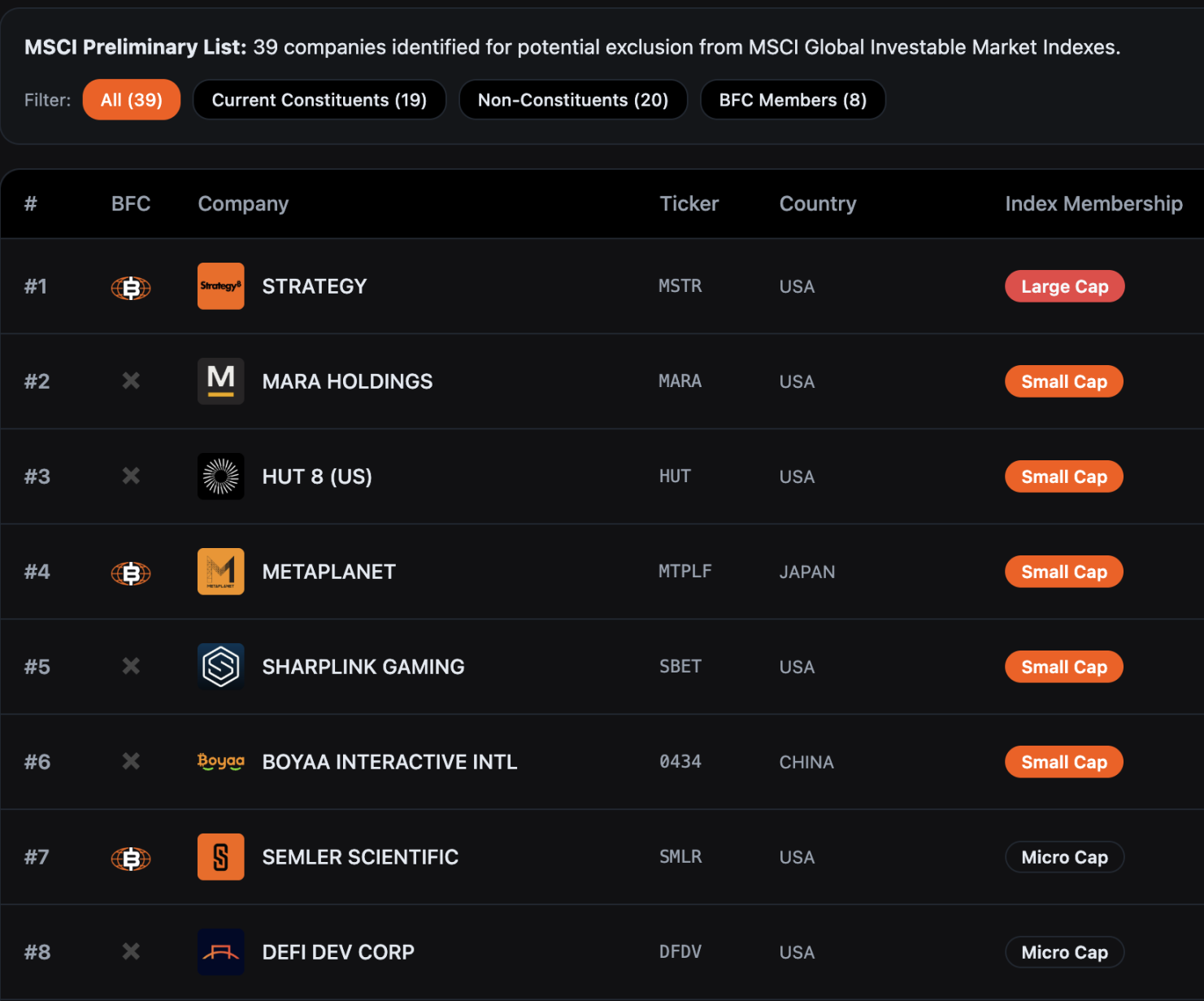
The consultation period for this MSCI proposal is currently open until December 31, 2025, with a final conclusion expected by January 15, 2026. Any adjustments would be formally implemented during the February 2026 index review.

Faced with this urgent situation, Strategy submitted a strongly worded 12-page public letter to the MSCI Equity Index Committee on December 10th. Signed jointly by Executive Chairman and Founder Michael Saylor and President & CEO Phong Le, the letter clearly expressed firm opposition to the proposal. It stated unequivocally: "This proposal is seriously misleading and will have far-reaching destructive consequences for the interests of global investors and the development of the digital asset industry. We strongly urge MSCI to completely withdraw this plan."

Strategy's Four Core Arguments

Digital Assets Are a Revolutionary Foundational Technology Reshaping the Financial System

Strategy believes MSCI's proposal underestimates the strategic value of Bitcoin and other digital assets. Since Satoshi Nakamoto introduced Bitcoin 16 years ago, this digital asset has gradually grown into a key component of the global economy, with a current total market value of approximately $1.85 trillion.

In Strategy's view, digital assets are far more than simple financial instruments; they represent a fundamental technological innovation capable of reshaping the global financial system — companies investing in Bitcoin-related infrastructure are building a new financial ecosystem, much like leading companies that deeply invested in single emerging technologies throughout history.

Just as Standard Oil focused on oil well extraction in the 19th century and AT&T全力 built telephone networks in the 20th century, these companies laid a solid foundation for subsequent economic transformations through前瞻性 investment in core infrastructure, ultimately becoming industry benchmarks. Strategy argues that companies focusing on digital assets today are following this path of "technology pioneers" and should not be simply dismissed by traditional index rules.

DATs Are Operating Companies, Not Passive Funds

This is the core of Strategy's argument — Digital Asset Treasury companies (DATs) are operating companies with complete business models, not merely investment funds passively holding Bitcoin. Although Strategy currently holds over 600,000 Bitcoin, its core value does not rely solely on Bitcoin's price fluctuations. Instead, it creates sustainable returns for shareholders by designing and offering unique "digital credit" instruments.

Specifically, Strategy issues "digital credit" instruments including various types of preferred stock with fixed dividend rates, floating dividend rates, different priority levels, and credit protection terms. It uses the funds raised from selling these instruments to acquire more Bitcoin. As long as the long-term investment return on Bitcoin exceeds Strategy's USD-denominated financing costs, it can generate stable returns for shareholders and clients. Strategy emphasizes that this model of "active operation + asset appreciation" is fundamentally different from the passive management logic of traditional investment funds or ETFs and should be regarded as a normal operating company.

Furthermore, Strategy questions in the letter: Why can oil giants, Real Estate Investment Trusts (REITs), timber companies, etc., concentrate holdings in a single asset class without being classified as investment funds and excluded from indexes? Imposing special restrictions only on digital asset companies clearly violates the principle of industry equity.

The 50% Digital Asset Threshold is Arbitrary, Discriminatory, and Impractical

Strategy points out that MSCI's proposal employs discriminatory standards. Many large companies in traditional industries also hold a highly concentrated single asset class in their portfolios, including oil and gas companies, REITs, timber companies, and power infrastructure firms. Yet, MSCI has set special exclusion criteria only for digital asset companies, constituting obvious unfair treatment.

From an implementation feasibility perspective, the proposal also has serious issues. Due to the high volatility of digital asset prices, the same company could frequently enter and exit MSCI indexes within days due to changes in asset value, causing market chaos. Additionally, differences between accounting standards (the treatment of digital assets differs under US GAAP and international IFRS standards) will lead to differential treatment for companies with the same business model based on their jurisdiction of incorporation.

Violates Index Neutrality Principle, Introduces Policy Bias

Strategy argues that MSCI's proposal is essentially a value judgment on a certain asset class, violating the fundamental principle that index providers should remain neutral. MSCI claims to markets and regulators that its indexes provide "exhaustive" coverage, aiming to reflect the "evolution of the underlying equity market," and should not "make judgments about the goodness or appropriateness of any market, company, strategy, or investment."

By selectively excluding digital asset companies, MSCI is effectively making a policy judgment on behalf of the market, which is precisely what index providers should avoid.

Contradicts US Digital Asset Strategy

Strategy specifically emphasizes that this proposal conflicts with the strategic goals of the Trump administration to advance US leadership in digital assets. The Trump administration signed an executive order in its first week to promote growth in digital financial technology and established a strategic Bitcoin reserve, aiming to make the US the global leader in digital assets.

However, if MSCI's proposal is implemented, it would directly prevent long-term US capital, such as pension funds and 401(k) plans, from investing in digital asset companies, leading to tens of billions of dollars flowing out of the sector. This would not only hinder the development of US digital asset innovation companies but could also weaken US competitiveness in this strategic field, running counter to the government's stated policy direction.

Citing analyst estimates, Strategy states that it alone could face up to $2.8 billion in passive stock liquidation due to MSCI's proposal. This harms not only Strategy itself but will also have a chilling effect on the entire digital asset ecosystem. For example, it might force Bitcoin mining companies to sell assets prematurely to adjust their asset structure, thereby distorting the normal supply and demand dynamics of the digital asset market.

Strategy's Ultimate Demands

Strategy puts forward two main demands in its public letter:

First, it hopes MSCI will completely withdraw the exclusion proposal, allowing the market to test the value of Digital Asset Treasury companies (DATs) through free competition, enabling indexes to neutrally and faithfully reflect the development trends of next-generation financial technology.

Second, if MSCI still insists on "special treatment" for digital asset companies, it must expand the scope of industry consultation, extend the consultation period, and provide more substantial logical support to explain the rationality of the rules.

Strategy Is Not Fighting Alone

Strategy is not fighting alone. According to data from BitcoinTreasuries.NET, as of December 11th, 208 publicly listed companies globally hold over 1.07 million Bitcoin, exceeding 5% of Bitcoin's total supply, currently worth approximately $100 billion.
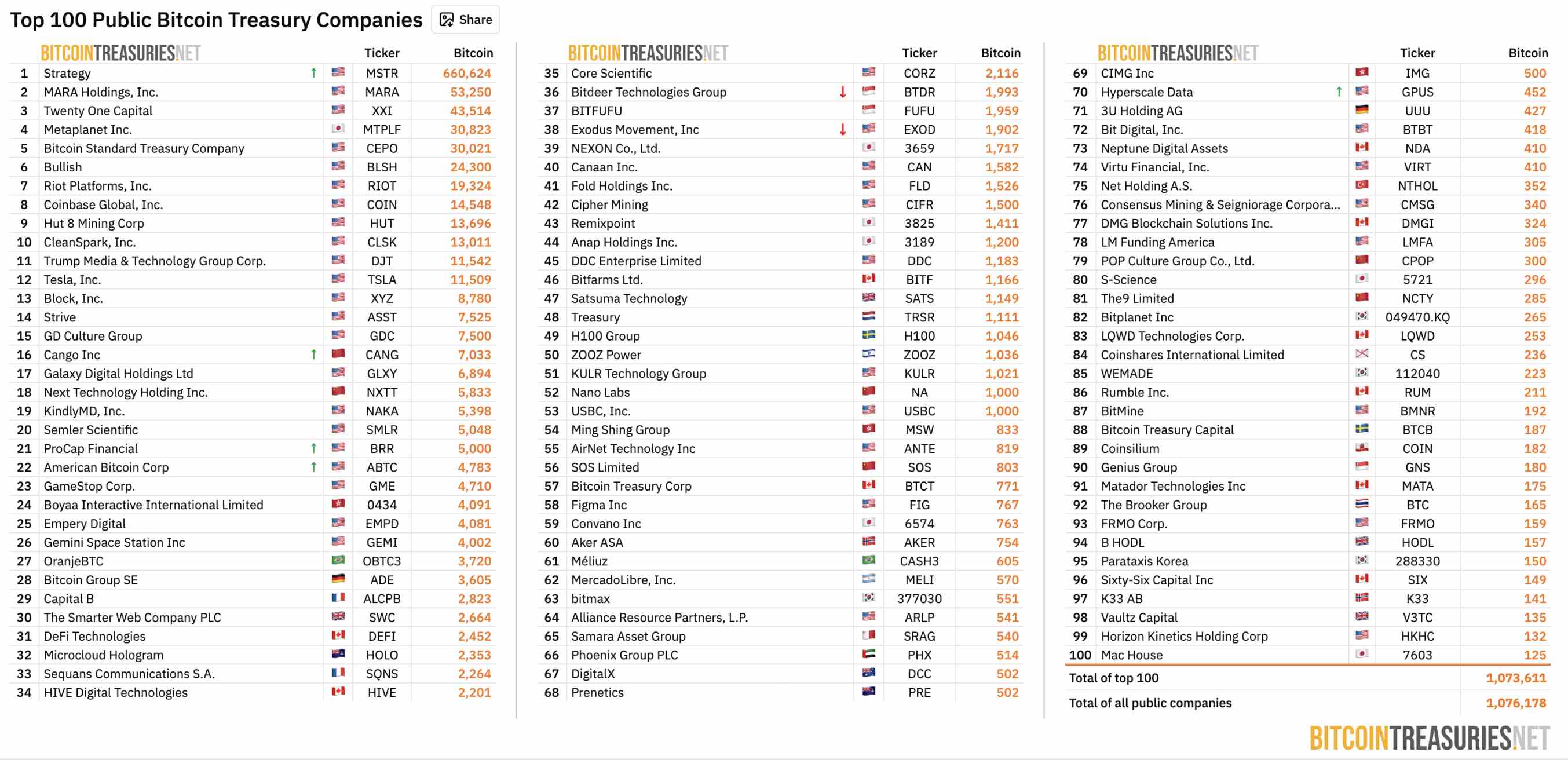
Source: BitcoinTreasuries.NET

These digital asset treasury companies have become important bridge for institutional adoption of cryptocurrency, providing compliant indirect exposure for traditional financial institutions like pension funds and endowments.

Previously, Strive, a Bitcoin-holding public company, suggested that MSCI should leave the "choice" regarding digital asset companies to the market. A simple and direct solution would be to create "ex-Digital Asset Treasury" versions of existing indexes, such as the MSCI USA ex Digital Asset Treasuries Index and the MSCI ACWI ex Digital Asset Treasuries Index. A transparent screening mechanism would allow investors to choose their tracking benchmark independently, preserving index integrity while meeting the needs of different investors.

Additionally, the industry organization Bitcoin for Corporations has initiated a joint petition calling on MSCI to withdraw the digital asset proposal. It advocates that classification should be based on a company's actual business model, financial performance, and operational characteristics, rather than simply drawing a line based on asset percentage. According to the organization's website, 309 companies or investors have currently signed the joint letter. Signatories, besides Strategy, include executives from industry-known firms like Strive, BitGo, Redwood Digital Group, 21MIL, Btc inc, DeFi Development Corp, as well as numerous individual developers and investors.

Summary

The standoff between Strategy and MSCI is essentially a fundamental debate about "how emerging financial innovations integrate into the traditional system." Digital Asset Treasury companies (DATs), as "cross-border" entities between traditional finance and the cryptocurrency world, are neither pure technology companies nor simple investment funds, but represent a new business model built upon digital assets.

MSCI's proposal attempts to use a "50% asset threshold" to classify these complex entities as "investment funds" and exclude them from indexes; Strategy insists that this simplified treatment is a serious misunderstanding of their business essence and a departure from the principle of index neutrality. As the January 15, 2026 decision date approaches, the outcome of this博弈 will not only determine the index "eligibility" of several Bitcoin-holding public companies but will also delineate a critical "survival boundary" for the future position of the digital asset industry within the global traditional financial system.


Câu hỏi Liên quan

QWhat is the core argument that Strategy uses to defend its classification as an operational company rather than a passive fund?

AStrategy argues that it is an operational company with a complete business model, not a passive investment fund. Its core value is not derived from Bitcoin's price fluctuations but from creating sustainable returns for shareholders through its unique 'digital credit' instruments, such as preferred shares with fixed or floating dividend rates, which it sells to raise capital for acquiring more Bitcoin. This active operational model is fundamentally different from the passive management of ETFs or funds.

QWhat potential financial impact does Strategy claim the MSCI proposal could have on it and the broader digital asset market?

AStrategy, citing analyst estimates, claims that its exclusion from the MSCI index alone could trigger nearly $2.8 billion in passive fund outflows. If other index providers adopt similar rules, the outflows could reach as high as $8.8 billion. This would not only harm Strategy but also create a chilling effect on the entire digital asset ecosystem, potentially forcing companies like Bitcoin miners to sell assets prematurely and distorting market supply and demand.

QHow does Strategy's public letter justify the strategic value of Bitcoin and digital assets?

AStrategy's letter argues that Bitcoin and digital assets represent a revolutionary foundational technology reshaping the financial system, not merely financial instruments. It compares companies investing in Bitcoin infrastructure to historical pioneers like Standard Oil and AT&T, which made foundational investments in oil and telephone networks. These companies laid the groundwork for economic transformation and became industry benchmarks, a path Strategy believes digital asset companies are now following.

QWhat alternative solution does the industry group Bitcoin for Corporations suggest to MSCI's proposal?

AThe industry group Bitcoin for Corporations, along with companies like Strive, suggests that MSCI should create new versions of its existing indices that explicitly exclude Digital Asset Treasury companies, such as 'MSCI USA ex Digital Asset Treasuries' and 'MSCI ACWI ex Digital Asset Treasuries'. This would give investors the transparent choice of which benchmark to follow, preserving the integrity of the main indices while catering to different investor preferences.

QWhat is Strategy's ultimate request to MSCI regarding the proposed rule change?

AStrategy's primary request is for MSCI to completely withdraw the proposal to exclude companies based on their digital asset holdings. It argues the market should freely compete to validate the value of Digital Asset Treasury companies (DATs) and that the index should neutrally reflect the evolution of next-generation fintech. If MSCI insists on special treatment for these companies, Strategy demands a broader industry consultation, an extended consultation period, and a more robust logical justification for the rule.

Nội dung Liên quan

Điều Gì Đang Xảy Ra Với Altcoin XDC Và Tại Sao Nó Vừa Vượt Mặt Bitcoin?

Chuyên gia tiền điện tử X Finance Bull đã chỉ ra rằng đồng altcoin XDC gần đây đã vượt qua Bitcoin để trở thành đồng coin được truy cập nhiều nhất trên CoinMarketCap trong bảy ngày qua. Ông lý giải rằng sự chú ý này không ngẫu nhiên, mà do mạng lưới XDC được xây dựng để giải quyết khoảng cách tài trợ thương mại trị giá 2,5 nghìn tỷ USD, thay thế các quy trình giấy tờ thủ công bằng công nghệ blockchain. Mạng XDC được thiết kế cho thương mại thể chế, với các tính năng như tốc độ 2.000 giao dịch/giây, xác nhận trong 2 giây, phí gần như bằng không, các masternode đã xác minh KYC và tuân thủ tiêu chuẩn ISO 20022. Đội ngũ phát triển có André Casterman, cựu chuyên gia với hơn 20 năm tại SWIFT. Các yếu tố tích cực khác bao gồm việc BitGo cung cấp dịch vụ lưu ký, nền tảng Liqi xử lý hơn 100 triệu USD khối lượng tài chính thương mại hàng ngày, và việc được SEC và CFTC phân loại là hàng hóa kỹ thuật số. Đợt nâng cấp "Cancun" vào tháng 1 đã giúp XDC tương thích với các tiêu chuẩn mới nhất của Ethereum. Với vốn hóa thị trường khoảng 635 triệu USD và giá giao dịch quanh mức 0,03 USD, chuyên gia này cho rằng XDC vẫn bị định giá thấp so với tiềm năng trong thị trường tài trợ thương mại đầy triển vọng.

bitcoinist42 phút trước

Điều Gì Đang Xảy Ra Với Altcoin XDC Và Tại Sao Nó Vừa Vượt Mặt Bitcoin?

bitcoinist42 phút trước

Nhịp Độ Thị Trường BTC: Tuần 20

Bitcoin đã có một tuần tăng điểm ổn định, từ vùng cao 77K USD lên sát 82K USD, với lực mua tiếp tục hấp thụ các đợt điều chỉnh. Cấu trúc thị trường cho thấy nhiều tín hiệu tích cực: Khối lượng giao dịch giao ngay (Spot Volume) và dòng tiền (Spot CVD) tăng mạnh, phản ánh sự tham gia và niềm tin của nhà đầu tư. Hoạt động trên chuỗi (on-chain) như số địa chỉ hoạt động, khối lượng chuyển và phí mạng lưới đều tăng, cho thấy mức độ sử dụng mạng lưới cao hơn. Tuy nhiên, động lượng giá (Price Momentum) đã giảm nhiệt, báo hiệu sự cân bằng hơn giữa áp lực mua và bán. Trong thị trường tương lai, dù lòng tham rủi ro và số hợp đồng mở (Open Interest) tăng, nhưng thanh toán funding cho vị thế mua (Long-Side Funding) giảm cho thấy sự quan tâm đến vị thế bán đang gia tăng. Thị trường quyền chọn cũng phản ánh kỳ vọng trung lập đến hơi tích cực nhưng với mức độ bất ổn định (volatility) được định giá cao. Nhìn chung, cấu trúc thị trường Bitcoin tiếp tục được cải thiện nhờ hoạt động on-chain mạnh mẽ, vị thế nắm giữ ổn định và tỷ lệ lợi nhuận lành mạnh. Dù có những yếu tố tích cực, dòng vốn vào chậm và tâm lý thận trọng cho thấy thị trường vẫn nhạy cảm với các thay đổi trong cảm nhận rủi ro.

insights.glassnode1 giờ trước

Nhịp Độ Thị Trường BTC: Tuần 20

insights.glassnode1 giờ trước

Saylor Tuyên Bố Mô Hình Tín Dụng Bitcoin Của MicroStrategy Không Phải Là Mô Hình Lừa Đảo Ponzi

Michael Saylor đã bảo vệ mô hình tín dụng được hỗ trợ bằng Bitcoin của MicroStrategy trước những chỉ trích cho rằng cấu trúc cổ tức STRC của công ty giống một mô hình Ponzi. Ông nhấn mạnh rằng doanh nghiệp này được xây dựng dựa trên việc kiếm tiền từ lợi nhuận vốn của Bitcoin chứ không phụ thuộc vào việc phát hành vốn cổ phần vĩnh viễn. Saylor giải thích rằng công ty phát hành tín dụng (STRC), sử dụng số tiền thu được để mua Bitcoin và kỳ vọng tài sản này sẽ tăng giá trị vượt trội so với chi phí cổ tức về lâu dài. Ông so sánh mô hình này với một công ty phát triển bất động sản. Ông cũng làm rõ quan điểm nổi tiếng "không bao giờ bán Bitcoin" của mình, nói rằng ý chính xác là MicroStrategy không có ý định trở thành "người bán ròng" Bitcoin. Ngay cả khi bán một phần Bitcoin để trả cổ tức, việc phát hành tín dụng mới sẽ cho phép công ty mua nhiều Bitcoin hơn số đã bán, từ đó tiếp tục tích lũy tài sản một cách ròng. Saylor bác bỏ ý kiến của những người chỉ trích như Peter Schiff, cho rằng họ xuất phát từ việc không công nhận Bitcoin là tài sản hợp pháp. Ông mô tả STRC là một dạng "tín dụng kỹ thuật số" được thế chấp quá mức, được thiết kế để giảm bớt biến động và tạo ra lợi nhuận xác định cho các nhà đầu tư tin tưởng vào Bitcoin với tư cách là một kho lưu trữ giá trị kỹ thuật số.

bitcoinist1 giờ trước

Saylor Tuyên Bố Mô Hình Tín Dụng Bitcoin Của MicroStrategy Không Phải Là Mô Hình Lừa Đảo Ponzi

bitcoinist1 giờ trước

Phân Tích Báo Cáo Tài Chính Q1 Của Circle: Khi Lợi Nhuận Lãi Suất Rút Lui, USDC Chuẩn Bị Một Ván Cờ Lớn

Circle đã công bố báo cáo tài chính quý 1 năm 2026. Tổng doanh thu và thu nhập từ dự trữ đạt 6,94 tỷ USD, thấp hơn kỳ vọng thị trường, chủ yếu do tỷ suất lợi nhuận từ tài sản dự trữ giảm. Tuy nhiên, thu nhập khác (không bao gồm thu nhập từ dự trữ) lên mức kỷ lục 42 triệu USD, cho thấy nguồn thu đang đa dạng hóa. Lợi nhuận ròng đạt 55 triệu USD, giảm 15% so với cùng kỳ, trong khi chi phí hoạt động tăng mạnh. Biên lợi nhuận RLDC cốt lõi tiếp tục cải thiện lên 41%. Về hoạt động, lượng USDC lưu hành cuối quý đạt 77 tỷ USD, tăng 28%, nhưng khối lượng giao dịch trên chuỗi tăng tới 263%, lên 21,5 nghìn tỷ USD, cho thấy mức độ sử dụng thực tế cao. Circle cũng công bố mạng lưới thanh toán Arc Network đã hoàn thành đợt bán trước token ARC trị giá 222 triệu USD, và ra mắt Agent Stack để phục vụ nền kinh tế AI Agent. Bối cảnh lãi suất giảm đang thúc đẩy Circle chuyển trọng tâm từ phụ thuộc vào thu nhập lãi sang mở rộng đa dạng hóa dịch vụ, với tham vọng biến USDC thành mạng lưới thanh toán cơ bản cho kỷ nguyên internet và kinh tế kỹ thuật số.

marsbit2 giờ trước

Phân Tích Báo Cáo Tài Chính Q1 Của Circle: Khi Lợi Nhuận Lãi Suất Rút Lui, USDC Chuẩn Bị Một Ván Cờ Lớn

marsbit2 giờ trước

Giải Mã Báo Cáo Tài Chính Q1 Của Circle: Sau Khi Lợi Nhuận Từ Lãi Suất Suy Giảm, USDC Đang Chuẩn Bị Cho Một Ván Cờ Lớn

Circle đã công bố báo cáo tài chính quý I/2026 với doanh thu và thu nhập dự trữ tổng cộng là 6,94 tỷ USD, thấp hơn kỳ vọng thị trường, chủ yếu do lãi suất dự trữ giảm sau khi Fed hạ lãi suất. Tuy nhiên, thu nhập khác (không từ dự trữ) đạt mức cao kỷ lục 42 triệu USD, cho thấy sự đa dạng hóa nguồn thu. Biên lợi nhuận RLDC tăng lên 41%, phản ánh kiểm soát chi phí hiệu quả hơn. Lưu thông USDC tăng 28% lên 77 tỷ USD, nhưng khối lượng giao dịch trên chuỗi tăng mạnh 263% lên 21,5 nghìn tỷ USD, chứng tỏ USDC đang được sử dụng tích cực trong thanh toán và DeFi. Circle đang mở rộng mạnh mẽ sang các lĩnh vực phi lãi suất. Mạng thanh toán Arc Network đã huy động được 222 triệu USD từ đợt bán trước token ARC. Các dịch vụ mới như Circle Payments Network (CPN), Managed Payments và bộ công cụ Agent Stack cho AI đang được triển khai, nhằm biến USDC từ một tài sản dự trữ thành hạ tầng tài chính lập trình được cho nền kinh tế internet và AI. Đây là chiến lược dài hạn của Circle trong bối cảnh lợi nhuận từ lãi suất đang thu hẹp.

Odaily星球日报2 giờ trước

Giải Mã Báo Cáo Tài Chính Q1 Của Circle: Sau Khi Lợi Nhuận Từ Lãi Suất Suy Giảm, USDC Đang Chuẩn Bị Cho Một Ván Cờ Lớn

Odaily星球日报2 giờ trước

Giao dịch

Giao ngay
Hợp đồng Tương lai

Bài viết Nổi bật

Làm thế nào để Mua CC

Chào mừng bạn đến với HTX.com! Chúng tôi đã làm cho mua CC(Canton) (CC) trở nên đơn giản và thuận tiện. Làm theo hướng dẫn từng bước của chúng tôi để bắt đầu hành trình tiền kỹ thuật số của bạn.Bước 1: Tạo Tài khoản HTX của BạnSử dụng email hoặc số điện thoại của bạn để đăng ký tài khoản miễn phí trên HTX. Trải nghiệm hành trình đăng ký không rắc rối và mở khóa tất cả tính năng. Nhận Tài khoản của tôiBước 2: Truy cập Mua Crypto và Chọn Phương thức Thanh toán của BạnThẻ Tín dụng/Ghi nợ: Sử dụng Visa hoặc Mastercard của bạn để mua CC(Canton) (CC) ngay lập tức.Số dư: Sử dụng tiền từ số dư tài khoản HTX của bạn để giao dịch liền mạch.Bên thứ ba: Chúng tôi đã thêm những phương thức thanh toán phổ biến như Google Pay và Apple Pay để nâng cao sự tiện lợi.P2P: Giao dịch trực tiếp với người dùng khác trên HTX.Thị trường mua bán phi tập trung (OTC): Chúng tôi cung cấp những dịch vụ được thiết kế riêng và tỷ giá hối đoái cạnh tranh cho nhà giao dịch.Bước 3: Lưu trữ CC(Canton) (CC) của BạnSau khi mua CC(Canton) (CC), lưu trữ trong tài khoản HTX của bạn. Ngoài ra, bạn có thể gửi đi nơi khác qua chuyển khoản blockchain hoặc sử dụng để giao dịch những tiền kỹ thuật số khác.Bước 4: Giao dịch CC(Canton) (CC)Giao dịch CC(Canton) (CC) dễ dàng trên thị trường giao ngay của HTX. Chỉ cần truy cập vào tài khoản của bạn, chọn cặp giao dịch, thực hiện giao dịch và theo dõi trong thời gian thực. Chúng tôi cung cấp trải nghiệm thân thiện với người dùng cho cả người mới bắt đầu và người giao dịch dày dạn kinh nghiệm.

Tổng lượt xem 208Xuất bản vào 2026.04.21Cập nhật vào 2026.04.21

Làm thế nào để Mua CC

Làm thế nào để Mua BLEND

Chào mừng bạn đến với HTX.com! Chúng tôi đã làm cho mua Fluent (BLEND) trở nên đơn giản và thuận tiện. Làm theo hướng dẫn từng bước của chúng tôi để bắt đầu hành trình tiền kỹ thuật số của bạn.Bước 1: Tạo Tài khoản HTX của BạnSử dụng email hoặc số điện thoại của bạn để đăng ký tài khoản miễn phí trên HTX. Trải nghiệm hành trình đăng ký không rắc rối và mở khóa tất cả tính năng. Nhận Tài khoản của tôiBước 2: Truy cập Mua Crypto và Chọn Phương thức Thanh toán của BạnThẻ Tín dụng/Ghi nợ: Sử dụng Visa hoặc Mastercard của bạn để mua Fluent (BLEND) ngay lập tức.Số dư: Sử dụng tiền từ số dư tài khoản HTX của bạn để giao dịch liền mạch.Bên thứ ba: Chúng tôi đã thêm những phương thức thanh toán phổ biến như Google Pay và Apple Pay để nâng cao sự tiện lợi.P2P: Giao dịch trực tiếp với người dùng khác trên HTX.Thị trường mua bán phi tập trung (OTC): Chúng tôi cung cấp những dịch vụ được thiết kế riêng và tỷ giá hối đoái cạnh tranh cho nhà giao dịch.Bước 3: Lưu trữ Fluent (BLEND) của BạnSau khi mua Fluent (BLEND), lưu trữ trong tài khoản HTX của bạn. Ngoài ra, bạn có thể gửi đi nơi khác qua chuyển khoản blockchain hoặc sử dụng để giao dịch những tiền kỹ thuật số khác.Bước 4: Giao dịch Fluent (BLEND)Giao dịch Fluent (BLEND) dễ dàng trên thị trường giao ngay của HTX. Chỉ cần truy cập vào tài khoản của bạn, chọn cặp giao dịch, thực hiện giao dịch và theo dõi trong thời gian thực. Chúng tôi cung cấp trải nghiệm thân thiện với người dùng cho cả người mới bắt đầu và người giao dịch dày dạn kinh nghiệm.

Tổng lượt xem 103Xuất bản vào 2026.04.24Cập nhật vào 2026.04.24

Làm thế nào để Mua BLEND

Làm thế nào để Mua ACN

Chào mừng bạn đến với HTX.com! Chúng tôi đã làm cho mua AITECH CLOUD NETWORK (ACN) trở nên đơn giản và thuận tiện. Làm theo hướng dẫn từng bước của chúng tôi để bắt đầu hành trình tiền kỹ thuật số của bạn.Bước 1: Tạo Tài khoản HTX của BạnSử dụng email hoặc số điện thoại của bạn để đăng ký tài khoản miễn phí trên HTX. Trải nghiệm hành trình đăng ký không rắc rối và mở khóa tất cả tính năng. Nhận Tài khoản của tôiBước 2: Truy cập Mua Crypto và Chọn Phương thức Thanh toán của BạnThẻ Tín dụng/Ghi nợ: Sử dụng Visa hoặc Mastercard của bạn để mua AITECH CLOUD NETWORK (ACN) ngay lập tức.Số dư: Sử dụng tiền từ số dư tài khoản HTX của bạn để giao dịch liền mạch.Bên thứ ba: Chúng tôi đã thêm những phương thức thanh toán phổ biến như Google Pay và Apple Pay để nâng cao sự tiện lợi.P2P: Giao dịch trực tiếp với người dùng khác trên HTX.Thị trường mua bán phi tập trung (OTC): Chúng tôi cung cấp những dịch vụ được thiết kế riêng và tỷ giá hối đoái cạnh tranh cho nhà giao dịch.Bước 3: Lưu trữ AITECH CLOUD NETWORK (ACN) của BạnSau khi mua AITECH CLOUD NETWORK (ACN), lưu trữ trong tài khoản HTX của bạn. Ngoài ra, bạn có thể gửi đi nơi khác qua chuyển khoản blockchain hoặc sử dụng để giao dịch những tiền kỹ thuật số khác.Bước 4: Giao dịch AITECH CLOUD NETWORK (ACN)Giao dịch AITECH CLOUD NETWORK (ACN) dễ dàng trên thị trường giao ngay của HTX. Chỉ cần truy cập vào tài khoản của bạn, chọn cặp giao dịch, thực hiện giao dịch và theo dõi trong thời gian thực. Chúng tôi cung cấp trải nghiệm thân thiện với người dùng cho cả người mới bắt đầu và người giao dịch dày dạn kinh nghiệm.

Tổng lượt xem 93Xuất bản vào 2026.04.28Cập nhật vào 2026.04.28

Làm thế nào để Mua ACN

Thảo luận

Chào mừng đến với Cộng đồng HTX. Tại đây, bạn có thể được thông báo về những phát triển nền tảng mới nhất và có quyền truy cập vào thông tin chuyên sâu về thị trường. Ý kiến ​​của người dùng về giá của A (A) được trình bày dưới đây.

活动图片