SpaceX and OpenAI Are About to Go Public, Your Index Fund Might Be Forced to 'Buy at the Peak'

marsbitXuất bản vào 2026-04-23Cập nhật gần nhất vào 2026-04-23

Tóm tắt

The imminent mega-IPOs of companies like SpaceX and OpenAI pose a significant risk to index fund investors, who may be forced to buy these overvalued stocks at peak prices. Index funds, designed to replicate market performance, must purchase new listings once they are included in major indices, often through "fast entry" rules that allow inclusion within days. This creates a hidden cost: hedge funds and other intermediaries front-run these predictable purchases, driving up prices before the inclusion date, after which the shares typically underperform. Historical data shows that IPOs, especially those with low float (like SpaceX’s planned <5% float), tend to dramatically underperform the market over time. High valuations, low float, and forced buying during index rebalancing result in a performance drag for passive investors, effectively acting as a hidden tax. Attempting to invest pre-IPO via private markets is also risky due to survivor bias, high fees, and liquidity issues. For index investors, this costly mechanism is an unavoidable aspect of passive investing.

Source: Ben Felix Podcast

Compiled by: Felix, PANews
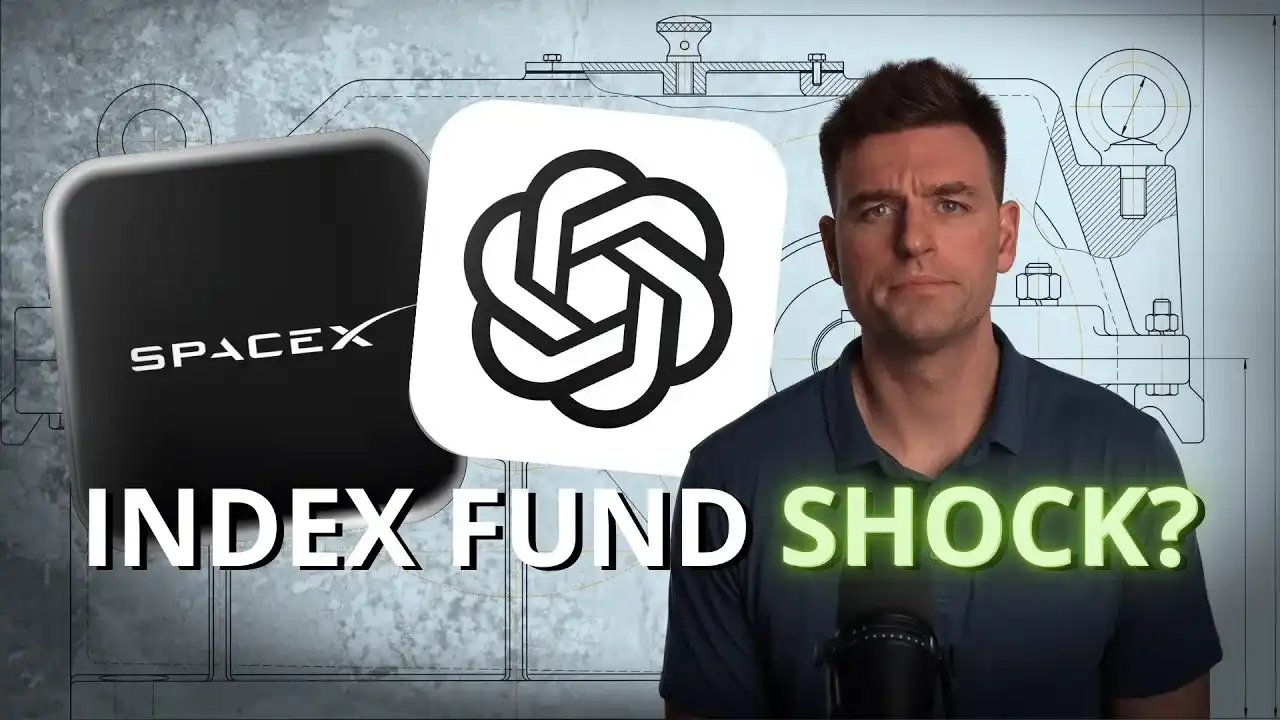
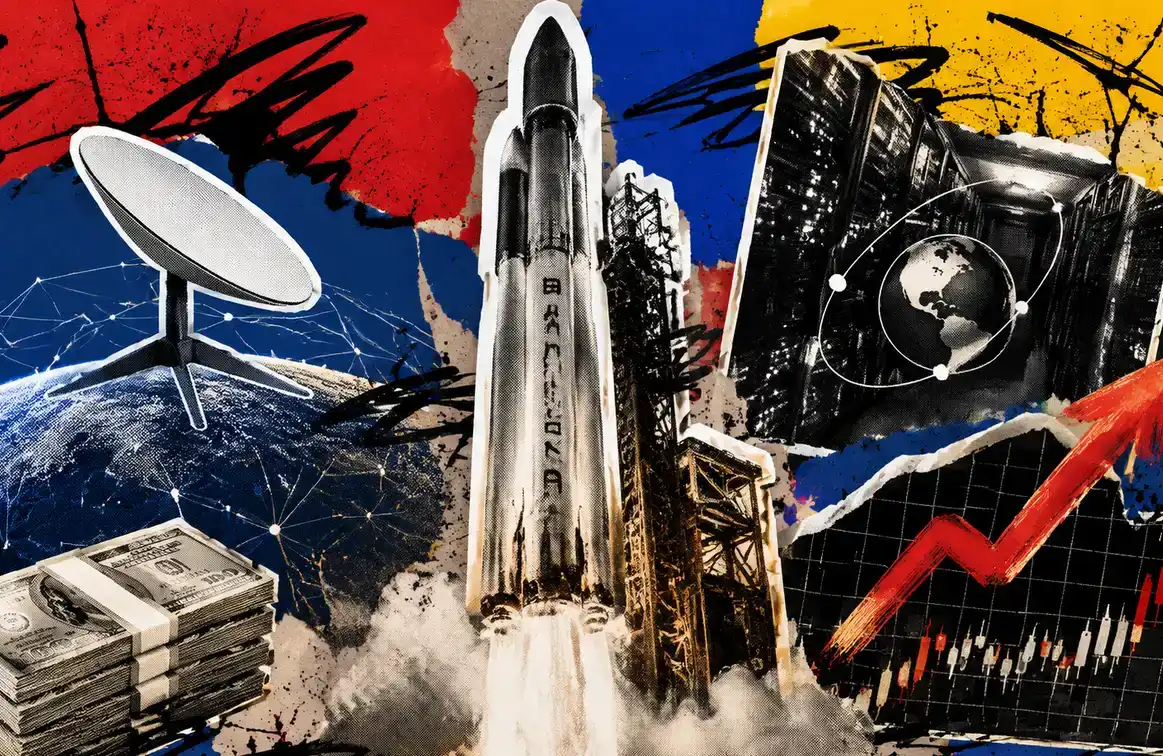
Editor's Note: Recently, SpaceX, under Elon Musk's leadership, has secretly filed IPO registration documents with the U.S. SEC, targeting a listing as early as June. The company plans to raise $50-75 billion, with a target valuation of approximately $1.75 trillion, potentially making it the largest IPO in history.

Amid the market's excitement, some have pointed out that such super IPOs are a 'disaster' for retail investors, especially index fund investors. Ben Felix, Chief Investment Officer at PWL Capital, recently stated in a podcast that super IPOs like SpaceX and OpenAI are a carefully designed 'scam' and shared what the upcoming super IPOs mean for retail investors and their portfolios.

PANews has compiled the highlights of the podcast. Details are as follows.

If private companies like SpaceX, OpenAI, and Anthropic go public, they will rank among the world's largest companies. For index fund investors, this means that regardless of whether you are optimistic about these companies, your funds will be forced to buy their stocks.

The original intention of index funds is to perfectly replicate the performance of the public stock market. To stay as close to the market as possible, many index construction rules require the inclusion of companies as soon as they go public. While this is reasonable from a macro-representative perspective, historical data shows that blindly buying IPO stocks often yields poor returns.

Today, index funds control trillions of dollars. When a newly listed stock is included in a major index, it means a massive inflow of funds into that stock. Because index funds are forced to buy, this provides ample liquidity for sellers and drives up the stock price. This is extremely beneficial for the shareholders of the newly listed company (such as insiders and early investors), but not for the index fund investors who have to become the 'bag holders.'

Companies typically prefer to go public when they believe they can sell at a high price. This means that when ordinary investors finally get to buy the stock on the secondary market, it is precisely when the company insiders believe the stock is overvalued or priced extremely high. Investors generally do not want to buy overvalued stocks, but index funds do not have this discretion. Regardless of the stock price, they must buy any stock included in the index.

Different indices have varying rules for including IPOs. For example, the current S&P 500 index requires a stock to be traded on a public exchange for 12 months before inclusion; the S&P Total Market Index, however, allows stocks meeting specific conditions to be included in as little as 5 days after listing, known as 'fast entry.'

According to Bloomberg, S&P is considering modifying the rules of the S&P 500 index to accelerate the inclusion of super IPOs like SpaceX; Nasdaq is also considering similar adjustments to the Nasdaq 100 index.

A 2025 paper studied the impact of 'fast entry' into the CRSP US Total Market Index (tracked by large ETFs like VTI, with inclusion in as little as 5 days) on stock returns. The authors found that due to the expectation that index investors would be forced to buy, IPOs taking the 'fast entry' route often performed more than 5 percentage points higher than non-fast-track IPOs post-listing. However, this outperformance peaked on the index inclusion day and significantly declined within the following two weeks. Essentially, index funds are being 'front-run' by intermediaries like hedge funds, who know that index funds will buy the stocks once they meet the inclusion criteria. These intermediaries then sell when the price falls back close to its IPO price, while index funds continue to hold these stocks. The authors refer to this as a high 'invisible tax' paid by index fund investors, with these intermediaries acting like ticket scalpers for concerts.

Another important concept related to super IPOs is 'free float,' which is the proportion of a company's shares available for purchase on the public market. Most major indices have minimum free float requirements and determine stock weightings based on free float. Some companies go public by releasing only a very small portion of their total market capitalization, known as a 'low float IPO.'

According to the Financial Times, SpaceX plans to go public with a free float of less than 5%, far below the average. Even with a valuation of $1.75 trillion, with only a 5% free float, most indices would only weight it at $88 billion, and many indices might even exclude it entirely. Nasdaq originally had a minimum free float requirement of 10%, but after recent public consultation, they approved rule changes that not only accelerated IPO access but also removed the lower limit for free float.

A pessimistic view is that Nasdaq changed the rules of the Nasdaq 100 index to attract SpaceX to list on its exchange. If SpaceX is included in the Nasdaq index, it would force index funds to buy heavily. This is good news for SpaceX, its early investors, and Nasdaq, but the cost will most likely be borne by the investors of the Nasdaq 100 index.

Despite differences in index construction, there is no doubt that these super IPOs will change the landscape of the public market. A blog post by S&P Global pointed out that SpaceX, OpenAI, and Anthropic alone could account for 2.9% of the weight in the S&P Global Index, almost equivalent to the entire Canadian market. MSCI, an index provider, calculated the impact of the top 10 private companies going public in a February 2026 blog post (at that time, SpaceX's valuation was predicted to be only $800 billion, but the overall point still stands): with a 5% free float, only 4 companies could be included; with a 10% free float, 7 could be included. MSCI found that even with a 25% free float, the forced adjustments by index funds would lead to massive capital flows: newly listed companies would attract billions of dollars, while the largest existing listed companies would see billions of dollars flow out. These forced buying flows ultimately affect the interests of index fund investors.

The core fact to understand this phenomenon is: investing in IPOs is one of the worst investment strategies available. Although IPOs often surge on the first day of trading, most investors cannot get the offering price and can only buy in the public market after the surge, with subsequent performance being dismal.

This phenomenon of IPO underperformance even has a specific name: the 'new issues puzzle,' first proposed in a 1995 paper. The paper found that the average annual return of IPOs from 1970 to 1990 was only 5%, while the return for similar-sized already public companies was 12% during the same period. To achieve the same return after 5 years, investors would need to invest 44% more capital in the IPO.

Dimensional Fund Advisors (DFA) analyzed the first-year performance of over 6000 IPOs in the secondary market from 1991 to 2018 in a 2019 study. They found that the IPO portfolio underperformed the broader market and small-cap indices by about 2% annually. The only exception was during the 1992-2000 internet bubble when small tech IPOs surged, but the subsequent crash is well-known. The study pointed out that IPO stocks exhibit characteristics similar to 'small, high-growth expectation, low-profit margin, aggressive expansion' stocks, often referred to as small junk growth stocks, which are highly volatile and lag the market in the long run.

This is also reflected in ETF products focused on IPOs. The Renaissance IPO ETF, which specializes in investing in large new U.S. stocks, has underperformed the total U.S. stock market ETF (VTI) by more than 6 percentage points annually since its inception in October 2013. The IPO return database compiled by IPO expert Jay Ritter shows that from 1980 to 2023, buying and holding IPO stocks for three years in the secondary market underperformed the market by an average of 19 percentage points.

Low float IPOs perform even worse because the limited supply of shares available for trading amplifies price volatility due to concentrated demand. This is widely expected to be the method of listing for OpenAI and SpaceX.

Data shared by Ritter shows that since 1980, there have been only 11 low float (i.e., below 5% free float) IPOs with inflation-adjusted trailing twelve-month sales of $100 million or more. Ten of these IPOs underperformed the market within three years, lagging the offering price by about 50% on average and the first-day closing price by over 60%. This indicates that supply constraints indeed drive early price surges, but they are often followed by significant underperformance.

Furthermore, these IPOs often have extremely high price-to-sales (P/S) ratios at the time of listing. If SpaceX goes public with a $1.75 trillion valuation, its P/S ratio would exceed 100x. In comparison, Palantir, currently the highest P/S ratio in the S&P 500, is at 73x, while the S&P index average is only 3.1x.

Overall, high valuations are generally associated with lower expected future returns. For index fund investors, the issue is more complex. When large private companies go public at high valuations, they change the landscape of the broader market. In response, indices must readjust to remain representative of the broader market.

Market-cap-weighted indices must rebalance to reflect changes in market composition, meaning index funds implicitly participate in 'market timing.' The problem is that this is often very bad market timing. Companies tend to issue shares and go public when valuations are extremely high and buy back shares when valuations are low. Therefore, index funds, in their effort to track the index, end up forced to buy high and sell low.

A 2025 paper estimated that this passive timing due to index rebalancing results in an annual performance drag of 47 to 70 basis points (0.47% - 0.70%) on the portfolio.

Since companies are staying private longer before going public, should ordinary investors try to seek opportunities to invest in private companies before their IPO? There are several serious problems here:

Survivorship Bias: For every SpaceX or OpenAI you hear about, there are thousands of private companies that fail or do not grow. Survivorship bias in the private market is far more brutal than in the public market.

Extremely High Implicit Fees: The fees and costs associated with investing in private companies often eat away at the returns from holding them. The Wall Street Journal reported that a Special Purpose Vehicle (SPV) designed to buy SpaceX shares charged up to 4% in front-end fees and took an additional 25% of future profits as a carry. There are also risks of unclear ownership due to complex structures and pure fraud.

Liquidity Drought and Anomalous Losses: Unless you are an internal employee, financial intermediaries with access to private stock channels will not simply hand you a windfall. For example, the ERShares Private-Public Crossover ETF (XOVR) bought SpaceX through an SPV in December 2024. Although SpaceX's valuation increased significantly afterward, due to the SPV's lack of liquidity, this ETF, as a liquid ETF holding illiquid assets, faced a series of practical issues. The result was that the fund not only lost money in absolute terms but also severely underperformed the market.

As Jeff Ptak, a Director at Morningstar, pointed out: 'In investing, the more you crave something, the more you should probably question your initial desire to own it.' Investors are too eager to get a piece of the pie, and in this case, it backfired.

For index fund investors, super IPOs will inevitably affect market indices and the funds that track them, especially when these companies are given 'fast entry.' Bound by their operating mechanism, index funds will blindly buy these IPO stocks at any price, and the massive buying pressure can even further push up the purchase cost of the stocks.

If you are an index fund investor, this is an implicit cost you have been paying, or rather, it is a part of life in index investing that must be accepted. You can choose to continue to endure and accept it, or you can look for alternative products that do not blindly and automatically buy IPO stocks. Finally, it is almost impossible for ordinary people to get shares in these scarce private companies before their IPO; when everyone is scrambling to buy, the high price or high barrier to entry will inevitably consume most of the returns you expect to gain.

Câu hỏi Liên quan

QAccording to the article, why are index fund investors described as being forced to buy at high prices during super IPOs like SpaceX and OpenAI?

AIndex funds are designed to replicate the market by automatically including new listings in their portfolios. When a highly anticipated company like SpaceX or OpenAI IPOs at a high valuation, index funds are forced to buy its shares at that inflated price, regardless of whether it's overvalued, to maintain accurate tracking of the index. This benefits the company's insiders and early investors who are selling, but forces index fund investors to 'buy high'.

QWhat is the 'invisible tax' mentioned in the article that is paid by index fund investors in the context of IPOs?

AThe 'invisible tax' refers to the cost borne by index fund investors due to 'front-running' by hedge funds and other intermediaries. These intermediaries buy IPO shares expecting index funds to be forced to purchase them later upon index inclusion, which drives up the price. The intermediaries then sell after the index funds have bought, causing the price to fall. The index fund investors are left holding the overpriced stock, effectively paying a hidden cost for the mechanism of index investing.

QHow do 'low float IPOs' (like the one planned for SpaceX) exacerbate the problem for index funds and their investors?

AA 'low float IPO' is when a company issues only a very small percentage of its total shares to the public (e.g., SpaceX's planned <5%). This limited supply, combined with high demand, can cause extreme price volatility and initial price surges. However, historical data shows these stocks subsequently perform very poorly. For index funds, a low float can mean the stock gets a lower weighting or is excluded from some indices, but if rules are changed to include them (as Nasdaq did), it forces funds to buy into this volatile and often overvalued asset, magnifying the risk for their investors.

QWhat historical evidence does the article present to support the claim that investing in IPOs is generally a poor strategy?

AThe article cites multiple studies: 1) A 1995 paper finding IPOs from 1970-1990 underperformed comparable public stocks (5% vs 12% annual return). 2) DFA research (1991-2018) showing IPOs underperformed the market and small-cap indices by about 2% annually, except during the dot-com bubble. 3) Jay Ritter's database showing IPOs bought on the secondary market and held for three years underperformed the market by an average of 19 percentage points from 1980-2023. 4) The Renaissance IPO ETF has lagged the broader market ETF (VTI) by over 6 percentage points annually since 2013.

QWhat are the major risks cited for individual investors trying to invest in private companies like SpaceX before they IPO?

AThe major risks are: 1) Survivorship Bias: For every successful company like SpaceX, thousands of private companies fail. 2) Extremely High Fees: Investment vehicles like SPVs often charge high upfront fees (e.g., 4%) and a large cut of future profits (e.g., 25%), eroding potential returns. 3) Structural Complexity and Fraud Risk: Complex ownership structures in private investments can be opaque and carry a risk of fraud. 4) Liquidity Issues: As seen with the XOVR ETF, holding illiquid private assets in a liquid fund can create practical problems and lead to significant underperformance, even if the underlying company's valuation increases.

Nội dung Liên quan

Có nên mua cổ phiếu SpaceX trị giá 1,7 nghìn tỷ đô la? Bạn cần biết thị trường đang lo lắng điều gì

SpaceX đang chuẩn bị cho một đợt IPO với mức định giá khoảng 1,75 nghìn tỷ USD, một trong những đợt phát hành lớn nhất trong lịch sử. Tuy nhiên, thị trường đang có nhiều lo ngại. Định giá cao gấp 94 lần doanh thu năm 2025, dù SpaceX sở hữu mạng lưới vệ tinh Starlink sinh lời và công nghệ tên lửa tái sử dụng độc đáo, khiến nhiều nhà đầu tư cho rằng giá trị này đã tính trước phần lớn lợi nhuận từ các dự án tương lai như cơ sở hạ tầng AI, trung tâm dữ liệu quỹ đạo và tàu Starship. Cơ cấu tài chính cho thấy Starlink là nguồn lợi nhuận chính, trong khi bộ phận AI đang thua lỗ nặng và tiêu tốn phần lớn chi tiêu vốn. Việc mua lại xAI càng làm dấy lên lo ngại về các giao dịch liên kết và rủi ro tài chính tiềm ẩn được chuyển vào bảng cân đối của công ty. Cơ cấu quản trị với cổ phiếu đa quyền biểu quyết cho phép Elon Musk duy trì quyền kiểm soát tuyệt đối, hạn chế khả năng ảnh hưởng của cổ đông phổ thông đối với các quyết định rủi ro cao và dài hạn. Tóm lại, thị trường không nghi ngờ thành công trong quá khứ của SpaceX, mà đang cân nhắc mức độ sẵn sàng trả giá cao cho những câu chuyện tăng trưởng tương lai đầy tham vọng, đồng thời phải chiết khấu hợp lý cho các rủi ro về khả năng sinh lời, cấu trúc tài chính và quản trị doanh nghiệp.

marsbit55 phút trước

Có nên mua cổ phiếu SpaceX trị giá 1,7 nghìn tỷ đô la? Bạn cần biết thị trường đang lo lắng điều gì

marsbit55 phút trước

Phá Vỡ Lời Nguyền Thanh Lý Tuần Hoàn Trong DeFi, Vitalik Đề Xuất Giải Pháp Mới

**Tóm tắt: Đề xuất của Vitalik Buterin về một giải pháp thay thế cho cơ chế thanh lý DeFi** Vitalik Buterin đã đề xuất một phương pháp cách mạng để loại bỏ cơ chế thanh lý tự động – vốn là nguyên nhân gây ra hiệu ứng bán tháo dây chuyền trong thị trường DeFi. Thay vì sử dụng cấu trúc cho vay thế chấp truyền thống, phương án mới xây dựng tài sản tổng hợp dựa trên hợp đồng quyền chọn (options). **Vấn đề với cơ chế thanh lý hiện tại:** Khi giá tài sản thế chấp giảm mạnh, hàng loạt vị thế bị buộc thanh lý đồng loạt, tạo ra áp lực bán lớn và làm trầm trọng thêm đà giảm giá ngắn hạn, như đã thấy trong đợt sụt giảm thị trường gần đây. **Giải pháp mới dựa trên quyền chọn:** Một tài sản (ví dụ: ETH) được chia thành hai loại tài sản giống quyền chọn: P (put) và N (call). Giá trị của chúng luôn bằng một ETH. Thay vì thanh lý đột ngột khi vượt ngưỡng, giá trị vị thế của người dùng sẽ "lệch" dần so với mức mục tiêu nếu họ không chủ động tái cân bằng (rebalance) vị thế. Điều này chuyển quyền kiểm soát rủi ro từ hệ thống sang người dùng. **Lợi ích chính:** * **Giảm bán tháo dây chuyền:** Loại bỏ sự kiện thanh lý tập trung và ép buộc. * **Giảm áp lực lên oracle:** Oracle chỉ cần xác định giá khi hợp đồng đáo hạn, thay vì cung cấp giá thời gian thực để kích hoạt thanh lý, giúp tăng cường an toàn và cho phép sử dụng các cơ chế định giá chịu lỗi cao hơn. * **Trao quyền kiểm soát cho người dùng:** Người dùng có thể lựa chọn thời điểm tái cân bằng vị thế phù hợp với chiến lược của họ. **Thách thức và hạn chế:** * **Chi phí giao dịch (trượt giá):** Việc tái cân bằng thường xuyên trên các AMM thông thường có thể tạo ra chi phí giao dịch đáng kể, đặc biệt trong thị trường biến động. * **Giá trị lệch dần:** Không phù hợp cho các stablecoin cần gắn chặt 1:1 với USD để thanh toán hoặc kế toán. * **Phức tạp về trải nghiệm người dùng:** Cần có các công cụ tự động hoá hoặc giao diện được đóng gói sẵn để đơn giản hóa việc quản lý vị thế. * **Cần thanh khoản mới:** Thị trường điều chỉnh cần một loại hình tạo lập thị trường mới, tập trung vào các lệnh chờ một chiều, thụ động. **Kết luận:** Đề xuất này thách thức quan điểm cho rằng thanh lý tự động là một phần không thể tránh khỏi của DeFi. Mặc dù còn nhiều vấn đề cần giải quyết trước khi áp dụng thực tế, nó mở ra một hướng đi mới để thiết kế các hệ thống tài chính phi tập trung linh hoạt và ổn định hơn, giảm thiểu rủi ro hệ thống trong các đợt biến động thị trường.

marsbit1 giờ trước

Phá Vỡ Lời Nguyền Thanh Lý Tuần Hoàn Trong DeFi, Vitalik Đề Xuất Giải Pháp Mới

marsbit1 giờ trước

Sự Kết Thúc Của Tiền Mã Hóa Yếu Tố Đơn Lẻ

Bài viết thảo luận về sự chuyển dịch trong thế giới tiền mã hóa, từ trạng thái phụ thuộc đơn nhất vào giá Bitcoin sang một giai đoạn mới được thúc đẩy bởi các yếu tố bên ngoài. Nền kinh tế tiền mã hóa đang phân hóa thành hai nhóm: nội sinh (giá trị gắn liền với chu kỳ tiền mã hóa) và ngoại sinh (giá trị độc lập với giá tiền mã hóa, ví dụ như các công ty fintech sử dụng blockchain làm cơ sở hạ tầng). Các tài sản ngoại sinh, như Venice (dịch vụ AI trả phí) hay các công ty stablecoin, có mô hình kinh doanh dựa trên nhu cầu thực tế và cơ sở người dùng ổn định, không bị ảnh hưởng nhiều bởi biến động giá Bitcoin. Sự tăng trưởng của chúng được minh chứng qua các thương vụ M&A lớn (ví dụ: Mastercard mua BVNK). Bài viết chỉ ra rằng việc phân tích các dự án ngoại sinh cần tập trung vào cơ bản doanh nghiệp như khách hàng, kinh tế đơn vị và lợi thế cạnh tranh, thay vì chỉ theo dõi biểu đồ giá Bitcoin. Một số lĩnh vực ngoại sinh đáng chú ý bao gồm: sàn giao dịch trên chuỗi, tín dụng/tài sản thế chấp, AI riêng tư, ngân hàng mới, cho vay, stablecoin, kênh thanh toán, và các sản phẩm tiêu dùng phi tài chính. Tóm lại, ngành công nghiệp đang thoát khỏi trạng thái phụ thuộc vào một yếu tố duy nhất, hướng tới một tương lai đa dạng với các động lực tăng trưởng độc lập.

marsbit1 giờ trước

Sự Kết Thúc Của Tiền Mã Hóa Yếu Tố Đơn Lẻ

marsbit1 giờ trước

‘Cổ Phiếu Lão Làng’ Biến Thành ‘Quý Tộc Mới’: Từ Dell Đến Nokia, AI Định Giá Lại Cơ Sở Hạ Tầng Cũ Như Thế Nào?

**Tóm tắt: "Cổ phiếu 'lão làng' thành 'quý tộc mới': AI định giá lại cơ sở hạ tầng cũ từ Dell đến Nokia như thế nào?"** Chỉ một năm trước, những công ty công nghệ lâu đời như Dell, Nokia, Cisco, Corning, Western Data dường như đứng ngoài cuộc chơi AI. Thị trường chú trọng vào những cái tên "nóng" như NVIDIA hay các mảng chip, lưu trữ, quang học. Tuy nhiên, gần đây, các "lão làng" này lại thể hiện sức hút mạnh mẽ. Nguyên nhân? AI đang chuyển từ giai đoạn phát triển mô hình sang giai đoạn triển khai thực tế, đòi hỏi xây dựng cơ sở hạ tầng vật lý quy mô lớn. Đây là thời điểm các công ty có năng lực tích hợp hệ thống, kinh nghiệm giao hàng và mạng lưới khách hàng doanh nghiệp vững chắc được định giá lại. Họ sở hữu những "tài sản cũ" nhưng lại đáp ứng "nhu cầu mới" của kỷ nguyên AI. Có ba nhóm chính được định giá lại: 1. **Máy chủ & Tích hợp hệ thống:** Dell và HPE không sản xuất GPU, nhưng họ là những "nhà thầu chính" quan trọng, cung cấp năng lực thiết kế server, chuỗi cung ứng và triển khai trọn gói các cụm AI cho khách hàng. 2. **Mạng & Kết nối:** Cơ sở hạ tầng AI cần mạng lưới siêu tốc. Corning (cáp quang), Nokia (mạng không dây AI-RAN, 6G) và Cisco (thiết bị chuyển mạch trung tâm dữ liệu) trở nên quan trọng khi quy mô tính toán mở rộng và AI di chuyển ra biên mạng. 3. **Lưu trữ & Quản lý dữ liệu:** Ngoài bộ nhớ tốc độ cao (HBM), sự bùng nổ dữ liệu AI (dữ liệu huấn luyện, nhật ký, video, lưu trữ lạnh) làm tăng nhu cầu về ổ cứng dung lượng lớn, giúp các công ty như Western Digital và Seagate được chú ý trở lại. Tuy nhiên, không phải mọi công ty cũ đều được hưởng lợi đồng đều. Một sự "định giá lại thực sự" cần đáp ứng ba tiêu chí: (1) Có đơn hàng và doanh thu AI cụ thể được công bố; (2) Ban lãnh đạo điều chỉnh kỳ vọng tăng trưởng (hướng dẫn) tăng lên; (3) Chất lượng lợi nhuận được cải thiện, không chỉ tăng trưởng doanh thu đơn thuần. Tóm lại, đợt định giá lại này không phải là cơn sốt ngắn hạn hay câu chuyện mơ hồ. Nó phản ánh thực tế rằng khi AI bước vào giai đoạn xây dựng hạ tầng thực tế, các công ty có năng lực triển khai và cung cấp các thành phần cơ sở hạ tầng thiết yếu sẽ tìm thấy vị thế mới. Họ không trở nên trẻ trung hơn, mà những gì họ có lại trở nên cần thiết trong kỷ nguyên mới.

marsbit1 giờ trước

‘Cổ Phiếu Lão Làng’ Biến Thành ‘Quý Tộc Mới’: Từ Dell Đến Nokia, AI Định Giá Lại Cơ Sở Hạ Tầng Cũ Như Thế Nào?

marsbit1 giờ trước

Giao dịch

Giao ngay
Hợp đồng Tương lai
活动图片