SBF Appeals from Prison, 35-Page Document Accuses Judicial Misconduct

marsbitXuất bản vào 2026-02-11Cập nhật gần nhất vào 2026-02-11

Tóm tắt

Sam Bankman-Fried (SBF), the founder of FTX currently imprisoned, is appealing his fraud conviction and 25-year sentence through a 35-page pro se motion filed by his mother. The motion cites newly discovered evidence and alleges multiple judicial and prosecutorial misconducts. Key claims include the absence of favorable witnesses like Ryan Salame, who was allegedly threatened by prosecutors, and coerced testimony from Nishad Singh. SBF also challenges the prosecution’s financial narrative, presenting a sworn statement from former FTX data head Daniel Chapsky arguing that Alameda’s account was misrepresented to show artificial losses. Additionally, SBF accuses Sullivan & Cromwell, FTX’s bankruptcy counsel, of undervaluing assets to support the narrative of insolvency, despite high customer recovery rates. The motion further suggests political targeting by the Biden administration and requests Judge Kaplan’s recusal due to alleged bias. Legal experts view the appeal as an uphill battle given the high bar for new evidence and judicial discretion in such motions.

Original Author: Sanqing, Foresight News

On February 10, according to Inner City Press, FTX founder Sam Bankman-Fried (SBF), currently serving his sentence at Terminal Island prison in California, is actively seeking to overturn his conviction. A pro se (self-represented) motion for a new trial, submitted on his behalf by his mother, Stanford Law Professor Barbara H. Fried, has been formally filed with the court. This 35-page document, citing Federal Rule of Criminal Procedure Rule 33 and newly discovered evidence, strongly requests the overturning of his 2023 fraud conviction and the 25-year prison sentence imposed in 2024.

The motion primarily argues that the trial was severely flawed due to the absence of key witnesses (such as former Alameda Research co-CEO Ryan Salame and former FTX.US executive Daniel Chapsky) from testifying; that prosecutors allegedly concealed evidence; and that the entire process was influenced by political factors, with SBF subtly suggesting he is a victim of a "targeted attack" by the Biden administration.

The evidence and arguments submitted by SBF this time are not aimed at directly proving his "innocence" but rather adopt a legal strategy questioning the procedural flaws of the judicial trial.

Core Accusation One: "Customized" Witnesses and Judicial Coercion

The motion accuses the prosecution of coercing and inducing key insiders to turn against SBF and silencing witnesses favorable to him.

For example, the absence of former Alameda Research co-CEO Ryan Salame. The motion cites Salame's public statements after August 2024 (including an interview with Tucker Carlson) as newly discovered evidence, alleging that prosecutors threatened to indict Salame's partner, Michelle Bond, to prevent Salame from testifying to SBF's innocence.

Regarding former engineering head Nishad Singh, who testified against SBF, the motion discloses that during pre-trial interviews, when Singh's initial statements did not meet the prosecution's expectations, a prosecutor angrily "slammed the table" and斥责 (chì zé - reprimanded/scolded) Singh's memory as "unreliable."

SBF believes that such high-pressure intimidation forced Singh to subsequently alter his testimony. The motion formally requests the court to order the prosecution to hand over the relevant interview notes to prove this coercion was concealed.

Core Accusation Two: The Disappearing "Liabilities" and the Mystery of [email protected]

SBF submitted a sworn declaration from former FTX Head of Data Science Daniel Chapsky, countering the misappropriation allegations from a data perspective.

The motion points out that the prosecution had presented the huge negative balance in the [email protected] account as ironclad evidence of SBF's misappropriation of customer funds. However, Chapsky's declaration refutes this, calling the prosecution's interpretation a "fundamental misrepresentation."

He stated that the negative balance in this account corresponded to cash and assets held offline by Alameda. The prosecution only showed the "debit" negative numbers to the jury but deliberately omitted the corresponding "credit" assets, thus fabricating a false impression of a multi-billion dollar shortfall out of thin air.

Chapsky's data analysis further shows that if correctly accounted for during most of 2022, Alameda's account on FTX actually maintained a positive balance of approximately $2 billion. The prosecution and expert witness Peter Easton deliberately displayed only certain specific sub-accounts with negative balances, misleading the jury.

Core Accusation Three: Bankruptcy Law Firm S&C's "Asset Erasure Technique"

SBF also targeted the law firm Sullivan & Cromwell (S&C), responsible for FTX's bankruptcy restructuring. He accuses S&C of artificially creating "insolvency" to align with the prosecution's conviction narrative and to earn exorbitant legal fees.

The motion points out that FTX held a venture portfolio valued at up to $8.4 billion at the time of bankruptcy (including investments in Claude AI developer Anthropic). However, early in the bankruptcy process, S&C and the prosecution, to solidify the capital shortfall, recorded these less liquid but highly valuable assets at zero or extremely low values.

SBF emphasizes that the bankruptcy team's eventual confirmation that customers will receive 119% to 143% cash recovery itself proves that his assertion during the trial—"FTX was solvent, the money wasn't lost"—was true.

Core Accusation Four: Political Targeting and Judicial Bias

Finally, SBF played the political and procedural cards. He implied he is a victim of a "political war" by the Biden administration. As a former major Democratic donor, he was quickly distanced from and harshly sentenced after the incident to quell public anger.

Furthermore, given that presiding Judge Lewis A. Kaplan repeatedly rejected defense evidence regarding "FTX's solvency" during the previous trial, SBF's motion not only requests a new trial but also explicitly requests Judge Kaplan to recuse himself, citing the judge's demonstrated extreme bias and inability to adjudicate the case fairly.

Is This Breakout Attempt Doomed to Be a Struggle of a Cornered Beast?

A Rule 33 motion requires the evidence to be "newly discovered" after the trial, which the defense could not have obtained through "due diligence" during the trial. The judge will likely rule that Salame and Chapsky were known potential witnesses during the trial, and the defense's failure to call them was a strategic choice or an objective difficulty, not "new evidence."

Moreover, FTX's high recovery rate (even exceeding 100%) does not conversely prove that SBF did not misappropriate customer funds at the time. The crime is established as soon as customer funds are used without authorization (regardless of purpose). Subsequent asset appreciation is generally considered irrelevant to legal guilt, potentially affecting only sentencing.

Regarding the coercion allegations, unless there is conclusive audio recording or written evidence proving direct prosecutorial coercion (such as a specific recording of "table slamming"), judges typically tend to credit the prosecution's explanations of procedural compliance.

Furthermore, successfully requesting a senior federal judge to recuse themselves due to "bias" is extremely rare in judicial practice, unless there is very clear evidence of a conflict of interest. Otherwise, such accusations might even further anger the judicial system and be seen as contempt for the court.

* The original motion document can be viewed here.

Câu hỏi Liên quan

QWhat is the core legal strategy employed in SBF's 35-page motion for a new trial?

ASBF's motion does not his innocence directly, but instead challenges the legal process by alleging procedural flaws, including the absence of key witnesses, prosecutorial misconduct in withholding evidence, and political bias, seeking to overturn his conviction under Federal Rule of Criminal Procedure 33.

QAccording to the motion, how did the prosecution allegedly prevent Ryan Salame from testifying for the defense?

AThe motion alleges the prosecution threatened to prosecute Ryan Salame's partner, Michelle Bond, to prevent him from taking the stand to testify in a way that would have supported SBF's claims of innocence.

QWhat key point does Daniel Chapsky's sworn declaration make regarding the [email protected] account evidence?

ADaniel Chapsky's declaration argues the prosecution's portrayal of the [email protected] account's negative balance as proof of missing customer funds was a 'fundamental misrepresentation.' He states the negative balances were offset by Alameda's cash and assets held off-chain, and that the account actually maintained a positive net balance of around $2 billion for much of 2022.

QHow does the motion link the law firm Sullivan & Cromwell (S&C) to the narrative of FTX's insolvency?

AThe motion accuses S&C of artificially creating the appearance of insolvency by initially writing down FTX's valuable venture portfolio (e.g., its investment in Anthropic) to zero or a very low value to support the prosecution's case and to justify their own high legal fees, despite the subsequent high recovery rate for customers.

QWhat two significant requests does SBF make regarding the presiding judge, Lewis A. Kaplan?

ASBF requests a new trial and also formally requests that Judge Lewis A. Kaplan recuse himself from the case, arguing the judge has exhibited extreme bias' and can no longer rule on the matter fairly.

Nội dung Liên quan

Trên Ethereum, hàng chờ stake đã hình thành với thời gian chờ 43 ngày: nhưng theo một chuyên gia, đây không phải là tín hiệu tăng giá thực sự

Số lượng người xác thực muốn đặt cọc token trong mạng Ethereum đã tăng mạnh, tạo ra hàng chờ kích hoạt khoảng 2,5 triệu ETH. Do tắc nghẽn hiện tại, người tham gia đặt cọc mới phải chờ khoảng 43 ngày. Tuy nhiên, Thomas Brunner từ Sygnum Bank cho rằng thời gian chờ dài này không phải là tín hiệu trực tiếp cho thấy xu hướng tăng giá mạnh. Ông giải thích rằng hàng chờ không chỉ phản ánh nhu cầu thể chế mà còn bị ảnh hưởng bởi các đặc điểm kỹ thuật của giao thức Ethereum, như giới hạn thông lượng hàng ngày sau bản cập nhật Dencun. Một phần lượng ETH trong hàng chờ là do phân bổ lại, bổ sung vào các trình xác thực hiện có và quá trình lãi kép. Brunner nêu bật rằng tín hiệu thị trường mạnh hơn là hàng chờ rút tiền gần như trống, cho thấy những người tham gia hiện tại đang tiếp tục giữ vị thế của họ. Ông nhấn mạnh sự tin tưởng thực sự này. Hiện có khoảng 41,2 triệu ETH được đặt cọc, tương đương 33,8% tổng nguồn cung lưu hành. Dù giá ETH giảm, các nhà đầu tư thể chế vẫn không từ bỏ việc đặt cọc, coi đó là đặc điểm cơ bản của Ethereum. Tuy nhiên, vấn đề riêng tư vẫn là rào cản chính vì các địa chỉ và giao dịch liên quan đến đặt cọc có thể bị theo dõi trên blockchain, khiến các thể chế thận trọng khi mở rộng hoạt động.

cryptonews.ru36 phút trước

Trên Ethereum, hàng chờ stake đã hình thành với thời gian chờ 43 ngày: nhưng theo một chuyên gia, đây không phải là tín hiệu tăng giá thực sự

cryptonews.ru36 phút trước

Ngân hàng Trung ương Hàn Quốc công bố kết quả thử nghiệm tiền gửi token hóa

Ngân hàng Trung ương Hàn Quốc (BOK) đã công bố kết quả thử nghiệm dự án tiền gửi được mã hóa (tokenized deposits) với sự tham gia của 28 ngân hàng trung ương và tổ chức tài chính quốc tế. Các ngân hàng Hàn Quốc tham gia gồm KB Kookmin Bank, NH NongHyup Bank, Shinhan Bank, Woori Bank và Hana Bank. Toàn bộ quy trình, từ lệnh thanh toán đến quyết toán cuối cùng, chỉ mất trung bình 1 phút 20 giây. Trong đợt thử nghiệm, 30 giao dịch đã được thực hiện theo 17 kịch bản khác nhau, bao gồm chuyển tiền doanh nghiệp và liên ngân hàng, với 6 loại tiền tệ như won Hàn Quốc, USD và euro. Tổng giá trị giao dịch đạt khoảng 995.000 USD. Nền tảng hoạt động ổn định, cho phép thanh toán nhanh chóng, minh bạch ngay cả trong môi trường kết nối một phần với cơ sở hạ tầng ngân hàng hiện có. BOK cũng đã thử nghiệm chuyển khoản nội bộ 20 triệu won (13.890 USD) giữa NH NongHyup Bank và Shinhan Bank thông qua nền tảng Project Agora, có kết nối thử với nền tảng CBDC của BOK. Ngoài ra, KB Kookmin Bank và MUFG Bank của Nhật Bản đã hoàn tất thử nghiệm thanh toán bằng token tiền gửi. Đây là các chứng chỉ số do ngân hàng phát hành trong dự án thí điểm, không phải do ngân hàng trung ương phát hành trực tiếp. BOK dự định tiếp tục thử nghiệm loại hình thanh toán này. Năm ngoái, chính quyền Hàn Quốc cam kết siết chặt quy định đối với stablecoin dựa trên won, yêu cầu phải có sự cho phép của BOK và Ủy ban Dịch vụ Tài chính (FSC).

cryptonews.ru58 phút trước

Ngân hàng Trung ương Hàn Quốc công bố kết quả thử nghiệm tiền gửi token hóa

cryptonews.ru58 phút trước

Lãnh đạo một thợ đào lớn đánh giá lợi nhuận từ AI cao gấp mười lần so với đào coin

Giám đốc công ty khai thác tiền điện tử HIVE Digital Technologies của Canada, Frank Holmes, tuyên bố về việc tăng tốc phát triển hướng điện toán cho trí tuệ nhân tạo (AI). HIVE là một trong những công ty khai thác lớn nhất, kiểm soát khoảng 2% hash rate toàn cầu của Bitcoin. Theo Holmes, tỷ trọng doanh thu từ AI của công ty dự kiến tăng từ khoảng 10% lên hơn 50% trong năm nay. Ông chỉ ra rằng hiện tại, các máy ASIC khai thác mang lại khoảng 0,12–0,14 USD mỗi giờ, trong khi một GPU Nvidia H100 có thể tạo ra gần 2 USD mỗi giờ. Ngay cả các GPU cũ hơn cũng tạo ra khoảng 1,4 USD mỗi giờ, cao gấp khoảng mười lần so với thiết bị khai thác. Nhiều công ty khai thác lớn như Riot Platforms, Cipher Digital, MARA và TeraWulf đang giảm thiểu thua lỗ bằng cách chuyển từ khai thác tiền điện tử sang hỗ trợ điện toán AI trong các trung tâm dữ liệu hoặc kết hợp cả hai hoạt động. Đầu tháng 7, công ty khai thác lớn nhất Hoa Kỳ, MARA Holdings, đã mua một địa điểm cho trung tâm dữ liệu AI và khai thác với giá 600 triệu USD. Từ tháng 11 năm ngoái, Giám đốc MARA Fred Thiel đã cảnh báo rằng nếu giá Bitcoin không tăng ít nhất 50% mỗi năm, mô hình khai thác hiện tại sẽ trở nên không có lãi. Mặc dù không thể tính toán chính xác chi phí sản xuất một Bitcoin, nhưng theo các mô hình ước tính khác nhau, vào mùa hè năm 2026, chi phí này vào khoảng 78.000 USD. Giá Bitcoin đã duy trì dưới mức này trong vài tháng, khiến một số công ty khai thác bắt đầu tắt thiết bị khi độ khó và chi phí tăng cao.

cryptonews.ru1 giờ trước

Lãnh đạo một thợ đào lớn đánh giá lợi nhuận từ AI cao gấp mười lần so với đào coin

cryptonews.ru1 giờ trước

Tại NKЦБФР tiết lộ chi tiết về việc chuẩn bị dự luật về tiền mã hóa

Chủ tịch Ủy ban Chứng khoán và Thị trường Chứng khoán Quốc gia Ukraine (NKTsBFR), Oleksiy Semenyuk, tiết lộ dự thảo luật về tài sản ảo đã hoàn thành khoảng 90% và dự kiến hoàn thành văn bản vào tháng 8. Tuy nhiên, một số vấn đề quan trọng vẫn chưa được giải quyết, bao gồm chính sách thuế và tư cách pháp lý của tài sản tiền mã hóa trong tố tụng hình sự và thi hành án. Các nội dung đã thống nhất bao gồm: - Phân định quyền hạn rõ ràng, với NKTsBFR là cơ quan quản lý chính. - Phân loại tài sản ảo theo quy định MiCA của EU (token gắn với tài sản, token tiền điện tử, các tài sản ảo khác). - Quy tắc cấp phép và các yêu cầu an toàn cho nhà cung cấp dịch vụ. - Một chế độ đặc biệt cho thị trường trong thời gian thiết quân luật. Các vấn đề còn đang thảo luận là mức thuế, thời điểm đánh thuế, thời gian miễn giảm thuế, và đặc biệt là tư cách pháp lý của tài sản ảo trong các vụ án hình sự - được cho là điểm chậm trễ nhất. Các cuộc thảo luận về thời gian chuyển tiếp sau khi luật có hiệu lực cũng đang diễn ra. Dự luật này đã được Quốc hội Ukraine thông qua lần đầu vào tháng 9/2025 và trải qua hàng nghìn chỉnh sửa. Các nhà chức trách kỳ vọng bản dự thảo cuối cùng sẽ sẵn sàng vào tháng 8 và luật có thể chính thức có hiệu lực từ ngày 1/1/2027.

cryptonews.ru1 giờ trước

Tại NKЦБФР tiết lộ chi tiết về việc chuẩn bị dự luật về tiền mã hóa

cryptonews.ru1 giờ trước

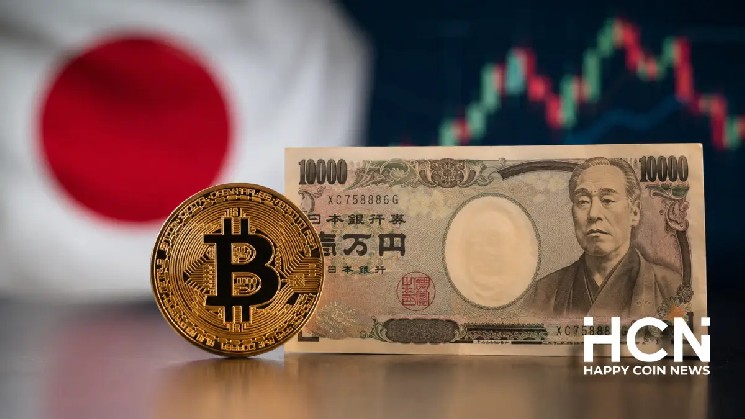
Việc củng cố đồng yên Nhật Bản có thể ảnh hưởng thế nào đến Bitcoin?

Đồng yên Nhật ghi nhận mức tăng mạnh nhất trong ngày so với đô la Mỹ sau khi cặp USD/JPY đảo chiều từ mức đỉnh gần 164. Sự biến động này cho thấy thay đổi trong đồng tiền Nhật có thể tác động đến điều kiện tài chính toàn cầu, đặc biệt là Bitcoin. Trên biểu đồ ngày, cặp USD/JPY đảo chiều sau đợt tăng kéo dài nhiều tháng từ tháng 5, khi gần chạm 164. Áp lực bán mạnh đã đẩy cặp tiền xuống dưới 160 trước khi phục hồi nhẹ, đóng cửa quanh 160,59. Dù xuất hiện bóng nến dài phía dưới cho thấy có nhu cầu mua ở mức thấp, việc không thể giữ trên đỉnh gần đây cho thấy đà tăng đang suy yếu. Đồng yên tăng giá tới 3%, đẩy USD xuống mức thấp trong ngày 158,34. Các nhà phân tích cho rằng mức độ biến động cùng khối lượng giao dịch ngoại hối bất thường có thể liên quan đến các đợt can thiệp trước đây. Sự chú ý hiện tại đổ dồn vào thông báo từ Ngân hàng Trung ương Nhật Bản và dự báo về lãi suất trong tương lai. Việc đồng yên tăng giá có thể gây áp lực bán ngắn hạn lên Bitcoin, nhất khi các nhà đầu tư đóng các vị thế carry-trade được tài trợ bằng vốn vay rẻ từ yên. Mặt khác, nếu yên tiếp tục mạnh, làm giảm lợi suất trái phiếu chính phủ Nhật và cải thiện thanh khoản toàn cầu, điều kiện tài chính có thể trở nên thuận lợi hơn cho các tài sản rủi ro như Bitcoin về lâu dài. Giá Bitcoin hiện đã giảm 2,5% xuống 62.500 USD, có thể phản ánh đợt bán tháo từ các nhà đầu tư.

cryptonews.ru1 giờ trước

Việc củng cố đồng yên Nhật Bản có thể ảnh hưởng thế nào đến Bitcoin?

cryptonews.ru1 giờ trước

Giao dịch

Giao ngay
活动图片