RWA, Meme, and Privacy: Who Will Be the True Source of Alpha in 2026?

marsbitXuất bản vào 2026-01-21Cập nhật gần nhất vào 2026-01-21

Tóm tắt

The crypto market in 2026 is increasingly divided between two major investment camps: institutional-backed RWA (Real World Assets) and retail-driven Meme/Privacy coins. RWA, with its promise of tokenizing trillions in traditional assets like real estate, faces challenges such as low liquidity and regulatory delays despite strong institutional support. Meme coins have rebounded but remain a speculative, zero-sum game with inherent unlock selling pressures. Privacy coins, though seeing limited rebounds, struggle with regulatory scrutiny and a lack of mainstream adoption. The article argues that alpha is unlikely to come from any single sector. Instead, it may emerge from innovative intersections: Privacy-enhanced RWA, Meme IP tokenization, and compliant privacy layers that blend institutional patience with retail engagement. For retail investors, the optimal strategy may be to hold BTC/ETH and wait for clearer signals, avoiding the risks of chasing pumps and lacking conviction. The key is to avoid time horizon mismatches and capitalize on hybrid opportunities.

Author: Nikka / WolfDAO (X: @10xWolfdao)

By 2026, the crypto market is becoming increasingly polarized, with RWA, Meme, and privacy coins forming two major investment camps. Institutions are betting on the RWA revolution, anticipating a trillion-dollar market, but face risks of low liquidity and regulatory delays; Meme coins are rebounding but remain a game of existing players, with hidden risks of unlocking sell-offs; privacy coins have limited rebounds, caught in the dilemma of compliance and ideology. The article points out that a single sector is unlikely to yield Alpha, and opportunities lie in the intersection of these three areas. The best strategy for retail investors may be to hold BTC/ETH and wait for signals, avoiding the risks of chasing highs and failing to hold.

A Class Divide Unfolding

Are you all in on institutional narratives like RWA, or are you still chasing 100x quick gains in Meme/Privacy? This choice may determine whether you feast or starve in 2026.

Wall Street is betting on a "tokenization revolution." Bernstein predicts that 2026 will kick off a Tokenization supercycle, while Grayscale boldly claims that RWA (Real World Assets) will achieve a thousandfold growth by 2030. The institutional playbook is clear: tokenizing real estate, bonds, and treasury bonds on-chain to connect with trillion-dollar traditional markets.

But the story on the other end of the market is entirely different. Meme coins rose 23% at the beginning of the year, while privacy coin QUAI, once suppressed by regulation, surged 261%. Retail investors in Discord groups are still searching for the "next 100x coin," scoffing at the slow-money narratives of institutions.

This is not just an investment divergence; it is a collision of two worlds: suit-clad institutional investors calculating risk-reward ratios for RWA in boardrooms, and retail investors chasing Meme coin pumps at 3 a.m. while staring at K-line charts.
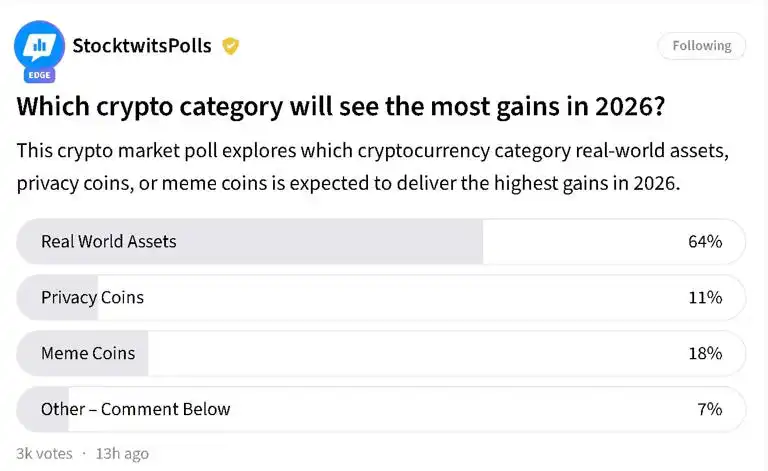
A recent Stocktwits poll shows: 64% of investors believe RWA will deliver the strongest returns in 2026, far exceeding Meme coins' 12% and privacy coins' 8%. But behind this number lies a question—when retail investors start clamoring to allocate to RWA, is it genuine cognitive upgrade, or just a PTSD response after the 2025 Meme crash?

RWA: The Promised Land for Institutions, or an Overcrowded Narrow Bridge?

Let’s first examine why Wall Street is so fascinated with RWA. The current total crypto market cap is approximately $3.2 trillion, with Bitcoin oscillating around $95,000. The market is searching for the next growth engine.

RWA’s logic seems flawless: Tokenizing traditional assets like real estate, bonds, and treasury bonds on-chain allows for both the efficiency advantages of blockchain and access to traditional finance’s trillion-dollar capital pool. This isn’t speculation; it’s "infrastructure building."

Grayscale, in its "2026 Digital Asset Outlook: Dawn of the Institutional Era" report, listed RWA as a core theme, predicting its scale will grow from the current $21 billion level to trillions by 2030. Behind this growth curve is a gradually clarifying regulatory environment—the potential passage of the U.S. CLARITY Act, and U.S. banks already allowing wealth advisors to allocate 1-4% of client assets to crypto.

Frontrunners have emerged. Ondo Finance focuses on RWA lending, with a current market cap of about $1.5 billion; Chainlink, as an oracle infrastructure, supports RWA data on-chain, with a market cap exceeding $20 billion. Bernstein explicitly expressed optimism about these projects and named Coinbase and MicroStrategy as indirect beneficiaries of the tokenization wave.

But here lies a paradox: When everyone knows RWA is the "correct answer," can it still deliver excess returns?
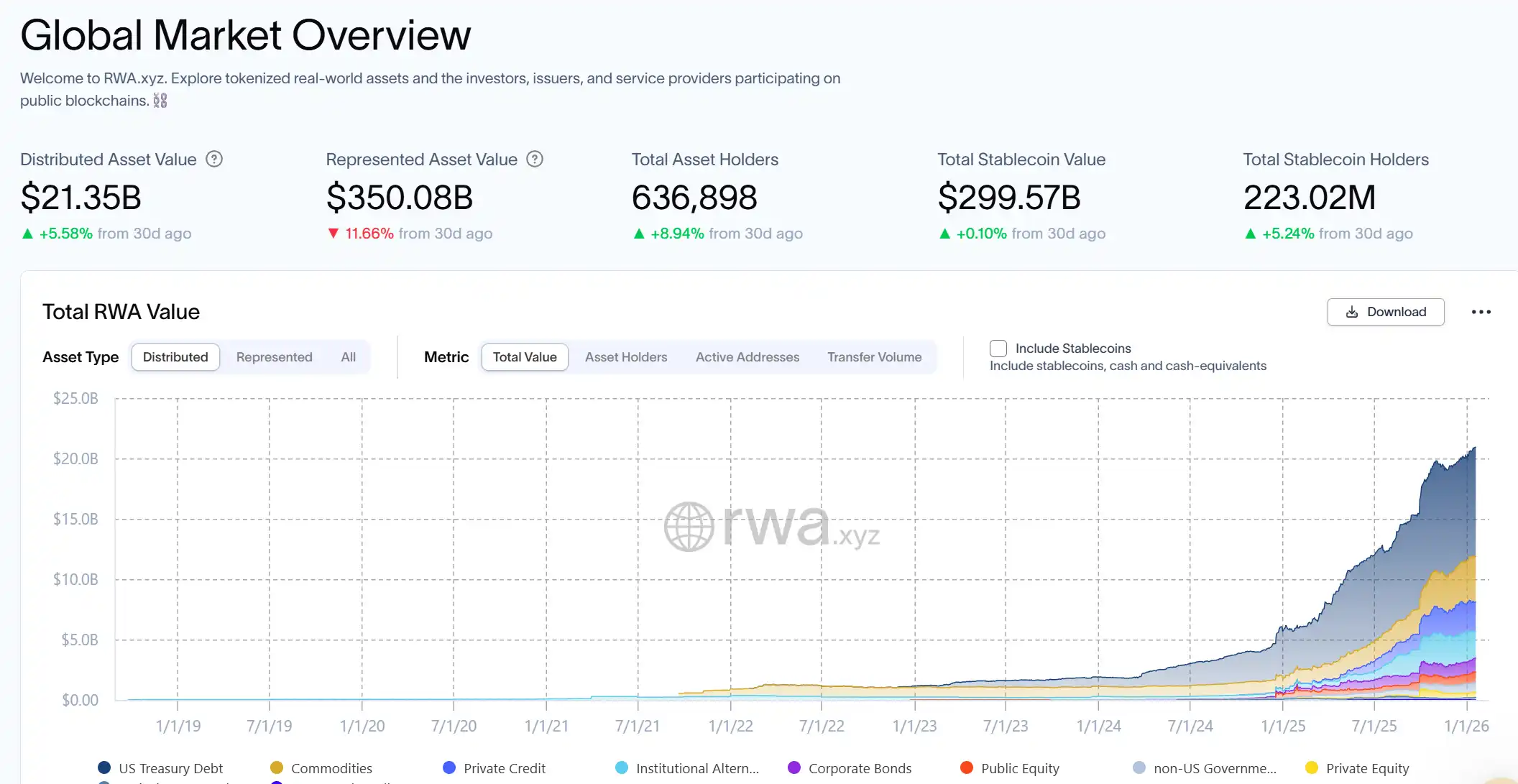
RWA’s current overall market cap is only around $20 billion, with extremely low liquidity. This means that once institutional funds pour in, prices could indeed surge; but the same logic applies to retreats—when the first batch of institutions starts taking profits, retail investors may find their RWA tokens unsellable.

A more realistic risk is regulatory delays: If the CLARITY Act is postponed, or if the Fed’s rate-cutting cycle lags behind expectations, the entire RWA narrative may need to wait another year or two amid volatility.

Institutions can endure this wait because they have advantages in funding costs and long-term allocation needs. But can retail investors? This is the most overlooked dimension of RWA investment—it requires not only correctly judging the direction but also having enough patience and liquidity to survive the vacuum period before the narrative materializes.

Meme: Cultural Renaissance or Final Carnival?

Compared to RWA’s rational narrative, Meme coins are more like the sentiment barometer of the crypto market. In early 2026, the total market cap of Meme coins rose from $150 billion at the end of 2025 to $185 billion, a 23% increase.

This number pales in comparison to the frenzy of 2021 or early 2025, but it still illustrates one fact: Meme is not dead.
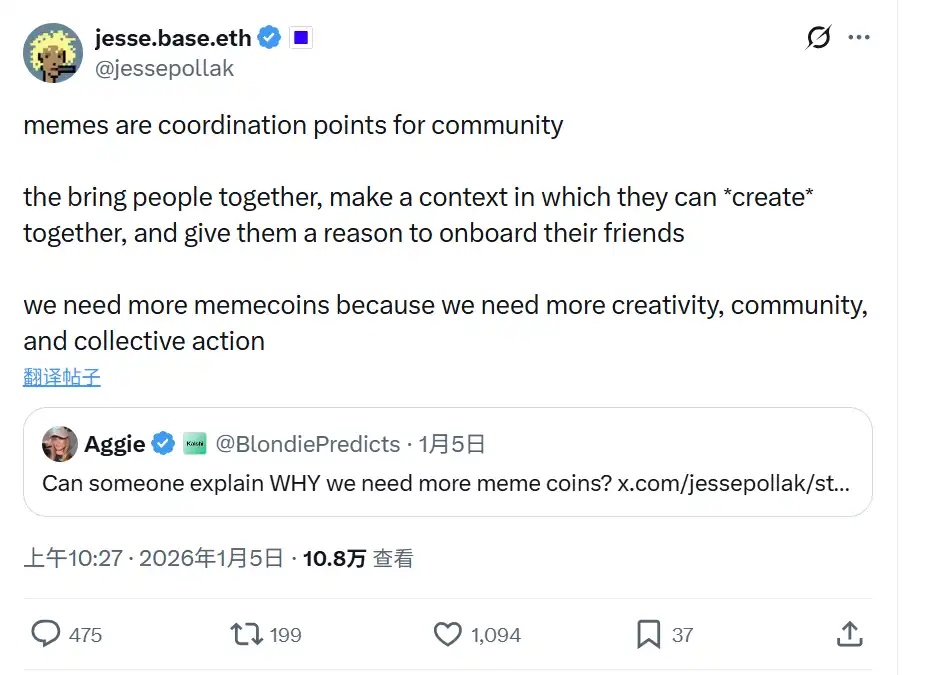
Base chain founder Jesse Pollak offers an interesting perspective. He repeatedly emphasizes that Meme is not just a speculative tool but the "core of on-chain culture." Through images, videos, music, and other content forms, Meme can attract millions of new users on-chain, becoming the entry point for Web3 mass adoption.

Meme projects on Base chain like TYBASEGOD, TOSHI, and BLOOFOSTERCOIN are validating this logic—they are not just tokens but更像是 vehicles for community culture.

But we must admit that this "cultural theory"更像是 justifications for platform ecosystems rather than genuine investment logic. The essence of Meme coins remains a zero-sum game: early participants profit through community consensus and viral spread, while later arrivals pay for liquidity.

The Stocktwits poll showing only 12% optimism for Meme reflects collective avoidance by institutions and rational retail investors. More critically, the 2025 Meme market crash left deep scars—many retail investors were deeply trapped buying at the top and have yet to break even.

So what does the 2026 Meme rebound mean? One interpretation is that Layer 2s like Base, with low costs and high throughput, have lowered the barriers to Meme creation and trading, allowing this sector to remain active with smaller capital flows.

But a more pessimistic interpretation is that this is just "existing player gambling"—old hands harvesting each other, with no new capital truly entering. If 2026 fails to birth new 100x myths (like Shiba Inu in 2021), Meme may gradually devolve into a niche game for enthusiasts.

More alarmingly, the密集 TGE (Token Generation Event) period in Q1 brings unlocking sell-off pressure. When large amounts of tokens unlock, market liquidity may be drained, and Meme, as the most fragile asset class, often bears the brunt first. This structural risk is rarely discussed in Meme communities but could be the main cause of retail losses in 2026.

Privacy: The Last Bastion of Idealism, or Regulation’s Next Target?

Privacy coins occupy the most awkward position in this discussion. On one hand, Quai Network surged 261% at the beginning of the year, rising from $0.03 to $0.11, with a market cap of about $86 million; Monero and Zcash also rebounded 10-50%.

On the other hand, the entire privacy coin category’s market cap is only around $5-10 billion, almost negligible in the $3.2 trillion total crypto market cap.

Privacy coin supporters will tell you this is because they represent crypto’s original intent—financial freedom and transaction privacy. Privacy coins uphold ideals of decentralization and censorship resistance. Quai’s surge partly stems from new mining hardware launches and DEX liquidity support, indicating that technical upgrades can still create short-term alpha for privacy coins.

But reality is harsher than ideals. The EU’s anti-money laundering laws are tightening regulations on privacy coins, and multiple exchanges have delisted coins like Monero. The Stocktwits poll showing only 8% optimism for privacy coins reflects not just regulatory concerns but also that privacy as an investment theme lacks sufficient market consensus.

A deeper issue: Can privacy and compliance coexist in the current regulatory environment? If not, privacy coins will either be marginalized as tools for geeks and dark web users or compromised into "pseudo-privacy" projects.

This dilemma makes it difficult for privacy coins to become mainstream investment targets. Of course, for true privacy believers, this恰恰 presents an opportunity for long-term contrarian accumulation—buying at historical lows after regulatory clarity may yield substantial returns. But this requires enduring 3-5 years of volatility and uncertainty, which is too long for most investors.

Polarization Is Inevitable, Where Is Alpha?

So, RWA, Meme, Privacy—who will be the true source of Alpha in 2026?

The answer may disappoint you: None of them, at least not in the way you imagine.

The essence of this polarization is a mismatch in time dimensions—RWA operates on a yearly scale, Meme on a weekly scale, Privacy on a quarterly scale. Institutions have the patience to lock up RWA, while retail seeks quick money but easily stops out repeatedly during volatility. The biggest risk isn’t "choosing the wrong sector" but "chasing highs + failing to hold."

True Alpha may lie in these two places:

1. The Intersection: Innovation Breaking Time Mismatch

True Alpha isn’t at the end of a single sector but in the intersection of narrative fusion:

  • Privacy-Enhanced RWA: Tokenized bonds, real estate on-chain, but with trading intent and holdings fully encrypted, disclosed only during audits. Transforming from "institution-exclusive" to playable by "institutions + high-net-worth retail."
  • Meme IP Tokenization: Viral Meme IP, once RWA-ized, generates cash flows from copyrights, merchandise, community shares. Evolving from "casino" to "cultural fund."
  • Compliant Privacy Layers: Default privacy + selective disclosure. Private stablecoins, private cross-chain bridges address institutional pain points (data leaks) and retail pain points (front-running).

The essence of these intersections: Using institutional patience to feed retail FOMO, and using retail viral spread to activate institutional liquidity. Pure sector players are easily washed out by time mismatch; intersection players find asymmetric opportunities.

2. Non-Participation: Retail’s Most Underrated Advantage

If you can’t understand this polarization, the best strategy may be non-participation. Hold BTC/ETH and wait for clearer market signals. FOMO will make you lose money in every sector; patience will let you go all-in at the right time. Retail’s biggest advantage is flexibility.


Câu hỏi Liên quan

QAccording to the article, what are the two main investment camps in the 2026 crypto market, and what are their primary focuses?

AThe two main investment camps are institutions betting on the RWA (Real World Asset) tokenization revolution and retail investors speculating on Meme and Privacy coins. Institutions focus on the long-term infrastructure play of bringing trillions in traditional capital on-chain, while retail investors chase quick, high-multiple returns in more speculative assets.

QWhat major risk does the article identify for investors in the RWA sector, despite its promising growth narrative?

AThe article identifies low liquidity as a major risk for RWA investors. While prices could surge if institutional money floods in, they could also crash dramatically if those same institutions decide to take profits, leaving retail investors unable to sell their tokens. Additionally, the narrative is vulnerable to regulatory delays.

QHow does the article characterize the current state of the Meme coin market in 2026?

AThe article characterizes the 2026 Meme coin market as a potential 'culture revival' but also a possible 'last狂欢 (carnival)' or game of '存量博弈 (存量博弈 -存量 game)' where existing players are harvesting each other. It has seen a 23% rebound but lacks new, massive capital inflow and is vulnerable to sell-pressure from token unlocks.

QWhy do Privacy coins face a significant challenge in becoming a mainstream investment, as per the article?

APrivacy coins face a significant challenge due to a fundamental conflict between privacy and compliance in the current regulatory environment. Tightening anti-money laundering laws in regions like the EU and delistings from major exchanges have marginalized them. They lack broad market consensus as an investment theme, trapped between being tools for ideologues or compromising their core values.

QWhere does the article suggest the true 'Alpha' or outperforming investment opportunity lies for 2026?

AThe article suggests the true 'Alpha' is not in any single pure-play sector but in the cross-pollination and innovation between them, such as Privacy-Enhanced RWA, Meme IP tokenization, and compliant privacy layers. Alternatively, it states that for many retail investors, the best strategy might be to not participate directly and instead hold core assets like BTC/ETH patiently until clearer signals emerge.

Nội dung Liên quan

Ripple (XRP) Đã Tìm Đường Vào Trung Tâm Quyền Lực Phố Wall, Đây Là Cách Thức

Chuyên gia tiền điện tử Bank XRP đã chỉ ra cách Ripple Prime thâm nhập vào cơ sở hạ tầng cốt lõi của Phố Wall. Điều này diễn ra sau thông báo của Tập đoàn Depository Trust & Clearing (DTCC), nơi công nhận Ripple là đối tác cho dịch vụ token hóa của mình. DTCC, đơn vị xử lý 114 nghìn tỷ USD giao dịch, đã xác nhận Ripple Prime nằm trong nhóm làm việc về token hóa với hơn 50 công ty, bao gồm BlackRock, Goldman Sachs và JPMorgan. DTCC dự kiến triển khai thí điểm giao dịch tài sản thực được token hóa vào tháng 7/2026 và chính thức ra mắt dịch vụ vào tháng 10/2026. Chuyên gia ChartNerd nhận định quan hệ đối tác này là tín hiệu tích cực cho XRP. Ripple Prime, hiện được sử dụng trên toàn nước Mỹ, cho phép khách hàng sử dụng XRP và RLUSD cho giao dịch, tài sản thế chấp và thanh toán sau giao dịch. Song song đó, câu chuyện token hóa trên XRP Ledger (XRPL) cũng đang nóng lên. Dữ liệu từ RWA.xyz cho thấy tổng giá trị Tài sản Thực (RWA) trên XRPL đã vượt 4 tỷ USD, tăng hơn 10% trong 30 ngày qua. Các chỉ số như số người nắm giữ RWA, vốn hóa thị trường stablecoin và khối lượng giao dịch stablecoin cũng tăng, cho thấy hoạt động mạng lưới sôi động. Một chuyên gia khác, X Finance Bull, liên hệ việc Bank of America triển khai thanh toán xuyên biên giới qua SWIFT với XRP. Ngân hàng này vốn là thành viên của RippleNet, có ghế trong Ủy ban Quản trị Ripple và tiếp xúc với XRP thông qua Quỹ ETF XRP. Ông nhấn mạnh các ngân hàng không chọn giữa SWIFT hay Ripple mà vận hành song song cả hai: SWIFT cung cấp mạng lưới nhắn tin toàn cầu, trong khi RippleNet cung cấp giải pháp thanh toán dựa trên blockchain và thanh khoản theo yêu cầu qua XRP, tập trung vào tốc độ, chi phí và hiệu quả vốn. Tại thời điểm viết bài, giá XRP đang giao dịch quanh mức 1,15 USD.

bitcoinist14 phút trước

Ripple (XRP) Đã Tìm Đường Vào Trung Tâm Quyền Lực Phố Wall, Đây Là Cách Thức

bitcoinist14 phút trước

Chris Jericho Tham Gia và Đồng Sáng Tạo Đặc Điểm Cộng Đồng Chính Thức cho Bộ Sưu Tập NFT Kokopi Koalas™

Tampa, Florida, ngày 9 tháng 6 năm 2026 - Huyền thoại đấu vật chuyên nghiệp và là nhà sưu tập lâu năm Chris Jericho chính thức tham gia hệ sinh thái NFT Kokopi Koalas trên Solana. Anh sẽ hợp tác trực tiếp với cộng đồng để tạo ra các "Đặc điểm Chris Jericho" chính thức, được bán trong Cửa hàng Đặc điểm của dự án. Khác với NFT tĩnh thông thường, Kokopi Koalas cho phép chủ sở hữu tùy chỉnh và phát triển bộ sưu tập kỹ thuật số của họ theo thời gian bằng cách mua, trao đổi và trang bị các đặc điểm. Jericho sẽ tổ chức các sự kiện trực tiếp để cộng đồng đóng góp ý tưởng thiết kế đặc điểm, và chính anh sẽ chọn ra những thiết kế chiến thắng. Ngoài ra, việc sở hữu và trang bị các đặc điểm chính thức (như đặc điểm của Jericho) sẽ mở khóa quyền truy cập vào các mặt hàng merch giới hạn ngoài đời thực như quần áo, đồ uống và đồ chơi, với mức giá ưu đãi. Jericho chia sẻ: "Mô hình Cửa hàng Đặc điểm của Kokopi Koalas trao lại khả năng sáng tạo vào tay người hâm mộ. Tôi muốn trở thành một đối tác!" Đợt đúc mint NFT Kokopi Koalas dự kiến diễn ra vào ngày 11 tháng 6. Dự án cũng thông báo sẽ ra mắt các đặc điểm cảm hứng bóng đá nhân World Cup sắp tới, cho phép trang bị áo đấu và các phụ kiện liên quan cho Koalas.

TheNewsCrypto1 giờ trước

Chris Jericho Tham Gia và Đồng Sáng Tạo Đặc Điểm Cộng Đồng Chính Thức cho Bộ Sưu Tập NFT Kokopi Koalas™

TheNewsCrypto1 giờ trước

Strategy Bán Bitcoin, Giờ Metaplanet Giảm 47% — Ai Là Người Tiếp Theo Sẽ Bán?

Công ty Metaplanet, công ty quỹ Bitcoin niêm yết công khai lớn nhất Nhật Bản, đang xem xét chương trình mua lại cổ phiếu để bảo vệ và tối đa hóa lợi suất Bitcoin trên mỗi cổ phần. Động thái này được kích hoạt khi giá trị thị trường của công ty giảm xuống dưới giá trị tài sản ròng (mNAV) của Bitcoin mà họ nắm giữ, một ngưỡng hiện ở mức 0.90x do giá Bitcoin giảm. Theo Giám đốc Điều hành Simon Gerovich, chỉ số hiệu suất chính (KPI) là "BTC Yield" - tốc độ tăng trưởng Bitcoin trên mỗi cổ phần. Chính sách phân bổ vốn quy định rằng khi mNAV dưới 1.0x, công ty sẽ mạnh mẽ xem xét mua lại cổ phiếu để tối đa hóa BTC Yield. Việc mua lại cổ phiếu ở mức chiết khấu này tương đương với việc mua Bitcoin với giá thấp hơn giá giao ngay, làm tăng tỷ lệ Bitcoin trên mỗi cổ phần cho các cổ đông còn lại. Metaplanet hiện nắm giữ khoảng 40.177 BTC, là công ty niêm yết công khai nắm giữ Bitcoin lớn thứ ba toàn cầu. Cổ phiếu của công ty đã giảm khoảng 47% từ đầu năm, nhưng chính sự suy giảm này, theo khuôn khổ của Metaplanet, lại tạo điều kiện cho các đợt mua lại cổ phiếu có lợi nhất. Sự phát triển này cho thấy một mô hình độc đáo trong lĩnh vực quỹ Bitcoin, nơi điểm yếu của thị trường có thể trực tiếp tạo ra giá trị dài hạn cho cổ đông.

bitcoinist3 giờ trước

Strategy Bán Bitcoin, Giờ Metaplanet Giảm 47% — Ai Là Người Tiếp Theo Sẽ Bán?

bitcoinist3 giờ trước

Giao dịch

Giao ngay
Hợp đồng Tương lai

Bài viết Nổi bật

MEME 2.0 là gì

Memecoin 2.0: Sự Trỗi Dậy của $MEME 2.0 Trong Thế Giới Tiền Điện Tử Giới thiệu Trong bối cảnh liên tục phát triển của tiền điện tử, một đối thủ mới đã xuất hiện. Memecoin 2.0, được biểu tượng hóa là $MEME 2.0, nâng cao khái niệm về đồng tiền meme lên một tầm cao mới đầy thú vị. Là sản phẩm phụ của Memecoin gốc, dự án này đã thu hút sự chú ý của cộng đồng tiền điện tử bằng cách chuyển sự chú ý từ các ưu đãi tài chính thông thường sang một trải nghiệm hấp dẫn và giải trí. Hoạt động trên blockchain Ethereum, Memecoin 2.0 táo bạo định nghĩa lại sự tham gia của cộng đồng trong lĩnh vực tiền điện tử. Memecoin 2.0, $MEME 2.0 là gì? Ở cốt lõi, Memecoin 2.0 là một dự án tiền điện tử ưu tiên tinh thần cộng đồng và sự vui nhộn liên quan đến văn hóa meme. Khác với các loại tiền điện tử thông thường, vốn tập trung vào các trường hợp sử dụng thực tiễn và lợi ích hữu hình, Memecoin 2.0 nổi bật bằng cách ôm ấp khía cạnh nhẹ nhàng của tiền tệ kỹ thuật số. Dự án tồn tại mà không có lời hứa về tiện ích, lộ trình rõ ràng hay lợi nhuận tài chính, mà thay vào đó tập trung vào việc xây dựng một cộng đồng sôi động xoay quanh memes và niềm vui chung. Bằng cách này, nó khai thác xu hướng ngày càng tăng của văn hóa meme trong không gian trực tuyến, khiến nó trở thành một người chơi độc đáo trong thế giới tài sản kỹ thuật số. Người Sáng Tạo Memecoin 2.0, $MEME 2.0 Mặc dù đã có nhiều nghiên cứu về nguồn gốc của Memecoin 2.0, nhưng danh tính rõ ràng của người sáng tạo vẫn chưa được biết đến. Sự ẩn danh này không phải là hiếm trong cộng đồng tiền điện tử, nơi nhiều dự án được lãnh đạo bởi các cá nhân hoặc nhóm thích ở lại trong bóng tối. Việc thiếu thông tin công khai về người sáng tạo có thể được xem là một động thái chiến lược, đưa sự chú ý vào sự tham gia của cộng đồng thay vì sự nổi tiếng cá nhân trong không gian này. Các Nhà Đầu Tư của Memecoin 2.0, $MEME 2.0 Thông tin liên quan đến các nhà đầu tư hoặc nguồn tài chính cho Memecoin 2.0 còn rất ít. Sự thiếu hụt thông tin này có thể cho thấy rằng dự án hoặc tự tài trợ hoặc rằng sự tập trung vào cộng đồng hơn là các cấu trúc đầu tư truyền thống đã thu hút một loại nhà hỗ trợ khác. Khi thế giới tiền coin meme thường liên quan đến việc tham gia từ cơ sở hơn là đầu tư từ tổ chức, cách tiếp cận này phù hợp với tinh thần của các dự án do cộng đồng dẫn dắt. Memecoin 2.0, $MEME 2.0 hoạt động như thế nào? Memecoin 2.0 hoạt động hoàn toàn trên blockchain Ethereum, tận dụng các tính năng bảo mật mạnh mẽ và khả năng mở rộng của nó. Bằng cách khai thác những điểm mạnh của Ethereum, Memecoin 2.0 có thể cung cấp một môi trường an toàn cho các tương tác của người dùng trong khi đảm bảo rằng các giao dịch diễn ra hiệu quả và tiết kiệm chi phí. Một trong những thuộc tính độc đáo của Memecoin 2.0 nằm ở cấu trúc do cộng đồng điều hành. Giá trị và sự phổ biến của token $MEME 2.0 đến từ sự tham gia tích cực của người dùng, thay vì từ tiện ích vốn có. Thiết kế này củng cố sự tập trung của dự án vào khía cạnh giải trí của tiền điện tử, ngụ ý rằng tiếng cười và sự tham gia cộng đồng mới là những đồng tiền thực sự thúc đẩy thành công của nó. Hơn nữa, dự án phù hợp với hệ sinh thái rộng lớn hơn của các đồng tiền meme, nơi giá trị của mỗi đồng tiền meme dao động dựa trên văn hóa, xu hướng và sự tham gia của cộng đồng chứ không phải các nguyên tắc kinh tế truyền thống. Thời Gian của Memecoin 2.0, $MEME 2.0 Để hiểu rõ hơn về sự tiến triển và các cột mốc của Memecoin 2.0, dưới đây là một dòng thời gian nổi bật các sự kiện quan trọng trong lịch sử của nó: 2024: Sự ra đời của Memecoin 2.0 được công nhận là một nhánh của Memecoin gốc, xác lập mình trong bối cảnh thịnh vượng của các đồng tiền meme trong khi hoạt động trên blockchain Ethereum. Ngày 13 tháng 7 năm 2024: Memecoin 2.0 chính thức định vị mình là một đồng tiền meme tập trung vào cộng đồng trên mạng lưới Ethereum, nhấn mạnh cách tiếp cận mang tính giải trí, mời gọi người dùng tham gia vào sự phát triển của nó. Các Điểm Chính Về Memecoin 2.0, $MEME 2.0 Nhiều đặc điểm quan trọng xác định Memecoin 2.0: Cách Tiếp Cận Tập Trung Vào Cộng Đồng: Sứ mệnh chính của Memecoin 2.0 là tạo ra một trải nghiệm cộng đồng thú vị, hấp dẫn, tận dụng niềm vui tập thể từ văn hóa meme. Xây Dựng Trên Ethereum: Hoạt động trên blockchain Ethereum cung cấp cho dự án một hạ tầng thiết yếu đảm bảo an toàn và khả năng mở rộng. Thiếu Tiện Ích hoặc Lộ Trình: Trong một sự ra đi nổi bật khỏi tiền điện tử truyền thống, Memecoin 2.0 không hứa hẹn bất kỳ tính năng tiện ích hay lợi nhuận tài chính nào, khẳng định cam kết của mình đối với sự tham gia của cộng đồng và sự gắn kết xã hội. Tập Trung Vào Văn Hóa Meme: Bằng việc ôm ấp những khía cạnh hài hước và văn hóa của hiện tượng meme, Memecoin 2.0 cung cấp một nền tảng cho người dùng tham gia vào lĩnh vực tiền điện tử cả trực tuyến và ngoại tuyến. Bối Cảnh Bổ Sung: Tầm Quan Trọng Của Đồng Tiền Meme Các đồng tiền meme đã xuất hiện như một loại tiền điện tử riêng biệt, thường được thúc đẩy bởi sự hài hước và cách tiếp cận nhẹ nhàng đối với giao dịch. Những đồng tiền này thường thiếu tiện ích đáng kể hoặc lộ trình phát triển, thu hút người dùng bằng lời hứa về sự vui vẻ, tương tác cộng đồng, và sự liên quan văn hóa. Trong bối cảnh của hệ sinh thái tiền điện tử rộng lớn hơn, các đồng tiền meme hồi sinh tầm quan trọng của sự tham gia cộng đồng, đẩy lùi các cách tiếp cận chỉ tập trung vào lợi nhuận. Các dự án như Memecoin 2.0 tạo ra một kỷ nguyên mà trong đó giải trí có thể hòa hợp với khát vọng tài chính, biến blockchain thành một sân chơi cho sự sáng tạo và tương tác xã hội. Kết Luận Memecoin 2.0, hoặc $MEME 2.0, thể hiện một làn sóng mới của tiền điện tử mà ưu tiên sự tham gia của cộng đồng hơn là các cấu trúc tài chính cứng nhắc. Với sự tập trung vào sự hài hước và tương tác xã hội, nó tận dụng sự hấp dẫn đối với văn hóa meme. Bằng cách hoạt động trên blockchain Ethereum, Memecoin 2.0 khai thác các khả năng của công nghệ trong khi vẫn kiên định với cam kết đối với giá trị giải trí của tiền tệ kỹ thuật số. Khi không gian xung quanh tiền điện tử tiếp tục phát triển, Memecoin 2.0 là một minh chứng cho quan niệm rằng tương lai của tài sản kỹ thuật số có thể rất cần thiết dựa vào những trải nghiệm chia sẻ, tiếng cười, và những kết nối cộng đồng vững chắc. Trong thế giới tiền điện tử không thể đoán trước, có lẽ niềm vui có thể cũng có giá trị ngang bằng với lợi nhuận tài chính truyền thống.

Tổng lượt xem 126Xuất bản vào 2024.04.06Cập nhật vào 2024.12.03

MEME 2.0 là gì

Làm thế nào để Mua MEME

Chào mừng bạn đến với HTX.com! Chúng tôi đã làm cho mua Memeland (MEME) trở nên đơn giản và thuận tiện. Làm theo hướng dẫn từng bước của chúng tôi để bắt đầu hành trình tiền kỹ thuật số của bạn.Bước 1: Tạo Tài khoản HTX của BạnSử dụng email hoặc số điện thoại của bạn để đăng ký tài khoản miễn phí trên HTX. Trải nghiệm hành trình đăng ký không rắc rối và mở khóa tất cả tính năng. Nhận Tài khoản của tôiBước 2: Truy cập Mua Crypto và Chọn Phương thức Thanh toán của BạnThẻ Tín dụng/Ghi nợ: Sử dụng Visa hoặc Mastercard của bạn để mua Memeland (MEME) ngay lập tức.Số dư: Sử dụng tiền từ số dư tài khoản HTX của bạn để giao dịch liền mạch.Bên thứ ba: Chúng tôi đã thêm những phương thức thanh toán phổ biến như Google Pay và Apple Pay để nâng cao sự tiện lợi.P2P: Giao dịch trực tiếp với người dùng khác trên HTX.Thị trường mua bán phi tập trung (OTC): Chúng tôi cung cấp những dịch vụ được thiết kế riêng và tỷ giá hối đoái cạnh tranh cho nhà giao dịch.Bước 3: Lưu trữ Memeland (MEME) của BạnSau khi mua Memeland (MEME), lưu trữ trong tài khoản HTX của bạn. Ngoài ra, bạn có thể gửi đi nơi khác qua chuyển khoản blockchain hoặc sử dụng để giao dịch những tiền kỹ thuật số khác.Bước 4: Giao dịch Memeland (MEME)Giao dịch Memeland (MEME) dễ dàng trên thị trường giao ngay của HTX. Chỉ cần truy cập vào tài khoản của bạn, chọn cặp giao dịch, thực hiện giao dịch và theo dõi trong thời gian thực. Chúng tôi cung cấp trải nghiệm thân thiện với người dùng cho cả người mới bắt đầu và người giao dịch dày dạn kinh nghiệm.

Tổng lượt xem 531Xuất bản vào 2024.12.12Cập nhật vào 2026.06.02

Làm thế nào để Mua MEME

Thảo luận

Chào mừng đến với Cộng đồng HTX. Tại đây, bạn có thể được thông báo về những phát triển nền tảng mới nhất và có quyền truy cập vào thông tin chuyên sâu về thị trường. Ý kiến ​​của người dùng về giá của MEME (MEME) được trình bày dưới đây.

活动图片













