OpenAI Researcher: 100% of Code Handed Over to AI, Claude Rewrites Python Library

marsbitXuất bản vào 2026-08-17Cập nhật gần nhất vào 2026-08-17

Tóm tắt

OpenAI researchers and prominent developers like DHH (creator of Ruby on Rails) are reporting a dramatic shift toward AI-driven coding, with some claiming they no longer write code manually. DHH recently used Claude Fable 5 to fully rewrite the Python library "TerminalTextEffects" into Rust in a single, largely unassisted session, consuming 110 million tokens. The resulting Rust executable is only 3MB, with startup time slashed from 87ms to 2ms and a 9.6x render speed increase. This follows DHH's own reversal from a year ago, when he opposed ceding coding to AI, fearing the loss of "muscle memory" and deep learning. Now, he predicts that within five years, few people will be writing or reading code directly. The article highlights other large-scale migrations, like Bun's move from Zig to Rust in under two weeks, suggesting the marginal cost of code generation is nearing zero. The future role of programmers is envisioned as shifting from writing code to defining requirements, designing constraints, establishing test frameworks, and validating AI output—focusing on discerning "what is worth building" and "what is correct."

Claude Code's creator has publicly stated that he hasn't handwritten a single line of code in over two months.

In a single day, he can merge 27 PRs, all handled by Claude.
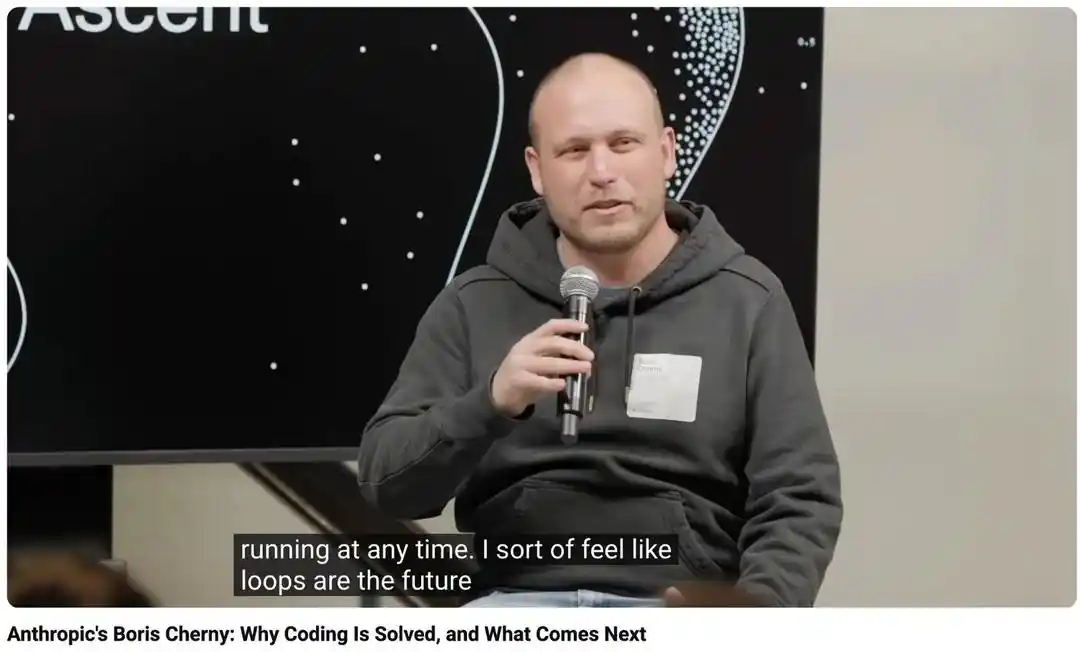
OpenAI researcher roon was even more extreme: 'I don't write code anymore; 100% is done by GPT.'

Now, another big name, after deeply experiencing Claude Code and Codex, declared, 'In five years, humans won't write code anymore!'

These past few days, Rails creator DHH personally took on a major task—

Using only Claude Fable 5, he completely rewrote the Python library 'TerminalTextEffects' into Rust in one go.

What's astonishing is that this refactoring consumed a staggering 11 million tokens, almost completing it in a single pass.
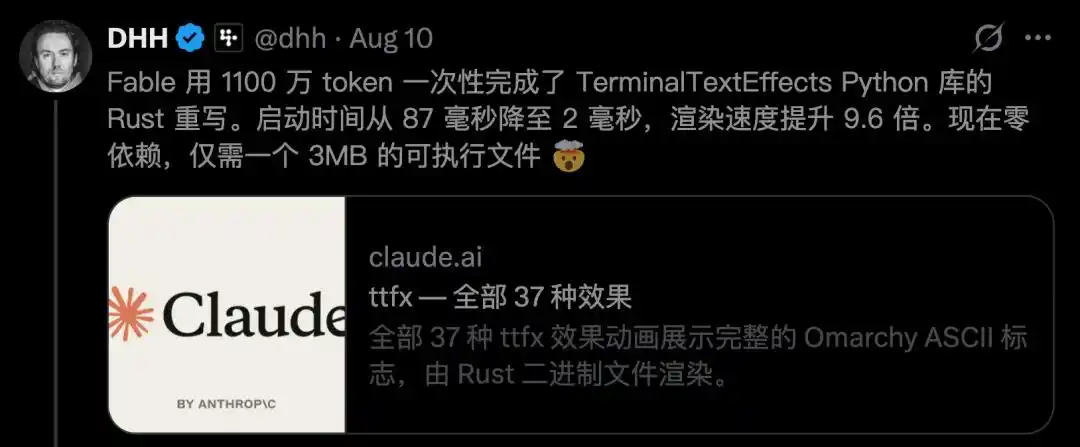
The results after it ran were nothing short of 'cheating'—startup time was compressed from 87 milliseconds to just 2 milliseconds, and rendering speed skyrocketed by 9.6 times.

The post instantly garnered millions of views across the internet.

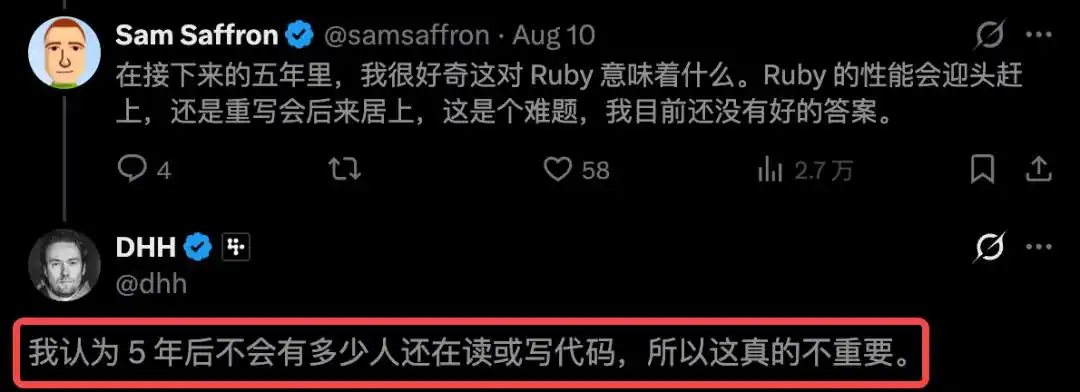
One AI expert directly posed a soul-searching question to the Rails creator: 'If that's the case, where does Ruby go in the next five years?'

DHH's answer was straightforward—

Within five years, not many people will be writing or reading code by hand anymore. So, it really doesn't matter.
Who would have thought that in just one year, the contrast would be so stark!

Handing the Keyboard to AI, Rather Retire

Remember, in May of last year, DHH was firmly stating online that he refused to cede the joy of coding to AI.

In that lengthy post 'Coding should be a vibe!', he clearly stated:

AI is, at best, an assistive 'pair programmer,' good for looking up APIs and answering questions.

He even issued a stern warning: 'If the day comes when I must completely hand the keyboard over to AI, I would rather retire.'
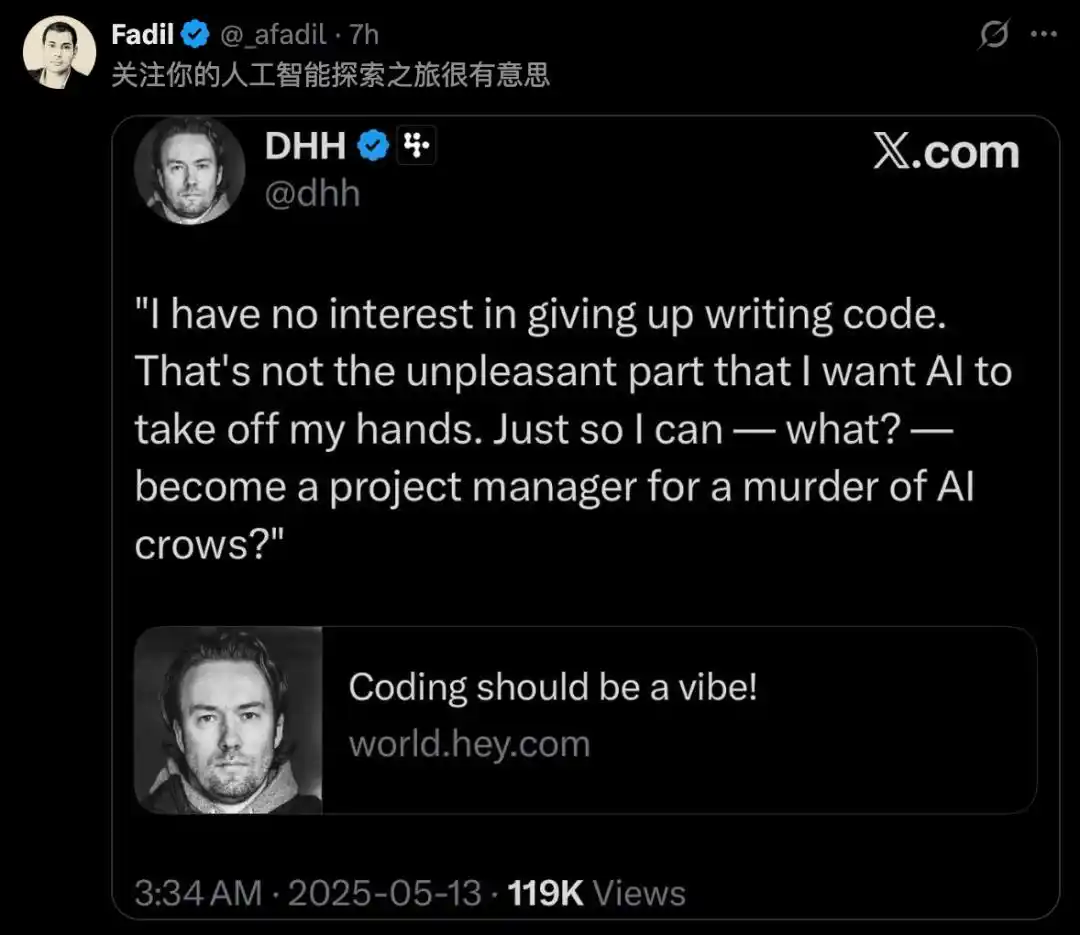
I have zero interest in giving up coding. It's not some chore to offload to AI. What would be the point? To become a project manager for a pack of AI 'hooligans'?

In that six-hour deep-dive conversation with Lex Fridman, DHH insisted that every line of his code was typed by his own hands.

Once, while building a Linux distribution, he repeatedly asked AI to generate the same Bash conditional statement, only to realize that because he lacked the physical act of typing, he never truly mastered it.

This loss of 'muscle memory' left him deeply unsettled. 'Is this the end of learning?'

However, by April this year, the winds had shifted dramatically.

On a podcast, he admitted he had now fully switched to 'Agent-first,' essentially saying goodbye to handwritten code.

Yet, no one expected the phrase 'in five years, not many people will be reading or writing code' to come from the mouth of the Rails creator.

Fable 5 All-in, No One Writes Code in Five Years

Let's take a closer look at this hardcore Python rewrite by Claude.

TerminalTextEffects, or TTE for short, is a terminal visual effects engine.

It can be used both as a command-line program and imported as a Python library into other applications.

Developers can, like magicians, control text trajectories, colors, gradient effects, and animation sequences, transforming dull UIs into something cool.
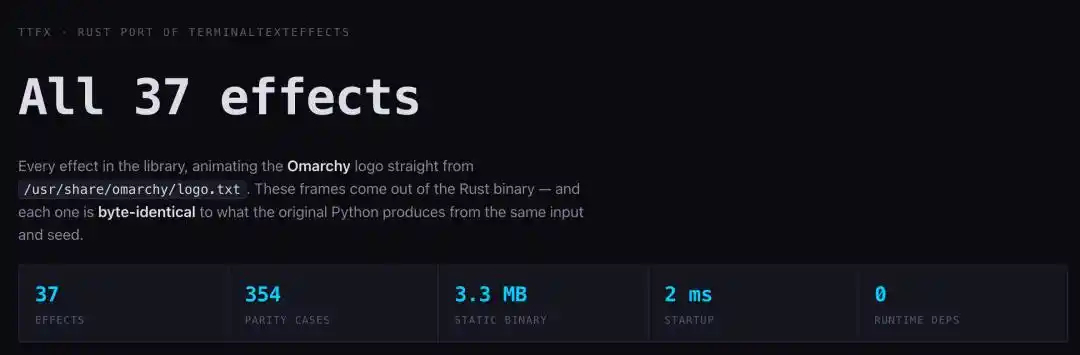
The Rust version demonstrated by DHH can run 37 effects.

A piece of software that originally required a Python runtime environment was transformed by Claude's refactoring into a mere 3MB executable.

This new repository is called ttfx, hosted under DHH's own Omarchy organization, with every commit history intact.

The entire process took 3 hours and 11 minutes. The main Rust code is 21,000 lines, almost the same volume as the original Python version.

During the task, 8 Agents each worked on a separate branch simultaneously, in batches: reading the code themselves, generating implementations, compiling, running tests, handling failures, then moving to the next round.

The so-called 'one-shot' was essentially handing the task over once.

Using the same method, DHH had Codex complete it, and the results after a single prompt were also excellent.

However, it was 30% slower and cost $43 (290 RMB) in Tokens.
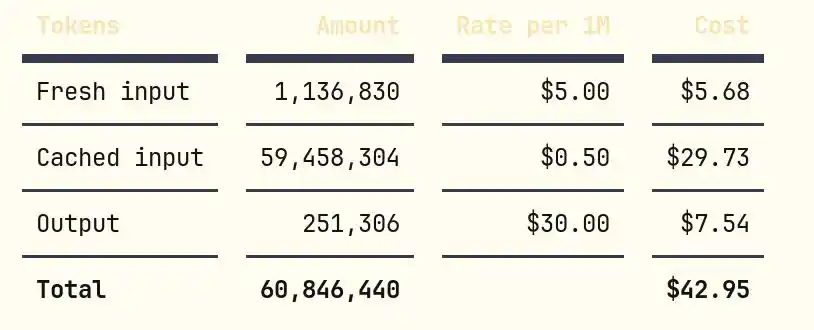
DHH's hardcore operation directly blew up the community, drawing out several Anthropic bigwigs.

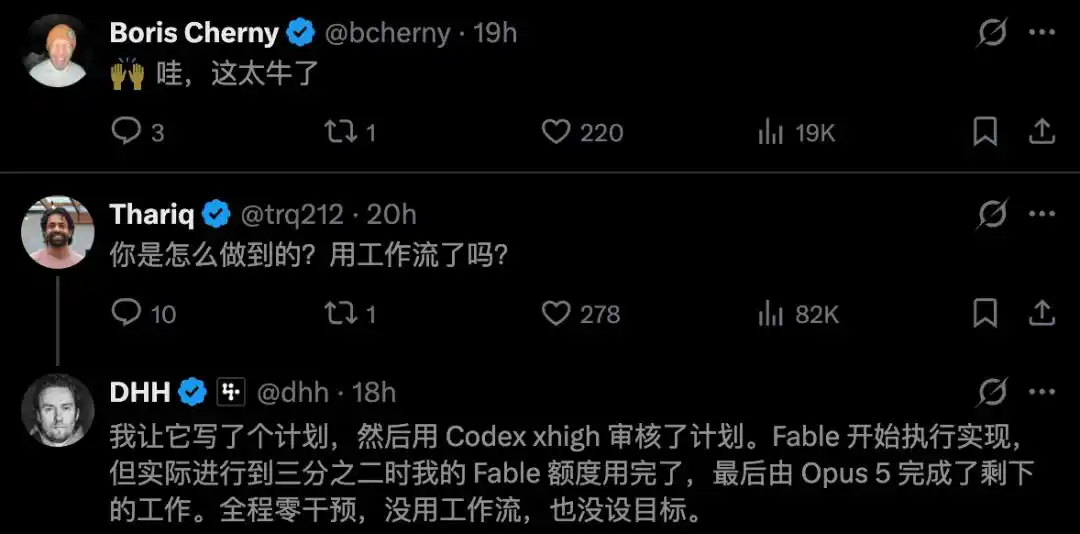
Claude Code creator Boris Cherny couldn't help but appear in the comments exclaiming, 'This is insane!'

Faced with a follow-up question from another researcher, Thariq, DHH revealed an even more astonishing detail—

He simply asked Claude to formulate a plan. After that, it was zero intervention throughout, no complex workflows applied, no specific goals pre-set; it was all about complete delegation of authority.
Million-Line Codebase, Bun One-Click Migration

TerminalTextEffects, after all, is limited in scale.

What truly demonstrates the power of AI coding is a massive refactoring in Bun's core.

A few months ago, founder Jarred Sumner personally spearheaded the migration of the massive codebase from Zig to Rust in its entirety.

It's astonishing that this monumental project, involving a million lines of code, was declared 'complete' in less than two weeks.

If this were a few years ago, a project of this magnitude would have been a marathon lasting several quarters, if not years.

Future Coders to Become 'Dragon Tamers'

Now, all signs are frantically hinting at a fact that is both brutal and exciting—

The marginal cost of code generation is approaching zero.

This inevitably plunges many into panic. 'If no one reads or writes code in five years, will programmers disappear?'

Actually, 'no one writes code' absolutely does not equal 'programmers disappear.'

The core work of future programmers will undergo a fundamental shift—

From 'personally implementing code' to fully focusing on defining requirements, designing constraints, establishing testing frameworks, and judging whether the AI wrote it correctly.

It's foreseeable that when 'handcrafting code' becomes history, the only remaining scarce moats will be two points:

Insight into 'what is worth doing' + defining 'what counts as correct.'

Rather than worrying about losing your keyboard, it's better to start thinking now: what kind of Rome do you want to command this boundless-compute 'super coder' AI to build?

References:

https://x.com/dhh/status/2086713611934695848?s=20

https://claude.ai/code/artifact/287825bc-7aad-4541-a7e7-fa4ba8d03612

This article is from the WeChat public account "New Zhiyuan", author: Taozi

Câu hỏi Liên quan

QWhat major transformation did DHH perform using Claude Fable 5?

AHe completely rewrote the Python library 'TerminalTextEffects' into Rust in one go.

QWhat were the performance improvements after the AI-assisted rewrite of TerminalTextEffects?

AStartup time was reduced from 87 milliseconds to just 2 milliseconds, and rendering speed increased by 9.6 times.

QAccording to DHH, what will happen to human coding in the next five years?

AVery few people will be hand-writing or reading code anymore, as the focus will shift to other tasks.

QWhat significant project did Bun founder Jarred Sumner undertake with AI assistance?

AHe migrated the entire massive codebase of Bun from Zig to Rust in less than two weeks.

QWhat does the article suggest will be the core role of future programmers in the age of AI coding?

ATheir core role will shift from writing code to defining requirements, designing constraints, establishing testing systems, and judging whether the AI's output is correct.

Nội dung Liên quan

Công ty đầu tư mất 2 triệu USD sau cuộc tấn công "bụi tiền mã hóa"

Một công ty đầu tư đã mất 2 triệu USD do cuộc tấn công "đánh cắp mã độc bằng bụi tiền điện tử" (address poisoning/crypto dust attack). Kẻ gian đã gửi một giao dịch vi mô 0.0002 USDC tới ví của công ty Bofur Capital trước đó 20 giờ, sử dụng địa chỉ ví giả có ký tự đầu và cuối gần giống hệt với đối tác thật. Khi thực hiện giao dịch 2 triệu USDC, có khả năng nhân viên đã sao chép nhầm địa chỉ giả mạo từ lịch sử giao dịch. Sau khi nhận được tiền, kẻ tấn công nhanh chóng chuyển đổi toàn bộ số tiền sang stablecoin DAI. Các chuyên gia cho rằng tin tặc chủ động theo dõi ví của công ty, chờ đợi một giao dịch rút tiền lớn để thực hiện hành vi lừa đảo này. Số vụ tấn công kiểu "đầu độc địa chỉ" đã tăng mạnh sau bản cập nhật Fusaka của mạng Ethereum, với số lượng giao dịch "bụi tiền điện tử" USDT tăng 612% trong ba tháng gần đây. Một nhà đầu tư khác cũng đã mất hơn 500.000 USDT. Theo một nghiên cứu của Etherscan từ năm 2022 đến giữa 2024 (trước Fusaka), đã có khoảng 17 triệu nỗ lực tấn công kiểu này, ảnh hưởng đến ít nhất 1,3 triệu người dùng và gây thiệt hại ít nhất 79,3 triệu USD. Các mạng có phí giao dịch thấp hơn, như BNB Smart Chain (BSC), ghi nhận tần suất các cuộc tấn công tương tự cao hơn tới 1355%.

cryptonews.ru17 phút trước

Công ty đầu tư mất 2 triệu USD sau cuộc tấn công "bụi tiền mã hóa"

cryptonews.ru17 phút trước

Besu khắc phục lỗ hổng bảo mật trên 5 nút: Điều người vận hành cần biết

Các nhà phát triển máy khách Ethereum Besu đã khắc phục năm lỗ hổng bảo mật được phát hiện bởi công ty an ninh blockchain CertiK. Các bản vá được phát hành trong phiên bản 23.7.1 vào ngày 27 tháng 7, với thông tin chi tiết được công bố ngày 14 tháng 8 theo mô hình "vá trước, công bố sau" nhằm cho các nhà vận hành nút mạng thời gian chuẩn bị và cập nhật trước khi chi tiết kỹ thuật bị lộ. Các lỗ hổng, mức độ từ nhẹ đến nghiêm trọng, nằm trong xử lý thông báo khối, bộ đệm đề xuất đồng thuận, giới hạn đăng ký WebSocket và tạo bộ lọc JSON-RPC. Nếu bị khai thác, chúng có thể cho phép kẻ tấn công làm cạn kiệt bộ nhớ hoặc tài nguyên luồng của nút, gây nguy hại cho tính khả dụng và quá trình đạt được đồng thuận. Jialiang Chuang của CertiK nhấn mạnh tầm quan trọng của phương pháp này, đặc biệt đối với các mạng blockchain được cấp phép cần quy trình phê duyệt phức tạp. Ông cũng chỉ ra các khoảng trống trong các mô hình kiểm thử hiện tại của ngành, thường tập trung vào sự tuân thủ giao thức hơn là kiểm thử căng thẳng tài nguyên liên tục hay hành vi nút độc hại. Ông kêu gọi một mô hình bảo mật tích lũy và liên tục, kết hợp kiểm tra tự động, nghiên cứu độc lập và kiểm thử hồi quy.

cryptonews.ru20 phút trước

Besu khắc phục lỗ hổng bảo mật trên 5 nút: Điều người vận hành cần biết

cryptonews.ru20 phút trước

Phá vỡ Term Finance: Kẻ tấn công rút 8,5 triệu USD thông qua lỗ hổng hệ thống quản trị

Sự cố bảo mật xảy ra với giao thức cho vay phi tập trung Term Finance đã dẫn đến thiệt hại 8,5 triệu USD. Vụ việc không phải do lỗ hổng hợp đồng thông minh, mà xuất phát từ việc kẻ tấn công khai thác cơ chế quản trị. Đối tượng này đã gửi một khoản rất nhỏ (0,5 ETH) vào Meta Vault, chuyển đổi token nhận được thành token có quyền biểu quyết (gtmvETH), và từ đó kiểm soát tới hơn 90% số phiếu hiện có do phần lớn người dùng không tham gia chuyển đổi. Với quyền kiểm soát này, kẻ tấn công đã đưa ra và tự thông qua một đề xuất hợp lệ để tắt cơ chế trì hoãn rút tiền (timelock) 7 ngày, thêm một chiến lược rút tiền tùy chỉnh và chuyển toàn bộ tài sản trong các khoản chứa (vault) về địa chỉ của chúng. Đề xuất này đã được công khai trên blockchain trong gần 6 ngày nhưng không bị ngăn chặn. Khoảng 2.841 ETH và 1,68 triệu USDC đã bị rút đi ngay sau khi đề xuất được thực thi. Nhóm Term Labs đã xác nhận vụ việc, hủy bỏ mọi vai trò quản trị DAO và đóng cửa vĩnh viễn các Meta Vault. Tuy nhiên, giao thức cơ bản và thị trường cho vay trực tiếp không bị ảnh hưởng. Sự cố này làm nổi bật rủi ro hệ thống khi quyền biểu quyết tách rời khỏi sự tham gia kinh tế, cùng với tỷ lệ biểu quyết (quorum) quá thấp và sự thờ ơ của phần đông người nắm giữ token, cho phép một lượng vốn nhỏ chi phối toàn bộ quyết định quản trị.

cryptonews.ru20 phút trước

Phá vỡ Term Finance: Kẻ tấn công rút 8,5 triệu USD thông qua lỗ hổng hệ thống quản trị

cryptonews.ru20 phút trước

Giao dịch

Giao ngay
活动图片