It's 2026 Already, DAOs Should Have Matured by Now

比推Xuất bản vào 2026-01-29Cập nhật gần nhất vào 2026-01-29

Tóm tắt

By 2026, DAO governance is maturing beyond idealistic experiments. In 2025, major protocols shifted from pure community governance to hybrid models with clearer operational control, as seen with Arbitrum’s OpCo and Uniswap’s DUNI framework. Voting participation declined but became more concentrated among professional delegates, while token value accumulation gained prominence through buybacks, fee switches, and staking mechanisms. Key conflicts, like Gnosis terminating Karpatkey and Aave’s revenue dispute with Aave Labs, highlighted accountability gaps. Looking ahead, DAOs will formalize legal structures, prioritize risk management, and leverage AI for decision-making. Governance tokens must capture economic value to sustain engagement. The evolution reflects a balance between decentralized oversight and operational efficiency, signaling DAO’s maturation into more effective, accountable organizations.

Author: Pink Brains

Compiled by: Deep Tide TechFlow

Original title: It's 2026 Already, DAOs Should Have Matured by Now


Deep Tide Guide: 2025 was a critical inflection point for decentralized governance (DAO). After years of idealistic experimentation, mainstream protocols began to seriously address core pain points such as power distribution, accountability mechanisms, and sustainability. This article is written by veteran DAO delegate Pink Brains, based on their practical experience of casting 725 votes in top protocols like Aave, Lido, and Gnosis. It provides an in-depth analysis of the shift in DAOs from "community autonomy" to a "hybrid operation" model.

The author points out that governance tokens alone are no longer sustainable. In the future, DAOs will evolve towards economic alignment, legal entity formation, and AI-assisted decision-making. This is not just a review of governance; it's a prophecy book for the evolution of Web3 organizational structures in 2026.

Full text below:

2025 marked a turning point for decentralized governance.

After years of experimentation, major protocols began confronting fundamental questions about power distribution, accountability, and sustainability.

The answers weren't always pleasant, but they were necessary.

What We Achieved in 2025

2025 was also the first year of our operation as an active DAO Delegate.

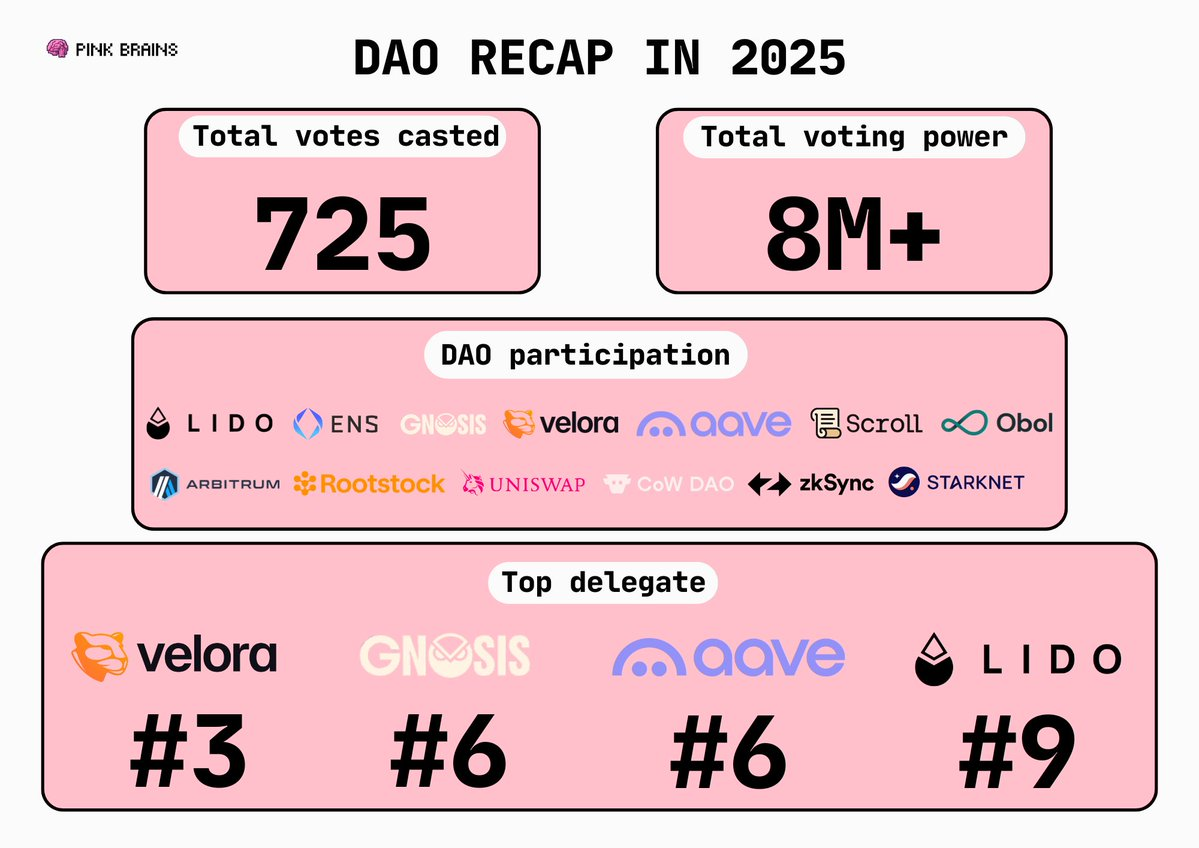
  • Casted 725 votes across 18 protocols

  • Held over 8 million in voting power

  • Top 10 delegate in Aave and Lido

  • Top 3 delegate in Velodrome

  • Top 6 delegate in Gnosis

This perspective, grounded in actual governance work, gave us clear insight into the patterns reshaping DAOs in 2025 and defined their trajectory entering 2026.

Changes in DAOs in 2025

Shift in Operational Model: From Pure Community Governance to Hybrid Control

The most notable change in 2025 was the shift from purely community-based governance towards hybrid models with clearer operational control.

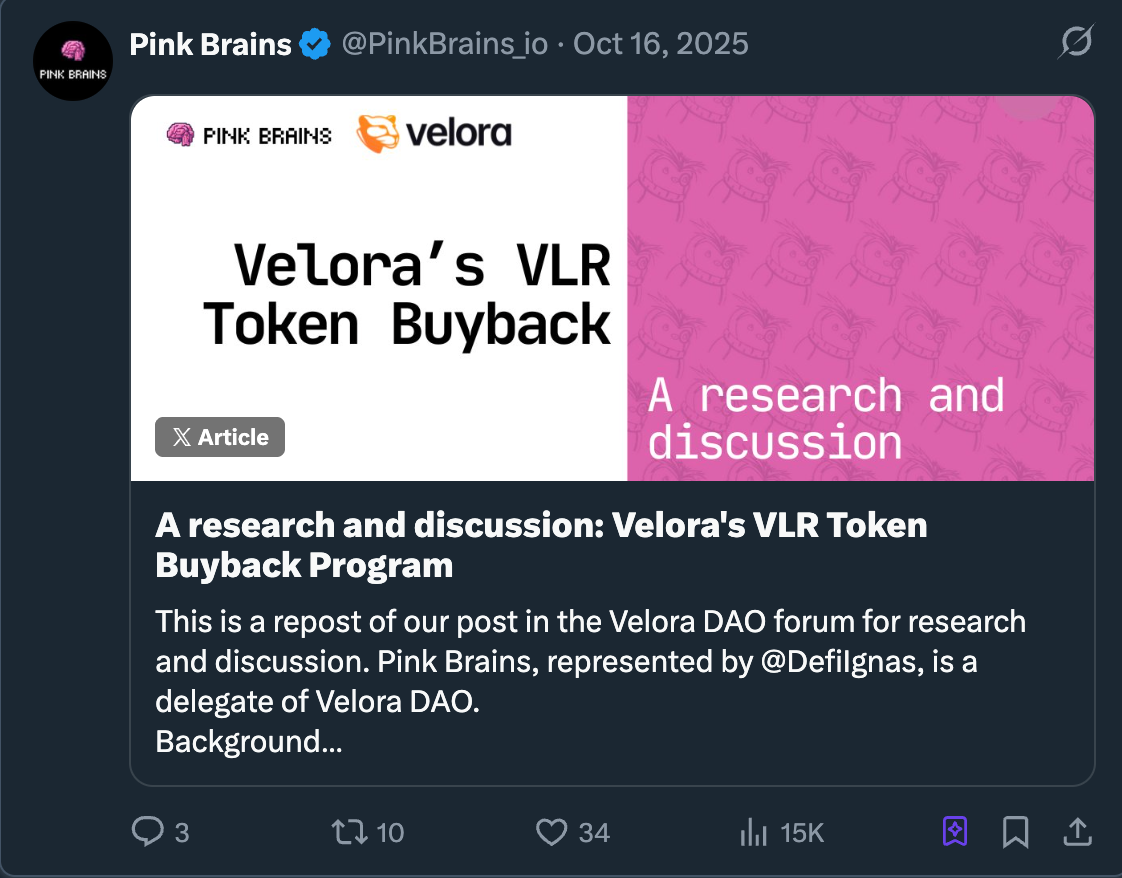
  • @arbitrum introduced an Operating Company (OpCo), channeling all DAO operations through a unified structure.

  • @JupiterExchange completely paused governance for nearly six months to reassess its approach.

  • @Uniswap launched the DUNI framework, centralizing operational authority.

  • @Gnosis's DAO executed a hard fork amidst reduced community engagement. Scroll transitioned to a CEO-led structure.

  • @Scroll_ZKP suspended its DAO, shifting focus to centralized governance.

  • Recently, the Celo Foundation merged with @cLabs into a unified core contributor organization.
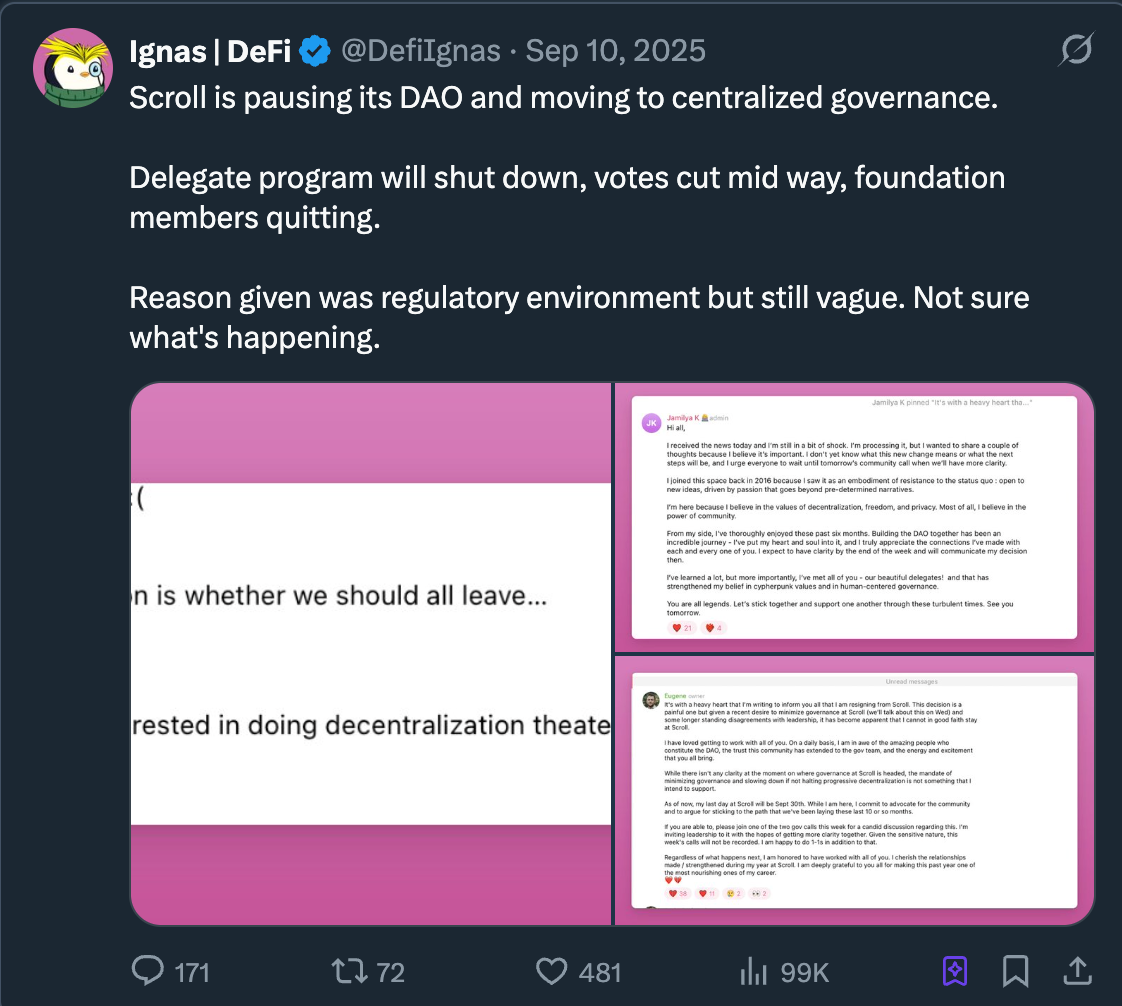
The motivation for this shift was DAOs hitting scaling limits. Execution became the bottleneck. Full-community votes were often too slow for operations, too noisy for technical nuances, and too vulnerable for security-sensitive actions.

Consequently, governance power concentrated towards smaller, high-context groups, while the broader community shifted towards oversight functions, as seen in the next section.

Fewer Voters, But More Concentrated Power

In 2025, the number of proposals and participating voters dropped significantly across major DAOs. However, the voting power behind each proposal remained strong.

  • Lido saw an increase in participation after adopting a dual governance framework.

  • Arbitrum and Uniswap still had the highest overall participation, but both saw a decrease in the number of voters.
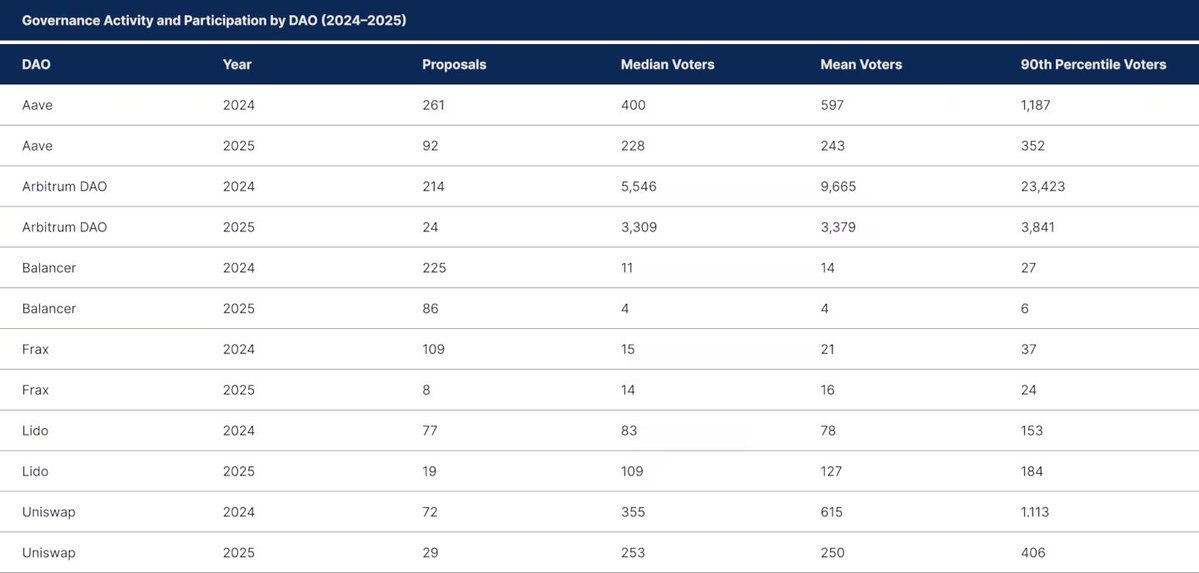
Caption: From DeFiLlama's State of DeFi 2025 Report

This does not signal the failure of governance. Instead, governance became more bundled, more operationally abstract, and less frequent.

Governance influence migrated to a small number of highly active Delegates and heavily capitalized participants.

Value Accrual for Token Holders

"Token buyback," "buyback and burn," and "fee switch" became central themes in 2025.
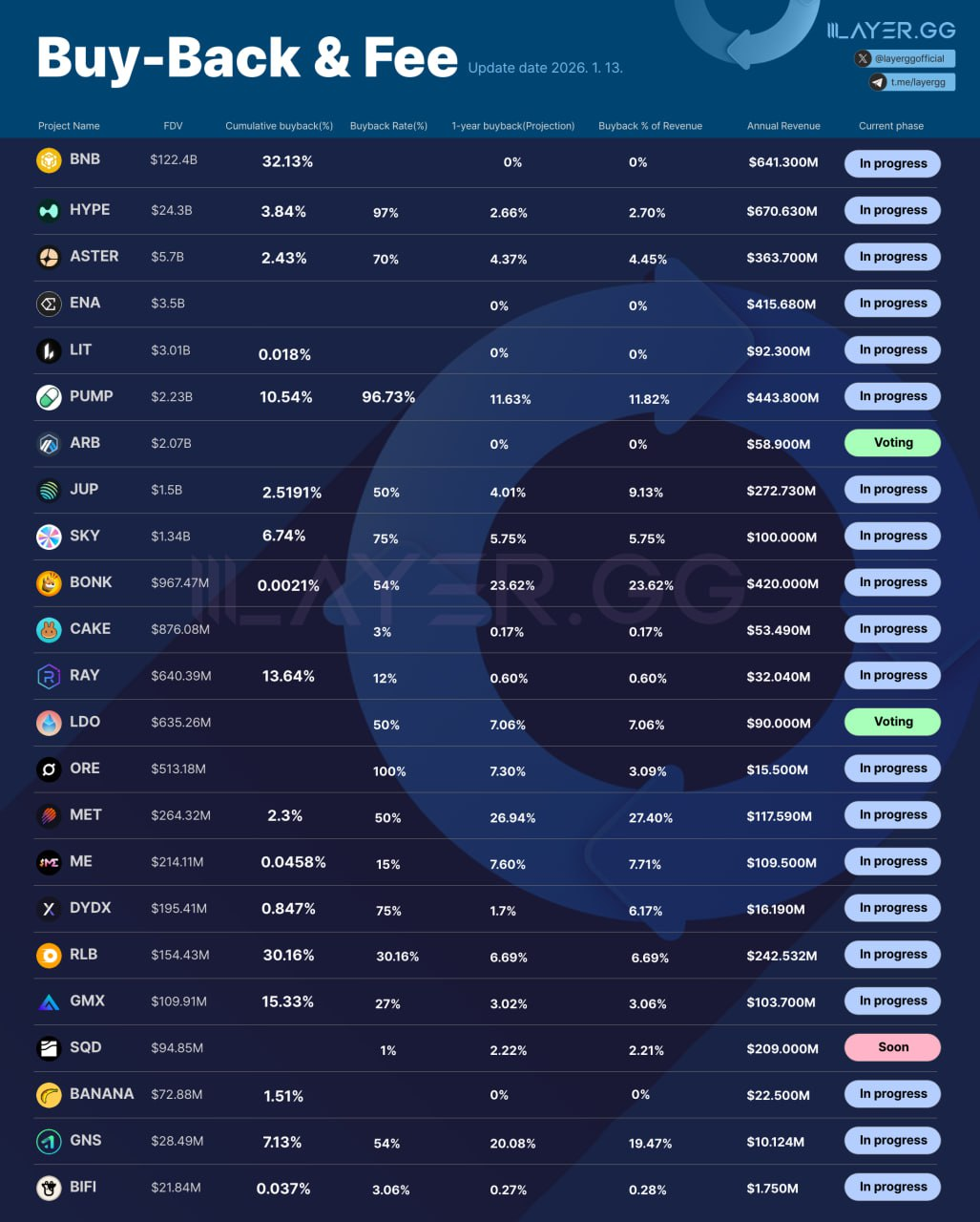
For years, token utility revolved around voting rights and incentive distribution, but offered minimal economic value to token holders. 2025 changed this equation.

  • Lido adopted a buyback framework.

  • Uniswap DAO activated the long-awaited fee switch, pledging to burn nearly $600 million worth of UNI tokens.

  • Aave implemented a token buyback mechanism. Optimism launched a buyback program.

  • CoW Protocol increased solver profitability in a way that benefits token holders.

This trend addresses a key challenge in tokenomics. Buybacks and burns reduce circulating supply, making the token more scarce. If demand holds steady, the price strengthens. When token holders can actually benefit from the protocol's success, they are more incentivized to buy, hold, and participate in governance decisions long-term.

Who Really Owns the DAO?

Two major controversies forced DAOs to confront structural flaws.

  • Gnosis voted to terminate Karpatkey's treasury mandate due to fee disputes, underperformance, and a ~$700k loss related to a liquidity issue.

  • Tensions between Aave DAO and Aave Labs escalated when it was discovered that ~$10 million annually in swap fees from the CoW Swap integration were flowing to Aave Labs instead of the DAO. A vote on brand ownership failed, and the controversy left a harder question: what does "DAO-owned" really mean when the core team controls development and distribution?

These conflicts forced protocols to fill the gaps in accountability and governance structures.

Legal Infrastructure is Adapting to DAOs

Despite DeFi's growth, most DAOs still lack clear legal structures, creating liability and regulatory risks as protocols scale.

While jurisdictions like Wyoming have introduced DAO LLC frameworks, and Switzerland offers mature legal pathways, most DAOs remain in a legal gray area.

2026 Trend Predictions

Centralized DAOs as a New Practice

Protocols will develop clear frameworks to delineate "community decisions" from "operational decisions," moving beyond the false binary of "fully decentralized" or "fully centralized."

  • Operational Execution: Will be handled by Labs teams, not foundations.

  • Community Oversight: DAO delegates and the community will be responsible for treasury strategy, long-term direction, and major structural decisions.

Governance Shifts Towards Risk Management Infrastructure

The DAO of the future will be less like a forum full of chatter. More teams will bifurcate decisions into concave decisions and convex decisions.

Concave problems require:

  • Pre-approved guardrails and automated execution.

  • Professional oversight (risk services, auditors, security teams).

  • Rapid response frameworks for emergencies and market shocks.

  • Fewer proposals, but each decision carries higher economic impact.

Convex problems (like product direction) require decisive leadership, where the DAO acts as a "brake" or "checkpoint," not a "steering wheel."

By 2026, this will be standard for lending, stablecoins, perps, and any protocol where financial risk can compound quickly.

The End of Governance Tokens? Value Capture is a Must

Continuing into 2026, tokens with only governance functions will struggle to maintain long-term engagement.

Delegates, whales, and strategic holders won't consistently provide protection for the system without seeing a return profile. Protocols will increasingly adopt at least one value accrual path:

  • Token buyback frameworks.

  • Fee diversion or revenue sharing.

  • Staking tied to protocol cash flows.

  • Treasury strategies aimed at supporting token value.

When holders gain economically from the protocol's success, they are incentivized to stay attentive, participate, and protect the system.
Legal Structures Shift from Optional to Necessary

Regulatory pressure and real-world legal challenges will push DAOs towards formal entity formation, seeking a balance between decentralized governance and legal clarity.

Professional Delegation

As governance complexity increases, token holders will increasingly delegate to full-time professional delegates. While this concentrates voting power, it may improve decision quality. Meanwhile, weaker delegate institutions that cannot financially sustain themselves will fold, as governance work becomes more professional, political, and costly.
Privacy, AI & Futarchy

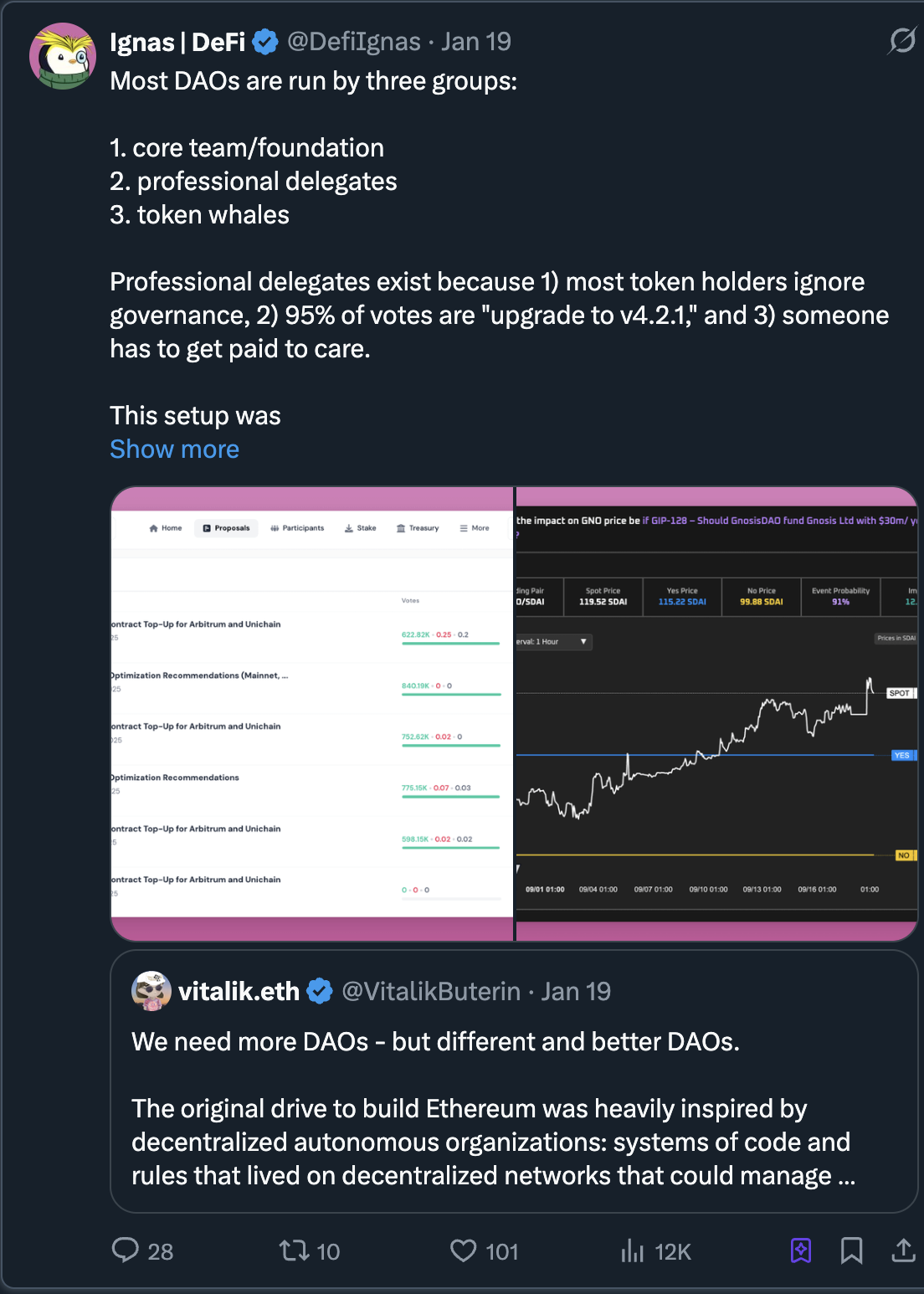
Public governance is a social game. When every vote is publicly visible, decisions are influenced by reputation, pressure, and alliances, rather than purely the protocol's best interest. Therefore, governance privacy will become more important in the future.

AI will address decision fatigue. It can assist in analyzing proposals and auto-voting on routine upgrades based on user-defined preferences, requiring human intervention only for disputes or high-impact matters.

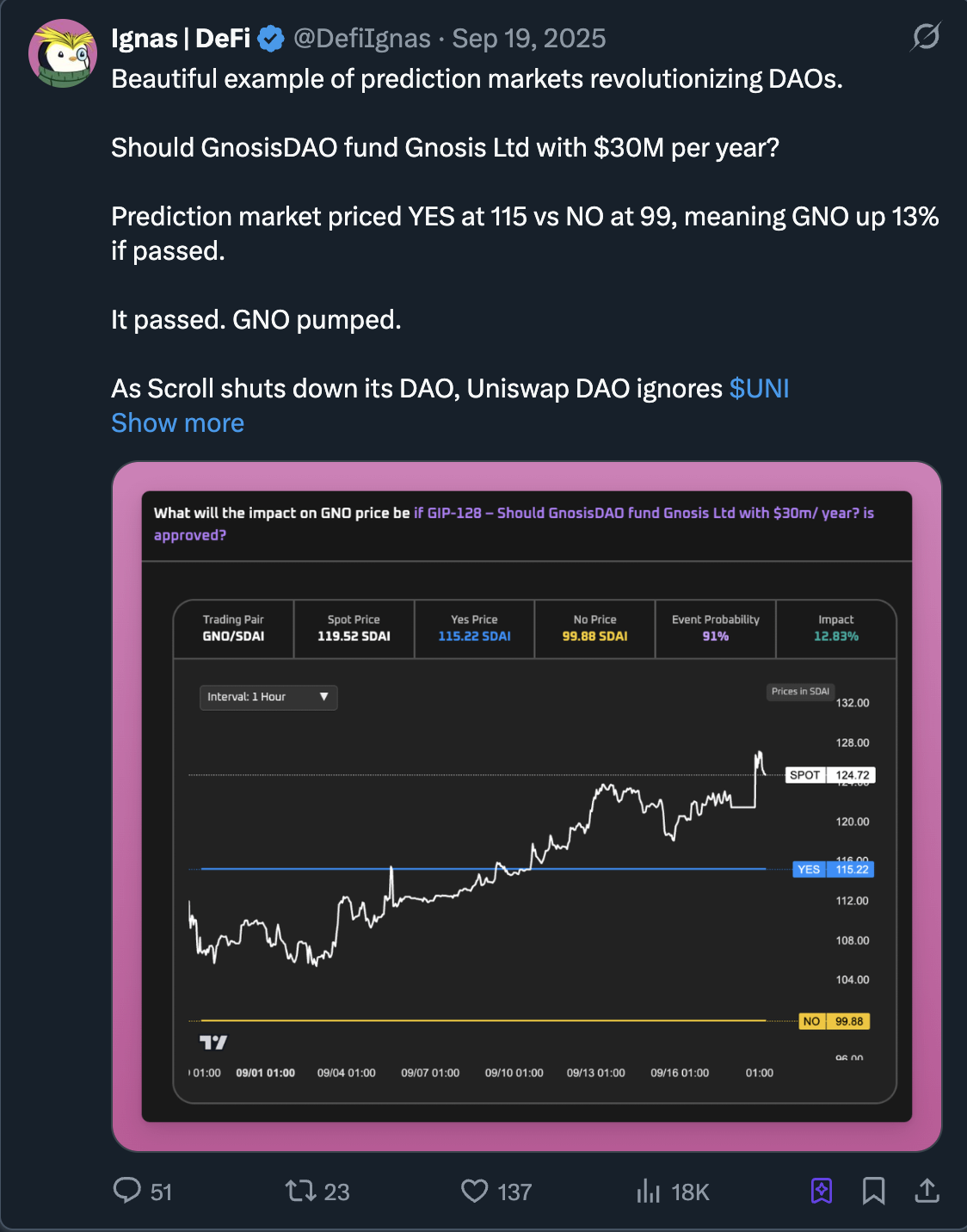
Futarchy markets will also play a larger role in DAOs. They let market signals predict which option might create value. Gnosis is testing this model, using retail prediction markets to reflect sentiment on proposals.
Crypto is Maturing, and So Are DAOs

The shifts we see in DAO operations, economic alignment, accountability conflicts, and professionalization represent maturation, not the end of DAOs.

DAOs are evolving from ideological experiment to organizational architecture that balances "decentralized oversight" with "proven operational efficiency." We believe DAO governance becomes meaningful if teams can align with community interests: moving fast when action is needed, letting growth benefit token holders, and holding all participants—core teams and delegates alike—accountable.

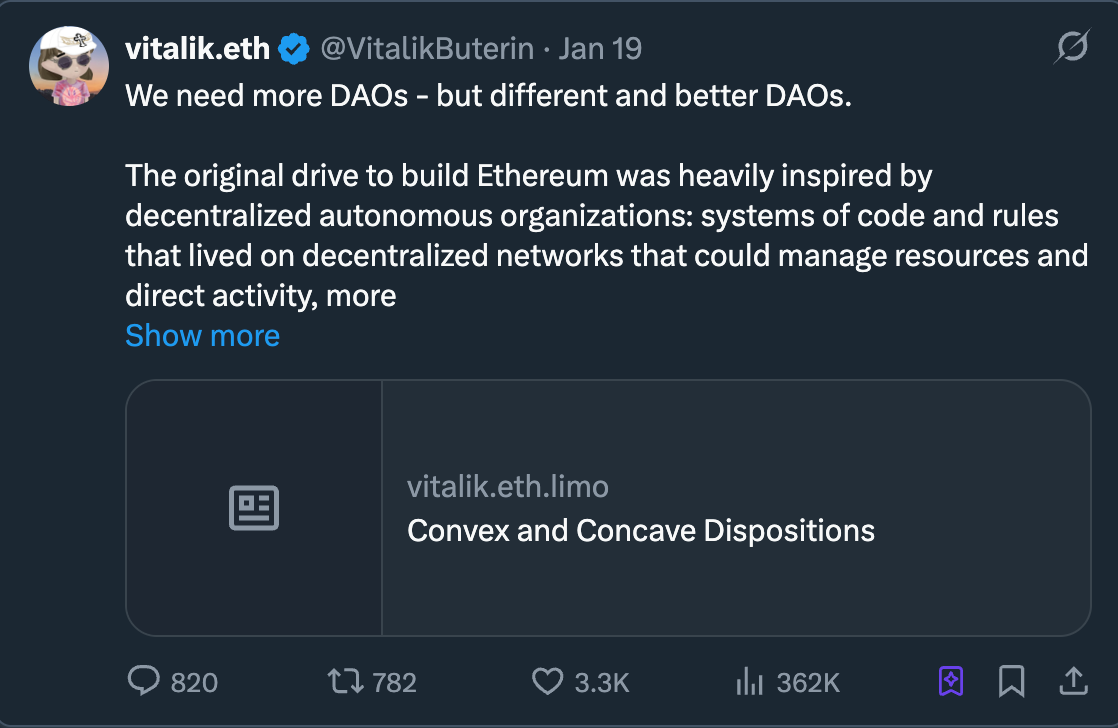
As Vitalik said: We need more DAOs, but different and better DAOs.
If you believe in the value of DAOs, we can be your voice.

Effective delegation is more than just casting a vote; it means doing the actual work: reading proposals, being active on forums, understanding risks, and voting against bad decisions, even when it's not the popular choice.

This is how we operate as delegates: through clear communication and educational content, helping the protocol grow while staying aligned with community incentives.


Twitter:https://twitter.com/BitpushNewsCN

BitPush TG Discussion Group:https://t.me/BitPushCommunity

BitPush TG Subscription: https://t.me/bitpush

Original link:https://www.bitpush.news/articles/7607064

Câu hỏi Liên quan

QWhat was the most significant shift in DAO operational models in 2025, according to the article?

AThe most significant shift was the transition from pure community governance to hybrid control models with clearer operational authority, as seen with protocols like Arbitrum introducing operational companies (OpCo) and Uniswap launching the DUNI framework.

QHow did the trend of token buybacks and fee switches address a key challenge in tokenomics in 2025?

AIt addressed the challenge of providing minimal economic value to token holders. By implementing buyback frameworks, fee switches, and revenue-sharing mechanisms, protocols made tokens more scarce and valuable, aligning token holder incentives with the protocol's long-term success.

QWhat two major controversies in 2025 forced DAOs to confront structural flaws in accountability?

AThe two major controversies were: 1) Gnosis DAO voting to terminate Karpatkey's treasury mandate due to fee disputes and performance issues, and 2) The conflict between Aave DAO and Aave Labs over the misdirection of approximately $10 million in annual swap fees.

QWhat is the predicted role of AI in DAO governance for 2026, as outlined in the article?

AAI is predicted to help solve decision fatigue by analyzing proposals and automating votes on routine upgrades based on user-defined preferences, requiring human intervention only for contentious issues or decisions with significant impact.

QWhat does the article suggest is the future for governance tokens that only have voting utility?

AThe article suggests that governance tokens with only voting utility will struggle to maintain long-term engagement. They must incorporate value-capture mechanisms like buyback frameworks, fee sharing, or staking tied to protocol cash flows to be sustainable.

Nội dung Liên quan

Việc Giảm Mạnh STRC Của Strategy Cho Thấy Rủi Ro Đằng Sau Các Sản Phẩm Tín Dụng Liên Kết Bitcoin

Việc cổ phiếu ưu đãi STRC của Strategy (công ty mẹ của MicroStrategy) giao dịch giảm mạnh dưới mệnh giá 100 USD đã làm nổi bật rủi ro đằng sau các sản phẩm tín dụng gắn với Bitcoin. Dù CEO Matt Cole mô tả đây là đợt "thanh lọc đòn bẩy" do bán ép chứ không phải sự kiện vỡ nợ cơ bản, sự sụt giảm vẫn cho thấy mức độ nhanh chóng mà đòn bẩy có thể làm lộ ra điểm yếu trong các công cụ liên quan đến chiến lược kho bạc Bitcoin. Sự kiện này nhấn mạnh rằng các sản phẩm tín dụng Bitcoin mang rủi ro khác biệt so với nắm giữ BTC trực tiếp hoặc cổ phiếu phổ thông, đặc biệt khi nhà đầu tư sử dụng vay mượn. Nó cũng phản ánh sự phức tạp ngày càng tăng của thị trường tài chính hóa các kho bạc Bitcoin, nơi sự tương tác giữa cổ phiếu ưu đãi, cam kết cổ tức, đòn bẩy và biến động giá Bitcoin có thể dẫn đến bán ép trong điều kiện thanh khoản căng thẳng. Bài học chính là một lời cảnh báo về rủi ro đòn bẩy và tính dễ tổn thương trong cấu trúc tài chính phức tạp, hơn là bằng chứng về khả năng trả nợ của công ty phát hành.

bitcoinist3 giờ trước

Việc Giảm Mạnh STRC Của Strategy Cho Thấy Rủi Ro Đằng Sau Các Sản Phẩm Tín Dụng Liên Kết Bitcoin

bitcoinist3 giờ trước

Tòa Án Tối Cao Australia Trao Thắng Lợi Lớn Cho ASIC Trong Vụ Án Sản Phẩm Yield Tiền Mã Hóa Block Earner

Tòa án Tối cao Úc đã phán quyết nhất trí ủng hộ Ủy ban Chứng khoán và Đầu tư Úc (ASIC) trong vụ kiện chống lại công ty Block Earner. Tòa án xác định sản phẩm "Earner" cố định lợi suất lịch sử của Block Earner là một sản phẩm tài chính và phái sinh, do đó yêu cầu công ty phải có Giấy phép Dịch vụ Tài chính Úc để cung cấp sản phẩm này. Vụ việc giờ sẽ được chuyển lại cho Tòa án Liên bang Toàn thể để xác định hình phạt. Phán quyết này rất quan trọng vì nó áp dụng luật dịch vụ tài chính truyền thống của Úc vào một sản phẩm tiền mã hóa hứa hẹn lợi suất. Nó thiết lập một tiền lệ rõ ràng rằng các sản phẩm cung cấp lợi nhuận có cấu trúc hoặc có đặc điểm kinh tế giống phái sinh có thể phải đáp ứng các yêu cầu cấp phép, bất kể được gắn nhãn là gì. Mặc dù sản phẩm "Earner" cụ thể này không còn được cung cấp, phán quyết cung cấp cho ASIC cơ sở pháp lý vững chắc cho các hành động tương tự trong tương lai, phù hợp với xu hướng toàn cầu của các cơ quan quản lý trong việc đưa các sản phẩm tiền mã hóa vào khuôn khổ quy định hiện hành. Đối với các công ty tiền mã hóa, bài học là cần xem xét kỹ lưỡng bản chất kinh tế của sản phẩm. Đối với người tiêu dùng, phán quyết nhắc nhở rằng các sản phẩm sinh lợi tiềm ẩn rủi ro và khác biệt so với việc nắm giữ tiền mã hóa thông thường. Phán quyết này vạch ra một ranh giới quy định rõ ràng hơn cho ngành công nghiệp tiền mã hóa tại Úc.

bitcoinist6 giờ trước

Tòa Án Tối Cao Australia Trao Thắng Lợi Lớn Cho ASIC Trong Vụ Án Sản Phẩm Yield Tiền Mã Hóa Block Earner

bitcoinist6 giờ trước

Blockchain.com Mở Rộng Truy Cập Cổ Phiếu Token Hóa Thông Qua Ondo Finance

Blockchain.com đã mở rộng khả năng tiếp cận cổ phiếu và ETF được mã hóa (tokenized) của Hoa Kỳ thông qua ví tiền điện tử của mình, nhờ vào quan hệ đối tác với Ondo Finance. Động thái này mang các tài sản trong thế giới thực được quản lý vào giao diện quen thuộc dành cho người dùng tiền điện tử đủ điều kiện, cho phép họ nắm giữ các sản phẩm truyền thống như cổ phiếu bên cạnh stablecoin và công cụ DeFi. Ondo Finance, một tên tuổi nổi bật trong thị trường tài sản thực được mã hóa (RWA), đóng vai trò trung tâm bằng cách cung cấp các sản phẩm tài chính quen thuộc dưới dạng token. Sự hợp tác này giải quyết thách thức về phân phối, đưa các tài sản được mã hóa trực tiếp đến người dùng ví tiền điện tử hiện có. Một khía cạnh quan trọng là mục tiêu phục vụ người dùng bên ngoài Hoa Kỳ, nơi việc tiếp cận thị trường vốn Mỹ có thể bị hạn chế. Giải pháp này cung cấp một lựa chọn thay thế mang tính bản địa hóa cho tiền điện tử, tích hợp vào cơ sở hạ tầng tài chính mà người dùng toàn cầu đã quen thuộc. Bối cảnh thị trường RWA đang trở nên cạnh tranh hơn, với nhiều nền tảng tranh giành để trở thành cổng kết nối chính cho tài sản truyền thống được mã hóa. Blockchain.com và Ondo đặt cược rằng việc tích hợp liền mạch vào ví tiền điện tử có thể cung cấp trải nghiệm đơn giản và đáng tin cậy, giúp thu hẹp khoảng cách so với các sản phẩm môi giới truyền thống.

bitcoinist8 giờ trước

Blockchain.com Mở Rộng Truy Cập Cổ Phiếu Token Hóa Thông Qua Ondo Finance

bitcoinist8 giờ trước

CPU trở lại bàn đàm phán, một vở kịch "thăng tiến" trị giá 1700 tỷ USD bắt đầu

CPU đang trở lại trung tâm sân khấu trong kỷ nguyên AI, dẫn dắt một cơ hội thị trường trị giá 1700 tỷ USD vào năm 2030. Việc chuyển dịch từ huấn luyện sang suy luận (inference) và AI Agent đã làm thay đổi hoàn toàn vai trò của CPU. Trong các tác vụ Agent phức tạp, CPU hiện đảm nhận hơn 70% khối lượng công việc, xử lý luồng điều khiển, gọi công cụ và quản lý bộ nhớ (KV Cache). Tỷ lệ phối hợp GPU:CPU đang thu hẹp từ 1:8 xuống khoảng 1:4, thậm chí 1:1 trong một số trường hợp. Nhu cầu này dẫn đến việc thiếu hụt nguồn cung và lần tăng giá đầu tiên sau hơn một thập kỷ cho server CPU của Intel và AMD, với mức tăng 10-15%. Thị trường CPU server dự kiến tăng từ khoảng 300 tỷ USD năm 2025 lên 1700 tỷ USD vào năm 2030, được thúc đẩy bởi ba phân khúc: điện toán đám mây truyền thống, CPU head-node cho cụm AI và CPU node độc lập cho Agent – một thị trường hoàn toàn mới. NVIDIA cũng đã tham gia cuộc chơi với CPU Vera dựa trên kiến trúc ARM, nhấn mạnh tầm quan trọng chiến lược của CPU. Tại Trung Quốc, các công ty như Hygon (Hải Quang) và Huawei đang nắm bắt cơ hội từ làn sóng nhu cầu này và chương trình thay thế nhập khẩu (xinchuang), với hệ sinh thái phần mềm đang trưởng thành nhanh chóng.

marsbit8 giờ trước

CPU trở lại bàn đàm phán, một vở kịch "thăng tiến" trị giá 1700 tỷ USD bắt đầu

marsbit8 giờ trước

TechFlow Tình Báo: Giám đốc AI của AMD công khai chỉ trích Claude Code 'ngày càng ngốc nghếch và lười biếng', Trump tuyên bố eo biển Hormuz sẽ ngừng bắn toàn diện nhưng vẫn còn 80 quả thủy lôi chờ dọn

TechFlow Intelligence: Tóm tắt tin tức công nghệ & tài chính ngày... * **AI & Mô hình lớn:** Giám đốc AI của AMD chỉ trích Claude Code trở nên "kém thông minh và lười biếng". Z.AI (Trung Quốc) ra mắt GLM-5.2, tuyên bố ngang bằng Claude Opus mà không dùng chip NVIDIA. SK Telecom (Hàn Quốc) bị điều tra về chuyển giao công nghệ với Anthropic. DeepSeek gây sốt trên Zhihu với tính năng đa phương tiện mới. Gemini bị chỉ trích trên Reddit vì đưa lời khuyên sai trong tình huống lừa đảo. * **Chip & Phần cứng:** MIT tự viết hệ điều hành để nghiên cứu chip. Mỹ cáo buộc máy quang khắc EUV tối tân của ASML có thể đã tới Trung Quốc, ASML phủ nhận. Amazon đàm phán bán chip AI tự thiết kế ra bên ngoài. iPhone phiên bản kỷ niệm 20 năm của Apple dự kiến dùng quy trình N2P độc quyền từ TSMC. * **An ninh & Công ty:** Phát hiện 10.000 kho GitHub phân phối phần mềm độc hại. Apple vá lỗ hổng nghe lén nghiêm trọng trên tai nghe Beats. Nhiều kỹ sư Amazon bị điều tra nội bộ vì chỉ trích việc mở rộng trung tâm dữ liệu AI. Microsoft và Amazon có thể đối mặt với điều tra chống độc quyền khắt khe từ EU. * **Web3 / Crypto:** 0G Labs đạt cột mốc 100 tỷ token suy luận AI phi tập trung. Sàn Hàn Quốc Bithumb niêm yết RE, trong khi Upbit hủy niêm yết KERNEL. * **Thị trường & Địa chính trị:** Cổ phiếu bán dẫn Mỹ tăng mạnh, Intel tăng 10.6%, trong khi SpaceX giảm. Eo biển Hormuz chính thức mở cửa theo thỏa thuận Mỹ-Iran, nhưng hiệp hội vận tải dầu cảnh báo vẫn còn khoảng 80 quả thủy lôi trong luồng chính. Gần 80 tàu chở dầu chờ tín hiệu an toàn để xuất phát. Iran hoãn chuyến công du tới Thụy Sĩ, làm dấy lên nghi ngờ về tiến trình hòa bình.

marsbit8 giờ trước

TechFlow Tình Báo: Giám đốc AI của AMD công khai chỉ trích Claude Code 'ngày càng ngốc nghếch và lười biếng', Trump tuyên bố eo biển Hormuz sẽ ngừng bắn toàn diện nhưng vẫn còn 80 quả thủy lôi chờ dọn

marsbit8 giờ trước

Giao dịch

Giao ngay
Hợp đồng Tương lai
活动图片