How Can War News Turn into Millions in Profits a Step Ahead?

比推Xuất bản vào 2026-03-02Cập nhật gần nhất vào 2026-03-02

Tóm tắt

The article "How War News Turns into Millions in Profits" explores the rise of prediction markets like Polymarket and Kalshi as digital arenas for wagering on geopolitical events, using the hypothetical U.S.-Israel airstrike on Iran on February 28, resulting in the death of Iran’s Supreme Leader Ali Khamenei, as a case study. These platforms saw surging trading volumes, with Polymarket’s market on "Will Khamenei be ousted by February 28?" reaching $95.93 million in daily volume. While Polymarket operates with anonymity and a profit-based fee model, Kalshi faced controversy for refusing to fully pay out on contracts tied to deaths, citing ethical concerns. The piece also highlights suspicions of insider trading, with some wallets making highly timed, profitable bets ahead of the strike. The trend raises questions about morality, market manipulation, and the need for stricter regulation as prediction markets blur the lines between real-world conflict and digital profit-seeking.

Author: Ma He, Foresight News

Original Title: Prediction Platforms Are Becoming the Digital Battlefield of Postmodern Warfare


On February 28, the United States and Israel jointly launched an airstrike against Iran, resulting in the death of Iran's Supreme Leader Ali Khamenei. This attack shook Middle Eastern geopolitics. In the 21st century, the flames of war continue to spread everywhere, and its impact has also stirred up huge waves in the prediction markets of the crypto world.

Polymarket and Kalshi became another "battlefield" outside the actual war zone. Traders placed bets on the timing of the attack, regime change, and ceasefire dates, with trading volumes soaring to astronomical figures.

In war, some are always quietly making a fortune.

Polymarket became a "barometer" of the conflict. Since last December, they had set up a market for "When will the US strike Iran?" covering various date options.

The prediction market "Will Khamenei step down by February 28?" saw a daily trading volume of $95.93 million on February 28, becoming one of the platform's largest geopolitical markets ever. Its trading volume reached $54.15 million on March 31.
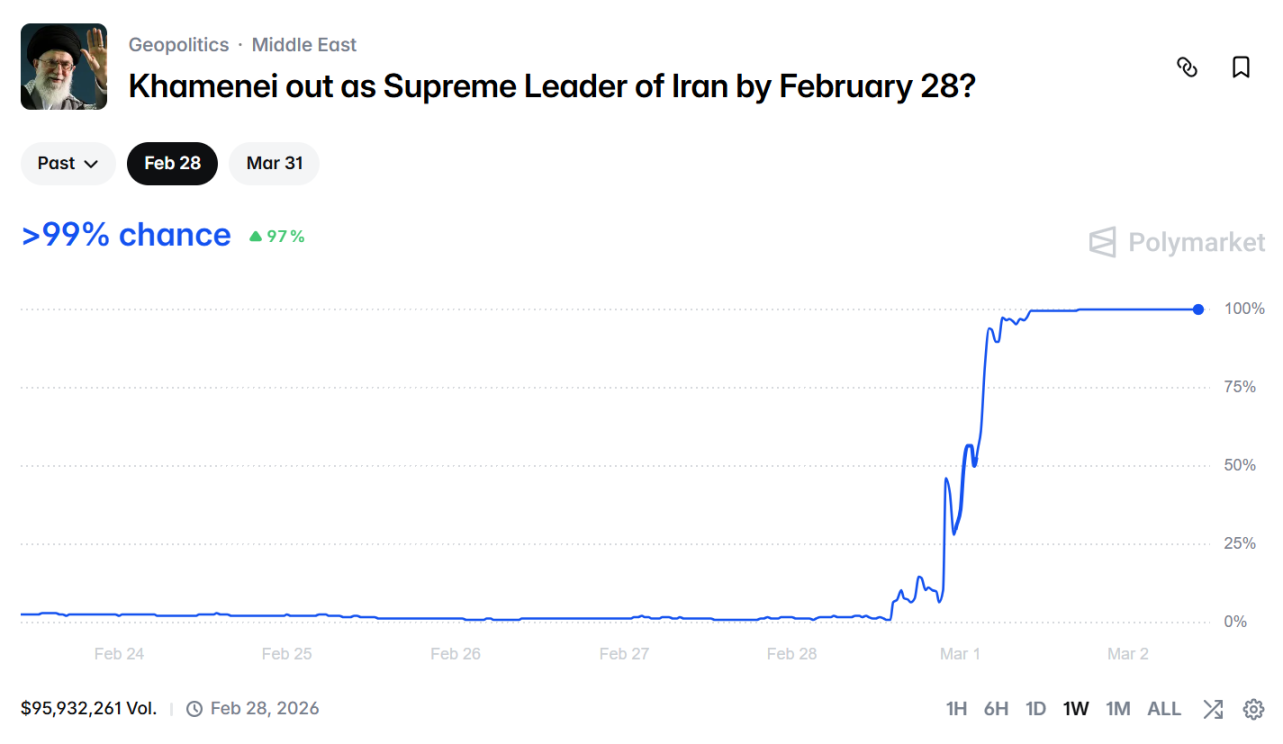
After the attack was confirmed, this market quickly settled to "Yes" (it is still in the final dispute period), as Khamenei's death directly led to him "stepping down."

Although Polymarket currently does not charge any transaction fees for the vast majority of its regular markets (including all political, geopolitical, pop culture, and long-term macro events), in early 2026, Polymarket introduced fees for specific high-frequency trading markets. The expansion of its brand influence has a significantly positive impact on its revenue growth.

Furthermore, the global version of Polymarket uses a profit-based fee model. Its core logic is: users do not need to pay fees when placing buy or sell orders daily, but when users close a position for profit, the platform charges a 2% fee on the net profit. This model only taxes the "winners."

Taking the example in the image, if the total net profit of the winners is $10 million, the income from this single prediction market alone would reach $200,000.

Traders flocked there not only for the thrill but also because these markets reflect news in real time—much faster than traditional media. As soon as news of the attack broke, contract prices instantly jumped, demonstrating the market's "efficiency."

There are always winners in war. In the past, those who profited from conflicts were often arms dealers, oil giants, or intelligence peddlers—think of Lockheed during World War II or the oil tycoons during the Cold War, who made fortunes through contracts and resource monopolies. Ordinary people? At best, they were bystanders; war meant loss and uncertainty for them. But now, crypto prediction markets have颠覆ed this landscape. Platforms like Polymarket allow retail investors to also bet on geopolitical events, from the date of US-Iran airstrikes to the probability of regime change, sharing a piece of the pie with just a few clicks.

However, participating in this game also blurs ethical boundaries. This shift is striking: the "dividends" of war have spread from the physical supply chain to the digital gambling table. Arms dealers are still making money, but prediction markets have turned ordinary users into new players. They don't produce missiles, but they can "predict" explosions on the blockchain and profit handsomely.

When conflicts escalate, platform trading volumes explode; the war economy has gone digital.

But this also raises many questions—does the thrill of making money dilute compassion for real suffering?

Kalshi, as another player, also got a share of the pie. Their "Will Khamenei step down?" market had a trading volume of tens of millions of dollars (slightly varying by source). On the day of the attack, trading volume in this market surged, reaching tens of millions of dollars in a single day.

But Kalshi's handling of the situation sparked controversy. A clause in the platform's rules states "no settlement on death," meaning that if stepping down is due to death, the "Yes" contract will not be paid in full.

After the attack, Kalshi suspended the market. CEO Tarek Mansour posted on X to explain: they oppose profiting from an individual's death, so they would settle at the last traded price before the death and refund all fees in full. Mansour emphasized that this was to uphold "moral bottom lines" and avoid the platform becoming a "death betting pool." Some users complained that this was like changing the rules mid-game, but Kalshi insisted this was a pre-set term, with details clarified just the day before the attack.
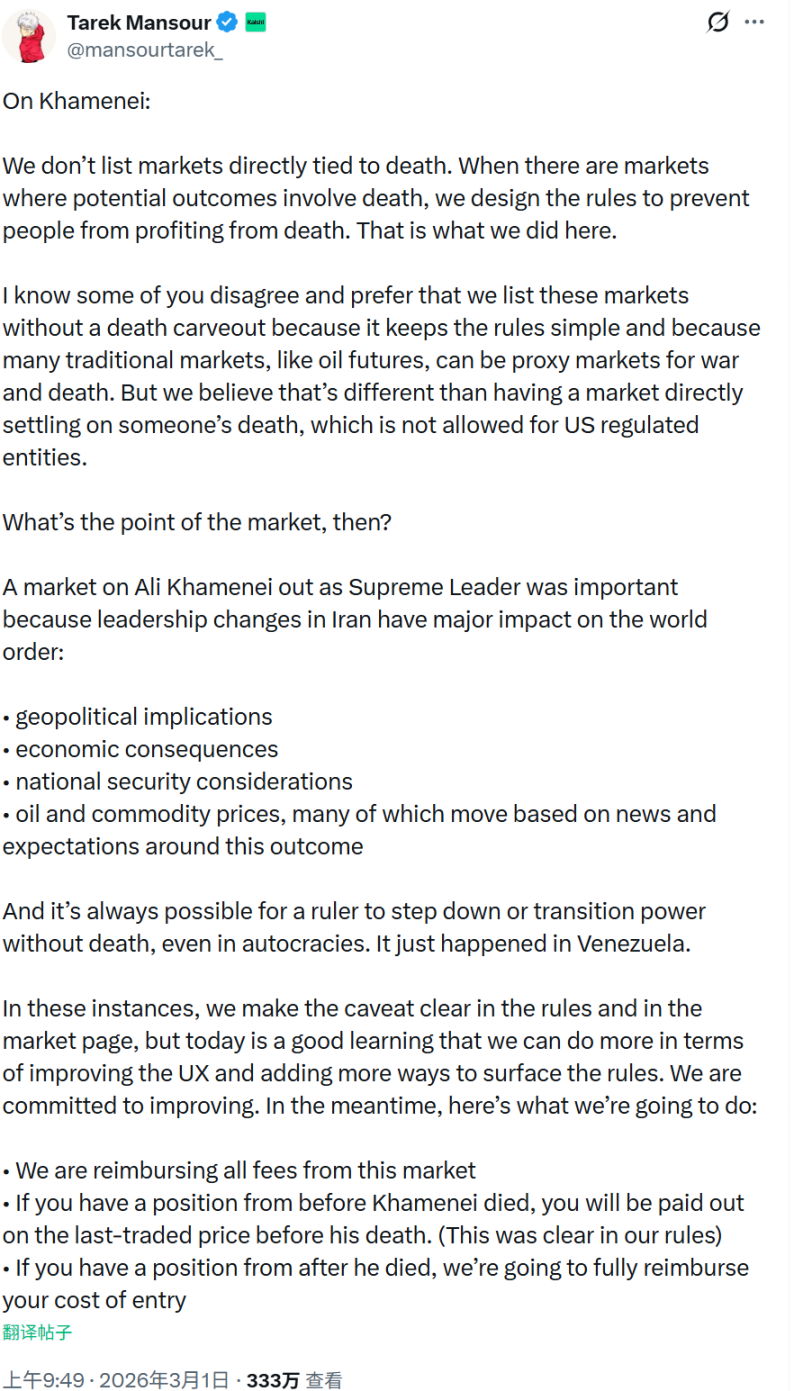
As a result, the platform lost money but gained a reputation for "not making money from the dead."

Polymarket has high user anonymity, attracting global funds; Kalshi is more compliant but restricts markets related to war and assassination.

However, while most players bet based on gut feeling, some insiders are also quietly making a fortune.

On Polymarket, the timing of some accounts' bets was so precise that it raised suspicions of insider trading. Blockchain analysis company Bubblemaps discovered that six newly created wallets placed bets on a US strike against Iran on February 28 just hours before the attack, collectively profiting about $1 million.
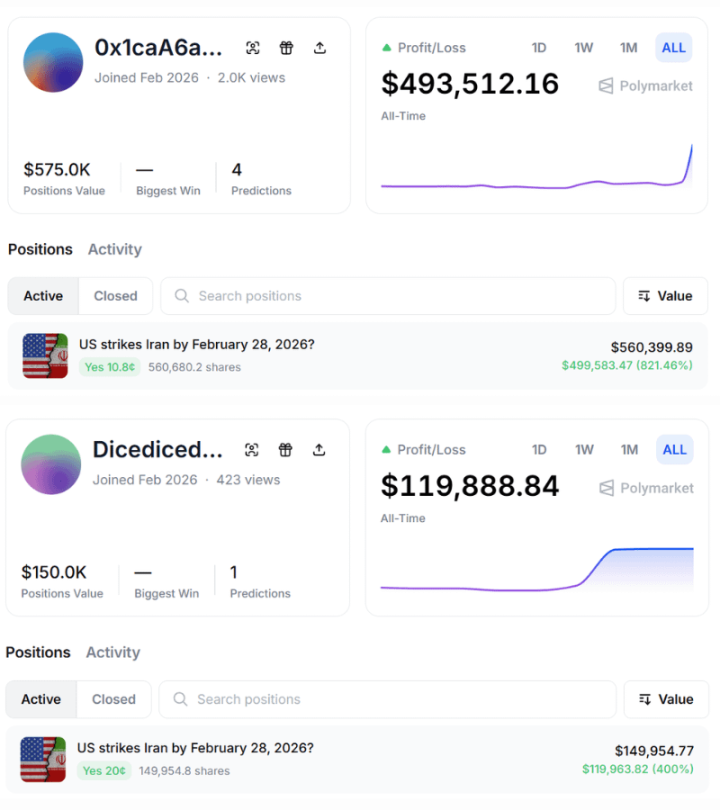
These 6 wallets were all created in February of this year. Almost all their trading was concentrated on contracts predicting the timing of the US military strike. Some positions were established hours before the first news of explosions emerged from Tehran, with contract purchase prices as low as around $0.10. Analysts stated that such concentrated betting behavior before major geopolitical events is characteristic of "suspected insider trading" previously seen in prediction markets.

However, the report also pointed out that the related accounts had incurred losses in other predictions before, and the US government had publicly warned weeks earlier that military action was possible. Therefore, the timing of the trades alone is not sufficient to directly prove illegal activity.

These are not isolated cases. Polymarket has faced similar质疑 in the past, such as during the 2024 Super Bowl or the Venezuela incident. But this time the scale is larger, involving national security. The CFTC has warned about insider trading in the past, and Kalshi recently penalized famous YouTube creator MrBeast's team editor, Artem Kaptur, for insider trading. Polymarket operates overseas with loose regulation, becoming a gray area.

US Representative Ritchie Torres is promoting legislation called the "2026 Public Integrity in Financial Prediction Markets Act," which aims to restrict government officials with access to non-public information from trading on related prediction markets. Meanwhile, Polymarket has faced regulatory restrictions or bans in multiple countries in recent years, including the Netherlands, France, Italy, and Singapore.

Of course, not everyone won. Many bet on the wrong date and suffered heavy losses. Currently, Polymarket has updated its website's top display, pinning all prediction markets related to the Iran situation to the top.
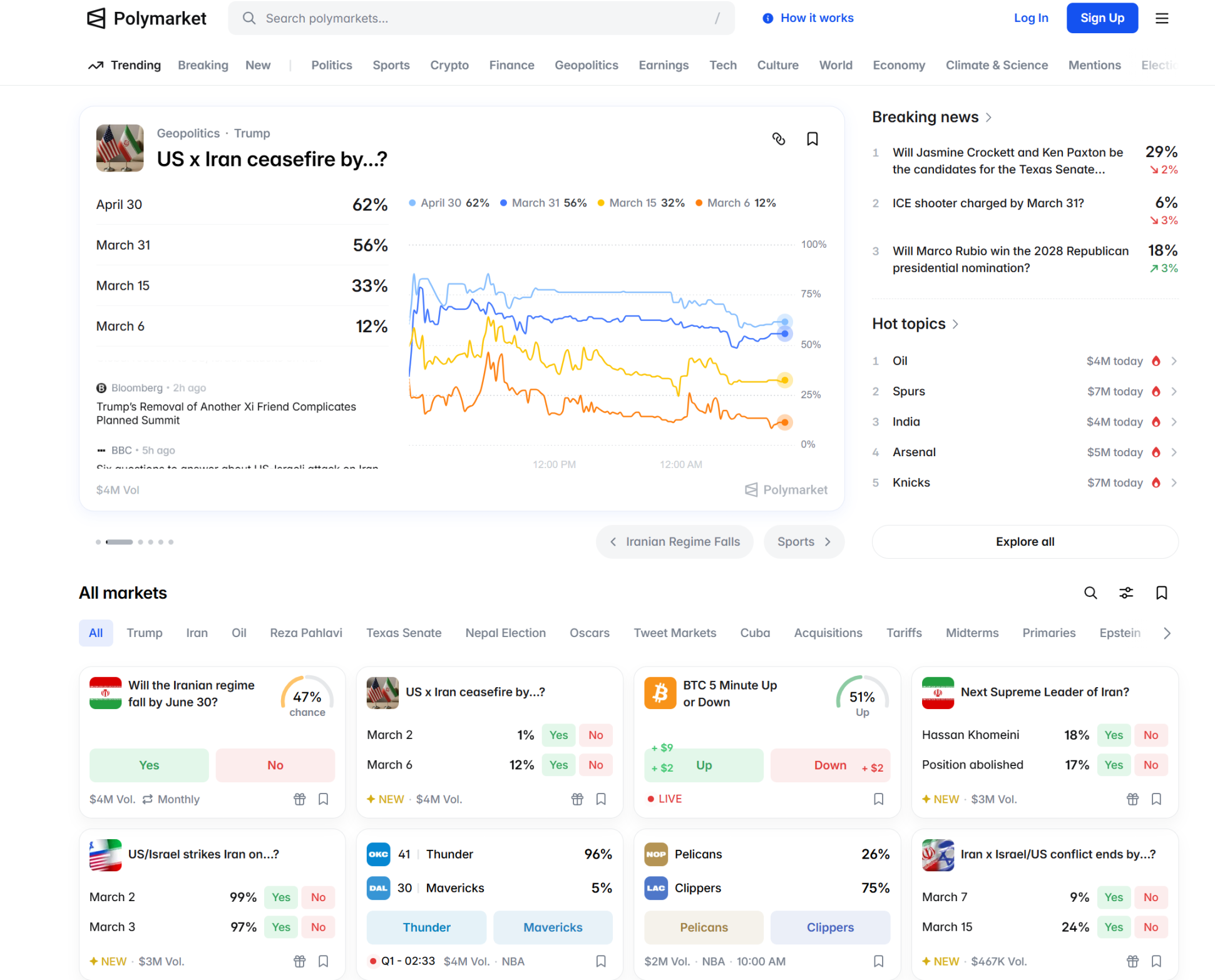
Overall, this "war profit" exposed the double-edged sword of prediction markets: on one hand, they provide real-time data intelligence and insights; on the other hand, they are easily manipulated or exploited with insider information.

Under the trend of "everything can be bet on," future betting in prediction markets may require stricter regulation and clearer rules. After all, the stakes are real money, but behind them are real lives.


Twitter:https://twitter.com/BitpushNewsCN

Bitpush TG Discussion Group:https://t.me/BitPushCommunity

Bitpush TG Subscription: https://t.me/bitpush

Original link:https://www.bitpush.news/articles/7615813

Câu hỏi Liên quan

QWhat are the two main prediction markets discussed in the article that saw massive trading volumes related to the US-Israel airstrike on Iran?

AThe two main prediction markets discussed are Polymarket and Kalshi.

QHow does Polymarket's global version generate revenue from its users?

APolymarket's global version uses a profit-based fee model, charging users a 2% fee on their net profits only when they close a winning position, effectively taxing only the 'winners'.

QWhat controversial action did Kalshi take regarding its market on 'Whether Khamenei would step down' after the airstrike, and why?

AKalshi paused its market and settled it based on the last trading price before the event, citing a pre-existing 'no settlement on death' clause. The CEO stated this was to uphold moral standards and avoid profiting from an individual's death.

QWhat evidence suggests potential insider trading on Polymarket related to the airstrike?

ABlockchain analysis firm Bubblemaps found six newly created wallets that placed bets on the US striking Iran on February 28th just hours before the attack, collectively profiting approximately $1 million.

QWhat legislative action is mentioned in the article as a response to concerns about prediction markets?

AUS Representative Ritchie Torres is promoting legislation called the '2026 Financial Prediction Market Public Integrity Act,' which aims to restrict government officials with non-public information from trading on such prediction markets.

Nội dung Liên quan

Thu hút vốn toàn cầu, châu Á đang bước vào một 'siêu chu kỳ' mới

Từ góc nhìn của các nhà đầu tư, châu Á đang nổi lên như điểm đến tiếp theo cho sự tăng trưởng của thị trường chứng khoán toàn cầu. Làn sóng AI đang thúc đẩy mạnh mẽ các thị trường như Hàn Quốc và định hình lại động lực cơ bản của chu kỳ công nghiệp châu Á: chuyển từ bất động sản truyền thống sang đầu tư vào cơ sở hạ tầng AI, an ninh năng lượng, quốc phòng và khả năng phục hồi chuỗi cung ứng. Morgan Stanley dự báo quy mô đầu tư cố định của châu Á sẽ tăng từ khoảng 11 nghìn tỷ USD năm 2025 lên 16 nghìn tỷ USD vào năm 2030. AI, với tư cách là một cuộc đua vốn, đang thúc đẩy nhu cầu lớn về chip, máy chủ, trung tâm dữ liệu và hệ thống điện. Châu Á, đặc biệt là Trung Quốc, Hàn Quốc và Nhật Bản, nằm ở trung tâm của chuỗi cung ứng phần cứng này. Trung Quốc được kỳ vọng sẽ tăng tỷ lệ tự cung cấp chip AI lên 86% vào năm 2030. Bên cạnh AI, câu chuyện xuất khẩu của Trung Quốc đang mở rộng từ "ba món mới" (xe điện, pin, quang điện) sang robot, đặc biệt là robot công nghiệp và robot hình người, với vị thế sản xuất tương tự ngành xe điện những năm trước. Đồng thời, đầu tư vào an ninh năng lượng và chi tiêu quốc phòng cũng đang cung cấp các động lực tăng trưởng bổ sung cho khu vực. Tuy nhiên, chu kỳ "siêu tăng trưởng" này đi kèm với rủi ro: áp lực dư cung tiềm ẩn, biến động tỷ suất lợi nhuận, hạn chế công nghệ, tác động đến việc làm và bất ổn địa chính trị có thể ảnh hưởng đến triển vọng.

marsbit5 phút trước

Thu hút vốn toàn cầu, châu Á đang bước vào một 'siêu chu kỳ' mới

marsbit5 phút trước

38.000 Ứng Dụng Phơi Bày, 2.000+ Ứng Dụng Rò Rỉ, Lập Trình AI Biến 'Mạng Nội Bộ' Thành Mạng Công Cộng

Theo nghiên cứu của công ty an ninh mạng RedAccess, các công cụ lập trình AI (vibe coding) như Lovable, Replit, Base44 và Netlify đang gây ra rò rỉ dữ liệu nghiêm trọng. Khoảng 38.000 ứng dụng tạo ra từ các nền tảng này có thể truy cập công khai, trong đó ước tính 2.000 ứng dụng đang lộ thông tin nhạy cảm như hồ sơ y tế, dữ liệu tài chính, chiến lược nội bộ của doanh nghiệp, thậm chí cả quyền quản trị hệ thống. Nguyên nhân chính đến từ việc cài đặt mặc định của nhiều nền tảng là công khai (public) và người dùng thiếu nhận thức an ninh. Các "công dân lập trình viên" có thể dễ dàng tạo và triển khai ứng dụng vào môi trường sản xuất mà không trải qua quy trình kiểm tra bảo mật truyền thống. Các lỗ hổng này dễ dàng bị phát hiện qua công cụ tìm kiếm. Dù một số nền tảng phản bác rằng trách nhiệm thuộc về người dùng trong việc cấu hình bảo mật, sự cố này vẫn cho thấy mối nguy hiểm tiềm ẩn khi AI tự động tạo mã mà thiếu hiểu biết sâu về bối cảnh và kiến trúc bảo mật tổng thể, dẫn đến việc hàng loạt dữ liệu nội bộ doanh nghiệp bị biến thành tài sản công khai trên mạng.

marsbit8 phút trước

38.000 Ứng Dụng Phơi Bày, 2.000+ Ứng Dụng Rò Rỉ, Lập Trình AI Biến 'Mạng Nội Bộ' Thành Mạng Công Cộng

marsbit8 phút trước

Thị trường trái phiếu Nhật Bản sẽ 'lên chuỗi' toàn diện

Bài báo thảo luận về việc số hóa trái phiếu chính phủ Nhật Bản (JGBs) bằng công nghệ blockchain, cụ thể là trên mạng Canton Network. JGBs là tài sản thế chấp quan trọng bậc nhất ở châu Á, với giá trị lưu thông hơn 9 nghìn tỷ USD. Tuy nhiên, hệ thống thế chấp truyền thống hoạt động chậm, giới hạn trong giờ hành chính ở Tokyo, gây tắc nghẽn thanh khoản. Việc chuyển JGB lên chuỗi, thông qua một dự án thử nghiệm của JSCC, Mizuho, Nomura và Digital Asset, nhằm mục tiêu cho phép thanh toán nguyên tử (atomic settlement) 24/7, tức thì và xuyên biên giới. Động lực chính là sự cấp thiết khi Mỹ đã tiên phong với trái phiếu kho bạc được token hóa (DTCC, Broadridge, JPMorgan), đe dọa vị thế của JGB nếu không hiện đại hóa. Mạng Canton được lựa chọn vì kiến trúc bảo mật và tuân thủ pháp lý phù hợp, cho phép các bên chỉ xem dữ liệu được ủy quyền. Việc thanh toán thế chấp "xuyên suốt" như vậy có thể ngăn chặn vòng xoáy bán tháo trong khủng hoảng, giảm rủi ro và giải phóng hàng trăm tỷ USD vốn bị đóng băng. Sự hội tụ của các trái phiếu chính phủ lớn (Mỹ, Nhật, châu Âu) trên Canton có thể biến nó thành một cơ sở hạ tầng tài chính toàn cầu mới, giống như SWIFT. Bài báo nhận định đây là một cuộc cách mạng về hiệu quả, nâng cấp cơ sở hạ tầng nhưng vẫn do các định chế tài chính truyền thống nắm giữ.

marsbit1 giờ trước

Thị trường trái phiếu Nhật Bản sẽ 'lên chuỗi' toàn diện

marsbit1 giờ trước

Báo cáo gọi vốn tuần | Có 14 sự kiện gọi vốn công khai, Kalshi hoàn thành vòng tài trợ mới 1 tỷ USD với định giá 22 tỷ USD, Coatue Management dẫn đầu

**Báo cáo Tài chính Tuần: 14 Sự kiện Gọi vốn Công khai, Tổng giá trị hơn 1 tỷ USD** Theo thống kê không đầy đủ của PANews, tuần trước (4-10/5) ghi nhận **14 thỏa thuận đầu tư** trong lĩnh vực blockchain toàn cầu với **tổng vốn huy động được công bố hơn 1 tỷ USD**. Đáng chú ý nhất là vòng gọi vốn 1 tỷ USD của nền tảng thị trường dự đoán **Kalshi**, định giá công ty lên tới 22 tỷ USD, do Coatue Management dẫn đầu. **Phân bổ theo lĩnh vực:** * **DeFi (4 vụ):** OnRe (bảo hiểm tái tục trên chuỗi) huy động 5 triệu USD; Saturn Credit (giao thức tín dụng hỗ trợ Bitcoin) huy động 2 triệu USD; Ekiden (nền tảng giao dịch blockchain) huy động 2 triệu USD; Centrifuge nhận đầu tư chiến lược "7 con số" từ Coinbase. * **Cơ sở hạ tầng & Công cụ (4 vụ):** OpenTrade huy động 17 triệu USD để mở rộng cơ sở hạ tầng cho sản phẩm yield stablecoin; Balcony (nền tảng RWA) huy động 12.7 triệu USD; Antier Solutions huy động 3 triệu USD; Coinbase đầu tư chiến lược vào Kemet Trading. * **Thị trường Dự đoán (3 vụ):** Ngoài Kalshi, Elastics (nền tảng AI) huy động 2 triệu USD; Sportix (cơ sở hạ tầng thể thao AI) huy động 3.2 triệu USD. * **Tài chính Tập trung (CeFi) (1 vụ):** Stockcoin.ai (nền tảng giao dịch AI) hoàn thành vòng seed do Amber Group dẫn đầu. * **Ứng dụng Web3 Khác (2 vụ):** SC Ventures (thuộc Standard Chartered) đầu tư chiến lược vào nhà tạo lập thị trường GSR; Capital B (công ty dự trữ Bitcoin) huy động 1.1 triệu Euro. **Hoạt động của Quỹ Đầu tư:** * **Haun Ventures** (của Katie Haun) đã huy động thành công 1 tỷ USD cho quỹ mới, tập trung vào crypto, AI và tài sản thay thế. * **Multi Investment** (Thụy Sĩ) huy động ~616 triệu USD để tăng cường đầu tư vào fintech, blockchain và Web3. * **Global Millennial Capital** hoàn thành huy động 100 triệu USD cho quỹ tập trung vào cơ hội trước IPO, chú trọng AI và DeFi. Tóm lại, tuần qua chứng kiến dòng vốn mạnh mẽ đổ vào các lĩnh vực then chốt như cơ sở hạ tầng tài chính phi tập trung (RWA, yield), thị trường dự đoán và AI, với sự tham gia của nhiều tổ chức tài chính lớn truyền thống và quỹ đầu tư mạo hiểm.

marsbit1 giờ trước

Báo cáo gọi vốn tuần | Có 14 sự kiện gọi vốn công khai, Kalshi hoàn thành vòng tài trợ mới 1 tỷ USD với định giá 22 tỷ USD, Coatue Management dẫn đầu

marsbit1 giờ trước

Giao dịch

Giao ngay
Hợp đồng Tương lai
活动图片





