From Fragmented Components to the Super Layer

marsbitXuất bản vào 2026-01-27Cập nhật gần nhất vào 2026-01-27

Tóm tắt

In recent developments within the decentralized social space, Farcaster and Lens have both undergone significant strategic transitions, highlighting a broader shift toward platformization and operational specialization. Farcaster’s co-founder announced that Neynar, a major infrastructure provider and client, will acquire the protocol. This move reflects a growing consensus that long-term sustainability depends less on protocol-level iteration and more on professionalized infrastructure and execution. Neynar has abstracted away the complexity of running hubs and provides APIs that allow developers to focus on product development rather than protocol mechanics. Similarly, Lens announced that Mask Network will take over as the protocol’s next “steward,” shifting focus from infrastructure to consumer-facing products. Both Lens and Aave emphasized that the transition involves no change in ownership or governance—only a reallocation of responsibility toward productization and user experience. These cases illustrate that as protocols mature into platforms, the key challenge is no longer adding features, but clearly defining roles and optimizing the full operational stack—infrastructure, tooling, and distribution. The trend points toward the emergence of “super layers,” where tightly integrated technical and operational capabilities become essential to compete at scale. The movement signals that Web3 is entering an era of mature ecosystem competition, where independent teams and ...

Author: JayLovesPotato

Compiled by: Block unicorn

Over the past few days, a series of protocol announcements—along with Vitalik's comments—have reignited discussions in the decentralized social space. While these events may seem isolated, together they clearly indicate that the platformization of protocols is now advancing in a "strategic" manner.

1. The News and the Strategic Context Behind Them
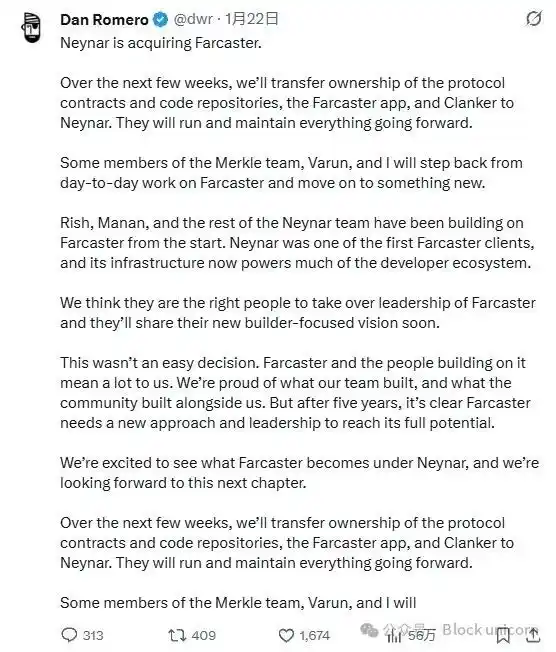
Last Wednesday, Dan Romero, co-founder of the decentralized social platform Farcaster, announced that Neynar, one of Farcaster's earliest and most influential clients, would acquire Farcaster. As part of this transition, ownership of the protocol contracts, core codebase, official applications, and (even) Clanker would be transferred in phases. Meanwhile, Romero noted that the founding team would step back from daily operations to focus on new projects.

Behind Farcaster's decision seems to be a growing internal consensus: the long-term sustainability of social protocols relies less on continuous iteration at the protocol design level and more on increasingly specialized infrastructure and operational execution capabilities at the current stage.

In practice, this means control naturally shifts to infrastructure providers who have successfully aggregated developer resources and traffic—Neynar has been emphasizing the cost and complexity of running Farcaster's hub servers since 2024, abstracting these challenges into APIs and infrastructure layers so developers can focus on product development rather than grappling with protocol internals.
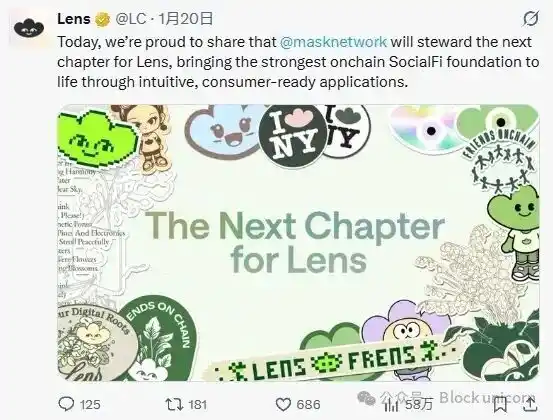
In contrast, Lens has adopted a more advanced—though conceptually aligned with Farcaster—approach. With a relatively richer set of tools, resources, and a mature user base, Lens has chosen to push further in the operational direction.

On January 20, 2026, Lens Labs officially announced that Mask Network would take on the role of "steward" for the next phase of Lens, shifting the project's focus from infrastructure building to consumer-facing products. Mask, for its part, stated that the move aims to translate the protocol's proven achievements into experiences accessible to the mass market.

Notably, both Lens and Aave specifically emphasized that this transition does not involve changes to ownership, financial structure, or governance. The focus is not on the acquisition itself but on a clear reallocation of responsibilities—specifically, who is responsible for turning the protocol into a product people use daily.

2. The Key to Platformization Lies in Clear Role Division

From a broader perspective, both cases point to the same conclusion: as protocols evolve into platforms, the key requirement is no longer adding more features but clearly dividing roles and responsibilities—i.e., how to efficiently optimize the complete operational stack required by a platform, including infrastructure resources, developer onboarding tools, distribution capabilities, and more.

Neynar's core value in the Farcaster ecosystem lies in standardizing social data and user behavior through APIs. Neynar enables developers to immediately start experimenting with products without dealing with the complexities of hub operations or the protocol level. Thus, this acquisition marks Neynar's entry into the next stage—enhancing Farcaster's development and operational layer by integrating the protocol itself.

Lens, though it followed a different path, ultimately landed in a similar framework. With Lens Chain and V3 already establishing the foundational architecture, the next challenge is no longer building more protocols but delivering consumer experiences that users truly engage with daily. The partnership with Mask Network is precisely aimed at bridging this gap.

3. The Battle of the Super Layers

In fact, the integration and consolidation of protocols are not new. Similar patterns have emerged in the Web2 and Web2.5 spaces since around 2025. Wallet providers, crypto payment companies, exchanges, and infrastructure providers are increasingly seeking to integrate adjacent services or make acquisitions to achieve vertical expansion and build so-called "super layers."

However, the most important aspect is not the range of functions these players are trying to bundle. Instead, the decisive shift lies in how they carefully design the integration—selecting the technology stack and operational platforms to integrate based on clearly defined target audiences.

The Neynar–Farcaster and Mask–Lens cases show that the Web3 ecosystem is also moving beyond the stage of loosely connected experimental protocols into an era of large-scale network ecosystems, where organization, operations, and technology are tightly interwoven. Even in the realm of building an open internet, Web3 product teams, long constrained by founder-centric, semi-closed structures, now face the reality of competition: independent team structures, clear division of responsibilities, and the ability to operate products long-term are no longer optional but essential.

Looking ahead, the market dynamics around building super layers (spanning both Web2 and Web3) are likely to become more strategic and more intense.


Tiền kỹ thuật số thịnh hành

Câu hỏi Liên quan

QWhat is the strategic shift behind Farcaster's acquisition by Neynar?

AThe strategic shift is that the long-term sustainability of social protocols relies more on specialized infrastructure and operational execution rather than continuous iteration at the protocol design level. Control naturally transfers to infrastructure providers like Neynar, which abstracts away the complexity and cost of running hubs, allowing developers to focus on product development.

QHow does the Lens and Mask Network partnership differ from a traditional acquisition?

AThe partnership does not involve changes in ownership, financial structure, or governance. The focus is on a clear reallocation of responsibility—specifically, who is responsible for turning the protocol into a product that people use daily, rather than a merger or acquisition itself.

QWhat is the core value that Neynar provides to the Farcaster ecosystem?

ANeynar's core value lies in standardizing social data and user behavior through APIs, enabling developers to immediately start product experiments without dealing with the complexities of hub operations or the protocol layer.

QWhat broader trend do the Farcaster and Lens cases indicate about Web3 ecosystem evolution?

AThey indicate that the Web3 ecosystem is moving beyond loosely connected experimental protocols into an era of large-scale network ecosystems where organization, operations, and technology are tightly interwoven, with clear role divisions and long-term operational capabilities becoming essential.

QWhat is meant by the 'super layer' in the context of Web2 and Web3?

AThe 'super layer' refers to the trend where providers (like wallets, exchanges, infrastructure companies) integrate adjacent services or make acquisitions to achieve vertical expansion, building comprehensive platforms that bundle functionalities based on carefully selected tech and operational stacks for specific target audiences.

Nội dung Liên quan

Tại sao Bitcoin duy trì mức 64.000 USD sau lần tạm dừng cứng rắn của Fed

Bitcoin duy trì quanh mức 64.000 USD sau cuộc họp của Fed. Dù Fed giữ lãi suất trong khoảng 3,50–3,75%, ba thành viên ủy ban đã bỏ phiếu ủng hộ tăng lãi suất, gửi đi tín hiệu chính sách thắt chặt hơn dự kiến. Bitcoin phản ứng biến động nhưng cuối cùng ổn định quanh 64.000 USD, với vùng hỗ trợ 63.000–63.500 USD và kháng cự ở 66.000 USD. ETF Bitcoin ghi nhận dòng vốn ròng chảy vào 32,1 triệu USD, chấm dứt chuỗi rút tiền, trong khi ETF Ethereum tiếp tục thất thoát 18,65 triệu USD. Điều này cho thấy sự luân chuyển vốn sang Bitcoin giữa bối cảnh bất ổn vĩ mô. Ethereum giao dịch quanh 1.900 USD, áp lực bán tăng nhưng mạng lưới vẫn mạnh với lượng ETH chờ staking cao. Các altcoin khác di chuyển không đồng nhất. Về pháp lý, dự luật CLARITY Act bị trì hoãn đến sau kỳ nghỉ tháng 8 của Thượng viện Mỹ, khiến thị trường thận trọng hơn về khả năng thông qua vào năm 2026. Tóm lại, thị trường tiền mã hóa đang trong trạng thái chờ đợi, với Bitcoin thể hiện sự kiên cường nhờ dòng vốn ETF. Các nhà đầu tư trung hạn cần theo dõi khả năng giữ trên 63.000 USD của Bitcoin, mức 1.860 USD của Ethereum và dòng vốn thể chế để tìm tín hiệu cho sự phục hồi trong nửa cuối năm 2026.

cryptonews.ru1 giờ trước

Tại sao Bitcoin duy trì mức 64.000 USD sau lần tạm dừng cứng rắn của Fed

cryptonews.ru1 giờ trước

Parker Lewis Lý Giải Tại Sao Bitcoin Vẫn Là Đồng Tiền Tốt Nhất

Nhà phân tích Bitcoin uy tín Parker Lewis chỉ trích mạnh mẽ các chiến lược tiếp thị của các công ty tự xưng là kho bạc tiền mã hóa. Ông cho rằng việc các công ty này huy động vốn thông qua việc bán "tín dụng số" dưới dạng cổ phiếu ưu đãi vĩnh viễn đã làm sai lệch bản chất của tiền mã hóa đầu tiên. Lewis nhấn mạnh Bitcoin không có lợi suất định sẵn, và việc hứa hẹn cổ tức thường xuyên là một trò chơi rủi ro cao, dựa chủ yếu vào việc thu hút nhà đầu tư mới trên thị trường tăng trưởng. Ông dẫn chứng sự chênh lệch lớn giữa thị trường tín dụng toàn cầu (300 nghìn tỷ USD) và thị trường cổ phiếu ưu đãi vĩnh viễn (1 nghìn tỷ USD) để chứng minh rủi ro của các công cụ phái sinh này, thường được chuyển cho các nhà đầu tư nhỏ lẻ. Lewis bác bỏ quan điểm cho rằng Bitcoin quá biến động, lập luận rằng biến động là hệ quả tự nhiên của việc chấp nhận một loại tài sản mới. Với nguồn cung cứng và không co giãn, mỗi làn sóng người dùng mới sẽ dẫn đến biến động giá mạnh. Thay vì mua cổ phiếu phái sinh của các công ty như MicroStrategy, ông khuyên nên mua Bitcoin trực tiếp, vì điều này an toàn hơn về mặt toán học so với việc giao tiền cho các nhà quản lý tập đoàn. Việc chuyển hướng sang các công cụ phái sinh làm mất tập trung vào mối đe dọa thực sự: sự mất giá nhanh chóng của tiền pháp định. Lewis đưa ra "Chỉ số thịt bò" của riêng mình, cho thấy mức lạm phát tiêu dùng thực tế khoảng 12-13% mỗi năm, cao hơn nhiều so với số liệu chính thức. Ông kết luận rằng chiến lược tài chính an toàn và hiệu quả nhất trong bối cảnh lạm phát toàn cầu là sở hữu trực tiếp Bitcoin và tự kiểm soát khóa riêng tư, thay vì theo đuổi lợi nhuận đầy rủi ro từ cổ phiếu kho bạc tiền mã hóa.

cryptonews.ru1 giờ trước

Parker Lewis Lý Giải Tại Sao Bitcoin Vẫn Là Đồng Tiền Tốt Nhất

cryptonews.ru1 giờ trước

Bắt giữ các thành viên trong âm mưu lừa đảo với XRP, chiếm đoạt 9 triệu đô la từ 71 nhà đầu tư

Vào ngày 30/7, Cảnh sát Thủ đô Seoul thông báo đã bắt giữ ba nghi phạm trong một vụ lừa đảo đầu tư liên quan đến tiền điện tử XRP. Nhóm này bị cáo buộc vận hành nền tảng đầu tư gian lận Fxrpntwork.com, thu hút 71 nhà đầu tư chuyển khoảng 3,4 triệu đô la XRP trong một tuần (từ 16-23/10) trước khi đóng cửa trang web và biến mất. Các nghi phạm quảng bá trang web thông qua blog, bài báo trực tuyến và video YouTube, hứa hẹn bảo toàn vốn gốc và lợi nhuận hàng tháng từ 1,5% đến 1,8%. Họ hướng dẫn nạn nhân chuyển XRP từ các sàn giao dịch Hàn Quốc qua nền tảng nước ngoài rồi vào ví do nhóm kiểm soát. Cảnh sát Seoul cảnh báo các nhà đầu tư cần kiểm tra kỹ nguồn thông tin chính thức trước khi chuyển tiền. Các đối tượng đã sao chép thương hiệu của Flare Network và FXRP để tạo vẻ ngoài hợp pháp. Ripple và Interpol cảnh báo đây là thủ đoạn phổ biến, với các mạng lưới tội phạm xuyên quốc gia ngày càng có tổ chức. Việc hứa hẹn lợi nhuận đảm bảo vẫn là dấu hiệu phổ biến của lừa đảo tiền điện tử. Hai nghi phạm 29 tuổi đã bị bắt, một người 34 tuổi khác bị đề nghị truy tố, và một nghi phạm 29 tuổi khác đang bị truy nã ở nước ngoài với thông báo đỏ của Interpol. Cảnh sát cũng đã phong tỏa tài sản ảo trị giá 17,3 tỷ won và đang điều tra các chuyển khoản liên quan trị giá 27,3 tỷ won để xác định thêm nạn nhân và đồng phạm.

cryptonews.ru1 giờ trước

Bắt giữ các thành viên trong âm mưu lừa đảo với XRP, chiếm đoạt 9 triệu đô la từ 71 nhà đầu tư

cryptonews.ru1 giờ trước

Giao dịch

Giao ngay

Bài viết Nổi bật

Làm thế nào để Mua LAYER

Chào mừng bạn đến với HTX.com! Chúng tôi đã làm cho mua Solayer (LAYER) trở nên đơn giản và thuận tiện. Làm theo hướng dẫn từng bước của chúng tôi để bắt đầu hành trình tiền kỹ thuật số của bạn.Bước 1: Tạo Tài khoản HTX của BạnSử dụng email hoặc số điện thoại của bạn để đăng ký tài khoản miễn phí trên HTX. Trải nghiệm hành trình đăng ký không rắc rối và mở khóa tất cả tính năng. Nhận Tài khoản của tôiBước 2: Truy cập Mua Crypto và Chọn Phương thức Thanh toán của BạnThẻ Tín dụng/Ghi nợ: Sử dụng Visa hoặc Mastercard của bạn để mua Solayer (LAYER) ngay lập tức.Số dư: Sử dụng tiền từ số dư tài khoản HTX của bạn để giao dịch liền mạch.Bên thứ ba: Chúng tôi đã thêm những phương thức thanh toán phổ biến như Google Pay và Apple Pay để nâng cao sự tiện lợi.P2P: Giao dịch trực tiếp với người dùng khác trên HTX.Thị trường mua bán phi tập trung (OTC): Chúng tôi cung cấp những dịch vụ được thiết kế riêng và tỷ giá hối đoái cạnh tranh cho nhà giao dịch.Bước 3: Lưu trữ Solayer (LAYER) của BạnSau khi mua Solayer (LAYER), lưu trữ trong tài khoản HTX của bạn. Ngoài ra, bạn có thể gửi đi nơi khác qua chuyển khoản blockchain hoặc sử dụng để giao dịch những tiền kỹ thuật số khác.Bước 4: Giao dịch Solayer (LAYER)Giao dịch Solayer (LAYER) dễ dàng trên thị trường giao ngay của HTX. Chỉ cần truy cập vào tài khoản của bạn, chọn cặp giao dịch, thực hiện giao dịch và theo dõi trong thời gian thực. Chúng tôi cung cấp trải nghiệm thân thiện với người dùng cho cả người mới bắt đầu và người giao dịch dày dạn kinh nghiệm.

Tổng lượt xem 626Xuất bản vào 2025.02.11Cập nhật vào 2026.06.02

Làm thế nào để Mua LAYER

Thảo luận

Chào mừng đến với Cộng đồng HTX. Tại đây, bạn có thể được thông báo về những phát triển nền tảng mới nhất và có quyền truy cập vào thông tin chuyên sâu về thị trường. Ý kiến ​​của người dùng về giá của LAYER (LAYER) được trình bày dưới đây.

活动图片












