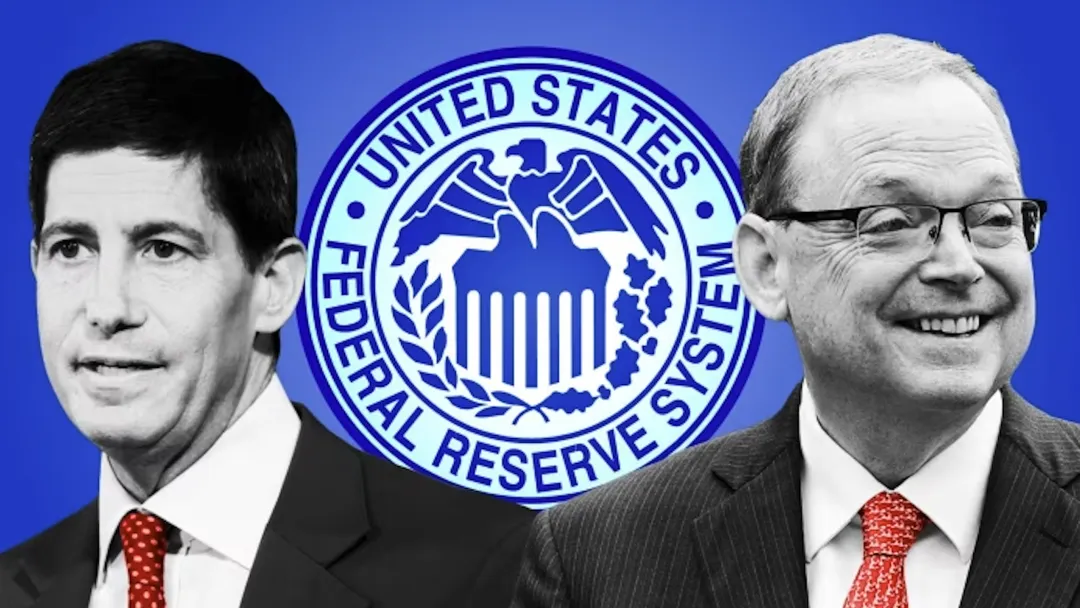
Fed Candidates Warsh and Hassett: Who Is More Beneficial for Us?

marsbitXuất bản vào 2025-12-16Cập nhật gần nhất vào 2025-12-16

Tóm tắt

Amidst inflation pressures and geopolitical uncertainty in 2025, the potential successors to the U.S. Federal Reserve Chair—Kevin Warsh and Kevin Hassett—present sharply contrasting policy approaches. Warsh, a former Fed governor with a hawkish stance, emphasizes financial stability, market discipline, and inflation control, advocating for cautious monetary tightening and reduced intervention risks. In contrast, Hassett, a former White House economic advisor and dovish figure, supports aggressive rate cuts, growth-oriented policies, and closer alignment with presidential agendas, potentially benefiting markets and cryptocurrencies. Market predictions show narrowing odds, with Warsh gaining traction post-Trump’s endorsement, though Hassett retains advantages due to his political ties. The selection will significantly influence long-term economic stability versus short-term growth, testing the Fed’s independence and global financial resilience.

Against the backdrop of inflation pressures, geopolitical uncertainties, and technological changes facing the U.S. economy in 2025, the successor to the Federal Reserve Chair position has drawn significant attention.‍‍‍‍‍‍‍‍‍‍‍‍‍‍‍‍‍‍‍‍‍‍‍‍‍‍‍‍‍‍‍

President Donald Trump recently stated that he is "leaning towards Warsh or Hassett," a remark that has triggered market volatility and widespread discussion.

Kevin Warsh, a former Federal Reserve Governor, is known for his hawkish stance and experience in responding to the financial crisis;


Kevin Hassett, a former White House economic advisor, is renowned for his dovish perspective and pro-growth policies.


Comparing their backgrounds, monetary policy thinking, potential impacts, and current online public sentiment, who has a greater chance of being elected?

Overview of the Two Candidates' Backgrounds


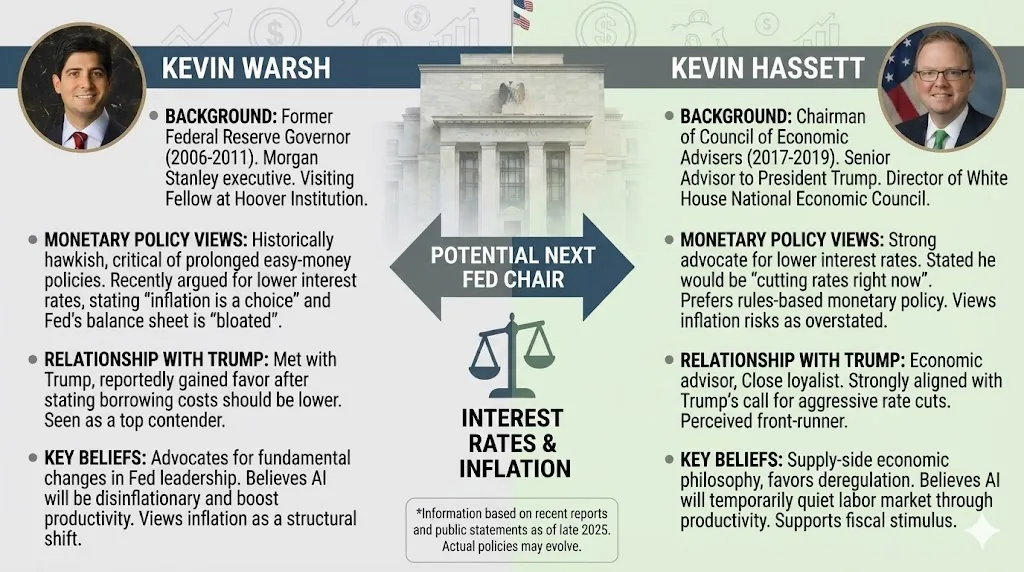
Kevin Warsh is an experienced financial policy expert, born in 1970, and a graduate of Stanford University and Harvard Law School. He worked as an investment banker at Morgan Stanley and served as Special Assistant to the President for Economic Policy during the George W. Bush administration. From 2006 to 2011, Warsh served as a Federal Reserve Governor, participating in the response to the global financial crisis, including the formulation of quantitative easing (QE) policies. Currently, he is a visiting scholar at the Hoover Institution and serves on the boards of several companies. Warsh's career emphasizes financial stability and market discipline, and he is seen as a representative of conservative economics.


Kevin Hassett is a seasoned economist with a Ph.D. in economics from the University of Pennsylvania. He has taught at Yale University and Columbia University and worked at the conservative think tank American Enterprise Institute. Hassett served as Chairman of the White House Council of Economic Advisers during Trump's first term and as Director of the National Economic Council in the second term. He led the design of the Trump tax reforms and is known for his expertise in macroeconomics and tax policy. Currently, Hassett also serves as an advisor to Coinbase, showing an affinity for cryptocurrencies.

Distinct Contrasts in Monetary Policy Thinking


The differences in monetary policy thinking between Warsh and Hassett are rooted in their philosophical foundations.


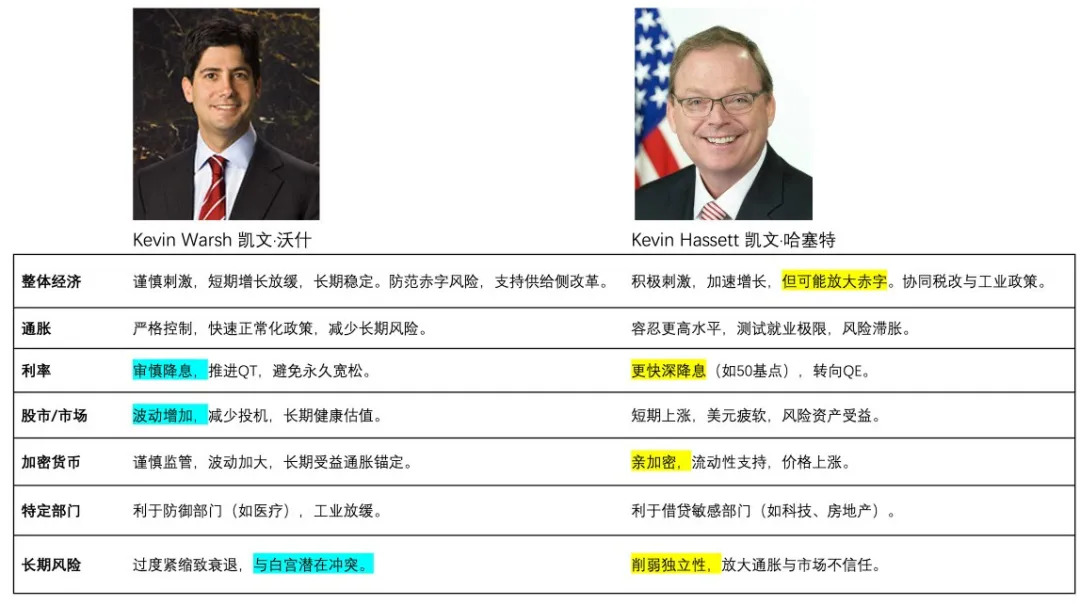
Warsh holds a hawkish view, believing that inflation is a result of policy choices rather than simply an outcome of economic growth. He criticizes the Fed for indirectly fueling fiscal deficits through low interest rates and QE, advocating for shrinking the central bank's balance sheet, restoring market discipline, and avoiding the moral hazard of "too big to fail."


Warsh views tariffs as a one-time price shock rather than a sustained driver of inflation, emphasizing that the central bank should intervene in crises but quickly normalize policies to maintain long-term economic stability.


Hassett, on the other hand, leans more dovish, emphasizing that monetary policy should coordinate with fiscal policy, supporting investment growth driven by tax incentives and regulatory certainty. He advocates for aggressive rate cuts, such as recently suggesting a 50-basis-point cut to address slowing growth and inflation below expectations, and criticizes the Fed for potential "anti-Trump partisan bias" if it does not cut rates.


Hassett believes the Fed should not be a "black box," advocating for "slow and steady" interest rate adjustments to boost the stock and cryptocurrency markets.


This difference reflects the classic hawk versus dove opposition:Warsh prioritizes controlling inflation and fiscal sustainability, guarding against the risks of excessive easing; Hassett focuses on stimulating economic growth and coordinating with White House policies, potentially being more market-friendly.


If Warsh is elected, the Fed may shift to a more cautious monetary policy framework.In the short term, this could lead to slower economic growth, prudent rate cuts, and the推进 of quantitative tightening (QT), thereby controlling inflation and reducing the risk of asset bubbles. However, it could also exacerbate an economic recession and create political friction with the White House. Stock market volatility may increase, but in the long run, it would promote healthy valuations, benefiting defensive sectors like healthcare and utilities.


Conversely, under Hassett's leadership, the Fed might focus more on short-term prosperity, stimulating consumption and investment through faster rate cuts and ending QT.This would benefit borrowing-sensitive sectors like technology and real estate, driving up stock and cryptocurrency markets, but could amplify deficits and inflation expectations, leading to stagflation risks and weakening the Fed's independence.


Overall, Warsh's policies focus more on long-term stability, while Hassett could amplify short-term market prosperity but increase the risk of political intervention.


Online Public Sentiment and Election Chance Analysis


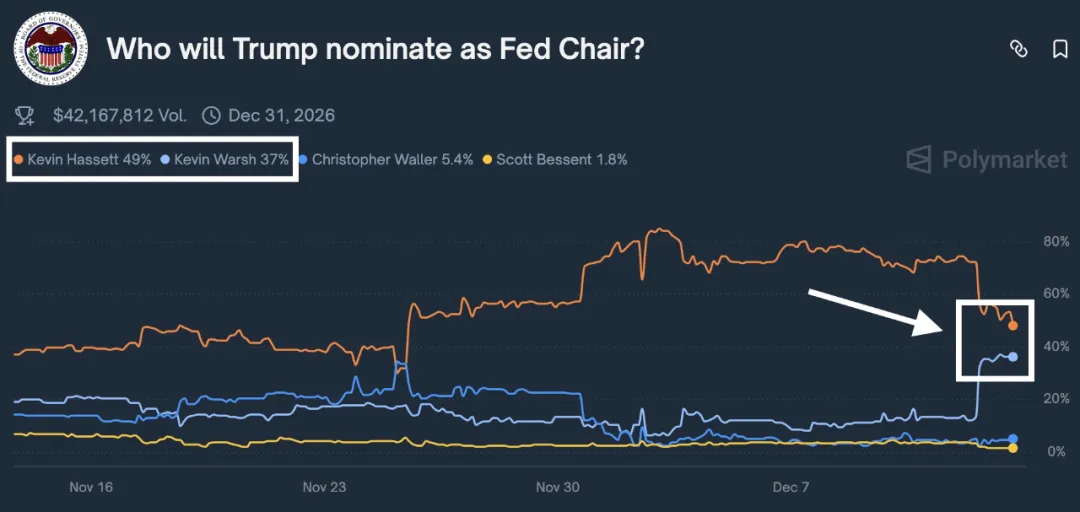
As of December 13, 2025, opinion leaders and public sentiment on X platform (formerly Twitter) show that Hassett initially led, but after Trump's statement, Warsh's probability surged from 15% to 37-40%.


Prediction markets like Kalshi and Polymarket show Hassett's probability at around 49%, but the gap is narrowing.

Wall Street Journal reporter Nick Timiraos pointed out that Hassett might "win the race," while financial commentator Steve Grasso emphasized that his pro-rate-cut stance is beneficial for the market.


Crypto analyst MartyParty sees Hassett as a pro-crypto candidate.


Mainstream media reports indicate that Trump views both as "top contenders" and expects an announcement before Christmas.


Warsh has received support from JPMorgan CEO Dimon, enhancing his prestige in financial circles. Currently, Warsh has stronger momentum and a slightly greater chance of being elected, but Hassett's pro-Trump background still gives him an advantage.


The appointment of the Fed Chair will profoundly affect the trajectory of the U.S. economy.


Warsh could bring an era of disciplined stability, while Hassett预示着 more aggressive growth-oriented policies.


Against the backdrop of the Trump administration's emphasis on "America First," who will prevail remains undecided, but regardless of the outcome, this choice will test the Fed's independence and the resilience of global financial markets.


Investors and policy observers should closely monitor subsequent developments to应对 potential market volatility.



Tiền kỹ thuật số thịnh hành

Câu hỏi Liên quan

QWhat are the key differences in monetary policy philosophy between Kevin Warsh and Kevin Hassett?

AKevin Warsh holds a hawkish view, prioritizing inflation control and fiscal sustainability, advocating for market discipline and cautious monetary policy normalization. Kevin Hassett is more dovish, emphasizing growth stimulation through aggressive rate cuts and coordination with fiscal policy, which may favor short-term market prosperity but risks higher deficits and inflation.

QHow did the market and prediction markets react to Trump's preference for Warsh or Hassett?

AFollowing Trump's statement, Kevin Warsh's probability surged from 15% to 37-40%, while prediction markets like Kalshi and Polymarket showed Hassett's probability around 49%, indicating a narrowing gap between the two candidates.

QWhat are the potential economic impacts if Kevin Warsh is appointed as Fed Chair?

AUnder Warsh's leadership, the Fed might adopt a more cautious monetary framework, leading to slower growth, prudent rate cuts, and quantitative tightening. This could control inflation and reduce asset bubbles but may increase recession risks and cause political friction with the White House.

QWhat are the potential economic impacts if Kevin Hassett is appointed as Fed Chair?

AHassett's Fed would likely focus on short-term prosperity through faster rate cuts and ending quantitative tightening, benefiting sectors like tech and real estate. However, this approach could amplify deficits, inflation expectations, and stagflation risks, potentially undermining Fed independence.

QWho are the key supporters of Warsh and Hassett, and how does this influence their chances?

AWarsh gained support from JPMorgan CEO Dimon, enhancing his credibility in financial circles. Hassett is favored for his pro-Trump background and endorsements from figures like crypto analyst MartyParty. Currently, Warsh has slightly stronger momentum, but Hassett's alignment with Trump keeps him competitive.

Nội dung Liên quan

Ngân hàng Ý không nhìn thấy lợi thế hệ thống của stablecoin trong chuyển tiền

Một nghiên cứu của Ngân hàng Ý kết luận rằng stablecoin không mang lại lợi thế hệ thống bền vững về chi phí và tốc độ trong chuyển tiền quốc tế so với các dịch vụ tiêu chuẩn. Các ưu điểm tiềm năng bị mất đi bởi phí chuyển đổi sang/và từ tiền pháp định và hiệu quả của cơ sở hạ tầng thanh toán địa phương. Nghiên cứu so sánh việc chuyển 200 USDC qua 10 hành lang giữa Ý và các nước như Brazil, Argentina, Nhật Bản, UAE và Nam Phi. Tổng chi phí chuyển stablecoin dao động từ 0,3% đến gần 9%, tùy tuyến. Thời gian giải quyết giao dịch dưới 20 phút ở những nơi có hệ thống thanh toán tức thời, nhưng có thể kéo dài 1-2 ngày làm việc ở khu vực không có. Chi phí và độ trễ chủ yếu đến từ việc trao đổi, chuyển đổi tiền tệ và chất lượng hạ tầng địa phương, không phải từ phí blockchain. Dù stablecoin rẻ hơn mức trung bình toàn cầu là 6,65%, chúng chỉ rẻ hơn dịch vụ Wise ở 3/7 tuyến so sánh được. Các tác giả cho rằng lợi ích sẽ rõ ràng hơn nếu stablecoin có thể được chi tiêu trực tiếp mà không cần đổi sang tiền địa phương. Họ cũng lưu ý rằng các quy định cấm đoán không làm giảm nhu cầu với stablecoin, trong khi quy định quá chặt chẽ lại gây khó khăn cho người dùng phổ thông.

cryptonews.ru1 giờ trước

Ngân hàng Ý không nhìn thấy lợi thế hệ thống của stablecoin trong chuyển tiền

cryptonews.ru1 giờ trước

Cơn sốt Bitcoin đang bùng nổ: Tuyên bố mới của Saylor gây nên những đồn đoán về việc mua vào

Giám đốc điều hành của Strategy Inc. (Nasdaq: MSTR), Michael Saylor, một lần nữa khơi dậy những đồn đoán về việc công ty sẽ thông báo mua Bitcoin mới vào thứ Hai, sau khi đăng thông điệp "Bitcoin Drive engaged" vào ngày 2 tháng 8. Thông báo này đi kèm với biểu đồ mua hàng quen thuộc của công ty, phù hợp với thói quen báo hiệu thay đổi kho bạc trước các báo cáo hàng tuần của Saylor. Báo cáo kèm theo cho thấy dự trữ Bitcoin của Strategy là 843.775 BTC, trị giá khoảng 53,25 tỷ USD. Giá mua trung bình được ghi nhận là 75.653 USD/BTC, với lỗ chưa thực hiện là 10,58 tỷ USD (-16,58%). Một tín hiệu tương tự vào Chủ nhật tuần trước đã dẫn đến thông báo vào ngày 27/7 về việc công ty gia tăng dự trữ tiền mặt. Sổ cái thời gian thực của Strategy hiển thị 116 giao dịch đã đăng ký với tổng số 843.775 BTC được mua, đồng thời ghi nhận hai đợt bán Bitcoin gần đây tổng cộng 3.588 BTC (giảm từ 847.363 BTC), nhằm mục đích tài trợ cho cổ tức ưu đãi và bổ sung dự trữ USD. Công ty được báo cáo là đã không mua BTC trong tuần kết thúc ngày 26/7, đồng thời tăng dự trữ USD lên khoảng 3,75 tỷ USD. Bối cảnh tài chính đầy thách thức khi Strategy báo lỗ hoạt động 8,33 tỷ USD trong quý II/2026, chủ yếu do lỗ chưa thực hiện trên tài sản kỹ thuật số. Ban lãnh đạo có thể bán thêm tới 1,25 tỷ USD Bitcoin để củng cố dự trữ USD. Thông báo cập nhật dự kiến vào thứ Hai sẽ cho thấy liệu "Bitcoin Drive" có đánh dấu việc tái tích lũy hay không, khi Strategy cân bằng giữa kho dự trữ Bitcoin khổng lồ và các nghĩa vụ tiền mặt ngày càng tăng.

cryptonews.ru1 giờ trước

Cơn sốt Bitcoin đang bùng nổ: Tuyên bố mới của Saylor gây nên những đồn đoán về việc mua vào

cryptonews.ru1 giờ trước

Cổ phiếu các công ty trí tuệ nhân tạo được giao dịch như 'meme coin', trong khi Bitcoin hầu như không thay đổi giá - Tổng quan tuần

**Tóm tắt:** Bài viết phân tích các diễn biến chính trên thị trường tài chính và tiền điện tử trong tuần, với trọng tâm là sự biến động mạnh ở lĩnh vực AI và sự trầm lặng tương đối của Bitcoin. **Thị trường chứng khoán & AI:** * Cổ phiếu AI được giao dịch như "meme coin" với biến động cực đoan. Thị trường Hàn Quốc lao dốc 8% trong một phiên, chịu ảnh hưởng từ đợt bán tháo chip toàn cầu. * Quỹ "Situational Awareness" của Leopold Aschenbrenner bị thua lỗ nặng, dẫn đến thanh lý tài sản lớn, góp phần gây ra biến động. Citadel được cho là đã mua lại phần lớn danh mục của quỹ này. * Các chuyên gia như Ram Ahluwalia và Flood khuyên nên kiên nhẫn, trong khi Jim Bianco lưu ý thị trường thường tìm đáy sau khi một sự kiện lớn (như sự sụp đổ của một quỹ) xảy ra. **Macro & Tiền tệ:** * Các phát biểu của Chủ tịch Fed Kevin Warsh được cho là đã góp phần gây ra biến động, với một số ý kiến cho rằng ông thiếu năng lực. * Bộ Tài chính Nhật Bản can thiệp để hỗ trợ đồng Yên, nhưng hiệu quả hạn chế. * Có dấu hiệu về việc giảm thanh khoản toàn cầu và đà tăng trưởng sản xuất Mỹ chậm hơn kỳ vọng. **Thị trường Tiền điện tử:** * Bitcoin ít biến động, dao động quanh mức 64,000 USD, trong khi sự chú ý đổ dồn sang thị trường truyền thống. * Nhiều công ty tiền điện tử gặp khó khăn: BitMart và Storj Labs tuyên bố đóng cửa/phá sản; Coinbase (COIN) lao dốc sau báo cáo tài chính yếu; Uphold và các sàn khác cắt giảm nhân sự. * MicroStrategy tiếp tục tích lũy Bitcoin và mua lại cổ phiếu của chính mình, một chiến lược bị chỉ trích là "vòng xoáy Ponzi". * Cảnh báo bảo mật nghiêm trọng về lỗ hổng trên ví phần cứng Coldcard có thể làm lộ khóa riêng tư, đòi hỏi người dùng hành động ngay. **Các chủ đề khác:** * **DeFi/Blockchain:** Trade.xyz trên Hyperliquid và Pump.fun trên Solana cực kỳ thành công, đặt ra câu hỏi liệu họ có tự khởi chạy blockchain riêng hay không. Nghi ngờ giao dịch nội gián trên Hyperliquid. * **AI & Crypto:** Jason Calacanis và Barry Silbert nhiệt tình ủng hộ dự án Bittensor (TAO), coi đó là mô hình AI phi tập trung. Tác giả cảnh báo nên thận trọng trước sự cổ xúy của các nhà đầu tư mạo hiểm. * Các tranh cãi trong ngành: Kyle Samani chỉ trích Multicoin Capital; Charles Hoskinson khó chịu vì câu hỏi về quá khứ đồng sáng lập Ethereum. **Thông điệp chính:** Thị trường đang trải qua giai đoạn biến động mạnh, đặc biệt ở mảng AI, trong khi tiền điện tử chịu áp lực. Tính kỷ luật, sự kiên nhẫn và cảnh giác cao độ (đặc biệt về bảo mật) là cần thiết trong bối cảnh hiện tại.

cryptonews.ru1 giờ trước

Cổ phiếu các công ty trí tuệ nhân tạo được giao dịch như 'meme coin', trong khi Bitcoin hầu như không thay đổi giá - Tổng quan tuần

cryptonews.ru1 giờ trước

Giao dịch

Giao ngay

Bài viết Nổi bật

Làm thế nào để Mua US

Chào mừng bạn đến với HTX.com! Chúng tôi đã làm cho mua Talus Network (US) trở nên đơn giản và thuận tiện. Làm theo hướng dẫn từng bước của chúng tôi để bắt đầu hành trình tiền kỹ thuật số của bạn.Bước 1: Tạo Tài khoản HTX của BạnSử dụng email hoặc số điện thoại của bạn để đăng ký tài khoản miễn phí trên HTX. Trải nghiệm hành trình đăng ký không rắc rối và mở khóa tất cả tính năng. Nhận Tài khoản của tôiBước 2: Truy cập Mua Crypto và Chọn Phương thức Thanh toán của BạnThẻ Tín dụng/Ghi nợ: Sử dụng Visa hoặc Mastercard của bạn để mua Talus Network (US) ngay lập tức.Số dư: Sử dụng tiền từ số dư tài khoản HTX của bạn để giao dịch liền mạch.Bên thứ ba: Chúng tôi đã thêm những phương thức thanh toán phổ biến như Google Pay và Apple Pay để nâng cao sự tiện lợi.P2P: Giao dịch trực tiếp với người dùng khác trên HTX.Thị trường mua bán phi tập trung (OTC): Chúng tôi cung cấp những dịch vụ được thiết kế riêng và tỷ giá hối đoái cạnh tranh cho nhà giao dịch.Bước 3: Lưu trữ Talus Network (US) của BạnSau khi mua Talus Network (US), lưu trữ trong tài khoản HTX của bạn. Ngoài ra, bạn có thể gửi đi nơi khác qua chuyển khoản blockchain hoặc sử dụng để giao dịch những tiền kỹ thuật số khác.Bước 4: Giao dịch Talus Network (US)Giao dịch Talus Network (US) dễ dàng trên thị trường giao ngay của HTX. Chỉ cần truy cập vào tài khoản của bạn, chọn cặp giao dịch, thực hiện giao dịch và theo dõi trong thời gian thực. Chúng tôi cung cấp trải nghiệm thân thiện với người dùng cho cả người mới bắt đầu và người giao dịch dày dạn kinh nghiệm.

Tổng lượt xem 579Xuất bản vào 2025.12.11Cập nhật vào 2026.06.02

Làm thế nào để Mua US

Thảo luận

Chào mừng đến với Cộng đồng HTX. Tại đây, bạn có thể được thông báo về những phát triển nền tảng mới nhất và có quyền truy cập vào thông tin chuyên sâu về thị trường. Ý kiến ​​của người dùng về giá của US (US) được trình bày dưới đây.

活动图片











