Crypto Market Makers Are Collectively Seeking Change as Money Becomes Harder to Earn

marsbitXuất bản vào 2026-06-12Cập nhật gần nhất vào 2026-06-12

Tóm tắt

**Summary: Crypto Market Makers Adapt as Margins Shrink** Leading crypto market maker GSR exemplifies a broader industry shift, moving beyond traditional market-making to become a full-service "Web3 investment bank." Its recent strategic acquisitions—including an SEC-registered broker-dealer, rebranded as GSR Securities—and purchases of token advisory firms aim to create an integrated platform covering token design, fundraising, listing, liquidity provision, and asset management. This includes launching an ETF and investing in tokenization platforms like Libeara, backed by a strategic investment from Standard Chartered's SC Ventures. This transformation is not unique to GSR. Other major players like Keyrock, B2C2, Wintermute, and DWF Labs are also expanding geographically, pursuing regulatory licenses (especially under frameworks like MiCA in the EU), and diversifying into over-the-counter (OTC) trading, asset management, and real-world asset tokenization. The driving force behind this collective pivot is a rapidly changing market. Profits from traditional altcoin market-making are declining due to fewer viable projects, reduced client budgets, increased competition, and smarter, more demanding clients. Simultaneously, regulatory pressures are mounting, making compliance a baseline cost. Extreme market events further expose teams lacking robust risk controls. Consequently, the crypto market-making business model is evolving from one reliant on information asymmetry and vo...

Author: momo, ChainCatcher

This year, the veteran crypto market maker GSR has been making frequent moves.

Recently, GSR announced the completion of its acquisition of the SEC-registered broker-dealer Equilibrium Capital Services and renamed it GSR Securities. This means that GSR has obtained a broker-dealer license regulated by the U.S. FINRA, enabling it to participate in the trading and brokerage of securities-like digital assets under the U.S. compliance framework.

Prior to this, it had completed several key intensive layouts: In March, it acquired two token consulting firms; in April, it jointly launched a crypto ETF on Nasdaq and invested in the tokenization platform Libeara; in May , it introduced a strategic investment from SC Ventures under Standard Chartered Bank.

What exactly is GSR plotting behind these intensive actions? And what other collective actions are other crypto market makers taking?

From Crypto Market Making to “Web3 Investment Bank”

As early as 2025, GSR CEO Xin Song positioned the company as a “Crypto Capital Markets Platform” and has repeatedly mentioned its evolution towards a “Web3 Investment Bank.”

He also mentioned the motivation behind the transformation. In his view, the issues with crypto projects are never just in one single link; the entire chain is fragmented. For example, from token design, financing, listing, to liquidity arrangements, different institutions need to be approached separately, and the goals of these institutions are not aligned, resulting in high coordination costs. Therefore, what they hope to do is bring as many services surrounding the token lifecycle as possible into one system.

With this direction in mind, starting from last year or even earlier, GSR has been continuously complementing its capabilities through licenses, acquisitions, and investments.

In early 2025 , GSR obtained UK FCA registration status, entering the regulated system. Subsequently, it acquired the FINRA-registered broker-dealer Equilibrium Capital Services, which was renamed GSR Securities upon completion of regulatory approval this year. This change is not just about acquiring another compliant identity; it gives GSR the ability to interface with traditional capital markets.

Beyond licenses, GSR has also begun moving its services earlier into the issuance phase.

In March this year, it acquired Autonomous and Architech for $57 million. The former focuses on foundation operations and financing coordination, while the latter focuses on token economics design and liquidity strategy.

After the merger, the entire chain from token design and financing to listing and market making begins to be integrated. These stages were previously often dispersed among different institutions but are now gradually being consolidated into a unified service system.

But the more significant change is that services have started extending from “how to issue a token” further to “how to manage assets.”

GSR mentioned in a public interview that many foundations and protocols hold significant amounts of their own tokens in the early stages but lack a mature financial system to manage these assets. As a result, the assets are highly concentrated, extremely volatile, and it is difficult to form a stable source of funds. Therefore, they are also gradually expanding into the asset management space.

In addition to helping crypto enterprises build crypto treasuries last year, GSR also began launching ETF funds this year.

In April this year, GSR launched its first ETF, the GSR Crypto Core3 ETF, which includes Bitcoin, Ethereum, and Solana in a unified portfolio and generates returns through staking mechanisms.

Meanwhile, GSR is also betting on the tokenization direction.

This year, it invested in Libeara, a platform incubated by Standard Chartered's SC Ventures . This platform already supports the issuance of over $10 billion in on-chain assets and possesses relevant licenses from Singapore's MAS. Interestingly, shortly after this, SC Ventures made a reverse investment in GSR, becoming its first external strategic shareholder since its founding in 2013.

This cross-shareholding has transformed the relationship from a business partnership to a capital alliance, granting GSR more direct access to banking systems, institutional networks, and compliance channels.

In public information, GSR also mentioned having encountered tokenization demands for various assets including film studios, farmland, real estate, and accounts receivable.

From licensing and compliance capabilities to consulting, issuance, market making, asset management, and secondary liquidity, GSR is attempting to gradually complete the puzzle of a “web3 investment bank.”

The Collective Change-Seeking of Crypto Market Makers

GSR is actually not an isolated case of transformation but a microcosm of the collective change-seeking among crypto market makers.

Over the past year, the actions of leading market makers have shown clear convergence. On one hand, they continue to strengthen their compliance and licensing systems; on the other hand, they are constantly extending their business beyond market making.

For example, Keyrock , while entering the U.S. market and setting up a New York office, is also advancing compliance layout under the EU's MiCA framework and has entered the asset management business by acquiring a fund management company; B2C2 has obtained MiCA authorization, expanding its business to more complex institutional OTC and stablecoin exchange scenarios. Wintermute , while strengthening its institutional trading capabilities, has begun venturing into new areas such as prediction markets, DeFi treasury curation, and tokenized gold trading; DWF Labs is also attempting to extend from liquidity provision to real-world asset directions, including gold trading and physical delivery.

Crypto market makers seem to have formed a similar path: first entering mainstream regulatory systems through licensing and geographical expansion, then using OTC and institutional liquidity as core business entry points into the institutional market, followed by gradual extension into asset management, tokenized assets, and more complex financial products.

The underlying driving force may be that the crypto market-making industry is transitioning from high profitability to intense competition and low error tolerance.

First, there is “less money”. With the decline of altcoins and the bear market, project market-making budgets have also significantly decreased. Project teams themselves have become smarter. After experiencing multiple cycles, they have a better understanding of market-making mechanisms and profit margins.

Moreover, it's a case of “more monks but less gruel”. The number of projects with market-making value has decreased, but the number of market makers has increased. The result is that quality liquidity is increasingly concentrated in the hands of a few top-tier teams, while a large number of long-tail projects are neither profitable nor have growth potential. Many market makers are essentially competing for limited returns within an increasingly narrow range, with marginal space being squeezed thin.

Meanwhile, competition is also expanding outward. The emergence of new tracks such as on-chain market making, derivatives, and tokenized assets is causing differentiation in the crypto market maker landscape, and market makers are being required to possess more systematic capabilities.

And harder to ignore is the pressure from compliance and risk incidents. Regulation is accelerating, with the U.S. and EU MiCA systems gradually taking effect. After this, licenses and audits have become basic thresholds, not just bonuses. Coupled with extreme market conditions like those on October 11th last year, a perception is reinforced: teams without systematic risk control capabilities will eventually be washed out.

In summary, the way to make money in the crypto market-making business has changed. The role of crypto market makers seems to be evolving from a trading industry reliant on information asymmetry and volatility into an institutionalized industry jointly reshaped by compliance, client structure, and asset forms.

Câu hỏi Liên quan

QWhat is GSR's strategic transformation goal, and what key steps have they taken to achieve it?

AGSR aims to transform from a traditional crypto market maker into a 'Web3 investment bank' or a comprehensive 'crypto capital markets platform.' Key steps include obtaining regulatory licenses (like an FCA registration and acquiring FINRA-regulated GSR Securities), acquiring token consulting firms (Autonomous and Architech) to integrate services from token design to market making, launching ETF products (GSR Crypto Core3 ETF), investing in tokenization platforms (Libeara), and forming a strategic capital partnership with SC Ventures from Standard Chartered Bank.

QWhy are traditional crypto market making profits decreasing, according to the article?

AProfits from traditional crypto market making are decreasing due to several factors: a market downturn reducing project budgets, project founders becoming more knowledgeable about market making mechanics, increased competition among market makers for fewer valuable projects, and the rising importance of compliance and risk management. This has compressed profit margins and shifted the industry towards more institutionalized, low-margin operations.

QWhat common trends are other major crypto market makers like Keyrock, B2C2, and Wintermute following?

AOther major crypto market makers are following similar trends of expansion and diversification. These include strengthening compliance and licensing frameworks (e.g., under MiCA regulations in the EU), expanding into institutional OTC trading and stablecoin services, and extending their business beyond market making into areas like asset management, tokenized assets (e.g., gold), DeFi treasury curation, and prediction markets.

QHow does the partnership between GSR and SC Ventures benefit both parties?

AThe partnership involves a two-way capital investment: GSR invested in SC Ventures' tokenization platform Libeara, and SC Ventures then became a strategic shareholder in GSR. This deepens their relationship from business cooperation to capital alignment. It provides GSR with enhanced access to traditional banking networks, institutional clients, and regulated channels, while SC Ventures gains deeper insight and a stake in the evolving crypto capital markets ecosystem.

QWhat broader shift in the crypto market making industry does the article describe?

AThe article describes a broader shift where the crypto market making industry is evolving from a high-margin business reliant on information asymmetry and market volatility into a more institutionalized, competitive, and low-margin sector. This transformation is driven by regulatory pressures, the need for sophisticated risk management, client demand for integrated services, and the emergence of new asset classes like tokenized real-world assets, requiring market makers to develop more systematic and diversified capabilities.

Nội dung Liên quan

EF Tái cấu trúc ở cấp độ Sử thi: Cắt giảm 20% nhân sự, cắt ngân sách một nửa, Liệu Ethereum sẽ nhẹ gánh tiến bước?

Quỹ Ethereum (EF) vừa công bố cơ cấu tổ chức lại lớn nhất trong những năm gần đây, bao gồm cắt giảm 20% nhân sự (khoảng 54 người) và chia thành các cụm chức năng: giao thức, truy cập, người dùng, cộng đồng và thể chế. Đồng sáng lập Vitalik Buterin tiết lộ thêm: EF sẽ giảm dần quy mô chi tiêu, cắt ngân sách khoảng 40% và dự kiến giảm tỷ lệ chi tiêu hàng năm từ ~15% xuống còn ~5% sau năm 2030, chuyển sang mô hình vận hành dựa vào quỹ tài trợ. Động thái này được xem là sự điều chỉnh vị trí cần thiết trước những tranh cãi kéo dài về hiệu suất ETH, lộ trình mở rộng quy mô và sự rời đi của các thành viên chủ chốt. EF từ lâu đối mặt với chỉ trích về việc bán ETH, tập trung quá mức vào nghiên cứu dài hạn, và thiếu chiến lược rõ ràng trong môi trường cạnh tranh. Qua cuộc tái cấu trúc, EF xác định lại ranh giới, rút về các chức năng cốt lõi: nghiên cứu giao thức, hỗ trợ hàng hóa công cộng và điều phối sinh thái. Nhiều công việc xây dựng cụ thể sẽ được chuyển giao cho các lực lượng thị trường và đội ngũ độc lập trong hệ sinh thái. Sự xuất hiện của Ethlabs (do các cựu nghiên cứu viên EF sáng lập) và các tổ chức độc lập khác như Argot Collective cho thấy năng lực và nguồn lực đang được phân tán, giảm bớt sự phụ thuộc vào một tổ chức duy nhất. Ngay cả đối thủ Solana cũng đánh giá tích cực, cho rằng EF tinh gọn hơn sẽ quyết đoán và linh hoạt hơn. Tóm lại, đây là bước đi quan trọng để EF thích ứng với giai đoạn phát triển mới của Ethereum, nơi hệ sinh thái đã đủ trưởng thành để chia sẻ trách nhiệm.

Odaily星球日报23 phút trước

EF Tái cấu trúc ở cấp độ Sử thi: Cắt giảm 20% nhân sự, cắt ngân sách một nửa, Liệu Ethereum sẽ nhẹ gánh tiến bước?

Odaily星球日报23 phút trước

Đối tác Dragonfly Haseeb: Những công ty tăng trưởng nhanh nhất tương lai có thể sẽ bị chặn ở mốc 149 người

Bài viết phân tích chính sách giá token AI của Anthropic, chỉ ra sự khác biệt lớn về chi phí giữa doanh nghiệp nhỏ và lớn. Các công ty dưới 150 người dùng có thể đăng ký gói "Team" với giá cố định, tạo ra chi phí biên bằng 0 cho mỗi token và hoạt động như một khoản trợ cấp đổi mới. Ngược lại, doanh nghiệp trên 150 người phải chuyển sang gói "Enterprise" với phí theo token và biên lợi nhuận ước tính 75%, giống như một mức thuế đánh vào lao động AI. Điều này tạo ra hai hệ quả. Thứ nhất, nó khuyến khích startup tối đa hóa việc sử dụng AI trong khi khiến các tập đoàn thận trọng hơn, có thể dẫn đến việc thay thế lao động gián tiếp thông qua cạnh tranh thị trường thay vì sa thải trực tiếp. Thứ hai, ngưỡng 150 người tạo ra một "vách đá quy định", khuyến khích các công ty giữ quy mô dưới 149 nhân sự để duy trì mức giá ưu đãi, từ đó thúc đẩy một triết lý quản lý ưu tiên AI và tự động hóa tối đa. Tác giả so sánh cơ chế định giá token với chính sách thuế, có khả năng định hình cấu trúc doanh nghiệp trong tương lai.

marsbit33 phút trước

Đối tác Dragonfly Haseeb: Những công ty tăng trưởng nhanh nhất tương lai có thể sẽ bị chặn ở mốc 149 người

marsbit33 phút trước

xBubble Làm Thế Nào Để Phá Thế Trong Nền Kinh Tế OPC Được VC Đổ Tiền Mạnh

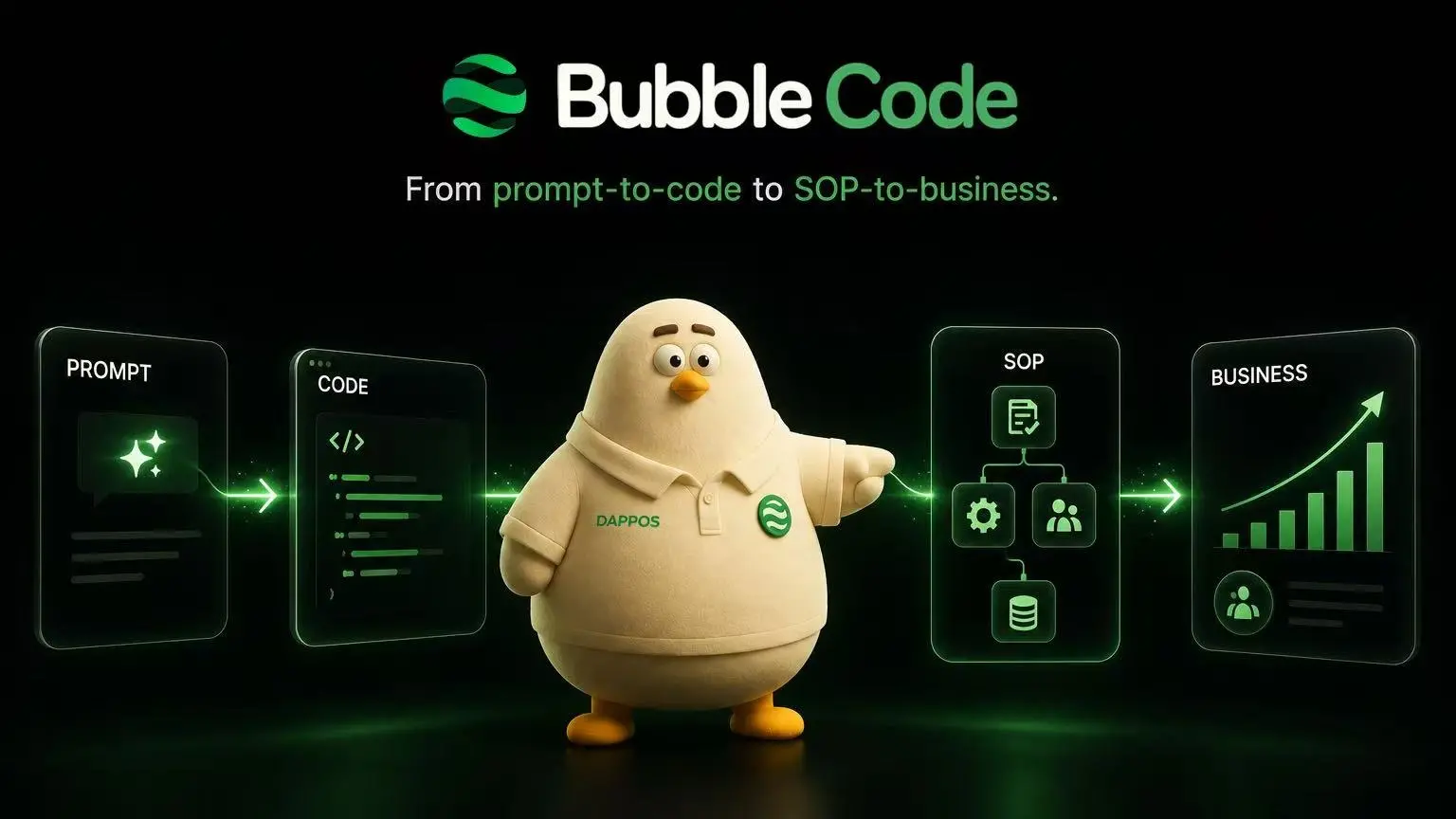
Khái niệm OPC (One Person Company - Công ty Một Người) đang trở thành một chủ đề mới đáng chú ý trong ngành AI, không còn chỉ là ý tưởng trên bàn ăn mà là một thị trường tiềm năng, được củng cố bởi những dự đoán từ các nhà lãnh đạo như Sam Altman và Dario Amodei. Bài viết phân tích sự dịch chuyển trong AI: từ việc tăng hiệu suất nhân viên sang giúp thiết lập và vận hành toàn bộ doanh nghiệp với rất ít người. Các công cụ AI coding như Replit và Lovable đã chứng minh nhu cầu từ người dùng không chuyên về kỹ thuật là có thật. Tuy nhiên, vẫn tồn tại khoảng trống: các công cụ hiện tại giúp tạo demo nhanh chóng nhưng khó đảm bảo để một ứng dụng trở thành một doanh nghiệp có thể vận hành ổn định và thích ứng lâu dài. xBubble của DAPPOS tiếp cận vấn đề này bằng cách thay đổi đơn vị cung cấp, chuyển từ "Prompt-to-Code" sang "SOP-to-Business". Thay vì yêu cầu người dùng tự quản lý quy trình phát triển, xBubble sử dụng hệ thống SOP (Quy trình thao tác chuẩn) để biến mục tiêu kinh doanh thành một lộ trình thực thi hoàn chỉnh, bao gồm xây dựng phần mềm, tích hợp thanh toán và quản lý đơn hàng. Đồng thời, mạng lưới nhà cung cấp dịch vụ bên thứ ba của xBubble giải quyết các nhu cầu về cơ sở hạ tầng như triển khai và hosting, giúp người dùng không chuyên về kỹ thuật có thể dễ dàng đưa doanh nghiệp vào hoạt động. Lợi thế cạnh tranh của xBubble nằm ở việc nhắm mục tiêu rõ ràng vào các OPC đã có sản phẩm, dịch vụ và khách hàng nhưng thiếu nguồn lực kỹ thuật. Hệ thống SOP có khả năng tích lũy kinh nghiệm từ nhiều trường hợp, giúp quá trình khởi nghiệp trở nên thân thiện và ổn định hơn. Hỗ trợ thanh toán bằng tiền mã hóa cũng phù hợp với các doanh nghiệp nhỏ hướng tới khách hàng toàn cầu. Tóm lại, trong khi thị trường AI coding đã chứng minh khả năng trao quyền sáng tạo phần mềm cho số đông, xBubble tìm cách lấp đầy khoảng trống quan trọng tiếp theo: biến khả năng đó thành một hệ thống khởi nghiệp thực sự, giúp những người không có đội ngũ kỹ thuật có thể bắt đầu và duy trì hoạt động kinh doanh của mình.

链捕手34 phút trước

xBubble Làm Thế Nào Để Phá Thế Trong Nền Kinh Tế OPC Được VC Đổ Tiền Mạnh

链捕手34 phút trước

Đối tác Dragonfly Haseeb: Tại sao các công ty phát triển nhanh nhất trong tương lai có thể sẽ mắc kẹt ở mốc 149 người

Tác giả Haseeb (Dragonfly) phân tích hiện tượng định giá token AI của các công ty như Anthropic tạo ra một "chính sách thuế" ảnh hưởng sâu sắc đến cấu trúc doanh nghiệp. Công ty nhỏ (dưới 150 nhân viên) được hưởng gói đăng ký (subscription) với chi phí cận biên cho mỗi token gần như bằng 0, khuyến khích họ sử dụng AI tối đa như một khoản trợ cấp đổi mới. Ngược lại, doanh nghiệp lớn (trên 150 chỗ ngồi) buộc phải chuyển sang gói "Enterprise" với phí API tính theo token và biên lợi nhuận ước tính 75% – giống như một mức thuế cao đánh vào lao động AI. Sự chênh lệch này tạo ra hai hệ quả chính: 1. **Thay thế lao động di chuyển:** Việc thay thế việc làm không xảy ra trực tiếp trong các tập đoàn lớn do "thuế" AI cao, mà thông qua sự phát triển của các startup AI-native có chi phí thấp, lấy thị phần và khiến các công ty cũ thu hẹp. 2. **Vách đá 150 người:** Ngưỡng 150 nhân viên trở thành một "điểm gãy" quy định mạnh mẽ, khuyến khích các công ty giữ quy mô nhỏ (dưới 149 người) để duy trì lợi thế định giá AI. Điều này có thể định hình một triết lý quản lý mới: tối ưu hóa cực đoan bằng AI, thuê ngoài và giữ đội ngũ tinh gọn để tránh mức thuế cao. Tác giả so sánh điều này với các ngưỡng quy định như luật lao động Pháp ở 50 nhân viên, và kết luận rằng định giá token – một quyết định thương mại – có thể trở thành chính sách thuế có ảnh hưởng lớn nhất trong thập kỷ tới, định hình cách các công ty được xây dựng và phát triển.

链捕手41 phút trước

Đối tác Dragonfly Haseeb: Tại sao các công ty phát triển nhanh nhất trong tương lai có thể sẽ mắc kẹt ở mốc 149 người

链捕手41 phút trước

Có thể đầu tư hay không cũng được, vậy thì không đầu tư: 9 năm nhìn lại của một VC sau khi vượt qua bốn chu kỳ

Người được phỏng vấn: Jocy, Nhà sáng lập IOSG. Người viết: Joe Zhou, Foresight News. Sau 9 năm đầu tư và trải qua 4 chu kỳ, người sáng lập IOSG Ventures chia sẻ những bài học đắt giá từ việc xây dựng "cơ sở dữ liệu những nhà sáng lập thất bại" để tránh lặp lại sai lầm. Bài viết liệt kê 6 kiểu hình nhà sáng lập dễ thất bại: **1. Người không ổn định về mặt cảm xúc:** Phản ứng tiêu cực trước áp lực, khó kiểm soát trong khủng hoảng. **2. Người thiếu "cơn khát" / có đường lui:** Có lưới an toàn (tài sản gia đình, công việc tốt) dẫn đến không dốc toàn lực. **3. Người có cái tôi quá lớn:** Gồm hai loại: "cỗ máy thực thi" cứng nhắc, khó thích ứng khi nền tảng thay đổi; và "giáo sư" coi thường khía cạnh thương mại và không sẵn sàng lắng nghe. **4. Ưu tiên Token hơn sản phẩm:** Coi token chỉ là công cụ huy động vốn, tách biệt với giá trị thực và dòng tiền của sản phẩm. **5. Không có luận điểm thoát vốn (Exit Thesis) ngay từ đầu:** Không có chiến lược vốn rõ ràng, không biết vòng gọi vốn này nhằm mục tiêu gì để chuyển tiếp vòng sau. **6. Chưa trải qua một chu kỳ hoàn chỉnh:** Thiếu kinh nghiệm về áp lực và sự tàn khốc của thị trường bear, dẫn đến đánh giá thấp rủi ro. (Đây là yếu tố định giá chứ không phải dấu hiệu loại trừ). Ngược lại, những nhà sáng lập đáng để đầu tư thường có: sự ám ảnh với vấn đề cần giải quyết; là người sáng lập lần hai có tầm nhìn phi đồng thuận; kỹ năng giao tiếp tốt và cái tôi được kiểm soát; ý chí kiên cường, không trốn tránh; tầm nhìn toàn cầu, khả năng chủ động (Agency) và gu thẩm định (Taste) tốt trong thời đại AI. Bài viết cũng đưa ra ba lời khuyên sống còn cho các startup Web3: 1. **Dòng tiền quan trọng hơn câu chuyện.** 2. **Đừng phát hành token chỉ để phát hành.** Chi phí ẩn sau khi phát hành (market maker, thanh khoản, tuân thủ...) rất lớn, có thể lên tới hàng triệu USD và trở thành một gánh nặng nợ. 3. **Tôn trọng tính thanh khoản.** Bán khi thị trường tốt, mua lại khi thị trường xấu. Định giá khi gọi vốn phải tương xứng với mục tiêu phát triển trong tương lai. Phương châm đầu tư xuyên suốt của IOSG là: "Có thể đầu tư hoặc không, thì chúng tôi sẽ không đầu tư." Sự kỷ luật trong việc nói "không" mới là chìa khóa để tồn tại qua các chu kỳ biến động của thị trường crypto.

Foresight News1 giờ trước

Có thể đầu tư hay không cũng được, vậy thì không đầu tư: 9 năm nhìn lại của một VC sau khi vượt qua bốn chu kỳ

Foresight News1 giờ trước

Giao dịch

Giao ngay
Hợp đồng Tương lai
活动图片