Cross-Border Collaboration: Tom Lee Invests $200 Million, Partnering with Global Top Streamer MrBeast

marsbitXuất bản vào 2026-01-16Cập nhật gần nhất vào 2026-01-16

Tóm tắt

Wall Street analyst Tom Lee's BitMine Immersion Technologies (BMNR) is investing $200 million in MrBeast's holding company, Beast Industries, which plans to integrate DeFi into its upcoming financial services platform. MrBeast, whose YouTube channels have over 4.6 billion subscribers, has built a massive but costly content empire, with single videos often costing $3-5 million to produce. His company, Beast Industries, generates over $400 million in annual revenue but operates with thin margins due to high content expenses. Its profitable chocolate brand, Feastables, brings in $250 million in sales. Despite a valuation around $5 billion, MrBeast has described himself as "cash poor," reinvesting nearly all earnings back into the business. The partnership with Tom Lee signals a strategic move to explore decentralized finance solutions, potentially creating a programmable financial infrastructure for creators and fans, though specific plans remain undisclosed.

$200 million is the figure just announced today.

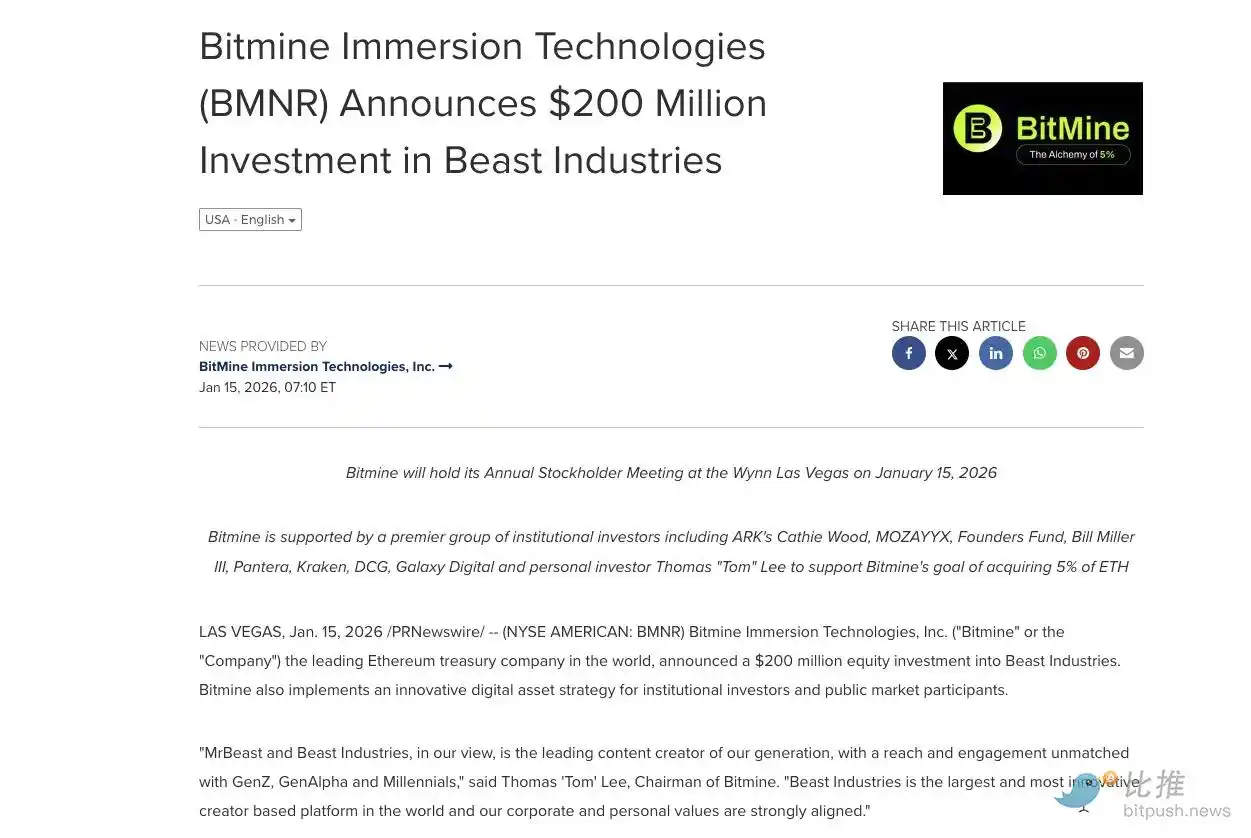
BitMine Immersion Technologies (BMNR), chaired by renowned Wall Street analyst Tom Lee, announced that it will invest in Beast Industries, the holding company behind global top streamer MrBeast. Meanwhile, Beast Industries mentioned in its official statement that the company will explore how to "integrate DeFi into the upcoming financial services platform" in the future.
If you only look at the news, it seems like another familiar crossover: traditional, crypto, internet celebrity, entrepreneurship. On one side is the YouTube霸主 with cumulative global subscriptions exceeding 400 million, whose single video can make the algorithm spontaneously weight you; on the other side is Wall Street's top analyst best at telling crypto narratives, skilled at writing grand blockchain concepts into balance sheets. Everything seems logical.

MrBeast's Journey

Looking back at MrBeast's early videos, it's hard to connect them with today's Beast Industries valued at $5 billion.
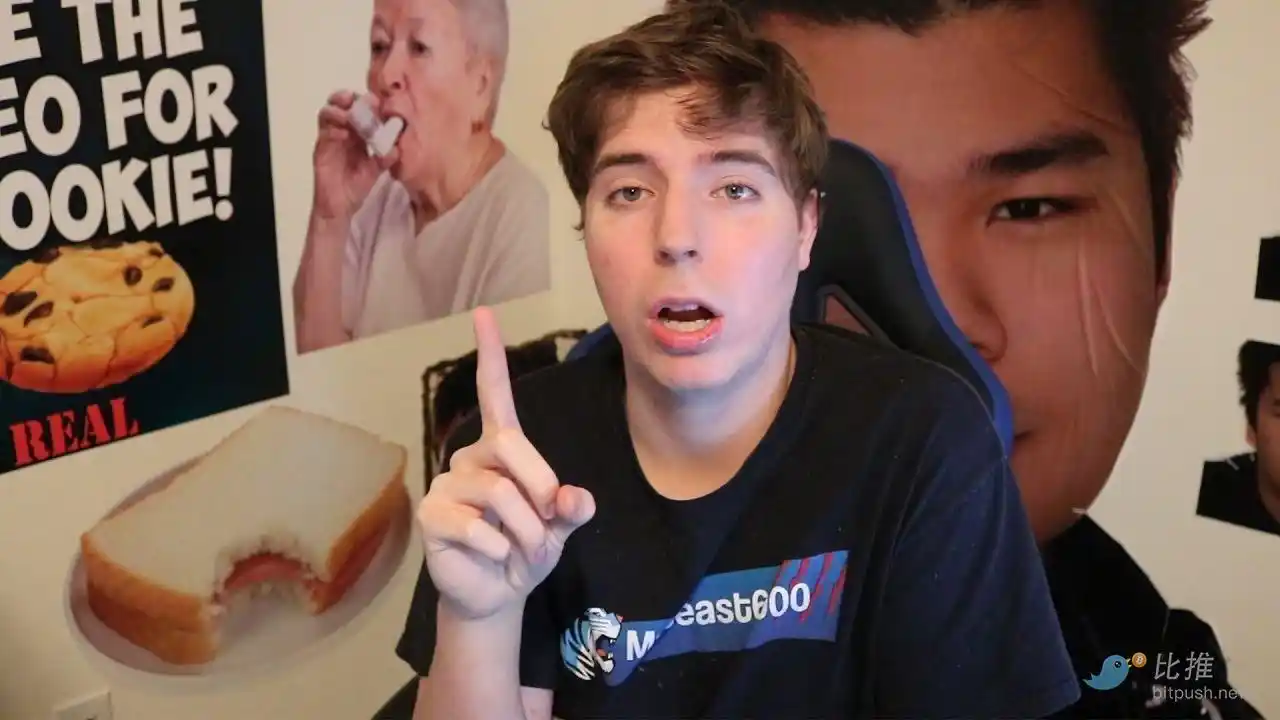
In 2017, Jimmy Donaldson, who had just graduated from high school, uploaded a video of himself counting continuously for 44 hours—"Challenge to count from 1 to 100,000!" The content was simple to the point of childishness, with no plot, no editing, just a person repeating numbers in front of the camera, yet it became a turning point in his content career.

At that time, he was not yet 19 years old, with only about 13,000 channel subscribers. After the video was released, it quickly exceeded a million views, becoming the first globally viral case.

Later, he recalled that time in an interview with one sentence:

"I didn't actually want to become famous at that time; I just wanted to know if the result would be different if I was willing to put all my time into something no one else was willing to do."

Jimmy Donaldson successfully built his account, becoming the later well-known MrBeast. But more importantly, from that moment on, he formed an almost obsessive belief: attention is not a gift of talent but something earned through investment and endurance.

Treating YouTube as a Company, Not a Creative Platform

Many creators choose to "conservatize" after becoming famous: reduce risks, improve efficiency, turn content into stable cash flow.

MrBeast chose the opposite path.

He repeatedly emphasized one thing in multiple interviews:

"The money I earn is basically spent on the next video."

This is the core of his business model.

By 2024, his main channel had over 460 million subscribers, with cumulative video views exceeding 100 billion. But behind this is extremely high costs:

· The production cost of a single top video is consistently between $3 million and $5 million;

· Some large challenges or public welfare projects can cost over $10 million;

· "Beast Games" on Amazon Prime Video, described by himself as "completely out of control," and he admitted in an interview: losses reached tens of millions of dollars.

When he said this, he did not show regret:

"At this level, you can't win while trying to save money."

This sentence can almost be used as the key to understanding Beast Industries.

Beast Industries: Annual Revenue of $400 Million, but Thin Profits

By 2024, MrBeast consolidated all businesses under the name Beast Industries.

From public information, this company has far exceeded the scope of "creator side business":

· Annual revenue exceeds $400 million;

· Businesses span content production, fast-moving consumer goods retail, licensed merchandise, tool-based products;

· After the latest round of financing, the general expectation for its valuation is around $5 billion.

But it's not easy.

MrBeast's YouTube main channel and Beast Games bring huge exposure but almost consume all profits.
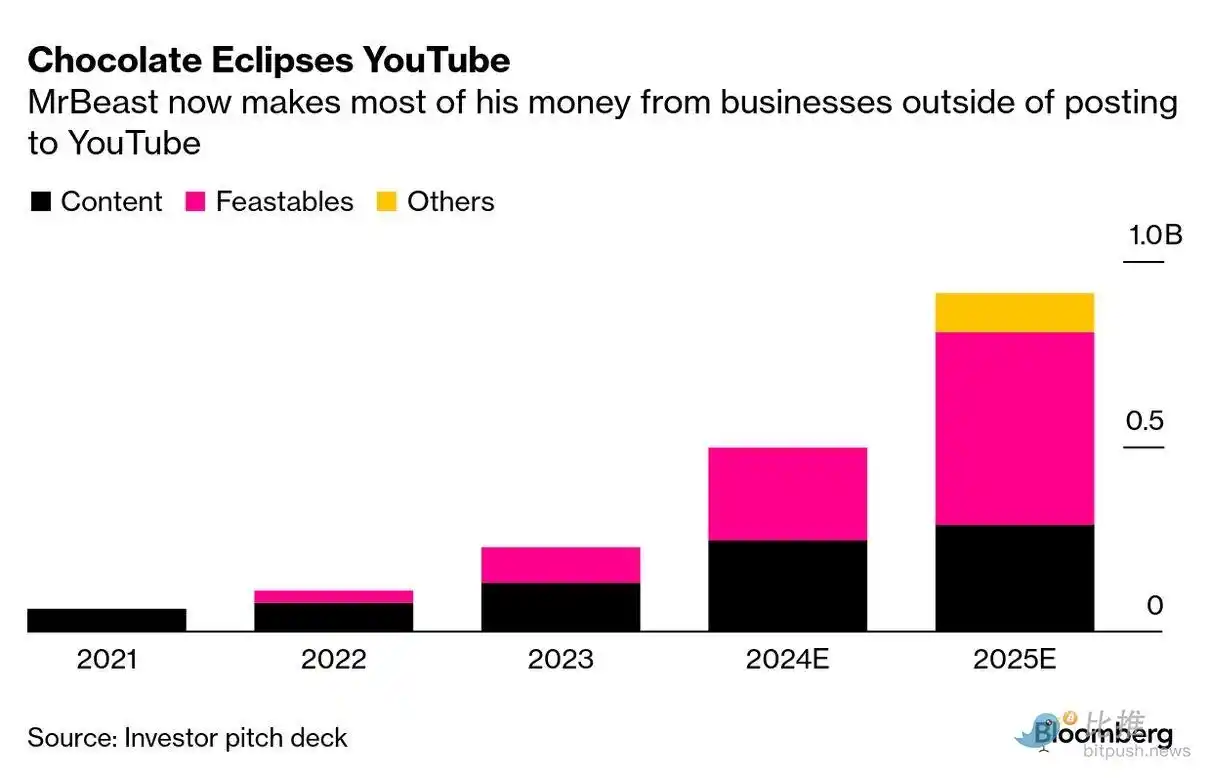
In stark contrast to the content is his chocolate brand Feastables. Public information shows that in 2024, Feastables sales were about $250 million, contributing over $20 million in profit. This is the first time Beast Industries has seen a stable, replicable cash flow business. By the end of 2025, Feastables had entered over 30,000 physical retail stores in North America (including Walmart, Target, 7-Eleven, etc.), covering the United States, Canada, and Mexico, greatly enhancing the brand's offline sales capabilities.

MrBeast has坦言 on multiple occasions that video production costs are getting higher and even "increasingly difficult to break even." But he still insists on investing heavily in content production because, in his view, this is not just paying for videos but buying traffic for the entire business ecosystem.

The core barrier of the chocolate business is not production but the ability to reach consumers. While other brands need to spend huge sums on advertising exposure, he only needs to release one video. Whether the video itself is profitable is no longer important; as long as Feastables can continue to sell, this business闭环 can continue to operate.

"I'm Actually Broke"

In early 2026, MrBeast revealed in a Wall Street Journal interview that he was broke, sparking discussion:

"I'm basically in a 'negative cash' state now. They all say I'm a billionaire, but there's not much money in my bank account."

This statement is not "humblebragging" but a natural result of his business model.

MrBeast's wealth is highly concentrated in unlisted equity; although he holds slightly over 50% of Beast Industries shares, the company continues to expand and almost pays no dividends; he personally甚至 deliberately does not retain cash.

In June 2025, he坦言 on social media that because he spent all his savings on video production, he even had to borrow money from his mother to pay for wedding expenses.
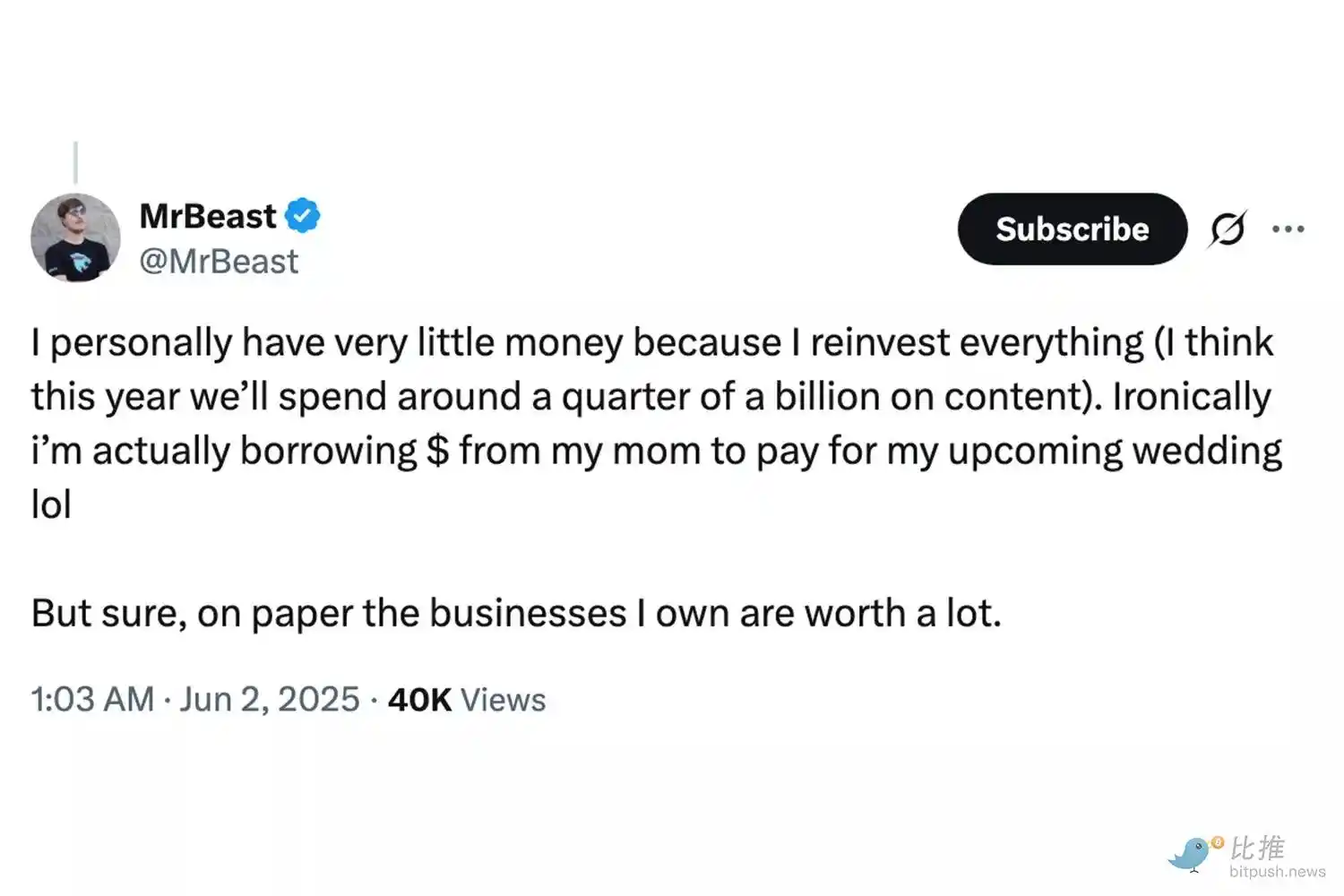
As he later explained more bluntly:

"I don't look at my bank account—it affects my decision-making."

And the tracks he invests in are no longer limited to content and consumer goods.

In fact, as early as the 2021 NFT热潮, on-chain records show that he had purchased and traded multiple CryptoPunks, some of which were sold for 120 ETH each (worth hundreds of thousands of dollars at the time).
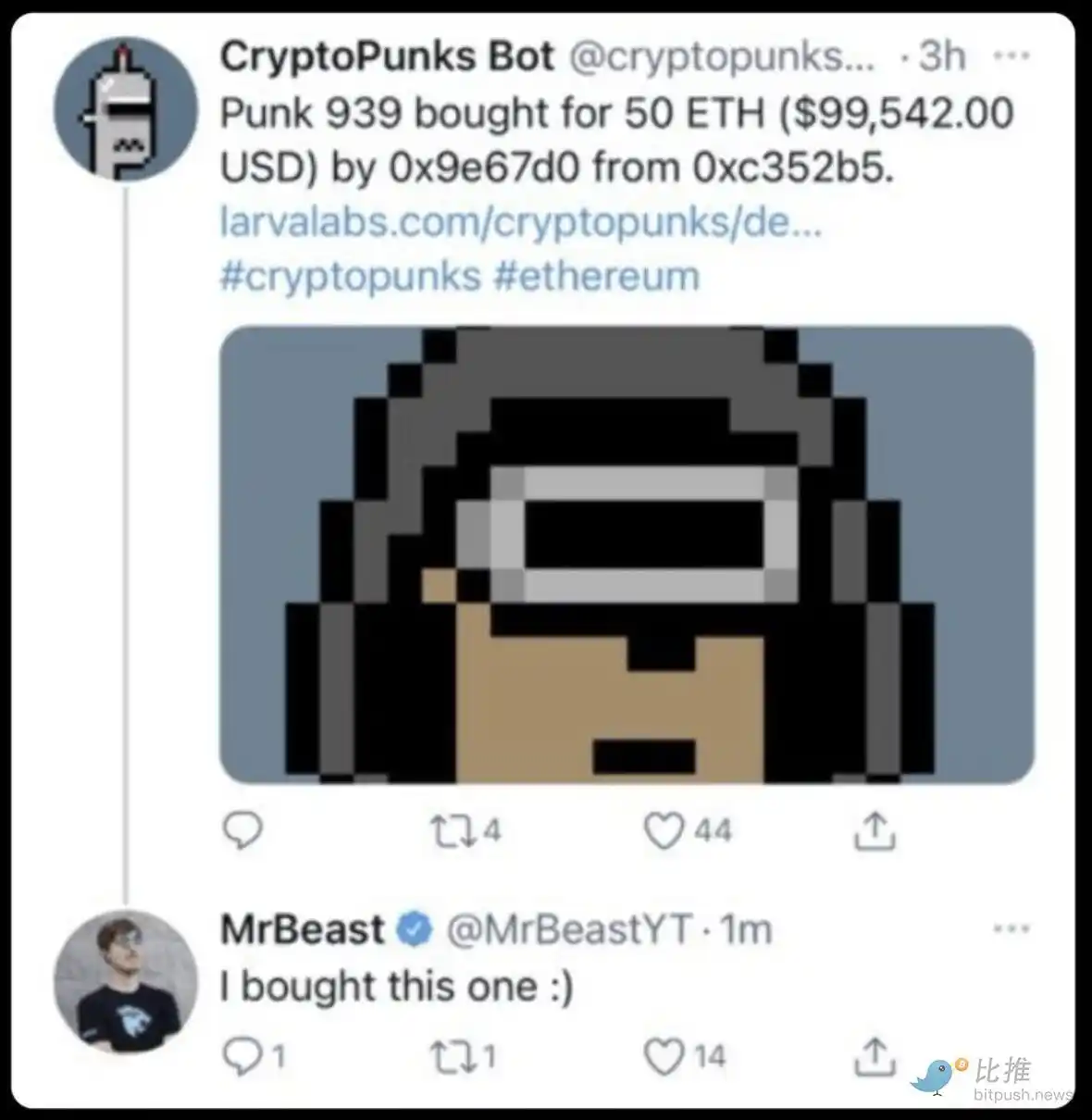
However, as the market entered a correction period, his attitude became more cautious.

The real turning point is that the "MrBeast" business model itself has reached a critical edge.

When a person controls the world's top traffic入口 but is长期 in a state of high investment, cash紧张, expansion relying on financing, finance is no longer just an investment option but becomes infrastructure that must be重构.

The命题 repeatedly discussed within Beast Industries in recent years has gradually become clear: how to make users no longer just "watch content, buy goods" but enter a long-term, stable, sustainable economic relationship?

This is precisely the direction traditional internet platforms have been trying for years: payment, accounts, credit systems. And at this node, the appearance of Tom Lee and BitMine Immersion (BMNR) leads this path to a more structural possibility.

Partnering with Tom Lee to Build a DeFi Foundation

On Wall Street, Tom Lee has always played the role of a "narrative architect." From early explanations of Bitcoin's value logic to emphasizing the strategic significance of Ethereum in corporate balance sheets, he is good at translating technological trends into financial language. BMNR's investment in Beast Industries is not chasing internet celebrity热度 but betting on the programmable future of attention入口.

So, what exactly does DeFi mean here?

Currently, public information is extremely restrained: no token issuance, no profit promises, no fan-exclusive financial products. But the expression "integrating DeFi into the financial services platform" points to several possibilities:

- Lower-cost payment and settlement layer;

- Programmable account system for creators and fans;

- Asset recording and equity structure based on decentralized mechanisms.

The imagination space is large, but the real challenges are also clear. In the current market, whether native DeFi projects or traditional institutions exploring转型, most have not yet truly run a sustainable model. If they cannot find a differentiated path in this fierce competition, the complexity of financial business may反而 erode the core capital he has accumulated over the years: fan loyalty and trust. After all, he has repeatedly stated publicly:

"If one day what I do harms the audience, I would rather do nothing."

This sentence may be repeatedly tested in every future financialization attempt.

So, when the world's strongest attention machine starts seriously building financial infrastructure, will it become a new generation platform or a "too brave" crossover?

The answer will not be revealed soon.

But one thing he knows better than anyone: the greatest capital is not past glory but the right to "start over."

After all, he is only 27 years old.

Câu hỏi Liên quan

QWhat is the amount of investment announced by Tom Lee's BitMine Immersion Technologies in Beast Industries?

A$200 million.

QWhat is the core business model of MrBeast (Jimmy Donaldson) as described in the article?

AHe reinvests almost all earnings into the next video, using high-cost content to drive traffic for his broader commercial ecosystem, including consumer goods like Feastables.

QWhich product of Beast Industries generated over $2.5 billion in sales and contributed more than $20 million in profit in 2024?

AFeastables, the chocolate brand.

QWhy did MrBeast describe himself as 'broke' despite his company's high valuation?

AHis wealth is tied up in equity, the company reinvests heavily and does not pay dividends, and he personally avoids holding cash to avoid influencing his investment decisions.

QWhat potential applications of DeFi are hinted at in Beast Industries' collaboration with Tom Lee's company?

ALower-cost payment and settlement layers, programmable account systems for creators and fans, and asset recording and equity structures based on decentralized mechanisms.

Nội dung Liên quan

Ý tưởng về stablecoin thuật toán của Vitalik: Góc nhìn từ quyền chọn giải mã cơ chế và thách thức

Tác giả phân tích đề xuất về stablecoin thuật toán của Vitalik từ góc nhìn quyền chọn. Ý tưởng cốt lõi là chia 1 ETH thành hai phần: phần "Ổn định" (P) đảm bảo giá trị đến một mức giá thực hiện nhất định, hoạt động như một quyền chọn mua bán được bảo đảm (covered call); và phần "Tăng giá" (N) nhận toàn bộ lợi nhuận nếu giá vượt trên mức đó. Cơ chế này không cần nợ, ký quỹ hay thanh lý. Tuy nhiên, thách thức lớn nằm ở việc duy trì tính ổn định. Tài sản P cần liên tục gia hạn các quyền chọn mua có giá thực hiện sâu trong vùng có lãi, dẫn đến rủi ro trượt giá khi gia hạn, bị tận dụng giao dịch và thiếu thanh khoản. Vấn đề then chốt là ai sẽ liên tục nắm giữ phần N - một vị thế mua ETH có đòn bẩy không chịu phí funding và rủi ro thanh lý - để hệ thống mở rộng. Bài viết so sánh với kinh nghiệm từ Rysk, nơi quyền chọn đã thành công khi trở thành module cơ sở cho các sản phẩm như công cụ tạo thu nhập thay vì một sản phẩm giao dịch độc lập. Tác giả kết luận rằng tương lai của quyền chọn trong DeFi không phải là cạnh tranh với hợp đồng vĩnh cửu, mà là đóng vai trò là động cơ định giá và phân bổ rủi ro nền tảng cho thế hệ sản phẩm tài chính phức tạp tiếp theo như stablecoin, sản phẩm cấu trúc hoặc chỉ số.

marsbit5 phút trước

Ý tưởng về stablecoin thuật toán của Vitalik: Góc nhìn từ quyền chọn giải mã cơ chế và thách thức

marsbit5 phút trước

SpaceX, AI và XRP: Tại sao lần chuyển dịch tài sản tiếp theo có thể khác biệt?

Bài viết khám phá sự hội tụ tiềm năng của ba lĩnh vực công nghệ - Cơ sở hạ tầng vũ trụ (đại diện bởi SpaceX), Trí tuệ nhân tạo (AI) và mạng lưới thanh toán blockchain (như XRP) - như là động lực chính cho một đợt chuyển dịch tài sản và chu kỳ đầu tư cơ sở hạ tầng mới. Nội dung chính cho rằng, khi các động lực tăng trưởng truyền thống chậm lại, vốn toàn cầu đang tìm kiếm các hệ thống nền tảng mới. Các dự án cơ sở hạ tầng không gian, mạng lưới vệ tinh, trung tâm dữ liệu và năng lực tính toán AI sẽ thúc đẩy nhu cầu lớn về hàng hóa cơ bản. Đồng thời, các hoạt động kinh tế mới nổi này sẽ cần một lớp giải quyết thanh toán toàn cầu hiệu quả, nơi các tài sản kỹ thuật số tập trung vào thanh toán và khả năng tương tác như XRP có thể đóng vai trò then chốt. Bài viết nhấn mạnh sự chuyển dịch từ một "câu chuyện đầu cơ" sang một "câu chuyện cơ sở hạ tầng" trong thị trường tài sản kỹ thuật số, nơi giá trị sẽ ngày càng được xác định bởi tiện ích thực tế như khối lượng giao dịch, hoạt động thanh toán và sự tích hợp với AI (ví dụ: các tác nhân AI thực hiện giao dịch tự động). Sự rõ ràng về mặt quy định được coi là yếu tố quan trọng để thúc đẩy việc áp dụng rộng rãi hơn bởi các tổ chức. Tóm lại, tác giả đưa ra viễn cảnh về một nền kinh tế tương lai, nơi các hệ thống cơ sở hạ tầng vật chất (vũ trụ, AI), nhu cầu nguyên vật liệu và lớp tài chính kỹ thuật số (blockchain) hội tụ, tạo ra cơ hội đầu tư sớm cho những ai nhận ra xu hướng này.

marsbit1 giờ trước

SpaceX, AI và XRP: Tại sao lần chuyển dịch tài sản tiếp theo có thể khác biệt?

marsbit1 giờ trước

Đếm ngược GPT-5.6: Từ bỏ ảo tưởng API đơn nhất, tốc độ lặp lại sức mạnh tính toán nhanh đến mấy cũng không chống nổi một tờ quy định tuân thủ

Giữa tháng 6, ba sự kiện – Fable 5 bị giới hạn tuân thủ, GLM-5.2 được mã nguồn mở và thời điểm ra mắt GPT-5.6 bị rò rỉ – đánh dấu bước ngoặt cho ngành AI toàn cầu. Các logic vận hành cơ bản đang được định hình lại: 1. **"Khả năng sử dụng" quan trọng hơn "tính tiên tiến":** Chuỗi cung ứng mô hình lớn bước vào giai đoạn "hai luồng" với mã nguồn đóng được kiểm soát và mã nguồn mở triển khai cục bộ cùng tồn tại. 2. **Rào cản cạnh tranh thay đổi:** Các gã khổng lồ mã nguồn đóng chuyển trọng tâm từ "trí tuệ ngôn ngữ" sang "trí tuệ không gian (mô hình thế giới)" đòi hỏi lượng lớn sức mạnh tính toán. 3. **Thiết kế "phi mô hình" là yêu cầu sống còn:** Để đối phó rủi ro tuân thủ xuyên quốc gia, các nhà phát triển ứng dụng phải đảm bảo tính liên tục kinh doanh bằng cách tách biệt logic nghiệp vụ khỏi một mô hình cụ thể. Sự kiện Fable 5 của Anthropic bị hạn chế truy cập chỉ sau 72 giờ đối với người dùng không phải công dân Mỹ cho thấy rủi ro tuân thủ có thể vô hiệu hóa bất kỳ lợi thế công nghệ nào. Trong bối cảnh đó, các mô hình mã nguồn mở như GLM-5.2 của Trí Phổ AI trở thành lựa chọn dự phòng chiến lược, nhờ hiệu suất được cải thiện, chi phí thấp hơn đáng kể và khả năng triển khai cục bộ. Để tái khẳng định giá trị, các hãng mã nguồn đóng như OpenAI đang định vị lại. GPT-5.6 (dự kiến ra mắt) chuyển trọng tâm sang "trí tuệ không gian", nhằm tạo khoảng cách thế hệ mới trong các lĩnh vực như mô phỏng công nghiệp và robot – nơi đòi hỏi sức mạnh tính toán khổng lồ. Bài học rõ ràng: Trong môi trường hiện nay, việc đánh giá cơ sở hạ tầng AI không thể chỉ dựa trên hiệu suất kỹ thuật. Khả năng truy cập ổn định và tuân thủ quy định đã trở thành các yếu tố tiên quyết ngang bằng. Đối với các doanh nghiệp, việc phụ thuộc hoàn toàn vào API của một nhà cung cấp duy nhất là rủi ro cao. Thiết kế kiến trúc "phi mô hình" để có thể chuyển đổi linh hoạt giữa các giải pháp là điều tối cần thiết để đảm bảo tính liên tục trong kinh doanh.

marsbit2 giờ trước

Đếm ngược GPT-5.6: Từ bỏ ảo tưởng API đơn nhất, tốc độ lặp lại sức mạnh tính toán nhanh đến mấy cũng không chống nổi một tờ quy định tuân thủ

marsbit2 giờ trước

Cuộc Chiến 'Trợ Cấp Token' của Những Gã Khổng Lồ AI Sắp Kết Thúc Chưa?

Cuộc chiến trợ cấp Token giữa các gã khổng lồ AI như OpenAI, Anthropic và Google đang diễn ra quyết liệt. Hiện tại, người dùng đang được hưởng mức giá "bẻ gãy" khi các công ty này bù lỗ nặng để thu hút và giữ chân người dùng, đặc biệt là các gói cao cấp. Tuy nhiên, khác với các cuộc chiến trợ cấp thời internet, token AI hầu như không tạo ra hiệu ứng "khóa" người dùng do việc chuyển đổi giữa các nền tảng là quá dễ dàng. Bill Maris, người sáng lập Google Ventures, dự đoán 100% rằng Google - với lợi thế từ cỗ máy in tiền quảng cáo khổng lồ - có thể hạ giá token thêm 80%, gây áp lực khủng khiếp lên các đối thủ phụ thuộc vào vốn đầu tư như OpenAI và Anthropic. Điều này đặt ra câu hỏi về tính bền vững của mô hình kinh doanh khi họ phải công khai báo cáo tài chính sau IPO. Bài viết phân tích hai kịch bản có thể xảy ra: 1) Mô hình "dịch vụ internet" với một vài công ty thống trị rồi tăng giá, hoặc 2) Token trở thành cơ sở hạ tầng tiêu chuẩn như "điện, nước", nơi cạnh tranh đẩy giá xuống sát chi phí và lợi nhuận trở nên rất thấp. Do thiếu hiệu ứng khóa chân người dùng, kịch bản thứ hai có vẻ thực tế hơn. Cuộc chiến này có thể không có kẻ chiến thắng rõ ràng, mà là một cuộc chạy đua tiêu hao kéo dài nhằm giữ vị trí trên "bàn chơi", thúc đẩy AI trở thành một tiện ích cơ sở hạ tầng công cộng mà không công ty nào có thể độc chiếm. Đối với người dùng, điều này có nghĩa là họ có thể tiếp tục được hưởng lợi từ các giao dịch "hời" trong một thời gian dài hơn.

marsbit3 giờ trước

Cuộc Chiến 'Trợ Cấp Token' của Những Gã Khổng Lồ AI Sắp Kết Thúc Chưa?

marsbit3 giờ trước

Ngoài sân cỏ: Trò chơi đầu cơ xoay quanh World Cup

Bên cạnh sân cỏ, World Cup 2026 đã tạo ra một mạng lưới đầu cơ đa dạng, biến sự kiện thể thao thành một thí nghiệm đầu tư toàn cầu kéo dài hàng tháng. Thị trường dự đoán (như Polymarket, Kalshi) nổi lên như một kịch bản đầu cơ mới, thu hút khối lượng giao dịch khổng lồ, thậm chí lấn át sự phát triển của các nền tảng cá cược truyền thống vốn vẫn là thị trường cơ bản lớn nhất. Các cổ phiếu khái niệm liên quan đến World Cup, như cổ phiếu "gà rán" của Hàn Quốc hay cổ phiếu liên quan đến đội tuyển Nhật Bản, biến động mạnh theo kết quả thi đấu và tâm lý người hâm mộ. Thị trường vé xem trở thành sân chơi đầu cơ phức tạp, với việc bán lại vé, giao dịch quyền mua vé (RTB) và cả hành vi "bán khống" vé trên các sàn thứ cấp. Các mặt hàng sưu tầm như sticker Panini hay áo đấu phiên bản giới hạn cũng được săn đón và định giá lại trên thị trường thứ cấp. Lĩnh vực tiền điện tử chứng kiến sự bùng nổ của các meme coin lợi dụng chủ đề World Cup, mang lại lợi nhuận siêu tốc cho một số ít nhưng cũng tiềm ẩn rủi ro sụp đổ lớn. Cuối cùng, một lớp dịch vụ khác thu lợi bằng cách cung cấp công cụ theo dõi giá vé, thông tin hoặc lời khuyên cá cược cho chính những người tham gia vào cuộc chơi đầu cơ này. Tóm lại, World Cup không chỉ là lễ hội bóng đá mà còn là một cửa sổ toàn cầu hiếm có, nơi sự chú ý, cảm xúc và nguồn lực được nén lại, tạo ra một hệ sinh thái đầu cơ đa tầng phức tạp xoay quanh nó.

marsbit3 giờ trước

Ngoài sân cỏ: Trò chơi đầu cơ xoay quanh World Cup

marsbit3 giờ trước

Giao dịch

Giao ngay
Hợp đồng Tương lai
活动图片