Bankless: A Comprehensive Analysis of the Five Key Points in the U.S. Senate's Draft 'Crypto Market Structure Bill'

比推Xuất bản vào 2026-01-13Cập nhật gần nhất vào 2026-01-13

Tóm tắt

The U.S. Senate's proposed Digital Asset Market Clarity Act (DAMCA) introduces a comprehensive regulatory framework for cryptocurrencies, jointly overseen by the SEC and CFTC. Key provisions include a ban on interest payments for stablecoin holders, clear criteria for classifying tokens as securities or commodities, and stringent regulations for DeFi protocols based on their level of decentralization. The bill also establishes a "Micro-Innovation Sandbox" for small startups to test innovations under regulatory exemptions and imposes strict rules on digital asset ATMs, requiring detailed reporting and consumer disclosures. The 278-page draft reflects bipartisan negotiations and aims to provide regulatory clarity while addressing industry and consumer protection concerns.

Source: Bankless

Original Title: 5 Highlights from the U.S. Senate's Much-Hyped Crypto Market Structure Draft Bill

Author: Jack Inabinet

Compiled and Edited by: BitpushNews


The crypto market may finally get what it has long desired—a written market structure law. This is thanks to the "Digital Asset Market Clarity Act" (DAMCA) released last night. Due to some noteworthy compromises on the future development of cryptocurrency in the United States, the bill has garnered bipartisan support.

This 278-page text is the result of months of arduous negotiations among Senate Republicans, Democrats, and industry lobbyists.

It establishes a regulatory framework that divides the authority over digital assets between the U.S. Securities and Exchange Commission (SEC) and the Commodity Futures Trading Commission (CFTC).

The crypto community is likely to have mixed opinions on its provisions. Justin Slaughter, Policy Director at Paradigm, called the bill "a major victory for Democratic members of the Senate Banking Committee" and said it should have been passed during the Biden administration.

Today, we will delve into five key provisions of DAMCA to better understand the future evolution of transparency in the crypto market structure.

1. Strict Prohibition of Stablecoin Dividends

According to the Digital Asset Market Clarity Act, stablecoin issuers will be prohibited from distributing returns to passive holders.

Chapter 4 of DAMCA outlines the guidelines for regulated banking institutions to interact with digital assets. This chapter will prohibit stablecoin issuers (as defined in the GENIUS Act) from paying interest to holders.

Although DAMCA allows stablecoin issuers to distribute "rewards" tied to specific actions (such as account-opening incentives or cashback on spending), the fact is that protecting stablecoin returns has long been a firm red line for the crypto industry. Strict restrictions on stablecoins may put crypto-native issuers at a long-term disadvantage compared to the banking sector.

Nonetheless, many key crypto giants, including Coinbase, continue to support the wording of the bill regarding the prohibition of stablecoin returns. They see it as the worst provision they can tolerate without derailing the bill's momentum.
2. Clarity on Commodity Status

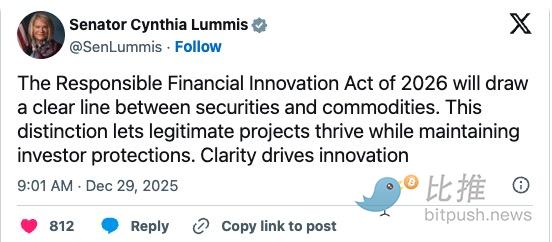
The 2026 Lummis-Gillibrand Responsible Financial Innovation Act (Chapter 1 of DAMCA) will amend the 1933 Securities Act to clarify when crypto network tokens transition from "securities" to "commodities."

According to this chapter, the SEC will, within 360 days of the bill's enactment, issue formal guidelines specifying when individuals involved in the initial offering, sale, or distribution of tokens, as well as the largest recipients of tokens, are considered "joint and several" issuers of those tokens.

Chapter 1 establishes broad oversight over anyone selling, controlling, or facilitating the initial distribution, raising concerns that even those who do not receive the largest share of tokens could be held liable. Additionally, it expands the SEC's jurisdiction to include tokens issued by foreign governments, tokens without a corporate structure, and tokens where Americans hold a majority stake.

This chapter provides some exemptions: if a network token does not attach any financial rights (such as profit-sharing or implied ownership interests), it can be considered a non-security (i.e., a commodity).

To obtain non-security status, the responsibility will fall on the network token project itself; asset issuers must submit a written certification to the SEC proving that their token is not a security. The SEC will have 60 days to reject this certification.

If a project does not or cannot certify its non-security status to the SEC, the law will require it to publish disclosure reports every six months—an obligation that alone occupies 12 pages in DAMCA. Projects with gross revenue exceeding $25 million must also publish financial statements audited by an independent public accountant.

Thankfully, Chapter 1 of DAMCA will not be retroactive. This means individuals who offered, sold, or distributed relevant tokens before the bill's enactment need not worry about retrospective legal liability.

3. DeFi Regulation

Chapter 3 of DAMCA explores the "decentralized" aspect of decentralized finance, outlining the circumstances under which crypto projects are considered—and not considered—truly "decentralized."

According to this chapter, a decentralized protocol should allow users to conduct financial transactions based on "predetermined, non-discretionary automated rules or algorithms" and, apart from the users themselves, not rely on any other party to maintain custody or control of their digital assets.

The label of "non-decentralized financial transaction protocol" will apply to any protocol where:

  • An individual or group has the ability to control or alter the application's functionality;

  • The application does not operate solely based on code;

  • An individual or group can restrict, censor, or prohibit user activities.

Non-decentralized protocols must comply with the 1934 Securities Exchange Act and the Bank Secrecy Act, and fulfill new registration, conduct, disclosure, record-keeping, and regulatory requirements.

While this chapter may harmonize the application of securities laws across different technologies and protect the public interest, it could also sweep up protocols with minimal operational control that are not immutable smart contract protocols (including those designed based on multi-signature technology or trusted execution environments).

Fortunately, Chapter 3 does contain a significant exemption: it allows a protocol's "security committee" to take "predefined, temporary, rule-based network emergency measures" in response to incidents like hacking attacks without jeopardizing its decentralized status.

Worryingly, Chapter 3 imposes requirements on "web-hosted" crypto wallets that allow users to interact with blockchain technology, mandating that such intermediaries comply with sanctions and anti-money laundering regulations. Confusingly, this regulation does not apply to "any software or hardware wallet that facilitates self-custody of digital assets by individuals."

4. "Micro-Innovation" Regulatory Sandbox

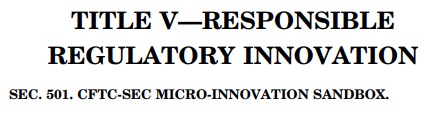
DAMCA requires the CFTC and SEC to establish a "Micro-Innovation Sandbox" within 360 days of the bill's enactment. This sandbox aims to "allow up to 10 eligible companies to test innovative activities within the United States" while still being subject to federal and state securities and commodities laws.

To participate in the sandbox, eligible entities must intend to engage in legitimate innovative activities within the U.S., have no more than 25 employees in any given fiscal year, and have gross revenue not exceeding $10 million.

All applications to enter the sandbox must be jointly approved by the CFTC and SEC. Program participants will receive regulatory exemptions, but the committees retain the discretion to revoke these exemptions at any time.

Sandbox participants must meet the disclosure requirements of both committees regarding matters within their jurisdiction. Any regulatory exemptions granted through this program will preempt any state securities or commodities registration requirements.

The program is limited to 20 projects per year, and the total funds controlled by participating companies from customers, investors, or counterparties must not exceed $20 million.
5. Crackdown on Digital Asset ATMs

Perhaps most surprisingly, the Digital Asset Market Clarity Act devotes significant effort to regulating digital asset kiosks—commonly known as Bitcoin ATMs.

According to Section 205 of DAMCA, digital asset kiosks will be designated as "money transmission businesses," imposing heavy regulatory burdens on operators of such "cash-for-crypto" machines.

Operators must submit a detailed inventory of their kiosks to the Secretary of the Treasury every 90 days, including the operator's legal name, trade name, physical address of each machine, and the types of digital assets supported for transactions.

Before conducting a transaction with a customer, operators must disclose the terms of the transaction in an easily readable manner, along with a series of government-mandated consumer risk warnings.

Additionally, digital asset kiosks must provide customers with receipts detailing transaction information and implement anti-fraud controls to prevent digital assets from being transferred to wallets known to be associated with fraudulent activities.

The Secretary of the Treasury will also have the discretionary authority to set daily deposit and withdrawal limits for digital asset kiosks. Until such limits are set, kiosk operators cannot conduct transactions exceeding $3,500 with a "new customer" within a 24-hour period.


Twitter:https://twitter.com/BitpushNewsCN

Bitpush TG Discussion Group:https://t.me/BitPushCommunity

Bitpush TG Subscription: https://t.me/bitpush

Original link:https://www.bitpush.news/articles/7602504

Câu hỏi Liên quan

QWhat is the Digital Asset Market Clarity Act (DAMCA) and what is its primary purpose?

AThe Digital Asset Market Clarity Act (DAMCA) is a proposed 278-page bill that aims to establish a regulatory framework for the crypto market in the United States. Its primary purpose is to divide regulatory authority over digital assets between the Securities and Exchange Commission (SEC) and the Commodity Futures Trading Commission (CFTC), providing clarity on market structure and offering some compromises that have garnered bipartisan support.

QAccording to the DAMCA, what are stablecoin issuers explicitly prohibited from doing?

AThe DAMCA explicitly prohibits stablecoin issuers from distributing yields or interest payments to passive holders of their tokens. While it allows for the distribution of 'rewards' tied to specific actions like sign-up incentives or cash-back rewards, paying interest on stablecoin holdings is banned.

QHow does the DAMCA's first chapter attempt to clarify the classification of a crypto network token as a security or a commodity?

AThe first chapter of the DAMCA amends the 1933 Securities Act to clarify when a crypto network token transitions from being a 'security' to a 'commodity.' It requires the SEC to issue formal guidance within 360 days of the bill's enactment. A token can be considered a non-security (i.e., a commodity) if it has no attached financial rights (like profit-sharing). The burden of proof is on the project, which must submit a written certification to the SEC asserting its token is not a security; the SEC then has 60 days to reject this certification.

QWhat criteria does the DAMCA use to define a 'decentralized' protocol, and what are the consequences for a protocol deemed 'non-decentralized'?

AThe DAMCA defines a decentralized protocol as one that allows users to conduct financial transactions based on 'predetermined, non-discretionary automated rules or algorithms' and does not rely on anyone other than the user to maintain custody or control of their digital assets. A protocol is labeled 'non-decentralized' if an individual or group can control/alter its functionality, if it does not operate solely based on code, or if an individual or group can restrict, censor, or prohibit user activity. Non-decentralized protocols must comply with the Securities Exchange Act of 1934, the Bank Secrecy Act, and new registration, conduct, disclosure, record-keeping, and regulatory requirements.

QWhat new regulatory burdens does the DAMCA impose on operators of digital asset kiosks, commonly known as Bitcoin ATMs?

AThe DAMCA designates digital asset kiosks (Bitcoin ATMs) as 'money transmitting businesses,' imposing significant regulatory burdens. Operators must submit a detailed inventory of their kiosks to the Treasury Secretary every 90 days, including their legal name, business name, each machine's physical address, and the types of digital assets supported. They must also disclose transaction terms and government-mandated consumer risk warnings clearly, provide customers with detailed transaction receipts, implement anti-fraud controls, and adhere to a $3,500 transaction limit with a 'new customer' within a 24-hour period. The Treasury Secretary is also granted the authority to set daily deposit and withdrawal limits.

Nội dung Liên quan

Bị PayPal sa thải, Elon Musk định dùng thị trường tiền mã hóa để trở lại

Tính năng Smart Cashtags của X (trước đây là Twitter) đã tạo ra 1 tỷ USD khối lượng giao dịch chỉ trong vài ngày sau khi ra mắt vào tháng 4/2026. Tính năng này cho phép người dùng xem biểu đồ giá và thảo luận về mã chứng khoán, tiền mã hóa (như BTC, TSLA) ngay trong ứng dụng, thậm chí hỗ trợ tìm kiếm bằng địa chỉ hợp đồng thông minh trên Solana. Hiện tại, tính năng đã có mặt cho người dùng iPhone tại Mỹ và Canada, với kế hoạch mở rộng toàn cầu. X hợp tác với công ty môi giới Wealthsimple ở Canada để cho phép người dùng thực hiện giao dịch trực tiếp. Báo cáo từ Galaxy Research chỉ ra ba công cụ tài chính hóa sự chú ý trong crypto: meme coin, hợp đồng vĩnh cửu (perps) và thị trường dự đoán. X có lợi thế lớn với 500-600 triệu người dùng hàng tháng và là nơi thảo luận chính của cộng đồng. Bước đi tiếp theo là X Money, một nền tảng ví kỹ thuật số và thanh toán, được ví như WeChat Pay của phương Tây. Nó cung cấp lãi suất tiết kiệm 6% và dự kiến có thể tích hợp giao dịch tiền mã hóa và stablecoin, mang lại dòng tiền mới cho thị trường. Tuy nhiên, tham vọng này vấp phải những thách thức về quy định. Thượng nghị sĩ Elizabeth Warren đặt câu hỏi về tính bền vững của mức lãi suất 6% và đối tác ngân hàng Cross River Bank của X, vốn có lịch sử vi phạm quy định. Các vấn đề pháp lý xung quanh stablecoin cũng là một rào cản lớn.

marsbit1 giờ trước

Bị PayPal sa thải, Elon Musk định dùng thị trường tiền mã hóa để trở lại

marsbit1 giờ trước

Giao dịch

Giao ngay
Hợp đồng Tương lai

Bài viết Nổi bật

AGENT S là gì

Agent S: Tương Lai của Tương Tác Tự Động trong Web3 Giới thiệu Trong bối cảnh không ngừng phát triển của Web3 và tiền điện tử, các đổi mới đang liên tục định nghĩa lại cách mà cá nhân tương tác với các nền tảng kỹ thuật số. Một dự án tiên phong như vậy, Agent S, hứa hẹn sẽ cách mạng hóa tương tác giữa con người và máy tính thông qua khung tác nhân mở của nó. Bằng cách mở đường cho các tương tác tự động, Agent S nhằm đơn giản hóa các nhiệm vụ phức tạp, cung cấp các ứng dụng chuyển đổi trong trí tuệ nhân tạo (AI). Cuộc khám phá chi tiết này sẽ đi sâu vào những phức tạp của dự án, các tính năng độc đáo của nó và những tác động đối với lĩnh vực tiền điện tử. Agent S là gì? Agent S đứng vững như một khung tác nhân mở đột phá, được thiết kế đặc biệt để giải quyết ba thách thức cơ bản trong việc tự động hóa các nhiệm vụ máy tính: Thu thập Kiến thức Cụ thể theo Miền: Khung này học một cách thông minh từ nhiều nguồn kiến thức bên ngoài và kinh nghiệm nội bộ. Cách tiếp cận kép này giúp nó xây dựng một kho lưu trữ phong phú về kiến thức cụ thể theo miền, nâng cao hiệu suất của nó trong việc thực hiện nhiệm vụ. Lập Kế Hoạch Qua Các Tầm Nhìn Nhiệm Vụ Dài Hạn: Agent S sử dụng lập kế hoạch phân cấp tăng cường kinh nghiệm, một cách tiếp cận chiến lược giúp phân chia và thực hiện các nhiệm vụ phức tạp một cách hiệu quả. Tính năng này nâng cao đáng kể khả năng quản lý nhiều nhiệm vụ con một cách hiệu quả và hiệu suất. Xử Lý Các Giao Diện Động, Không Đều: Dự án giới thiệu Giao Diện Tác Nhân-Máy Tính (ACI), một giải pháp đổi mới giúp nâng cao tương tác giữa các tác nhân và người dùng. Sử dụng các Mô Hình Ngôn Ngữ Lớn Đa Phương Thức (MLLMs), Agent S có thể điều hướng và thao tác các giao diện người dùng đồ họa đa dạng một cách liền mạch. Thông qua những tính năng tiên phong này, Agent S cung cấp một khung vững chắc giải quyết các phức tạp liên quan đến việc tự động hóa tương tác giữa con người với máy móc, mở ra nhiều ứng dụng trong AI và hơn thế nữa. Ai là Người Tạo ra Agent S? Mặc dù khái niệm về Agent S là hoàn toàn đổi mới, thông tin cụ thể về người sáng lập vẫn còn mơ hồ. Người sáng lập hiện vẫn chưa được biết đến, điều này làm nổi bật giai đoạn sơ khai của dự án hoặc sự lựa chọn chiến lược để giữ kín các thành viên sáng lập. Bất chấp sự ẩn danh, sự chú ý vẫn tập trung vào khả năng và tiềm năng của khung này. Ai là Các Nhà Đầu Tư của Agent S? Vì Agent S còn tương đối mới trong hệ sinh thái mã hóa, thông tin chi tiết về các nhà đầu tư và những người tài trợ tài chính của nó không được ghi chép rõ ràng. Sự thiếu vắng thông tin công khai về các nền tảng đầu tư hoặc tổ chức hỗ trợ dự án dấy lên câu hỏi về cấu trúc tài trợ và lộ trình phát triển của nó. Hiểu biết về sự hỗ trợ là rất quan trọng để đánh giá tính bền vững và tác động tiềm năng của dự án. Agent S Hoạt Động Như Thế Nào? Tại cốt lõi của Agent S là công nghệ tiên tiến cho phép nó hoạt động hiệu quả trong nhiều bối cảnh khác nhau. Mô hình hoạt động của nó được xây dựng xung quanh một số tính năng chính: Tương Tác Giống Như Con Người: Khung này cung cấp lập kế hoạch AI tiên tiến, cố gắng làm cho các tương tác với máy tính trở nên trực quan hơn. Bằng cách bắt chước hành vi của con người trong việc thực hiện nhiệm vụ, nó hứa hẹn nâng cao trải nghiệm người dùng. Ký Ức Tường Thuật: Được sử dụng để tận dụng các trải nghiệm cấp cao, Agent S sử dụng ký ức tường thuật để theo dõi lịch sử nhiệm vụ, từ đó nâng cao quy trình ra quyết định của nó. Ký Ức Tình Huống: Tính năng này cung cấp cho người dùng hướng dẫn từng bước, cho phép khung này cung cấp hỗ trợ theo ngữ cảnh khi các nhiệm vụ diễn ra. Hỗ Trợ OpenACI: Với khả năng chạy cục bộ, Agent S cho phép người dùng duy trì quyền kiểm soát đối với các tương tác và quy trình làm việc của họ, phù hợp với tinh thần phi tập trung của Web3. Tích Hợp Dễ Dàng với Các API Bên Ngoài: Tính linh hoạt và khả năng tương thích với nhiều nền tảng AI khác nhau đảm bảo rằng Agent S có thể hòa nhập liền mạch vào các hệ sinh thái công nghệ hiện có, làm cho nó trở thành lựa chọn hấp dẫn cho các nhà phát triển và tổ chức. Những chức năng này cùng nhau góp phần vào vị trí độc đáo của Agent S trong không gian tiền điện tử, khi nó tự động hóa các nhiệm vụ phức tạp, nhiều bước với sự can thiệp tối thiểu của con người. Khi dự án phát triển, các ứng dụng tiềm năng của nó trong Web3 có thể định nghĩa lại cách mà các tương tác kỹ thuật số diễn ra. Thời Gian Phát Triển của Agent S Sự phát triển và các cột mốc của Agent S có thể được tóm tắt trong một dòng thời gian nêu bật các sự kiện quan trọng của nó: 27 tháng 9, 2024: Khái niệm về Agent S được ra mắt trong một bài nghiên cứu toàn diện mang tên “Một Khung Tác Nhân Mở Sử Dụng Máy Tính Như Một Con Người,” trình bày nền tảng cho dự án. 10 tháng 10, 2024: Bài nghiên cứu được công bố công khai trên arXiv, cung cấp một cái nhìn sâu sắc về khung và đánh giá hiệu suất của nó dựa trên tiêu chuẩn OSWorld. 12 tháng 10, 2024: Một video trình bày được phát hành, cung cấp cái nhìn trực quan về khả năng và tính năng của Agent S, thu hút thêm sự quan tâm từ người dùng và nhà đầu tư tiềm năng. Những dấu mốc trong dòng thời gian không chỉ minh họa sự tiến bộ của Agent S mà còn chỉ ra cam kết của nó đối với sự minh bạch và sự tham gia của cộng đồng. Những Điểm Chính Về Agent S Khi khung Agent S tiếp tục phát triển, một số thuộc tính chính nổi bật, nhấn mạnh tính đổi mới và tiềm năng của nó: Khung Đổi Mới: Được thiết kế để cung cấp cách sử dụng máy tính trực quan giống như tương tác của con người, Agent S mang đến một cách tiếp cận mới cho việc tự động hóa nhiệm vụ. Tương Tác Tự Động: Khả năng tương tác tự động với máy tính thông qua GUI đánh dấu một bước tiến tới các giải pháp tính toán thông minh và hiệu quả hơn. Tự Động Hóa Nhiệm Vụ Phức Tạp: Với phương pháp mạnh mẽ của nó, nó có thể tự động hóa các nhiệm vụ phức tạp, nhiều bước, làm cho các quy trình nhanh hơn và ít sai sót hơn. Cải Tiến Liên Tục: Các cơ chế học tập cho phép Agent S cải thiện từ các trải nghiệm trước đó, liên tục nâng cao hiệu suất và hiệu quả của nó. Tính Linh Hoạt: Khả năng thích ứng của nó trên các môi trường hoạt động khác nhau như OSWorld và WindowsAgentArena đảm bảo rằng nó có thể phục vụ một loạt các ứng dụng rộng rãi. Khi Agent S định vị mình trong bối cảnh Web3 và tiền điện tử, tiềm năng của nó để nâng cao khả năng tương tác và tự động hóa quy trình đánh dấu một bước tiến quan trọng trong công nghệ AI. Thông qua khung đổi mới của mình, Agent S minh họa cho tương lai của các tương tác kỹ thuật số, hứa hẹn một trải nghiệm liền mạch và hiệu quả hơn cho người dùng trên nhiều ngành công nghiệp khác nhau. Kết luận Agent S đại diện cho một bước nhảy vọt táo bạo trong sự kết hợp giữa AI và Web3, với khả năng định nghĩa lại cách chúng ta tương tác với công nghệ. Mặc dù vẫn còn ở giai đoạn đầu, những khả năng cho ứng dụng của nó là rộng lớn và hấp dẫn. Thông qua khung toàn diện của mình giải quyết các thách thức quan trọng, Agent S nhằm đưa các tương tác tự động lên hàng đầu trong trải nghiệm kỹ thuật số. Khi chúng ta tiến sâu hơn vào các lĩnh vực tiền điện tử và phi tập trung, các dự án như Agent S chắc chắn sẽ đóng một vai trò quan trọng trong việc định hình tương lai của công nghệ và sự hợp tác giữa con người với máy tính.

Tổng lượt xem 654Xuất bản vào 2025.01.14Cập nhật vào 2025.01.14

AGENT S là gì

Làm thế nào để Mua S

Chào mừng bạn đến với HTX.com! Chúng tôi đã làm cho mua Sonic (S) trở nên đơn giản và thuận tiện. Làm theo hướng dẫn từng bước của chúng tôi để bắt đầu hành trình tiền kỹ thuật số của bạn.Bước 1: Tạo Tài khoản HTX của BạnSử dụng email hoặc số điện thoại của bạn để đăng ký tài khoản miễn phí trên HTX. Trải nghiệm hành trình đăng ký không rắc rối và mở khóa tất cả tính năng. Nhận Tài khoản của tôiBước 2: Truy cập Mua Crypto và Chọn Phương thức Thanh toán của BạnThẻ Tín dụng/Ghi nợ: Sử dụng Visa hoặc Mastercard của bạn để mua Sonic (S) ngay lập tức.Số dư: Sử dụng tiền từ số dư tài khoản HTX của bạn để giao dịch liền mạch.Bên thứ ba: Chúng tôi đã thêm những phương thức thanh toán phổ biến như Google Pay và Apple Pay để nâng cao sự tiện lợi.P2P: Giao dịch trực tiếp với người dùng khác trên HTX.Thị trường mua bán phi tập trung (OTC): Chúng tôi cung cấp những dịch vụ được thiết kế riêng và tỷ giá hối đoái cạnh tranh cho nhà giao dịch.Bước 3: Lưu trữ Sonic (S) của BạnSau khi mua Sonic (S), lưu trữ trong tài khoản HTX của bạn. Ngoài ra, bạn có thể gửi đi nơi khác qua chuyển khoản blockchain hoặc sử dụng để giao dịch những tiền kỹ thuật số khác.Bước 4: Giao dịch Sonic (S)Giao dịch Sonic (S) dễ dàng trên thị trường giao ngay của HTX. Chỉ cần truy cập vào tài khoản của bạn, chọn cặp giao dịch, thực hiện giao dịch và theo dõi trong thời gian thực. Chúng tôi cung cấp trải nghiệm thân thiện với người dùng cho cả người mới bắt đầu và người giao dịch dày dạn kinh nghiệm.

Tổng lượt xem 1.3kXuất bản vào 2025.01.15Cập nhật vào 2025.03.21

Làm thế nào để Mua S

Thảo luận

Chào mừng đến với Cộng đồng HTX. Tại đây, bạn có thể được thông báo về những phát triển nền tảng mới nhất và có quyền truy cập vào thông tin chuyên sâu về thị trường. Ý kiến ​​của người dùng về giá của S (S) được trình bày dưới đây.

活动图片