After the Crypto Craze, What Is Changpeng Zhao Thinking?

marsbitXuất bản vào 2026-01-27Cập nhật gần nhất vào 2026-01-27

Tóm tắt

In the post-crypto boom era, Binance founder Changpeng Zhao (CZ) is shifting focus from short-term price speculation to long-term structural cycles, regulation, and government engagement. Speaking at Davos 2026, CZ avoided making specific price predictions but suggested Bitcoin could reach new highs in 2026 due to increasingly favorable regulatory environments, particularly in the U.S. and other countries. He revealed he is now acting as an unofficial coordinator between governments and the crypto industry, engaging with over a dozen countries on topics like regulatory frameworks, asset tokenization, and stablecoin design. CZ explicitly denied having any personal or business ties with Donald Trump, emphasizing that policy benefits are industry-wide, not personal. A key insight from his talk was the ongoing friction between traditional banking and crypto, with stablecoins serving as a temporary bridge. CZ’s evolution from a disruptive exchange CEO to a policy dialogue participant signals a broader industry shift from "price narrative" to "institution narrative." The new cycle is expected to be slower, longer, and more structured, driven by regulatory clarity and institutional maturity rather than mere market speculation.

Author: 137Labs

As the crypto market gradually cools and the narrative shifts toward long-term structures, the recent statements by Binance founder Changpeng Zhao provide a noteworthy perspective. This article does not focus on short-term price predictions but instead analyzes how he has shifted the discussion toward more macro variables such as cycles, governments, regulation, and time, based on his recent remarks at Davos. Through this shift, the article attempts to answer a more critical question: After the crypto craze, what stage has the industry truly entered?

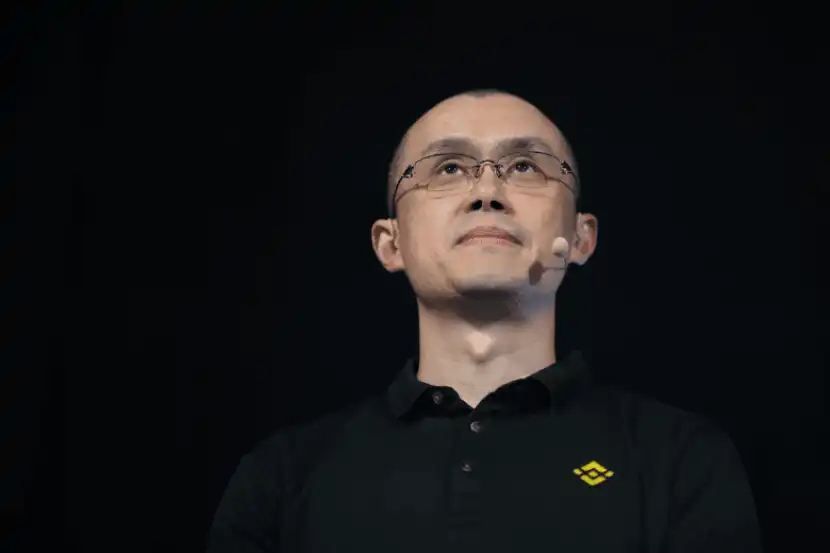
At Davos, Changpeng Zhao (CZ) appeared more cautious than ever before.

The founder and former CEO of Binance no longer leads the world's largest cryptocurrency exchange. Yet, at the 2026 World Economic Forum, he remained a figure of interest for the media and policy circles.

The reason lies not in any radical price predictions he offered—quite the opposite, he almost deliberately avoided short-term judgments.
I. He No Longer Predicts Prices, But Talks About "Time"

In an interview with CNBC, when asked about Bitcoin's price, Changpeng Zhao's response was surprisingly conservative:

Short-term prices are almost impossible to predict.

But immediately after, he offered a more macro judgment—

The cryptocurrency market may be entering a structural cycle that lasts for years.

In his description, this is not a traditional bull-bear switch but more of a change in cycle patterns.

He mentioned that Bitcoin historically fluctuated in four-year cycles, but this pattern is now being influenced by changes in the policy environment.

II. Why Might This Cycle Be Different?

The core reason Zhao gave was not technological upgrades or the halving narrative, but politics and regulatory environment.

He pointed out:

· The U.S. attitude toward cryptocurrency is becoming more friendly

· Other countries are quickly following suit with similar policies

· Crypto assets are gradually being incorporated into a "regulatable, discussable" category

In this context, he believes:

Bitcoin could reach a new all-time high in 2026.

However, it's important to note that this is not a statement of bullishness but more of a judgment on a policy-driven cycle.

III. "I Am in Dialogue with About a Dozen Governments"

More noteworthy than his price predictions is Zhao's main focus now.

He revealed in the interview that he is in communication with about a dozen governments, discussing key topics including:

· Cryptocurrency regulatory frameworks

· Asset tokenization

· The design and issuance of stablecoins

This stands in stark contrast to his earlier image of "innovate first, regulate later."

Today, he更像是一名:

Unofficial coordinator navigating between governments and the crypto industry.

IV. Regarding Trump, He Chose a "Clarification with Distance"

As U.S. politics increasingly influences the crypto industry, speculation about the relationship between Changpeng Zhao and Donald Trump has frequently surfaced.

To this, he gave a very clear response:

· He has never met Trump in person

· There is no close personal or business relationship

· The so-called "relationship" stems more from overlapping policy environments

In his explanation, the logic is very clear:

Policy benefits are at the industry level, not the result of personal relationships.

V. An Easily Overlooked Detail:

Why "Bypass the Banks"?

When discussing a Binance-related investment completed using a $1 stablecoin, Zhao added a thought-provoking detail:

The only requirement for using cryptocurrency was to avoid dealing with the banking system.

This statement highlights a practical issue:

Even as regulation becomes clearer, structural friction still exists between the traditional financial system and the crypto industry.

And stablecoins are becoming a temporary solution to bridge the two.

VI. Why Are Governments Becoming the Decisive Variable in the New Cycle?

In the early crypto narrative, governments were often seen as external disruptions, with cycles driven primarily by technological breakthroughs and market sentiment.

But today, that logic is fading.

As crypto assets are incorporated into formal regulatory frameworks, the market's focus shifts from "can it be done" to "how to do it, and under what system." When rules begin to be systematically designed, cycles are no longer solely determined by risk appetite but start to be influenced by the pace of institutional progress.

Regulatory clarity, compliance paths, and the confirmation of legal status do not immediately drive up prices, but they reshape long-term expectations, attracting institutional capital and national-level projects.

In this context, the new cycle is likely to be slower, longer, and more restrained.

Extreme bubbles decrease, while infrastructure and institutions gradually take shape.

If the early crypto cycles relied on imagination, the next phase seems more driven by policy patience and institutional maturity.

Conclusion:

CZ's Transformation Might Be More Important Than His Predictions

If one only extracts a few sentences, Zhao's remarks can easily be interpreted as price predictions.

But what is truly worth noting is his change.

From exchange CEO to industry advisor;

From resisting regulation to participating in institutional discussions;

From talking about coin prices to talking about time.

This perhaps signifies one thing:

The crypto industry is moving from "price narrative" to "institutional narrative."

And this time, the rhythm of the cycle may no longer be determined solely by the market.

This article represents the author's personal views only and does not constitute any investment, legal, or financial advice. The views are based on public information and are for discussion and reference only.


Câu hỏi Liên quan

QWhat is the main shift in Zhao Changpeng's (CZ) focus according to the article?

ACZ has shifted his focus from short-term price predictions and a 'build first, regulate later' approach to engaging in macro-level discussions about cycles, government relations, and regulatory frameworks. He is now acting more as an unofficial coordinator between governments and the crypto industry.

QWhat reason does CZ give for why the current crypto market cycle might be different from previous ones?

ACZ states that the core reason is not technological upgrades or the 'halving' narrative, but the changing political and regulatory environment, particularly more friendly attitudes from the U.S. and other countries, which is integrating crypto into a 'governable and discussable' category.

QWhat detail does CZ provide about his relationship with former U.S. President Donald Trump?

ACZ explicitly clarifies that he has never met Donald Trump in person and that there is no close personal or business relationship. He attributes any perceived connection to an overlap in policy environments, not personal rapport.

QAccording to the article, what role is stablecoin playing in the current crypto landscape?

AStablecoins are serving as a temporary solution to bridge the structural friction that still exists between the traditional banking system and the crypto industry, allowing transactions to be settled without directly dealing with banks.

QWhat does the article suggest is the new primary driver of the crypto market's long-term cycle?

AThe article suggests that government policy, regulatory clarity, and institutional maturity are becoming the key long-term drivers, shifting the cycle from being driven by market speculation and imagination to being shaped by policy patience and the pace of regulatory development.

Nội dung Liên quan

Arthur Hayes: Bong bóng AI sắp vỡ, thị trường tiền mã hóa chịu áp lực ngắn hạn

Bài viết của Arthur Hayes cảnh báo về nguy cơ vỡ bong bóng AI, gây áp lực ngắn hạn lên thị trường tiền mã hóa. Ông phân tích ba yếu tố chính: giá dầu tăng do căng thẳng địa chính trị ở eo biển Hormuz, các đợt IPO khổng lồ sắp tới của SpaceX, Anthropic và OpenAI, cùng những tuyên bố chính sách tiềm ẩn của cựu Tổng thống Trump nhằm vào ngành AI để tranh cử. Hayes lập luận rằng giá năng lượng cao sẽ làm tăng chi phí vận hành AI, trong khi việc chào bán cổ phần ồ ạt có thể vượt quá khả năng hấp thụ của thị trường. Ông dự đoán nếu Trump đưa ra các tuyên bố về việc đánh thuế hoặc siết chặt AI, nó có thể châm ngòi cho đợt bán tháo. Sự sụp đổ của thị trường AI sẽ kéo theo tiền mã hóa, bao gồm cả Bitcoin, do dòng tiền trước đây đổ vào AI sẽ cạn kiệt và tín dụng toàn ngành có thể bị thắt chặt. Hayes tiết lộ quỹ Maelstrom của ông đã chuyển sang nắm giữ các cổ phiếu sản xuất năng lượng, bán toàn bộ cổ phiếu AI và cắt giảm phần lớn danh mục tiền mã hóa, chỉ giữ lại Bitcoin và Ethereum để bảo toàn vốn, chờ đợi cơ hội mua lại sau khi thị trường chạm đáy.

marsbit31 phút trước

Arthur Hayes: Bong bóng AI sắp vỡ, thị trường tiền mã hóa chịu áp lực ngắn hạn

marsbit31 phút trước

‘Bản đồ tương lai’ của OpenAI: Mang AI đến với mọi người trên toàn cầu

Vài thế hệ một lần, một công nghệ mới xuất hiện và thay đổi mọi thứ. Giống như điện lực đã biến đổi cuộc sống vào thế kỷ 20, trí tuệ nhân tạo (AI) ngày nay cũng đang tạo ra một bước ngoặt tương tự. Sức mạnh thực sự của AI không nằm ở bản thân công nghệ, mà ở việc mọi người có thể sử dụng nó để làm gì - từ hỗ trợ chăm sóc sức khỏe, học kỹ năng mới đến thúc đẩy khám phá khoa học. Tầm nhìn của OpenAI là xây dựng một tương lai nơi AI phục vụ con người, trao quyền rộng rãi cho đại chúng thay vì tập trung quyền lực vào một số ít tổ chức. Họ cam kết phát triển AI an toàn, phù hợp với ý định của con người và đặt con người vào vị trí giám sát, kiểm soát. Tự động hóa hoàn toàn không phải là mục tiêu; AI nên hỗ trợ con người hoàn thiện bản thân, trong khi con người đưa ra các quyết định quan trọng, áp dụng các giá trị và sự phán xét. Ba mục tiêu cốt lõi của OpenAI là: 1) Xây dựng "nhà nghiên cứu AI tự động" để tăng tốc nghiên cứu chính về AI một cách an toàn; 2) Thúc đẩy phát triển kinh tế và đảm bảo lợi ích được chia sẻ rộng rãi; 3) Cung cấp một AGI cá nhân cho mỗi người trên Trái đất, cho phép họ hưởng lợi từ công nghệ này theo cách riêng của mình. OpenAI tin rằng phân phối quyền lực rộng rãi là chìa khóa cho một tương lai kiên cường và tốt đẹp hơn. Tương lai AI lý tưởng phải là nơi nhiều cá nhân, doanh nghiệp và quốc gia đều có thể xây dựng, hưởng lợi và nắm giữ quyền lực. Nếu thực hiện đúng, AI có thể trở thành nền tảng thúc đẩy năng suất, sáng tạo và thịnh vượng chung, từ đó thực hiện sứ mệnh đảm bảo AGI mang lại lợi ích cho toàn nhân loại.

marsbit33 phút trước

‘Bản đồ tương lai’ của OpenAI: Mang AI đến với mọi người trên toàn cầu

marsbit33 phút trước

Phi công đầu tiên của SpaceX đến Sao Hỏa đến từ Trung Quốc

Tác giả: Hội phát triển tài năng trẻ Thanh niên Tuần này chắc chắn sẽ được ghi vào lịch sử. Vào ngày 12 tháng 6, đợt IPO lớn nhất từ trước đến nay của nhân loại sắp diễn ra. SpaceX, "gã khổng lồ" do Elon Musk tạo ra, đang ấp ủ giấc mơ di cư liên hành tinh tột cùng của tỷ phú giàu nhất thế giới này. Tuy nhiên, nhân vật chính của bài viết hôm nay không phải là SpaceX hay Musk, mà là thuyền trưởng sắp chỉ huy chuyến tàu vũ trụ đầu tiên của con người bay tới Sao Hỏa - một tỷ phú Bitcoin đến từ Thiên Tân, Trung Quốc, tên là Vương Thuần. Thời thơ ấu, Vương Thuần sống cùng ông bà. Năm 5 tuổi (1987), ông nội nhặt về một tấm bản đồ thế giới, trở thành món đồ chơi yêu thích của cậu. Những vùng đất xa xôi, hoang vu như Nam Cực và Bắc Cực đã mê hoặc cậu bé từ đó. Năm 13 tuổi, cậu có chiếc máy tính đầu tiên và viết nhiều chương trình, trong đó có một trình mô phỏng trọng lực để hiển thị chuyển động của các hành tinh. Nhờ tài năng lập trình, cậu tham gia các kỳ thi Olympic Tin học quốc tế (IOI) và ACM-ICPC, sau đó được tuyển thẳng vào đại học mà không cần thi đại học. Sau khi tốt nghiệp, Vương Thuần làm việc tại một công ty phần mềm ở Bắc Kinh và bắt đầu đam mê đi tàu hỏa. Năm 2007, anh dùng mọi ngày cuối tuần để đi tàu, tổng cộng 75.900 km, ghi chép tỉ mỉ từng chuyến và đăng lên diễn đàn, được mệnh danh là "Nam thiên sứ cao tốc". Anh đã đi khắp tất cả các tỉnh của Trung Quốc. Năm 2013, anh cùng đối tác thành lập F2Pool, bể đào Bitcoin đầu tiên ở Trung Quốc. Chỉ một năm sau, F2Pool trở thành bể đào Bitcoin lớn nhất thế giới. Trong một thập kỷ, hơn 1,3 triệu Bitcoin đã được khai thác từ đây, chiếm hơn 30% tổng sức mạnh tính toán của mạng lưới toàn cầu vào thời điểm đỉnh cao. Nhờ đó, Vương Thuần trở thành một tỷ phú Bitcoin. Có tiền, anh bắt đầu thực hiện giấc mơ du lịch vòng quanh thế giới và khám phá vùng cực từ thuở nhỏ. Ngày 1 tháng 4 năm 2025, chuyến bay thứ 1000 trong đời anh không phải đến một thành phố nào, mà là vào vũ trụ. Nhiệm vụ mang tên Fram2 được thực hiện bởi tàu Dragon của SpaceX. Vương Thuần tự bỏ tiền túi khoảng 200 triệu USD để thuê toàn bộ 4 chỗ ngồi trên tàu Dragon, tự mình chọn ba đồng đội và thiết kế quỹ đạo bay cực hiếm qua hai cực của Trái Đất. Trong ba ngày rưỡi, họ chụp nhiều ảnh cực quang từ không gian và cả bức X-quang đầu tiên của con người chụp trong vũ trụ. Nhưng đó mới chỉ là khởi động. Ngày 21 tháng 5 năm 2026, SpaceX giới thiệu tàu Starship thế hệ mới và thông báo Vương Thuần sẽ là chỉ huy cho sứ mệnh có người lái đầu tiên của nhân loại bay tới Sao Hỏa. Đây sẽ là hành trình kéo dài khoảng hai năm, bay qua vài trăm triệu km trong không gian sâu thẳm. Trước đó, anh còn có chuyến bay vòng quanh Mặt Trăng với Dennis Tito, du khách không gian tự trả tiền đầu tiên. Mục tiêu của nhiệm vụ Sao Hỏa là thu thập dữ liệu quan trọng để biến việc khám phá Sao Hỏa từ một thử nghiệm ngắn hạn thành một ngôi nhà tự cung tự cấp lâu dài cho con người. Đối với Musk và SpaceX, bay ngang Sao Hỏa không phải là mục đích cuối cùng. Tầm nhìn của họ là xây dựng một thành phố thực sự trên Sao Hỏa, biến nhân loại thành một "loài đa hành tinh". Trong khi nhiều người trong giới tiền số đắm chìm trong cuộc sống xa hoa, Vương Thuần lại khác biệt. Anh coi tiền là công cụ, không phải mục đích. Trong một cuộc phỏng vấn với CBS, anh nói về ý nghĩa của các sứ mệnh: "Đây không chỉ là về việc lên không gian, mà là về sự nghiệp mở rộng ranh giới và chia sẻ kiến thức. Chúng tôi hy vọng những câu chuyện như vậy có thể truyền cảm hứng cho nhiều người khác theo đuổi trí tò mò của chính họ." Như nhà văn Stefan Zweig đã viết: "Vận may lớn nhất trong cuộc đời một người là ở giữa dòng đời, khi còn tráng kiện, anh ta phát hiện ra sứ mệnh của mình." Rất ít người sẵn sàng mạo hiểm đến những nơi hoang vu khắc nghiệt để khám phá hành tinh chúng ta, và càng ít người sẵn sàng dốc hết tài sản để chủ động tìm đến những môi trường khắc nghiệt. Rõ ràng, Vương Thuần là một người may mắn như vậy.

marsbit49 phút trước

Phi công đầu tiên của SpaceX đến Sao Hỏa đến từ Trung Quốc

marsbit49 phút trước

Ngày mai, mô hình mới nhất của Claude sẽ ra mắt, Anthropic đang biến việc phát hành mô hình thành ngôn ngữ niêm yết

Tóm tắt: Anthropic đang chuẩn bị cho đợt IPO trong bối cảnh định giá sau đầu tư gần 1 nghìn tỷ USD, doanh thu hàng hóa hóa hàng năm (run-rate) trên 470 tỷ USD và việc nộp hồ sơ S-1 bí mật cho SEC. Các tin đồn về Claude 5 (Fable 5) được thổi phồng, trở thành một phần trong câu chuyện định giá, cho thấy thị trường coi việc phát hành mô hình mới là tín hiệu về khả năng duy trì lợi thế công nghệ. Bài viết phân tích rằng Anthropic không còn chỉ là công ty mô hình "an toàn" mà đang định vị là nền tảng AI cấp doanh nghiệp, với câu chuyện định giá dựa trên sự tiến bộ liên tục của mô hình, khách hàng doanh nghiệp sẵn sàng trả phí và định vị an toàn. Dự án Mythos và Glasswing nhấn mạnh khả năng vào các tác vụ phức tạp, giá trị cao và an ninh mạng, giúp phân biệt Anthropic nhưng cũng làm tăng áp lực tuân thủ và rủi ro. Cuối cùng, thị trường công khai sẽ không chỉ đánh giá sức mạnh mô hình mà còn xem xét cụ thể chất lượng doanh thu, cơ cấu khách hàng, khả năng kiểm soát chi phí điện toán (training & inference) và các rủi ro. Tương lai của Anthropic trên thị trường công khai sẽ phụ thuộc vào khả năng chuyển đổi năng lực mô hình thành tăng trưởng doanh thu bền vững với sự minh bạch và rủi ro có thể quản lý được.

marsbit54 phút trước

Ngày mai, mô hình mới nhất của Claude sẽ ra mắt, Anthropic đang biến việc phát hành mô hình thành ngôn ngữ niêm yết

marsbit54 phút trước

Giao dịch

Giao ngay
Hợp đồng Tương lai
活动图片




