A New Crypto Predator Emerges: Google Exposes ‘Ghostblade’

bitcoinistXuất bản vào 2026-03-21Cập nhật gần nhất vào 2026-03-21

Tóm tắt

A new iOS malware called "Ghostblade," part of the DarkSword tool suite, has been exposed by Google Threat Intelligence. Designed to steal sensitive data from Apple devices, it targets cryptocurrency private keys, messages from iMessage, WhatsApp, and Telegram, as well as SIM details, location data, and media files. Ghostblade operates once, extracts information, and then deletes crash logs to avoid detection, leaving no persistent trace. This makes it particularly effective and hard to identify. The emergence of Ghostblade reflects a broader shift in cyberattacks toward individual crypto users rather than institutions. Although overall crypto hack losses dropped to around $50 million in February—down from $385 million the previous month—this decline is due to attackers shifting from code exploits to social engineering, phishing, and wallet poisoning schemes. The report underscores that high-value individual holders are increasingly targeted through deceptive websites and malware designed to operate quickly and discreetly.

Private crypto holders took the heaviest losses from hacking, phishing, and digital theft attempts in February 2026, according to blockchain intelligence firm Nominis — and a newly identified strain of iOS malware may explain part of why individual users have become the preferred target.

Designed To Strike Fast And Disappear

Google Threat Intelligence has identified a JavaScript-based malicious tool called Ghostblade, built specifically to hit Apple iOS devices, extract sensitive data, and go quiet before anyone notices.

The software is one of six tools bundled inside a broader package researchers are calling DarkSword. Together, the tools are engineered to steal cryptocurrency private keys, messaging data, and personal information from infected devices.

Ghostblade runs once, takes what it needs, and stops. No persistent background activity. No extra software required to make it work. That design makes it far harder to catch than malware that keeps running after an infection.
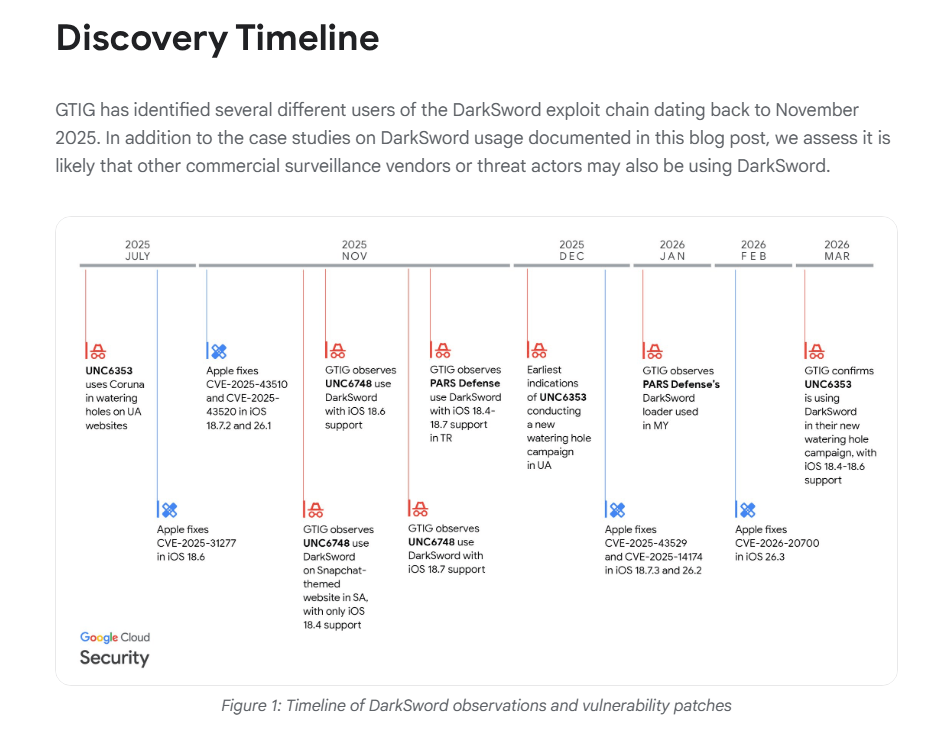
Source: Google

The tool also covers its tracks in a specific way. After it finishes, it wipes crash logs from the compromised device. Those logs are what Apple normally collects to identify software problems and flag suspicious activity. Without them, Apple receives no signal that anything went wrong.

What Ghostblade Can Actually Access

The scope of what Ghostblade can pull from a device is wide. Based on Google’s report, the malware is capable of reaching messages from iMessage, WhatsApp, and Telegram.

It can also collect SIM card details, location data, multimedia files, and system-level settings. For crypto users, the most direct threat is private key exposure — the kind of access that gives an attacker full control over a digital wallet with no way to reverse transactions once funds are moved.

Bitcoin is currently trading at $70,572. Chart: TradingView

The DarkSword suite represents a new chapter in browser-based attacks aimed at the crypto space, with Ghostblade serving as one of its most technically refined components.

Hackers Shift Focus From Code To People

Total losses from crypto-related hacks dropped sharply in February, falling to close to $50 million from $385 million the month before, Nominis data shows. But that decline does not signal a safer environment.

Reports indicate the drop reflects a change in method, not ambition. Attackers moved away from exploiting code vulnerabilities and toward phishing schemes, wallet poisoning, and other approaches that rely on tricking users rather than breaking systems.

Fake websites built to mirror legitimate platforms are a common vehicle. Users who land on them and interact with any element can have credentials and keys lifted without realizing it.

The Ghostblade alert from Google arrives against that backdrop — a reminder that high-value individual users, not just exchanges or protocols, are firmly in the crosshairs.

Featured image from Unsplash, chart from TradingView

Câu hỏi Liên quan

QWhat is the name of the newly identified iOS malware described in the article, and what is its primary function?

AThe malware is called Ghostblade. Its primary function is to extract sensitive data, such as cryptocurrency private keys, messaging data, and personal information, from infected Apple iOS devices and then go quiet to avoid detection.

QAccording to the article, what broader package is Ghostblade a part of, and what is the collective goal of its tools?

AGhostblade is one of six tools bundled inside a broader package called DarkSword. The collective goal of these tools is to steal cryptocurrency private keys, messaging data, and personal information from infected devices.

QHow does the Ghostblade malware avoid detection after it completes its task on a compromised device?

AGhostblade avoids detection by running only once, taking the data it needs, and then stopping with no persistent background activity. It also covers its tracks by wiping crash logs from the device, which prevents Apple from receiving signals that would normally flag suspicious activity.

QWhat specific types of data can the Ghostblade malware access on an infected device?

AGhostblade can access messages from iMessage, WhatsApp, and Telegram. It can also collect SIM card details, location data, multimedia files, system-level settings, and most critically for crypto users, private keys that control digital wallets.

QWhat trend in cyber attacks does the article highlight, as shown by the change in total crypto losses from January to February 2026?

AThe article highlights a trend where attackers are shifting their focus from exploiting code vulnerabilities to using methods that trick users, such as phishing schemes and wallet poisoning. This is evidenced by a sharp drop in total losses from $385 million in January to about $50 million in February, which reflects this change in method rather than a decrease in attacker ambition.

Nội dung Liên quan

Hiện trường thứ hai của ngôi sao hàng đầu vĩ mô Phó Bằng

Nhà kinh tế trưởng nổi tiếng Phó Bằng chính thức gia nhập Tập đoàn Tân Hỏa (Bitfire Group), đánh dấu bước chuyển mình sang lĩnh vực tài sản số sau gần một năm vắng bóng. Sự kiện này ngay lập tức đẩy giá cổ phiếu Tân Hỏa tăng hơn 11%. Phó Bằng, cựu Chuyên gia kinh tế trưởng của Đông Bắc Chứng quyền, sẽ đảm nhiệm vị trí tương tự tại Tân Hỏa, tập trung tích hợp tài sản số (C) vào khung phân bổ tài sản toàn cầu, kết hợp với chuyên môn FICC (thu nhập cố định, ngoại hối và hàng hóa) của ông. Bài viết điểm lại hành trình sự nghiệp của Phó Bằng, từ kinh nghiệm tại Lehman Brothers và các tổ chức tài chính truyền thống, đến phong cách phân tích phổ biến kiến thức vĩ mô phức tạp cho công chúng qua mạng xã hội, giúp ông có hơn 4 triệu người theo dõi. Năm 2024, một bài phát biểu trực tiếp về kinh tế Trung Quốc đã dẫn đến việc tài khoản của ông bị đình chỉ và ông rời Đông Bắc Chứng quyền, một phần vì lý do sức khỏe. Động thái này được xem là chiến lược cùng có lợi. Tân Hỏa, một công ty quản lý tài sản số có trụ sở tại Hồng Kông, đang tìm cách xây dựng niềm tin với các khách hàng tổ chức và gia đình giàu có. Danh tiếng và chuyên môn của Phó Bằng trong tài chính truyền thống được kỳ vọng sẽ cung cấp một "bộ não chiến lược" uy tín, giúp công ty thu hút dòng tiền truyền thống vào thị trường tài sản số đầy biến động.

marsbit11 phút trước

Hiện trường thứ hai của ngôi sao hàng đầu vĩ mô Phó Bằng

marsbit11 phút trước

Giao dịch

Giao ngay
Hợp đồng Tương lai
活动图片