Finally, Apple has confirmed that WWDC26 will commence at 10:00 AM local time on June 8th, which is 1:00 AM Beijing time on June 9th.
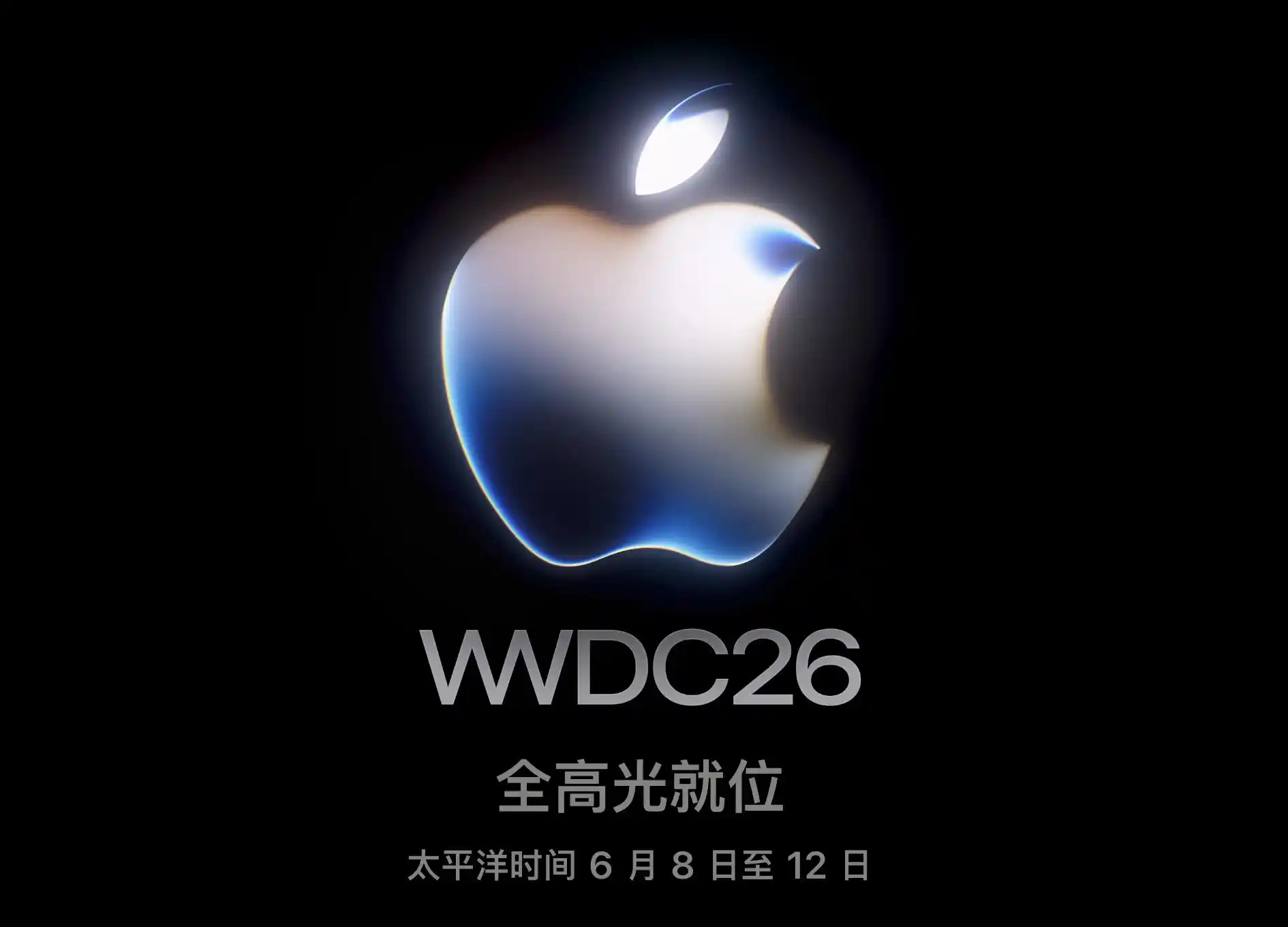
Image Source: Apple
As per tradition, each WWDC showcases the next generation of Apple platform updates, including AI progress, new software, and developer tools. Particularly the most heavyweight keynote at the opening, in the past, typically focused on what upgrades and changes iOS, iPadOS, and macOS had. However, by 2026, the challenges Apple faces are different.
Over the past two years, Apple Intelligence has not fundamentally changed iPhone users' daily experience. The major Siri upgrade has been repeatedly delayed, making Apple appear somewhat slow in this wave of generative AI.
Therefore, the truly noteworthy aspects of WWDC26 this year are not just what iOS 27 looks like or what new capabilities macOS 27 adds, but also whether Apple can answer a more fundamental question: In today's world where AI deeply integrates into phones, computers, headphones, watches, glasses, and home devices, will the Apple ecosystem still be the best computing platform?
Based on current leaks about WWDC26 compiled by Leikeji, apart from the all-new Siri powered by the underlying Gemini model, Apple's next-generation systems likely won't undergo drastic overhauls. Updates will primarily involve refinements to the underlying structure and details. True reforms are expected to arrive in 2027 (the 20th anniversary of the iPhone), especially for iOS.
Siri Major Overhaul, iOS 27 Another Year of Refinements
In recent years, changes to iOS have been somewhat awkward. On one hand, Apple has added new features every year, from Lock Screen widgets and Dynamic Island to personalized home screens and Apple Intelligence. On the other hand, for a vast number of average users, the daily way of using the iPhone hasn't changed much. Apps are still apps, Control Center is still Control Center, System Settings are still layered menus, and Siri has long not truly become a core entry point.
iOS 27 might first change this inertia visually and in terms of entry points. According to Bloomberg, the new Siri will appear as a lighter-weight bubble popping up from the Dynamic Island, and users can enter a system-level portal similar to "Search or Ask" by swiping down from the top center of the screen.
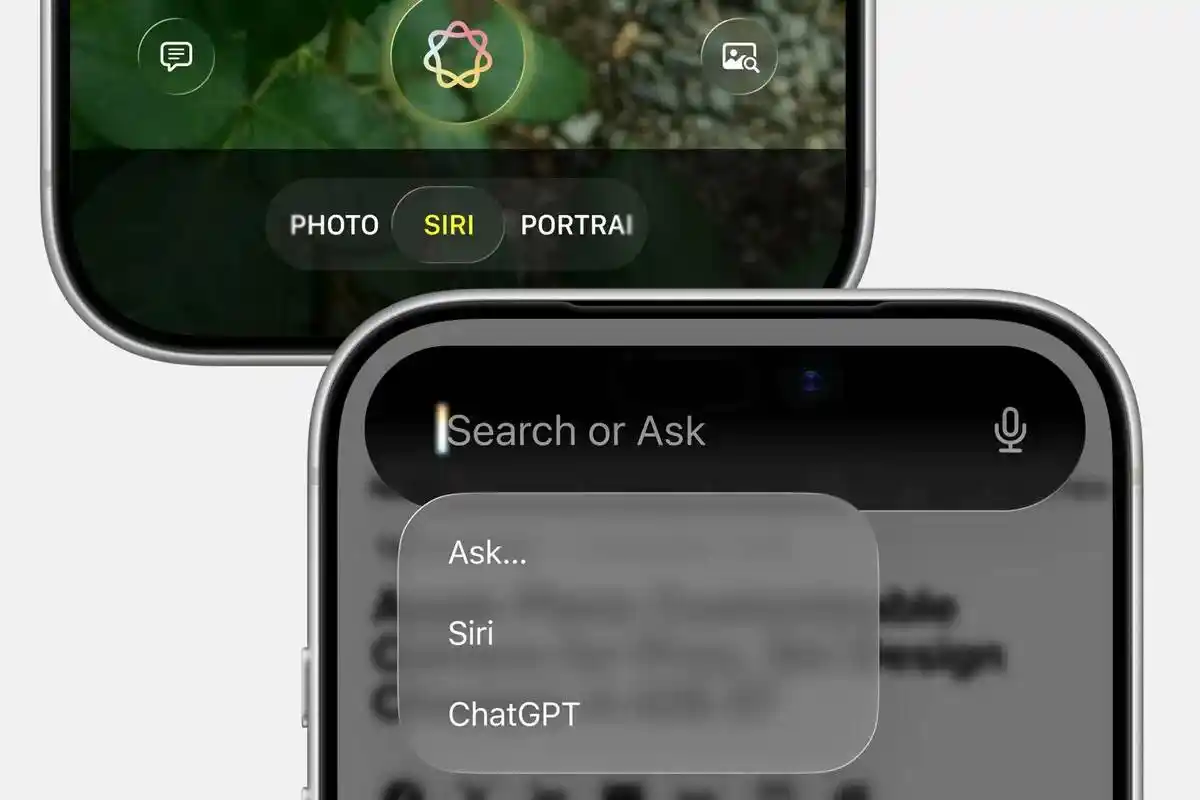
Not actual device image, Image Source: Bloomberg
This portal itself doesn't necessarily need to be understood solely within the context of AI capabilities. It's more like Apple redefining the way of searching, controlling, and asking questions on the iPhone. In the past, users swiped down for Spotlight Search. In the future, swiping down might become a unified portal connecting local content, system functions, web search, and intelligent assistants simultaneously.
The Dynamic Island has traditionally been more of an area for status prompts and light interactions, such as incoming calls, timers, music playback, and navigation progress. If iOS 27 truly integrates Siri and the system search portal into the Dynamic Island, it signifies that Apple might further transform this screen cutout from an "information display area" into a "system entry point."
The Camera app might also receive more practical adjustments.
According to leaks, the Camera app in iOS 27 will add a new "Advanced" tab, supporting depth-of-field control, exposure control, and providing widget-like functions such as "Basic," "Manual," "Presets," etc. New grid and color grading tools may also be included. Meanwhile, the main interface will allow users to customize whether to display icons for functions like flash, exposure, and timer.
If iOS 27 can make the camera interface maintain Apple's consistent simplicity while offering more control to those who want it, it would indeed be a very practical upgrade.
Additionally, the Photos app might increase its toolset and, beyond the existing "Clean Up" feature, add editing capabilities like image expansion and recomposition. This will, of course, be related to AI, but from a system experience perspective, it's more like Apple continuing to incorporate light photo editing capabilities that previously required third-party apps into the system album.
A more foundational change might be stability and performance. MacRumors mentions that Apple's focus for this generation of systems is more on bug fixes, stability improvements, and underlying performance optimization, even drawing external comparisons to the Mac OS X Snow Leopard-style update. This may not sound as exciting as AI, but it's arguably more important for iOS users.
Another direction that cannot be ignored is preliminary adaptation for a foldable iPhone.
Even if Apple doesn't release a foldable iPhone this year, iOS 27 might reveal some system preparations in advance, such as more flexible window proportions, multitasking better suited for large screens, improved landscape interfaces, and a blurrier boundary between iPhone and iPadOS.
For Apple, the real difficulty with foldables lies not just in the hardware, but also in how to make iOS transition naturally between the small screen, unfolded large screen, and outer display.
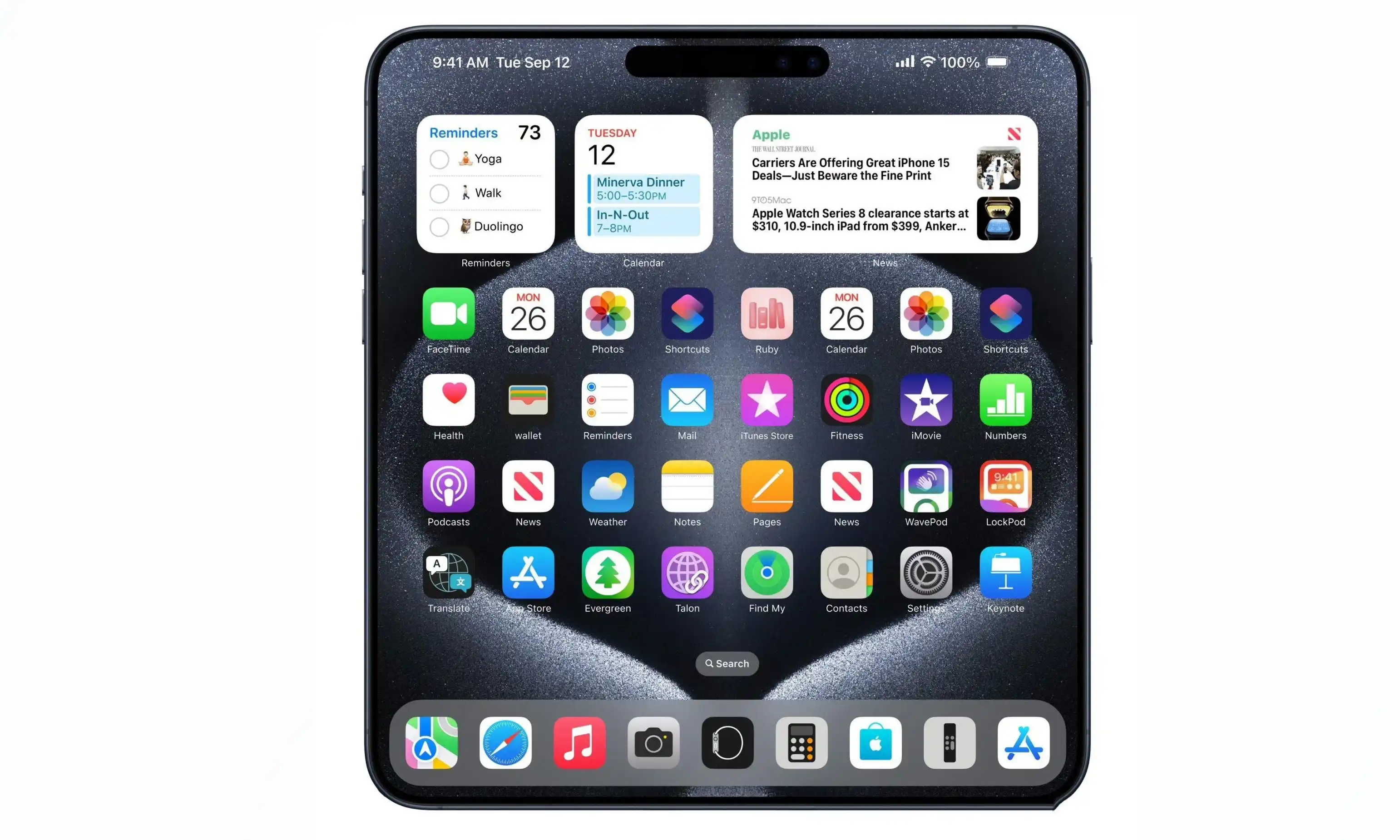
Image Source: X
Let's also briefly mention iPadOS 27.
The biggest issue for the iPad in recent years has consistently been hardware over-performance paired with insufficient system productivity. Therefore, one can anticipate whether Apple will continue to relax the system boundaries of the iPad, such as more stable Stage Manager, freer window management, a file system closer to the desktop, a better external display experience, and a more natural workflow between Apple Pencil, keyboard, trackpad, and multiple windows.
For the iPad, AI is certainly important, but foundational system capabilities are more crucial. Without sufficiently mature multitasking and file logic, even the most powerful intelligent assistant will struggle to turn the iPad into a truly reliable primary production tool.
macOS 27: The Core Testing Ground for Apple Intelligence
Compared to the iPhone, the Mac is actually more suited to showcase Apple's AI ambitions. The reason is simple: the Mac naturally handles more complex workflows. Writing, editing, programming, file management, organizing browser research, meeting communications, cross-app collaboration—these are all scenarios where generative AI can more easily provide value.
The upgrade focus for macOS 27 this time includes the new Siri, new Apple Intelligence features, and continued refinement of the Liquid Glass design language.
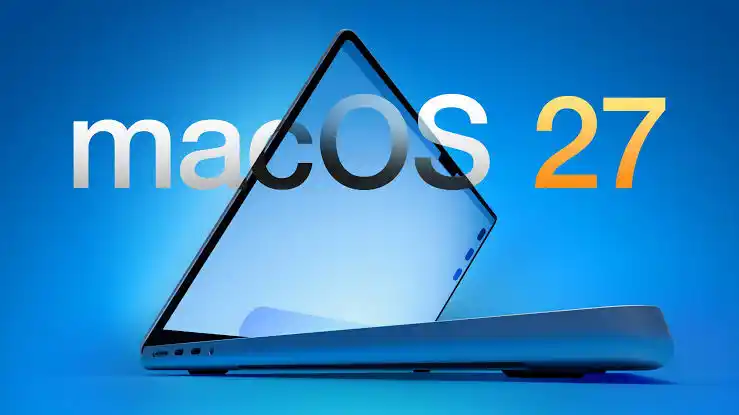
Image Source: X
Firstly, macOS 27 will build upon macOS Tahoe with performance optimizations and minor design adjustments, including improving the readability of the "Liquid Glass" interface. For Mac users, this kind of "fine-tuning" is not trivial. Finder, menu bar, Dock, Mission Control, window management, Safari, file previews, keyboard shortcut systems—these elements constitute the basic productivity of the Mac.
Additionally, macOS 27 will officially drop support for Intel chips. Many Intel Macs are still quite capable performance-wise, but from Apple's perspective, unifying to the M-series allows macOS to shed the historical burden for graphics, energy efficiency, security, virtualization, on-device models, and cross-device synergy.
Safari might also be a key focus in macOS 27. The new Safari in macOS 27 will add an automatic tab grouping feature, simplifying the browser experience.
If the new Siri and Apple Intelligence truly arrive in macOS 27, its primary goal shouldn't be AI chat on the Mac, but whether it can integrate into real workflows. For example, can it understand the content of the current window? Can it connect information from Mail, Calendar, Notes, files, and the browser? Can it directly help users generate scripts, organize files, create to-dos, process images, or even, with user permission, perform a sequence of tasks across apps.
This will be a crucial step for Apple. One reason Apple Intelligence has had low visibility on the iPhone is that mobile scenarios are more fragmented, and users have lower tolerance for AI errors. But tasks on the Mac are longer and more complex, making the value of AI easier to perceive.
If Apple can make macOS 27 the most stable, secure, and intuitive personal AI work system, it might actually prove its capabilities better than piling on features for the iPhone.
The All-New Siri Will Be the Biggest Main Course of This WWDC
Besides iOS, iPadOS, and macOS, WWDC26 is also an opportunity for Apple to reorganize the cross-platform experience. visionOS, watchOS, tvOS, and other platforms will also receive their own updates, but there is currently little information leaked.
And undoubtedly, the biggest highlight of WWDC26 will still fall on Siri.
According to Mark Gurman, Apple is preparing a new Siri based on Gemini technology. It is said to have deep system-level permissions, integrating more deeply with iOS 27, iPadOS 27, and macOS 27, and able to access a full range of personal data like local messages, photo albums, schedules, and documents on the phone.
Not only that, Apple also plans to launch an independent Siri APP, which is expected to take on more functions, similar to the standalone AI assistant apps created by Chinese smartphone manufacturers.
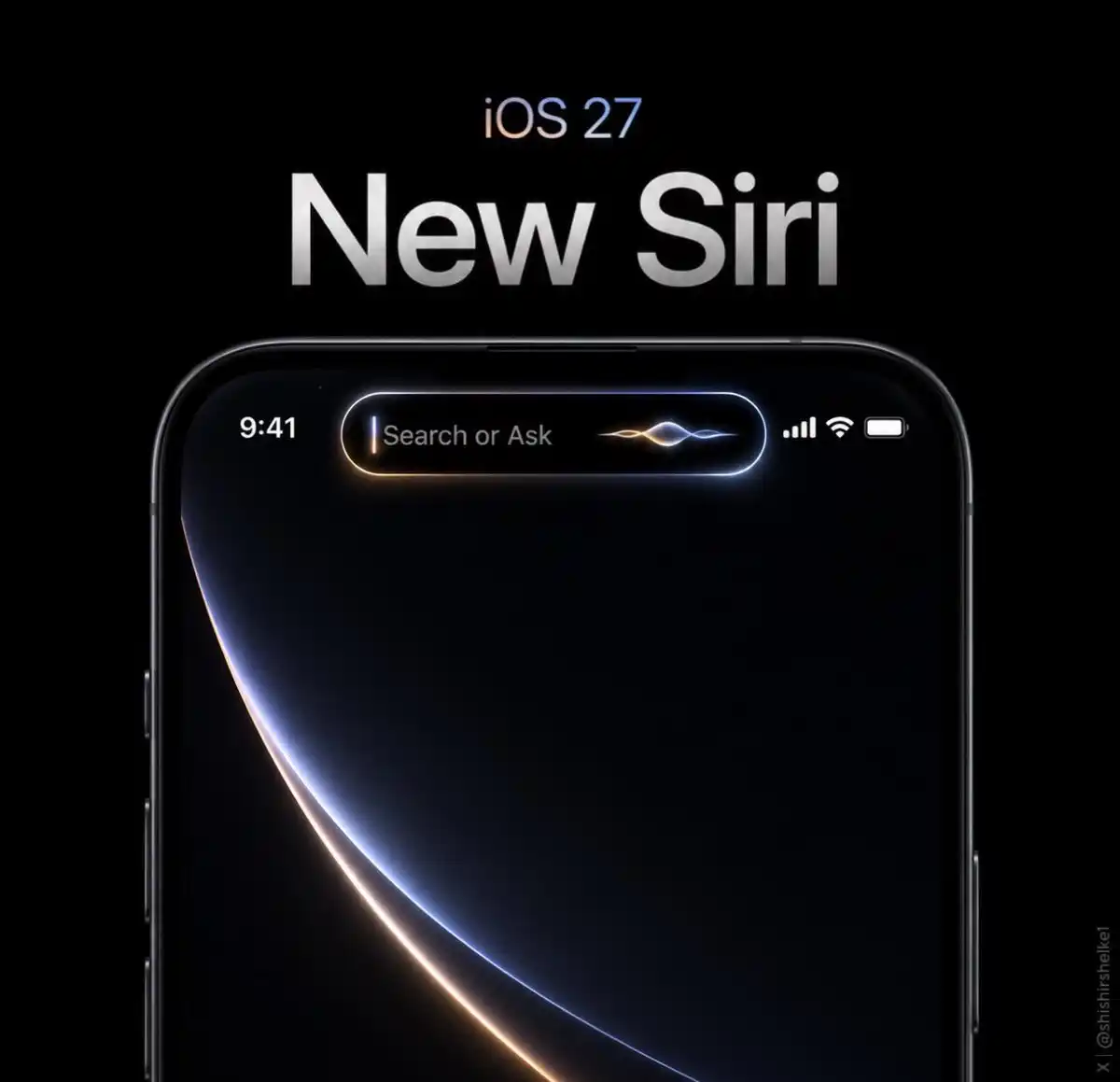
Image Source: X
However, it's worth noting that Apple has long emphasized hardware-software integration and has built a differentiated image on privacy and on-device processing. Now, however, it must rely on Google's Gemini model to achieve the major Siri upgrade, which, to some extent, amounts to an admission: in terms of foundational large model capabilities, Apple itself has indeed fallen behind.
From a practical standpoint, this might also be Apple's most pragmatic choice. The Siri issue has dragged on for too long, and Apple can hardly use "we're still refining it" as an explanation for another year or two. By leveraging Gemini, Apple can patch up the underlying model capabilities and then amplify its own true strengths:
System entry points, privacy architecture, on-device processing, cross-device experience, developer ecosystem, and control over user data access boundaries.
This is also the most intriguing aspect of WWDC26. Apple needs to clearly explain what role Gemini exactly plays? Which tasks are completed on-device? Which tasks go to Private Cloud Compute? Will users' personal data be used to train third-party models? Can developers access the new Siri capabilities?
On the other hand, the biggest problem with Apple Intelligence in the past is that it seemed like a collection of scattered features: writing tools, summarization, image generation, notification organization, photo cleanup, partial Siri enhancements. They weren't useless, but it was hard for users to develop a feeling of "I can't live without it every day."
So what truly matters is whether they can be interconnected. The next step for AI phones is not each app having its own AI button, but the system understanding what the user is currently doing and providing help at the appropriate place.
For example, when a user is viewing a photo, AI could help them edit it, generate a caption, and send it to a specific contact; when a user is writing an email, AI could reference calendar events, files, and previous email content; when a user is researching in Safari, AI could organize web pages, extract tables, and generate notes; when a user describes a need in Shortcuts, the system could automatically generate a cross-app workflow.
This is the role Apple Intelligence should undertake—not just a brand name, but a system-level intelligence permeating the iPhone, iPad, Mac, Watch, and Vision Pro.
Can Apple's AI Prove Itself Again? WWDC26 Will Reveal
WWDC26 will be a very special developers conference for Apple. It will, of course, feature the regular updates to iOS, iPadOS, macOS, watchOS, visionOS, and tvOS, along with continuous refinement of design, performance, development tools, and ecosystem capabilities.
But what will truly determine external perception this year remains Siri and Apple Intelligence.
Apple doesn't lack devices, users, or an ecosystem. But in today's world where generative AI has reshaped software entry points, the question is whether Apple can still transform complex technology into an experience ordinary people are willing to use daily.
If the new Siri is merely better at chatting, WWDC26 will likely be seen as Apple's belated catch-up. If AI can truly integrate into Apple's major systems, understand personal contexts, mobilize device capabilities, and maintain the privacy and stability Apple always emphasizes, then this conference could mark the beginning of Apple redefining the AI entry point.
Apple has already missed the earliest window. Now, it must prove it can still seize the new window of opportunity.