CLARITY Act Leaves 5 Loopholes—From Pensions to Trump's $1.4 Billion in Cryptocurrency

cryptonews.ruXuất bản vào 2026-08-10Cập nhật gần nhất vào 2026-08-10

Tóm tắt

A US Senate Banking Committee minority staff analysis, led by Senator Elizabeth Warren, identifies five major loopholes in the proposed Digital Asset Market Clarity Act (CLARITY Act). The analysis argues the bill fails on key measures: protecting retirement savings from securities law gaps, preventing illicit finance, shielding taxpayers from bailouts, stopping presidential self-enrichment, and preserving consumer protections. The bill's dual regulatory system could let crypto assets evade SEC oversight, weakening fraud enforcement and state regulators' authority, while also restricting investors' legal recourse. Concerns include that DeFi platforms could escape anti-money laundering rules, and stablecoin interest payments might drain deposits from local banks. The staff report highlights that former President Trump earned over $1.4 billion from crypto in 2025, raising self-dealing concerns as enforcement would rely on his Attorney General while banning state suits. Industry leaders like Coinbase's CEO support the bill as providing US oversight. The bill faces a Senate cloture vote on September 15, needing 60 votes to proceed.

Minority staff of the U.S. Senate Committee on Banking, Housing, and Urban Affairs, led by the committee's ranking member, U.S. Senator Elizabeth Warren (D-Mass.), reviewed the text of the "Digital Asset Market Clarity Act," published on July 22. The result of this work was an analysis published on August 5, which identified five major loopholes in the CLARITY Act.

The CLARITY Act (H.R. 3633) is digital asset market structure legislation that draws jurisdictional boundaries between the Securities and Exchange Commission (SEC) and the Commodity Futures Trading Commission (CFTC). Staff identified five provisions they believe must be included in cryptocurrency legislation: protecting retirement savings from securities law gaps, cracking down on illicit finance, protecting taxpayers from financial bailouts, preventing presidential self-enrichment, and preserving consumer protections. According to the analysis, the bill fails to address any of these five provisions.

Majority staff on the Senate Banking Committee argue that the bill strengthens investor protections, establishes federal oversight, and aims to combat fraud and money laundering.

Pensions, Fraud, and Right to Sue

Staff assert that the two-tier system would allow assets offered on blockchain to evade SEC oversight. Cryptocurrency-issuing companies would be able to self-certify their exemption from requirements applicable to securities. Staff state this would deprive the SEC and state regulators of the disclosure and oversight tools needed to protect investors.

This staff memo names six organizations expressing concerns about pension issues, including Healthy Markets—an investor advocacy group whose members include pension funds and financial companies. Also mentioned are five labor union organizations: the American Federation of Labor and Congress of Industrial Organizations (AFL-CIO), the American Federation of State, County and Municipal Employees (AFSCME), the Service Employees International Union (SEIU), the National Education Association (NEA), and the American Federation of Teachers (AFT).

Legal recourse would be sharply curtailed under the fifth standard, which governs actions after an investor has been defrauded. Staff argue that exempting assets from securities laws would weaken the SEC's ability to combat fraud. State and tribal authorities could also be stripped of their power to enforce their own securities laws, consumer protections, and gambling regulations. Staff further assert that the bill does not establish an enforceable private right of action and does not regulate the use of forced arbitration in cryptocurrency-related disputes.

Cartels, Sanctions, and Bank Deposits

According to the minority staff memo on the CLARITY Act, companies associated with Decentralized Finance (DeFi) platforms would be exempt from illicit financing responsibilities even if they earn millions from transactions on the platforms. The minority staff document cites a 2023 Treasury Department warning linking DeFi services to ransomware operators, thieves, and drug traffickers. Some cryptocurrency mixers would also remain outside the scope of U.S. sanctions thanks to the so-called "Tornado Cash loophole"—a legislative gap that, by court decision, only Congress can fix.

The yield on stablecoins raises the third objection. The Independent Community Bankers of America (ICBA) and the Conference of State Bank Supervisors (CSBS) warn that paying interest would lead to an outflow of deposits from local banks, tightening credit conditions for small businesses. At the same time, banks would be granted leeway to issue loans backed by cryptocurrency collateral, hold cryptocurrency directly, and trade derivatives using customer deposits and the federal financial safety net. The Systemic Risk Council—a non-partisan body composed of former regulators—has identified these activities as a potential risk for requiring financial bailouts.

Trump Family Profits and Uncertain Vote Outcome

According to the minority staff of the Senate Banking Committee, President Trump earned over $1.4 billion from cryptocurrency projects in 2025 alone, accounting for nearly two-thirds of his total income. Enforcement of the law would rest solely with his Attorney General, while state Attorneys General would face an outright ban on filing lawsuits. These obligations would also expire once Trump leaves office. Warren and U.S. Senator Richard Blumenthal (D-Conn.) separately demanded the Securities and Exchange Commission (SEC) investigate Trump's "memecoin," citing investor losses of $3.8 billion.

Industry leaders state that this bill would bring cryptocurrency activities under U.S. oversight rather than push them offshore. The CEO of cryptocurrency exchange Coinbase (Nasdaq: COIN), Brian Armstrong, described the bill as a result of bipartisan work and urged the Senate to pass the CLARITY Act. The bill is now slated for a Senate vote on September 15 on a cloture motion to end debate and proceed to a vote. Majority Leader John Thune (R-S.D.) filed this motion just before the Senate's August recess, and 60 votes are still required to advance the bill.


Câu hỏi Liên quan

QAccording to the article, what is the main criticism against the CLARITY Act by the Senate Banking Committee minority staff?

AThe main criticism is that the CLARITY Act contains five major loopholes. It fails to address key issues such as protecting retirement savings from securities law gaps, curbing illicit financing, protecting taxpayers from bailouts, preventing presidential self-enrichment, and preserving consumer protections.

QWhat specific concern is raised regarding pension funds and retirement savings in the analysis of the CLARITY Act?

AThe concern is that the Act's two-tiered system could allow blockchain-offered assets to escape SEC oversight. This would deprive the SEC and state regulators of the disclosure and oversight tools needed to protect investors, putting retirement savings at risk. Investor advocate groups and several major labor unions have expressed this concern.

QWhat are the concerns related to DeFi platforms and sanctions mentioned by the minority staff?

AThe concerns are that companies linked to DeFi platforms would be exempt from illicit financing obligations even if they earn millions from platform transactions. The memo cites a 2023 Treasury warning linking DeFi services to ransomware operators, thieves, and drug traffickers. It also mentions that some crypto mixers could remain outside U.S. sanctions due to a 'Tornado Cash loophole' that only Congress can fix.

QHow much did the article claim President Trump earned from cryptocurrency projects in 2025, and why is this presented as a problem?

AThe article claims President Trump earned over $1.4 billion from cryptocurrency projects in 2025, which was nearly two-thirds of his total income. This is presented as a problem because the Act's enforcement would rely solely on his Attorney General, with state Attorneys General barred from bringing suits. This creates a potential conflict of interest regarding presidential self-enrichment.

QWhat is the next step for the CLARITY Act in the Senate, and what is required for it to proceed?

AThe next step is a cloture vote in the Senate scheduled for September 15, which would end debate and allow a vote on the bill itself. To proceed, the bill needs 60 votes to overcome the cloture motion filed by Majority Leader John Thune before the August recess.

Nội dung Liên quan

Người sáng lập Bitcoin Red Team chuyển sang dùng AI Trung Quốc: 'Điều đó khiến tôi đau lòng'

Nhà sáng lập Bitcoin Red Team, Rob Hamilton, đã công bố trên X rằng ông buộc phải quay lại sử dụng các mô hình AI mã nguồn mở của Trung Quốc để tiếp tục nghiên cứu bảo mật. Động thái này đến sau khi quyền truy cập của ông vào các công cụ AI của OpenAI đột ngột bị hạn chế, chỉ một ngày sau khi ông bắt đầu tích hợp chúng vào công việc kiểm tra lỗ hổng cho cơ sở hạ tầng Bitcoin. Hamilton bày tỏ sự thất vọng khi với tư cách một người Mỹ yêu nước nhưng buộc phải dùng đến giải pháp này. Ông nhấn mạnh mối lo ngại rằng các công cụ AI mạnh nhất không được cung cấp cho những người bảo vệ hệ thống, trong khi "tin tặc" thì không gặp phải các rào cản tương tự. Nhóm tình nguyện Bitcoin Red Team của ông đang nỗ lực quét hàng trăm kho mã nguồn mở liên quan đến Bitcoin để tìm lỗ hổng, đặc biệt sau vụ tấn công ví phần cứng Coldcard gây thất thoát hơn 100 triệu USD. Tình trạng này phản ánh một vấn đề rộng hơn trong ngành công nghiệp tiền mã hóa, nơi nhiều công ty hàng đầu vẫn đang chờ đợi quyền truy cập vào các mô hình AI tiên tiến để tăng cường bảo mật cho mã nguồn của họ.

cointelegraph26 phút trước

Người sáng lập Bitcoin Red Team chuyển sang dùng AI Trung Quốc: 'Điều đó khiến tôi đau lòng'

cointelegraph26 phút trước

Giá Cổ Phiếu Tăng Gấp Đôi Trong Năm, Tái Niêm Yết Sụt 20CM, Kịch Bản 'Chip Mượn Vỏ' Của Baolaite Hạ Màn

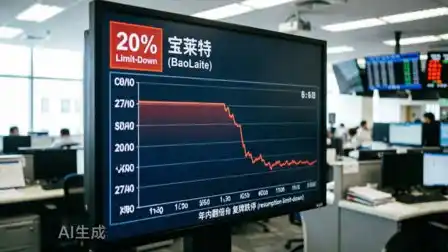
Ngày 10/8/2026, sau gần một tuần tạm ngừng giao dịch, thông tin về việc chấm dứt thay đổi quyền kiểm soát tại Baolai Te (300246.SZ) đã gây ra đợt bán tháo mạnh, khiến cổ phiếu của công ty này bị khóa sàn 20% ngay trong ngày đầu tiên mở cửa trở lại, đóng cửa ở mức 15,41 NDT/cổ phiếu. Nguyên nhân sâu xa của đợt sụt giảm này nằm ở tình hình kinh doanh đang gặp khó khăn của Baolai Te. Hoạt động kinh doanh chính là thận nhân tạo đang sa lầy trong cuộc chiến về giá do chính sách tập trung đấu thầu của nhà nước, trong khi đó mảng máy theo dõi bệnh nhân cũng đạt đỉnh tăng trưởng. Công ty đã lỗ liên tiếp trong ba năm (2023-2025) với tổng cộng hơn 200 triệu NDT và tiếp tục báo lỗ trong quý I/2026. Kỳ vọng về một "cú lội ngược dòng" bắt đầu từ đầu năm 2026 khi Tập đoàn Kỹ thuật Thông tin Weigu (Weigu Information) - một doanh nghiệp "kỳ lân" chuyên về chip lưu trữ bán dẫn, thông qua công ty liên kết là Cử Uy Trí Hợp, mua vào 7% cổ phần của Baolai Te. Điều này khiến thị trường đồn đoán về kế hoạch Weigu Information "lên sàn" thông qua con đường "bọc thép" bằng Baolai Te, một doanh nghiệp không cùng ngành. Kỳ vọng này đã đẩy giá cổ phiếu Baolai Te tăng hơn 137% trong năm 2026 trước khi bị tạm ngừng giao dịch. Tuy nhiên, vào ngày 7/8, Baolai Te thông báo chấm dứt kế hoạch thay đổi quyền kiểm soát, chính thức dập tắt hy vọng về một cuộc chuyển đổi sang lĩnh vực công nghệ cao. Công ty hiện đang đối mặt với thách thức kép: lỗ hoạt động kéo dài và áp lực thanh khoản ngắn hạn lớn, đặc biệt là khoản trái phiếu chuyển đổi "Baolai Convertible Bond" trị giá khoảng 218 triệu NDT sắp đến hạn vào tháng 9/2026 trong bối cảnh giá cổ phiếu thấp hơn nhiều so với giá chuyển đổi.

marsbit50 phút trước

Giá Cổ Phiếu Tăng Gấp Đôi Trong Năm, Tái Niêm Yết Sụt 20CM, Kịch Bản 'Chip Mượn Vỏ' Của Baolaite Hạ Màn

marsbit50 phút trước

Moore Threads vừa gọi vốn 80 tỷ, lại chuẩn bị IPO tại thị trường chứng khoán Hồng Kông

Ngày 9/8, Moore Threads (Mộ Nhi Ti Trình) thông báo kế hoạch niêm yết trên thị trường chứng khoán Hồng Kông và công bố báo cáo tài chính bán niên ấn tượng. Dù vừa huy động thành công 8 tỷ nhân dân tệ trên sàn chứng khoán A (Thượng Hải) vào tháng 12/2025, công ty lại lên kế hoạch IPO tại Hồng Kông, gây tranh cãi trong giới đầu tư, đặc biệt là sau động thái sử dụng 2,9 tỷ nhân dân tệ tiền nhàn rỗi để mua sản phẩm tài chính. Kể từ đỉnh cao vào tháng 12/2025, vốn hóa thị trường của Moore Threads trên sàn A đã giảm khoảng 40%, xuống còn khoảng 269,8 tỷ nhân dân tệ. Nguyên nhân được cho là do định giá quá cao ban đầu và phản ứng tiêu cực của thị trường trước việc công ty dùng tiền huy động được để đầu tư tài chính. Mục tiêu niêm yết tại Hồng Kông của Moore Threads là nhằm thúc đẩy chiến lược toàn cầu hóa, thu hút nhân tài quốc tế và nâng cao năng lực quản trị. Đây cũng là xu hướng chung của các doanh nghiệp công nghệ hàng đầu Trung Quốc. Về hiệu quả kinh doanh, doanh thu bán niên 2026 của công ty đạt 1,74 tỷ nhân dân tệ, tăng 147,4% so với cùng kỳ, chủ yếu nhờ vào nhu cầu mạnh mẽ về GPU đa chức năng và sự phát triển của cụm trí tuệ nhân tạo "Khoa Nga". Tuy nhiên, công ty vẫn chưa thoát lỗ, với lỗ ròng thuần sau khi loại trừ các khoản thu không thường xuyên là 150 triệu nhân dân tệ. Chi phí nghiên cứu phát triển và bán hàng tăng mạnh. Công ty dự kiến có thể đạt lợi nhuận sớm nhất vào năm 2027. Tóm lại, việc Moore Threads theo đuổi mô hình "A+H" là một bước đi chiến lược, nhưng áp lực về định giá trên thị trường Hồng Kông và con đường dài phía trước để đạt được lợi nhuận bền vững vẫn là những thách thức lớn mà công ty phải đối mặt.

marsbit1 giờ trước

Moore Threads vừa gọi vốn 80 tỷ, lại chuẩn bị IPO tại thị trường chứng khoán Hồng Kông

marsbit1 giờ trước

Giao dịch

Giao ngay
活动图片