Dark Pools Prevail, Whales Vanish: How Credible Are Public Market Signals?

marsbitXuất bản vào 2026-08-07Cập nhật gần nhất vào 2026-08-07

Tóm tắt

Institutional cryptocurrency trading is increasingly shifting towards dark pools and over-the-counter (OTC) desks, with data from sFOX showing such venues accounted for 15% of total monthly volume by June, up from negligible levels in April. In July, 77.7% of institutional capital on sFOX's platform was routed through OTC desks, while only 18.4% went to public exchanges. A key driver is institutions' need to conceal large orders to avoid revealing trading patterns, preventing front-running and minimizing price impact. Firms like Jane Street and Citadel use dark pools and order-splitting across multiple venues to execute trades discreetly. This structural shift mirrors earlier developments in equities and forex markets. As a result, public order books now reflect only a fraction of actual market activity, eroding the once-significant advantage retail traders had in tracking large wallets and exchange flows. The proliferation of prime brokers and aggregation platforms is also rapidly closing simple arbitrage opportunities. The market may evolve toward a brokerage model for retail, similar to traditional stocks. Two scenarios emerge: an optimistic one where retail gains from narrower spreads and better order routing, and a pessimistic one where transparency declines faster than benefits trickle down, leaving smaller investors in the dark. Regardless, traders must adapt by not relying solely on exchange volume, comparing total execution costs, and using limit orders in thin marke...

Original Author: Gino Matos

Original Compilation: Saoirse, Foresight News

Data from sFOX shows that cryptocurrency dark pool trading volume continues to climb, growing from negligible levels in April to account for 15% of total monthly volume by June. The firm's July 30th report also noted that 77.7% of institutional capital on its platform was matched through OTC desks, with only 18.4% flowing to public exchanges. In May alone, dark pool transaction volume reached $147 million.

In an interview with CryptoSlate, sFOX's Diana Pires described this as a structural shift, similar to the industry transformation experienced by stock and foreign exchange markets years ago.

Why Institutions Choose Crypto Dark Pools

Large orders placed on public order books leave clear footprints. Other traders can identify these trading patterns, execute trades ahead of the order, or push prices in the opposite direction before the order is filled, thereby increasing trading slippage.

Pires gave an example: institutions like Jane Street and Citadel have strong incentives to hide their trading trails. Once trading patterns are identified by the market, other participants will conduct targeted reverse trades.

This is also the fundamental reason why more and more crypto orders are choosing dark pools, OTC desks, and platforms that can route single orders to over a dozen trading venues simultaneously.

sFOX alone is connected to over 40 exchanges and OTC desks, and its institutional clients typically use 14 to 19 of these channels to complete trades each month on average.

OTC desks that receive large orders typically break them down into smaller orders before distributing them to avoid single transactions from causing severe market fluctuations.

Pires summarized the core logic of crypto dark pools as follows: trading platforms privately take on large positions, then split them into small orders to be sent to exchanges; these small orders hardly disturb the order book. She believes that this type of capital inflow into the public market helps deepen the order book and further narrow the bid-ask spread.

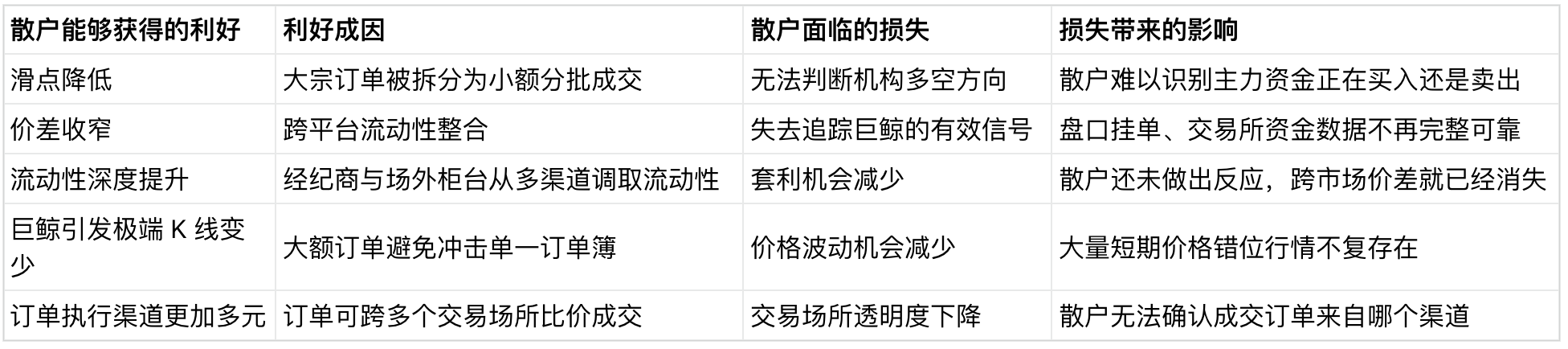
In the past, public order books could reflect the vast majority of real market trading activity, but now they only represent a small fraction of it. Quiet exchange order books do not mean institutions are not trading. Large buyers can accumulate positions over weeks without posting any visible buy orders; large sellers can complete significant reductions in holdings without massive sell pressure appearing on the order book.
The Information Advantage of Tracking Whales Is Being Actively Diminished

Bitcoin and crypto traders once had a natural advantage over participants in other markets: everyone could continuously monitor exchange fund balances, large orders on the order book, and large on-chain holdings.

Pires pointed out that dark pools, by design, eliminate this advantage. Trading platforms, OTC desks, and brokers can see the underlying fund flows. This information is protected by regulatory rules and client agreements, preventing retail traders from knowing whether institutions are buying or selling.

Simple cross-market arbitrage opportunities are also disappearing. Information once spread slower than capital flows, allowing investors to buy low on one exchange and sell high on another for profit. Pires stated that as prime brokers and aggregation platforms simultaneously scan dozens of trading venues, completing arbitrage and closing price gaps before retail traders can capture them, such opportunities are shrinking year by year.

She predicts the crypto trading market will eventually evolve towards a structure similar to the stock market: individual investors will no longer connect directly to exchanges but will instead go through brokers, who will seek the best prices across major trading venues on their behalf.

Retail account trading volumes typically struggle to meet the minimum fee tier thresholds set by exchanges, while brokers aggregating massive institutional orders can easily meet them. Pires believes this disparity will continue to drive ordinary traders towards brokers, although this shift won't be mandated by regulation as it was in the stock market.

Two Market Outlook Scenarios

Optimistic Scenario

Order aggregation platforms and mainstream trading venues handle retail orders in the same way they handle institutional orders. Market spreads continue to narrow, slippage decreases further, and instances of large orders piercing thin order books diminish.

Trading opportunities lost from public exchanges shift to other arenas. On-chain and DeFi markets still maintain public data on large holdings, providing channels for traders wanting to speculate on price volatility; regulated, compliant trading markets will exhibit more stable trends.

Pessimistic Scenario

For traders with ordinary capital sizes, the loss of trading transparency outpaces the realization of expected trading optimization benefits. Retail and medium-sized investors completely lose the ability to discern institutional capital movements.

Spread optimization and premium order routing services remain exclusively for large clients with sufficient capital to access prime brokers and aggregation platforms. Public exchange price signals continue to weaken, with participants relying on monitoring exchange order books being the first to feel the change.

Regardless of the market's direction, traders need to adjust their habits: do not treat the trading volume of a single exchange as a reflection of the entire market; compare total trading costs across different channels before referencing exchange-listed fee rates; when order book depth is insufficient, use limit orders as much as possible to guard against market orders impacting prices.

Beneath seemingly calm order books may lurk large-scale institutional trading.

As the crypto market matures and trading experiences continuously optimize, the difficulty of interpreting the market increases. Retail traders encounter fewer sudden price shocks from whales, but they also find it harder to observe the movements of the most influential capital.


Tiền kỹ thuật số thịnh hành

Câu hỏi Liên quan

QWhat is the main trend highlighted in the sFOX report regarding cryptocurrency trading?

AThe sFOX report highlights a significant structural shift, showing that dark pool and OTC trading volumes are rising sharply. In April, dark pool volume was negligible, but by June it accounted for 15% of the total monthly volume. In May alone, dark pool transaction volume reached $147 million.

QWhy are institutional players increasingly using crypto dark pools according to the article?

AInstitutions use dark pools to hide their trading patterns. Large orders on public order books leave clear traces, allowing other traders to front-run them or push prices against them before execution, increasing slippage. Dark pools and OTC desks allow them to break large orders into smaller ones executed across multiple venues, minimizing market impact.

QHow does the rise of dark pools affect the information advantage previously held by crypto traders?

AIt actively dismantles that advantage. Dark pools are designed to obscure large trade flows. Information on institutional buying or selling is protected by regulations and client agreements, making it inaccessible to retail traders. Furthermore, opportunities for simple cross-exchange arbitrage are disappearing as prime brokers and aggregators execute trades faster than retail can.

QWhat are the two potential future scenarios for the crypto market outlined in the article?

AThe article outlines one optimistic and one pessimistic scenario. The optimistic scenario envisions benefits like tighter spreads and lower slippage trickling down to retail traders via aggregators. The pessimistic scenario predicts that transparency will erode faster than benefits materialize for retail, leaving them unable to gauge institutional moves, with premium services remaining exclusive to large clients.

QWhat practical adjustments does the article suggest for traders in light of the rising use of dark pools?

ATraders should adjust by: 1) Not treating a single exchange's volume as representative of the whole market. 2) Comparing comprehensive transaction costs across different channels before referencing exchange-listed fees. 3) Using limit orders over market orders when order book depth is insufficient to prevent price impact.

Nội dung Liên quan

Các quỹ đầu tư nhà nước của Abu Dhabi tiết lộ số lượng Bitcoin mà họ sở hữu! Họ đã bán hay mua vào?

Các quỹ đầu tư nhà nước hàng đầu của Abu Dhabi, Mubadala Investment Company và Hội đồng Đầu tư Abu Dhabi (ADIC), đã duy trì nguyên vẹn vị thế nắm giữ hàng trăm triệu đô la của họ trong quỹ ETF Bitcoin giao ngay iShares Bitcoin Trust (IBIT) của BlackRock trong quý II. Theo các báo cáo 13F nộp cho Ủy ban Chứng khoán và Giao dịch Hoa Kỳ (SEC), tính đến ngày 30/6, Mubadala sở hữu 14.721.917 cổ phiếu IBIT, trị giá khoảng 490,1 triệu USD. Vị thế này không thay đổi so với quý trước và là khoản đầu tư có giá trị lớn thứ hai trong danh mục báo cáo của Mubadala. Tương tự, ADIC cũng không thay đổi khoản đầu tư, tiếp tục nắm giữ 8.218.712 cổ phiếu IBIT, trị giá khoảng 273,6 triệu USD. Đối với ADIC, đây là vị thế đầu tư lớn nhất trong danh mục được báo cáo. Tổng cộng, hai tổ chức đầu tư nhà nước của Abu Dhabi nắm giữ khoảng 22,94 triệu cổ phiếu IBIT, tương đương giá trị khoảng 763,7 triệu USD. Thông tin này cho thấy sự quan tâm và nắm giữ ổn định của các quỹ lớn này đối với tài sản Bitcoin thông qua sản phẩm ETF đã được phê duyệt.

cryptonews.ru13 phút trước

Các quỹ đầu tư nhà nước của Abu Dhabi tiết lộ số lượng Bitcoin mà họ sở hữu! Họ đã bán hay mua vào?

cryptonews.ru13 phút trước

Elon Musk xây dựng Terafab: Nhà máy chip lớn nhất thế giới phục vụ AI, robot và trung tâm dữ liệu vũ trụ

SpaceX và Tesla đã khởi động dự án Terafab nhằm xây dựng một nhà máy sản xuất chất bán dẫn quy mô lớn tại Quận Grimes, Texas. Nhà máy sẽ kết hợp sản xuất chip logic, bộ nhớ, đóng gói và kiểm tra trên diện tích hơn 9,3 triệu m². Giai đoạn đầu tiên có vốn đầu tư 16,8 tỷ USD và mục tiêu dài hạn là sản xuất thiết bị tính toán với công suất hơn 1 terawatt/năm để phục vụ robot Optimus, xe tự lái Cybercab và các trung tâm dữ liệu trên quỹ đạo. Dự án nhận được hỗ trợ từ chính quyền Texas, bao gồm khoản tài trợ 30 triệu USD và tạo ra 3.000 việc làm mới. Elon Musk nhấn mạnh tầm quan trọng của việc tích hợp thiết kế, sản xuất và đóng gói dưới một mái nhà. Khoảng 25% sản lượng sẽ dành cho robot của Tesla, 75% còn lại phục vụ các hệ thống AI trong không gian của SpaceX. Intel là đối tác công nghệ chính, cung cấp quy trình sản xuất 14A, giúp giảm sự phụ thuộc vào TSMC. Dự án phù hợp với sáng kiến "Pax Silica" của Mỹ nhằm đảm bảo chuỗi cung ứng chất bán dẫn an toàn và củng cố vị thế cạnh tranh công nghệ toàn cầu. Tuy nhiên, việc triển khai các siêu nhà máy bán dẫn thường gặp chậm trễ và vượt ngân sách, như trường hợp dự án của Intel ở Ohio. Thành công của Terafab sẽ phụ thuộc vào nhiều yếu tố như nguồn nhân lực, năng lượng và sự ổn định của chuỗi đối tác, và chỉ có thể được đánh giá rõ ràng vào cuối thập kỷ này.

cryptonews.ru1 giờ trước

Elon Musk xây dựng Terafab: Nhà máy chip lớn nhất thế giới phục vụ AI, robot và trung tâm dữ liệu vũ trụ

cryptonews.ru1 giờ trước

Elon Musk xây dựng Terafab: Nhà máy chip AI, robot và trung tâm dữ liệu vũ trụ lớn nhất thế giới

Elon Musk đang xây dựng Terafab tại Texas, nhà máy sản xuất chip bán dẫn lớn nhất thế giới cho AI, robot và trung tâm dữ liệu không gian. Dự án hợp tác giữa SpaceX và Tesla sẽ bao gồm sản xuất chip logic, bộ nhớ, đóng gói và kiểm tra trên diện tích hơn 9,3 triệu m². Giai đoạn đầu tiên cần vốn đầu tư 16,8 tỷ USD, với mục tiêu dài hạn là cung cấp hơn 1 terawatt điện toán mỗi năm cho robot Optimus, xe tự lái Cybercab và các trung tâm dữ liệu quỹ đạo. Thống đốc Texas Greg Abbott đã xác nhận dự án vào tháng 8/2026, hứa hẹn tạo ra 3.000 việc làm với khoản tài trợ 30 triệu USD. Elon Musk mô tả cơ sở này sẽ "lớn nhất và có giá trị nhất Trái Đất", lớn hơn Lầu Năm Góc khoảng 50 lần khi hoàn thành. Khoảng 25% sản lượng dành cho robot Tesla, 75% còn lại cho các hệ thống AI không gian của SpaceX. Intel là đối tác công nghệ chính, cung cấp quy trình sản xuất 14A. Động thái này nhằm đa dạng hóa chuỗi cung ứng và giảm sự phụ thuộc vào TSMC. Dự án phù hợp với sáng kiến "Pax Silica" của Mỹ nhằm đảm bảo chuỗi cung ứng chip an toàn. Tuy nhiên, phân tích của AI lưu ý rằng các dự án megafab quy mô lớn như vậy thường phải đối mặt với sự chậm trễ và vượt ngân sách, như trường hợp nhà máy của Intel ở Ohio. Thành công của Terafab sẽ phụ thuộc vào nhiều yếu tố phức tạp và chỉ có thể được đánh giá rõ ràng vào cuối thập kỷ này.

cryptonews.ru1 giờ trước

Elon Musk xây dựng Terafab: Nhà máy chip AI, robot và trung tâm dữ liệu vũ trụ lớn nhất thế giới

cryptonews.ru1 giờ trước

"Thần Tài AI" Mất Khả Năng Thanh Khoản Kéo Theo, Jane Street Lỗ Hơn 150 Tỷ USD Vào Tháng 7, Lần Đầu Thua Lỗ Trong Một Tháng Sau Một Thập Kỷ

Jane Street, một trong những gã khổng lồ giao dịch tự doanh bí ẩn và siêu lợi nhuận của Phố Wall, đã hứng chịu khoản lỗ khoảng 15 tỷ USD trong tháng 7, được cho là tháng lỗ đầu tiên của họ trong khoảng một thập kỷ. Tổn thất chủ yếu liên quan đến khoản đầu tư vào quỹ đầu cơ AI Situational Awareness - vốn đã phải đóng cửa các vị thế chứng khoán lớn do đòn bẩy cao và thị trường biến động, cũng như các vị thế mua cổ phiếu công nghệ không phải AI khác ở châu Á. Mặc dù tổn thất nghiêm trọng, thu nhập giao dịch ròng của Jane Street tính từ đầu năm đến nay vẫn vượt quá 40 tỷ USD. Công ty đã phản ứng bằng cách chủ động đóng các vị thế rủi ro cụ thể gây ra thua lỗ trong tháng 7 và giảm mức độ chấp nhận rủi ro trong các chiến lược khác. Đáng chú ý, sự việc xảy ra khi Jane Street đang tiến hành tái cấu trúc khoản nợ khoảng 14,6 tỷ USD, chuyển một phần từ thị trường trái phiếu công chúng sang các nhà đầu tư tư nhân như Pimco và Fidelity, đồng ý chịu chi phí cao hơn để đổi lấy tính linh hoạt và giảm bớt việc tiết lộ thông tin công khai. Vụ việc của Situational Awareness làm nổi bật rủi ro trong hệ thống môi giới chính hiện đại, nơi nhiều quỹ có thể sử dụng đòn bẩy cao, đầu tư vào các tài sản AI tương tự và phụ thuộc vào các kênh tài trợ giống nhau, từ đó tạo ra hiệu ứng domino khi thị trường đảo chiều. Jane Street, thông qua các hành động hiện tại, dường như đang tự định vị lại từ một nhà cung cấp thanh khoản truyền thống thành một thực thể thận trọng hơn trong chu kỳ bùng nổ tài sản AI.

marsbit1 giờ trước

"Thần Tài AI" Mất Khả Năng Thanh Khoản Kéo Theo, Jane Street Lỗ Hơn 150 Tỷ USD Vào Tháng 7, Lần Đầu Thua Lỗ Trong Một Tháng Sau Một Thập Kỷ

marsbit1 giờ trước

Giao dịch

Giao ngay

Bài viết Nổi bật

Làm thế nào để Mua DATA

Chào mừng bạn đến với HTX.com! Chúng tôi đã làm cho mua DATA Network (DATA) trở nên đơn giản và thuận tiện. Làm theo hướng dẫn từng bước của chúng tôi để bắt đầu hành trình tiền kỹ thuật số của bạn.Bước 1: Tạo Tài khoản HTX của BạnSử dụng email hoặc số điện thoại của bạn để đăng ký tài khoản miễn phí trên HTX. Trải nghiệm hành trình đăng ký không rắc rối và mở khóa tất cả tính năng. Nhận Tài khoản của tôiBước 2: Truy cập Mua Crypto và Chọn Phương thức Thanh toán của BạnThẻ Tín dụng/Ghi nợ: Sử dụng Visa hoặc Mastercard của bạn để mua DATA Network (DATA) ngay lập tức.Số dư: Sử dụng tiền từ số dư tài khoản HTX của bạn để giao dịch liền mạch.Bên thứ ba: Chúng tôi đã thêm những phương thức thanh toán phổ biến như Google Pay và Apple Pay để nâng cao sự tiện lợi.P2P: Giao dịch trực tiếp với người dùng khác trên HTX.Thị trường mua bán phi tập trung (OTC): Chúng tôi cung cấp những dịch vụ được thiết kế riêng và tỷ giá hối đoái cạnh tranh cho nhà giao dịch.Bước 3: Lưu trữ DATA Network (DATA) của BạnSau khi mua DATA Network (DATA), lưu trữ trong tài khoản HTX của bạn. Ngoài ra, bạn có thể gửi đi nơi khác qua chuyển khoản blockchain hoặc sử dụng để giao dịch những tiền kỹ thuật số khác.Bước 4: Giao dịch DATA Network (DATA)Giao dịch DATA Network (DATA) dễ dàng trên thị trường giao ngay của HTX. Chỉ cần truy cập vào tài khoản của bạn, chọn cặp giao dịch, thực hiện giao dịch và theo dõi trong thời gian thực. Chúng tôi cung cấp trải nghiệm thân thiện với người dùng cho cả người mới bắt đầu và người giao dịch dày dạn kinh nghiệm.

Tổng lượt xem 625Xuất bản vào 2026.07.01Cập nhật vào 2026.07.01

Làm thế nào để Mua DATA

Thảo luận

Chào mừng đến với Cộng đồng HTX. Tại đây, bạn có thể được thông báo về những phát triển nền tảng mới nhất và có quyền truy cập vào thông tin chuyên sâu về thị trường. Ý kiến ​​của người dùng về giá của DATA (DATA) được trình bày dưới đây.

活动图片