With Two Consecutive Quarters of Losses, Coinbase Must Rely on Paths Beyond Trading

marsbitXuất bản vào 2026-07-31Cập nhật gần nhất vào 2026-07-31

Tóm tắt

Coinbase posted its second consecutive quarterly net loss of $359 million on $1.22 billion in revenue for Q2, highlighting its vulnerability to crypto market cycles where weaker prices and lower volatility reduce user trading. However, the report also reveals a strategic shift in its business model. Despite a 25% quarter-over-quarter decline in global spot trading volume, Coinbase increased its market share to a company-record 10.3%. This suggests its position as a compliant U.S. on-ramp is strengthening even in a cooler market. A key development is the diversification of revenue streams. Transaction revenue fell to $599 million, nearly equaling subscription and services revenue of $555 million. Stablecoin services, generating $292 million, are becoming a crucial revenue "floor." This income, derived from interest on the $20 billion average USDC balance held on its platform, is less tied to daily trading activity. Furthermore, while spot trading volume dropped significantly, derivatives volume held steady at $1.03 trillion. Coinbase is pushing to integrate spot, stablecoin, and derivatives liquidity to create a more interconnected and sticky ecosystem for users. The GAAP net loss includes non-cash expenses like stock-based compensation and crypto asset valuation changes. Its adjusted EBITDA remained positive at $208 million for the 14th straight quarter, indicating core operations can cover ongoing costs. The company is also reducing expenses to manage the downturn. The ...

U.S. crypto trading platform Coinbase delivered an earnings report that's easy to misinterpret. In the second quarter, total revenue fell to $1.22 billion, with a GAAP net loss of $359 million. According to the earnings report supplement Coinbase filed with the U.S. Securities and Exchange Commission on July 30th, this marks the company's second consecutive quarter of net losses.

Looking solely at the income statement, the story seems familiar—the crypto cycle. Weak coin prices, declining volatility, reduced user trading, and consequently shrinking exchange revenue. But there's another narrative in this report. According to Coinbase's disclosure, its share of the crypto trading volume market rose to 10.3%, setting a new company-record high. In a receding quarter, it captured more traffic.

Coinbase's cyclicality hasn't disappeared; it's just that it no longer completely mirrors the cyclicality of spot trading. Market share, stablecoins, and derivatives are now splitting the company's revenue and liquidity sources into several distinct streams.

Why Does the Platform Grow Stronger as the Market Cools Down?
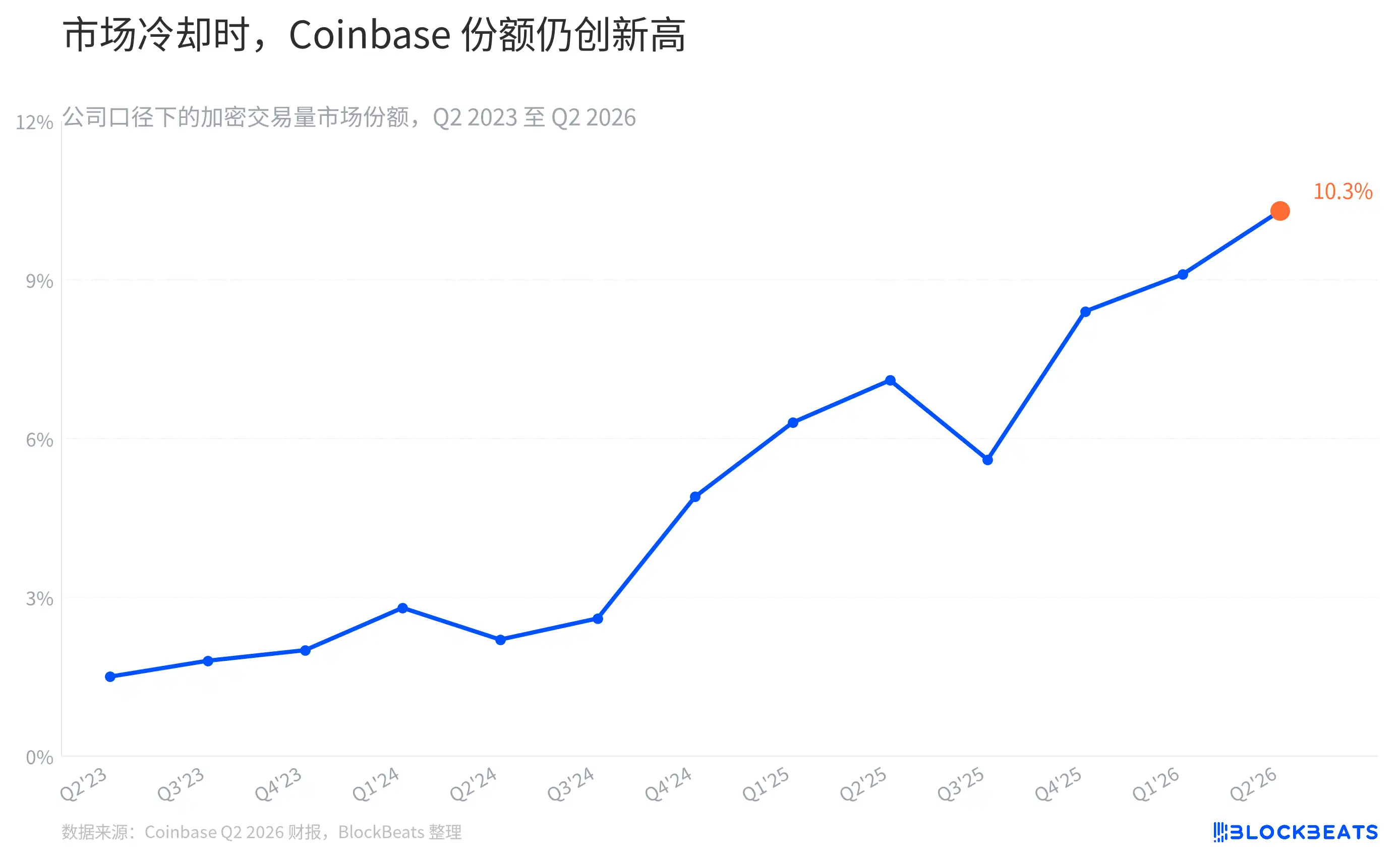
In the second quarter, the global crypto spot trading volume metric used by Coinbase fell 25% quarter-over-quarter. Yet, according to the company's earnings report, Coinbase's market share during the same period climbed from 9.1% in Q1 to 10.3%. Less revenue doesn't mean the platform's relative position has worsened.

Exchanges aren't fighting over a static pie. When the market is hot, retail investors flood in, and liquidity naturally thickens. When the market is dull, the users who remain test the platform's depth, product offerings, and compliant access channels. Coinbase's strongest tag has been its status as the compliant U.S. on-ramp. The current market share curve indicates this on-ramp is attracting a larger portion of trading activity.

However, this curve has its limits. Market share is Coinbase's internal calculation based on data from sources like CoinDesk Data, CoinMetrics, Dune, and Tardis, and includes stablecoin conversion activities. It's suitable for observing changes in its own competitiveness but should not be taken as the sole industry-wide market share standard.

What's Supporting Trading Revenue?
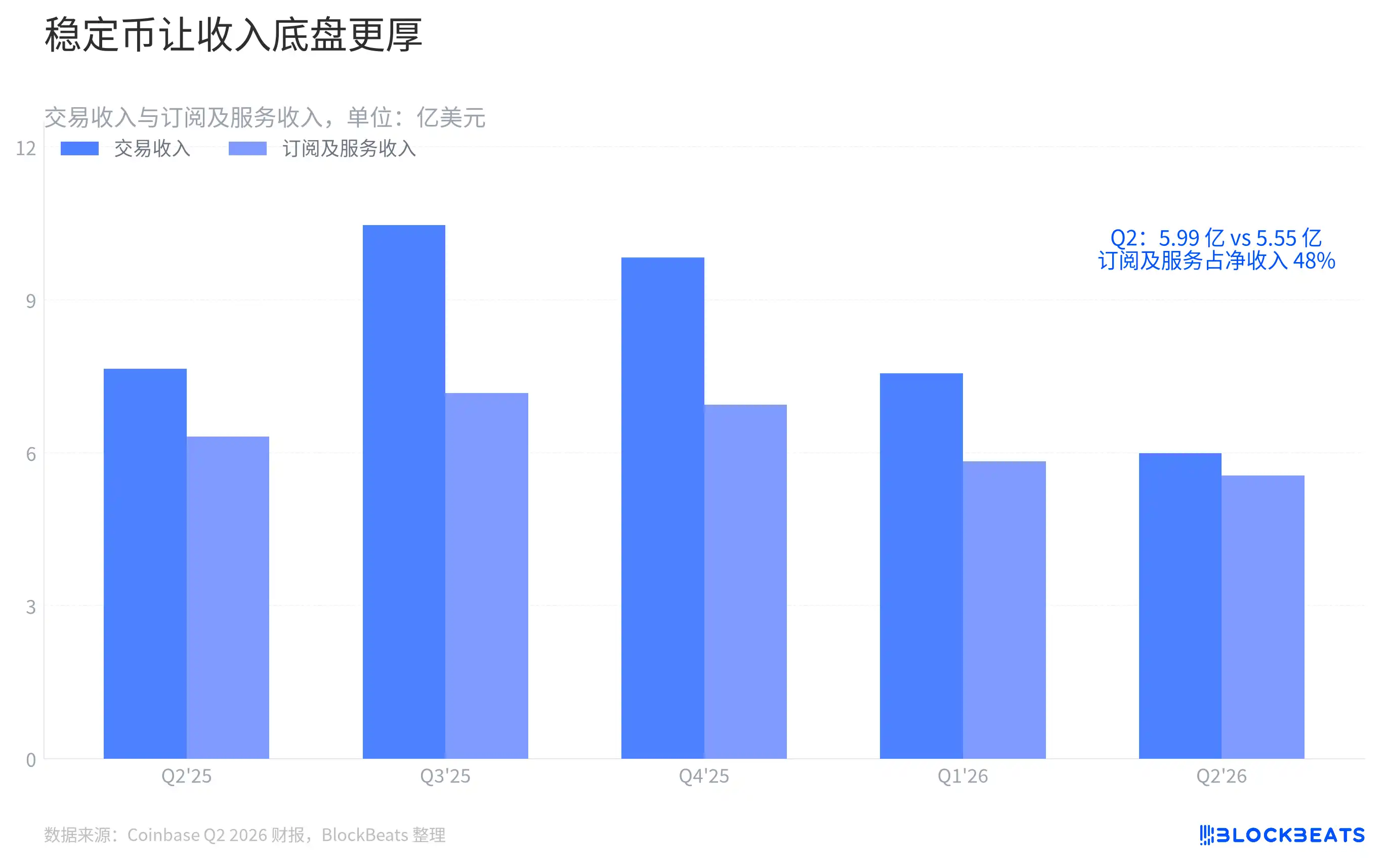
According to Coinbase's earnings report, second-quarter transaction revenue was $599 million, while subscription and services revenue was $555 million. The gap between them is now just a narrow sliver. In the past, transaction revenue was the primary beam that rose swiftly during bull markets. Now, subscription, custody, staking, interest, and stablecoin businesses are forming another layer of foundational income.

The largest portion comes from stablecoins. The company disclosed that stablecoin revenue this quarter was $292 million. Its logic differs from spot commission fees. When users hold USDC within Coinbase's products, the platform can share in the interest from reserve assets and partnership proceeds. A transaction commission is one-time. Stablecoin balances remain, generating returns on a daily basis.

This change is not abstract. The average USDC balance within Coinbase's products has risen to $20 billion. According to the company, over 30% of USDC's circulating supply was within its products at quarter-end. For the exchange, this is akin to turning wallets that were only opened during market rallies into accounts where funds can be parked.

This also explains why subscription and services revenue accounted for 48% of net revenue this quarter. This isn't to say Coinbase has become immune to coin price influences. Interest rate changes, fluctuations in USDC market cap, and user willingness to hold stablecoins will still impact this revenue line. However, its rhythm no longer needs to sync perfectly with spot trading volume.

After Spot Volume Shrinks, Where Does Liquidity Go?
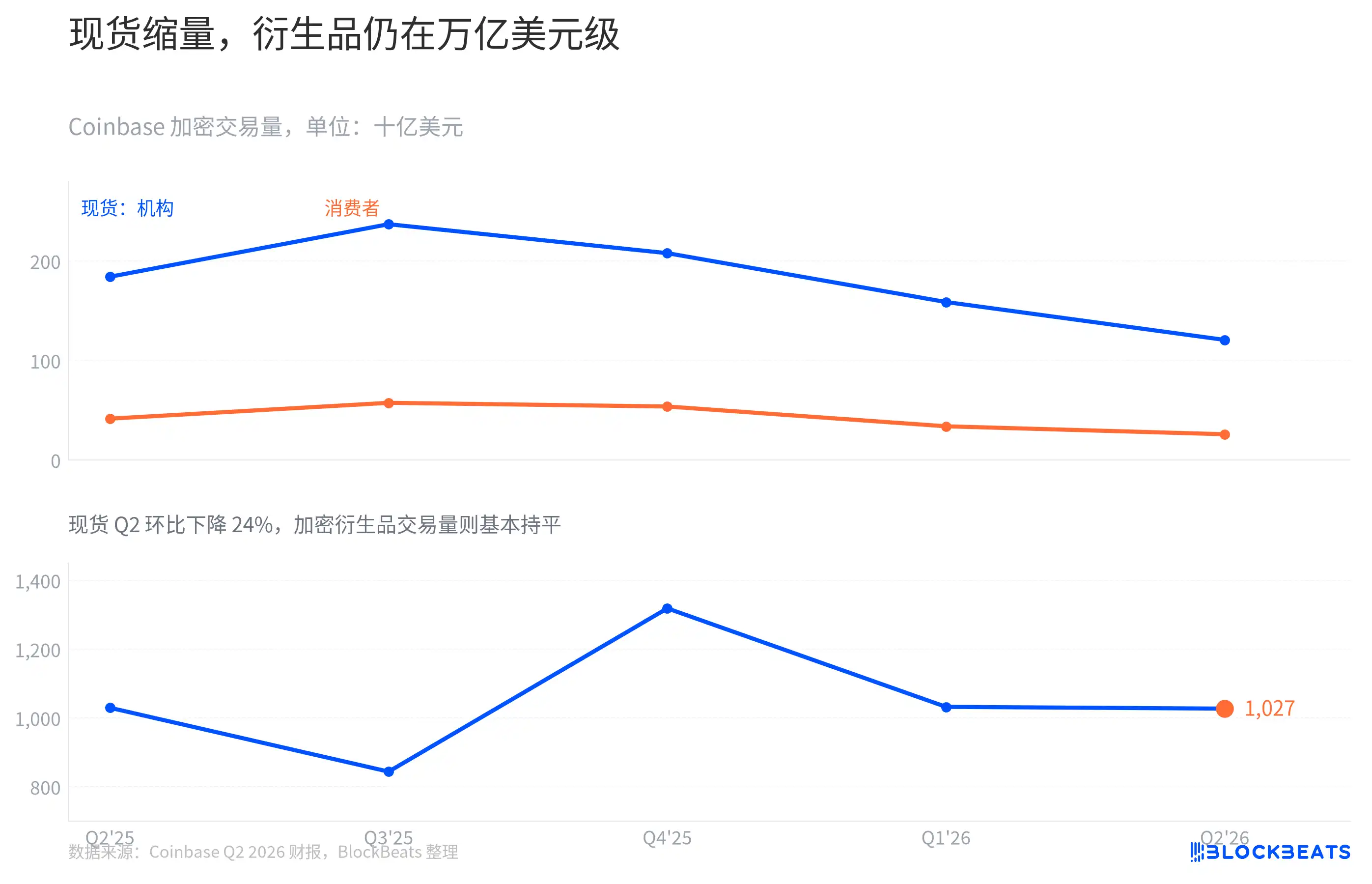
In the second quarter, Coinbase's crypto spot trading volume fell to $146.4 billion. Crypto derivatives trading volume remained at $1.03 trillion. According to the company's report, spot volume declined 24% quarter-over-quarter, while derivatives volume was largely flat.

This isn't a simple case of product substitution. Spot buying and selling are more akin to taking a directional bet on price, most likely to be postponed during low volatility. Derivatives serve purposes like leverage, hedging, and cross-market position adjustments; professional traders don't exit completely just because the market is quiet. Their trading volumes also can't be used directly to extrapolate revenue; derivatives are reported as notional amounts, and their fee structures and revenue recognition logic differ from spot.

Coinbase repeatedly emphasized global perpetual contracts, U.S. compliant access, and Deribit integration in its report. Its goal isn't just to add a derivatives tab next to the spot page; it's to enable one piece of collateral to support more trading needs. Once a platform can connect spot, stablecoins, and derivatives to the same pool of liquidity, the cost for users to leave is no longer just downloading another app.

Net Loss—Where Exactly Is the Loss?
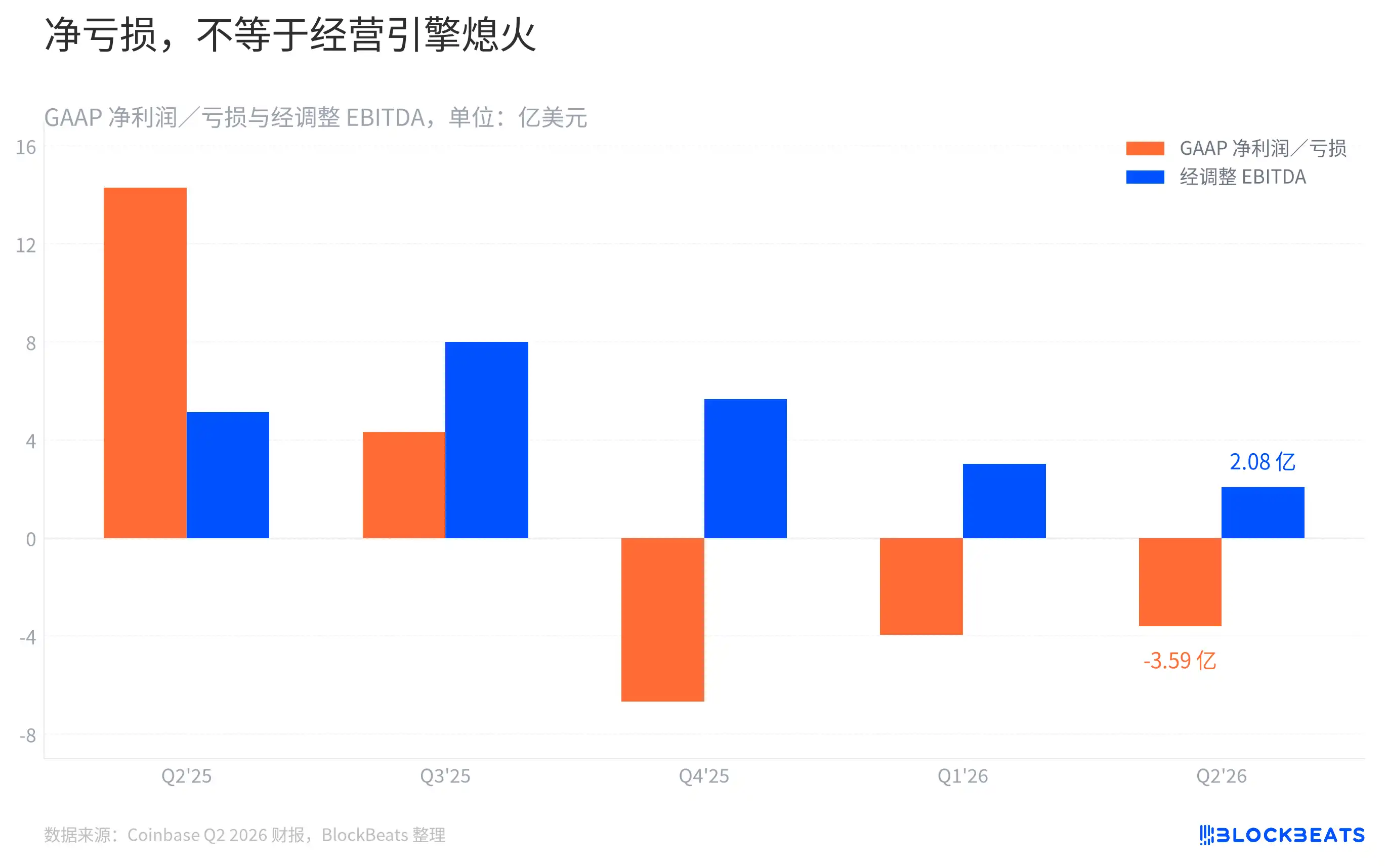
The GAAP net loss of $359 million this quarter is of course a real result. However, according to Coinbase's report, adjusted EBITDA for the same period remained positive at $208 million and has been positive for 14 consecutive quarters. The gap between these two bars is precisely what's most easily overlooked when reading the earnings report.

The GAAP income statement includes fair value changes of crypto asset investments, investment gains/losses, restructuring charges, and stock-based compensation in the current period's results. Adjusted EBITDA removes several of these items. It's a more direct gauge of whether operational activities can cover day-to-day costs in the period, but it's not an alternative scorecard to replace net profit.

According to the company's disclosure, the operating loss this quarter was $113 million, indicating that the decline in transaction revenue is still weighing on the profit side. Adjusted expenses decreased 9% quarter-over-quarter, and the full-year guidance for adjusted expenses was narrowed to $4.20 billion - $4.45 billion. Controlling expenses can reduce bleeding during low-volatility periods, but it cannot replace the validation of new revenue streams.

This is the real question left by Coinbase's earnings report. It has already proven it can gain market share even as the market cools and has stablecoins and derivatives keeping the platform afloat. The next time market trading volume declines, readers should watch not just how much revenue falls, but whether these new streams can continue channeling water into the same account.


Tiền kỹ thuật số thịnh hành

Câu hỏi Liên quan

QAccording to the article, what were the main financial results for Coinbase in Q2?

AIn Q2, Coinbase reported total revenue falling to $1.22 billion and a GAAP net loss of $359 million, marking its second consecutive quarter of net loss.

QDespite a market downturn, what key competitive metric improved for Coinbase according to its internal calculations?

ACoinbase's share of global crypto spot trading volume (as calculated by the company) rose to 10.3% in Q2, a new record high under its methodology.

QWhat is the primary revenue driver for Coinbase's 'Subscriptions and services' income, specifically from stablecoins?

AThe primary driver is USDC. Coinbase earns interest and partnership revenue by holding USDC reserves for users. This income stream is based on the average balance held ($20 billion in Q2), not on transaction commissions.

QHow did trading activity in spot markets versus derivatives markets differ for Coinbase in Q2, and what does the article suggest is the reason?

ASpot trading volume fell 24% to $146.4 billion, while derivatives volume remained roughly flat at $1.03 trillion. The article suggests derivatives are less sensitive to low volatility as they serve needs like hedging and leverage for professional traders who remain active even in quiet markets.

QWhat is the key difference between Coinbase's GAAP net loss and its Adjusted EBITDA for Q2, and what does this indicate about its core operations?

AThe GAAP net loss of $359 million includes items like investment gains/losses and stock-based compensation. Adjusted EBITDA, which was positive at $208 million, excludes these to show that its core business operations were still generating cash to cover ongoing costs for the 14th consecutive quarter.

Nội dung Liên quan

Các trader Bitcoin thiệt hại 100 triệu USD do giá BTC giảm 3.000 USD trong 12 giờ

Vào ngày cuối cùng của tháng 7, giá Bitcoin đã giảm mạnh, mất gần 3.000 USD chỉ trong 12 giờ do biến động dữ dội, chạm mức thấp nhất trong hai tuần. Sự sụt giảm này đã đảo ngược xu hướng tăng trưởng trước đó, khiến mức tăng hàng tháng của BTC thu hẹp từ gần 10% xuống còn 4,5%. Vốn hóa thị trường của Bitcoin cũng giảm từ 1,3 nghìn tỷ USD xuống 1,26 nghìn tỷ USD. Trên thị trường phái sinh, các nhà giao dịch sử dụng đòn bẩy cao với vị thế mua (long) chịu tổn thất nặng nề. Dữ liệu cho thấy có tới 100 triệu USD vị thế mua bị thanh lý, cao gấp bốn lần so với ngày trước đó. Tổng cộng, gần 360 triệu USD các vị thế đòn bẩy trong toàn bộ thị trường tiền điện tử đã bị xóa sổ, trong đó vị thế mua chiếm 65%. Một yếu tố chính ảnh hưởng đến tâm lý thị trường là sự chậm trễ trong quá trình lập pháp ở Mỹ. Dự luật CLARITY Act, được kỳ vọng sẽ cung cấp khuôn khổ pháp lý rõ ràng cho ngành công nghiệp tiền điện tử, đang bị tắc nghẽn tại Thượng viện. Việc thiếu tiến triển này khiến xác suất dự luật được thông qua vào năm 2026 giảm mạnh từ hơn 80% (vào tháng 2) xuống còn khoảng 30%, làm dấy lên lo ngại về sự thiếu vắng khung quy định cần thiết cho sự tăng trưởng dài hạn của thị trường.

cryptonews.ruVừa rồi

Các trader Bitcoin thiệt hại 100 triệu USD do giá BTC giảm 3.000 USD trong 12 giờ

cryptonews.ruVừa rồi

Tại sao sự chiết khấu tiền mã hóa tại Nga lại khiến các thành viên thị trường lo ngại

Thị trường cảnh báo: giảm giá tiền mã hóa tại Nga có thể là một trong những hậu quả đáng chú ý đầu tiên của quy định mới. Do các lệnh trừng phạt, nguy cơ bị chặn và cơ sở hạ tầng phân tán, tiền kỹ thuật số ở Nga có thể được định giá thấp hơn so với trên các sàn giao dịch nước ngoài. Các rủi ro chính dẫn đến chiết khấu này bao gồm: hạn chế trừng phạt làm giảm khả năng tiếp cận cơ sở hạ tầng bên ngoài; khả năng tài sản bị đóng băng; và thiếu một kho lưu ký kỹ thuật số thống nhất, khiến việc quản lý và lưu thông tài sản phức tạp hơn. Cơ sở hạ tầng phân tán theo đề xuất của Ngân hàng Trung ương Nga được coi là nguồn rủi ro chính, có khả năng tạo ra khoảng cách giá giữa thị trường trong nước và quốc tế. Khung pháp lý mới cho thị trường tiền mã hóa đang được hình thành, nhưng các lệnh trừng phạt quốc tế liên quan đến cuộc xung đột ở Ukraine vẫn là yếu tố bên ngoài trọng yếu. Chúng ảnh hưởng đến mức chiết khấu thông qua nguy cơ bị chặn tài sản, khả năng tiếp cận hạn chế với các sàn giao dịch nước ngoài và việc rút vốn khó khăn hơn. Các chuyên gia nhấn mạnh rằng nếu không có một cơ sở hạ tầng minh bạch, rủi ro về chiết khấu cục bộ sẽ vẫn còn tồn tại.

cryptonews.ruVừa rồi

Tại sao sự chiết khấu tiền mã hóa tại Nga lại khiến các thành viên thị trường lo ngại

cryptonews.ruVừa rồi

Các thợ đào tiền mã hóa Nga không được loại khỏi cơ chế 'dùng hay không cũng phải trả tiền'

Chính phủ Nga không loại trừ các công ty khai thác tiền điện tử (miner) khỏi cơ chế định giá điện mới "take-or-pay" (lấy hoặc trả), theo thông tin từ Bộ Năng lượng. Cơ chế này, dự kiến áp dụng từ năm 2027, yêu cầu các doanh nghiệp công nghiệp có công suất trên 670 kW thanh toán dựa trên công suất tối đa đã đăng ký, thay vì lượng điện thực tế tiêu thụ. Đặc biệt, các trung tâm dữ liệu và công ty khai thác tiền điện tử được xếp vào nhóm riêng và sẽ phải áp dụng cơ chế này trong mọi trường hợp. Mức thanh toán tối thiểu được đề xuất cho họ là 90% công suất đăng ký, cao hơn mức 70% áp dụng cho các nhóm khác. Bộ Năng lượng cho biết các sửa đổi gần đây chủ yếu nhằm miễn trừ cho các công ty tiện ích (cấp nước, nhiệt), những đơn vị phản đối vì chi phí tăng cao có thể đẩy giá lên cho người dân. Giới khai thác tiền điện tử, đại diện là công ty "Algorithm", đã phản đối kế hoạch này. Họ cảnh báo rằng chi phí năng lượng tăng sẽ khiến mô hình khai thác ở Nga trở nên kém cạnh tranh so với các công ty Mỹ và có thể không còn khả thi trong 2-3 năm tới. Thay vào đó, họ đề xuất vai trò cân bằng lưới điện, sẵn sàng tăng giảm tiêu thụ điện theo nhu cầu của hệ thống.

cryptonews.ru2 phút trước

Các thợ đào tiền mã hóa Nga không được loại khỏi cơ chế 'dùng hay không cũng phải trả tiền'

cryptonews.ru2 phút trước

Giao dịch

Giao ngay

Bài viết Nổi bật

Làm thế nào để Mua T

Chào mừng bạn đến với HTX.com! Chúng tôi đã làm cho mua Threshold Network Token (T) trở nên đơn giản và thuận tiện. Làm theo hướng dẫn từng bước của chúng tôi để bắt đầu hành trình tiền kỹ thuật số của bạn.Bước 1: Tạo Tài khoản HTX của BạnSử dụng email hoặc số điện thoại của bạn để đăng ký tài khoản miễn phí trên HTX. Trải nghiệm hành trình đăng ký không rắc rối và mở khóa tất cả tính năng. Nhận Tài khoản của tôiBước 2: Truy cập Mua Crypto và Chọn Phương thức Thanh toán của BạnThẻ Tín dụng/Ghi nợ: Sử dụng Visa hoặc Mastercard của bạn để mua Threshold Network Token (T) ngay lập tức.Số dư: Sử dụng tiền từ số dư tài khoản HTX của bạn để giao dịch liền mạch.Bên thứ ba: Chúng tôi đã thêm những phương thức thanh toán phổ biến như Google Pay và Apple Pay để nâng cao sự tiện lợi.P2P: Giao dịch trực tiếp với người dùng khác trên HTX.Thị trường mua bán phi tập trung (OTC): Chúng tôi cung cấp những dịch vụ được thiết kế riêng và tỷ giá hối đoái cạnh tranh cho nhà giao dịch.Bước 3: Lưu trữ Threshold Network Token (T) của BạnSau khi mua Threshold Network Token (T), lưu trữ trong tài khoản HTX của bạn. Ngoài ra, bạn có thể gửi đi nơi khác qua chuyển khoản blockchain hoặc sử dụng để giao dịch những tiền kỹ thuật số khác.Bước 4: Giao dịch Threshold Network Token (T)Giao dịch Threshold Network Token (T) dễ dàng trên thị trường giao ngay của HTX. Chỉ cần truy cập vào tài khoản của bạn, chọn cặp giao dịch, thực hiện giao dịch và theo dõi trong thời gian thực. Chúng tôi cung cấp trải nghiệm thân thiện với người dùng cho cả người mới bắt đầu và người giao dịch dày dạn kinh nghiệm.

Tổng lượt xem 624Xuất bản vào 2024.12.13Cập nhật vào 2026.06.02

Làm thế nào để Mua T

Thảo luận

Chào mừng đến với Cộng đồng HTX. Tại đây, bạn có thể được thông báo về những phát triển nền tảng mới nhất và có quyền truy cập vào thông tin chuyên sâu về thị trường. Ý kiến ​​của người dùng về giá của T (T) được trình bày dưới đây.

活动图片