Trump Relents on Ethics Provisions, 《CLARITY Act》 Makes Final Push Before Senate Recess

Foresight NewsXuất bản vào 2026-07-21Cập nhật gần nhất vào 2026-07-21

Tóm tắt

U.S. President Donald Trump has reportedly agreed to include ethics provisions in the *CLARITY Act*, a major digital asset market structure bill, resolving a key negotiation obstacle. This paves the way for the bill's text release and a critical Senate vote before the August recess. The legislation aims to establish comprehensive federal digital asset regulation and clarify the regulatory roles of the SEC and CFTC. The ethics clause is designed to restrict federal officials, including the President and Congress members, from profiting from digital assets while in office. A central point of contention involved Trump's own significant crypto holdings. Following this development, prediction market odds for the bill's passage in 2026 saw an uptick. The bill faces a tight timeline for Senate passage before the August 7th recess, with subsequent steps required in the House before reaching the President's desk. Industry lobbyists have emphasized prioritizing the bill's core regulatory framework over the political details of the ethics rules, while some Democratic senators have called for even stronger provisions. Concurrently, market data shows significant Bitcoin accumulation by large holders ("whales") in recent weeks, and a reversal to net inflows for U.S. spot Bitcoin and Ethereum ETFs after an extended period of outflows.


By: Sanqing, Foresight News


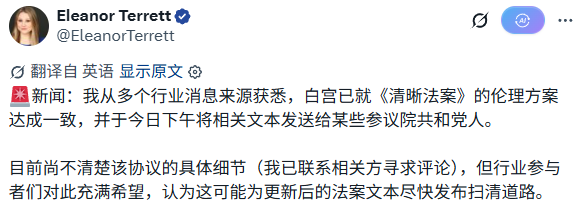
July 21 - According to a report by crypto journalist Eleanor Terrett citing sources, U.S. President Donald Trump has agreed to include ethics provisions in the "CLARITY Act" (Digital Asset Market Structure Act). The White House has reached a consensus on the ethics framework for the "CLARITY Act," clearing the last major hurdle for this crypto regulatory legislation that has been debated for months. The bill text could be released as soon as the same day, though it may be slightly delayed; as of the time of reporting, the Democratic side had not yet seen the specific text.


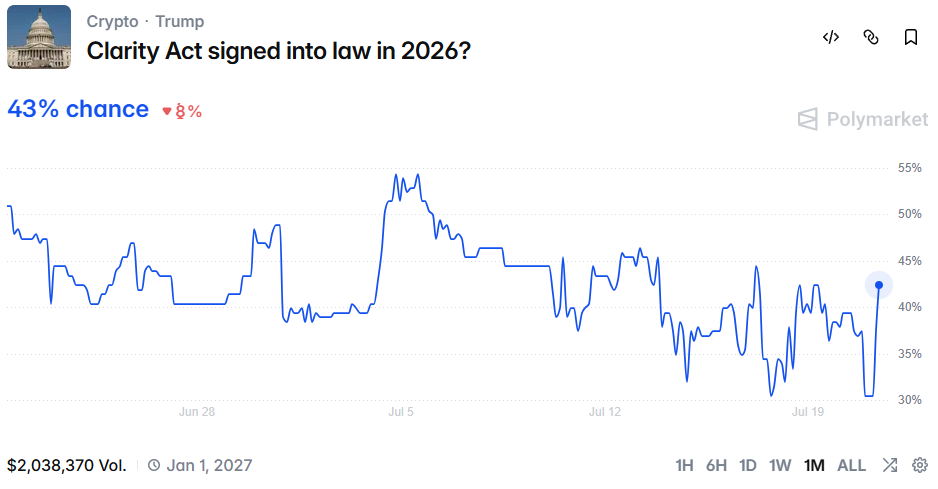
Following the news, the probability of "the 'CLARITY Act' being signed into law in 2026" on Polymarket rebounded to 43%. Research firm Galaxy Research had previously assessed the probability of it passing within 2026 at roughly fifty-fifty.


Previously, on July 16, during a meeting with Republican Senators Bernie Moreno, Cynthia Lummis, and White House crypto advisor Patrick Witt, Trump did not immediately agree. However, the deal was finalized by the President himself on Monday evening. This provision aims to restrict the President, Vice President, members of Congress, and other federal officials from profiting from digital assets during their terms. The core controversy has centered on the Trump family's Meme tokens and World Liberty Financial. Financial documents disclosed last month showed Trump's crypto income was as high as approximately $14 billion, which had once brought negotiations to a standstill.


The Final Stretch Before the August Recess


If ultimately enacted, the "CLARITY Act" would provide the first comprehensive federal-level regulation for the digital asset industry, clarifying the jurisdictional division between the SEC and CFTC.


The U.S. House of Representatives previously passed the bill with bipartisan majority support in 2025 by a vote of 294 to 134. The Senate Banking Committee greenlit it on May 14 this year with a vote of 15 to 9. It is currently stalled in final negotiations before a full Senate vote.


The bill text is expected to be released in the coming days, followed by a full Senate vote. The window only lasts until the recess in the first week of August (the Senate will go into recess on August 7 and return on September 14). If passed, it would need to go back to the House for reconsideration, text reconciliation, etc., before finally reaching the President's desk for signature.


The vote count in the Senate tightened in mid-July. Republican Senator Lindsey Graham of South Carolina died unexpectedly at the age of 71 on the night of July 11 from an aortic dissection after returning from a trip to Ukraine. This temporarily reduced the Republican Senate seats from 53 to 52.


According to the Associated Press, the state's Governor Henry McMaster appointed Graham's sister, Darline Graham Nordone, to succeed him two days later. She was sworn in on July 14, immediately restoring the seat.


However, Republican Senator Mitch McConnell has been absent from votes since being hospitalized on June 14. As of July 12, he himself stated he was not ready to return to the Senate, and there have been no further updates on his potential return since.


According to the cloture procedure under Senate Rule XXII, if Mitch McConnell remains absent at that time, the bill would need at least 8 additional Democratic votes beyond the actual number of Republican votes present to pass.


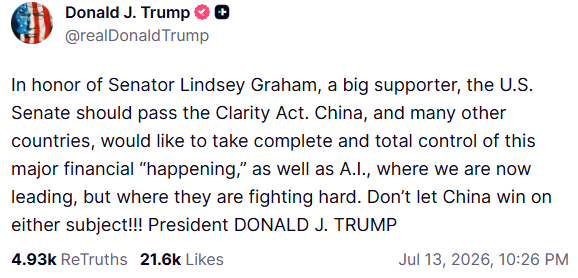
Trump previously posted on Truth Social, urging the Senate to pass the "CLARITY Act" quickly, calling it a tribute to the late Senator Lindsey Graham and emphasizing that it also concerns preventing China from gaining dominance in digital finance and artificial intelligence.


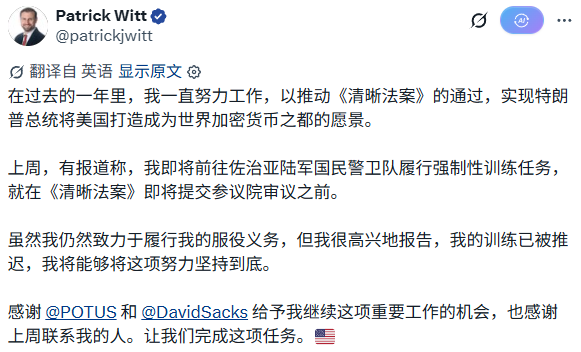
Personnel changes at the White House level also reflect the urgency of the push. Crypto advisor Patrick Witt was originally scheduled to be absent this week due to mandatory training with the Georgia Army National Guard. The training has been postponed, and he will remain in place to advance the legislation. His deputy, Harry Jung, announced his departure in two weeks.


"The Goal Line" or "The Elephant in the Room"?


The stance from industry lobbyists is straightforward. Blockchain Association CEO and former CFTC Commissioner Summer Mersinger said at the Injective Summit in Washington D.C. on July 16 that the core provisions of the bill "are very close to agreement, with only a few details left to iron out." She called the ethics issue "the elephant in the room" and the biggest current obstacle.
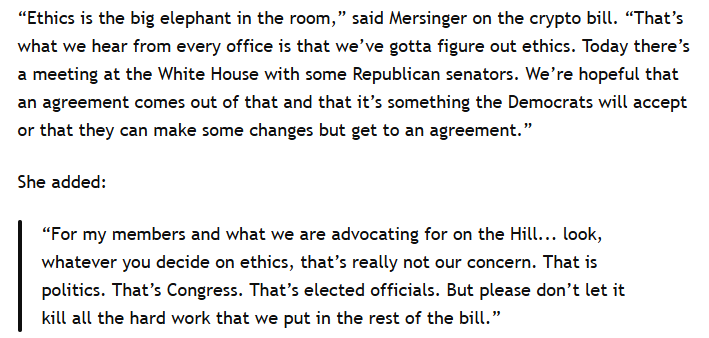


She urged Congress: "Whatever you decide on the ethics provision, that's really not our concern; that's politics, that's Congress, that's elected officials. But please don't let it ruin all the work we've put into the rest of the bill."


Coinbase Vice Chairman and former SEC official Ryan VanGrack was more blunt in a statement on CNBC in mid-July: "The 'CLARITY Act' is at the goal line. The momentum for passage is clear." Senate Majority Leader John Thune offered a more cautious assessment: "There is certainly a path to a deal, but time is running out."


These statements essentially convey the same message: we don't care how the ethics clause is written, just don't let it hinder the rest of the bill.


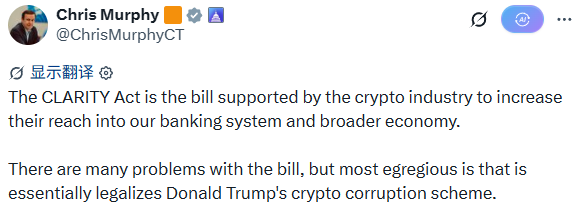
Skepticism comes primarily from the Democratic side and directly targets the inadequacy of the ethics provisions themselves. Senator Chris Murphy criticized in a Facebook post on July 14 that the "CLARITY Act" "is a crypto industry-backed bill designed to expand its influence over the banking system and the broader economy." He explicitly demanded that "the bill must have provisions prohibiting the President and his family members from issuing cryptocurrencies during his term, whether Meme tokens or stablecoins... The ethics provisions must cover the President and his immediate family members."


Senators Warren, Jack Reed, Chris Van Hollen, and others also issued a joint statement in mid-July, stating they "cannot support the current version of the 'CLARITY Act'," citing reasons including the need for stronger consumer protections, stricter conflict-of-interest and ethics rules, and more safeguards against crypto fraud and market manipulation. Senator Mark Warner bluntly said: "I am very pessimistic about the progress."


Whales, ETFs & Crypto Treasury Movements


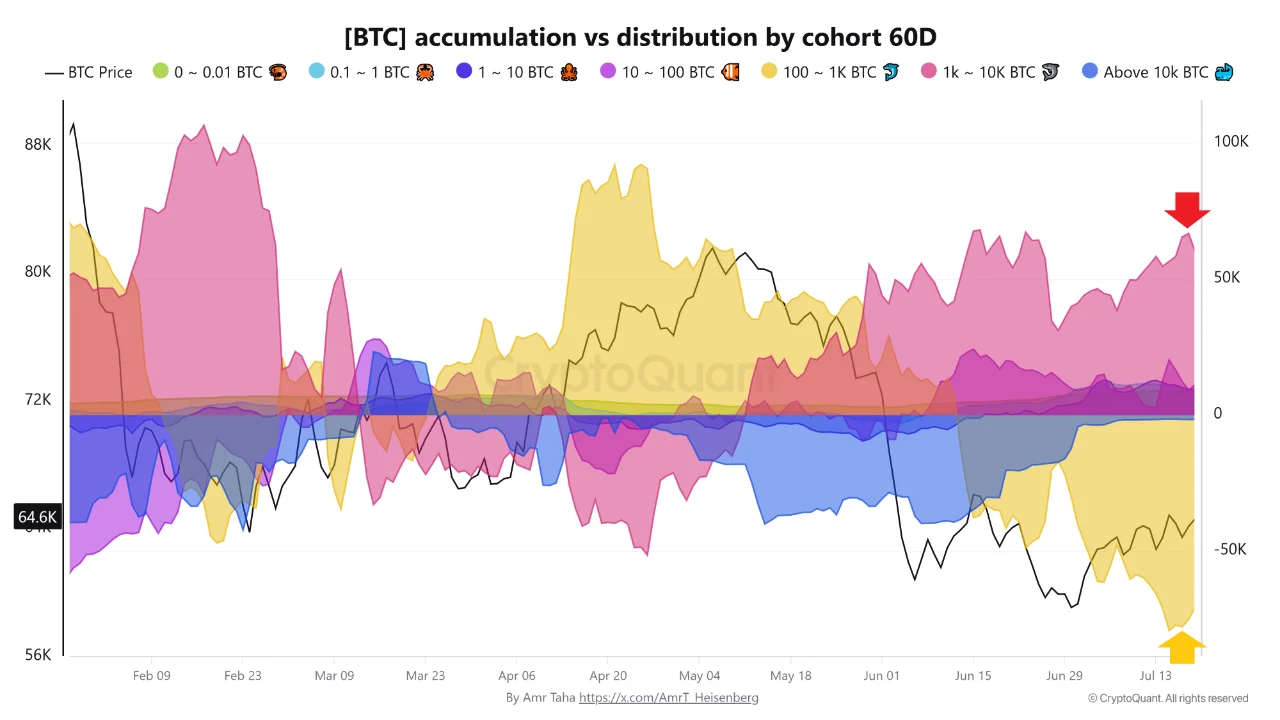
On-Chain Whales: According to CryptoQuant data from July 20, addresses holding 1,000 to 10,000 BTC saw a net increase of approximately 66,700 BTC over 60 days, the strongest wave of buying since mid-February. Meanwhile, addresses holding 100 to 1,000 BTC (medium holdings) sold about 77,800 BTC in the same period. Data provided by Bitfinex analysts to CoinDesk shows that whale addresses collectively added over 270,000 BTC in the first two weeks of July, worth about $16.7 billion.


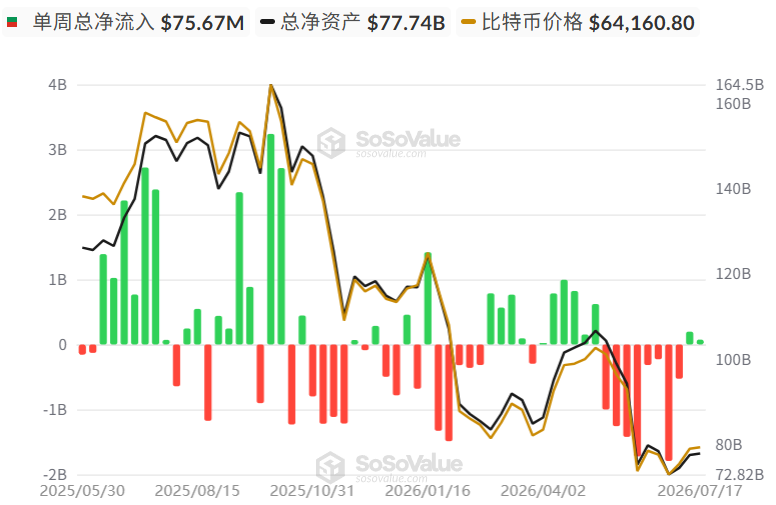
Spot ETFs: According to weekly data from SoSoValue, U.S. spot Bitcoin ETFs saw net outflows for 8 consecutive weeks starting the week of May 15, with the most severe outflow of $1.79 billion occurring the week of June 26. It wasn't until the week of July 10 that flows turned positive with a net inflow of $197 million, followed by another net inflow of $75.67 million the week of July 17.


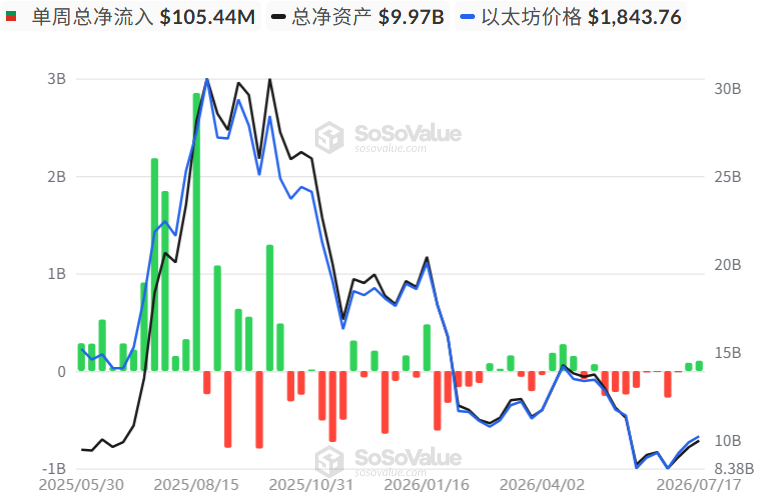
The trend for spot Ethereum ETFs was almost identical: also 8 consecutive weeks of net outflows from May 15 to July 2, turning to net inflows in the weeks of July 10 and July 17, with $84.42 million and $105 million, respectively.


Crypto Treasuries: MicroStrategy's holdings remained at approximately 844,000 BTC, with no Bitcoin purchases for two consecutive weeks. In mid-July, it raised $263.5 million in cash through a stock offering but did not immediately add to its position, instead holding it as a buffer for preferred stock dividends and interest. Japanese-listed company Metaplanet increased its holdings by 2,823 BTC in Q2, bringing its total holdings to 43,000 BTC, ranking third globally among publicly traded companies. Its subsidiary also completed a convertible bond financing of approximately $59.5 million on July 21, with plans to continue buying.


BitMine increased its holdings by 7,430 ETH last week, bringing its total to 5,777,468 ETH, accounting for approximately 4.8% of the total ETH supply. Of this, 85% is staked, with an estimated annual staking yield of about $247 million. The company simultaneously repurchased approximately 5.5 million shares of common stock at an average price of $15.62. Tom Lee stated that the buying pace has slowed due to this, but weekly accumulation has never been interrupted since the reserve strategy was launched on June 30, 2025.


Arthur Hayes: According to monitoring by Yu Jin, BitMEX co-founder Arthur Hayes spent 2.5 million USDC to buy 1,293 ETH at $1,933 on July 15, chasing the rally. On July 20, he bought another 2.5 million USDC worth of ETH via FalconX and Cumberland OTC at $1,876. The two transactions totaled 5 million USDC, purchasing 2,625.7 ETH at an average cost of $1,904. Hayes previously wrote that the AI sector is absorbing market liquidity, putting short-term pressure on BTC, but once liquidity returns, the crypto market still has room for a rebound.


Tiền kỹ thuật số thịnh hành

Câu hỏi Liên quan

QWhat was the main hurdle for the CLARITY Act that President Trump's agreement on an ethics clause helped to clear?

AThe main hurdle was the inclusion and agreement on an ethics clause. This clause aims to restrict federal officials, including the President, Vice President, and members of Congress, from profiting from digital assets during their terms. A key point of contention was the Trump family's involvement with Meme coins and World Liberty Financial, which had stalled negotiations.

QWhat are the key regulatory roles defined for the SEC and CFTC under the proposed CLARITY Act?

AThe CLARITY Act, if passed, would establish the first comprehensive federal regulatory framework for the digital asset industry. A key provision is to clearly define the jurisdictional division of responsibilities between the Securities and Exchange Commission (SEC) and the Commodity Futures Trading Commission (CFTC).

QWhat challenge does Mitch McConnell's potential continued absence pose for the CLARITY Act's passage in the Senate?

AIf Senator Mitch McConnell remains absent from voting, it affects the procedural math. According to Senate Rule 22 for ending debate (cloture), the bill would need to secure at least 8 additional Democratic votes beyond the number of Republicans present and voting to overcome a filibuster and proceed to a final vote.

QAccording to industry lobbyists, what was the primary concern regarding the ethics clause during the final negotiations?

AIndustry lobbyists, represented by figures like Summer Mersinger of the Blockchain Association, expressed that while they were not directly concerned with the specifics of the ethics clause (calling it 'politics'), their primary worry was that the contentious debate over this clause could jeopardize or 'destroy' the entire broader legislative effort of the CLARITY Act.

QWhat criticism did Democratic Senators level against the ethics provisions in the CLARITY Act?

ADemocratic Senators, such as Chris Murphy, Elizabeth Warren, and others, criticized the ethics provisions as insufficient. They demanded stronger rules, specifically calling for clauses that would prohibit the President and their immediate family members from issuing cryptocurrencies (like Meme tokens or stablecoins) while in office. They also cited a need for stronger consumer protections and safeguards against fraud and market manipulation.

Nội dung Liên quan

Khâu Thành Đồng mời Vương Hồng, Đặng Dục về nước giảng dạy, Thanh Bắc đấu 20 năm mới phát hiện đối thủ không phải là nhau

Ngày 23/7, hai nhà toán học Trung Quốc Vương Hồng và Đặng Dục cùng đoạt giải Fields. Cả hai đều là cựu sinh viên Đại học Bắc Kinh (Bắc Đại). Ngay sau đó, giáo sư Khâu Thành Đồng công khai mời họ về giảng dạy tại Học viện Chân Lý thuộc Đại học Thanh Hoa. Việc này làm nổi bật cuộc cạnh tranh kéo dài hàng thập kỷ giữa Bắc Đại và Thanh Hoa trong lĩnh vực toán học. Mọi chuyện bắt đầu từ đợt điều chỉnh khoa viện năm 1952, khi toàn bộ khoa Toán của Thanh Hoa được chuyển sang Bắc Đại. Trong nhiều năm, Bắc Đại độc chiếm vị thế hàng đầu. Mâu thuẫn giữa Khâu Thành Đồng và cựu học trò Điền Cương (nguyên giám đốc Trung tâm Toán học Bắc Đại) vào năm 2005 càng làm sâu sắc thêm sự cạnh tranh. Từ đó, Khâu Thành Đồng tập trung xây dựng Trung tâm Khoa học Toán học tại Thanh Hoa. Hai trường liên tục tranh giành nhân tài: từ học sinh trung học thông qua các chương trình như "Kế hoạch Lãnh đạo Toán học" của Thanh Hoa và "Lớp Tài năng Toán học" của Bắc Đại, cho đến các giáo sư hàng đầu từ nước ngoài. Mặt trận cạnh tranh mới nhất nằm ở lĩnh vực AI và toán học. Thanh Hoa hợp tác với các đội ngũ như Tencent và ZhiPu AI, trong khi Bắc Đại phát triển các mô hình hình học lớn. Cả hai đều nhằm mục đích đột phá khả năng suy luận toán học của AI. Mặc dù cạnh tranh gay gắt, kết quả thực tế lại cho thấy sự phát triển chung của toán học Trung Quốc. Tại kỳ thi Olympic Toán học Sinh viên Khâu Thành Đồng năm 2026, các sinh viên Bắc Đại đã giành được nhiều giải thưởng cao nhất. Trong bài phát biểu của mình, giáo sư Khâu kêu gọi sự hợp tác xuyên trường học. Mục tiêu sâu xa của ông không phải là để Thanh Hoa thống trị, mà là thúc đẩy toàn bộ nền toán học Trung Quốc vươn lên tầm thế giới. Bối cảnh đang thay đổi với sự trỗi dậy của AI. Các mô hình như Fable 5 của Anthropic hay K3 của Kimi (do cựu sinh viên Thanh Hoa sáng lập) đang thể hiện khả năng toán học ấn tượng, thậm chí giải quyết các giả thuyết lâu đời. Như nhà toán học Đào Triết Hiên nhận định, kỷ nguyên AI dẫn dắt nghiên cứu toán học đã bắt đầu. Đây mới là tương lai mà cả Bắc Đại, Thanh Hoa và toàn bộ cộng đồng toán học phải đối mặt, vượt lên trên cuộc cạnh tranh truyền thống.

marsbit3 phút trước

Khâu Thành Đồng mời Vương Hồng, Đặng Dục về nước giảng dạy, Thanh Bắc đấu 20 năm mới phát hiện đối thủ không phải là nhau

marsbit3 phút trước

Ngày của Tin tặc | 23 tháng 7: Thiệt hại 35,5 triệu USD. Một lời nhắc nhở rằng bảo mật là trách nhiệm chung

Ngày 23/7 đã chứng kiến ba vụ tấn công lớn nhắm vào các giao thức DeFi, gây thiệt hại ước tính 35,5 triệu USD chỉ trong vòng 6 giờ. Các sự cố này chủ yếu khai thác lỗ hổng trong cơ sở hạ tầng hỗ trợ như cầu nối chuỗi chéo, chứ không phải từ bản thân các blockchain cơ bản. Sự kiện này là một hồi chuông cảnh tỉnh cho thấy an ninh trong ngành công nghiệp crypto là trách nhiệm chung. Khi hệ sinh thái phát triển và kết nối hơn, các thách thức bảo mật cũng phát triển theo. Bảo vệ người dùng ngày càng phụ thuộc vào khả năng phục hồi của cơ sở hạ tầng, các cơ chế bảo vệ chủ động và sự minh bạch. Ngành công nghiệp đã và đang không ngừng cải thiện thông qua các cuộc kiểm toán độc lập, chương trình tiền thưởng lỗi, bằng chứng dự trữ (Proof of Reserves) và các quỹ bảo vệ. Mỗi cải tiến đều góp phần nâng cao tiêu chuẩn bảo mật chung. Bài học quan trọng nhất là an ninh thực sự được xây dựng từ trước khi sự cố xảy ra, thông qua cam kết đầu tư liên tục và chuẩn bị lâu dài, chứ không chỉ là phản ứng sau sự kiện. Người dùng cũng cần chủ động bảo vệ mình bằng cách tìm hiểu kỹ các biện pháp bảo mật của nền tảng, kiểm tra kỹ địa chỉ ví và hợp đồng thông minh, đa dạng hóa tài sản và ưu tiên đánh giá tính minh bạch cùng cơ sở hạ tầng an ninh.

TheNewsCrypto3 phút trước

Ngày của Tin tặc | 23 tháng 7: Thiệt hại 35,5 triệu USD. Một lời nhắc nhở rằng bảo mật là trách nhiệm chung

TheNewsCrypto3 phút trước

Tiền điện tử có phải là một khoản đầu tư tốt? Tại sao khả năng chịu rủi ro và đầu tư trung bình chi phí quan trọng

Sự quan tâm đến tiền mã hóa đã tăng 300% so với năm năm trước đó, theo xu hướng tìm kiếm trên Google. Mặc dù giá Bitcoin còn biến động, danh tiếng chung của lĩnh vực này vẫn tăng gấp bốn lần, được thúc đẩy bởi đầu tư thể chế, ETF và sự phát triển của tài sản thực được mã hóa. Khảo sát cho thấy danh mục đầu tư trung bình của nhà đầu tư Mỹ bao gồm 10% tiền mã hóa. Tuy nhiên, 53% nhà đầu tư tiền mã hóa coi đây là lĩnh vực rủi ro cao. Tổng vốn hóa thị trường tiền mã hóa đã tăng khoảng 2,600% từ năm 2017, nhưng tiềm năng lợi nhuận lớn đi kèm với rủi ro như lừa đảo, tấn công sàn giao dịch và biến động giá mạnh. Việc tiền mã hóa có phải là lựa chọn tốt phụ thuộc vào mục tiêu, khẩu vị rủi ro và khung thời gian đầu tư của mỗi người. Các chuyên gia khuyên chỉ nên đầu tư số tiền có thể chấp nhận mất, ví dụ phân bổ 1-2% vào Bitcoin như BlackRock đề xuất. Nhà đầu tư dài hạn có thể ít bị ảnh hưởng bởi các chu kỳ thị trường hơn. Phương pháp trung bình giá (dollar-cost averaging) trong thị trường giảm và quản lý rủi ro chặt chẽ là chìa khóa khi tiếp cận loại tài sản thay thế này.

ambcrypto7 phút trước

Tiền điện tử có phải là một khoản đầu tư tốt? Tại sao khả năng chịu rủi ro và đầu tư trung bình chi phí quan trọng

ambcrypto7 phút trước

Giải mã từ UBS: Cổ phiếu công nghệ trong danh mục quỹ công chúng tăng lên mức cao nhất lịch sử, ngành điện tử trở thành trọng tâm tăng tỷ trọng quý II

Theo báo cáo chiến lược cổ phiếu Trung Quốc mới nhất của UBS, trong quý II/2026, các quỹ công chúng đã tăng cường phân bổ cho lĩnh vực công nghệ cứng (hard tech) trên thị trường A-shares lên mức cao kỷ lục. Các hướng tập trung tăng mua chủ yếu là điện tử, viễn thông, thị trường STAR và ChiNext. Nổi bật nhất, tỷ trọng nắm giữ của quỹ công chúng đối với nhóm ngành công nghệ lớn (bao gồm điện tử, viễn thông, máy tính và quốc phòng) đã tăng lên 57.3%, với tỷ lệ siêu phân bổ (overweight) đạt 18.5%, cả hai đều thiết lập mức cao mới. Theo tính toán của UBS, riêng ngành điện tử đã tăng tỷ trọng nắm giữ 20.2 điểm phần trăm trong quý, trở thành hướng tăng mua mạnh nhất. Ngành viễn thông và cơ khí lần lượt tăng 4.4 và 0.8 điểm phần trăm. Dòng vốn nước ngoài (thông qua kênh Bắc Hướng Thông) cũng chảy mạnh trở lại trong quý II, ước tính khoảng 2230 tỷ NDT, chuyển từ dòng ròng âm ở quý I. Theo phân loại ngành của UBS, công nghiệp và CNTT là hai lĩnh vực nhận dòng vốn chính. Sự trùng hợp này cho thấy cả vốn trong nước và nước ngoài đều tập trung vào chuỗi tài sản công nghệ cứng, liên quan đến AI, bán dẫn và sản xuất tiên tiến. Bên cạnh đó, tỷ lệ tài sản của các quỹ chủ động định hướng công nghệ trong tổng tài sản quản lý (AUM) của quỹ công chúng đã tăng lên 27.5%, cao hơn đỉnh từng đạt được của các chủ đề tiêu dùng hay năng lượng mới, cho thấy đây không chỉ là thay đổi ngắn hạn. Tuy nhiên, báo cáo cũng cảnh báo rằng tỷ trọng nắm giữ và siêu phân bổ ở mức cao kỷ lục có thể làm tăng tính nhạy cảm với biến động ngắn hạn, lợi nhuận chốt lời và sự co lại của vốn vay (leverage). Triển vọng dài hạn của công nghệ cứng vẫn được hỗ trợ bởi kỳ vọng lợi nhuận được nâng cấp, chính sách và xu hướng công nghiệp. Quá trình giảm đòn bẩy (deleveraging) có thể sắp kết thúc, nhưng sự phục hồi bền vững của nhóm ngành này cuối cùng vẫn phụ thuộc vào việc hiện thực hóa đồng thời các yếu tố: lợi nhuận tăng trưởng, tiến trình ổn định đòn bẩy và dòng vốn nước ngoài tiếp tục duy trì.

marsbit11 phút trước

Giải mã từ UBS: Cổ phiếu công nghệ trong danh mục quỹ công chúng tăng lên mức cao nhất lịch sử, ngành điện tử trở thành trọng tâm tăng tỷ trọng quý II

marsbit11 phút trước

Giao dịch

Giao ngay

Bài viết Nổi bật

Làm thế nào để Mua PUSH

Chào mừng bạn đến với HTX.com! Chúng tôi đã làm cho mua Push Protocol (PUSH) trở nên đơn giản và thuận tiện. Làm theo hướng dẫn từng bước của chúng tôi để bắt đầu hành trình tiền kỹ thuật số của bạn.Bước 1: Tạo Tài khoản HTX của BạnSử dụng email hoặc số điện thoại của bạn để đăng ký tài khoản miễn phí trên HTX. Trải nghiệm hành trình đăng ký không rắc rối và mở khóa tất cả tính năng. Nhận Tài khoản của tôiBước 2: Truy cập Mua Crypto và Chọn Phương thức Thanh toán của BạnThẻ Tín dụng/Ghi nợ: Sử dụng Visa hoặc Mastercard của bạn để mua Push Protocol (PUSH) ngay lập tức.Số dư: Sử dụng tiền từ số dư tài khoản HTX của bạn để giao dịch liền mạch.Bên thứ ba: Chúng tôi đã thêm những phương thức thanh toán phổ biến như Google Pay và Apple Pay để nâng cao sự tiện lợi.P2P: Giao dịch trực tiếp với người dùng khác trên HTX.Thị trường mua bán phi tập trung (OTC): Chúng tôi cung cấp những dịch vụ được thiết kế riêng và tỷ giá hối đoái cạnh tranh cho nhà giao dịch.Bước 3: Lưu trữ Push Protocol (PUSH) của BạnSau khi mua Push Protocol (PUSH), lưu trữ trong tài khoản HTX của bạn. Ngoài ra, bạn có thể gửi đi nơi khác qua chuyển khoản blockchain hoặc sử dụng để giao dịch những tiền kỹ thuật số khác.Bước 4: Giao dịch Push Protocol (PUSH)Giao dịch Push Protocol (PUSH) dễ dàng trên thị trường giao ngay của HTX. Chỉ cần truy cập vào tài khoản của bạn, chọn cặp giao dịch, thực hiện giao dịch và theo dõi trong thời gian thực. Chúng tôi cung cấp trải nghiệm thân thiện với người dùng cho cả người mới bắt đầu và người giao dịch dày dạn kinh nghiệm.

Tổng lượt xem 887Xuất bản vào 2024.12.13Cập nhật vào 2026.06.02

Làm thế nào để Mua PUSH

Thảo luận

Chào mừng đến với Cộng đồng HTX. Tại đây, bạn có thể được thông báo về những phát triển nền tảng mới nhất và có quyền truy cập vào thông tin chuyên sâu về thị trường. Ý kiến ​​của người dùng về giá của PUSH (PUSH) được trình bày dưới đây.

活动图片