Securitize Drops 40% in First Week of Trading as Tokenization Industry Enters Patent Wars

Foresight NewsXuất bản vào 2026-07-08Cập nhật gần nhất vào 2026-07-08

Tóm tắt

The article discusses the recent stock performance of Securitize (NYSE: SECZ) and a looming patent war in the tokenization industry. Securitize, a leading tokenization platform and transfer agent for BlackRock's BUIDL fund, debuted on the NYSE via a SPAC merger on July 2. After an initial rise, its stock plummeted nearly 40% within a week, closing at $8.06 on July 7. Analysts attribute the sharp decline largely to typical post-SPAC investor turnover and broader pressure on crypto-related stocks, rather than fundamental business deterioration. Concurrently, Securitize faces significant legal challenges. On June 15, infrastructure rival tZERO accused Securitize of patent infringement concerning its core DS Protocol and Vault Registrar products. Securitize preemptively filed a lawsuit on June 22 seeking a declaratory judgment of non-infringement. tZERO, holding 105 patents, has indicated it has identified at least six other market participants for potential infringement actions, signaling a broader industry-wide patent conflict. A separate lawsuit was also filed by Liquid Rarity Exchange. The article concludes that while Securitize's stock drop may be a temporary SPAC-related correction, the patent disputes initiated by tZERO represent a more profound, long-term risk for the entire tokenization sector, potentially shifting competitive dynamics from business execution to intellectual property litigation.


Written by: Sanqing, Foresight News


On July 2nd, Securitize (NYSE:SECZ) officially listed on the New York Stock Exchange via a SPAC merger completed with Cantor Equity Partners II. The stock rose on its first trading day, an event initially seen by the market as a landmark signaling the acceptance of the tokenization industry by traditional capital markets. However, the script took a sharp turn just a few trading days later. By the close on July 7th, SECZ was trading at $8.06, plummeting 25.92% for the day, having touched an intraday low of $8.00. This represented a pullback of approximately 40% from its peak during the first week of trading.
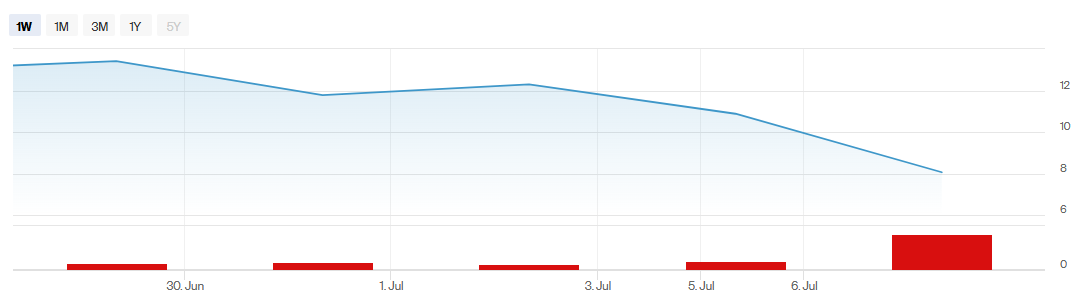

Source: NYSE


This is a company selected by BlackRock's tokenized money market fund BUIDL as its transfer agent, widely recognized by the capital markets as a leading platform in the tokenization space, with a pre-merger valuation of $1.25 billion. The stark contrast of its post-listing decline has led many investors to scrutinize the gap between the "tokenization narrative" and the "secondary market reality."


SPAC Mechanism Exposes Issues Before Fundamentals


In recent years, crypto-related companies that have gone public via SPAC have almost universally undergone similar valuation re-pricing during the handover period.


Twenty One Capital (XXI), also orchestrated by an entity affiliated with Cantor Fitzgerald, fell about 25% on its first day of trading on the NYSE via a SPAC merger on December 9th, 2025, closing at $11.42. It continued to decline thereafter, with its share price once falling below $6, a drop of over 80% from its peak of $49. ProCap Financial (BRR), a Bitcoin treasury company that completed its merger around the same time, debuted at $10 and is now trading around $2.4, a decline of roughly 76%.


Several market participants attribute the recent sharp decline to the SPAC structure itself rather than a deterioration in company fundamentals.


According to a CoinDesk report, Jeff Dorman of Arca stated publicly that this volatility is more a result of the SPAC mechanism than a worsening of fundamentals. Post-SPAC listing, the investor base undergoes a complete shift—from the original SPAC subscribers who prefer fixed income to long-term equity holders focused on fundamentals. This handover process inherently creates significant volatility.


Market confidence in the "tokenization" story itself has not collapsed; what has collapsed is confidence in the SPAC pricing mechanism. Despite the falling stock price, Securitize tokenized $295 million worth of its own stock on its first trading day and deployed it on Solana and Avalanche.


Securitize's decline also coincided with broader pressure on U.S.-listed crypto-related stocks. By early July, shares of Coinbase and Circle had fallen approximately 63% and 74%, respectively, from their respective all-time highs set in July 2025. Over the same period, the S&P 500 index retreated only about 2% from its June peak. When the entire sector's stocks are more volatile than their underlying assets, a newly listed tokenization platform can hardly remain unscathed.


Patent Lawsuit Reveals Industry Fissures


On June 15th, tokenization infrastructure company tZERO sent a "cease and desist and reservation of rights" letter to Securitize, alleging that its two core products, DS Protocol and Vault Registrar, infringe patents held by tZERO. The allegations specifically involve U.S. Patents No. 11,216,802 ("Smart Contract Rules for Self-Executing Security Tokens") and No. 11,394,560 ("Cryptographic Integration Platform").


tZERO demanded that Securitize cease commercialization of the relevant products by June 18th or face injunctive relief and claims for monetary damages.


Securitize took the offensive, filing a declaratory judgment action for non-infringement on June 22nd in the U.S. District Court for the District of Delaware (Case No. 1:26-cv-00722, Securitize, Inc. v. tZERO Group, Inc. et al.). It seeks a court declaration that its products do not infringe tZERO's patents, characterizing the allegations as "baseless," "lacking in substance," and "contrary to the spirit of fair competition in the industry."


The case is currently in its early stages, assigned to Judge Gregory B. Williams. There have been no substantive pleadings, counterclaims, motions to dismiss, or settlement announcements. This means the case could still take various paths, including an out-of-court settlement, partial dismissal, or even a withdrawal of the allegations by tZERO.


The weight of this lawsuit far exceeds that of an ordinary commercial dispute.


tZERO's patent assertions were not made on a whim. Founded in 2014 and stemming from the vision of a security token trading platform by Overstock.com (a longstanding U.S. online retailer whose founder, Patrick Byrne, was an early blockchain evangelist), the company initiated a strategic review of its intellectual property portfolio following a management reshuffle at the end of 2025.


According to tZERO's announcement on June 15th regarding the progress of its IP portfolio enforcement, it holds 105 patents across 23 patent families. Its business scope spans core aspects of tokenization infrastructure, including compliant security token systems, crypto asset integration, and KYC verification processes.


More critically, tZERO has explicitly stated that its patent review has identified "at least six" other market participants with potential infringements, covering areas such as compliant RWA platforms, institutional infrastructure, prime brokers, and decentralized exchanges. It plans to issue infringement warning letters to more companies after completing its analysis.


As of July 8th, the case remains in its early stages, with neither party having submitted substantive pleadings, counterclaims, or settlement documents.


However, the patent pressure facing Securitize is not limited to tZERO. Concurrently, Liquid Rarity Exchange has also filed a separate lawsuit against Securitize over two other patents, seeking damages and injunctive relief.


In other words, Securitize might be the first, but not the only one. According to data from rwa.xyz, the RWA market has accelerated its expansion from approximately $22 billion at the beginning of the year to over $33 billion, moving from the "proof-of-concept" stage to "actual deployment."


This is the backdrop against which tZERO has chosen to turn its long-dormant patent portfolio into a commercial bargaining chip. When the patent barriers within the tokenization industry begin to be actively asserted, nearly every platform claiming to "master core technologies" risks being drawn into similar disputes. This warrants more long-term attention than a single stock price pullback.


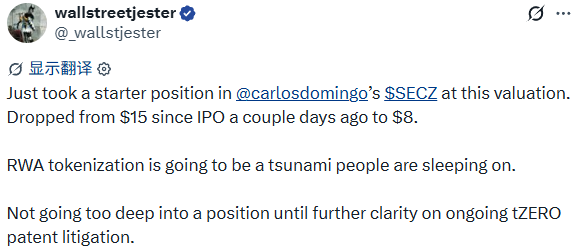
As X user wallstreetjester noted, he "just opened a position" in SECZ but clearly stated he "will not add significantly until the lawsuit has clearer progress." This represents the genuine sentiment of a segment of potential buyers.


Primary Market Believes in Institutions, Secondary Market Believes in Liquidity


Securitize's shareholder roster is impressively distinguished. It was chosen by BlackRock's BUIDL fund as its transfer agent, and during its PIPE financing round, it attracted institutional investors like Borderless Capital and Hanwha Investment. The SPAC transaction itself was initiated by an affiliate of Cantor Fitzgerald.


This narrative of "joint endorsement by traditional financial institutions" is highly persuasive during primary market fundraising and was a key support for Securitize's $1.25 billion pre-merger valuation.


However, the secondary market doesn't care about endorsements; it only cares about liquidity. The market still buys into the "tokenization" story; what has cooled off is merely the short-term pricing of Securitize's specific stock.


BlackRock's name might make primary market investors willing to pay for the valuation story, but it cannot convince the secondary market to continue holding shares when patent disputes are unresolved and SPAC handover pressure persists. Trust is a static brand asset; liquidity is the dynamic outcome of market博弈. This sharp decline precisely proves there is no necessary conversion rate between the two.


Securitize's share price will eventually stabilize or rebound as the investor base transition completes, a near-inevitable phase of growing pains for SPAC-listed companies. However, the patent war ignited by tZERO warrants vigilance from all participants in the tokenization industry.


With tZERO holding 105 patents and targeting at least six potential infringers, the next round of competition in the tokenization industry may no longer be just about compliance licenses, institutional relationships, or trading volume.


For platforms still relying on the valuation story of "we were the first to implement a certain technical solution," a cease-and-desist letter could bring that story to an abrupt halt at any moment.


Securitize's fall has wiped out short-term valuation; but tZERO's lawsuit may have unveiled a patent war that the entire tokenization industry is not yet prepared to face.


Câu hỏi Liên quan

QWhat are the main reasons for Securitize's (SECZ) sharp stock price decline shortly after its NYSE listing?

AThe primary reasons for SECZ's decline are attributed to the inherent volatility of the SPAC listing mechanism and sector-wide pressure on crypto-related stocks. The SPAC structure triggered a shift in investor base from SPAC investors to long-term equity holders, causing significant price volatility during the handover. Simultaneously, the entire crypto-stock sector, including companies like Coinbase and Circle, has been underperforming the broader market, creating a negative backdrop for SECZ.

QWhat is the core nature of the legal dispute between tZERO and Securitize mentioned in the article?

AtZERO has accused Securitize of patent infringement, specifically alleging that Securitize's DS Protocol and Vault Registrar products violate two of its U.S. patents related to self-executing smart contract rules for security tokens and crypto integration platforms. Securitize responded by filing a declaratory judgment lawsuit, asking the court to confirm that its products do not infringe and characterizing tZERO's claims as baseless.

QHow does the article contrast the forces driving primary market valuation versus secondary market performance for companies like Securitize?

AThe article contrasts that in the primary market, valuation is driven by institutional trust and prestigious backers (like BlackRock, Cantor Fitzgerald), which supported Securitize's $1.25 billion pre-merger valuation. However, the secondary market prioritizes liquidity and immediate risk factors over brand endorsements. It reacts to concrete issues like pending patent lawsuits and SPAC-related selling pressure, leading to a disconnect between the initial valuation narrative and the stock's trading reality.

QWhat broader implication does the tZERO vs. Securitize patent lawsuit hold for the tokenization industry according to the article?

AThe lawsuit signals the potential start of a widespread patent war within the tokenization industry. tZERO's announcement that it has identified at least six other market participants as potential infringers suggests that patent enforcement could become a new, critical competitive dimension. This shift moves the industry beyond competition based solely on compliance, institutional relationships, and trading volume, introducing legal and intellectual property risks that could disrupt many platforms' business narratives.

QAccording to the article, what is the current status of the patent lawsuits against Securitize as of July 8th?

AAs of July 8th, the legal cases are in their early stages. The primary lawsuit filed by Securitize against tZERO (case 1:26-cv-00722) is before Judge Gregory B. Williams, with no substantive pleadings, counterclaims, motions to dismiss, or settlement news filed yet. Additionally, Securitize faces a separate, independent patent infringement lawsuit from Liquid Rarity Exchange. The outcomes remain uncertain, with possibilities ranging from out-of-court settlement to case dismissal.

Nội dung Liên quan

Sau ba quý liên tiếp suy giảm, thị trường tiền điện tử có thể đón cửa sổ ổn định trong quý III?

Thị trường tiền mã hóa vừa trải qua quý tồi tệ nhất kể từ năm 2022, với vốn hóa giảm 12.6% xuống 2.1 nghìn tỷ USD, khối lượng giao dịch sụt giảm và dòng tiền rút mạnh khỏi các quỹ ETF Bitcoin. Bitcoin và Ethereum lần lượt giảm 14.2% và 25.4% trong quý, đánh dấu sự đảo ngược so với mối tương quan trước đây với các tài sản rủi ro như Nasdaq. Dòng vốn ETF chứng khoán Mỹ ghi nhận dòng ròng rút khoảng 46.7 tỷ USD trong quý II, báo hiệu áp lực bán. Tuy nhiên, dấu hiệu tích cực ban đầu xuất hiện khi các nhà đầu tư dài hạn bắt đầu tích lũy trở lại và dòng ETF có đợt thu hút ngắn hạn. Toàn bộ thị trường hiện tập trung vào cuộc họp của Cục Dự trữ Liên bang Mỹ (FOMC) vào cuối tháng 7. Các tín hiệu chính sách tiền tệ sẽ quyết định xu hướng: tín hiệu ôn hòa có thể đẩy Bitcoin lên vùng 68,000-84,000 USD, trong khi lập trường cứng rắn có thể kéo giá về vùng 50,000-56,000 USD. Tiến trình pháp lý của Đạo luật CLARITY gần như đình trệ, làm giảm kỳ vọng và gia tăng phí rủi ro cho toàn ngành. Trong bối cảnh ảm đạm, hai lĩnh vực nổi bật là thị trường dự đoán (tăng trưởng 48.7%) và bộ sưu tập kỹ thuật số được mã hóa (tăng ~143%), cho thấy sự chuyển dịch nhu cầu thực tế. Nhìn chung, thị trường thiếu động lực cho một đợt tăng trưởng mạnh dựa trên tâm lý. Các quyết định giao dịch trong quý III sẽ chủ yếu xoay quanh diễn biến giá, lựa chọn chính sách và kỳ vọng lãi suất.

marsbitHôm qua 08:39

Sau ba quý liên tiếp suy giảm, thị trường tiền điện tử có thể đón cửa sổ ổn định trong quý III?

marsbitHôm qua 08:39

Giao Dịch SpaceX, Đã Mở Khóa: SPCXON Được Giao Dịch Trên WEEX

SpaceX đã thực hiện đợt IPO lớn nhất lịch sử vào tháng 6/2026, nhưng nhiều nhà giao dịch không thể tiếp cận do các rào cản như hạn chế môi giới và khu vực. Sàn giao dịch tiền điện tử WEEX đã giới thiệu SPCXON/USDT, một công cụ token hóa cho phép tiếp cận biến động giá của SpaceX thông qua tài khoản crypto được quyết toán bằng USDT, mà không cần môi giới Mỹ hay tài khoản ngân hàng. Sản phẩm này, xây dựng trên nền tảng cổ phiếu token hóa của Ondo, dành cho các nhà giao dịch bên ngoài Hoa Kỳ. Trường hợp đầu tư dựa trên đà tăng doanh thu Starlink và các cột mốc Starship, trong khi các yếu tố cần thận trọng bao gồm định giá cao, lượng cổ phiếu lưu hành công chúng ít và sự kiện mở khóa cổ phiếu nội bộ sắp tới. Lưu ý quan trọng: SPCXON cung cấp mức tiếp xúc với hiệu quả kinh tế, không phải quyền sở hữu cổ phiếu trực tiếp, và có thể giao dịch ở mức cao hơn hoặc thấp hơn giá trị tài sản ròng. WEEX tích hợp SPCXON cùng các sản phẩm TradFi token hóa khác như MicroStrategy (MSTRON) và Micron (MUON) vào một tài khoản thống nhất, cho phép luân chuyển giữa crypto và cổ phiếu dễ dàng. Sàn cũng đang chạy chiến dịch TradFi Trading Challenge với quỹ thưởng $50,000.

TheNewsCryptoHôm qua 08:32

Giao Dịch SpaceX, Đã Mở Khóa: SPCXON Được Giao Dịch Trên WEEX

TheNewsCryptoHôm qua 08:32

BIT Trading Hours: BTC Vẫn Chịu Áp Lực Từ Đường MA 200 Tuần, Bị Từ Chối Có Thể Tái Khởi Động Đợt Giảm, Ngành Lưu Trữ và Bán Dẫn Tăng Mạnh Đêm Qua Bắt Đầu Giảm Trong Khung Giờ Giao Dịch Ban Đêm

Bitcoin (BTC) hiện giao dịch quanh mức $66,000, đối mặt với vùng kháng cự mạnh gần $68,000 - nơi tập trung nhiều lệnh mua trước đó có thể chốt lời. Về mặt kỹ thuật, BTC đang nằm giữa đường trung bình động 200 tuần (MA ~$63,333) và đường trung bình động hàm mũ 200 tuần (EMA ~$68,328). Việc không thể vượt qua mức $68,000 có thể kéo giá về kiểm tra lại vùng hỗ trợ $63,000. Thị trường hiện có tính thanh khoản thấp và được xem là đang trong đợt phục hồi nhẹ. Trên thị trường chứng khoán Mỹ, các chỉ số tương lai giảm nhẹ. Nhóm cổ phiếu bán dẫn và lưu trữ, vốn tăng mạnh vào đêm trước, đã điều chỉnh giảm trong phiên giao dịch ngoài giờ. Tuy nhiên, Super Micro Computer (SMCI) tăng mạnh sau báo cáo doanh thu và đơn đặt hàng tích cực. Dầu thô tăng (trên $91) và lợi suất trái phiếu kho bạc Mỹ tăng cao tiếp tục gây áp lực lên thị trường cổ phiếu và làm dấy lên lo ngại lạm phát. Tại châu Á, thị trường Hàn Quốc phục hồi nhẹ cùng với cổ phiếu công nghệ, trong khi Nhật Bản thận trọng do đồng Yên yếu kỷ lục. Các sự kiện quan trọng sắp tới bao gồm báo cáo thu nhập từ các gã khổng lồ công nghệ như Alphabet, Tesla, IBM; sự kiện AI của AMD; và cuộc họp chính sách tiền tệ của Ngân hàng Trung ương châu Âu.

marsbitHôm qua 08:31

BIT Trading Hours: BTC Vẫn Chịu Áp Lực Từ Đường MA 200 Tuần, Bị Từ Chối Có Thể Tái Khởi Động Đợt Giảm, Ngành Lưu Trữ và Bán Dẫn Tăng Mạnh Đêm Qua Bắt Đầu Giảm Trong Khung Giờ Giao Dịch Ban Đêm

marsbitHôm qua 08:31

Chủ tịch CFTC cũ, Chủ tịch Circle Tarbert: Một mặt khuyên bạn chủ nghĩa dài hạn, mặt kia tự mình thoái vốn 30 triệu USD

Tác giả: Zen, PANews Trước tình cảnh cổ phiếu Circle (CRCL) giảm 70% so với đỉnh và bị hạ xếp hạng, Chủ tịch Heath Tarbert - cựu Chủ tịch CFTC - trong một cuộc phỏng vấn ngày 14/7 đã kêu gọi các nhà đầu tư kiên nhẫn và tập trung vào tầm nhìn dài hạn của công ty. Tuy nhiên, hành động của ông lại trái ngược hoàn toàn. Kể từ khi Circle IPO, Tarbert đã không ngừng bán cổ phiếu CRCL thông qua kế hoạch giao dịch 10b5-1 được lập trước, thu về tổng cộng khoảng 30 triệu USD. Ông chưa từng mua lại cổ phiếu trên thị trường mở, ngay cả khi giá cổ phiếu lao dốc. Bài viết nêu bật sự mâu thuẫn giữa lời nói "chủ nghĩa dài hạn" và hành động "thoái vốn" mạnh tay của Tarbert. Sự nghiệp của ông được mô tả là điển hình của "cánh cửa xoay" chính trị-thương mại Mỹ: từ các vị trí cấp cao tại Bộ Tài chính và CFTC, ông nghỉ hưu chỉ 27 ngày trước khi gia nhập Citadel Securities - một nhà tạo lập thị trường lớn - vào thời điểm công ty này đang đối mặt với cuộc điều tra của Quốc hội sau sự kiện GameStop. Sau đó, ông chuyển sang Circle, nơi ông được cho là đã sử dụng kinh nghiệm và quan hệ quản lý để giúp công ty vượt qua các rào cản pháp lý và niêm yết thành công. Bài báo đặt câu hỏi liệu Tarbert có thực sự tin vào tương lai dài hạn của Circle hay không, khi mà ông liên tục chốt lời trong khi lại khuyên các cổ đông nhỏ lẻ giữ vị thế. Nó gợi ý rằng mô hình của ông là tận dụng tối đa kiến thức về chu kỳ chính sách và cơ hội thị trường để biến các nguồn lực và uy tín tích lũy được thành lợi thế nghề nghiệp và tài chính cá nhân, trong khi rủi ro dài hạn được chuyển sang cho các nhà đầu tư tin tưởng vào những tường thuật công khai của ông.

marsbitHôm qua 08:08

Chủ tịch CFTC cũ, Chủ tịch Circle Tarbert: Một mặt khuyên bạn chủ nghĩa dài hạn, mặt kia tự mình thoái vốn 30 triệu USD

marsbitHôm qua 08:08

Gate Research: Làn sóng "phố Wall hóa" trong các sản phẩm tài chính tiền điện tử - Cạnh tranh hay Hội tụ?

Gate Research Institute: Sự hòa hợp hay cạnh tranh trong làn sóng "phố Wall hóa" các sản phẩm tài chính tiền mã hóa? Từ tầm nhìn ban đầu về một hệ thống tài chính phi tập trung, loại bỏ trung gian của Bitcoin, thị trường tiền mã hóa đang chứng kiến sự hội tụ mạnh mẽ với tài chính truyền thống (TradFi). Các quỹ ETF Bitcoin, tài sản thế giới thực được mã hóa (RWA) và trái phiếu chính phủ trên chuỗi cho thấy các tổ chức như BlackRock, Fidelity đang đưa tài sản mã hóa vào hệ thống phát hành, định giá, lưu ký và phân phối truyền thống. Tuy nhiên, đây không phải là một trò chơi tổng bằng không. Xu hướng này thể hiện sự bổ sung lẫn nhau: TradFi cung cấp khung pháp lý, mạng lưới phân phối rộng và sự tin cậy, trong khi Crypto mang lại tính mở, thanh khoản toàn cầu 24/7 và khả năng thanh toán lập trình được. Hai hướng đi tiêu biểu minh chứng cho sự hội tụ hai chiều: các sàn giao dịch tiền mã hóa (CEX) như Gate mở rộng sang giao dịch cổ phiếu thực, ETF thông qua cơ sở hạ tầng môi giới truyền thống; trong khi các công ty môi giới truyền thống như Robinhood tích hợp tài sản mã hóa và phát triển tài sản mã hóa (như cổ phiếu mã hóa) để thu hút người dùng. Mục tiêu chung của cả hai hướng là tranh giành "tài khoản tài chính tổng hợp" thế hệ tiếp theo - một điểm vào duy nhất nơi người dùng có thể giao dịch đa dạng tài sản từ cổ phiếu, tiền mã hóa đến RWA. Sự tăng trưởng mạnh mẽ của thị trường RWA, đặc biệt là cổ phiếu mã hóa, bất chấp xu hướng thị trường giảm, cho thấy đây là một xu hướng cấu trúc thực sự. Kết luận, "phố Wall hóa" không có nghĩa là thị trường tiền mã hóa bị TradFi thôn tính. Thay vào đó, đây là một sự chuyển đổi hai chiều, nơi cả hai hệ thống đang cùng nhau định hình lại thị trường vốn thành một cấu trúc hỗn hợp hiệu quả và toàn cầu hơn, với trải nghiệm người dùng liền mạch cho nhiều loại tài sản khác nhau.

marsbitHôm qua 08:06

Gate Research: Làn sóng "phố Wall hóa" trong các sản phẩm tài chính tiền điện tử - Cạnh tranh hay Hội tụ?

marsbitHôm qua 08:06

Giao dịch

Giao ngay
活动图片




