Ondo, the Leader in RWA Tokenization, is Entering the Perp DEX Arena

Foresight NewsXuất bản vào 2026-07-07Cập nhật gần nhất vào 2026-07-07

Tóm tắt

Ondo Finance, the dominant player in the real-world asset (RWA) tokenization space, is entering the perpetual futures (Perp) DEX arena with the launch of "Ondo Perps." This move signifies a strategic pivot from primarily being an asset issuer to becoming a comprehensive trading infrastructure provider. The platform uniquely focuses on tokenized traditional assets like stocks, indices (e.g., US 500), and commodities (gold, silver, oil), offering up to 20x leverage for 24/7 trading. A key differentiator is its planned multi-asset collateral system, which will allow users to employ tokenized stocks and bonds as margin, enabling sophisticated portfolio hedging and strategies. This approach leverages Ondo's existing strengths—deep institutional relationships, regulatory approvals, and a vast library of tokenized assets—to create a bridge between traditional finance liquidity and decentralized, permissionless trading. By integrating its asset issuance (Ondo Global Markets) with a proprietary trading venue, Ondo aims to complete the RWA financialization loop, transforming tokenized holdings from passive investments into productive capital for leverage and complex financial engineering. The launch positions Ondo Perps not just as another derivatives exchange, but as a foundational piece of next-generation infrastructure merging TradFi assets with DeFi-native execution.


Written by: Eric, Foresight News


The perpetual contract space is undergoing a quiet revolution.


Over the past two years, Perp DEX has evolved from a fringe experiment into a force to be reckoned with in the derivatives market. In 2025, the total trading volume of Perp DEX reached $7.9 trillion, approaching 10% of the total volume on centralized exchanges. However, amidst this clamor, a fundamental limitation persisted: almost all platforms were trapped in the cage of crypto-native assets, trading mainly Bitcoin, Ethereum, and a handful of altcoins, with collateral almost uniformly being stablecoins.


Meanwhile, the real-world asset (RWA) tokenization sector is rising at a staggering pace, growing from a proof-of-concept in 2023 to a market size now exceeding $30 billion. In this sector, Ondo Finance has established an indisputable leading position: its tokenized equities platform, Ondo Global Markets, commands nearly 70% market share, about 2.5 times that of the runner-up.


Starting this year, precious metals, commodities, and stocks began to be included in DEX trading lists. But the trend we're familiar with has been Perp DEXs listing tokenized RWA assets.


When the absolute leader in the RWA sector decides to enter the Perp DEX arena, things get interesting. The launch of Ondo Perps signifies that the perpetual contract space finally has a player that genuinely starts from traditional financial assets, deeply integrating institutional-grade asset issuance capabilities with crypto-native trading infrastructure. This may mark a turning point in the evolution of Perp DEX from a pure crypto derivatives tool to a truly global asset trading infrastructure.


"Going Against the Grain"


In 2021, former Goldman Sachs employees Nathan Allman and Pinku Surana founded Ondo, initially positioning it as a DeFi structured products protocol. From late 2022 to early 2023, the team keenly observed that the DeFi internal loop model would eventually hit a ceiling, and the bridge connecting traditional finance with the on-chain world represented the next real opportunity. They decisively pivoted to the RWA sector, launching the tokenized U.S. Treasury fund OUSG, followed by USDY for non-U.S. retail investors. These products precisely addressed the market's biggest pain point at the time: the massive capital in the crypto world desperately needed low-risk, high-yield on-chain destinations, while the Fed's aggressive rate hikes made U.S. Treasuries the most attractive choice.


Sadly, in late May, Nathan Allman, Ondo's founder and CEO and a key proponent of the RWA tokenization space, passed away unexpectedly. Long-time President Ian De Bode will succeed him as CEO. Ondo stated that Ian De Bode has been responsible for company strategy, product, and daily operations for over two years, and his appointment as CEO has the full support of the management team.


Ondo's execution is impressive. In March 2024, when BlackRock launched its tokenized money market fund BUIDL, Ondo swiftly moved OUSG's primary holdings to BUIDL, leveraging the credit endorsement of the world's largest asset manager while maintaining its independence in distribution channels. By 2025, Ondo's TVL exceeded $2.5 billion, with the USDY product alone surpassing $1 billion, becoming the world's largest tokenized Treasury product for retail investors.


The launch of Ondo Global Markets expanded the company's footprint from fixed income to equities. This platform, launched in September 2025, offered trading in over 260 tokenized U.S. stocks and ETFs. From Apple and Nvidia to S&P 500 index ETFs, it covered hot sectors like AI, biotech, defense, and energy. The data—TVL surpassing $1 billion in under eight months and cumulative trading volume exceeding $18 billion—represents a phenomenal growth curve in the history of any financial product. By comparison, stablecoins didn't show such a steep adoption curve in their early stages.


More importantly, Ondo is not just a crypto project operating in a gray area. It obtained regulatory approval in Liechtenstein covering 30 European countries, confidentially filed a registration statement with the U.S. Securities and Exchange Commission (SEC), and partnered with traditional financial giants like JPMorgan Chase and Mastercard to complete the first cross-border tokenized Treasury redemption test. When established asset managers like Franklin Templeton chose to tokenize their ETF products via Ondo's platform, Ondo's hub status in the RWA space became self-evident.


This year, both exchanges and DEXs are racing to list tokenized RWA assets. Hyperliquid saw trading volume for assets like gold, silver, and crude oil spike over a weekend during the U.S.-Iran conflict, leading to two Bloomberg reports in one week. The trend is obvious, but everyone seems focused on how exchanges can capture trading of RWA tokenized assets, forgetting the potential for projects specializing in RWA tokenization themselves to launch exchanges.


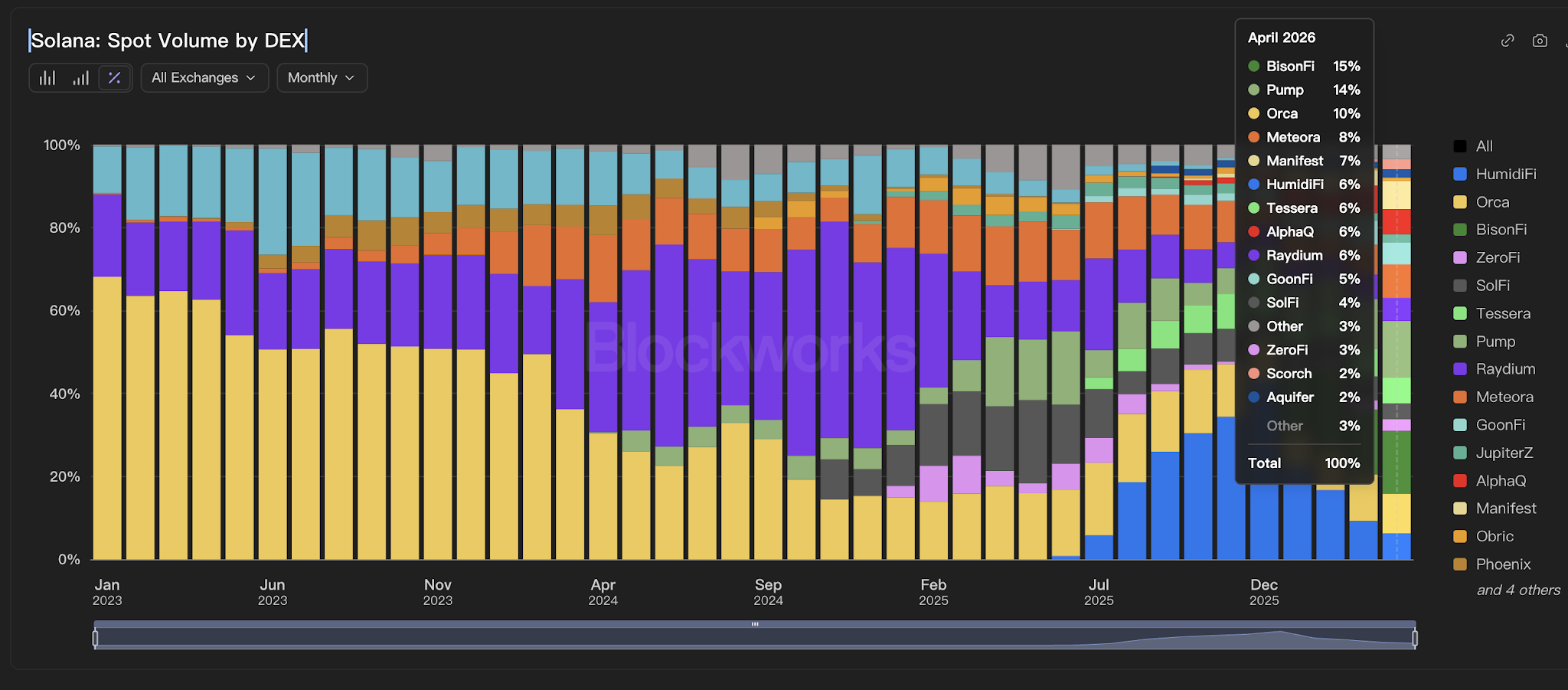
This is similar to the situation before pump.fun launched its DEX, when DEXs on Solana were fiercely competing for the meme token trading market. Thirteen months after pump.fun launched PumpSwap, its market share by trading volume had risen to second place, nearly tied for first, while once-dominant Raydium's share had shrunk to just 5%.


"Wall Street 2.0"


The core positioning of Ondo Perps is very clear: it is a perpetual futures platform focused on tokenized stocks, indices, and commodities, combining institutional-grade financial infrastructure with a permissionless, globally accessible trading platform interface. In simpler terms, it is a platform that genuinely brings Wall Street assets into the DeFi perpetual contract arena.


The first and most obvious advantage of this positioning lies in the richness of the asset side. Ondo Perps can directly list assets that Ondo has already tokenized on its Perp DEX for trading. For a trader looking to flexibly use leverage in global asset allocation, this difference in choice space is transformative.


Currently, Ondo Perps is open to all users. Let's look at some of its highlights:
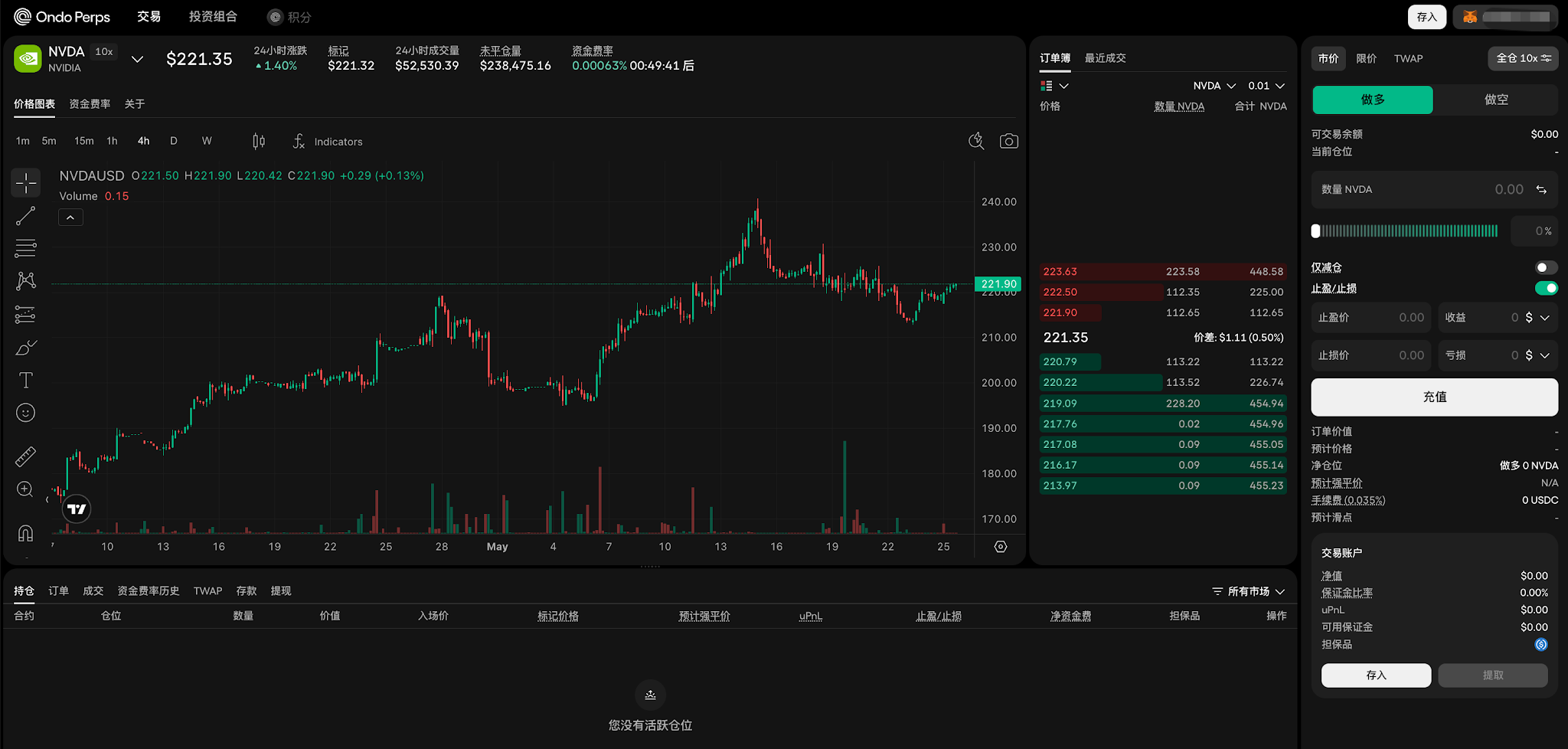


Ondo Perps, as a Perp DEX, has all the basic functionalities, which won't be detailed here. Currently, the maximum leverage supported by Ondo Perps is 20x, with most U.S. stock contracts capped at 10x, and commodities, indices, etc., at 20x.


Currently, Ondo Perps supports 24/7 trading across 24 perpetual contract markets, including:


16 U.S. Stocks: SPCX, MU, NVDA, TSLA, AAPL, MSFT, GOOGL, AMZN, META, NFLX, AMD, INTC, ORCL, PLTR, COIN, HOOD, MSTR, CRCL;

3 Commodities: XAU (Gold), XAG (Silver), WTI (Crude Oil);

2 Indices: US 500, US 100;

1 ETF: Roundhill Memory ETF (DRAM).


In practical use, the author noted two characteristics: first, users do not directly trade using their own wallets; they need to transfer USDC from Ethereum to a designated Ondo address to trade; second, Ondo Perps operates on a cross-margin mode, meaning positions (long/short) across different assets share the same margin pool.
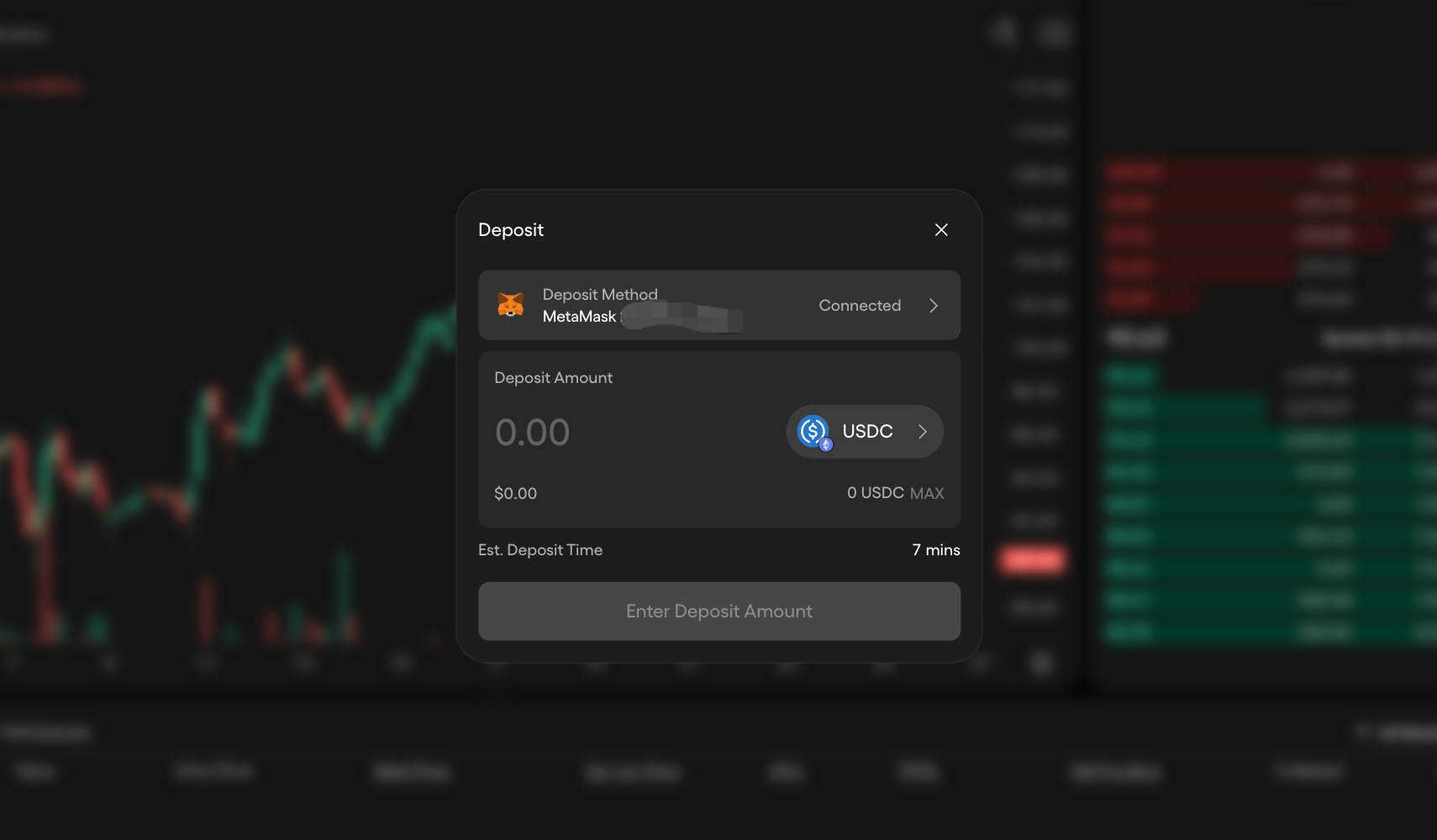


These designs correspond to longer-term plans. According to provided materials, Ondo Perps will eventually adopt a multi-asset collateral system, supporting not only stablecoins but also Ondo-issued U.S. stock and Treasury tokens as margin to open positions. This allows users to hedge, for example, without selling their investment portfolios.


From a financial engineering perspective, multi-asset collateral is not just an added feature; it fundamentally restructures the system's risk calculation logic. Ondo Perps is closer to the Portfolio Margin concept in traditional finance, treating the entire asset portfolio as a unified risk pool. This means natural hedging relationships between different assets can be automatically recognized by the system. For instance, if you hold both a tokenized SPY long position and an S&P 500 perpetual contract short, the system can identify this hedge and reduce margin requirements accordingly. While average users might not grasp its value, it genuinely serves complex quantitative strategies and basis traders.


Regarding liquidity, Ondo Perps does not build liquidity pools from scratch on-chain. Instead, through the issuance and redemption mechanism of tokenized stocks, it directly connects the on-chain market to traditional exchanges. This means price discovery and liquidity depth can inherit from the multi-trillion-dollar traditional markets like NASDAQ and NYSE, rather than relying on limited on-chain pools.


It can be said that Ondo Perps' design not only meets the basic needs of ordinary investors but also fully considers the requirements of professional traders and institutional investors. Additionally, Ondo Perps claims to be "the fastest permissionless perpetuals trading platform," with order routing, margin updates, and liquidations all processed in real-time while maintaining decentralized security guarantees.


The balance between decentralization and user experience, along with the design of routing contract trades directly to traditional financial exchanges, necessitates that Ondo aggregates funds, processes order routing, trading, and settlements off-chain, and allocates funds on-chain.


More Than Just Trading


A flagship trading platform was the missing piece for Ondo. The Perp DEX is actually a crucial piece in the financialization closed-loop of RWAs.


Let's return to the full picture of Ondo's business. On one hand, Ondo Global Markets is responsible for issuing tokenized assets, converting traditional securities like stocks, ETFs, and Treasuries into tokens that can flow freely on the blockchain. These tokenized assets inherently possess two properties: they represent price exposure to the underlying financial assets, and they can be composably used in DeFi protocols like any ERC-20 token. But the problem is, if tokenized assets can only be "held," their value is far from fully realized.


On the other hand, with the relaxation of tokenization regulations in the U.S., platforms currently partnering with Ondo and using its tokenized assets could choose to defect or issue their own tokenized products at any time. If the end-user traders are not retained, even a high market share is just building a bridge for others.


The emergence of Ondo Perps injects productivity into these tokenized assets. When a tokenized Apple stock can not only be held passively but also used as margin to open leveraged positions, execute complex basis arbitrage strategies, or hedge portfolio risks, its financial attributes are fully activated. This transition from "yield asset" to "credit foundation" is a necessary path for the entire RWA sector to move from early adoption to mainstream financial infrastructure.


Looking further, what Ondo is building is actually a unified ecosystem spanning spot and derivatives, connecting traditional finance with the on-chain world. Tokenized stocks are issued on Ondo Global Markets, previously cross-chained via Ondo Bridge to ecosystems like Hyperliquid's HyperEVM, and now can be traded directly on its own Ondo Perps. Once this network effect forms, it will be extremely difficult for competitors to replicate, as a better trading interface alone cannot replace a complete ecosystem deeply embedded in a multi-chain RWA infrastructure.


In fact, this vision is already materializing. Ondo has partnered with Chainlink to provide institutional-grade price oracles for its tokenized stocks, enabling these assets to be used as collateral in DeFi lending markets for the first time. Integration with lending protocols like Euler is underway, allowing traders to borrow funds without selling their holdings. This "holdings as capital" experience is the core value of prime brokerage in traditional finance, now being brought on-chain by Ondo.


The Era of New Infrastructure


Viewed from a broader perspective, the launch of Ondo Perps is the product of the convergence of two historic trends: one is the inevitable process of RWA tokenization moving from a fringe experiment to mainstream financial infrastructure, and the other is the natural evolution of Perp DEX from a pure crypto derivatives tool to a full-asset-class trading platform. Ondo happens to stand at the intersection of these two trends: it is the largest issuer in the RWA sector, with the deepest institutional financial partnerships and the broadest global regulatory layout.


For traders, Ondo Perps represents a new possibility: a platform where you can use Nvidia stock as margin to trade S&P 500 perpetual contracts on a Sunday night, while enjoying institutional-grade liquidity and execution speed. This experience simply doesn't exist in traditional finance and is unavailable in existing DeFi. It belongs to the new world that is accelerating towards us: the boundaries between traditional finance and crypto-native infrastructure are blurring, and assets themselves become pure financial building blocks that can be combined in any way, at any time, anywhere.


This is perhaps the true significance of Ondo Perps. It's not just a new perpetual contract exchange; in Ondo's own words, it is a "next-generation" platform "bringing traditional financial assets into on-chain trading infrastructure."

Tiền kỹ thuật số thịnh hành

Câu hỏi Liên quan

QWhat is the core positioning of Ondo Perps, and what kind of assets does it focus on?

AOndo Perps is positioned as a perpetual futures platform focused on tokenized stocks, indices, and commodities. It combines institutional-grade financial infrastructure with permissionless, global trading access, aiming to bring Wall Street assets into the DeFi perpetual contract arena.

QHow does Ondo Perps differentiate itself from other Perp DEXs in terms of asset offerings?

AIts key differentiation lies in asset richness. Leveraging its position as the leading RWA tokenization platform, Ondo Perps can directly list a wide range of tokenized real-world assets (like stocks, ETFs, and commodities) that it has already issued, moving beyond the crypto-native assets that dominate most other Perp DEXs.

QWhat is a significant future feature planned for Ondo Perps regarding collateral?

AOndo Perps plans to implement a multi-asset collateral system. In the future, users will be able to use not just stablecoins, but also Ondo-issued tokenized assets like stocks and U.S. Treasuries as margin to open positions, enabling complex strategies like hedging without selling the underlying portfolio.

QWhy is launching a Perp DEX a strategic move for Ondo Finance within its broader business?

ALaunching Ondo Perps completes a key piece of Ondo's financial ecosystem. It transforms its tokenized assets from passive 'holdings' into productive 'credit bases' that can be used for leverage and complex strategies. This move also helps Ondo retain end-users and control the trading terminal, securing its position in the RWA value chain beyond just issuance.

QAccording to the article, what broader trend does the launch of Ondo Perps represent?

AThe launch of Ondo Perps represents the convergence of two major trends: 1) RWA tokenization evolving from an experiment to mainstream financial infrastructure, and 2) Perp DEXs evolving from crypto-native derivative tools into full-asset-class trading platforms. It signals the blurring of boundaries between traditional finance and crypto-native infrastructure.

Nội dung Liên quan

Sau ba quý liên tiếp suy giảm, thị trường tiền điện tử có thể đón cửa sổ ổn định trong quý III?

Thị trường tiền mã hóa vừa trải qua quý tồi tệ nhất kể từ năm 2022, với vốn hóa giảm 12.6% xuống 2.1 nghìn tỷ USD, khối lượng giao dịch sụt giảm và dòng tiền rút mạnh khỏi các quỹ ETF Bitcoin. Bitcoin và Ethereum lần lượt giảm 14.2% và 25.4% trong quý, đánh dấu sự đảo ngược so với mối tương quan trước đây với các tài sản rủi ro như Nasdaq. Dòng vốn ETF chứng khoán Mỹ ghi nhận dòng ròng rút khoảng 46.7 tỷ USD trong quý II, báo hiệu áp lực bán. Tuy nhiên, dấu hiệu tích cực ban đầu xuất hiện khi các nhà đầu tư dài hạn bắt đầu tích lũy trở lại và dòng ETF có đợt thu hút ngắn hạn. Toàn bộ thị trường hiện tập trung vào cuộc họp của Cục Dự trữ Liên bang Mỹ (FOMC) vào cuối tháng 7. Các tín hiệu chính sách tiền tệ sẽ quyết định xu hướng: tín hiệu ôn hòa có thể đẩy Bitcoin lên vùng 68,000-84,000 USD, trong khi lập trường cứng rắn có thể kéo giá về vùng 50,000-56,000 USD. Tiến trình pháp lý của Đạo luật CLARITY gần như đình trệ, làm giảm kỳ vọng và gia tăng phí rủi ro cho toàn ngành. Trong bối cảnh ảm đạm, hai lĩnh vực nổi bật là thị trường dự đoán (tăng trưởng 48.7%) và bộ sưu tập kỹ thuật số được mã hóa (tăng ~143%), cho thấy sự chuyển dịch nhu cầu thực tế. Nhìn chung, thị trường thiếu động lực cho một đợt tăng trưởng mạnh dựa trên tâm lý. Các quyết định giao dịch trong quý III sẽ chủ yếu xoay quanh diễn biến giá, lựa chọn chính sách và kỳ vọng lãi suất.

marsbitHôm qua 08:39

Sau ba quý liên tiếp suy giảm, thị trường tiền điện tử có thể đón cửa sổ ổn định trong quý III?

marsbitHôm qua 08:39

Giao Dịch SpaceX, Đã Mở Khóa: SPCXON Được Giao Dịch Trên WEEX

SpaceX đã thực hiện đợt IPO lớn nhất lịch sử vào tháng 6/2026, nhưng nhiều nhà giao dịch không thể tiếp cận do các rào cản như hạn chế môi giới và khu vực. Sàn giao dịch tiền điện tử WEEX đã giới thiệu SPCXON/USDT, một công cụ token hóa cho phép tiếp cận biến động giá của SpaceX thông qua tài khoản crypto được quyết toán bằng USDT, mà không cần môi giới Mỹ hay tài khoản ngân hàng. Sản phẩm này, xây dựng trên nền tảng cổ phiếu token hóa của Ondo, dành cho các nhà giao dịch bên ngoài Hoa Kỳ. Trường hợp đầu tư dựa trên đà tăng doanh thu Starlink và các cột mốc Starship, trong khi các yếu tố cần thận trọng bao gồm định giá cao, lượng cổ phiếu lưu hành công chúng ít và sự kiện mở khóa cổ phiếu nội bộ sắp tới. Lưu ý quan trọng: SPCXON cung cấp mức tiếp xúc với hiệu quả kinh tế, không phải quyền sở hữu cổ phiếu trực tiếp, và có thể giao dịch ở mức cao hơn hoặc thấp hơn giá trị tài sản ròng. WEEX tích hợp SPCXON cùng các sản phẩm TradFi token hóa khác như MicroStrategy (MSTRON) và Micron (MUON) vào một tài khoản thống nhất, cho phép luân chuyển giữa crypto và cổ phiếu dễ dàng. Sàn cũng đang chạy chiến dịch TradFi Trading Challenge với quỹ thưởng $50,000.

TheNewsCryptoHôm qua 08:32

Giao Dịch SpaceX, Đã Mở Khóa: SPCXON Được Giao Dịch Trên WEEX

TheNewsCryptoHôm qua 08:32

BIT Trading Hours: BTC Vẫn Chịu Áp Lực Từ Đường MA 200 Tuần, Bị Từ Chối Có Thể Tái Khởi Động Đợt Giảm, Ngành Lưu Trữ và Bán Dẫn Tăng Mạnh Đêm Qua Bắt Đầu Giảm Trong Khung Giờ Giao Dịch Ban Đêm

Bitcoin (BTC) hiện giao dịch quanh mức $66,000, đối mặt với vùng kháng cự mạnh gần $68,000 - nơi tập trung nhiều lệnh mua trước đó có thể chốt lời. Về mặt kỹ thuật, BTC đang nằm giữa đường trung bình động 200 tuần (MA ~$63,333) và đường trung bình động hàm mũ 200 tuần (EMA ~$68,328). Việc không thể vượt qua mức $68,000 có thể kéo giá về kiểm tra lại vùng hỗ trợ $63,000. Thị trường hiện có tính thanh khoản thấp và được xem là đang trong đợt phục hồi nhẹ. Trên thị trường chứng khoán Mỹ, các chỉ số tương lai giảm nhẹ. Nhóm cổ phiếu bán dẫn và lưu trữ, vốn tăng mạnh vào đêm trước, đã điều chỉnh giảm trong phiên giao dịch ngoài giờ. Tuy nhiên, Super Micro Computer (SMCI) tăng mạnh sau báo cáo doanh thu và đơn đặt hàng tích cực. Dầu thô tăng (trên $91) và lợi suất trái phiếu kho bạc Mỹ tăng cao tiếp tục gây áp lực lên thị trường cổ phiếu và làm dấy lên lo ngại lạm phát. Tại châu Á, thị trường Hàn Quốc phục hồi nhẹ cùng với cổ phiếu công nghệ, trong khi Nhật Bản thận trọng do đồng Yên yếu kỷ lục. Các sự kiện quan trọng sắp tới bao gồm báo cáo thu nhập từ các gã khổng lồ công nghệ như Alphabet, Tesla, IBM; sự kiện AI của AMD; và cuộc họp chính sách tiền tệ của Ngân hàng Trung ương châu Âu.

marsbitHôm qua 08:31

BIT Trading Hours: BTC Vẫn Chịu Áp Lực Từ Đường MA 200 Tuần, Bị Từ Chối Có Thể Tái Khởi Động Đợt Giảm, Ngành Lưu Trữ và Bán Dẫn Tăng Mạnh Đêm Qua Bắt Đầu Giảm Trong Khung Giờ Giao Dịch Ban Đêm

marsbitHôm qua 08:31

Chủ tịch CFTC cũ, Chủ tịch Circle Tarbert: Một mặt khuyên bạn chủ nghĩa dài hạn, mặt kia tự mình thoái vốn 30 triệu USD

Tác giả: Zen, PANews Trước tình cảnh cổ phiếu Circle (CRCL) giảm 70% so với đỉnh và bị hạ xếp hạng, Chủ tịch Heath Tarbert - cựu Chủ tịch CFTC - trong một cuộc phỏng vấn ngày 14/7 đã kêu gọi các nhà đầu tư kiên nhẫn và tập trung vào tầm nhìn dài hạn của công ty. Tuy nhiên, hành động của ông lại trái ngược hoàn toàn. Kể từ khi Circle IPO, Tarbert đã không ngừng bán cổ phiếu CRCL thông qua kế hoạch giao dịch 10b5-1 được lập trước, thu về tổng cộng khoảng 30 triệu USD. Ông chưa từng mua lại cổ phiếu trên thị trường mở, ngay cả khi giá cổ phiếu lao dốc. Bài viết nêu bật sự mâu thuẫn giữa lời nói "chủ nghĩa dài hạn" và hành động "thoái vốn" mạnh tay của Tarbert. Sự nghiệp của ông được mô tả là điển hình của "cánh cửa xoay" chính trị-thương mại Mỹ: từ các vị trí cấp cao tại Bộ Tài chính và CFTC, ông nghỉ hưu chỉ 27 ngày trước khi gia nhập Citadel Securities - một nhà tạo lập thị trường lớn - vào thời điểm công ty này đang đối mặt với cuộc điều tra của Quốc hội sau sự kiện GameStop. Sau đó, ông chuyển sang Circle, nơi ông được cho là đã sử dụng kinh nghiệm và quan hệ quản lý để giúp công ty vượt qua các rào cản pháp lý và niêm yết thành công. Bài báo đặt câu hỏi liệu Tarbert có thực sự tin vào tương lai dài hạn của Circle hay không, khi mà ông liên tục chốt lời trong khi lại khuyên các cổ đông nhỏ lẻ giữ vị thế. Nó gợi ý rằng mô hình của ông là tận dụng tối đa kiến thức về chu kỳ chính sách và cơ hội thị trường để biến các nguồn lực và uy tín tích lũy được thành lợi thế nghề nghiệp và tài chính cá nhân, trong khi rủi ro dài hạn được chuyển sang cho các nhà đầu tư tin tưởng vào những tường thuật công khai của ông.

marsbitHôm qua 08:08

Chủ tịch CFTC cũ, Chủ tịch Circle Tarbert: Một mặt khuyên bạn chủ nghĩa dài hạn, mặt kia tự mình thoái vốn 30 triệu USD

marsbitHôm qua 08:08

Gate Research: Làn sóng "phố Wall hóa" trong các sản phẩm tài chính tiền điện tử - Cạnh tranh hay Hội tụ?

Gate Research Institute: Sự hòa hợp hay cạnh tranh trong làn sóng "phố Wall hóa" các sản phẩm tài chính tiền mã hóa? Từ tầm nhìn ban đầu về một hệ thống tài chính phi tập trung, loại bỏ trung gian của Bitcoin, thị trường tiền mã hóa đang chứng kiến sự hội tụ mạnh mẽ với tài chính truyền thống (TradFi). Các quỹ ETF Bitcoin, tài sản thế giới thực được mã hóa (RWA) và trái phiếu chính phủ trên chuỗi cho thấy các tổ chức như BlackRock, Fidelity đang đưa tài sản mã hóa vào hệ thống phát hành, định giá, lưu ký và phân phối truyền thống. Tuy nhiên, đây không phải là một trò chơi tổng bằng không. Xu hướng này thể hiện sự bổ sung lẫn nhau: TradFi cung cấp khung pháp lý, mạng lưới phân phối rộng và sự tin cậy, trong khi Crypto mang lại tính mở, thanh khoản toàn cầu 24/7 và khả năng thanh toán lập trình được. Hai hướng đi tiêu biểu minh chứng cho sự hội tụ hai chiều: các sàn giao dịch tiền mã hóa (CEX) như Gate mở rộng sang giao dịch cổ phiếu thực, ETF thông qua cơ sở hạ tầng môi giới truyền thống; trong khi các công ty môi giới truyền thống như Robinhood tích hợp tài sản mã hóa và phát triển tài sản mã hóa (như cổ phiếu mã hóa) để thu hút người dùng. Mục tiêu chung của cả hai hướng là tranh giành "tài khoản tài chính tổng hợp" thế hệ tiếp theo - một điểm vào duy nhất nơi người dùng có thể giao dịch đa dạng tài sản từ cổ phiếu, tiền mã hóa đến RWA. Sự tăng trưởng mạnh mẽ của thị trường RWA, đặc biệt là cổ phiếu mã hóa, bất chấp xu hướng thị trường giảm, cho thấy đây là một xu hướng cấu trúc thực sự. Kết luận, "phố Wall hóa" không có nghĩa là thị trường tiền mã hóa bị TradFi thôn tính. Thay vào đó, đây là một sự chuyển đổi hai chiều, nơi cả hai hệ thống đang cùng nhau định hình lại thị trường vốn thành một cấu trúc hỗn hợp hiệu quả và toàn cầu hơn, với trải nghiệm người dùng liền mạch cho nhiều loại tài sản khác nhau.

marsbitHôm qua 08:06

Gate Research: Làn sóng "phố Wall hóa" trong các sản phẩm tài chính tiền điện tử - Cạnh tranh hay Hội tụ?

marsbitHôm qua 08:06

Giao dịch

Giao ngay

Bài viết Nổi bật

Làm thế nào để Mua ONDO

Chào mừng bạn đến với HTX.com! Chúng tôi đã làm cho mua OndoFinance (ONDO) trở nên đơn giản và thuận tiện. Làm theo hướng dẫn từng bước của chúng tôi để bắt đầu hành trình tiền kỹ thuật số của bạn.Bước 1: Tạo Tài khoản HTX của BạnSử dụng email hoặc số điện thoại của bạn để đăng ký tài khoản miễn phí trên HTX. Trải nghiệm hành trình đăng ký không rắc rối và mở khóa tất cả tính năng. Nhận Tài khoản của tôiBước 2: Truy cập Mua Crypto và Chọn Phương thức Thanh toán của BạnThẻ Tín dụng/Ghi nợ: Sử dụng Visa hoặc Mastercard của bạn để mua OndoFinance (ONDO) ngay lập tức.Số dư: Sử dụng tiền từ số dư tài khoản HTX của bạn để giao dịch liền mạch.Bên thứ ba: Chúng tôi đã thêm những phương thức thanh toán phổ biến như Google Pay và Apple Pay để nâng cao sự tiện lợi.P2P: Giao dịch trực tiếp với người dùng khác trên HTX.Thị trường mua bán phi tập trung (OTC): Chúng tôi cung cấp những dịch vụ được thiết kế riêng và tỷ giá hối đoái cạnh tranh cho nhà giao dịch.Bước 3: Lưu trữ OndoFinance (ONDO) của BạnSau khi mua OndoFinance (ONDO), lưu trữ trong tài khoản HTX của bạn. Ngoài ra, bạn có thể gửi đi nơi khác qua chuyển khoản blockchain hoặc sử dụng để giao dịch những tiền kỹ thuật số khác.Bước 4: Giao dịch OndoFinance (ONDO)Giao dịch OndoFinance (ONDO) dễ dàng trên thị trường giao ngay của HTX. Chỉ cần truy cập vào tài khoản của bạn, chọn cặp giao dịch, thực hiện giao dịch và theo dõi trong thời gian thực. Chúng tôi cung cấp trải nghiệm thân thiện với người dùng cho cả người mới bắt đầu và người giao dịch dày dạn kinh nghiệm.

Tổng lượt xem 503Xuất bản vào 2024.12.12Cập nhật vào 2026.06.02

Làm thế nào để Mua ONDO

Thảo luận

Chào mừng đến với Cộng đồng HTX. Tại đây, bạn có thể được thông báo về những phát triển nền tảng mới nhất và có quyền truy cập vào thông tin chuyên sâu về thị trường. Ý kiến ​​của người dùng về giá của ONDO (ONDO) được trình bày dưới đây.

活动图片