Google's AI Talent Loss: A Stress Test or a Prelude to an 'Obituary'?

marsbitXuất bản vào 2026-06-21Cập nhật gần nhất vào 2026-06-21

Tóm tắt

The departure of high-profile AI talent from Google, including transformer pioneer Noam Shazeer and AlphaFold's John Jumper, has sparked debate about the company's competitive position. However, this is less a sign of decline than a pressure test typical of the pre-IPO talent wars among AI giants like OpenAI and Anthropic. Google's true strength lies not just in models but in its unparalleled full-stack position: extensive AI research, proprietary infrastructure (TPU, Google Cloud), a massive user base across products (Search, YouTube, Android), and established enterprise relationships. It is simultaneously a competitor and a key infrastructure provider for rivals. While facing the innovator's dilemma inherent to protecting its core search business, Google is aggressively integrating AI across its ecosystem. The narrative shouldn't focus on individual departures but on Google's systemic advantages—its deep talent pool, integrated product strategy, and capacity to compete across every layer of the AI stack for the long term.

Author: Vivi

When a top AI researcher leaves Google, people might say it's a career choice. But when three high-profile AI talents leave one after another, many start writing Google's 'obituary'.

Noam Shazeer, Google Engineering VP and co-lead of Gemini, announced his departure from Google to join OpenAI. Noam is no ordinary AI researcher. He was one of the authors of the legendary 2017 paper 'Attention Is All You Need'. It was this paper that proposed the Transformer architecture, laying the foundation for today's era of large language models.

Image source: Noam Shazeer LinkedIn Profile

John Jumper, Google DeepMind VP, is leaving Google DeepMind to join Anthropic. Jumper helped create AlphaFold, the protein structure prediction system that revolutionized biology and drug discovery. In 2024, he and Demis Hassabis, co-founder and CEO of Google DeepMind, shared the Nobel Prize in Chemistry.

Image source: The Gairdner Foundation

Daniel De Freitas, longtime collaborator of Noam Shazeer and co-founder of Character.AI, is also part of this talent exodus story. He is not as widely known as Noam, but is very important in the history of conversational AI. He and Noam both worked on conversational AI at Google early on, later leaving Google in 2021 to found Character.AI, which created one of the earliest wildly popular consumer-grade AI chatbots. In 2024, Google brought them and part of the Character.AI team back to Google through a deal reportedly worth up to $2.7 billion. Now, their names are once again linked to the question: 'Can Google retain the talent that defined the conversational AI era?'

Image source: Business Insider

So, yes, market concern is understandable because this is not just ordinary employee turnover. These three individuals touch upon the three most important threads of modern AI: Transformer, conversational AI, and AlphaFold.

For a Google that is trying hard to prove to the world that Gemini can compete with OpenAI and Anthropic, this is undoubtedly painful.

But an 'obituary' is not the right framework. Talent drain is a warning signal, not a death certificate.

Interpreting from another angle - Google is being poached not because it's already unimportant. On the contrary, precisely because it remains critically important.

OpenAI and Anthropic are both young, hungry, AI giants on the eve of their IPOs. They are competing for talent, credibility, and market momentum. Where do they go when they want the world's top AI talent?

They go to Google.

Looking at it another way, this itself says one thing: Google is still one of the world's deepest pools of AI talent.

These departures are certainly not meaningless. Losing talents like Noam Shazeer, John Jumper, and Daniel De Freitas is certainly painful. They are not names that can be easily replaced.

But the real question should not just be: 'What exactly is wrong with Google?'

It should be: 'Beyond any individual genius, what else does Google have?'

I'd prefer to see it as a stress test, and Google might still be one of the few companies capable of withstanding this pressure test.

Let me elaborate.

1. First Look at the Background: This is a Classic Talent War on the Eve of IPOs

First, we must understand this is not just a Google story. It's also a classic Silicon Valley talent war on the eve of IPOs.

OpenAI and Anthropic are no longer the small research labs of a few years ago; they are now AI giants, entering the period scrutinized by capital markets.

Image source: TechCrunch

They need capital, customers, computing power, enterprise trust, regulatory credibility, and, most importantly, top-tier talent.

At this stage, top AI talent itself becomes part of the valuation narrative.

Noam Shazeer joining OpenAI sends the signal: OpenAI can still attract those who invented the foundational technology of the LLM era.

John Jumper joining Anthropic sends the signal: Anthropic is not just about Claude; it also wants to be seen as a serious frontier AI and AI for Science institution.

These hirings tell investors, employees, clients, and the entire AI community: the best people still believe in our mission.

This is also why this talent war appears so dramatic.

But it's too simplistic to interpret it as: 'Google must have a huge problem, that's why talent is leaving.'

Silicon Valley has never operated that way. Talent flows. Excellent people leaving excellent companies is a normal thing. They might leave for a new mission, bigger equity returns, faster decision-making, more autonomy, or simply entering a different stage in life.

This isn't necessarily a scandal.

In fact, a key reason Silicon Valley became an innovation engine is its extremely high talent mobility. Especially in California, where non-compete clauses are heavily restricted, people can freely move, start companies, compete, and start over.

This freedom is, of course, uncomfortable for many companies. But for the ecosystem, it's crucial.

2. Looking at Google's Real Advantage: It's Not Just a Model Company

Another common misconception is reducing the AI race to model leaderboards.

But Google's advantage is much bigger than benchmarks.

Of course, benchmarks are important.

Power users care about whether Claude writes code better, GPT has stronger reasoning, Gemini has better long-context, multimodal, or tool-calling performance, or if a model has a better personality, usability, or stronger agentic workflows.

Gemini also still needs to prove itself in areas where OpenAI and Anthropic have already established strong mindshare.

But the AI market is far larger than benchmarks.

Most average users don't wake up thinking: 'Which model should I use today?'

They want their email summarized, their schedule organized, their photos searchable, YouTube videos interpreted, and Docs, Gmail, Search, Maps, and Android to become smarter.

This is precisely Google's massive advantage.

OpenAI and Anthropic are excellent model companies. But Google's positioning is completely different: it's a full-stack AI company.
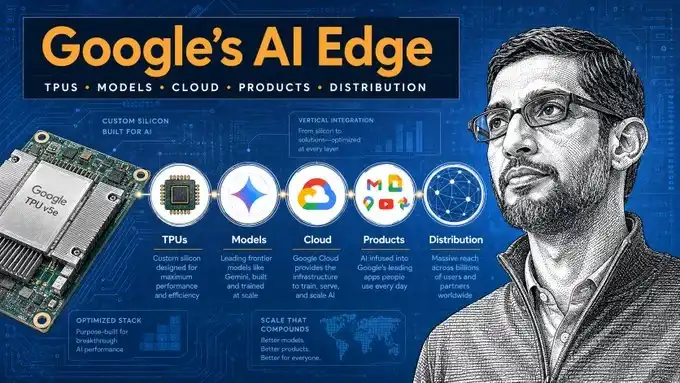
It has infrastructure: TPUs, data centers, Google Cloud, AI Hypercomputer.

It has models: Gemini, Gemma, Veo, Imagen, AlphaFold, and the deep research heritage from Google Brain and DeepMind.

It has products: Search, YouTube, Android, Chrome, Gmail, Workspace, Maps, Photos, Pixel.

It has revenue engines: Search Ads, YouTube Ads, subscriptions, Cloud, enterprise products.

Most importantly, it has distribution: billions of users are already in its ecosystem.

Most AI startups spend heavily to acquire users; Google already has a massive existing user base. Most AI startups need to build user habits from scratch; Google is already part of many people's daily routines.

Similarly, most AI startups need to convince enterprises to trust them; Google is already selling Cloud, Workspace, security, productivity, and infrastructure services to enterprises globally.

This is why the 'Google is doomed' narrative doesn't hold up.

Public opinion easily amplifies panic, but a calm look reveals Google possesses advantages most companies don't: an invisible AI intelligence layer.

The most successful consumer AI might not make users feel they're 'using AI'.

OpenAI and Anthropic need to pull users into their products; Google can push AI into the products users already use every day.

This is a very deep distribution advantage.

Search is also part of this advantage, even though it's often portrayed as Google's biggest weakness.

The bearish logic is clear: if AI changes how people access information, Google's core search business could be disrupted.

This risk is real.

Google's search advertising business is one of the most profitable in tech history. It funds AI research, YouTube infrastructure, Cloud expansion, moonshots, and massive capital expenditures.

So Google's moves here will be extra cautious. But Search isn't just a weakness for Google; it's also a superweapon.

Search gives Google distribution, user intent data, advertiser relationships, billions of daily user interactions, and a direct channel to push AI to mainstream users.

If Google can manage this transition well, Search won't simply be replaced by AI; it will become AI-native.

This process will inevitably create messy scenes - publishers will complain, advertisers will have issues, regulators will watch closely, and users will need time to build trust in AI-generated answers.

But if Google can evolve Search from a list of links into a personalized, multimodal, agentic answer engine, it will still be one of the most important gateways to the internet.

The question now is: Can Google change itself before someone else changes Search?

Google has another severely underestimated advantage: Google can even win when its competitors succeed.

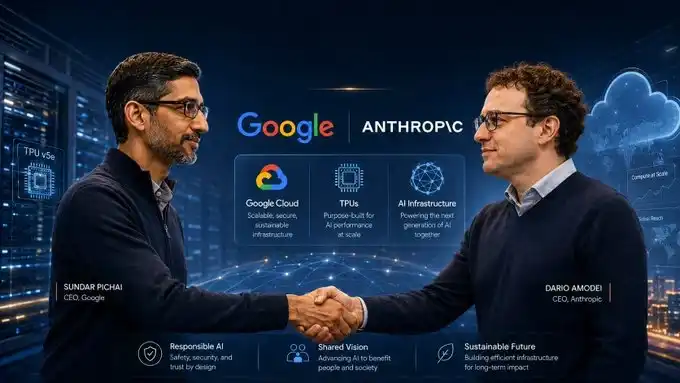
Anthropic isn't just Google's competitor. It's also its strategic partner.

Let's look at the data:

Google's parent company Alphabet has committed to invest up to $400 billion in Anthropic, including a $100 billion cash investment at a reported valuation of $3.5 trillion, with another $300 billion tied to performance goals.

Meanwhile, Anthropic reportedly committed to spending $2 trillion on Google Cloud over five years.

This isn't just a financial investment. Anthropic also announced plans to use up to 1 million Google TPUs, worth hundreds of billions of dollars, and expects to bring over 1GW of computing capacity.

This means one of Google's most important AI rivals could also become one of Google Cloud's most important AI infrastructure customers.
OpenAI has also reportedly turned to Google Cloud for additional computing power.

So Google isn't just participating in the AI model race; it's also becoming part of the underlying infrastructure for other frontier AI companies.

In the AI gold rush, Google isn't just trying to dig for gold itself.

It's also selling shovels, roads, electricity, and cloud infrastructure.

This is a very strong position.

The model race is extremely expensive. Training and serving frontier models requires massive computing power. Even the most successful AI companies need infrastructure partners.

Google has spent many years building its own chips, cloud capacity, and AI infrastructure. Now, even its rivals may need to rely on parts of its tech stack. This is its underlying strength.

Finally, it's worth mentioning that Google's AI ambitions aren't limited to chatbots; they also include AI for Science.

The Nobel Prize-winning AlphaFold is the best example. AlphaFold changed scientists' understanding of protein structure prediction, accelerated biological research, and proved AI isn't just for generating text but can solve truly difficult scientific problems.

This is crucial for the long-term AI race because, ultimately, the biggest AI winners might not just be the companies with the strongest consumer chatbots; they could also be those that can apply AI to science, medicine, climate, education, robotics, and deep technology infrastructure.

Google DeepMind has always had this larger ambition.

Indeed, John Jumper's departure might be Google's 'what could have been', as he represented one of Google's most important victories in AI for Science.

But AlphaFold wasn't the product of any single genius working alone. It came from a team and a research culture: the determination to commit long-term to world-class problems before the market was fully focused.

This culture is rare, and Google still has it.

3. The Real Innovator's Dilemma

So, does Google face the Innovator's Dilemma?

Certainly, no company is immune.

Google's core Search business is both its greatest asset and its biggest constraint.

Startups can charge forward with pure hunger. Google must protect a global business, a brand, regulatory risks, advertisers, publishers, enterprise clients, and billions of users.

This slows decision-making, makes product launches more cautious, and complicates internal coordination - this is the part many criticize.

Google has certainly made mistakes, for instance, Bard's launch was rocky.

Gemini itself has experienced its fair share of public setbacks.

But the important question isn't whether Google has weaknesses; it's: Is Google adapting and adjusting?

I think it is.

The Character.AI story well illustrates this boldness.

Noam Shazeer and Daniel De Freitas left Google to found Character.AI in 2021 and grew quickly. Later, Google decisively brought them and part of the Character.AI team back to Google through a massive deal.

This is the core tension in Google's AI story: Google was too cautious early on, appearing sluggish compared to startups; but later, Google reorganized, refocused, and started pushing Gemini across its entire ecosystem, turning it into an intelligence layer spanning Search, Workspace, Android, Cloud, and consumer products.

This doesn't mean Google can move like a 200-person startup. That's unrealistic.

But when the organization is aligned, it can move like a full-stack AI empire.

This distinction is very important - the Innovator's Dilemma is real, but Google isn't ignoring it.

From revolutionizing Search to integrating Gemini, what we see is the effort of a tech giant in transition.

4. Conclusion: This is a Stress Test, Not an Obituary

The departure of top-tier talent is more like a stress test for Google, not an obituary.

This company is facing one of the most difficult transitions in its history, but it's also one of the few with enough resources, tech stack, and distribution power to navigate this transition.

In the AI era, the shiniest model might win a news cycle; the most aggressive startup might grab headlines in the talent war.

But the best integrated system might win the next decade.

This is why I remain confident in Google - not because Google is perfect, but because Google is one of the few companies that can compete at every layer of the AI future.

The AI race is far from over, and Google is playing a long game.

Tiền kỹ thuật số thịnh hành

Câu hỏi Liên quan

QWhat is the main reason the article suggests for the recent high-profile AI talent departures from Google?

AThe article frames the departures primarily as part of a typical 'IPO eve talent war,' where companies like OpenAI and Anthropic are seeking top talent to bolster their credibility and market narrative before going public, rather than solely as a sign of Google's internal decline.

QAccording to the article, what is Google's key strategic advantage over pure model companies like OpenAI and Anthropic?

AGoogle's key advantage is its position as a 'full-stack AI company.' It has a massive ecosystem of widely-used products (Search, YouTube, Android, Workspace, etc.), vast infrastructure (TPUs, data centers, Google Cloud), and billions of existing users, allowing it to integrate AI directly into daily user habits rather than having to pull users into a new product.

QHow does the article reframe Google's role in the AI competition beyond just being a model competitor?

AThe article reframes Google as also being a crucial infrastructure provider in the AI 'gold rush.' It notes that even competitors like Anthropic and OpenAI are becoming significant customers of Google Cloud and its TPU chips, meaning Google profits from and underpins the infrastructure needs of the broader AI ecosystem.

QWhat example does the article give to show that Google is willing to be aggressive and adapt, despite its size?

AThe article cites the Character.AI story. After Noam Shazeer and Daniel De Freitas left Google to found Character.AI, Google later orchestrated a massive deal (reportedly around $27 billion) to bring them and part of their team back into the company, demonstrating a willingness to make bold moves to secure strategic talent and assets.

QWhat is the article's final conclusion about the significance of the AI talent leaving Google?

AThe article concludes that the talent departures are more accurately seen as a 'stress test' for Google, not an 'obituary.' It argues that while painful, Google possesses the unique resources, technology stack, and distribution scale to navigate this transition and compete in the long-term, multi-layered AI landscape.

Nội dung Liên quan

TechFlow Tình Báo Cục: Tỷ Lệ IPO Của Anthropic Trên 80%, Iran Đóng Eo Biển Hormuz Lần Nữa Gây Chấn Động Giá Dầu

Thị trường dự kiến Anthropic sẽ công bố IPO trước tháng 11/2026, đặt câu hỏi về việc liệu định giá nghìn tỷ USD có tương thích với cam kết an toàn AI của họ hay không. Cùng lúc, các thương hiệu đang sử dụng người có ảnh hưởng ảo AI để tiếp thị sản phẩm. Về tiền mã hóa/Web3, quân đội Iran thông báo đóng cửa lại eo biển Hormuz, gây ra biến động giá dầu, mặc dù dữ liệu theo dõi tàu cho thấy một số tuyến đường vẫn hoạt động. Iran cũng đã nối lại hoạt động bốc dầu tại đảo Kharg, có thể đưa tới 20 triệu thùng dầu ra thị trường. Trong lĩnh vực chip/phần cứng, Goldman Sachs cảnh báo đầu tư vốn 5,3 nghìn tỷ USD vào AI có thể đang chạm đến giới hạn bão hòa tín dụng. Các tin tức công nghệ đáng chú ý: Cloudflare ra mắt tính năng tài khoản tạm thời cho AI agent; lưu lượng IPv6 của Google vượt 50%; Tập đoàn Hyundai Motor có kế hoạch mua lại cổ phần của Boston Dynamics. Trên thị trường chứng khoán Mỹ, các nhà đầu tư nhỏ lẻ đã đổ 370 triệu USD vào SpaceX trong ba ngày, tạo ra làn sóng mua vào mạnh mẽ. Về tài chính vĩ mô, thị trường tín dụng châu Âu báo động khi xảy ra vỡ nợ trái phiếu CLO đầu tiên kể từ sau khủng hoảng, trong khi Nomura cảnh báo về khả năng chuyển hướng chính sách thắt chặt từ Fed. Đường dây ngầm của ngày hôm nay chỉ ra rằng các sự kiện như đóng cửa eo biển Hormuz, vỡ nợ CLO ở châu Âu và cảnh báo về chi tiêu vốn AI đều phản ánh một logic chung: thanh khoản toàn cầu đang thắt chặt và chi phí biên đang tăng lên trên nhiều lĩnh vực. Trong bối cảnh đó, vốn vẫn không ngừng tìm kiếm các câu chuyện tăng trưởng mới, như những tầm nhìn lớn về du hành phản vật chất của Musk hay cơn sốt IPO từ Anthropic và SpaceX.

marsbit10 giờ trước

TechFlow Tình Báo Cục: Tỷ Lệ IPO Của Anthropic Trên 80%, Iran Đóng Eo Biển Hormuz Lần Nữa Gây Chấn Động Giá Dầu

marsbit10 giờ trước

Tỷ Lệ ETH/BTC Quay Lại Mức Đầu Năm 2023 Khi Nhà Giao Dịch Tranh Luận Về Giá Trị Của Ethereum

Tỷ lệ ETH/BTC đã giảm xuống mức 0.027, tương đương với các mức đầu năm 2023, trong khi ở đỉnh năm 2021, tỷ lệ này là 0.088. Điều này cho thấy Ethereum hiện đang rẻ một cách lịch sử so với Bitcoin, dấy lên cuộc tranh luận giữa việc đây là cơ hội đầu tư ngược chiều hay dấu hiệu của một sự suy giảm cấu trúc. Trên biểu đồ ETH/USDT, một phân tích riêng biệt chỉ ra rằng Ethereum có nguy cơ điều chỉnh giảm sau khi mở cửa tuần mạnh, với cấu trúc thị trường bị phá vỡ và giá đảo chiều dưới mức cao 1.774 USD. Kế hoạch giao dịch được đề cập tập trung vào việc bán ra khi giá kiểm tra lại vùng nhập lệnh khoảng 1.723 USD. Sự kết hợp giữa tỷ giá ETH/BTC thấp và áp lực điều chỉnh trên biểu đồ ETH/USDT tạo ra một thiết lập cơ hội nhưng cũng đầy rủi ro. Ethereum có thể trông rẻ hơn so với Bitcoin, nhưng sức mạnh kỹ thuật vẫn đang cho thấy dấu hiệu yếu đi. Đối với những nhà đầu tư lạc quan về ETH, nhiệm vụ trước mắt là chứng minh được sức mạnh kỹ thuật và bắt đầu thể hiện hiệu suất vượt trội so với Bitcoin một lần nữa.

bitcoinist10 giờ trước

Tỷ Lệ ETH/BTC Quay Lại Mức Đầu Năm 2023 Khi Nhà Giao Dịch Tranh Luận Về Giá Trị Của Ethereum

bitcoinist10 giờ trước

Giao dịch

Giao ngay
Hợp đồng Tương lai

Bài viết Nổi bật

AGENT S là gì

Agent S: Tương Lai của Tương Tác Tự Động trong Web3 Giới thiệu Trong bối cảnh không ngừng phát triển của Web3 và tiền điện tử, các đổi mới đang liên tục định nghĩa lại cách mà cá nhân tương tác với các nền tảng kỹ thuật số. Một dự án tiên phong như vậy, Agent S, hứa hẹn sẽ cách mạng hóa tương tác giữa con người và máy tính thông qua khung tác nhân mở của nó. Bằng cách mở đường cho các tương tác tự động, Agent S nhằm đơn giản hóa các nhiệm vụ phức tạp, cung cấp các ứng dụng chuyển đổi trong trí tuệ nhân tạo (AI). Cuộc khám phá chi tiết này sẽ đi sâu vào những phức tạp của dự án, các tính năng độc đáo của nó và những tác động đối với lĩnh vực tiền điện tử. Agent S là gì? Agent S đứng vững như một khung tác nhân mở đột phá, được thiết kế đặc biệt để giải quyết ba thách thức cơ bản trong việc tự động hóa các nhiệm vụ máy tính: Thu thập Kiến thức Cụ thể theo Miền: Khung này học một cách thông minh từ nhiều nguồn kiến thức bên ngoài và kinh nghiệm nội bộ. Cách tiếp cận kép này giúp nó xây dựng một kho lưu trữ phong phú về kiến thức cụ thể theo miền, nâng cao hiệu suất của nó trong việc thực hiện nhiệm vụ. Lập Kế Hoạch Qua Các Tầm Nhìn Nhiệm Vụ Dài Hạn: Agent S sử dụng lập kế hoạch phân cấp tăng cường kinh nghiệm, một cách tiếp cận chiến lược giúp phân chia và thực hiện các nhiệm vụ phức tạp một cách hiệu quả. Tính năng này nâng cao đáng kể khả năng quản lý nhiều nhiệm vụ con một cách hiệu quả và hiệu suất. Xử Lý Các Giao Diện Động, Không Đều: Dự án giới thiệu Giao Diện Tác Nhân-Máy Tính (ACI), một giải pháp đổi mới giúp nâng cao tương tác giữa các tác nhân và người dùng. Sử dụng các Mô Hình Ngôn Ngữ Lớn Đa Phương Thức (MLLMs), Agent S có thể điều hướng và thao tác các giao diện người dùng đồ họa đa dạng một cách liền mạch. Thông qua những tính năng tiên phong này, Agent S cung cấp một khung vững chắc giải quyết các phức tạp liên quan đến việc tự động hóa tương tác giữa con người với máy móc, mở ra nhiều ứng dụng trong AI và hơn thế nữa. Ai là Người Tạo ra Agent S? Mặc dù khái niệm về Agent S là hoàn toàn đổi mới, thông tin cụ thể về người sáng lập vẫn còn mơ hồ. Người sáng lập hiện vẫn chưa được biết đến, điều này làm nổi bật giai đoạn sơ khai của dự án hoặc sự lựa chọn chiến lược để giữ kín các thành viên sáng lập. Bất chấp sự ẩn danh, sự chú ý vẫn tập trung vào khả năng và tiềm năng của khung này. Ai là Các Nhà Đầu Tư của Agent S? Vì Agent S còn tương đối mới trong hệ sinh thái mã hóa, thông tin chi tiết về các nhà đầu tư và những người tài trợ tài chính của nó không được ghi chép rõ ràng. Sự thiếu vắng thông tin công khai về các nền tảng đầu tư hoặc tổ chức hỗ trợ dự án dấy lên câu hỏi về cấu trúc tài trợ và lộ trình phát triển của nó. Hiểu biết về sự hỗ trợ là rất quan trọng để đánh giá tính bền vững và tác động tiềm năng của dự án. Agent S Hoạt Động Như Thế Nào? Tại cốt lõi của Agent S là công nghệ tiên tiến cho phép nó hoạt động hiệu quả trong nhiều bối cảnh khác nhau. Mô hình hoạt động của nó được xây dựng xung quanh một số tính năng chính: Tương Tác Giống Như Con Người: Khung này cung cấp lập kế hoạch AI tiên tiến, cố gắng làm cho các tương tác với máy tính trở nên trực quan hơn. Bằng cách bắt chước hành vi của con người trong việc thực hiện nhiệm vụ, nó hứa hẹn nâng cao trải nghiệm người dùng. Ký Ức Tường Thuật: Được sử dụng để tận dụng các trải nghiệm cấp cao, Agent S sử dụng ký ức tường thuật để theo dõi lịch sử nhiệm vụ, từ đó nâng cao quy trình ra quyết định của nó. Ký Ức Tình Huống: Tính năng này cung cấp cho người dùng hướng dẫn từng bước, cho phép khung này cung cấp hỗ trợ theo ngữ cảnh khi các nhiệm vụ diễn ra. Hỗ Trợ OpenACI: Với khả năng chạy cục bộ, Agent S cho phép người dùng duy trì quyền kiểm soát đối với các tương tác và quy trình làm việc của họ, phù hợp với tinh thần phi tập trung của Web3. Tích Hợp Dễ Dàng với Các API Bên Ngoài: Tính linh hoạt và khả năng tương thích với nhiều nền tảng AI khác nhau đảm bảo rằng Agent S có thể hòa nhập liền mạch vào các hệ sinh thái công nghệ hiện có, làm cho nó trở thành lựa chọn hấp dẫn cho các nhà phát triển và tổ chức. Những chức năng này cùng nhau góp phần vào vị trí độc đáo của Agent S trong không gian tiền điện tử, khi nó tự động hóa các nhiệm vụ phức tạp, nhiều bước với sự can thiệp tối thiểu của con người. Khi dự án phát triển, các ứng dụng tiềm năng của nó trong Web3 có thể định nghĩa lại cách mà các tương tác kỹ thuật số diễn ra. Thời Gian Phát Triển của Agent S Sự phát triển và các cột mốc của Agent S có thể được tóm tắt trong một dòng thời gian nêu bật các sự kiện quan trọng của nó: 27 tháng 9, 2024: Khái niệm về Agent S được ra mắt trong một bài nghiên cứu toàn diện mang tên “Một Khung Tác Nhân Mở Sử Dụng Máy Tính Như Một Con Người,” trình bày nền tảng cho dự án. 10 tháng 10, 2024: Bài nghiên cứu được công bố công khai trên arXiv, cung cấp một cái nhìn sâu sắc về khung và đánh giá hiệu suất của nó dựa trên tiêu chuẩn OSWorld. 12 tháng 10, 2024: Một video trình bày được phát hành, cung cấp cái nhìn trực quan về khả năng và tính năng của Agent S, thu hút thêm sự quan tâm từ người dùng và nhà đầu tư tiềm năng. Những dấu mốc trong dòng thời gian không chỉ minh họa sự tiến bộ của Agent S mà còn chỉ ra cam kết của nó đối với sự minh bạch và sự tham gia của cộng đồng. Những Điểm Chính Về Agent S Khi khung Agent S tiếp tục phát triển, một số thuộc tính chính nổi bật, nhấn mạnh tính đổi mới và tiềm năng của nó: Khung Đổi Mới: Được thiết kế để cung cấp cách sử dụng máy tính trực quan giống như tương tác của con người, Agent S mang đến một cách tiếp cận mới cho việc tự động hóa nhiệm vụ. Tương Tác Tự Động: Khả năng tương tác tự động với máy tính thông qua GUI đánh dấu một bước tiến tới các giải pháp tính toán thông minh và hiệu quả hơn. Tự Động Hóa Nhiệm Vụ Phức Tạp: Với phương pháp mạnh mẽ của nó, nó có thể tự động hóa các nhiệm vụ phức tạp, nhiều bước, làm cho các quy trình nhanh hơn và ít sai sót hơn. Cải Tiến Liên Tục: Các cơ chế học tập cho phép Agent S cải thiện từ các trải nghiệm trước đó, liên tục nâng cao hiệu suất và hiệu quả của nó. Tính Linh Hoạt: Khả năng thích ứng của nó trên các môi trường hoạt động khác nhau như OSWorld và WindowsAgentArena đảm bảo rằng nó có thể phục vụ một loạt các ứng dụng rộng rãi. Khi Agent S định vị mình trong bối cảnh Web3 và tiền điện tử, tiềm năng của nó để nâng cao khả năng tương tác và tự động hóa quy trình đánh dấu một bước tiến quan trọng trong công nghệ AI. Thông qua khung đổi mới của mình, Agent S minh họa cho tương lai của các tương tác kỹ thuật số, hứa hẹn một trải nghiệm liền mạch và hiệu quả hơn cho người dùng trên nhiều ngành công nghiệp khác nhau. Kết luận Agent S đại diện cho một bước nhảy vọt táo bạo trong sự kết hợp giữa AI và Web3, với khả năng định nghĩa lại cách chúng ta tương tác với công nghệ. Mặc dù vẫn còn ở giai đoạn đầu, những khả năng cho ứng dụng của nó là rộng lớn và hấp dẫn. Thông qua khung toàn diện của mình giải quyết các thách thức quan trọng, Agent S nhằm đưa các tương tác tự động lên hàng đầu trong trải nghiệm kỹ thuật số. Khi chúng ta tiến sâu hơn vào các lĩnh vực tiền điện tử và phi tập trung, các dự án như Agent S chắc chắn sẽ đóng một vai trò quan trọng trong việc định hình tương lai của công nghệ và sự hợp tác giữa con người với máy tính.

Tổng lượt xem 881Xuất bản vào 2025.01.14Cập nhật vào 2025.01.14

AGENT S là gì

Làm thế nào để Mua S

Chào mừng bạn đến với HTX.com! Chúng tôi đã làm cho mua Sonic (S) trở nên đơn giản và thuận tiện. Làm theo hướng dẫn từng bước của chúng tôi để bắt đầu hành trình tiền kỹ thuật số của bạn.Bước 1: Tạo Tài khoản HTX của BạnSử dụng email hoặc số điện thoại của bạn để đăng ký tài khoản miễn phí trên HTX. Trải nghiệm hành trình đăng ký không rắc rối và mở khóa tất cả tính năng. Nhận Tài khoản của tôiBước 2: Truy cập Mua Crypto và Chọn Phương thức Thanh toán của BạnThẻ Tín dụng/Ghi nợ: Sử dụng Visa hoặc Mastercard của bạn để mua Sonic (S) ngay lập tức.Số dư: Sử dụng tiền từ số dư tài khoản HTX của bạn để giao dịch liền mạch.Bên thứ ba: Chúng tôi đã thêm những phương thức thanh toán phổ biến như Google Pay và Apple Pay để nâng cao sự tiện lợi.P2P: Giao dịch trực tiếp với người dùng khác trên HTX.Thị trường mua bán phi tập trung (OTC): Chúng tôi cung cấp những dịch vụ được thiết kế riêng và tỷ giá hối đoái cạnh tranh cho nhà giao dịch.Bước 3: Lưu trữ Sonic (S) của BạnSau khi mua Sonic (S), lưu trữ trong tài khoản HTX của bạn. Ngoài ra, bạn có thể gửi đi nơi khác qua chuyển khoản blockchain hoặc sử dụng để giao dịch những tiền kỹ thuật số khác.Bước 4: Giao dịch Sonic (S)Giao dịch Sonic (S) dễ dàng trên thị trường giao ngay của HTX. Chỉ cần truy cập vào tài khoản của bạn, chọn cặp giao dịch, thực hiện giao dịch và theo dõi trong thời gian thực. Chúng tôi cung cấp trải nghiệm thân thiện với người dùng cho cả người mới bắt đầu và người giao dịch dày dạn kinh nghiệm.

Tổng lượt xem 1.6kXuất bản vào 2025.01.15Cập nhật vào 2026.06.02

Làm thế nào để Mua S

Thảo luận

Chào mừng đến với Cộng đồng HTX. Tại đây, bạn có thể được thông báo về những phát triển nền tảng mới nhất và có quyền truy cập vào thông tin chuyên sâu về thị trường. Ý kiến ​​của người dùng về giá của S (S) được trình bày dưới đây.

活动图片