M&A Deals Are Exceptionally Active in the Crypto Market

marsbitXuất bản vào 2026-06-16Cập nhật gần nhất vào 2026-06-16

Tóm tắt

Mergers and acquisitions (M&A) activity in the cryptocurrency primary market has reached a historic high, accounting for approximately 42% of total deals in the current month, nearly matching the number of financing rounds. This shift does not signal a new boom cycle but rather reflects a severe contraction in the venture capital funding environment. As financing dwindles, established industry giants—including major exchanges, payment firms, and infrastructure providers—are seizing the opportunity to acquire strategic assets at lower valuations. Key drivers behind the surge in M&A include depressed project valuations, the need to quickly acquire talent and technology to capture short market windows, the pursuit of crucial regulatory licenses, and the strategic expansion into adjacent business verticals such as derivatives, payments, stablecoins, and real-world asset (RWA) issuance. Major acquisitions, like Coinbase's purchase of Deribit and Kraken's acquisition of NinjaTrader, exemplify the push to expand into high-margin areas like derivatives and multi-asset trading. This trend is reshaping the industry's exit landscape, offering an alternative to token-based exits and incentivizing startups to build tangible products and revenue streams with inherent strategic value for acquisition. However, it also points toward increasing centralization, as critical functions—trading, custody, payments, compliance—become concentrated within a few large, well-capitalized platforms, pote...

Author: Gu Yu, ChainCatcher

A rare signal is emerging in the crypto primary market: the proportion of M&A deals is approaching half that of financing rounds.

According to RootData statistics, this month alone, the number of M&A cases in the crypto industry has reached 10, while the number of financing rounds is only 14. Calculated as a proportion of total primary market deals, M&A now accounts for approximately 42%, the highest level in history.
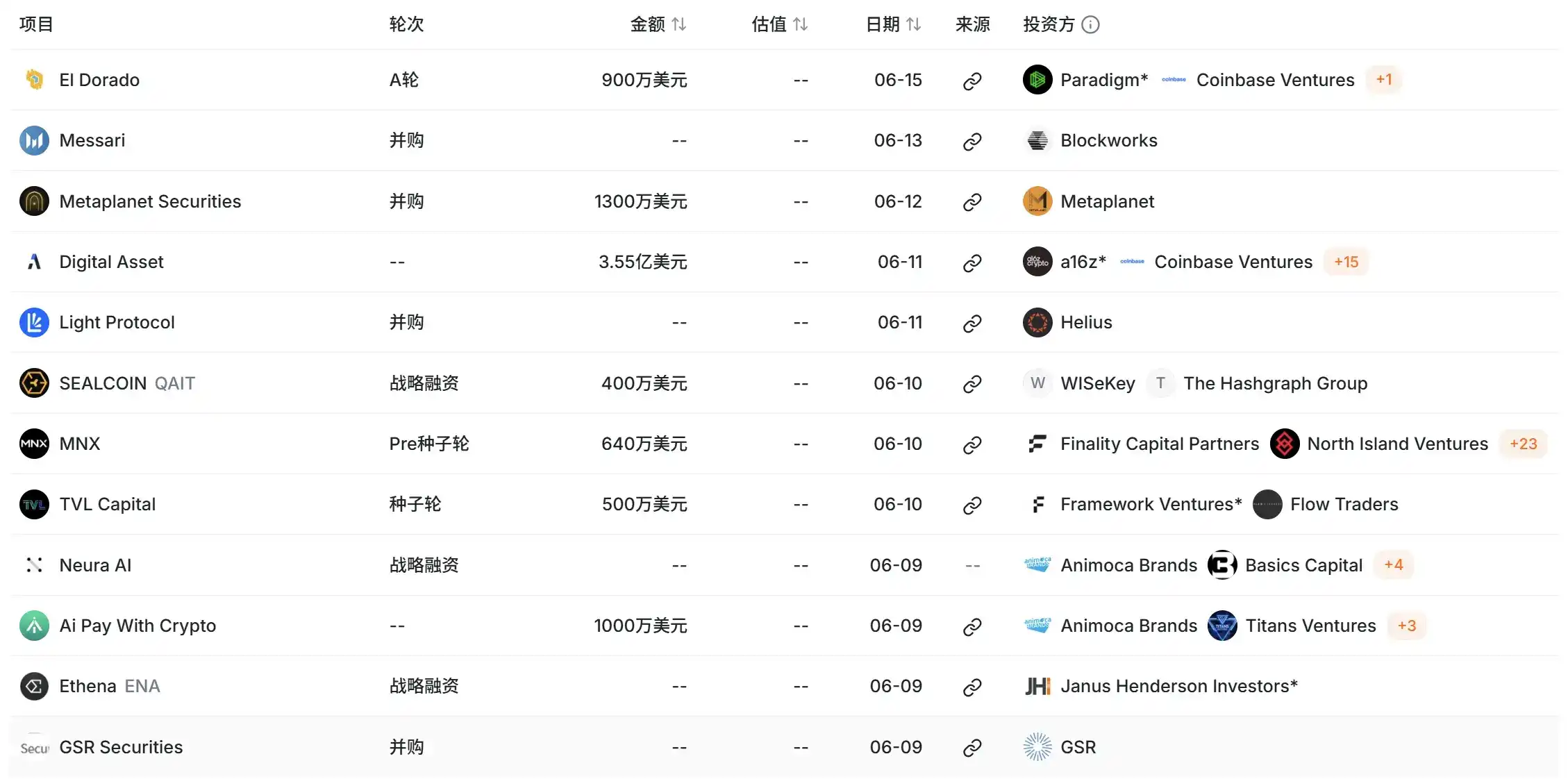
The meaning of this data is not complicated: in the past, the protagonist of the crypto primary market was fundraising; now, more and more deals are becoming acquisitions.

This does not mean the industry has suddenly entered a boom cycle. On the contrary, the rapid rise in the proportion of M&A primarily reflects the continued downturn in the financing market. Since November 2024, the monthly number of M&A transactions in the crypto industry has remained basically in the range of 10-20 deals, while the number of financing transactions has dropped significantly from around 100 to around 50, potentially setting a new low this month.

In other words, M&A transactions have not truly replaced the heat of the financing market; rather, they have become the most stable form of transaction in the primary market after the financing market contracted.

For project teams, this means the path of relying on narratives for fundraising, token expectations, and ecosystem subsidies to maintain valuations is narrowing. For leading companies, however, this means a rare window: to acquire teams, licenses, technology, liquidity, and market entry points at lower prices, with less competition, and stronger bargaining power.

After the ebb of fundraising, the crypto primary market has not stopped functioning; it's just that pricing power is shifting from VCs to buyer giants.

I. Why M&A Activity Remains High

Over the past year, frequent buyers have included Coinbase, Kraken, Ripple, MoonPay, Polymarket, Kaiko, Sol Strategies, GSR, Keyrock, Jupiter, Paxos, Ondo Finance, etc.

These companies operate in different sectors, including exchanges, payment companies, market makers, data service providers, prediction markets, RWA platforms, Solana treasury companies, as well as stablecoin and financial infrastructure firms. However, their M&A logic is highly consistent: to complement key capabilities at lower cost during the industry downturn.

First, valuations are cheap enough.

When the financing environment tightens, many projects cannot continue to raise funds at their previous round's valuation. For buyers, this means better acquisition prices, fewer competitors in bidding, and stronger bargaining power. For sellers, even if the price isn't ideal, being acquired by a leading company may offer more certainty than further dilution, layoffs, or pivots.

Take the recently acquired Messari as an example. The project's highest valuation once reached $300 million, with cumulative funding exceeding $70 million. However, as its core investment research business was severely impacted by AI and competitors, leading to repeated layoffs and business contraction, Blockworks' acquisition price was only a little over ten million dollars.

Second, saving time and trial-and-error costs.

Windows of opportunity in the crypto industry are often very short. When a regulatory gap opens, a new product model proves successful, or an asset class heats up, the market won't give companies two or three years to build a team from scratch. Acquiring a mature team is often faster than internal incubation and avoids unnecessary trial-and-error costs.

Coinbase's acquisition of Deribit for $2.9 billion is a typical case. Deribit is one of the world's major crypto options platforms, with trading volume reaching approximately $1.2 trillion in 2024. Through this transaction, Coinbase directly entered the core global crypto derivatives market, rather than building an options trading platform from scratch.

Third, acquiring licenses and compliance resources.

As regulatory frameworks in the US, EU, Hong Kong, Singapore, and other regions gradually become clearer, licenses are becoming core assets for crypto companies. Trading, custody, payment, stablecoins, brokerage, clearing, derivatives—every link requires a compliant entry point.

Kraken's acquisition of NinjaTrader follows this logic. NinjaTrader is a futures trading platform for retail users, with trading volume of $15 billion; this deal helps Kraken expand into multi-asset trading and regulated derivatives businesses.

Fourth, integrating industry chain upstream and downstream.

Crypto giants are moving from single-point products towards financial conglomerates. Exchanges are not just matching orders; they also want to offer derivatives, wallets, custody, payments, RWA, token issuance, data, and institutional services. Stablecoin companies don't just issue tokens; they want to build payment networks, AI agents, and financial infrastructure. RWA platforms don't just issue assets; they want to master compliance, distribution, liquidity, and data entry points.

The M&A path of crypto payment giant MoonPay is typical. In 2025, MoonPay acquired crypto payment startup Helio for approximately $175 million; later, it announced the acquisition of stablecoin infrastructure platform Iron to expand its enterprise payment and stablecoin capabilities.

II. Which Areas Are the Focus of M&A?

Judging from recent M&A directions, areas crypto giants are most willing to spend money on are mainly concentrated in four categories: trading infrastructure, payments & stablecoins, compliance licenses, and asset issuance & distribution.

Trading infrastructure remains the biggest battleground.

Coinbase's acquisition of Deribit and Kraken's acquisition of NinjaTrader are driven by the same judgment: spot trading growth is limited, while derivatives, options, futures, multi-asset trading, and institutional services are higher-value profit pools. Especially with the gradual rise of ETFs, RWA, tokenized stocks, and prediction markets, the boundaries of trading platforms are expanding from "crypto-to-crypto exchanges" to "global asset trading gateways."

Payments and stablecoins form the second main line.

MoonPay, Ripple, Paxos, Tether, and other companies are expanding around payment, stablecoin clearing, merchant acquiring, enterprise settlement, and cross-border transfers. Ripple's acquisition moves in recent years have been particularly aggressive, including the $250 million acquisition of custody company Metaco in 2023, followed by expansions focusing on stablecoin payments, prime brokerage, and enterprise treasury management.

This indicates that the stablecoin war is no longer just about issuance scale; it's about payment networks, compliance channels, institutional clients, and scenario access.

RWA and asset issuance are also becoming new M&A hotspots.

Companies like Ondo Finance, Jupiter, Polymarket, and Coinbase are expanding their asset issuance, liquidity distribution, and trading gateway capabilities through acquisitions or integrations. Coinbase's acquisitions of Liquifi and Echo are precisely focused on token issuance and on-chain financing capabilities. The Echo deal, valued at $375 million, helps Coinbase expand into an on-chain capital formation platform; Liquifi provides token distribution and management tools, aligning with Coinbase's bet on compliant token issuance pathways.

The strategic significance of such M&A lies in the fact that whoever controls asset issuance controls the source of trading. In the past, exchanges mainly profited from trading fees on existing assets; in the future, leading platforms prefer to profit from the entire chain encompassing asset creation, financing, listing, distribution, market making, custody, and trading. M&A is the fastest way to integrate this chain.

III. M&A Is Rewriting the Primary Market Exit Logic

The warming of M&A is not necessarily bad for entrepreneurs.

In the past, the exit path for crypto projects was overly reliant on tokens. A project's success often depended on whether it could issue a token, list it on exchanges, maintain market cap, and create liquidity. However, this mechanism created numerous problems over the past few years: founders exiting early, VC unlocking sell pressure, retail investors left holding the bag, high valuations with low circulation, and real business being held hostage by token prices.

M&A offers an alternative path. Even if a team cannot independently grow into a giant, as long as it can develop genuine capabilities in a certain area—such as licenses, technology, liquidity, compliance, users, data, risk control, market making, payment networks—it has the potential to be acquired by a larger platform.

This will change entrepreneurs' behavior. In the past, many projects issued tokens for the sake of issuing tokens and packaged narratives for fundraising; in the future, more teams might refocus on product, revenue, customers, and strategic value that can be integrated.

This is also why the M&A boom can, to some extent, give the primary market a shot in the arm. It shows that there are still asset buyers in the crypto industry, there is still value revaluation, and exit possibilities still exist.

It's just that the market is screening value in a more demanding way. What can be bought is no longer grand narratives on PowerPoint slides, but real capabilities that can be directly integrated into business blueprints.

IV. The Crypto Industry Is Becoming More Centralized

Behind the M&A boom lies the downturn in the financing market, declining project valuations, and increasing exit pressure on startup teams. But it also indicates that the crypto industry has not lost its capital vitality; it is simply completing resource reorganization in a different way.

Another issue that must be recognized is: the crypto industry is becoming more centralized.

As asset issuance, trading, market making, custody, payments, and data gradually concentrate in the hands of a few companies, the openness and anti-monopoly emphasis of the crypto industry's early days may be reshaped by realistic business logic.

Especially as compliance becomes a core barrier, the difficulty for new entrepreneurs to enter the market will increase further. The future crypto industry may develop a landscape similar to traditional finance: a few large platforms hold licenses, customers, and liquidity, while small and medium-sized teams can only become technology suppliers, ecosystem plugins, or potential acquisition targets.

Therefore, another implication of the rising proportion of M&A is: the crypto industry is bidding farewell to the era of low-barrier entrepreneurship.

Future entrepreneurs will not only face market competition but also the ecosystem boundaries and regulatory barriers of giants.

Câu hỏi Liên quan

QWhat is the current proportion of M&A deals in the crypto primary market, and what is this trend a reflection of?

AAccording to the article, M&A deals now account for approximately 42% of all primary market transactions, a historically high level. This trend primarily reflects the continued downturn in the fundraising market, not a sudden industry boom. The number of M&A deals has remained relatively stable while fundraising deals have significantly declined, making M&A the most stable form of transaction in this market environment.

QWhat are the four main reasons driving the surge in M&A activity according to the article?

AThe four main reasons are: 1) Valuations have become sufficiently cheap for buyers. 2) Acquisition saves time and trial-and-error costs compared to building capabilities from scratch. 3) Acquiring licenses and compliance resources is crucial in a tightening regulatory landscape. 4) To integrate and control the industry's upstream and downstream value chain.

QWhich key areas are currently the focus of acquisitions by crypto giants?

AThe key acquisition areas are: 1) Trading infrastructure (especially derivatives and multi-asset trading). 2) Payments and stablecoins (focusing on payment networks and compliance). 3) Compliance and licenses. 4) Asset issuance and distribution (RWA, token issuance platforms).

QHow does the article suggest the rise in M&A is changing the exit logic for crypto startups?

AThe article suggests M&A provides an alternative exit path to the traditional reliance on token listings and price performance. It incentivizes startups to build genuine strategic value—like real products, revenue, compliance assets, or specific technological capabilities—that can be integrated into a larger platform's business, potentially leading to a more tangible acquisition exit.

QWhat potential long-term consequence of increasing M&A activity does the article highlight regarding industry structure?

AThe article highlights that the increase in M&A activity is leading to greater centralization within the crypto industry. Resources like asset issuance, trading, custody, payments, and data are becoming concentrated in the hands of a few large platforms. This, combined with rising compliance barriers, is making the industry less accessible for new entrepreneurs, potentially leading to a structure resembling traditional finance with dominant incumbents.

Nội dung Liên quan

Kraken Lên Kế Hoạch Cung Cấp Hợp Đồng Tương Lai Vĩnh Viễn Được CFTC Quy Định Cho Nhà Giao Dịch Chuyên Nghiệp Hoa Kỳ

Kraken đang chuẩn bị ra mắt hợp đồng tương lai vĩnh viễn được CFTC quản lý cho các nhà giao dịch chuyên nghiệp đủ điều kiện tại Hoa Kỳ. Sản phẩm sẽ được cung cấp thông qua sàn phái sinh Bitnomial mà Kraken đã mua lại và dự kiến tích hợp vào nền tảng Kraken Pro. Hợp đồng tương lai vĩnh viễn là sản phẩm phái sinh crypto lớn toàn cầu, cho phép giao dịch không ngày đáo hạn. Tại Mỹ, các hạn chế quy định trước đây khiến nhà giao dịch có ít lựa chọn trong nước. Động thái của Kraken nhằm thu hẹp khoảng cách này, cung cấp một con đường được quản lý để tiếp cận sản phẩm chi phối khối lượng giao dịch crypto ở nước ngoài. Việc ra mắt sẽ tập trung vào các nhà giao dịch chuyên nghiệp đủ điều kiện. Các yếu tố cần theo dõi bao gồm điều khoản về tính đủ điều kiện, thiết kế hợp đồng, tài sản được hỗ trợ và quan trọng nhất là thanh khoản khi ra mắt. Thành công của sản phẩm có thể mở đường cho nhiều sản phẩm tương lai vĩnh viễn được quản lý khác tại thị trường Mỹ, đưa sản phẩm phái sinh chủ chốt này tiến gần hơn đến cơ sở hạ tầng thị trường nội địa được quản lý.

bitcoinist1 giờ trước

Kraken Lên Kế Hoạch Cung Cấp Hợp Đồng Tương Lai Vĩnh Viễn Được CFTC Quy Định Cho Nhà Giao Dịch Chuyên Nghiệp Hoa Kỳ

bitcoinist1 giờ trước

Sự Ra Mắt Của Warsh: Chủ Tịch Fed Hiểu Crypto Nhất Lịch Sử Sẽ Mang Đến Bất Ngờ Hay Cú Sốc Cho Thị Trường?

Tân Chủ tịch Cục Dự trữ Liên bang Kevin Warsh, người được mệnh danh là chủ tịch FED "hiểu rõ về Crypto nhất trong lịch sử", sắp có buổi họp báo chính sách đầu tiên trong bối cảnh thử thách ba mặt: lạm phát quay trở lại, áp lực giảm lãi suất từ Tổng thống Trump và kỳ vọng thị trường về việc tăng lãi suất. Khác với người tiền nhiệm, Warsh có cái nhìn sâu sắc về tài sản số, từng coi Bitcoin như "cảnh sát tốt cho chính sách" và nhấn mạnh giá trị sản xuất của ngành công nghiệp blockchain. Tuy nhiên, ông cũng nổi tiếng là người theo chủ nghĩa diều hâu về lạm phát. Sự kết hợp giữa "lãi suất chặt chẽ" và "quy định thân thiện" từ ông có thể trở thành yếu tố cốt lõi định giá tài sản mã hóa. Bài viết phân tích tác động từ ba khía cạnh: 1. **Chuyển đổi khuôn mẫu kỳ vọng quy định:** Từ phòng thủ sang tích hợp và đổi mới, có thể thúc đẩy các khung pháp lý rõ ràng hơn, hỗ trợ ổn định do khu vực tư nhân phát hành. 2. **Định giá lại lộ trình lãi suất và phần bù rủi ro:** Một chủ tịch hiểu biết và giao tiếp rõ ràng có thể giảm bớt phí bảo hiểm bất định, có lợi về cấu trúc cho thị trường. 3. **Tái phân bổ dòng vốn toàn cầu:** Kinh nghiệm đầu tư cá nhân của Warsh truyền tải tín hiệu về sự chấp nhận chính thống, có thể thúc đẩy các quỹ thể chế truyền thống phân bổ tài sản số. Hai kịch bản chính được đưa ra: * **Ngạc nhiên thú vị:** Nếu Warsh thể hiện thái độ ôn hòa và công nhận giá trị của tài sản số, thị trường có thể được tiếp thêm sức mạnh. * **Cú sốc:** Nếu ông phát tín hiệu tăng lãi suất mạnh mẽ, tài sản rủi ro, bao gồm crypto, có thể chịu áp lực bán. Mặc dù Warsh đã bán các khoản nắm giữ liên quan đến crypto để tuân thủ quy tắc đạo đức, nhưng sự hiểu biết thực sự của ông về công nghệ blockchain được kỳ vọng sẽ đặt nền tảng cho việc chính thống hóa tài sản số về lâu dài, vượt ra ngoài các phản ứng thị trường ngắn hạn.

marsbit1 giờ trước

Sự Ra Mắt Của Warsh: Chủ Tịch Fed Hiểu Crypto Nhất Lịch Sử Sẽ Mang Đến Bất Ngờ Hay Cú Sốc Cho Thị Trường?

marsbit1 giờ trước

XRP Ledger Ra Mắt Rebrand XRPLd Cùng Với Bản Nâng Cấp Phiên Bản 3.2.0

Phiên bản 3.2.0 của XRP Ledger đã chính thức ra mắt, đánh dấu một bước nâng cấp quan trọng cho cơ sở hạ tầng blockchain cốt lõi. Lần này, các nhà phát triển đã đổi tên phần mềm vận hành mạng từ "rippled" thành "xrpld" để phù hợp hơn với toàn bộ hệ sinh thái của dự án. Bản cập nhật tập trung chủ yếu vào các cải tiến back-end và hiệu suất thay vì tính năng người dùng mới. Các tối ưu hóa bộ nhớ được giới thiệu có khả năng tiết kiệm tới 40% lượng bộ nhớ máy chủ, đồng thời chuẩn bị kiến trúc phần mềm cho việc mở rộng quy mô trong tương lai. Về mặt bảo mật, bản sửa đổi `fixCleanup3_2_0` mang lại nhiều cải thiện cho các mô-đun như kho lưu ký tài sản đơn, giao thức cho vay, sàn giao dịch phi tập trung và mã thông báo đa năng. Các kiểm tra bất biến mới được thêm vào để đảm bảo tính toàn vẹn của sổ cái khi tài khoản bị xóa. Một khả năng mới cho nhà phát triển là ứng dụng có thể truy xuất thông tin định nghĩa giao thức và máy chủ XRP Ledger mà không cần kết nối trực tiếp, hỗ trợ đáng kể việc phát triển ví, công cụ khám phá chuỗi khối và API. Các thay đổi về khả năng mở rộng và ổn định bao gồm kích thước khối có thể cấu hình, hỗ trợ lưu trữ cơ sở dữ liệu hiệu quả qua nuDB, và việc hỗ trợ máy chủ gRPC cho TLS/mutual TLS trở thành tùy chọn. Cổng kết nối ngang hàng mặc định cũng được đổi từ 51235 sang 2459. Các tính năng kiểm tra bất biến giao dịch tạm thời bị vô hiệu hóa trong phiên bản 3.2.0 do ảnh hưởng đến hiệu suất, nhưng không gây rủi ro bảo mật.

TheNewsCrypto2 giờ trước

XRP Ledger Ra Mắt Rebrand XRPLd Cùng Với Bản Nâng Cấp Phiên Bản 3.2.0

TheNewsCrypto2 giờ trước

AGI không phải là điểm kết thúc, nghiên cứu mới của DeepMind: Hướng tới ASI, tiến bộ AI thực sự mới chỉ bắt đầu

DeepMind mới đây công bố nghiên cứu cho rằng AGI (Trí tuệ nhân tạo phổ quát) không phải là điểm cuối. AI sẽ tiếp tục phát triển vượt qua khả năng của các nhóm chuyên gia con người hàng đầu, hướng tới ASI (Trí tuệ siêu nhân tạo). Báo cáo phân biệt ba khái niệm: AGI (năng lực nhận thức tương đương mức trung bình của con người), ASI (vượt trội con người trong hầu hết lĩnh vực quan tâm), và UAI (giới hạn lý thuyết tối thượng). Nghiên cứu đề xuất bốn con đường tiềm năng để chuyển từ AGI sang ASI: 1. Mở rộng quy mô tính toán, mô hình và dữ liệu. 2. Tiến hóa thuật toán, có thể thay đổi mô hình mới. 3. Tự cải thiện đệ quy, tạo phản hồi tích cực. 4. Điều phối đa tác tử và trí tuệ tập thể. Đồng thời, báo cáo chỉ ra sáu điểm nghẽn chính: giới hạn dữ liệu chất lượng cao, áp lực tài nguyên và kinh tế, hạn chế của mô hình mạng nơ-ron hiện tại, nghiên cứu ngày càng khó khăn, rào cản trừu tượng, cùng các vấn đề quản lý và phản ứng xã hội. Khi AI vượt con người, các phương pháp đánh giá truyền thống sẽ mất ý nghĩa. Cần xây dựng hệ thống đánh giá mới cho thời kỳ hậu AGI. ASI không phải là hệ thống toàn năng, vẫn chịu ràng buộc bởi các quy luật vật lý, độ phức tạp tính toán, dữ liệu, tài nguyên và tốc độ phản hồi thực tế. Tương lai phát triển của AI vẫn chứa nhiều bất định, đòi hỏi một nỗ lực liên ngành quy mô lớn để theo dõi và ứng phó.

marsbit3 giờ trước

AGI không phải là điểm kết thúc, nghiên cứu mới của DeepMind: Hướng tới ASI, tiến bộ AI thực sự mới chỉ bắt đầu

marsbit3 giờ trước

Kraken Ra Mắt Hợp Đồng Perpetual Trước IPO Cho OpenAI Và Anthropic Với Đòn Bẩy Lên Đến 5x

Kraken đã ra mắt hợp đồng tương lai vĩnh viễn (perps) tiền IPO cho hai công ty trí tuệ nhân tạo hàng đầu là OpenAI và Anthropic. Các hợp đồng này cho phép các nhà giao dịch đủ điều kiện mở vị thế mua (long) hoặc bán (short) đối với các công ty tư nhân được theo dõi sát sao này trước khi họ lên sàn chứng khoán, với đòn bẩy lên tới 5x. Sản phẩm này đánh dấu một bước tiến trong việc mở rộng cơ sở hạ tầng phái sinh tiền mã hóa sang các tài sản ngoài chuỗi, cung cấp cho các nhà giao dịch một cách tiếp cận thay thế để có thể tiếp xúc với các công ty tư nhân vốn thường khó tiếp cận. Tuy nhiên, hợp đồng tiền IPO có những rủi ro đặc thù. Khác với các hợp đồng vĩnh viễn cho tiền mã hóa có giá cả minh bạch, định giá công ty tư nhân phụ thuộc vào nhiều yếu tố như các vòng gọi vốn, giao dịch thứ cấp và kỳ vọng về thời điểm IPO. Điều này khiến việc định giá và quản lý rủi ro trở nên phức tạp hơn. Việc sử dụng đòn bẩy cao có thể khuếch đại lợi nhuận nhưng cũng làm gia tăng đáng kể rủi ro thua lỗ và thanh lý. Do đó, các nhà giao dịch cần hiểu rõ bản chất của sản phẩm mới và các rủi ro độc đáo của thị trường tư nhân trước khi tham gia.

bitcoinist3 giờ trước

Kraken Ra Mắt Hợp Đồng Perpetual Trước IPO Cho OpenAI Và Anthropic Với Đòn Bẩy Lên Đến 5x

bitcoinist3 giờ trước

Giao dịch

Giao ngay
Hợp đồng Tương lai

Bài viết Nổi bật

Làm thế nào để Mua USOIL

Chào mừng bạn đến với HTX.com! Chúng tôi đã làm cho mua WTI Crude USOil/ CL (USOIL) trở nên đơn giản và thuận tiện. Làm theo hướng dẫn từng bước của chúng tôi để bắt đầu hành trình tiền kỹ thuật số của bạn.Bước 1: Tạo Tài khoản HTX của BạnSử dụng email hoặc số điện thoại của bạn để đăng ký tài khoản miễn phí trên HTX. Trải nghiệm hành trình đăng ký không rắc rối và mở khóa tất cả tính năng. Nhận Tài khoản của tôiBước 2: Truy cập Mua Crypto và Chọn Phương thức Thanh toán của BạnThẻ Tín dụng/Ghi nợ: Sử dụng Visa hoặc Mastercard của bạn để mua WTI Crude USOil/ CL (USOIL) ngay lập tức.Số dư: Sử dụng tiền từ số dư tài khoản HTX của bạn để giao dịch liền mạch.Bên thứ ba: Chúng tôi đã thêm những phương thức thanh toán phổ biến như Google Pay và Apple Pay để nâng cao sự tiện lợi.P2P: Giao dịch trực tiếp với người dùng khác trên HTX.Thị trường mua bán phi tập trung (OTC): Chúng tôi cung cấp những dịch vụ được thiết kế riêng và tỷ giá hối đoái cạnh tranh cho nhà giao dịch.Bước 3: Lưu trữ WTI Crude USOil/ CL (USOIL) của BạnSau khi mua WTI Crude USOil/ CL (USOIL), lưu trữ trong tài khoản HTX của bạn. Ngoài ra, bạn có thể gửi đi nơi khác qua chuyển khoản blockchain hoặc sử dụng để giao dịch những tiền kỹ thuật số khác.Bước 4: Giao dịch WTI Crude USOil/ CL (USOIL)Giao dịch WTI Crude USOil/ CL (USOIL) dễ dàng trên thị trường giao ngay của HTX. Chỉ cần truy cập vào tài khoản của bạn, chọn cặp giao dịch, thực hiện giao dịch và theo dõi trong thời gian thực. Chúng tôi cung cấp trải nghiệm thân thiện với người dùng cho cả người mới bắt đầu và người giao dịch dày dạn kinh nghiệm.

Tổng lượt xem 134Xuất bản vào 2026.05.25Cập nhật vào 2026.05.25

Làm thế nào để Mua USOIL

Làm thế nào để Mua WALLI

Chào mừng bạn đến với HTX.com! Chúng tôi đã làm cho mua Wallitelli (WALLI) trở nên đơn giản và thuận tiện. Làm theo hướng dẫn từng bước của chúng tôi để bắt đầu hành trình tiền kỹ thuật số của bạn.Bước 1: Tạo Tài khoản HTX của BạnSử dụng email hoặc số điện thoại của bạn để đăng ký tài khoản miễn phí trên HTX. Trải nghiệm hành trình đăng ký không rắc rối và mở khóa tất cả tính năng. Nhận Tài khoản của tôiBước 2: Truy cập Mua Crypto và Chọn Phương thức Thanh toán của BạnThẻ Tín dụng/Ghi nợ: Sử dụng Visa hoặc Mastercard của bạn để mua Wallitelli (WALLI) ngay lập tức.Số dư: Sử dụng tiền từ số dư tài khoản HTX của bạn để giao dịch liền mạch.Bên thứ ba: Chúng tôi đã thêm những phương thức thanh toán phổ biến như Google Pay và Apple Pay để nâng cao sự tiện lợi.P2P: Giao dịch trực tiếp với người dùng khác trên HTX.Thị trường mua bán phi tập trung (OTC): Chúng tôi cung cấp những dịch vụ được thiết kế riêng và tỷ giá hối đoái cạnh tranh cho nhà giao dịch.Bước 3: Lưu trữ Wallitelli (WALLI) của BạnSau khi mua Wallitelli (WALLI), lưu trữ trong tài khoản HTX của bạn. Ngoài ra, bạn có thể gửi đi nơi khác qua chuyển khoản blockchain hoặc sử dụng để giao dịch những tiền kỹ thuật số khác.Bước 4: Giao dịch Wallitelli (WALLI)Giao dịch Wallitelli (WALLI) dễ dàng trên thị trường giao ngay của HTX. Chỉ cần truy cập vào tài khoản của bạn, chọn cặp giao dịch, thực hiện giao dịch và theo dõi trong thời gian thực. Chúng tôi cung cấp trải nghiệm thân thiện với người dùng cho cả người mới bắt đầu và người giao dịch dày dạn kinh nghiệm.

Tổng lượt xem 457Xuất bản vào 2026.05.27Cập nhật vào 2026.06.10

Làm thế nào để Mua WALLI

Làm thế nào để Mua GRAM

Chào mừng bạn đến với HTX.com! Chúng tôi đã làm cho mua prev. Toncoin (GRAM) trở nên đơn giản và thuận tiện. Làm theo hướng dẫn từng bước của chúng tôi để bắt đầu hành trình tiền kỹ thuật số của bạn.Bước 1: Tạo Tài khoản HTX của BạnSử dụng email hoặc số điện thoại của bạn để đăng ký tài khoản miễn phí trên HTX. Trải nghiệm hành trình đăng ký không rắc rối và mở khóa tất cả tính năng. Nhận Tài khoản của tôiBước 2: Truy cập Mua Crypto và Chọn Phương thức Thanh toán của BạnThẻ Tín dụng/Ghi nợ: Sử dụng Visa hoặc Mastercard của bạn để mua prev. Toncoin (GRAM) ngay lập tức.Số dư: Sử dụng tiền từ số dư tài khoản HTX của bạn để giao dịch liền mạch.Bên thứ ba: Chúng tôi đã thêm những phương thức thanh toán phổ biến như Google Pay và Apple Pay để nâng cao sự tiện lợi.P2P: Giao dịch trực tiếp với người dùng khác trên HTX.Thị trường mua bán phi tập trung (OTC): Chúng tôi cung cấp những dịch vụ được thiết kế riêng và tỷ giá hối đoái cạnh tranh cho nhà giao dịch.Bước 3: Lưu trữ prev. Toncoin (GRAM) của BạnSau khi mua prev. Toncoin (GRAM), lưu trữ trong tài khoản HTX của bạn. Ngoài ra, bạn có thể gửi đi nơi khác qua chuyển khoản blockchain hoặc sử dụng để giao dịch những tiền kỹ thuật số khác.Bước 4: Giao dịch prev. Toncoin (GRAM)Giao dịch prev. Toncoin (GRAM) dễ dàng trên thị trường giao ngay của HTX. Chỉ cần truy cập vào tài khoản của bạn, chọn cặp giao dịch, thực hiện giao dịch và theo dõi trong thời gian thực. Chúng tôi cung cấp trải nghiệm thân thiện với người dùng cho cả người mới bắt đầu và người giao dịch dày dạn kinh nghiệm.

Tổng lượt xem 3Xuất bản vào 2026.06.15Cập nhật vào 2026.06.15

Làm thế nào để Mua GRAM

Thảo luận

Chào mừng đến với Cộng đồng HTX. Tại đây, bạn có thể được thông báo về những phát triển nền tảng mới nhất và có quyền truy cập vào thông tin chuyên sâu về thị trường. Ý kiến ​​của người dùng về giá của M (M) được trình bày dưới đây.

活动图片