ZEC Co-Founder Responds to Orchard Vulnerability: No Signs of Theft, Orchard Pool to Be Sealed

Foresight NewsXuất bản vào 2026-06-15Cập nhật gần nhất vào 2026-06-15

Tóm tắt

ZEC Co-Founder Addresses Orchard Vulnerability: No Signs of Theft, Plans to Sunset Orchard Pool A security vulnerability was recently discovered in Zcash's Orchard shielded pool, raising key concerns. The primary questions are whether the flaw was exploited, if user funds are safe, whether users can verify the total ZEC supply, and if other similar vulnerabilities exist. Analysis suggests the vulnerability was likely not exploited prior to its discovery. It was found proactively by a researcher using specialized tools, not due to an active breach. The development team and mining pools acted quickly to contain the issue. Typical financially-motivated attacks would likely have left visible on-chain evidence, which has not been observed. User funds in Orchard are considered safe and should be recoverable, assuming no prior exploitation. If the flaw was never used, all legitimate funds can be withdrawn. The article outlines risks associated with moving funds to transparent addresses or other pools, but concludes that leaving assets in place is a reasonable option. Currently, users cannot independently verify that the total ZEC supply hasn't been inflated due to this bug. However, the planned Ironwood network upgrade is designed to resolve this. It will permanently close the Orchard pool to new deposits and internal transfers, allowing only withdrawals. This mechanism will cap total withdrawals at the amount of legitimately deposited funds, enabling anyone to cryptographically...


Authors: Zooko Wilcox, Jason McGee

Compiled by: Luffy, Foresight News


Recently, a security vulnerability was exposed in Zcash's Orchard module, raising two major concerns for the community: Is the total supply of ZEC tokens abnormal? Are user assets safe?


Current discussions intertwine several different topics, making it difficult for many to understand the actual impact of this vulnerability on ordinary users. This article will address these issues, explaining the underlying meanings one by one.


This Orchard vulnerability primarily raises four key questions:


  1. Has the vulnerability been exploited by hackers?
  2. Can users' legitimate assets stored in Orchard be withdrawn normally?
  3. Can users independently verify that the total supply of Zcash has not been artificially inflated?
  4. How can we confirm that the project does not contain other similar token forgery vulnerabilities?


Has the Vulnerability Been Exploited?


Currently, there is no definitive conclusion. Overall, the likelihood of the vulnerability being maliciously exploited previously is low, but we cannot rule it out with 100% certainty. There are three main reasons:


  • For many years, numerous top global cryptographers and security researchers have been reviewing the Zcash code, and this vulnerability remained undiscovered. This vulnerability was proactively found by Shielded Labs' Taylor Hornby during targeted investigations, not accidentally exposed. He leveraged AI-powered security detection technology and custom tools specifically designed to uncover this type of hidden flaw. Such vulnerabilities have a high technical barrier; it would be difficult for individuals not specialized in the Zcash codebase to find and exploit them.
  • Upon the vulnerability's exposure, the Zcash development team immediately collaborated with major mining pools to temporarily freeze the Orchard pool and push a fix, significantly narrowing the window of opportunity for attackers.
  • Most attacks in the cryptocurrency space aim for quick profits. Once a vulnerability is public, hackers typically cash out immediately. To profit from this vulnerability, a hacker would need to transfer the forged ZEC out of the Orchard pool and exchange it for other assets. Such operations generally leave traces. If the vulnerability had been exploited long ago, evidence should have emerged by now. Throughout industry history, hackers' modus operandi is typically "strike and disappear quickly," not deliberately hiding for months or even years.


Can Legitimate Assets in Orchard Be Withdrawn?


We believe they can be withdrawn normally, provided the vulnerability has never been exploited. If this assessment holds true, all legitimate assets users have deposited into Orchard can be successfully transferred out.
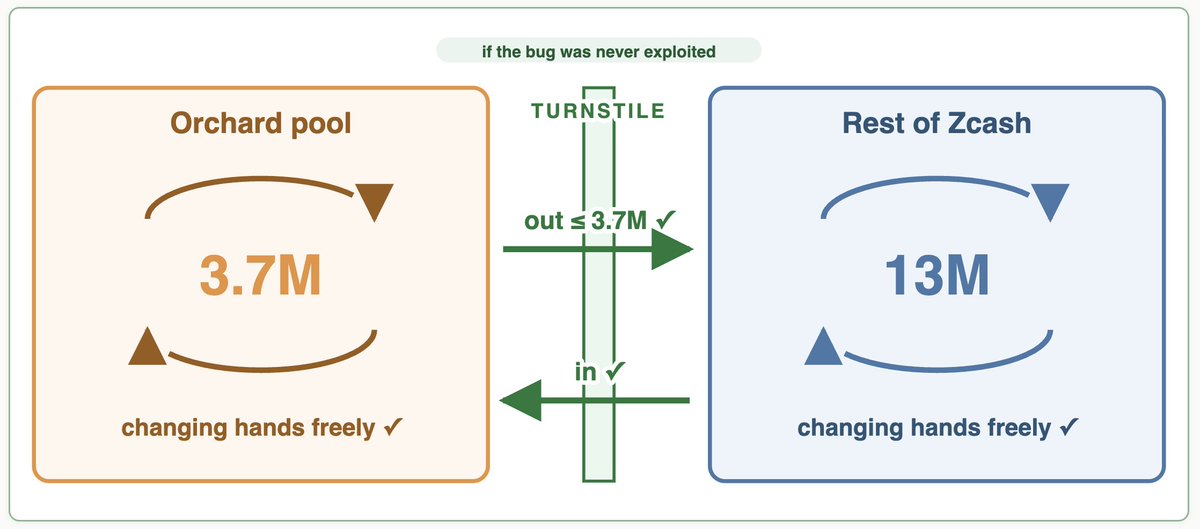


Conversely, if hackers have already used the vulnerability to create counterfeit tokens and transferred them into the pool, the existing withdrawal channels would cap the total withdrawal amount. The withdrawal limit would equal the total amount of legitimate tokens initially deposited. In this scenario, if counterfeit tokens are withdrawn first, some users' legitimate assets might not be fully recovered.
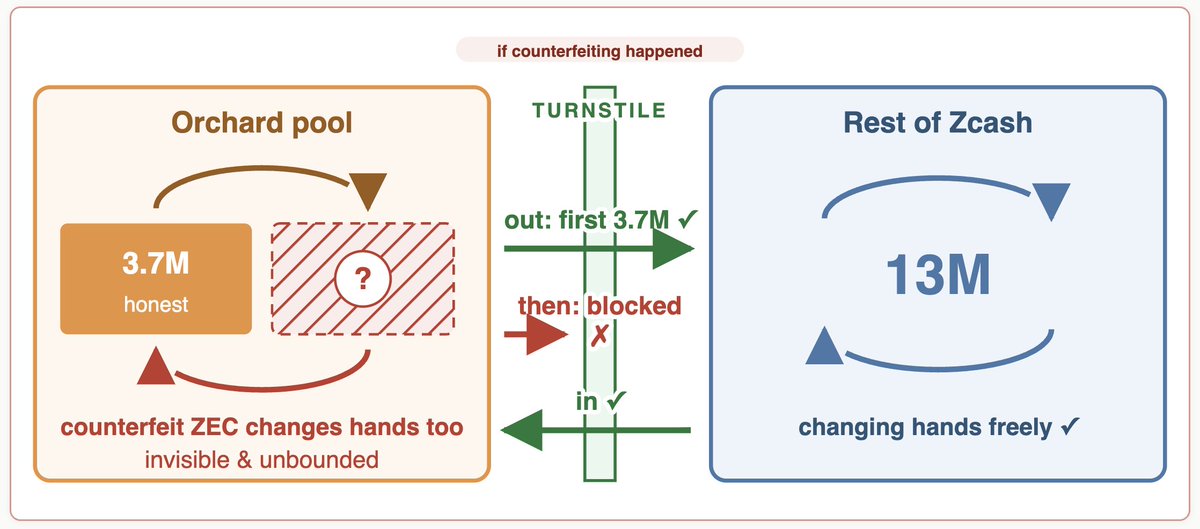


We consider the likelihood of this extreme scenario to be low. If users still have concerns, they can move their assets out of the Orchard pool. However, before doing so, it's important to understand the potential risks of different withdrawal methods:


  • Transferring to a transparent address (t-address): The transfer amount and time will be fully public, and the assets will become publicly associated with that address, completely losing privacy.
  • Transferring to the Sapling shielded pool: The transfer amount and time will still be recorded, but it won't link the assets to a specific address or transaction history, offering better privacy than transparent addresses. Note that Sapling relies on a trusted setup ceremony completed in 2018, which itself carries additional security considerations.
  • Wallets: Among mainstream self-custody wallets, currently only YWallet and Zkool support the Sapling pool.
  • Other wallets or custodial platforms: There may also be risks of operational errors, software faults, platform risk controls, and other unexpected issues.


Overall, these risks are manageable. Combined with the assessment that "the vulnerability was most likely not exploited," keeping assets in the original shielded wallet is a prudent choice. If users can ensure operational safety, withdrawing assets is also a viable option. Users should decide based on their individual circumstances.


Can Users Independently Verify That Zcash's Total Supply Has Not Been Inflated?


Currently, this is not possible. Due to the existence of this vulnerability, ordinary users cannot independently verify whether the total token supply within the shielded pools has been inflated.
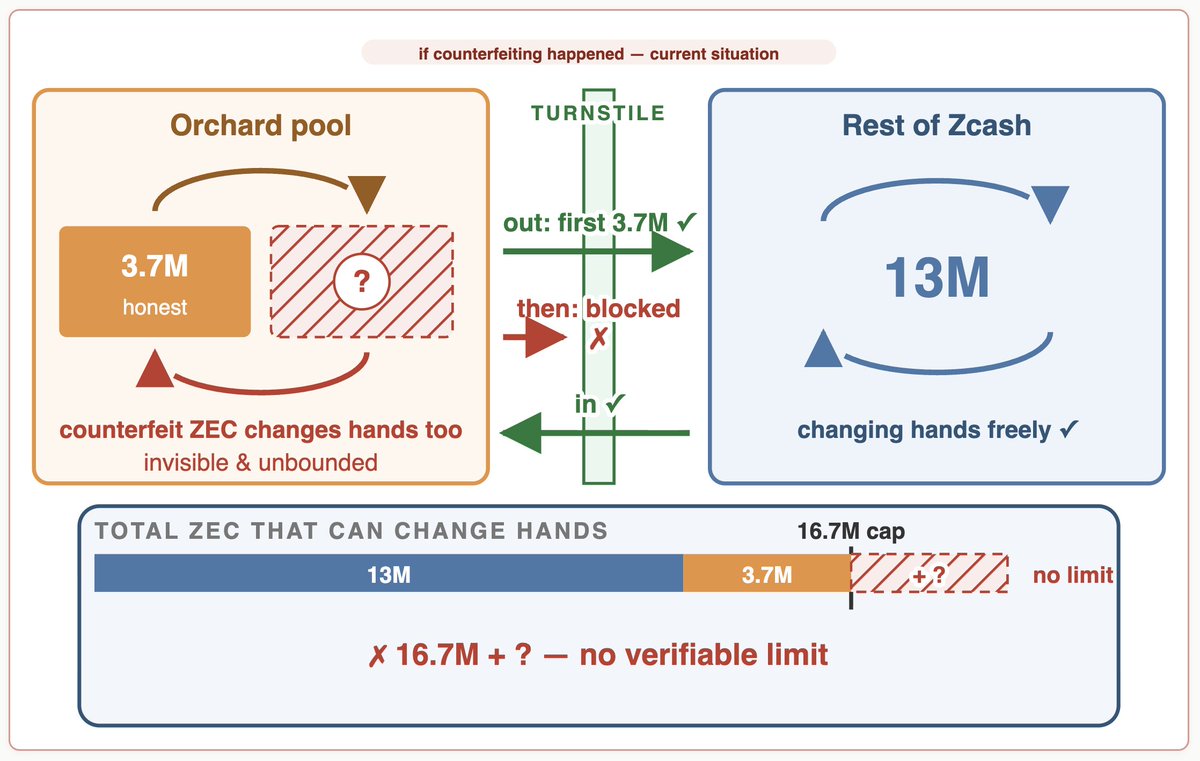


However, the planned Ironwood network upgrade will address this issue. The logic is as follows:
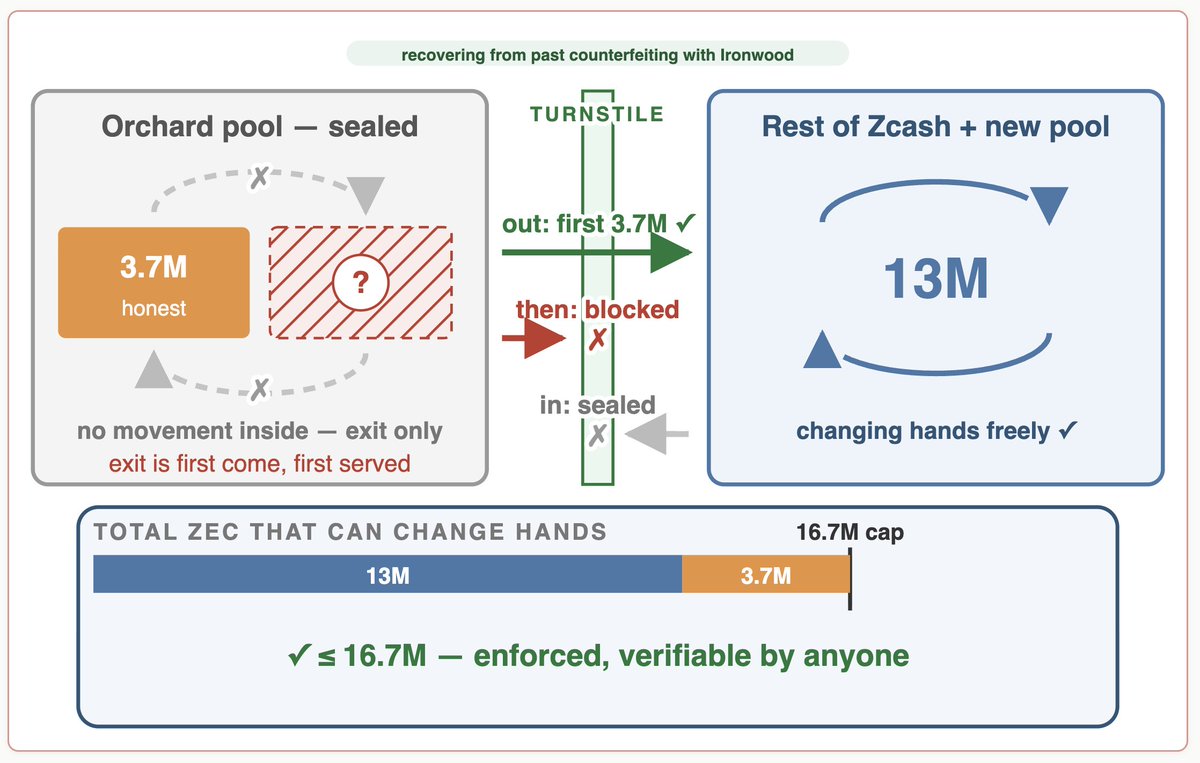


This upgrade will permanently close the Orchard pool, disallowing new asset deposits. Tokens within the pool will no longer be able to move internally; all assets can only be withdrawn through the original channels. The total withdrawal amount from these channels strictly equals the amount of legitimate tokens originally deposited, fundamentally preventing any excess outflow of tokens.


After the upgrade is complete, anyone running a node will be able to verify that the total token supply is compliant. Even if counterfeit tokens were created in the past, they will no longer be able to circulate within the Orchard pool, artificially inflating the total supply. Users won't need to speculate about the actions of hackers or other users; the protocol itself will guarantee that token over-issuance cannot occur.


This point is crucial. Zcash's long-term credibility is built on users' ability to independently verify the total token supply. The Ironwood upgrade will restore this capability to users.


How to Confirm the Project Has No Other Token Forgery Vulnerabilities?


At this stage, we cannot give an absolute answer, but we have reason to believe no similar vulnerabilities currently exist.


Shielded Labs, in collaboration with several teams, conducted a comprehensive review of the Zcash protocol, specifically searching for token forgery vulnerabilities. During this process, the team also utilized Anthropic's not-yet-publicly-released Mythos AI model for auxiliary detection. We will publish a follow-up article detailing the process and results of this review.


To date, the team has not discovered any new forgery vulnerabilities. This review assembled experienced technical personnel, professional security teams, and advanced AI analysis tools, which further strengthens our confidence that there are currently no undisclosed high-risk vulnerabilities of the same type.


Simultaneously, we are collaborating with partners like the Tachyon project to conduct additional inspections, further strengthening our security defenses. Related progress will also be announced later.


Summary


This Orchard vulnerability raises four core questions: whether the vulnerability was exploited, whether legitimate assets can be withdrawn, whether the total token supply can be verified, and whether other forgery vulnerabilities exist.


Based on the current investigation results, we assess that the likelihood of the vulnerability being exploited previously is low. Therefore, user assets are safe, and the total token supply currently remains normal. After repeated inspections by multiple independent teams, we are increasingly confident that the project currently has no other undiscovered forgery vulnerabilities.


However, one point is unavoidable: currently, users cannot independently verify the total token supply. The upcoming network upgrade will completely solve this problem. After the upgrade, the Orchard pool will be permanently closed, allowing users to independently verify the total token supply without needing to judge whether token forgery has ever occurred.

Câu hỏi Liên quan

QWhat are the four key questions raised by the Orchard security vulnerability?

AThe four key questions are: 1) Has the vulnerability been exploited? 2) Can legitimate user assets stored in Orchard be withdrawn normally? 3) Can users independently verify that the total Zcash supply has not been artificially increased? 4) How can we confirm there are no other similar token counterfeiting vulnerabilities in the project?

QWhat is the primary reason why the authors believe the Orchard vulnerability likely hasn't been exploited?

AThe authors believe exploitation is unlikely primarily because the vulnerability was discovered through proactive investigation by Shielded Labs using specialized AI detection tools, not due to a public exposure. They argue that exploiting it requires deep expertise and that typical cryptocurrency attackers would likely have cashed out already, leaving detectable traces, which haven't been observed.

QHow does the planned Ironwood network upgrade aim to restore users' ability to verify the Zcash supply?

AThe Ironwood upgrade will permanently close the Orchard pool, preventing new deposits and internal transfers. All assets can only be withdrawn via the original channels, whose total withdrawal amount is strictly capped at the amount of legitimate tokens originally deposited. This prevents any excess tokens from leaving the pool, allowing anyone running a node to verify the total supply compliance.

QWhat risks do users face if they choose to transfer their assets out of the Orchard pool?

ATransferring to a transparent address (t-address) reveals the amount, timing, and links the assets to that address, losing all privacy. Transferring to the Sapling pool offers better privacy but relies on a 2018 trusted setup ceremony, which introduces its own security considerations. Additionally, users may face risks from operational errors, software bugs, or platform restrictions when using wallets or custodial services.

QWhat measures have been taken to search for other potential token counterfeiting vulnerabilities in Zcash?

AShielded Labs, in collaboration with other teams, conducted a comprehensive audit of the Zcash protocol specifically for token counterfeiting vulnerabilities. They utilized advanced tools including an unreleased AI model from Anthropic called Mythos. So far, no new such vulnerabilities have been found, increasing confidence that no other high-risk, undisclosed vulnerabilities of this type exist.

Nội dung Liên quan

AGI không phải là điểm kết thúc, nghiên cứu mới của DeepMind: Hướng tới ASI, tiến bộ AI thực sự mới chỉ bắt đầu

DeepMind mới đây công bố nghiên cứu cho rằng AGI (Trí tuệ nhân tạo phổ quát) không phải là điểm cuối. AI sẽ tiếp tục phát triển vượt qua khả năng của các nhóm chuyên gia con người hàng đầu, hướng tới ASI (Trí tuệ siêu nhân tạo). Báo cáo phân biệt ba khái niệm: AGI (năng lực nhận thức tương đương mức trung bình của con người), ASI (vượt trội con người trong hầu hết lĩnh vực quan tâm), và UAI (giới hạn lý thuyết tối thượng). Nghiên cứu đề xuất bốn con đường tiềm năng để chuyển từ AGI sang ASI: 1. Mở rộng quy mô tính toán, mô hình và dữ liệu. 2. Tiến hóa thuật toán, có thể thay đổi mô hình mới. 3. Tự cải thiện đệ quy, tạo phản hồi tích cực. 4. Điều phối đa tác tử và trí tuệ tập thể. Đồng thời, báo cáo chỉ ra sáu điểm nghẽn chính: giới hạn dữ liệu chất lượng cao, áp lực tài nguyên và kinh tế, hạn chế của mô hình mạng nơ-ron hiện tại, nghiên cứu ngày càng khó khăn, rào cản trừu tượng, cùng các vấn đề quản lý và phản ứng xã hội. Khi AI vượt con người, các phương pháp đánh giá truyền thống sẽ mất ý nghĩa. Cần xây dựng hệ thống đánh giá mới cho thời kỳ hậu AGI. ASI không phải là hệ thống toàn năng, vẫn chịu ràng buộc bởi các quy luật vật lý, độ phức tạp tính toán, dữ liệu, tài nguyên và tốc độ phản hồi thực tế. Tương lai phát triển của AI vẫn chứa nhiều bất định, đòi hỏi một nỗ lực liên ngành quy mô lớn để theo dõi và ứng phó.

marsbit39 phút trước

AGI không phải là điểm kết thúc, nghiên cứu mới của DeepMind: Hướng tới ASI, tiến bộ AI thực sự mới chỉ bắt đầu

marsbit39 phút trước

Kraken Ra Mắt Hợp Đồng Perpetual Trước IPO Cho OpenAI Và Anthropic Với Đòn Bẩy Lên Đến 5x

Kraken đã ra mắt hợp đồng tương lai vĩnh viễn (perps) tiền IPO cho hai công ty trí tuệ nhân tạo hàng đầu là OpenAI và Anthropic. Các hợp đồng này cho phép các nhà giao dịch đủ điều kiện mở vị thế mua (long) hoặc bán (short) đối với các công ty tư nhân được theo dõi sát sao này trước khi họ lên sàn chứng khoán, với đòn bẩy lên tới 5x. Sản phẩm này đánh dấu một bước tiến trong việc mở rộng cơ sở hạ tầng phái sinh tiền mã hóa sang các tài sản ngoài chuỗi, cung cấp cho các nhà giao dịch một cách tiếp cận thay thế để có thể tiếp xúc với các công ty tư nhân vốn thường khó tiếp cận. Tuy nhiên, hợp đồng tiền IPO có những rủi ro đặc thù. Khác với các hợp đồng vĩnh viễn cho tiền mã hóa có giá cả minh bạch, định giá công ty tư nhân phụ thuộc vào nhiều yếu tố như các vòng gọi vốn, giao dịch thứ cấp và kỳ vọng về thời điểm IPO. Điều này khiến việc định giá và quản lý rủi ro trở nên phức tạp hơn. Việc sử dụng đòn bẩy cao có thể khuếch đại lợi nhuận nhưng cũng làm gia tăng đáng kể rủi ro thua lỗ và thanh lý. Do đó, các nhà giao dịch cần hiểu rõ bản chất của sản phẩm mới và các rủi ro độc đáo của thị trường tư nhân trước khi tham gia.

bitcoinist45 phút trước

Kraken Ra Mắt Hợp Đồng Perpetual Trước IPO Cho OpenAI Và Anthropic Với Đòn Bẩy Lên Đến 5x

bitcoinist45 phút trước

Các giao dịch M&A trên thị trường tiền mã hóa đang diễn ra sôi động bất thường

Thị trường mua bán và sáp nhập (M&A) trong lĩnh vực tiền mã hóa đang trở nên sôi động bất thường. Theo số liệu từ RootData, trong tháng này, số vụ M&A đã lên tới 10, trong khi số vòng gọi vốn chỉ là 14. Tỷ lệ M&A trong tổng số giao dịch thị trường sơ cấp đã đạt khoảng 42%, mức cao nhất từ trước đến nay. Hiện tượng này phản ánh trước hết là sự suy giảm kéo dài của thị trường gọi vốn. Kể từ tháng 11/2024, số lượng giao dịch M&A hàng tháng duy trì ở mức 10-20 vụ, trong khi giao dịch gọi vốn giảm mạnh từ khoảng 100 xuống còn khoảng 50 vụ. Điều này có nghĩa là M&A không thay thế cho sự sôi động của thị trường vốn, mà trở thành hình thức giao dịch ổn định hơn khi thị trường vốn thu hẹp. Các công ty lớn như Coinbase, Kraken, Ripple, MoonPay... đang tận dụng thời kỳ giá trị định thấp để mua lại các đội ngũ, giấy phép, công nghệ với chi phí thấp hơn, ít cạnh tranh hơn và có thêm quyền thương lượng. Bốn lý do chính thúc đẩy M&A là: định giá đủ rẻ, tiết kiệm chi phí thời gian và thử sai, tiếp cận nguồn lực giấy phép/tuân thủ, và hợp nhất chuỗi giá trị thượng-nhượng nguồn. Các lĩnh vực trọng tâm của M&A hiện nay bao gồm: cơ sở hạ tầng giao dịch (đặc biệt là phái sinh), thanh toán & stablecoin, giấy phép tuân thủ, và phát hành/phân phối tài sản (RWA). Làn sóng M&A này đang viết lại logic thoái vốn cho thị trường sơ cấp, cung cấp một lối thoát khác ngoài việc phụ thuộc vào phát hành token. Nó buộc các dự án phải chú trọng hơn vào giá trị sản phẩm, doanh thu thực và khả năng tích hợp chiến lược thay vì chỉ đóng gói câu chuyện để gọi vốn. Tuy nhiên, xu hướng này cũng cho thấy ngành công nghiệp tiền mã hóa đang trở nên tập trung hơn. Các nền tảng lớn dần nắm giữ tài sản, thanh khoản và giấy phép, khiến việc gia nhập thị trường của các startup mới ngày càng khó khăn, đánh dấu sự kết thúc của thời kỳ khởi nghiệp dễ dàng.

链捕手1 giờ trước

Các giao dịch M&A trên thị trường tiền mã hóa đang diễn ra sôi động bất thường

链捕手1 giờ trước

Giao dịch mua lại và sáp nhập trên thị trường tiền mã hóa đang diễn ra cực kỳ sôi động

Thị trường M&A trong lĩnh vực tiền mã hóa đang hoạt động sôi động một cách bất thường, với tỷ lệ giao dịch mua lại chiếm khoảng 42% tổng số giao dịch thị trường sơ cấp, mức cao nhất từ trước đến nay. Điều này phản ánh xu hướng suy giảm rõ rệt của thị trường gọi vốn. Các giao dịch M&A không thực sự thay thế sự sôi động của thị trường vốn, mà trở thành hình thức giao dịch ổn định khi thị trường gọi vốn thu hẹp. Các công ty hàng đầu như Coinbase, Kraken, Ripple, MoonPay đang tích cực mua lại để bổ sung năng lực cốt lõi với chi phí thấp hơn. Động lực chính bao gồm: định giá mục tiêu rẻ hơn, tiết kiệm thời gian và chi phí thử sai, tiếp cận giấy phép/tài nguyên tuân thủ, và tích hợp chuỗi giá trị. Các lĩnh vực trọng tâm của M&A là: cơ sở hạ tầng giao dịch (đặc biệt là phái sinh), thanh toán & stablecoin, RWA & phát hành tài sản. Điều này cho thấy các gã khổng lồ đang mở rộng từ sản phẩm đơn lẻ sang mô hình tập đoàn tài chính. Sự gia tăng M&A đang viết lại logic thoát vốn cho thị trường sơ cấp, cung cấp một lối thoát thay thế ngoài việc phụ thuộc vào token, khuyến khích các startup tập trung vào giá trị sản phẩm và năng lực tích hợp thực tế. Tuy nhiên, nó cũng cho thấy ngành công nghiệp đang trở nên tập trung hơn, với rào cản gia nhập ngày càng cao do yếu tố tuân thủ và sức mạnh của các nền tảng lớn.

marsbit1 giờ trước

Giao dịch mua lại và sáp nhập trên thị trường tiền mã hóa đang diễn ra cực kỳ sôi động

marsbit1 giờ trước

Bức tranh toàn cảnh về hệ sinh thái bảo mật Solana: Chồng bảo mật hoàn chỉnh từ Máy tính đến AI

Solana vẫn đang ở giai đoạn đầu trong việc phát triển hệ sinh thái bảo mật, tập trung vào các lĩnh vực như Ngân hàng mới (Neobanks) và DeFi riêng tư. Bài viết cung cấp cái nhìn toàn cảnh về hệ sinh thái này, từ cơ sở hạ tầng tính toán đến các ứng dụng AI. **Cơ sở hạ tầng Tính toán Riêng tư:** Hai dự án chính là Arcium (sử dụng MPC - Tính toán Đa bên) và Magic Block (sử dụng TEE - Môi trường Thực thi Tin cậy) cung cấp nền tảng cho tính toán bảo mật trên Solana. Chúng cho phép tạo lập sổ lệnh, nhóm thanh khoản kín và các giao thức DeFi riêng tư. **Chuyển khoản & Số dư Riêng tư:** Các ứng dụng như Umbra (trên Arcium), Privacy Cash và Hush cung cấp giải pháp cho giao dịch và số dư riêng tư thông qua các kỹ thuật như mã hóa, nhóm che giấu (shielding pools) và bằng chứng không kiến thức (ZK-proof). **Giao dịch không để lại dấu vết:** Các giao thức như encifherio và VanishTrade bảo vệ chiến lược giao dịch khỏi front-running và MEV bằng cách ẩn chi tiết đặt lệnh thông qua mã hóa hoặc định tuyến thanh khoản được che giấu. Darklake phát triển cơ sở hạ tầng thanh khoản và nhóm giao dịch kín (dark pool) dựa trên ZK. **Ứng dụng Nâng cao:** Các thị trường dự đoán riêng tư (ví dụ: Melee Markets) sử dụng cơ sở hạ tầng như của Arcium để mã hóa sổ lệnh, bảo vệ chiến lược của người tham gia. Trong lĩnh vực AI, Loyal tạo ra các giao thức thông minh bảo mật, lưu trữ dữ liệu người dùng (hội thoại, truy vấn) ở dạng mã hóa trên Solana với các quy tắc truy cập nghiêm ngặt. Tầm nhìn cuối cùng là một "ngăn xếp bảo mật hoàn chỉnh" nơi các công nghệ như ZK và FHE (Mã hóa Đồng cấu hình Đầy đủ) kết hợp để mang lại tính bảo mật mạnh mẽ và có thể kết hợp trên quy mô lớn.

Foresight News1 giờ trước

Bức tranh toàn cảnh về hệ sinh thái bảo mật Solana: Chồng bảo mật hoàn chỉnh từ Máy tính đến AI

Foresight News1 giờ trước

Giao dịch

Giao ngay
Hợp đồng Tương lai

Bài viết Nổi bật

Làm thế nào để Mua ZEC

Chào mừng bạn đến với HTX.com! Chúng tôi đã làm cho mua Zcash (ZEC) trở nên đơn giản và thuận tiện. Làm theo hướng dẫn từng bước của chúng tôi để bắt đầu hành trình tiền kỹ thuật số của bạn.Bước 1: Tạo Tài khoản HTX của BạnSử dụng email hoặc số điện thoại của bạn để đăng ký tài khoản miễn phí trên HTX. Trải nghiệm hành trình đăng ký không rắc rối và mở khóa tất cả tính năng. Nhận Tài khoản của tôiBước 2: Truy cập Mua Crypto và Chọn Phương thức Thanh toán của BạnThẻ Tín dụng/Ghi nợ: Sử dụng Visa hoặc Mastercard của bạn để mua Zcash (ZEC) ngay lập tức.Số dư: Sử dụng tiền từ số dư tài khoản HTX của bạn để giao dịch liền mạch.Bên thứ ba: Chúng tôi đã thêm những phương thức thanh toán phổ biến như Google Pay và Apple Pay để nâng cao sự tiện lợi.P2P: Giao dịch trực tiếp với người dùng khác trên HTX.Thị trường mua bán phi tập trung (OTC): Chúng tôi cung cấp những dịch vụ được thiết kế riêng và tỷ giá hối đoái cạnh tranh cho nhà giao dịch.Bước 3: Lưu trữ Zcash (ZEC) của BạnSau khi mua Zcash (ZEC), lưu trữ trong tài khoản HTX của bạn. Ngoài ra, bạn có thể gửi đi nơi khác qua chuyển khoản blockchain hoặc sử dụng để giao dịch những tiền kỹ thuật số khác.Bước 4: Giao dịch Zcash (ZEC)Giao dịch Zcash (ZEC) dễ dàng trên thị trường giao ngay của HTX. Chỉ cần truy cập vào tài khoản của bạn, chọn cặp giao dịch, thực hiện giao dịch và theo dõi trong thời gian thực. Chúng tôi cung cấp trải nghiệm thân thiện với người dùng cho cả người mới bắt đầu và người giao dịch dày dạn kinh nghiệm.

Tổng lượt xem 424Xuất bản vào 2024.12.12Cập nhật vào 2026.06.02

Làm thế nào để Mua ZEC

Thảo luận

Chào mừng đến với Cộng đồng HTX. Tại đây, bạn có thể được thông báo về những phát triển nền tảng mới nhất và có quyền truy cập vào thông tin chuyên sâu về thị trường. Ý kiến ​​của người dùng về giá của ZEC (ZEC) được trình bày dưới đây.

活动图片